
Sport in the morning – isn’t it dangerous? The coach tells when is the best time to practice. Let’s settle an endless dispute. When is it better to do sports: in the morning or in the evening

When is the best time to train?
To answer this question, you first need to clarify “is it better for what?” Physical activity is a multifaceted factor, and depending on what is most important to you, the lesson can be shifted to different times of the day. Example.
The heart is at its peak in the interval from 11.00 to 13.00. That is, the characteristics of the heart rhythm are such that it is at this time that the heart can most easily cope with physical activity. And I can say from my own experience: indeed, at this time, training is easiest. Although, perhaps, this is also due to the fact that by lunchtime you are mentally accelerated, and your fuel tanks are full and you are ready to plow and plow.
But. If your goal is mass gain, then it is better to shift your workout to the evening. Since, from the point of view of providing all the factors of muscle growth, after a brutal swing, it is better to fill your stomach with something worthy and go to bed.
So it turns out that the most suitable time for training: from 10.00 to 13.00 or from 18.00 to 20.00.
When is the best time to exercise, morning or evening
According to scientific evidence, evening workouts, as opposed to morning workouts, contribute to greater progress in building muscle mass, due to more glycogen (the main source of energy in the body) and improved athletic performance (due to body temperature).
But evening workouts cannot be called the best option. Depending on the biorhythms, for some people, classes in the evening will be less active. Fatigue during the day or skipping lunch (due to workload) can affect athletic performance.
If you don't have the opportunity to exercise in the evenings, morning workouts are a great option. The main rule is the daily routine. Try to exercise at the same time, so the body can adapt, and the classes will be more productive.
Before strength training in the morning, do not forget about breakfast and caffeine for extra energy and better central nervous system. Also, increase the warm-up time so that the physical activity is safe.
And remember that your result does not depend on the time of day. It will always be driven by individual differences, regularity, and level of performance in training.
When you shouldn't exercise
Sometimes I meet people exercising at night or late at night. This is the worst option. It is so bad that it is better to give it up altogether, even if there are no opportunities to train at other times. This is because stress at this time of day destroys your sleep, and sleep is the foundation of health and energy.
Not a very suitable option for training – after lunch. From 13.00 to 16.00, the rhythms of our brain are close to the rhythms of slow wave sleep. Therefore, it is always more difficult for us to concentrate on something after lunch than before lunch or even in the evening (assuming you have a healthy sleep). Accident statistics are relentless: it is in the afternoon that the number of accidents increases sharply, as the attentiveness of drivers is significantly reduced. And in training, mindfulness and concentration are the keys to success.
There is one more time when I would not recommend training – early morning. In the morning, neither the brain nor the heart “woke up” yet, the inertia of sleep remains, so any serious load can lead to injury or simply will be poorly perceived by the body. Exercising in the early morning will be useful to tone the muscles and nervous system, but not hard exercises.
If there are no other options
Some people exercise in the morning simply because there are no other options. For example me. However, in the morning I do hand-to-hand training, and I go to the rocking chair at lunchtime. If I didn't have the opportunity to do physical training at lunchtime or in the evening, I would simply refuse it. I am deeply convinced that strength exercises in the morning do the body more harm than good.
However, hand-to-hand training is also a serious load. But it can be organized in such a way as to smooth out all the rough edges and turn training into a source of energy.
First, you need a smooth introduction. It's good if you can switch to jogging from a brisk stride before a technical warm-up. The technical warm-up should be at least 10 minutes, carefully preparing your heart, brain, muscles and ligaments for the upcoming stress. In total, my warm-up lasts about 25 minutes.
Is it possible to include elements of SPP in the morning workout? You can, but leave them at the very end of the lesson. At the end of my workout, I sprint and work with a rubber band. These exercises give a serious load, but at the end of the workout they are easily tolerated.

Features of workouts in the morning
For people unable to carve out an hour or two after work, training early in the morning has become a great solution to the question of physical activity.
But who thought about how our body works in the morning, and whether such exercises will be effective?
We will reveal several features that need to be taken into account when planning the training process in the morning:
- After sleep, the elasticity of muscles, ligaments and joints is reduced. Which makes sense, since you haven't moved for many hours.
- Internal processes are not as fast as during the day. The nervous system is not prepared, and the secretion of hormones, as well as the reaction rate, are inhibited, in contrast to the evening activity.
- Deteriorated blood flow, blood viscosity is higher. This means that the risk of injury and the load on the cardiovascular system increases.
- Blood sugar levels are very low after prolonged fasting. And this can lead to poor health: dizziness, nausea and general weakness.
Recommendations
In order for a workout in the morning to be safe and effective, you need to take into account several recommendations:
- Be sure to have breakfast before class
After 6-8 hours of sleep, when food has not been ingested for a long time, the level of glucose in the blood is very low, its reserves are practically depleted.
To feel good and work productively in training, you need to eat for 1-1.5 hours. Therefore, do not rush to practice, barely opening your eyes.
After waking up, drink a glass of warm water to replenish fluid reserves and improve digestion. Choose carbohydrates and proteins for breakfast. This will provide you with energy before exercising, and the extra protein will reduce the likelihood of burning muscle mass during your workout.
Food intake should not be voluminous, so as not to overload the stomach. Otherwise, the body throws all its strength into digesting food and a feeling of heaviness may appear, which reduces the effectiveness of training. Half of your usual portion will be enough. If eating in the morning is too difficult for you, you can eat a banana, nuts, or drink a protein-carbohydrate shake.
- Have a cup of coffee or green tea.
Caffeine stimulates the nervous system, improves neuromuscular communication (feel better muscle work) and muscle strength.
- Warm up thoroughly
Another prerequisite is a longer (compared to the evening) warm-up before training.
Due to impaired blood flow and poor elasticity of muscles and ligaments after sleep, you run the risk of injury if you do not stretch enough.
Your job is to warm up, improve blood flow to your muscles and ligaments, improve joint mobility, and prepare your cardiovascular system.
For this, 5-10 minutes of cardiovascular exercise or jumping rope will be enough. And after that, devote the same amount of time to the joint warm-up. And don't neglect light weight warm-up sets before doing work sets.
Strength training in the morning. Pros and cons
Among the indisputable advantages: strength training in the morning is an empty gym. Well, or almost empty.
There is no queue for exercise equipment, unlike in the evening rush hour. You can easily diversify your occupation with supersets or trisets, when you need several shells at once. Or reduce rest between sets by making your workout harder and more energy-intensive. This helps you burn more calories if your goal is to lose weight.
In terms of biorhythms, each person's level of activity at different times will be different. If you feel vigorous and refreshed in the morning, then a workout in the morning will be the best solution. At the end of the working day, there may not be enough energy for strength training. For “owls”, everything will happen exactly the opposite.
An increased load on the cardiorespiratory system and insufficient excitation of the central nervous system (central nervous system) will become a clear argument against exercising in the morning. Especially for those wishing to gain muscle mass.
In addition, in the evening a person, as a rule, is in no hurry, so the likelihood of a precisely executed training plan increases. And in the morning, because of the rush, you can throw away the “unnecessary” or unloved exercise.
In defense of morning physical activity, we can say that the daily routine will play a key role in the effect of stress on your body. It all depends on adapting and following the recommendations listed above.
Motivation to get up early
In general, I must tell you that I really fell in love with morning classes for their energy. I get up at 4.30. At 5.15 I leave the house, and at 5.30 I am already at my training ground in the forest. I train to 6.45 and then run back. By 7.00 I am already at home, I have time to take a shower and have breakfast, and then also take the child to kindergarten. And I must tell you that after the morning session you feel such a powerful mental charge that does not dry out and continues to drag you throughout the whole working day. True, it is early to fight back – at 21.00.
Getting undermined every morning for a workout can be mentally difficult. Therefore, I use 3×1 periodization: three days of training, one of rest. This does not apply to general physical training. I train general physical training every day at lunchtime. This rhythm turned out to be ideal for me, it may suit you too. All that is needed to ensure it is the proper level of motivation, which will throw you out of a warm bed early in the morning and plunge you into the morning freshness of a forested area.
Workout in the morning: how to exercise so as not to harm
Not everyone has time to train in the evening – what can you do so that morning sports are only beneficial? First of all, don't overdo it in the intensity of your workout. If you are exercising on an empty stomach, avoid heavy and intense exertion. This is due to the fact that after sleeping and without eating, your body is practically deprived of energy. Excessive zeal can result in poor health.

Otherwise, morning workouts require compliance with the following rules:
• you need to sleep at least 8 hours – then by the morning awakening the body will fully recover;
• you need to wake up at least half an hour before going outside, or better – an hour;
• planning an intense workout – have breakfast at least an hour before it;
• increase loads smoothly.
If you want to do your workouts in the morning, a gentle aerobic exercise or warm-up is your best bet. But with the power ones you will have to wait – it is better to do them in the afternoon.
Why early morning workouts are good
Morning exercise provides many benefits that are beneficial to your physical and mental well-being.
First, strength training boosts your metabolism up to 48 hours, so exercising in the morning is a great way to boost your metabolism. A faster metabolism will help you burn calories throughout the day.
Secondly, due to physical activity , the concentration of endorphins in the brain increases. And they are known to improve your mood, so you start your day positive. Moreover, the feeling of satisfaction that you have accomplished what was planned fills you even more with optimism, and you are ready to face any surprises.
Exercise has been shown to significantly improve mental performance. So by exercising in the morning, you will have the opportunity to use your increased thinking ability.
1 Plan your pre-workout meal plan ahead of time.
Scientists have found that if the body receives fuel before exercise, then the calories are usually burned more. However, everyone knows their body, so decide what is best for you. You've probably noticed that some food eaten on the eve of a workout gives you more energy. Include it in your diet.
Food intake should not be heavy. This energy is enough for a workout, and the feeling of a full belly will not affect performance. It is good to start the day with a cocktail prepared the night before. A healthy smoothie will provide ample fuel for your workout.
Suggested Ingredients:
• Plain Greek Yogurt
• Berries
• Chia Seeds
• Whey Protein
• Almond Milk
2 Go to bed earlier
A person's sleep cycles repeat a daily cycle called circadian rhythms. Waking up on an alarm, eating on time, and even the usual workout time are signals that restore our rhythms. People who regularly do morning exercises train their bodies to be ready for stress at this time of day.
Go to bed 30-45 minutes earlier to stay on top of your regular sleep schedule. This will allow you to carve out 30-45 minutes to warm up and workout in the morning without compromising your normal rest.
Research also shows that exercising in the morning improves sleep, so going to bed earlier won't be a problem. The body's biological clock adjusts to be active during the day and sleep at night. An evening workout, however, can break this cycle. In a recent experiment70% of women who exercised in the morning slept better at night than those who did not.
3 Cook everything the night before
Whether it's a push-up block, a jump rope, or workout clothing, lay it out before you go to bed. In the morning, you don't have to rush around and lose your peace of mind. With proper preparation, you can ensure yourself a restful sleep and a stress-free morning.
Another great option is to create a new playlist the day before to start your workout to the music you really want to hear. This will help you get out of bed and recharge with optimal energy levels.
4 Warm up longer
In the morning, your body temperature is lower, and if you don't want to get hurt, warm up well. When you start exercising, your body undergoes a series of changes: increased blood flow, increased respiration rate, and increased oxygen delivery to muscle cells. In order for these processes to proceed correctly, the body must be prepared for training gradually. An appropriate warm-up will help with this.
The benefits of a thorough warm-up:
• Prepares the nervous system for the upcoming stress
• Increases the acuity of perception
• Relaxes joints and muscles, preventing injury
• Allows the heart to gradually adapt to increased activity, thereby increasing blood flow and supplying the required amount of oxygen and nutrients to the cells of the body.
Set aside at least 5-10 minutes for muscle activation and dynamic flexibility exercises. Blood will begin to circulate faster, and during this time you will psychologically tune in to exercise.
5 Start with exercises that you enjoy and need a partner to do.
You will have great pleasure in getting out of bed and exercising if you do the exercises that you enjoy. Whether it's a brisk run, yoga class, or a bike ride, choose the activity you like. This will help you stay on track and not take a negative alarm. Having a partner can help you be more consistent. This will help you get out of bed more quickly and resist the urge to get some more sleep.
Effective morning workout rules
So what is the key to a successful morning neural workout? After testing it with my clients over the years, I've formulated these guidelines to help you build your ideal regimen for every morning workout to be effective.
1 Exercise should be done immediately after waking up
This needs to be developed at the level of habit. You create an expectation of what your body should do right after you wake up. He may resist at first, but with practice it will become easier to do so.
I can hear you whining. “Seriously: right after waking up?” Sure, you can go to the toilet and have a glass of water, but that's about it. You can avoid spilling coffee or burning eggs if you start your day with a workout rather than, say, a cartoon.

2 You need at least one explosive movement
In order for your blood to boil, your muscle mass to increase and your metabolism to accelerate, you must include at least one explosive exercise in your workout.
Squat jump and lunges are obvious examples, but you can try explosive push-ups or tornado jumps where you rotate 90-180 degrees as you jump.
3 The workout must have at least one static exercise
The stereotype that we are completely wooden in the morning is fully confirmed the moment we stagger out of bed. But anyone who has ever seen Flex Wheeler do the splits can testify that all athletes are amazingly flexible. The best way to achieve this flexibility is by constantly practicing it.
Examples of such exercises are Spiderman-style lunges (pushing your hips forward), Bulgarian split squats, Hindu push-ups (video), and bottom side lunges.
4 She must be fast and sweet
Remember, your morning workout is something you should want to do every day. You don't want to overdo it and feel tired for the rest of the day. The only thing that can be worse is a morning workout that negatively affects athletic performance. As a general rule, your morning workout should not exceed 15 minutes.
5 It should match your aesthetic goals
If you are a person looking to build muscle and shoulders, your morning muscle building workout should focus on that. If you are a woman who wants to pump up the ass and chest, then focus your efforts on squats, deadlifts and abs.
If neither you know what exactly you want, well, okay. So be it. My additional sub-programs will suit you, which my clients and clients consider to be the most effective in achieving their aesthetic goals.
Morning workout – program for men
APPROACH: REPEAT 1-2 TIMES
| One-way movements of the lower body, hold for 3 seconds
8-15 reps per leg |
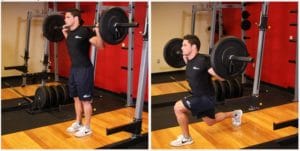 |
| Plank
15-30 seconds delay |
 |
| Dynamic upper body movements (with emphasis on the shoulders)
8-15 repetitions |
 |
| Static upper body movements (with emphasis on the shoulders) 15-45 seconds of support |  |
| Dynamic basic abs and back movements (dynamic core training) Maximum reps in 30 seconds |
 |
| Explosive Bilateral Lower Body Exercise 10-15 reps | 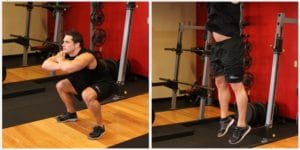 |
Note: Perform the entire set with little or no break in between exercises, as in circuit training. Do it once on training days and twice on non-training days. If you repeat it twice, take a 20-30 second break between exercises.
Morning workout – program for women

REPEAT 1-2 TIMES
Note: Perform the entire complex with little or no break between exercises. Do it once on training days and twice on non-training days. If you repeat it twice, take a 20-30 second break between exercises.
Benefits of morning workouts
Exercising in the morning, especially on an empty stomach, is the best way to burn stored fat. “The morning hormone profile is conducive to the best fat metabolism,” says Professor Anthony Hackney, Department of Physical Education and Sports (University of North Carolina Chapel Hill, USA).
In the morning, people have elevated levels of cortisol and growth hormone. Both of these hormones are involved in the metabolism, so that energy will be obtained through the breakdown of fat. In addition, research shows that morning exercises reduce appetite during the day, which also protects against weight gain.
But what if you don't like getting up early and playing sports? A study recently published in the Journal of Physiology found that exercising at 7 am can push your body clock back to an earlier time. This means that you will feel more cheerful in the morning and will tire faster in the evening. Since exercise is great for relieving stress, exercising in the morning can also lead to better mental health and performance throughout the day. But unless you really are a morning person, don't break yourself. “You can exercise in the morning, but it’s so inefficient that you’re really wasting a little energy,” says Hackney.
Afternoon workouts are almost as effective
If you can exercise during your lunch break, then this is not a bad option, says Professor Hackney. Morning workouts are ideal for burning fat and losing weight, while exercising in the afternoons can improve performance since you've already completed one or two meals. “Every time you eat, your blood sugar rises. And this is useful if you are going to do an intense workout, “says the specialist.
An afternoon workout can be a great way to keep your energy from running out at the end of the day. Experts in the Journal of Physiological Research have found that exercising between 1:00 pm and 4:00 pm shifts your biological clock just like exercising in the morning. Even a brisk walk will help you to cheer up and refocus.
Evening workouts also have benefits.

Many people find it comfortable to exercise after work. However, there is a widespread belief that evening exercises are so energizing that it can be difficult to fall asleep afterwards.
Findings from a study published in the Journal of Physiology show that exercising between 7:00 pm and 10:00 pm can push your body clock forward and make you go to bed later. But Professor Hackney is not sure if this is really the case. “The evidence is that once you stop exercising, shower, and then [immediately] go to bed, it has no effect on your sleep patterns,” he says. And relaxing activities like yoga can even help you sleep better, he adds.
The belief that morning workouts are the most beneficial in terms of weight loss is well-established. However, some evidence suggests that night workouts are just as good for weight loss. A new article, published in the journal Experimental Physiology, shows that night training does not interfere with sleep and, over time, reduces levels of the hunger-stimulating hormone ghrelin.
The main thing is to train
According to Hackney, if he had to choose the best time for sports, it would be morning. Early exercise is most biologically and psychologically beneficial and over time can lead to better results and morning exercise habits. There really isn't a bad time for exercise, Hackney says. The most important thing is to find time for sports on any schedule.
“If you can practice in the morning, do it. If you train in the evening, keep training, Hackney says. “But if your physiology doesn't match your training schedule, then that's a moot point.”
Sources used and useful links on the topic: https://zen.yandex.ru/media/ohotnik/mojno-li-trenirovatsia-rannim-utrom-5cbd529d88da1e00b5607d7d https://musclefit.info/trenirovki-s-utra/ https: / /zen.yandex.ru/media/id/5a95690d00b3dd72bc0df4ec/kogda-utrennie-trenirovki-mogut-prinesti-vred-zdoroviu-5da9bd1e43fdc000ae631013 https://fitfan.ru/trenirovveki/10471-5ja po-utram.html https://AthleticBody.ru/utrennie-trenirovki.html https://www.zdorovieinfo.ru/ti_insruciya_k_primeneniyu/uchenye-ustanovili-trenirovki-po-utram-samye-effektivnye2/
Post source: lastici.ru