
List of things to travel with a tent

What to do on the hike
If the weather is suddenly caught on a hike or it gets sharply cold, and you have unsuitable equipment, the main thing is not to get lost. We have already talked about a heating pad from a bottle, but there are other ways to keep warm.
Isolate yourself from the cold from below
If you didn't manage to take a warm rug, you sleep on a thin foam and feel the cold coming from the ground (or snow) on your back, you have to improvise. Your task is to isolate yourself as much as possible from the ground. Ask your comrades for a seat and put them under the lower back – there the back freezes the most. Shake everything out of the backpack, put unnecessary clothes under your back, the backpack itself under your feet. It may not turn out to be a very flat surface, but definitely warmer.
Dress correctly
Try to take a spare set of clothes for sleeping. Ideally, this should be warm thermal underwear, such as merino wool or Polartec Power Stretch. Never sleep in wet clothes, this is the best way to freeze. There is a lot of controversy about how to sleep warmer in a sleeping bag – with or without clothes. Someone claims that a sleeping bag warms worse if you sleep dressed, but this is only a small grain of truth. Do not put on all your clothes and climb into the sleeping bag in them – this way you will not get warm. But sleeping in thermal underwear is definitely warmer than without it. It is better to use the rest of the clothes in a different way: put the fleece under the lower back to create additional thermal insulation from the bottom, and throw the puff over the sleeping bag, so it will warm you better. Here in detail about the choice of winter clothing.
When it's cold, you can and should sleep dressed in a sleeping bag. But it is better not to put on all your clothes, for example, it is better to throw a puff on top
Insulate your head and legs
The head is often forgotten, but in vain: a lot of heat goes through the head. If you put on a warm hat and tighten the hood of the sleeping bag, it will become noticeably warmer. If you put a warm fleece in the hood of your sleeping bag, wrapping it around your neck like a scarf, it will be even warmer. There must be socks on your feet, but not the same ones in which you go on the route, but more spacious and warmer so that the feet are comfortable and there is no pressure anywhere. Polartec or soft wool socks are best for sleeping.
Eat before bed
The colder the hike, the more you need to eat. There is no time for diets – food should be high-calorie, and always hot before going to bed. Food is energy, and energy is heat, so the more energy your body receives in the form of dinner before bed, the warmer you will sleep.
Hot soup before bed – what could be better?
Do not go to bed frozen
A sleeping bag by itself does not warm, but only retains the heat that your body emits. If the body is frozen, there is nothing to allocate to it and a sleeping bag will not help much here. Therefore, before going to bed, you should warm up properly. Well, if there is a fire, you can warm up near it. If not, exercise: you can get out of the tent and do 50 squats, jump, or chop wood. It's important to warm up, but not sweat. You can drink hot tea before bed, the main thing is not to overdo it with the amount, so that you do not have to leave the tent in the cold in the middle of the night.
Bask in the warmth of each other
There is an old proverb: “One Indian is freezing under a blanket, two Indians under a blanket are not freezing.” If it is cold at night, there is no time for embarrassment – snuggle closer to each other to keep warm. it doesn't help, try zipping two sleeping bags in. Usually a twin bag is made from the same model of sleeping bags with right and left zippers, but sometimes different sleeping bags can be zipped together (but they should still be right and left).
Warm up the tent with a burner
A method that must be used very carefully and only as a last resort, if you are very cold and you cannot get warm in any way. You can briefly turn on the burner in the tent, it will raise the temperature inside and help you warm up and fall asleep. It is important to remember that this is unsafe: firstly, you can get poisoned by combustion products, and secondly, the tent burns out in 30 seconds. Therefore, if you decide to do this, follow the rules:
-
Make sure all ventilation windows are open. The tent must be ventilated.
-
Never sleep with the burner on. It is better to turn on a strong fire for a few minutes, quickly warm up the tent and turn off the burner than to leave the fire on low and accidentally fall asleep. This is not a heater, you need to watch the flame closely.
-
To heat the tent, use only proven gas cylinders, which have already been partially used. Low-quality cylinders often flare up at the wrong time, especially when they are full.
Go hiking more often and stay warm! All these recommendations will especially help in Altai when climbing Belukha.
Life hacks for camping
Let's take a look at 7 simple life hacks together that will make your time in nature easier. Each of which will definitely not require a lot of effort to implement, and you will be proud of your creation on the way out. So, let's begin:
Let's take a look at 7 simple life hacks together that will make your time in nature easier. Each of which will definitely not require a lot of effort to implement, and you will be proud of your creation on the way out. So, let's begin:
Tin can grill
An elementary recipe for making a grill
Step number 1: cut the tin can into even petals
Step number 2: put foil and charcoal in the jar
Step number 3: put the grate on top and add, in our case, sausages
Step # 4: proud of ourselves
Just 4 steps – and it's yours
Clove & Lime Fumigator

The recipe is quite simple: cut the lime into two halves and insert more cloves into the pulp. Place limes next to you on the table if you are preparing for a meal, or place them in a tent to repel mosquitoes. Mosquitoes are rumored to dislike these smells and will leave you alone.
Scrambled eggs in a bottle

Try it once and you will like it, it is really convenient
There is nothing better than scrambled eggs for breakfast, especially when camping. But fragile eggs are not easy to deliver whole. Use a plastic bottle to transport the eggs to the camp site. And, most importantly, mark it, otherwise someone might think that it is juice and leave you without breakfast.
Bottle spoon
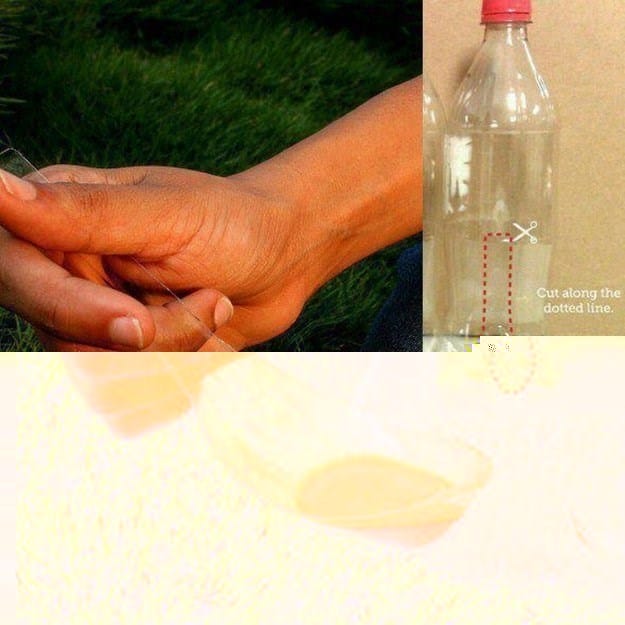
It seems, while already to write the book “A Thousand and One Thing from Plastic Bottles.” Above is an elementary example of how to make yourself a spoon if you forgot it at home, and buckwheat with stew is almost ready.
Struggling for weight with toothpaste
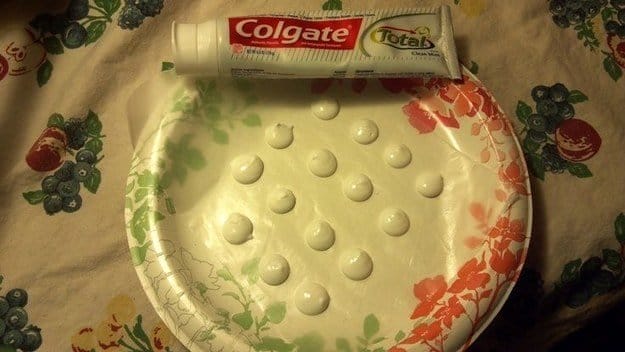
For those who are fighting for every gram in their backpack, there is such a life hack. Squeeze a few drops of toothpaste onto a plate (as shown in the picture above) and leave it on for three days. The toothpaste dries up and you can put it in a small box and not carry the whole tube with you. Immerse it in water for 5 minutes before use and it will regain its softness.
Spice packaging
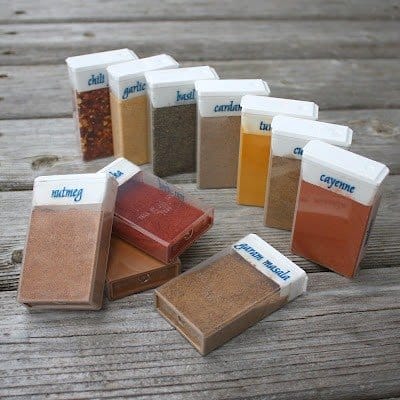
Compact storage of spices, isn't it?
If you can't imagine field cooking without spices, use tic tac packs for your favorite spices. And by sticking paper tape on the box, you can sign the name of the spice to speed up the search for the desired seasoning.
Wax will help your lightning
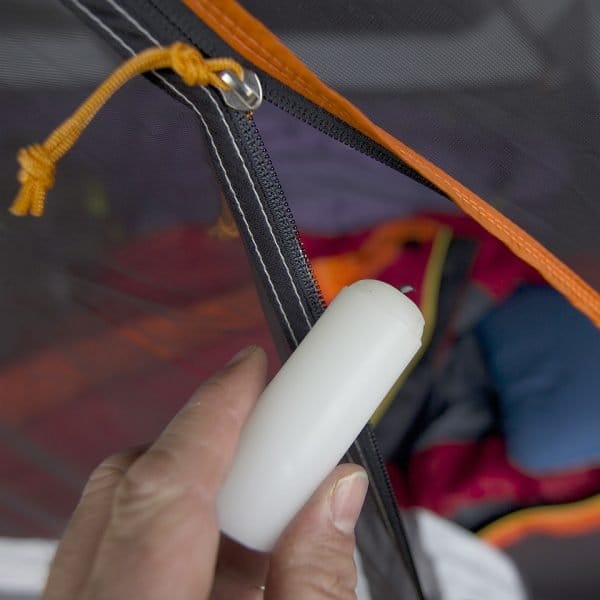
It really works, check it yourself
For those who have difficulty fastening zippers in tents or sleeping bags, there is a little secret. Wax up the zipper on both sides for better glide and comfort.
And finally, a short video with interesting life hacks.
1 Check the package contents of the tent
Before going on a hike, check that all the pegs and ropes are in place. Lay out your tent at home and make sure you have all the parts you need to set it up. Typically, the tent consists of a waterproof awning and an inner lightweight tent with a mosquito net and a waterproof bottom. It comes with pegs, frame arches and ropes that hold the rag house in strong winds.
Take the time and check if the zippers are working near your tent. With the arrival of darkness, not only cold can crawl to you, but also all sorts of small creatures.
5 Bring a heating pad with you
It will not take up much space, but on a cold night you will be very happy with it. A good option is a salt heating pad: it lasts for a long time, it is safe to use. If the cold took you by surprise, and you do not have a special heating pad at hand, then you can take an ordinary plastic bottle, fill it with hot water and place it in a sleeping bag.
6 Don't Forget Your Pillow
Another important item to help brighten up your nights in a tent is a pillow. You should not take with you a large home-made down pillow or a dummy from the sofa. All this variety will perfectly replace the inflatable analogue. Inflatable pillows are sold not only in tourist shops, but also in hypermarkets.
Another good pillow replacement is your sleeping bag cover, which can be used to fold warm items such as a jacket. The tent will be neat and tidy, and you won't lose the cover.
2 Learn to pitch a tent
It is very important! A crooked tent not only confuses perfectionists with its appearance, but can also leak in the rain or fly away in the wind. First, read the instructions – it hasn't hurt anyone yet.
Remember that the tent should be on a level surface without any holes or bumps. Assemble the tent (tie all the ropes, stick in the pegs, stretch the awning and close all the doors). In this position, the tent should not knock together. If it looks like a real flat house, then you can safely spend the night in it.
3 Stock up on a rug or mattress
Despite the fact that the tent is equipped with a waterproof bottom, it perfectly passes the cold. And if you don't want to freeze something for yourself, then get some foam or an inflatable mat. Thick high-quality foam will save you from cold and moisture, but sleeping on it is quite tough. Although after one or two nights you will get used to it, and your back will stop hurting. Lay two narrow foams with an overlap so that the cold does not get into the gap between them.
An inflatable mat or mattress is softer than foam. Sleeping on such a bed is comfortable, but it costs five times more. It's up to you to choose.
1 Coffee to go
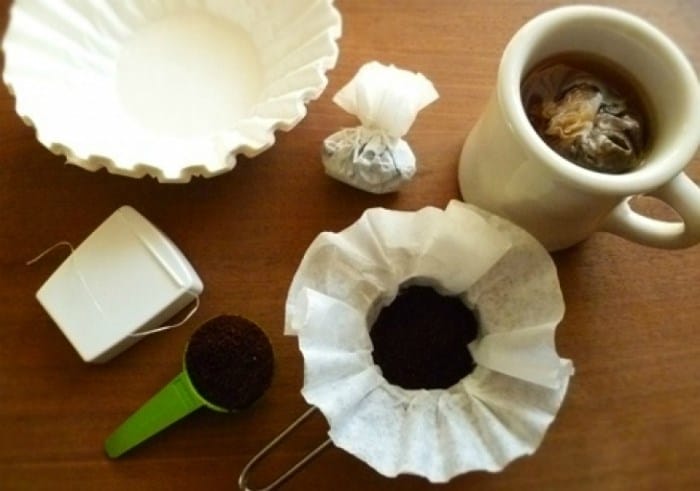
A trip to nature is not at all a reason to deny yourself good coffee. To do this, before leaving, you need to make small blanks, namely, put the ground coffee in portions into the filters for the coffee maker and tie them with dental floss. Already on vacation, you just need to dip the bag into a cup of boiling water.
2 Mosquito repellent
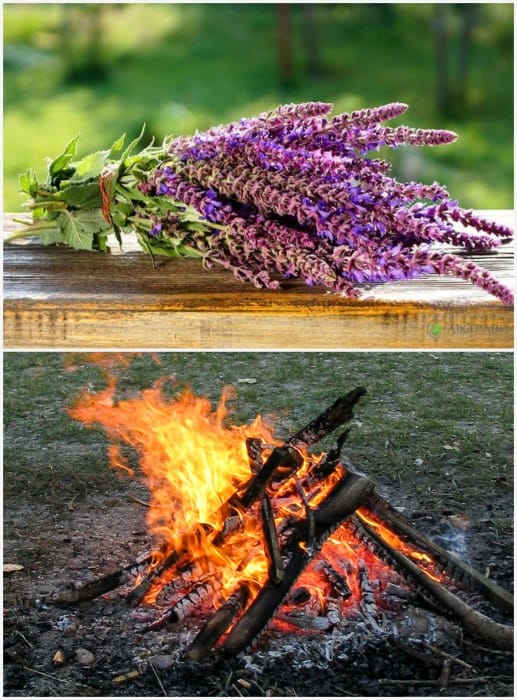
If you are relaxing by the river, get ready to fend off mosquitoes. Sage twigs, which should be thrown into the fire from time to time, will help to cope with nasty insects and somewhat improve the quality of rest.
3 Lantern
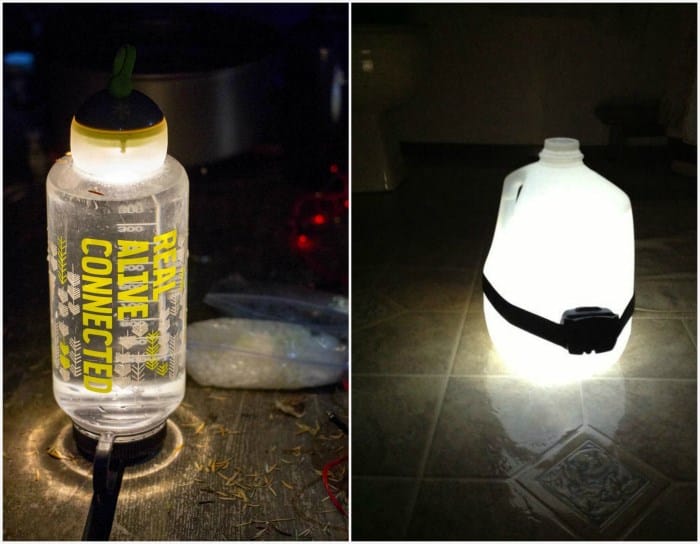
By using a headlamp and a canister of water, you can make a torch powerful enough to illuminate the inside of your tent.
4 Clean dishes
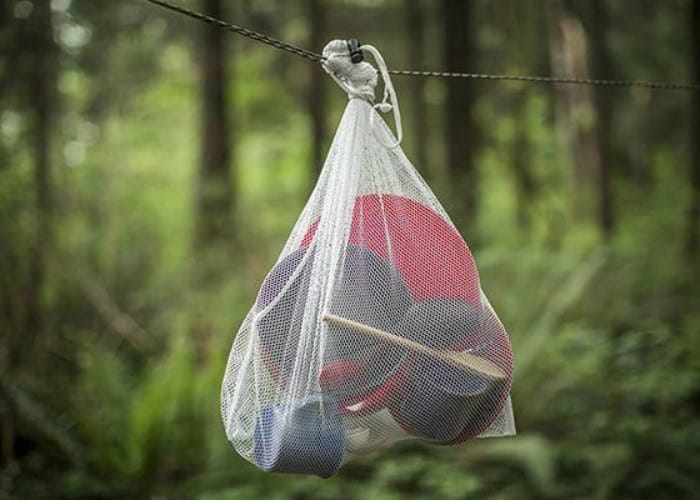
Novate.ru does not recommend drying clean dishes on vertical surfaces, since after such drying it will most likely become dirty again. In such a situation, the mesh is the best solution. Pack clean dishes in it and hang it on a post.
5 Sealed cups
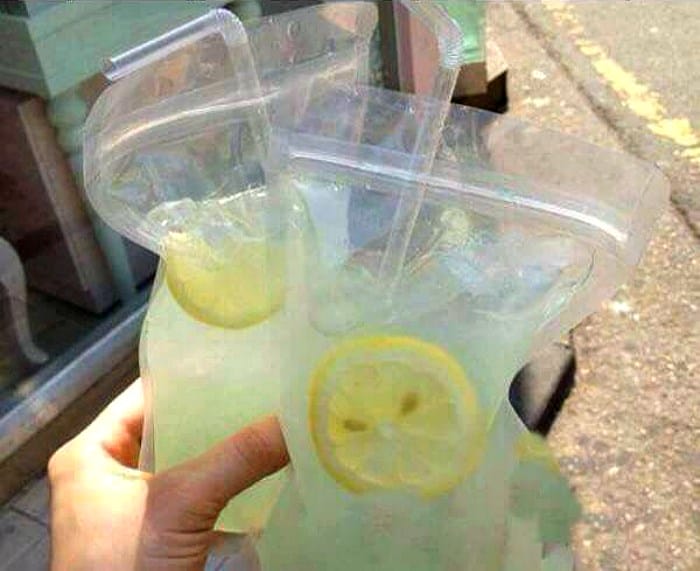
In summer, there is a danger that an insect will get into an open glass with a drink. However, if you use zip-lock bags instead of glasses, such a nuisance will not happen.
6 Glass volume
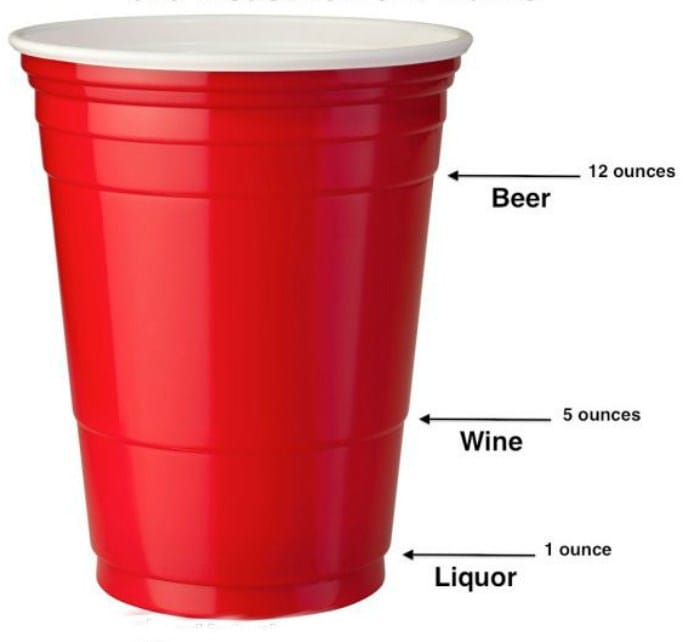
Few people know, but the marks on the glasses have a completely logical and practical purpose. The lowest bar is the ideal serving of spirits, the middle is for wine, and the highest is for beer.
8 tips for a comfortable sleep
If you decide to go to rest in nature, then you can take all the necessary things with you. If you do not have the necessary things for your trip, then here are 8 options for what will really help you comfortably spend the night in a tent.
Take an inflatable mat or mattress with you
Everyone knows that tents are perfectly equipped with a special water repellent at the bottom, but you should understand that it will still let the cold through. And if you do not want to freeze or freeze yourself some place, then you need to purchase a special foam or mat.
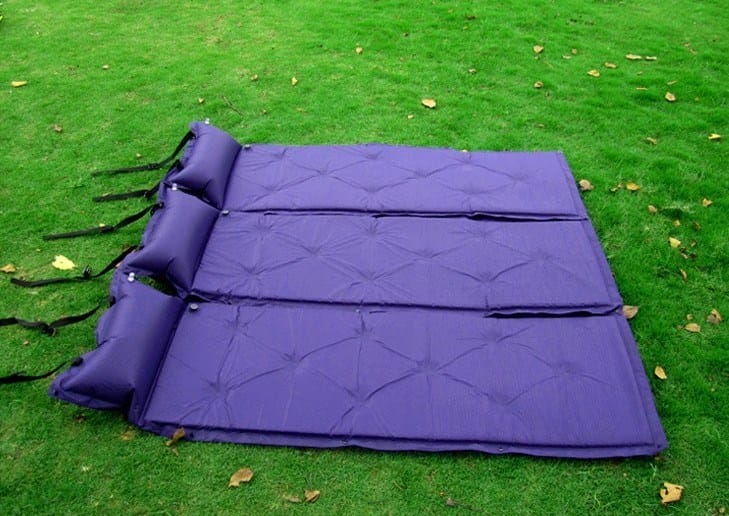
inflatable mat
Good and high-quality foam will help you save yourself from moisture or cold, but you can forget about camphor sleep then. But after about a few nights, you will be able to get used to such a dream, and your back will no longer hurt. Narrow foams had to be overlapped so that the coolness could not get to you. The inflatable mat or mattress will be much softer. Then you will be comfortable and pleasant to sleep, but this luxury is more expensive.
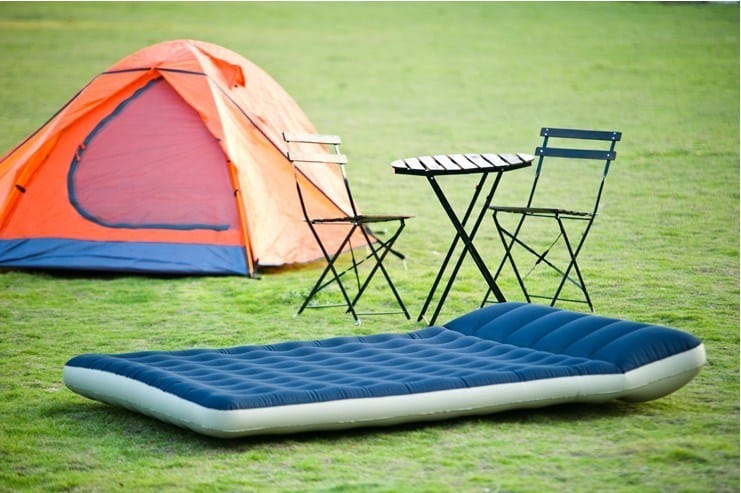
inflatable mattress in a tent
You need to bring a warm blanket and a sleeping bag
Your mistake would be if you thought. That a regular blanket can keep you warm when the weather is cold. In nature, in particular, it gets cold in the morning. In case you have a tent with automatic heating, then you can use a sheet and a simple blanket. The most correct decision would be to purchase a sleeping bag. You need to choose it quite carefully and pay more attention to the temperature that is applied to the sleeping bag. This temperature means the rate at which you can stay warm while sleeping in your sleeping bag.
Take a heating pad with you
Purchasing a heating pad will be a good solution, it will not take much time, but it will keep you warm at night. The best option would be to buy a salt heating pad. This option will be durable and safe to use. If the cool weather catches you by accident, and there is no heating pad with you, then you need to take a plastic bottle and fill it with hot water, and then put it in a sleeping bag.
Take a comfortable pillow with you
Another important item to help you cope with the comfort of your sleep is undoubtedly the pillow. You shouldn't take a down pillow from home. In this case, all of these pillows can be replaced with an inflatable pillow. You can buy an inflatable pillow not only in specialty stores, but also in a regular supermarket. You can also replace this pillow with your sleeping bag cover.
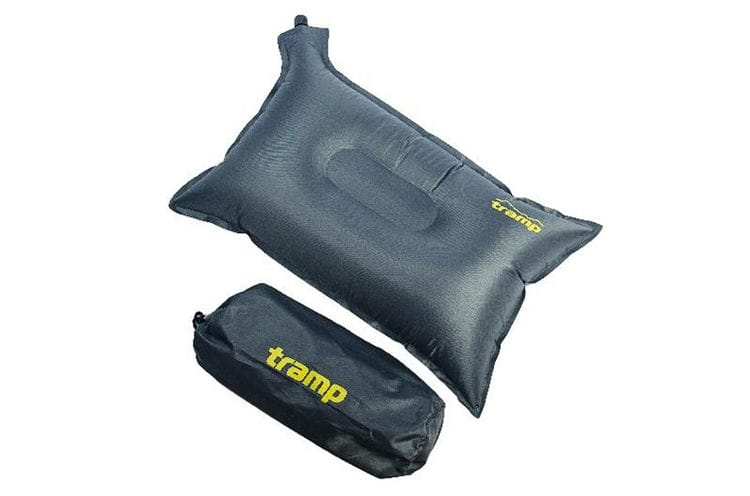
Self-inflating pillow
Make or buy insect repellent
To prevent insects from getting to you in the tent, you need to tightly close the door and windows in the tent. If, nevertheless, these insects were able to get into your tent, then a well-known remedy can be helped by everyone – this is tansy. But it should be understood that this tool will be quite difficult to find.
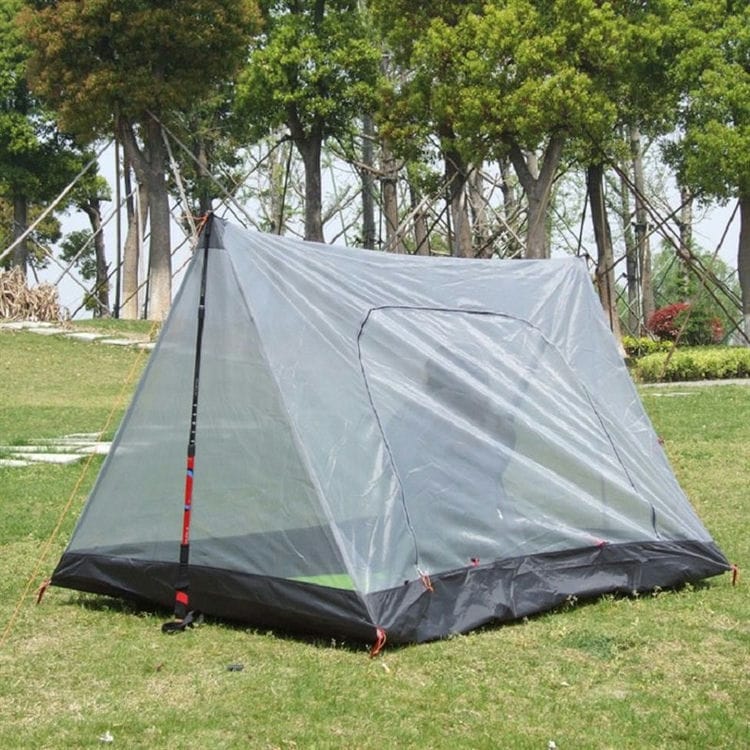
insect protection
You can also buy special spirals in the store, which scare away insects with their smoke. But such a smell is not very pleasant for a person, and the smoke will fill the entire space. In general, this option will be quite unpleasant for both these creatures and you.
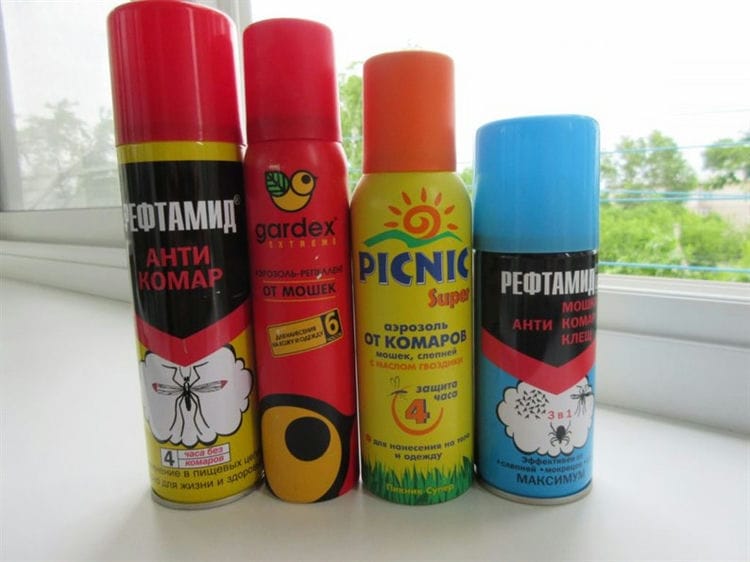
insect spray in the tent
Currently, there is another way, this is the purchase of a special device in the store. Such a device will work all night, but it does not emit an unpleasant smell and does not work loudly.
Take extra socks with you
In conditions such as camping, you will need replacement shoes and socks. These things won't take up a lot of your space, so don't be shy and bring some spare socks with you for a few days.
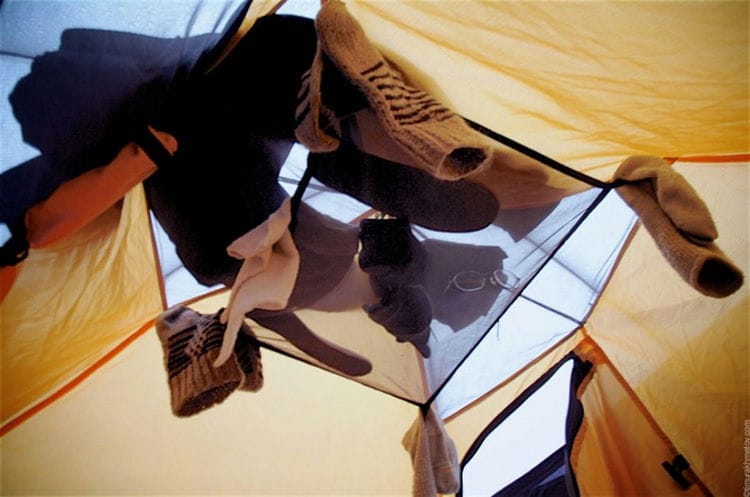
spare socks
Bring a highchair with you
In order not to sit on an uncomfortable log or on a blanket, then take a folding chair with you. Sitting on a folding chair is quite convenient and comfortable, and you can take it with you everywhere.
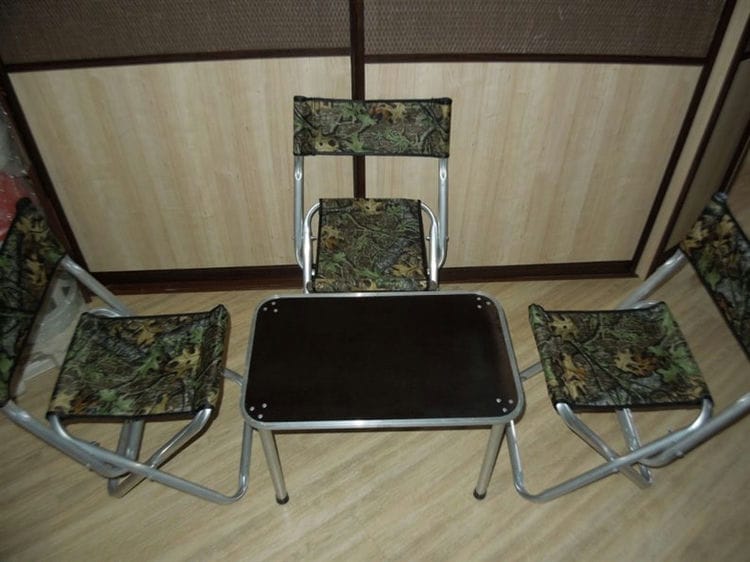
high chair
Take your lamps with you
So that you do not stumble somewhere at night or simply look for things in the dark, you need to take lamps with you. You need to cover the transparent jar with paints that glow. You need to paint inside. You can also tie the lamp to a bottle filled with water.
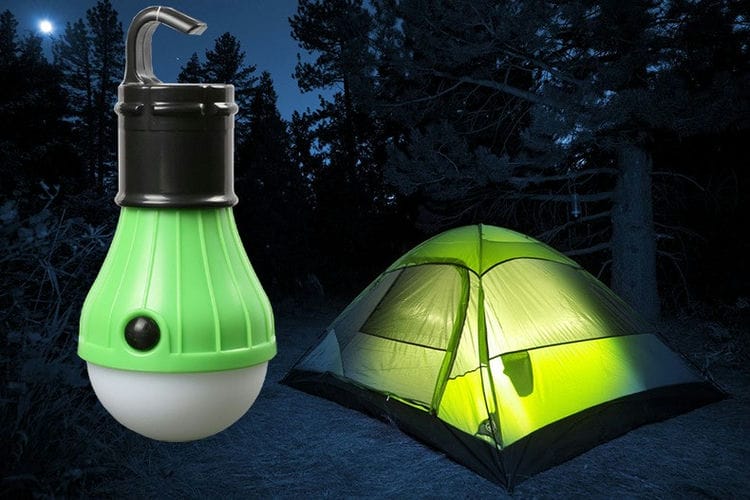
fixtures
Safety
Many are afraid that while they sleep bad people will come and attack them. This fear is understandable, but we decide. Any seasoned traveler will tell you that the quietest nights will be where there are no people. That is, when choosing a place to stay overnight, choose a location as far away from settlements and roads as possible. Then the local drunkards and thieves will not come to you. They just won't find you.
Or, conversely, use paid campings. I don't really like them, but in Iceland, for example, it is forbidden to put up tents in places that are not equipped for this.
Wild animals
It is clear that no one wants to be torn apart by, for example, a bear. However, animals in most cases avoid meeting humans themselves. Yes, there are many stories about the tragic incidents with the attack of bears in Kamchatka, but in other regions the bears will bypass the camp, smelling the smell of smoke and the voices of people. And they are not everywhere, in general, found.
Actually, in Kamchatka, it is not the bears that are to blame for the current situation, but the people. Do not provoke animals by leaving leftover food and dirty dishes overnight. Observe this simple rule and then nocturnal guests will definitely not come to you, even in the form of hedgehogs and other rodents.
And the most important thing. ALWAYS close the tent entrance with a zipper. Even if you climbed up to take something for a few minutes. Thus, inside the tent you will not even have insects, not to mention the same mice or, God forgive me, snakes.
Comfort or discomfort
A travel mat (aka polyurethane foam) is not an orthopedic mattress for you. But here, too, everything is fixable. Pay attention to this type of equipment such as self-inflating rugs. Compared to ordinary Intex type inflatable mattresses, which tend to be lowered at the most inopportune moment, “self-inflators” are much more practical and comfortable. But, it is true, and more expensive.
Also, choose the right place for your tent. Make sure there are no stones, bumps, etc. underneath. Be sure to choose a flat area, without a slope, so as not to roll onto each other in a dream.
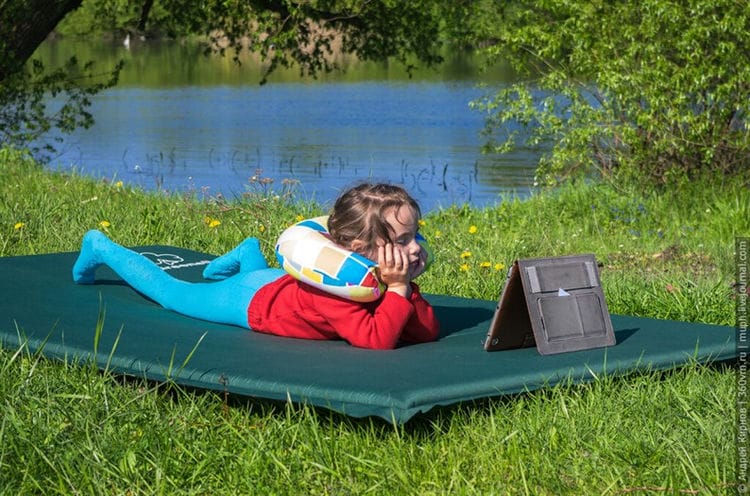
The child is balde on a soft rug
Be sure to get the right sleeping bag too. A regular blanket for sleeping in a tent is not the best solution. Choose a sleeping bag based on its performance characteristics and, first of all, pay attention to the comfort temperature that the manufacturers promise.
Insecurity
As practice shows, for irregular use, that is, several times per season, a mid-price tent from the same Decathlon will be enough.
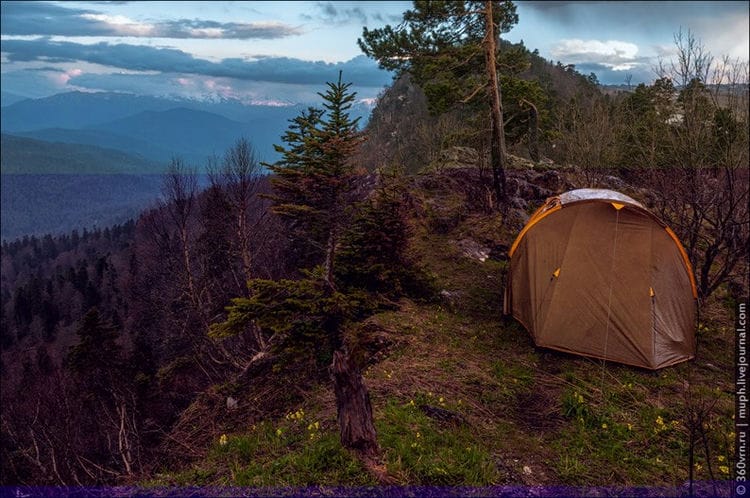
This Quechua tent has gone through fire, water and copper pipes.
The main rule is to choose a two-layer tent and with not the thinnest arcs. Expensive models are equipped with aluminum arches, but, in my experience, fiberglass ones also serve for a long time and, in which case, they can be easily repaired with tape. We can't storm Everest, right?
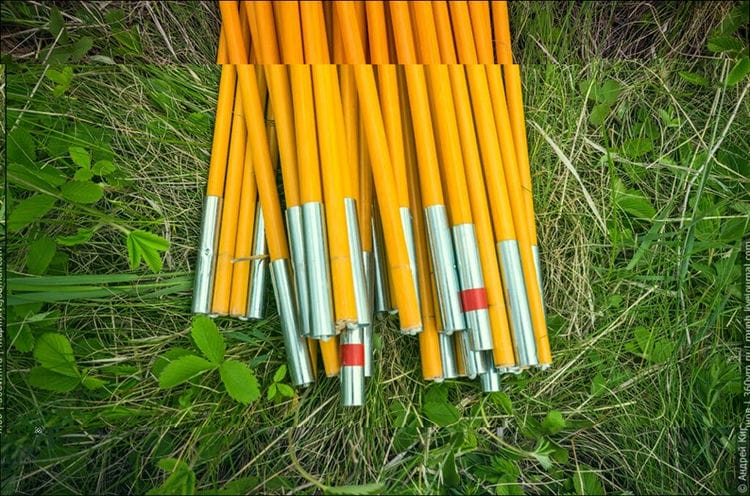
Tent arches
And don't be afraid to get wet. Tents made of modern materials perfectly hold even heavy rainfall. I repeat – two-layer!
Complexity of assembly
Some people have a fear that they will not be able to figure out how to set up a tent. But I dare to assure you that any adult can handle even the most complex camping tent in 15-20 minutes.
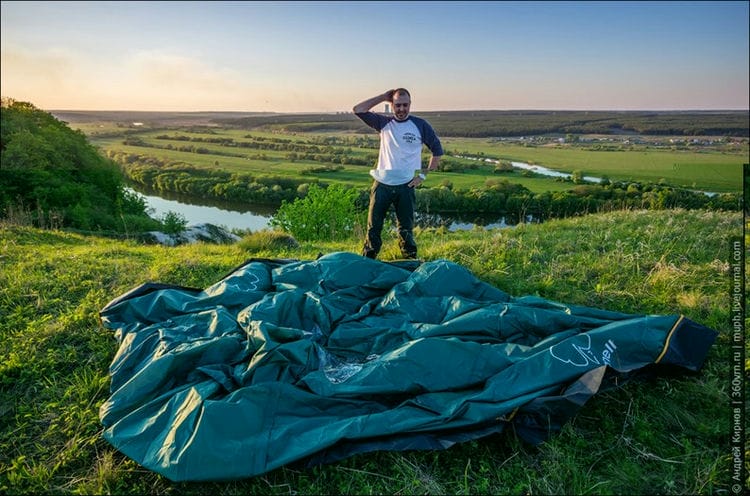
In most cases, fabric assembly instructions will be sewn to the tent cover. Sometimes with pictures.
Which tent to buy?
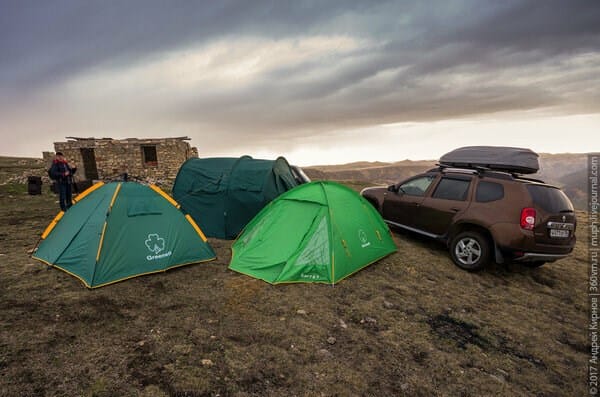
It seems like one brand, but so different …
The variety of options can confuse an inexperienced person. But everything is simple here. Consider the goals for future use of the tent. If you want space, take a large camping tent with several compartments, rooms, in which you can stand up to its full height. But keep in mind that it will be tedious to put and disassemble it every time. In such a good time to rest for a week without unnecessary movements on the river or sea.
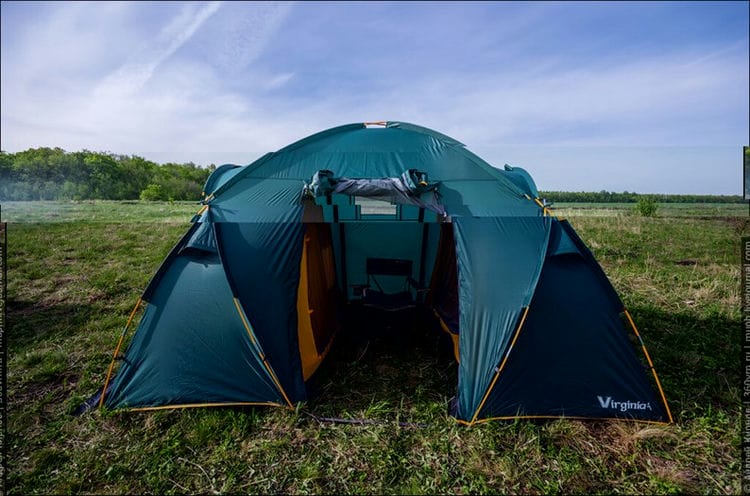
Two-room apartment with a small kitchen
If, however, you are not a fan of this type of recreation and plan to spend the night in a new place every day, take a smaller tent, but with a simple and quick installation.
Now they even sell semi-automatic and automatic tents, I already talked about one of these on my channel.
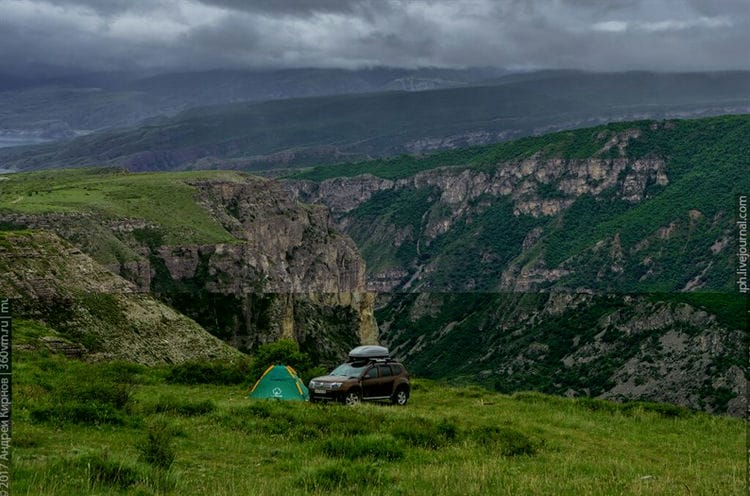
Tent on the edge of the Sulak canyon in Dagestan
If you are going on a hike or trekking, the main criterion for choosing for you should be the light weight of the tent. Well, there is no point in even mentioning the assault tents for climbers within the framework of this article.
Preparing for the cold in advance
Whether you're hiking in the winter or off-season, tune in to the cold and choose the right gear. Correct means suitable for specific conditions. Investigate the weather in the trekking area, especially nighttime temperatures. If you go to the mountains, be sure to take into account the height – so as not to be surprised later, where in September the snow came from in the south. After that, pick up clothes and equipment.
Choose the right sleeping bag and mat
This is the first and most important rule, if you follow it, you can skip reading further. A sleeping bag and a rug must correspond to the conditions of the hike, and if the hike is expected in an unpredictable off-season, it is better to take it with a margin.
The sleeping bag's comfort temperature should be 5-10 degrees lower than the expected temperature in the hiking area. That is, if you go to low mountains in autumn, where light frosts are expected, take a sleeping bag at -7 … -10. Frost-resistant can be guided by the lower comfort temperature, frozen – only at the upper one.
For rugs, the comfort temperature is shown by the R-Value, the larger the better. A thin Izhevsk rug is not for subzero temperatures, it freezes quickly. When hiking in winter and in the off-season, you should take thick foam or 4-season self-inflating rugs: they provide good thermal insulation and comfort.
Never choose a sleeping bag for extreme temperatures. This is the temperature at which you will not die. But you will not fall asleep either, most likely.
Use a warm liner
If for some reason it is impossible to take a warm sleeping bag, take what is, plus the liner in the sleeping bag. They are thin, made of cotton or silk, and warm, made of fleece or other synthetic insulation like Thermolite. The first is used exclusively for hygienic purposes – so as not to stain the sleeping bag with dirty socks, for example. But the warm liners significantly increase the temperature of comfort, thanks to the material itself and the additional air gap between the liner and the sleeping bag.
Take a catalytic heating pad
A catalytic heating pad is an indispensable thing in a winter and generally cold hike. This is a compact heater that will warm hands, feet or any other part of the body, dry boots or gloves, and most importantly, raise the temperature in a sleeping bag overnight. The heating pad runs on gasoline, while it is absolutely safe, because there is no open flame, and a special protective thermal cover does not give you a burn. It works simply: fill the heater with fuel, light the wick, close it and put it in the sleeping bag. It heats up from several hours to a day, depending on the model and the amount of fuel. You can refuel with “Galosha” gasoline, which is popular among tourists, or refined gasoline for lighters.
Make a twin of two sleeping bags
A spark is two sleeping bags fastened together. It is advisable that these were the same models with left and right zippers, although sometimes even sleeping bags of different brands can be zipped – the main thing is to check whether this can be done before the hike. And for a married couple who always plans to go on winter hikes together, you can buy a double sleeping bag and permanently solve the problem with the cold, also saving on weight.
The most important thing
If my post convinced you to go on a journey and spend the night in a tent, in addition to all of the above, you must fulfill another most important condition. When you pack your tent and things, nothing should be said at the place of your overnight stay that you spent that night here.
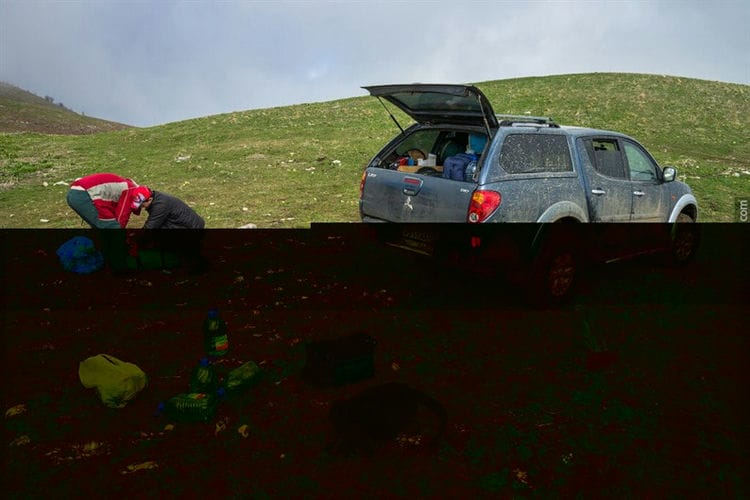
Simply put, remove every last wrapper.
If the cold caught suddenly
It so happens that you go on a summer hike, and frost suddenly hit the mountains – and I did not know any forecast. And you only have a summer sleeping bag and a thin rug. We'll have to improvise and insulate ourselves with what we have.
Keep warm before getting into your sleeping bag
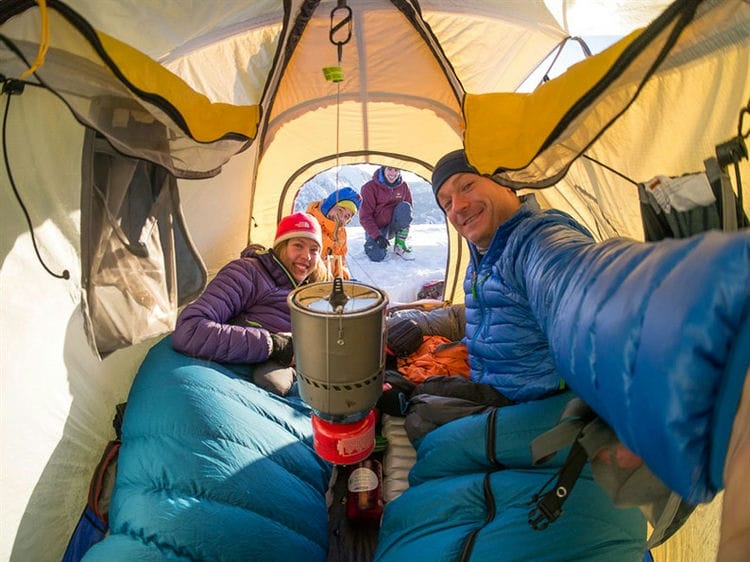
Do not go to bed frozen – otherwise you will not get warm soon (or you will not get warm at all). A sleeping bag does not heat, but only retains body heat, so it is important that there is more of this heat. Before going into the sleeping bag, try to warm up in any way. If there is a fire, warm up near it properly, if there is no fire, do some exercises outside (jump, squat), drink hot tea in the tent (you can do it right in your sleeping bag, just carefully, do not spill it).
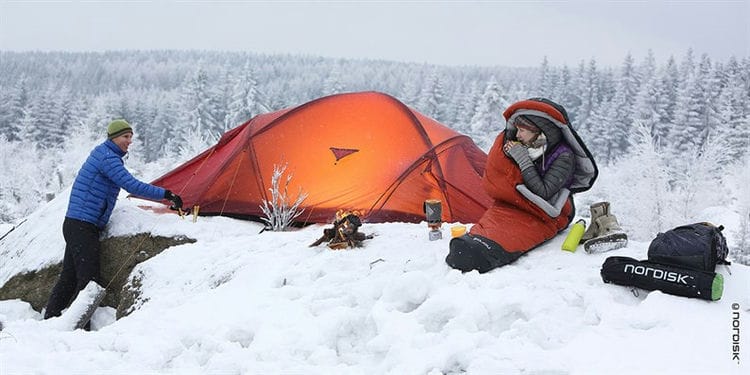
Go to bed with your clothes on
Someone thinks that sleeping without clothes in a sleeping bag is warmer. The question is ambiguous, and in fact it all depends on the temperature of the sleeping bag's comfort and the temperature overboard. If it's cold to sleep in one thermal underwear, keep warm. It is better not to put on bulky things like a down jacket, but put it on top. If you often toss and turn in your sleep, put the jacket inside the sleeping bag, otherwise it will slide, and you will have to unbutton the sleeping bag and straighten it. And on yourself – woolen socks or downy chuni, fleece, pants, hat. Warm things that are more cold, for example, you can shove your feet into a buttoned fleece jacket.
Keep your head warm
Usually everyone insulates their legs, but they forget about the head. Meanwhile, heat also escapes through it – sometimes it is enough to put on a hat or tighten the hood and the warm collar of the sleeping bag to keep warm. For those who are especially cold: if you have a lot of warm clothes, do not put all of them on yourself, but warm your head and neck, for example, by wrapping them in a fleece or a puff. This will also prevent heat loss from the sleeping bag.
Isolate the sleeping bag from the cold ground
If the frost hits suddenly, and you only have a thin foam, put everything under the rug that you do not put on yourself. A backpack under the legs, spare clothes under the back, a seat cushion under the lower back (or you can take the seat cushions from comrades with warm rugs and pave a second carpet out of them). If you have a rope, it's great, climbers sleep on it without any rugs, so you can do it too. It will be uncomfortable, but warm. As a last resort, place a folded rescue blanket under your back – it's not as effective as a normal warm rug, but better than nothing.
Make a heating pad from a bottle
If there is no catalytic heating pad, you can put an improvised one in your sleeping bag – from a plastic bottle or flask. Warm up the water, pour it into a container and put it in a sleeping bag. If you do not save gas, you can make two such heating pads: one for the legs, and on the other, sleep in an embrace. Flasks can always be taken from those who do not freeze. Such a heating pad gives off heat for several hours, and then it is better to get it out – sleeping in an embrace with cold water is not very pleasant.
Do not pour boiling water into a plastic bottle, otherwise you will have to throw it away later. Just don't bring the water to a boil, or cool it a little if you haven't kept track of it.
Try not to leave the tent
Each exit to the outside cools both you and the tent, especially if the entrance is upwind. Come out – and all the work on heating down the drain. Therefore, try not to leave the tent without an important reason. Before going to bed, drink less tea, and if you still want to out of need, adapt an airtight container for this business – for example, a plastic bottle with a wide neck. There are also special devices for girls, just in case you can take them. There is no time for ceremonies.
And if you still had to go out, remember the point, if necessary, to warm up and do at least a dozen squats in order to lie in the sleeping bag warmed up.
Eat more
Hiking is not the time for dieting. Calories are directly related to heat, not excess weight. On a cold hike, it is better to take high-calorie foods rich in fats and carbohydrates. For example, peanut butter, chocolate, nuts, pemmican … In the cold, some foods can freeze so that you won't bite (for example, chocolate bars with peanuts), so carefully plan the layout. But ghee is very convenient in winter: it does not flow or melt. Hot soup with pemmican and ghee is a perfect example of the right dinner for a chilly evening.
Eat hot food as often as possible because cold food requires energy from the body to keep it warm. But it should be the other way around: food warms you, not you food.
Sources used and useful links on the topic: https://Turclub-PIK.ru/blog/kak-ne-myorznut-v-palatke-10-pravil-opytnyh-turist/ http://jiviseichas.ru/na-chem- cpat-v-palatke / https://zen.yandex.ru/media/easy_outdoor_life/7-laifhakov-dlia-kempinga-kotorye-uprostiat-vashe-prebyvanie-na-prirode-5bf1cd97ae92b000a9f9c4a9 https://Lifehacker.ru/10 -palatochnyx-lajfxakov / https://novate.ru/blogs/020619/50532/ https://mir-tourista.ru/statyi/vyzhivanie-v-dikoi-prirode/spat-v-palatke-nochyu.html https: //zen.yandex.ru/media/muph/nochevka-v-palatke-kaif-ili-zlo—-5dc117419c944600aeb23a43 https://sport-marafon.ru/article/alpinizm/kak-ne-zamerznut-zimoy-v- palatke /
Post source: lastici.ru