
How to listen to classical music. Acquaintance with classical music. Top for beginners
Content
Find out at what time this or that work was written
It is very important to plunge into the era of a musical work, to find out how people lived in those centuries, what maxim they followed. It is enough to run through the historical chronology to learn about global political events and correlate them with how composers interpreted them in their music.
For example, two world wars played an important role in the 20th century. Domestic music was strongly influenced by the difficult domestic policy of the USSR in the 30-50s. Shostakovich's contemporaries in the work “From Jewish Folk Poetry” on the lines “Doctors, our sons have become doctors!” heard a reference to the bloody case of doctors in 1948, and in his 11th symphony behind the thunder of timpani depicting the shooting of a demonstration in 1905, heard the theme of suppressing the anti-communist uprising of 1956 in Hungary.
About the development of taste
The development of musical taste is not a difficult science, but there are still certain rules here. The beginning is fairly straightforward and obvious. Just take that music that you never understood and start listening to it.
How to do it? It's not that hard. The Internet is replete with ratings like “100 Best Electronic Albums” or “100 Great Works of Classical Music”, “500 Best Albums according to Rolling Stone.” (Or use the social network Last.fm, it's very convenient). and search. Secondly, there is nothing wrong in relying on the taste of critics, until yours is formed. Thirdly, it will give a chance to get acquainted with the generally recognized masterpieces of world music.
When you listen to music, try to only listen to music and not do anything else. I understand that many of you are used to playing musical compositions in the background, doing something else in parallel. But now try to act contrary to established habits.
Set aside an hour of time (this is the average length of a standard album) and devote this hour to music. Listen to the recording (album, compilation, etc.) from start to finish, without switching to anything else. Follow these rules, they will teach you a lot, and not only in the field of perception of the art form discussed in this article.
How to choose music?
– Method one: start with composers who are more “open” to a new listener. These are, for example, Chopin, Grieg, Mozart, Tchaikovsky. Their music is simply beautiful, melodic, it impresses you immediately at the level of emotions. For the first acquaintance with the classics, you can come to a concert of piano works by Fryderyk Chopin: waltzes, mazurkas, nocturnes. “The Four Seasons” by Pyotr Tchaikovsky and his other piano works are available for perception. They are poetic and touching.
You can start differently – with a concert of vocal music. These can be arias from operas, romances. This is music with lyrics that develops in a plot. Therefore, it is easier for a beginner to follow the author's train of thought.
It is best to start listening to classics with program music – the one that has a title, a literary program, a plot. For example, you can even listen to such a “complex” composer as Franz Liszt. His symphonic poem Preludes has a program, which is most often printed in special booklets or told before a concert. You can ask yourself and read it. Then you will all hear! And the “hero's” dreams of love, and how he takes a break in nature from everyday storms, and these storms themselves are formidable and warlike, and how in the end he wins. Other examples of such music: Pictures at an Exhibition by Modest Mussorgsky or The Four Seasons by Antonio Vivaldi. It is much easier to listen to and perceive program music, because you can follow the plot.
There is another way – to look for your own, what you like. In general, it would be nice to make sure that the sound of classical music, which, for example, you already liked, sounded with you all the time. You have attended a concert consisting of works by, for example, Chopin or Vivaldi, after the concert, create a playlist for yourself on your phone, on your computer and listen to this music in the background: at home, when you relax, cook food, do gymnastics, drive to work in your car. A lot of music in the 18th century was written specifically for feasts, walks and household chores. For example, Joseph Haydn “Music on the Water” or the suites by Johann Sebastian Bach. Surround your personal space with classical music and gradually expand the circle of what you like with other works of these authors.
Remember: you cannot love all genres, all eras. Someone like the sound of a grand piano, someone like a violin, and there are lovers of choral music.
Learn to understand the classics? Just start listening!
And this is actually the case! And it is not necessary to immediately acquire a pile of musicological books! The main thing is to start listening. And here there are rules, following which, you will discover a new wonderful world!
- A beginner in the classics cannot listen to everything. For example, twentieth century music is best saved for later. A newborn is not immediately fed meat! So it is here – starting from the 20th century, you run the risk of getting the wrong idea about it.
- Everyone knows the composition of the three most famous classical composers – Bach, Beethoven, Mozart. Start with them – they are clear to everyone! Just don't start with the biggest and most complex pieces. Take your pick!
- From time to time, include opera arias (for example, arias from operas by Verdi, Puccini, Tchaikovsky) and even entire operas on your listening list. It is always very beautiful and accessible music. Just try to look for recordings in a language you understand – many well-known foreign operas are performed in the original in Italian, German or English, but you can almost always find them in Russian as well.
- Before listening to the opera, read its storyline summary in order to be aware of the stage situation. It will be great if you have the libretto in your hands, that is, the text of the opera – all this is also very easy to find. Instead of the libretto, you can hold in your hands the clavier of the opera, which contains not only all the words, but also the musical parts.
If you decide to learn how to listen to classical music, then most likely you will be delighted by Russian composers – Glinka, Rimsky-Korsakov, Tchaikovsky, Rachmaninov, Taneyev, Sviridov and many others.
Peter Ilyich Tchaikovsky. “Seasons”
The piano cycle of the most famous Russian composer with the same name is built on a similar principle. 12 plays symbolize 12 months, each of them has a poetic epigraph – however, unlike Vivaldi, Tchaikovsky did not plan this in advance, but did not object either. For the composer, the genre diversity seemed to be the most important: for example, the play “Svyatki” received the subtitle “Waltz”, and “Harvest” – “Scherzo”.
Immerse yourself in context
We are not really interested in a subject when we do not know its origin and do not feel a part in it. So it is in the classics: the symphony seems like a huge, overwhelming piece of music, so majestic that it's even boring. There is one way to deal with this – to do a little research, find out the biography of the composer, study the history of the creation of the work. Many people know that Shostakovich's Leningrad Symphony No. 7, which was created at the beginning of the blockade, was used by the Soviet government as a propaganda weapon, including in the West. But few people know that the famous march from it was written long before the war. Initially, it contained the theme of state terror as such, the theme of a dull and blind political machine, an inevitable force, that is, it was more of an anti-Stalinist than an anti-Hitler story.
Sort music by era
You can listen to Vivaldi, and then switch to Tchaikovsky, and then find on the Internet the “interesting” fact that Vivaldi wrote an opera in 5-7 days, and Tchaikovsky needed two years to do it. But Vivaldi lived in the XVII-XVIII centuries, and Tchaikovsky in the XIX, respectively, the music has changed, and the approach to it. Vivaldi compiled his operas from other fragments of other works he had already written. And at the time, it was okay. Tchaikovsky, of course, wrote from scratch, and his musical content is much deeper. It is important to be aware of the music of which era you are listening to: Baroque, Classicism, Romanticism or Modernism. All of these genres are classics, but the sound and content of the works are very different from each other.
Slowly but surely
While listening to music, try to notice similar pieces and sequences, compare what you hear with the previous elements, paying attention to the frequency of repetitions and their positions. It takes time to develop this skill, but once you master it, it will feel like the first time you ride a bike.
Example
The composition DJ Shadow Midnight in a Perfect World consists of eight samples. Some of them play throughout the track, others appear, disappear and reappear. Can you count them?
To know what you are listening
Unfortunately, it is impossible to achieve absolute objective perception of music. Our musical experience is influenced by our preferences, experiences and memory. There is nothing wrong with that, but if you want to achieve greater objectivity, replace unnecessary information with useful: cultural context, information about the author and his creative process.
Example
Many thought Brian Adams' hit Summer of 69 was about the summer of 1969. But then Adams was no more than 10 years old, what does he remember about him?
Listen to those close to you
Music critic Ilya Ovchinnikov believes that the tradition of starting acquaintance with the classics through the music of Bach and Mozart is not entirely true. After all, there are several classical composers whose music is more in tune with the inner life of a modern person. Among them are Mahler, Shostakovich and Stravinsky. The turn of the century gave birth to geniuses who speak the same language with us. If the music of the 19th century, which makes up the bulk of the repertoire of modern performers, could have bored you in advance, then these works will surely seem to you fresh, interesting and close in spirit.
Listening to Mahler
Although most of Gustav Mahler's life fell on the 19th century, he became the first composer who, having destroyed the romantic canons, boldly jumped into the 20th century, very accurately predicting the torn consciousness of people who would witness world catastrophes. There was a turning point in his life, when he wrote a work of extraordinary tragic intensity – Symphony No. 6. Despite its duration (80 minutes), it is listened to in one breath, reminiscent of an exciting novel with constant plot twists. In Mahler's work, almost all music is soulful. You can not love her, but it is impossible to remain indifferent to her. Since the 1960s, thanks to the efforts of Leonard Bernstein, the Mahler boom began, so it is not difficult to hear Mahler live.

Listening to Stravinsky
Igor Stravinsky is not called a chameleon composer for nothing. During his life, he radically changed his style several times, so if you hear his works created at the beginning, middle and end of his career, it is absolutely impossible to believe that they were written by the same composer. Stravinsky all his life worried that, despite the fact that he continues to create, his most famous works are his early ballets – The Firebird, Petrushka and The Rite of Spring. The premiere of the ballet The Rite of Spring, staged by Nijinsky, is considered the loudest musical scandal of the 20th century. Spring is in many ways a visionary work, a story about half-people, half-beasts on the eve of an era when people had to lose their human appearance. For Stravinsky, this was the first truly original work, created without regard to other composers, a real breakthrough. You should start with it.
Listening to Shostakovich
Unlike Stravinsky, Shostakovich's work is a single whole, like Pushkin's lyrics or Dostoevsky's novels. For some, Shostakovich's music may be associated with something rude and “Soviet”. This erroneous opinion is formed due to the fact that his most famous (but not the best) work is the “Leningrad Symphony”. Shostakovich has brighter pieces that can make a strong impression on beginners. For example, Symphony No. 5, which he wrote in 1937, trying to escape the avalanche of party criticism that fell upon him. The authorities liked the classic, clear structure of the symphony and the triumphant, pretentious ending. At the same time, in terms of content, this is an absolutely brilliant, multi-layered work, an ideal option for acquaintance with Shostakovich's music. Then you can go to Symphonies No. 6 and No. 9.
To talk about what you hear
It is impossible to understand what you cannot describe. Yes, musical experience is difficult to convey in words. Knowing the terms, you can, however, be able to get close to, for example, to share your opinion.
Example
An example of musical terms is tempo notation, 25 Italian words that tell you how fast to play a piece. The Frenchman Eric Satie, however, did not stand on ceremony with them and ordered to play his compositions imbibet (drunk) or, for example, corpulentus (corpulent).
Wolfgang Amadeus Mozart. Little night serenade
Among all musical works, it is the music of Wolfgang Amadeus Mozart that is most often mentioned as the best medicine for blues and a means of intellectual development. And this is not without reason, because almost all of Mozart's music is permeated with fluency and positiveness. A fine example of this “light genre” of the classical era, Little Night Serenade is one of the most recognizable classics.
–
Serenade is filled with cheerfulness, has a light and light flavor and at the same time is full of grace. The liveliness of the tempo of the melody conveys an emotional impulse. And the repeating main theme and the accompaniment echoing to it, as it were, conduct a dialogue with each other, inviting the listener to plunge into the atmosphere of the balls of past centuries.
What to look for?
– Don't be afraid that you don't understand anything about music. If you didn’t like the Bach Mass, it doesn’t mean that you are not good enough. Pay attention to details, try to figure it out. For example, romances by Sergei Rachmaninoff. You listen to the text, you understand everything. But there is also a pianist who accompanies the singing. He has his own part, and often he “finish” what the singer has already sung. Listen to this!
You came to the concert from Giuseppe Verdi's opera arias, and they sound in Italian. You do not know the text, but the aria is big, it sounds for about five minutes. For example, King Philip's aria from the opera Don Carlos. Even without knowing what the baritone is singing about, you, if you wish, will hear his sorrowful, heavy reflections, mental anguish. Here you pay attention to his interrupted speech, as if he is slowly thinking about something, to the slow pace of the music, the mournful expression on the singer's face. If this happens, you begin to sympathize with him. You were not touched by the words – you did not understand them – you were touched by the musical atmosphere! And then, of course, if this music has sunk into your heart, you need to ask what he sang about.
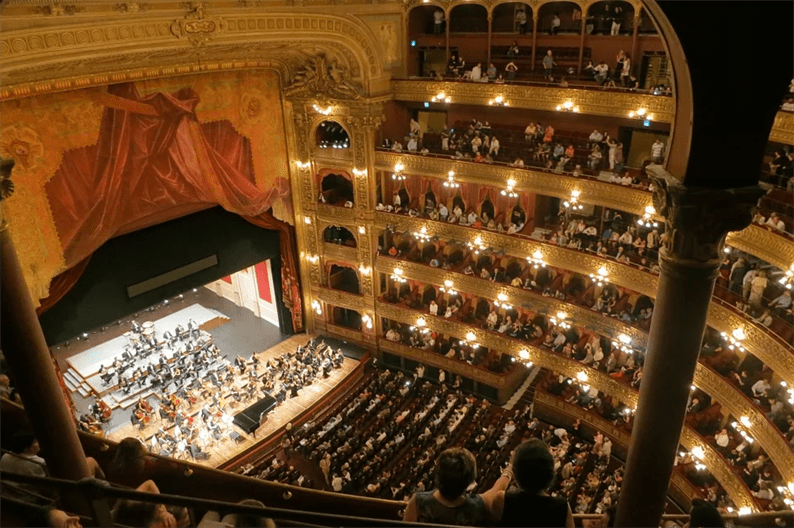
An orchestra is in front of you at a symphony concert. Pay attention to who is playing and how. You may be carried away by a performer even by the way he makes sounds from his instrument, how his body moves. Pay attention to the form of the pieces. Here the theme sounded, its development began, and the theme returned, but in a different quality, sound, in new timbres. You can follow all this and, at the same time, ask yourself the question, why these changes? At concerts of a symphony orchestra, or concerts with a soloist, I would advise you to take tickets closer to the stage – look at the musicians! Watch the soloist, his hands, as he makes sounds from the instrument. It helps and enthralls.
Ludwig van Beethoven. Symphony No. 5
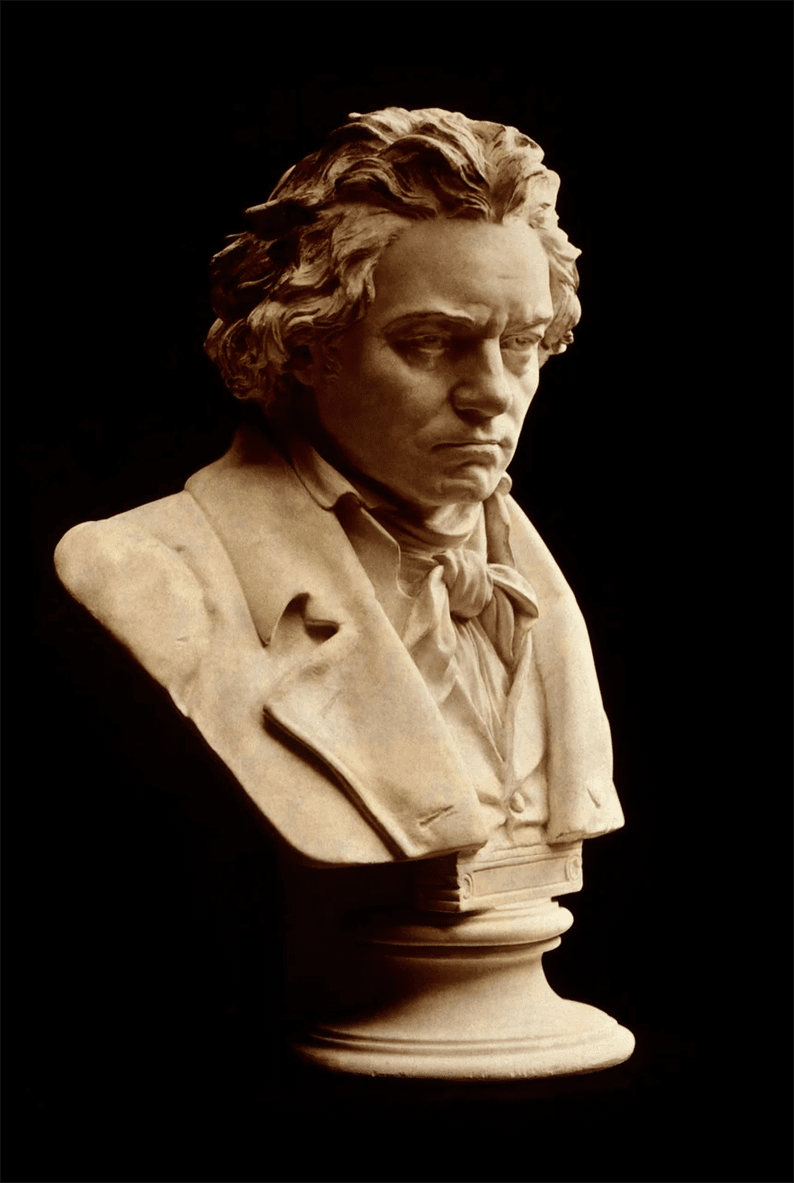
The symphony is the pinnacle of thinking of classical composers. This is a monumental genre, within the framework of which its own laws operate and their own metamorphoses take place. Learning to understand a symphony means learning to understand everything.
It is very difficult to find a symphony that would suit these purposes better than Beethoven's Fifth Symphony. First of all, because her main motive is known to absolutely everyone. The symphony begins with him, he also goes through the entire composition, acquiring musical timbres, contexts and meanings, which allows even a novice music lover to feel the joy of recognizing the theme.
Beethoven himself described the motive with the phrase “This is how fate knocks at the door.” It is known that he wrote this particular symphony longer than his other works: it did not let the composer go for three years. During this period, Beethoven was especially worried about a progressive serious illness – deafness. But, as he himself wrote to a friend: “I want to grab fate by the throat. She will not be able to completely break me. Oh, how wonderful it is to live a thousand lives! ” All this – ominous rock, drama from the realization of misfortune and the heroic decision not to give up – was embodied in this music.
Antonio Vivaldi. Summer thunderstorm
As one of the first works, we suggest paying attention to the 17th century composer Antonio Vivaldi and his enchanting work for the symphony orchestra “Summer Thunderstorm” (or “Storm”) (from the cycle of concerts “The Seasons”).
If you want to recharge with energy – this work is for you!
– The
concert begins with distant peals of thunder … Then the sounds of rain are heard, which either dies down, then continues with renewed vigor. Due to the many times repeated musical passages, a realistic feeling of meeting with the weather element is created.
The concept of classical music: imagery and abstractness
How to learn to understand classical music, understand it and love it? Classical composers created music under the impression of any images, plots, philosophical research and life impressions. In some works, even a beginner will hear the phenomena of nature: the sound of the surf, the cry of seagulls, a thunderstorm, or even social portraits: the organ-grinder's song, the knight's serenade, or even the troop's pace. The famous cycle of Saint-Saens “Carnival of Animals” also belongs to musical works about nature.
Listen to the classics in a peppy state
Tired at work? Save the classics for later. It requires a clear head. If you are overworked, then most likely classical music will have a sleeping pill effect on you and you will come to the conclusion that it is boring music.
Classicism
Our everything. Three whales of classical music – Haydn, Mozart, Beethoven. By the way, it is with classicism that I would recommend starting your acquaintance with classical music. Here there is a distinct drama, there is a struggle, there is overcoming death. The main theme of classicism, I would call the praise of man. Man is equal to God here. He is able to defeat rock. He is able to climb Olympus … And where there is no struggle, there is a sincere joy of life.
Frederic Chopin. Waltzes, nocturnes, etudes and other miniatures
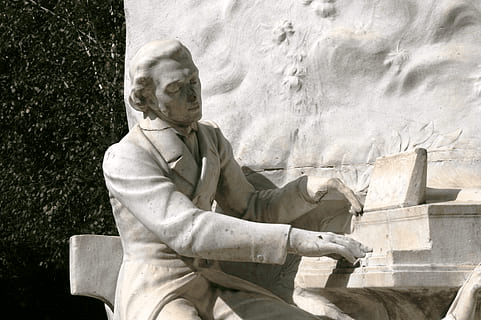
As any music lover will tell you, there is never too much Chopin. And you can listen to it from any piano miniature, be it the famous Waltz in C sharp minor, Barcarolle or Scherzo. The only advice is that at first it is better to avoid piano sonatas and start with small pieces (by the way, “that very” funeral march is just the third movement of the second sonata of the composer).
Chopin is interesting not only to listen, but also to watch: as a rule, the performance of his compositions requires a very definite, high level of skill from the pianist.
Combat prejudice
There is a general opinion: the classics are boring. This is mistake. Classical music is much more interesting than any other, if only because this term covers a gigantic period of several centuries. In each of the centuries, a huge number of directions appeared in which composers worked. Moreover, in the work of each had their own periods and stages, sometimes radically different from each other, like the “pink” and Cubist periods in Picasso. In fact, this is a bottomless ocean of amazing music and stories associated with it. Try to understand the chronology, take something understandable as a constant, for example, the music of Bach or Mozart, and go through the baroque, romanticism and avant-garde to minimalism and new simplicity, or vice versa.
Listen to pauses
The pauses in the classics are God (or the devil), so the disclosure of a piece of music occurs when you try, so to speak, to listen “deeply”, and not to catch a superficial melody. Try it, for sure the music will sound differently.
Romanticism
In my opinion, the highest point of musical development. The peculiarity of this trend is that music has gone into the psychological component and began to explore the human soul. The music is dramatically complex here. Romanticism is large-scale, it is replete with various conflicts, as a rule, it is a struggle with inner demons. Man's struggle with himself is the main theme of this era. And it was during this period that the genre of opera became the most interesting. I advise mature people who have some kind of life experience to start their acquaintance with romanticism. I think that children, due to their age, will not understand much, since they have not yet had time to face the ups and downs of life.
Sergei Sergeevich Prokofiev. Suites from the music of the ballet “Romeo and Juliet”
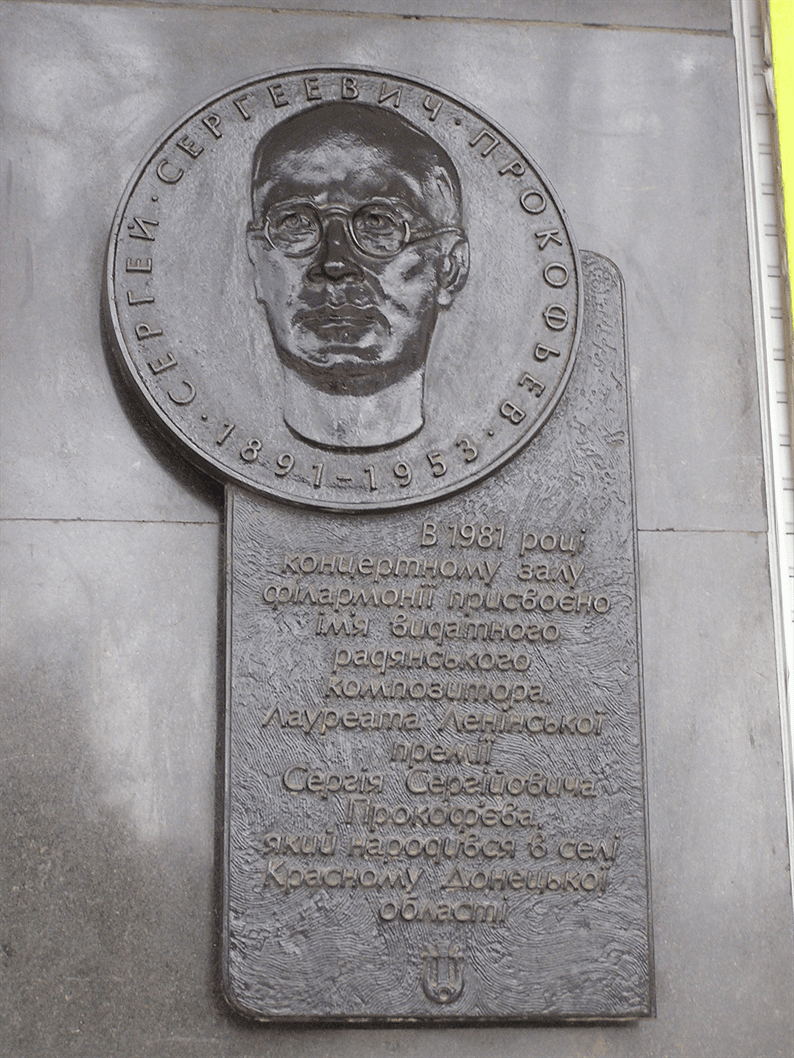
It is believed that starting listening to classical music with the works of Sergei Prokofiev is not a good idea, but the suites from Romeo and Juliet prove the opposite in the best way. First of all, because the most famous play, “The Montagues and the Capulet” (in the ballet it is called “Dance of the Knights”), you have definitely heard. The rest of the plays in the suites are no worse: you should definitely pay attention to the mischievous “Juliet the Girl”, the lyrical “Romeo and Juliet Before Parting” and the tragic “Mercutio”. Of all Russian composers performed abroad, it is Prokofiev who is among the leaders.
And do not be embarrassed that ballet music sounds without dance: by the way, the premiere of the work could not take place for a long time, also because the then unusual musical language of Prokofiev terrified the ballet dancers.
Do not switch / do not turn off
It often happens that a piece is revealed only at the climax, and with the sound of the last chords, the essence becomes clear. It's like in a movie, when the ending makes the whole movie. This happens quite often in music. The classics did not have a goal to catch you from the first notes, the main plot is there. Yes, there is a plot and drama in music.
Johann Strauss the son. Polka “On the hunt”
The son of Johann Strauss continued his father's musical traditions and, although Johann Strauss the son went down in music history as the “king of waltzes”, he also wrote other music: operettas, marches, polkas. One of his most famous plays is “The Polka” On the Hunt.
–
Polka is a fun fiery dance that appeared in the Czech Republic in the middle of the 19th century and subsequently spread as a ballroom dance. The music is cheerful, joyful, temperamental, delights with its lightness and optimism.
And don't look for what isn't
Try to listen to music as it is, not hoping to hear what you want in it. Try to sometimes react to it not emotionally, but using the terms you have learned. This will allow you to evaluate and compare works of different styles, cultures and eras.
Example
It is difficult to listen objectively to Lou Reed's experimental composition Metal Machine Music. An excellent exercise for training an unbiased perception of music.
It is worth hearing live for the first time
For example, after the festival, at least some of the 5,000 people will decide to go to the Philharmonic. And once you find yourself there and hear a good performance, you will not leave indifferent. There directly, without intermediaries, they talk to the soul. Mozart or Bach is the atmosphere in which you immerse yourself. Even the most invincible person will not leave without emotion.
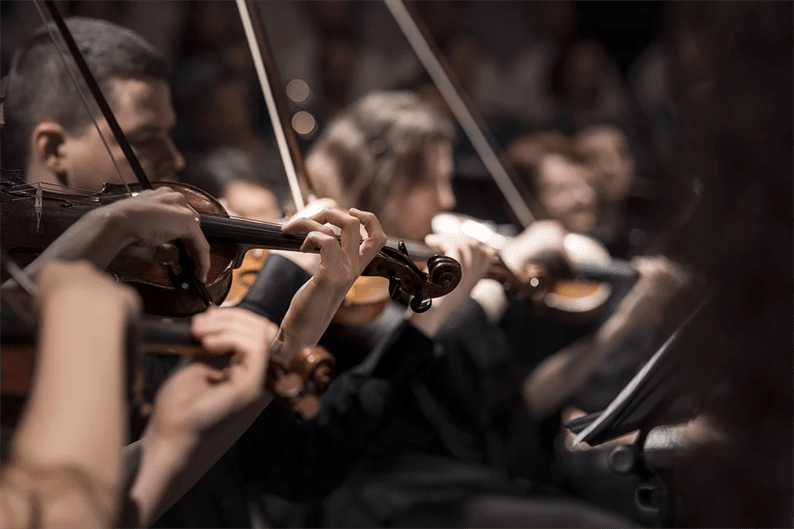
An attempt to classify academic genres according to the complexity of perception
For the overwhelming majority of people with whom I spoke, there were several gradations of difficulty in academic genres, chamber works were most easily perceived (short compositions for chamber ensembles – quintets, quartets, etc., works for solo and pair performance). This is not surprising due to the small number of tools, and, often, the relatively uncomplicated structure.
There are exceptions to this rule, such as works by Rachmaninoff and complex polyphonic compositions by Mozart for two pianos. In these cases, like a number of others, the limited chamber possibilities do not make the work easier.
Opera pieces are considered more difficult to understand. Due to the fact that opera is a combined form of musical and theatrical art, where actors “play” roles mainly with their voices, a lot of experience is required to understand the subtleties of a work and evaluate the quality of performance.
Organ music is called even harder to understand for not too experienced listeners. Evaluation of the quality of works, and the very addiction to fugues, tokatas, passacals and organ preludes, rarely appears at the beginning of the hobby for the classics. A keen interest in an organ can be called a sign of an emerging taste. Neophytes in the classics are very rare at organ concerts, there are more experienced listeners, which partly confirms the complexity of such works for the overwhelming majority.
The most difficult works are considered to be symphonic classics and polyphonic choral compositions. One can argue about the latter, but if we accept the axiom that the human voice is the most complex of musical instruments, then the logic of this approach becomes clear.
Such a classification in terms of complexity is imperfect and does not take into account a number of significant exceptions, but, in my opinion, in general, reflects reality. So a chamber work is comparable in complexity to some rock ballad with the only difference that the first, as a rule, is somewhat more last
Inquire about the personal lives of composers
Yes, you say that it is completely unimportant, but remembering Uncle Freud, we learn about such a term as sublimation. Indeed, would we have had the “Moonlight” sonata today in the form we know, if not for Beethoven's unhappy love for his student? I think no. And Tchaikovsky's mental anguish gave the world some of the most beautiful symphonies (Fifth and Sixth). More often than not, the more difficult the composer's life, the deeper his revelations. Therefore, even a superficial knowledge of the composer's biography is an additional cheat sheet to understanding his works.
Method: Clarifying
It is important to understand that you are already surrounded by the classics, it remains only to recognize it. You are already familiar with so many classics, you just do not know what they are called. There are melodies that we constantly hear in movies, advertisements, TV screensavers and calls on other people's phones. For example, you have heard many times the frightening cantata by Karl Orff, the mesmerizing “” from the opera “Lakme” by Leo Delibes, the aria from the opera “Turandot” by Puccini, the suite “” from “Peer Gynt” by Grieg. The method is that when you hear a familiar melody in a movie again, you just have to find its name on the Internet and then listen to it in full.
You can listen at home, but with the appropriate surroundings
In a special homely atmosphere, in the evening, with a glass of good wine and delicious snacks, in peace. It is even better if you listen without an established background, with a clean slate. Believe me, the effect will be colossal.

Musical temperaments
For choleric people, “Obsession” by S. Prokofiev is ideal, but it is still worth starting with Mozart and only with him.
Phlegmatic people will appreciate Debussy., For example.
The melancholic Chopin will sink into the soul.
Sanguine people will love anything.
The main thing is the quality of execution
Music will make you feel, but only if it is played by an intelligent professional. You can stumble upon nonsense, turn it off and decide that all music is like that. But this is not at all the case if you listen to Karajan, for example, musicians from the Berlin Philharmonic, the London Symphony Orchestra.
Music for subcultures
Metalists, punks and those who love Scorpions, Sting and Metallica can include Shostakovich. Isn't it the rock of his symphony? By the way, Beethoven will do too – he has some driving things.
Hipster fashionistas need a session, an event more, therefore, the main thing is the entourage and quality of performance. A big party is planned at the opening of the Bashmet festival. There will be a classic, but along with it, and something atmospheric, interesting.
I recommend Scriabin to goths and comrades with a specific attitude to life. This is sad, and the worldview in the topic: the composer wanted to compose a mystery, perform it with the whole world, and immediately afterwards meet the end of the world together.
Don't listen to snippets of popular classics
Yes, now there are all sorts of TOPs of classic tunes. They are harmful, as they make from classical music just a set of hits that are perceived by a person like any other music pleasing to the ear. Fragments of popular classics will not make you reflect, and they certainly will never reveal to you the true beauty of musical art. Don't forget that these are just melodies taken out of context. The closest analogue is popular quotes from books. We don't equate reading quotes with reading books. Don't do this with music either.
Method: theoretical
If you want to approach the study of the classics thoroughly, starting from the basics, you can first listen to several theoretical courses and read a couple of specialized books. Most often, beginners are advised the basic course How to Listen to and Understand Great Music and its Great Masters course, in which each lecture is dedicated to one of the famous composers. If you don't like Greenberg's manner of presentation, you can listen to the introductory course Listening to Music by Professor Craig Wright, who cheerfully and clearly explains the structure of classical works. Benjamin Zander gave a wonderful 20-minute lecture on how to love the classics at TED.
There are not so many understandable and interesting books about classical music in Russian. You can read Stephen Fry's An Incomplete and Ultimate History of Classical Music, Darren Henley's A Brief History of Music, and violinist Daniel Hope's simple When You Can Applaud. In the series “ZhZL” you can find biographies of many composers, for example, a very successful book about Tchaikovsky was published several years ago. Perhaps, for a start, reading the biography of Liszt or Chopin will be more interesting than reading about Bach, whose life was not so rich in vivid events and love dramas.
Why do I need it?
With music, you bring intelligence, beauty, harmony, genuine feelings into your life. Even listening to the classics in the background changes us. And if you study music, then it affects even more. Classical music develops memory, the performer thinks spatially, hitting the right keys, manipulating abstract sound figures. Many prominent scientists studied music: Albert Einstein played the violin. He even wrote in one of his letters that if it were not for Bach's fugues, he would never have come to a formula expressing the equivalence of mass and energy.
Classical music, like classical art in general, is elitist. It has been and always will be. You will never attract 100 percent of the population to it. And, in my opinion, this is not necessary. I could be wrong, but somewhere I came across a figure that only four percent of people are fond of classical music. Therefore, decide if this is interesting for you.
You need to start with desire. In any case, so. You want to learn how to bake pancakes, for example. They can tell you a hundred times how to bake them, show the process itself, but until you dilute the dough yourself, pour it into the pan, you cannot turn the pancake – you will not learn.
What kind of music will help you work?
None. It's better to work in silence.
Relaxation requires something fun, relaxing. However, there is one point: any music makes you think, and while resting, you want not to. In this case, you can listen to Schubert – he is very bright and cheerful. Or Strauss waltzes.
It's great to listen to Beethoven in the car, all his symphonies are driving and energetic. In addition, on a long journey to such music, you definitely will not fall asleep. In general, on the way, it is better to listen to what is heard well – take care of the acoustics in the car. I can also recommend Tchaikovsky. But all – only with high-quality sound. Mozart is suitable
for raising the mood. Major piano concertos – the very same, for example, the ninth. When you just remember him, you involuntarily smile.
Franz Schubert. Ave Maria
In outstanding classical music, there are also many instrumental and vocal works, often inspired by religious themes. One of the examples of such music is the immortal Ave Maria by Franz Schubert.
–
“Ave Maria” (from Lat. “Hail Mary”) – one of the main prayers of the Catholic Church, addressed to the Mother of God. Listening to this melody as if you are touching something sublime, divine. And the light joy that sounds in the music of this song evokes a feeling of calmness and pacification.
Music is the same as literature, painting, architecture.
Yes, the development of musical art is similar to literary and pictorial trends. By studying history or art in parallel, you will better understand classical music as well. That is why it is believed that educated people listen to classical music, since the desire to understand it requires a person to study many areas of human life.
Modernism
This direction will definitely scare off most of the novice listeners of the classics. It’s probably better not to start with him. Although, on the other hand, listeners of avant-garde musical movements can appreciate this very direction. Here composers tried to extract a new sound and shock the audience with their ideas. Modernism is an endless search. On the other hand, modernist music is the sound of the 20th century. Look back at history and you will understand everything.
Modest Petrovich Mussorgsky. Pictures at an Exhibition

Theater of one actor – this is how this piano cycle of Modest Mussorgsky can be characterized. The history of the creation of “Pictures” goes back to the tragic events in the life of the composer: illnesses and long departures of friends. One of the strongest blows for Mussorgsky was the sudden death of the artist Viktor Hartmann. A year after his death, an exhibition of his paintings and handicrafts was organized, which made a strong impression on the composer. In “Pictures” he captured the strange “Gnome” (in fact, it was a nutcracker), and “Babu Yaga” (and this is a clock in the form of a hut on chicken legs), and “The Old Castle”, and “Ballet unhatched chicks “, and our own walks around the exposition. And if you try, you can hear how Baba Yaga on a broomstick at full speed crashes into the “Heroic Gate”.
Go to live shows
But only for good live performances. The problem with classical music as a whole is not that its authors have long been dead, but that its performers are dead, or rather, their approach to performing. This is a very difficult task for a conductor: to find something new in the score, to make the musicians fight for the idea, to give themselves completely during the performance, and there are not very many such orchestras. Read the reviews, ask who is in charge of the team. An inexperienced listener can easily run into the deathly boredom and frustration of mediocre performance.
Get to know the structure of the orchestra
It's a whole world. Everything is interesting: the seating, the design of the instruments, their role in the orchestra, the musicians themselves. This is most likely a professional deformation, but I really enjoy watching a single part or a group of instruments in a piece (I advise you to try it). In addition, the tool really leaves an indelible mark on a person. It literally affects the psyche and physiology of musicians, so one can unmistakably distinguish a violinist from a cellist, and a flutist from a trumpeter. Watch Fellini's Orchestra Rehearsal. If many things seem grotesque to you, believe me, life can be much worse.
Express method
The Guardian's music critic Tom Servispo once compiled a weekly guide to classical music at the request of BBC Radio DJ. For the music to work, the Service asked the listeners to “go on a classic diet,” that is, for five days, do not listen to any other compositions except those proposed by them. Below is the schedule drawn up by the Service. Three pieces per day always represent three different musical eras.
First day:
Gioacchini Rossini – “Wilhelm Tel”
JS Bach – “Goldberg Variations”
John Adams – “A Brief Ride in a Fast Car”
Second day:
Franz Schubert – String Quintet in B, Adagio
Bedrich Smetana – “Vltava”
Steve Reich – “Music for 18 Performers”
The third day:
Giuseppe Verdi – Dies Irae from Requiem
Igor Stravinsky – Firebird
Karlheinz Stockhausen – Gesang der Junglinge
Fourth day:
Maurice Ravel – Bolero
Gustav Mahler – Symphony No. 2
Gyorde Ligeti – Requiem
The fifth day:
Eduard Elgar – Enigma Variations
Ludwig van Beethoven – Symphony No. 9
Krzysztof Penderecki – Lament for the Victims of Hiroshima
Sources used and useful links on the topic: https://zen.yandex.com/media/classicmusic/kak-ponimat-klassicheskuiu-muzyku-5c9d1b2237f4f400b3772135 http://nperov.ru/raznoe/kak-razvit-muzykalnyj-vkus-i -kak-pravilno-slushat-muzyku / https://fonar.tv/article/2020/02/20/kak-polyubit-klassicheskuyu-muzyku-sovety-muzykoveda-natali-giryavenko https://music-education.ru/ -nauchitsya-kak ponimat-klassicheskuyu-muzyku-odno-interesnoe-mnenie / https://www.culture.ru/materials/141093/s-chego-nachat-slushat-klassicheskuyu-muzyku-chtoby-nauchitsya-ee-ponimat https: //www.gq.ru/entertainment/5-sovetov-kak-ponimat-klassicheskuyu-muzyku https://zen.yandex.ru/media/classicmusic/kak-ponimat-klassicheskuiu-muzyku-5c9d1b2237f4f400b3772135 https://www.gq.ru/entertainment/kak-nauchitsya-slushat-muzyku https://www.the-village.ru/village/weekend/weekend-guide/164217-kak-nachat-razbiratsya-v-klassicheskoy-muzyke https://classicalmusic.by/classicalmusic_top20/ https://zen.yandex.ru/media/classicmusic/kak-slushat-klassicheskuiu-muzyku-5c1147fec507d300af25df66 https://zen.yandex.ru/media/classicmusic/s-chego-nachinat-slushat-klassiku-5cf80a3adbeaba00b08b29b8 https://mag.relax.by/city/topic/10411573-lajfkhak-kak-nauchitysya-ponimaty-klassicheskuju-muzyku-i-chto-slushaty-jesli-vy-khipster-ili-got-sovety-pianista/ https://habr.com/ru/company/pult/blog/412503/
Post source: lastici.ru