
How to eat vegetables correctly (and why). Are fruits really good for you? And how many of them can you eat?
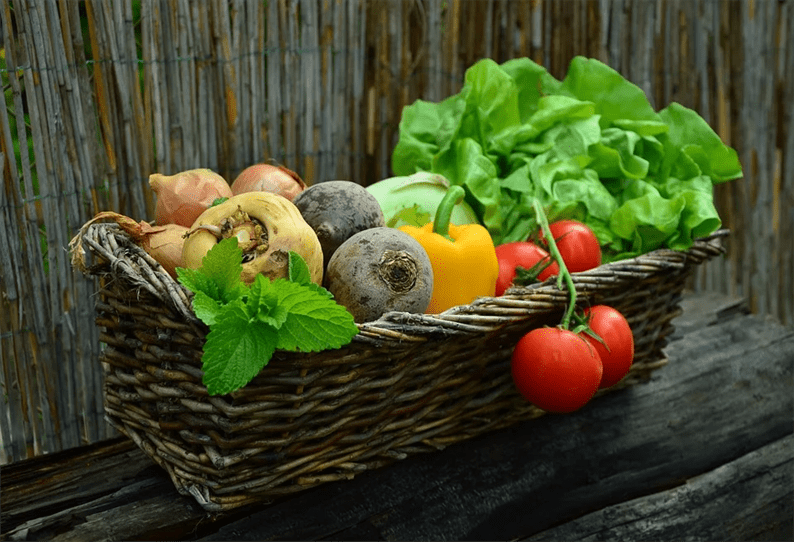
The history of fruitarianism
This movement first appeared in America in the 80s of the twentieth century. And in Russia, the first adherents appeared in 2010. The main difference between our Fructorians is their strict adherence to separate nutrition. If Americans and Europeans shamelessly mix different juices, make salads and smoothies from different fruits, then Russian fruitorians strictly adhere to the rule: one meal – one fruit.
General principles of fruit nutrition
Clean food – this is what the Fructorians call their way of life. Moderate supporters of this trend allow the addition of seeds, nuts and greens to the diet, more strict ones – they eat only fruits and make no exceptions.
Proponents of a smooth transition believe that the body must first be trained before switching to full fruitorianism. Indeed, in some cases, a sharp transition is fraught with hormonal disruption, problems with the gastrointestinal tract and nervous stress. Fruitarianism is contraindicated for people with an increased level of acidity of gastric juice!
A smooth transition to fruitorianism
• Become familiar with the principles of vegetarianism, raw food and fruitarianism
• Switch from fried foods to boiled foods
• Eliminate animal protein (including milk and eggs) and include beans and nuts in the diet
• Refusal from any processing of fruits and vegetables, a complete raw food diet
• Transition to true fruit-eating
Between these stages of the transition, it is advisable to arrange hunger days to facilitate the process. In addition to the fact that with such a transition, the body is given enough time to self-purify and adapt to a new type of nutrition, during this period it is possible to decide whether it is worth switching to this strict lifestyle, because fruitorianism is first of all a philosophy, and not just eating fruits.
A small study even tested this theory by forcing participants to consume a whopping 20 servings a day!
Despite the high fructose content of this diet, no adverse effects on subjects' body weight, blood pressure, insulin levels, or lipid levels were observed. So who's right?
Once again about fructose
Fructose has a bad reputation among many healthy lifestyle activists, and for good reason. Industrial fructose (i.e. corn syrup made from cornstarch and sucrose) affects serum lipid composition, in particular triglyceride levels, leading to metabolic syndrome and heart disease, liver problems, oxidative stress to the brain, and even dementia.
However, several authoritative studies published over the past two years show that fructose in fruits does NOT have the same deleterious effects on the liver or metabolism as industrial fructose, and does not contribute to the onset of hypertension.
Do you get fat from fruits?
As tasty as grapes, pineapple, kiwi, cherries, mangoes and bananas are, they are high in calories. As it turned out above, there will be no harm to health from them, but extra pounds will be added. The best choice is fruits with a low glycemic index and a lot of fiber: apples, pears, plums, apricots, peaches, grapefruits. And, of course, berries. This is the quintessence of healthy food: they are low in sugar, many useful substances.
Avoid fruity imposters
Fruit juices, jams, jellies and other “fruit” products from the supermarket are at least useless from a health point of view, if not harmful. Fruit processing loses valuable nutrients and fiber, and adds a lot of sugar. These are real sugar bombs flying to strike at your health!
Banana
Nutritional value per 100 grams:
Protein: 1.09 gr.
Fat: 0.33 gr.
Carbohydrates: 22.84 gr.
Caloric content: 354 kcal.
One banana contains 12 grams of sugar, which is quite a lot. At the same time, the fruit still has many beneficial properties. The presence of potassium is especially highlighted, the main function of which is to maintain the health of the kidneys and heart. The magnesium contained in banana also has a beneficial effect on the circulatory system.
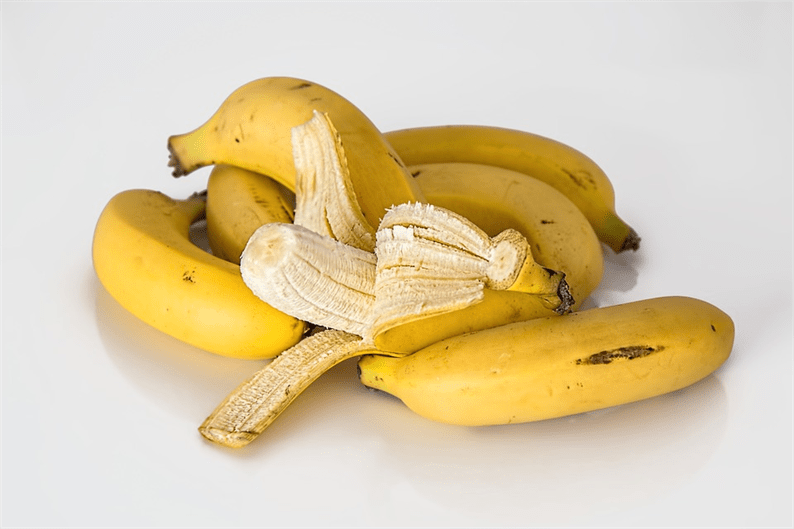
Why do athletes eat bananas and are they so useful? Nutritionist answers
These berries are not suitable for everyone. And yes, we didn't make a reservation.
Peaches
Nutritional value per 100 grams:
Protein: 0.91 gr.
Fat: 0.25 gr.
Carbohydrates: 9.54 gr.
Caloric content: 39 kcal.
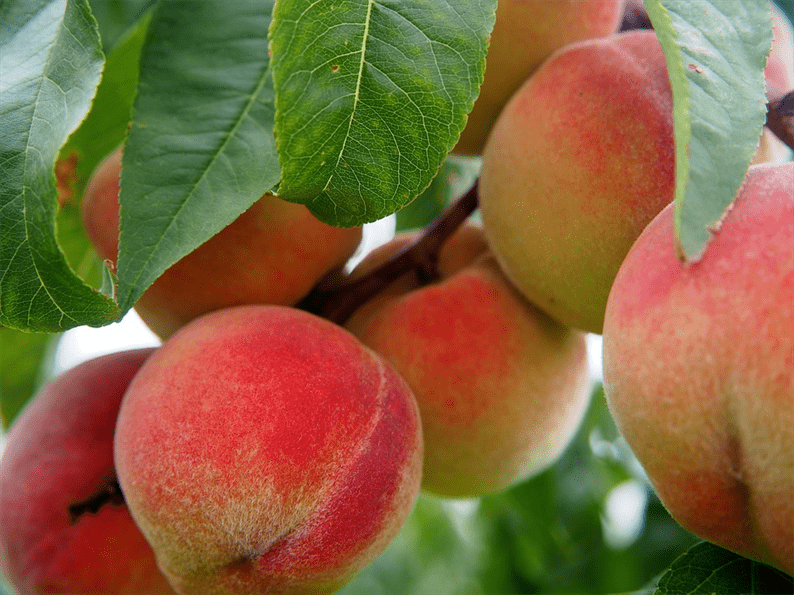 Favorite peaches contain 13 grams of sugar. Like banana, peach is rich in potassium. So, 100 grams of fruit contains about 15% of the daily value for a person.
Mango
Nutritional value per 100 grams:
Protein: 0.82 gr.
Fat: 0.38 gr.
Carbohydrates: 14.98 gr.
Caloric content: 60 kcal.
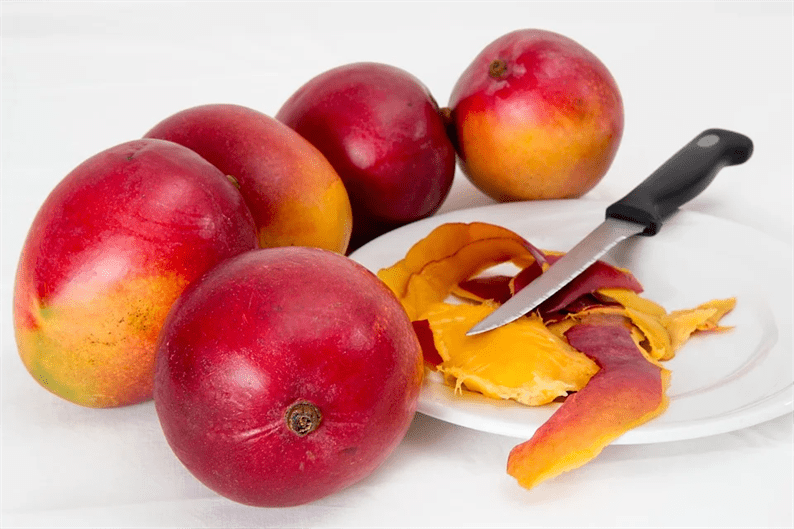 The exotic fruit also makes the list of sweet record holders. 100 grams of mango contains about 13.7 grams of sugar. The fruit has antipyretic properties and improves the functioning of the cardiovascular system. In addition, mango is an ideal antidepressant: it is recommended for stress and to relieve stress.
Lychee
Nutritional value per 100 grams:
Protein: 0.83 gr.
Fat: 0.44 gr.
Carbohydrates: 15.3 gr.
Caloric content: 66 kcal.
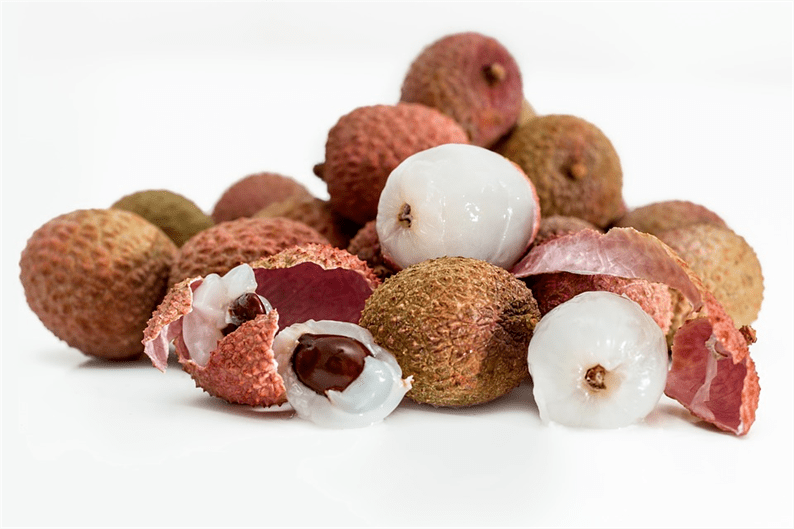 Another exotic fruit on the list comes from China. Depending on the specific variety, the sugar content in the fruit varies. As a rule, in one cup of lychee (100 grams), the amount of sugar does not exceed 15 grams. Excessive consumption of the fruit can trigger allergies. Adults are not recommended to eat more than 10 fruits a day, children – more than five.
Fig
Nutritional value per 100 grams:
Protein: 0.65 gr.
Fat: 0.30 gr.
Carbohydrates: 19.18 gr.
Caloric content: 74 kcal.
 One cup of fresh figs (about 100 grams) contains about 16 grams of sugar. However, this does not detract from the beneficial properties of the fruit. Its fruits, for example, are rich in calcium and phosphorus. Doctors say that eating two berries a day can speed up the process of bone repair after a fracture.

The main male hormone. What to eat to boost testosterone levels
Products that will not only increase attractiveness, but also help in sports and everyday life.
Grapes
Nutritional value per 100 grams:
Protein: 0.81 gr.
Fat: 0.47 gr.
Carbohydrates: 13.93 gr.
Caloric content: 57 kcal.
 Regardless of the variety and color, 100 grams of grapes contains approximately 16 grams of sugar. It is not particularly rich in proteins and coarse fibers, but it boasts an increased amount of carbohydrates. Also, grapes are able to increase nitric oxide in the blood. This, in turn, thins the blood and prevents blood clots.
Development of a diet
When developing a diet, I did not consult with anyone, I always listen only to my body. It has never let me down. We live in complete harmony with him, I always talk to him, listen to him and hear. I do not have a specific diet, I always eat seasonal vegetables and fruits. What is growing now, I consider optimal for nutrition.
Prana is life energy. I starve 36 hours once a week, that is, I do not drink water for 36 hours, I do not eat anything, I eat only energy, that is, prana. I spend 52 days a year on prana both for physical cleansing, that is, for cleansing the body, as well as for cleansing consciousness, cleansing energy channels. On dry I starve once a week. I have had long periods of fasting, about a week each, on plain and coconut water. I also do juice detox periodically. All this gives me health, a feeling of lightness and cleansing. After every fast, I feel just fine. My body has adapted to the days on prana, it is very happy when the fasting day comes.
I love almost all the fruits I've tried. Fruit is my favorite food, and some of the most any – bananas, pineapples, mangoes. I've always liked fruits, which is probably why I came to fruitarianism. The appearance of my figure, the condition of my skin and hair has not changed much, since I recently eat this way. When I switched from a vegan diet to a raw food diet, I noticed a significant improvement, because these types of food are different. I think that the transition from a raw food diet to fruitarianism will not bring any global changes, since they are similar.
Self-awareness, it seems to me, depends not only on nutrition. Nutrition is one of the components of a whole complex that shapes your sense of self, so I cannot say that mine has somehow changed. I clean myself regularly. Once a week I starve for dry food, spend lengthy detox sessions on water, juices, coconut water. I also cleanse myself of parasites, for example, triad. I clean the liver with olive oil, apple and lemon juices to get rid of stones. I drink apple cider vinegar every morning to cleanse and drink green juices all the time.
I do not practice informational detox, because I do not have pages on Facebook and VKontakte, because I do not need it. Yes, I have Instagram and YouTube, but they are created so that I can share information and my knowledge with people.
I have always loved sports and have been actively involved in it. Now I try to spend every day as actively as possible. And, of course, I run every day. I meditate every day, I always devote time to it. Recently I went to Vipassana for ten days. I also like very much such types of yoga as bikram and kundalini. All my life I try to travel as much and often as possible. As soon as I have the opportunity, I immediately go somewhere. In other countries, it is not at all difficult for me to adhere to fruitarianism, since no matter where I come, there is fruit.
Fruits are rich in many nutrients
The presence and amount of nutrients in fruits varies significantly for different types, but all fruits, without exception, contain one or another amount of nutrients.
For starters, fruits are rich in vitamins and minerals, including vitamin C, potassium, and folate, which many people are deficient in.
Fruits also contain a lot of dietary fiber, which also has many beneficial effects.
Eating enough fiber can lower cholesterol, speed up and prolong satiety, and thus help you lose weight.
In addition, fruits contain antioxidants that help fight free radicals. Free radicals can damage cells in the body. Maintaining a diet rich in antioxidants helps fight age-related changes and reduces the risk of many diseases.
Since different types of fruit contain different amounts of vitamins, minerals, and antioxidants, it is important to eat a variety of fruits to maximize your health benefits.
Fruits May Help Fight Overweight
Fruits are high in nutrients and low in calories, making them an ideal choice for those struggling with excess weight.
What's more, fruits are high in water and fiber to help you feel full.
Therefore, you can eat as much fruit as you like without exceeding your calorie intake.
Many studies confirm that eating fruit is associated with lower calorie intake and may contribute to weight loss over time.
Apples and citrus fruits such as oranges and grapefruits are the most satiated.
It should also be noted that raw fruits that have not been processed or cooked are better than other options or fruit juices that you can eat or drink without feeling full.
Studies have shown that eating a lot of fruit nipples is associated with high calorie intake and may increase the risk of obesity and serious illness.
In other words, avoid fruit juices and choose whole fruits.
Can You Eat Too Much Fruit?
It is well known that fruits are good for you, but would eating “too many” fruits be harmful?
First, when you eat whole fruits, it can be difficult to eat too much of them. This is because fruits are high in water and fiber, which provides a feeling of fullness. Therefore, sometimes you can feel full even after consuming a fairly small amount.
Thus, eating a lot of fruit every day is difficult enough. The fact is that only 1 in 10 Americans consume fruits that meet the minimum daily dietary requirement.
Even though it is very difficult to eat too much fruit, there are several studies that have analyzed the effects of eating 20 servings a day.
In one such study, 10 people ate 20 servings of fruit per day for 4 weeks and did not develop any complications.
In a slightly larger study, 17 people ate 20 servings of fruit every day for several months without side effects.
Researchers have even found some beneficial effects. Despite the small amount of research cited, there is reason to believe that fruits are safe to consume in any amount.
At the end of the day, if you eat fruit before you feel full, it is very difficult to eat too much of it.
However, it is worth remembering that fruit is best consumed as part of a balanced diet that contains a variety of nutritious foods.
Sources used and useful links on the topic: https://zhenskoe-mnenie.ru/themes/diets/chto-takoe-fruktorianstvo-is-chem-ego-ediat-kak-pravilno-pitatsia-fruktami-i-stoit-li- eto-delat-vse-o-polze-i-vrede-plodoedeniia-i-primernyi-ratsion-fruktoeda / https://Sportchic.ru/life-style/polezny-li-frukty-na-samom-dele-i- skolko-ih-mozhno-est / https://www.championat.com/lifestyle/article-4095347-pochemu-nelzja-est-slishkom-mnogo-fruktov-rekordsmeny-po-soderzhaniju-sahara.html https: // woman .rambler.ru / health / 39330198-lichnaya-istoriya-kak-ya-nachala-est-tolko-frukty / https://ZdravPit.com/pitanie/skolko-fruktov-neobhodimo-est-kazhdyj-den.html
Post source: lastici.ru