
What is the specificity of reportage shooting? Let’s figure it out together. A story in detail: How to photograph a reportage
Another language
The word “reportage”, like many others, came to us from European languages. The French verb reporter had an everyday meaning – “transfer”, “move”, and the English report translated means “report”, “report” or “message”. It turns out that a journalist or reporter also moves news and events from reality to another plane, and a photographic reportage is a kind of message, a message to the viewer, mainly to the reader of a newspaper or magazine, but not with the help of words and sentences, but with the help of visual images. Simply put, a photo essay is a story about life in pictures, photographs, because it is always “better to see once”.
The photographic language is universal, because it does not need words, and if the reporters' photographs are professional and talented, then the essence of what is happening is clear to viewers regardless of their nationality and country of residence. You can look at photographs taken elsewhere on the planet, or leaf through an illustrated magazine without knowing the language and not understanding the text, but nevertheless, looking at the pictures, you will be able to grasp the meaning of what is happening.
The photographic language is emotional, because it can not only convey with great force feelings, moods, experiences, but also evoke in the soul of the beholder his empathy, ideas and associations. By virtue of their documentary nature, reportage photographs can make a person believe that he, too, was there, on the spot, and survived the event together with its participants.
The photographic language is expressive, because in its best examples, reportage photography not only records and shows life without embellishment, but creates its own artistic image, which in the future can live completely independently.
Of course, in order for a photo reportage to turn into a self-sufficient work, it is necessary that the event or theme itself be photogenic, so that the photojournalist thinks when he was shooting and knows what he wants to say by that. So that the editor-in-chief of a newspaper, magazine or an exhibition organizer selects and puts pictures in accordance with the logic of the event, and the photo printing or printing is of high quality. Only under these necessary conditions can a reportage take place as a fictional story. But all this applies to professional reporting, but what about amateurs?
Like any language, photographic reportage needs to be learned, only at first glance everything seems simple and clear. What's the reportage? I took the camera, came, saw, pressed the button several times, took it off – and that's it, the masterpieces are ready. Unfortunately, such a naive notion of reporting photography is widespread in our time and is characteristic not only of ordinary people, but even of those who have to deal with reportage photography by virtue of their profession.
Any language uses words, phrases, sentences. For a photographer-reporter, visual material is people and living reality, which he sees through the viewfinder, and can transfer it to a photograph only with the help of forms, lines, chiaroscuro, color and other visual means. No other is given. He can take one, or a series of photographs, or track his characters over a long period of time, but perhaps the most important point is to be in the right place at the right time.
From the history of photo essay
The meaning of the word “reportage” itself is ambiguous: on the one hand, we call reportage a method, a method of documentary shooting. On the other hand, photo reportage is also a genre of photojournalism, a story about a real, non-fictional event with the help of photographs. There is nothing contradictory in this duality, the reportage as a photo series is filmed, as a rule, by the reportage method. It is assumed that the photographer, the reporter takes pictures of life “as it is”, without interfering and without embellishing it. However, not all so simple.
From its very first steps, reportage photography was not an ordinary fixation of reality of the “everything as it is” type. Bulky equipment and low sensitivity of photographic plates did not allow shooting life on the go, and photographers-reporters constantly used staged shooting methods. Look at the photographs of the early twentieth century, where you rarely see a simple daily life, mostly staged, group portraits, ethnographic scenes, and a little less often historical events. Photography itself at that time was rather an exceptional phenomenon than an everyday and ordinary one. And the heroes of photo reports of the past, at the request of the photographer, got up into poses, froze for a long exposure and remained on the pages of illustrated magazines and in history as participants in real events of those times. Actually, we do not represent them differently.
As technology improved, the reportage nature of photography prevailed, compact cameras, high-aperture lenses and highly sensitive films appeared, purely technically, the need for posing and organizing a true mise-en-scène for filming disappeared. Many subjects became available for instant shooting, and photographers began to shoot everyday reality in the course of their lives, without using staging, or, as we say, in a reportage manner.
Sequential shooting
1 Features of reportage shooting
What is the difference between a standard news article and a photo story? Let's return for a moment to childhood: to the mother's question: “What book should you buy?” followed by the invariable answer: “With pictures!”. On the pages of these books, fairytale heroes came to life, fantastic landscapes helped to fully immerse oneself in the events, to feel like a hero of the story.
Why do photo stories with high-quality photos invariably attract the reader's attention in the first place? Visual perception is key for most people. Good high-quality pictures optimally reflect the atmosphere of the event, details, mood, so that we, like in childhood, “live” a certain period of time together with its heroes. If we involuntarily smile when looking at the shots of happy people, and when we see tragic shots we sincerely grieve, then the photo reportage was a success.
What are the features of reportage shooting:
- Limited shooting time;
- Fast change of events;
- The need to clearly display what is happening, trying to capture all the participants in the event;
- Take pictures from different perspectives, keeping track of the chronology of the event.
In this case, the photographer should not relax, otherwise he will miss an interesting shot.
Choosing good angles, listening to your intuition, trying to convey the atmosphere of what is happening, the mood through photography – these are skills without which a photographer will not be able to carry out high-quality reportage photography.
2 Types of reportage shooting
Photo reports have long gone beyond the usual format. If earlier this category included photos from the center of events in “hot spots”, coverage of events from the world of politics, but today a photo-story about significant public or home events has become commonplace.
The main categories of reportage photography include:
1 Shooting sports events.
This is where instant reaction and the ability to “catch the moment” come in especially handy for the photographer. A second of delay, and the valuable frame is lost irretrievably, it will not be possible to repeat it “for an encore”. It is even more difficult to determine the correct perspective: an unsuccessful deployment will nullify all efforts. It is especially difficult to shoot a team game when the players are actively moving around – in this case, it is recommended to use the time-lapse mode. It is easier to focus on one athlete, it is easier to anticipate the key moments of the competition.
You can get more information and order a professional photographer for reporting sports events by clicking on the link.
2 Concert photo report.
High-quality equipment with high-aperture lenses is important. In concert halls, in open areas, as a rule, there is not enough lighting, which provokes noise in the photo. The flash conflicts with the stage light, so we pay special attention to the optics. Another important point, the choice of the correct “point” of shooting – movement in the hall during the concert is limited.
3 Filming of holidays, corporate events.
Here, too, there are some nuances: during the feast, the ideal angle is obtained from the highest point. If your own height allows, just raise the camera as high as possible, if not – it doesn't matter, use a chair, stairs and take a few shots. This simple technique is used to photograph dancing guests, when the participants of the event are actively moving, and a powerful torso or someone's arms suddenly appears in front of the lens.
You can get additional information and order a professional photographer for reportage photography of a corporate event by clicking on the link.
4 Reporting – “history”.
It is in this genre that you can fully reveal yourself creatively, show imagination, create a real masterpiece. An ordinary walk through the streets gives a million opportunities to “catch” a good shot, but here you need to be extremely careful: remember, it is a random “live” shot that can truly hook the viewer, touch the strings of the soul. And don't forget about the composition!
You may also be interested in the Love Story service, you can get additional information and order the service by clicking on the link.
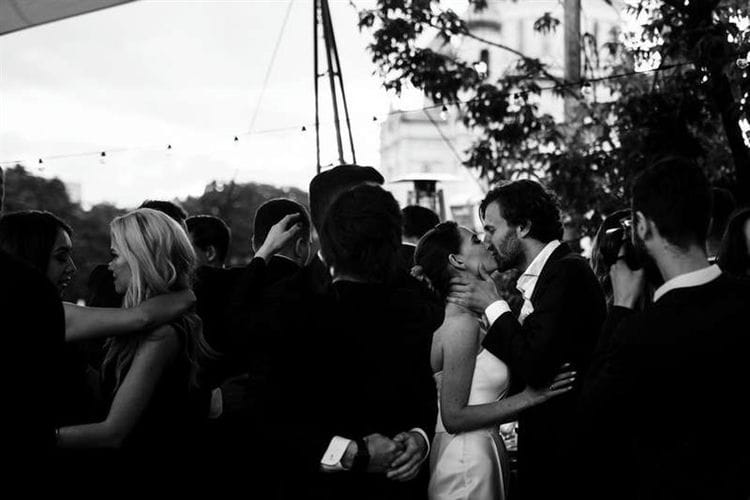
5 Wedding. To capture such a significant event for a long time is a serious responsibility. There are cases when amateur filming ended in a complete fiasco. Exposure, “correct” background, good points are extremely important. Ideally, you should visit the venue in advance at the time of day for which the celebration is scheduled. Assess the position of the sun – this way you will be able to avoid unsuccessful photos in which the newlyweds squint from the blinding light. Use a tall tripod, a stepladder for panoramic shots and don't forget about the details that can be photographed separately: the bridal bouquet, the wedding table, the banquet menu.
You can also get additional information and order a professional photographer for reportage shooting of a wedding event by clicking on the link.
Catch good moments when the heroes of the occasion do not pose on purpose, but in no case forget about important subjects, pictures of guests. Be sure to duplicate the equipment: in the event of a sudden breakdown or other force majeure circumstances, you will not have an excuse.
Children's holiday is a different story. Little fidgets are very mobile. They are unlikely to pose while you set up the equipment. Enter them in confidence, become “yours”. An important nuance: take pictures of children at the level of their height, so that the feeling of a “little gnomes” ball is not created.
You can get additional information and order a professional photographer for reportage shooting of your birthday by following the link.
Try to keep the atmosphere of a flawless reportage, genuine emotions.
The long shot, in principle, is of key importance in reportage photography: the closer you are to the participants of the event, the more likely you are to get a photo of the posing guests.
What makes reportage shooting different from other types?
I am sure that at least once in your life you have held the National Geographic magazine in your hands. Almost on every page of it there is a wonderful result of reportage shooting. So what makes them different from other genres of photography?
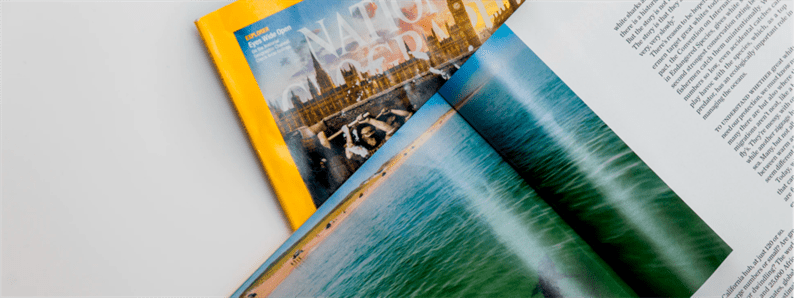
For examples of reportage photography, just flip through the National Geographic issue
- The invisible photographer. The subject of reportage shooting is in the frame range (most often it does its own thing), but does not pay a single drop of attention to the photographer.
- Reinforced training. All the necessary camera settings are set long before the shot is taken. Speed in reportage is critical.
- Constant surveillance. Yes, good lighting and a wide angle of view are all part of a good shot. But in reportage shooting, the main thing is often to remain absolutely still and observe.
Reportage photography is the art of capturing unplanned emotions. Be it joy, cheerfulness, delight or sadness. The main skill of a photographer for this genre is the ability to notice and observe.
What you need to shoot a reportage
The photographer must act situationally, focus on the features of the place, lighting conditions, statics and dynamics. When going to shoot a reportage, the set of equipment should include:
Lenses
You have to change angles, focal lengths, plans, backgrounds, adjust to the movement of objects. Optics alone are indispensable. When filming a wedding, the bride and groom, their guests, relatives, both in large and in the crowd: on stage, during a dance, rallies, contests, should be in the frame. It is better to keep a spare lens behind your back, in a backpack – in order to quickly get it and connect it to the camera. Most often, photographers use two models: wide-angle and telephoto (telephoto).
A wide-angle lens allows you to cover a large area, to include all the important details and objects in the frame. It is used when shooting group portraits, general shots, panoramas. Also, photographers actively use the opportunity to change focal lengths with a zoom. Zooming in and out with good focus is essential for the reportage genre.
The TV set is indispensable when shooting at a distance, when you do not have the physical ability to get closer to the subject. For example, at sports competitions, opening ceremonies, presentations, concerts, festivals, carnivals. A long-focus lens will solve the task, the frames will turn out to be clear and expressive.
Flash
Shooting can take place both outdoors and indoors, where additional lighting is required. This is where flashes and their accompanying elements come to the rescue. Don't forget about spare batteries. You will have to take a lot of frames, but there is only one flash, and its energy resources are not unlimited. Get ready for a quick charge. Sequential shooting does not tolerate delays and stops – you can miss key moments. Buy three or four packs of batteries, it is better they remain unused than run out earlier than expected.
Colored tracing paper
It weighs a little, but is very useful. Sometimes the lighting is too bright and cold. By fixing yellow tracing paper to the flash, you will get shots in beautiful warm colors. By the way, you can experiment with color, giving the pictures a creative touch.
Diffusers and reflectors
The ideal option preferred by many professional photographers is softboxes and umbrellas. They are practically weightless and extremely easy to use, without any hassle or complications. It is enough to expand and direct in the desired position, and the flash beams will be diffused, filling the frame with soft light.
Chargers and batteries
The batteries for the flash will not be enough. The camera itself can be discharged, and then the reportage shooting will have to be interrupted. You see that the energy is running out, replace the battery. Do not wait for the stripes to reach zero.
Flash drives
Based on practical experience, a six-hour reportage shooting takes about 14-16 GB. Be prepared for such a volume and stock up on a flash drive in case resources are depleted. The equipment is assembled and completed, you have arrived at the place. Now the question is what to shoot and how to do it.
What is the specificity of reportage shooting?
Sequential shooting is not easy anyway. But family and friendly ties complicate it even more. Capturing loved ones in this genre is almost impossible. They know you, they know what you are doing (often it may even annoy them). This means that they will often be distracted by you. Focus their attention on something else: give them a favorite topic of conversation. In a word, you need to help them forget that you have a camera in your hands.
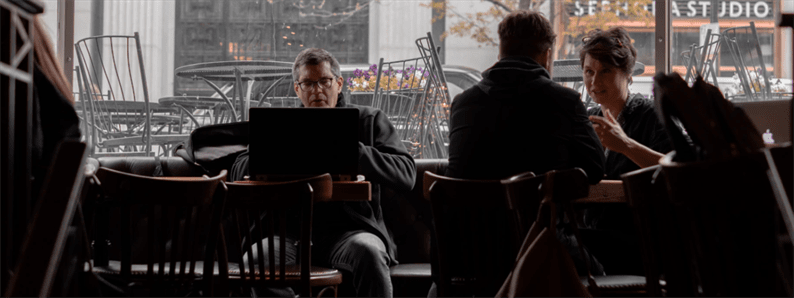
If you want to help your loved ones “forget” that you have a camera in your hands, captivate them with a pleasant conversation
Another point, which is the specificity of reportage shooting, is the existence of two types of people. Those who like to be photographed and those who are very shy. If you are thinking of doing reportage shooting, you will have to find a balance between the former and the latter. Reportage shooting is fascinating (and even reckless!). Get ready, wait. Shoot at the most inopportune moment and you will have a stunning shot.
What is the specificity of reportage shooting? In details
On top of all of the above, there are some small tricks that photographers in this genre go for. These same tricks reveal the essence of what is the specificity of reportage shooting:
- Anytime and anywhere. The reportage photographer always has a camera with him. No DSLR? It doesn't matter, the compact is always in your pocket. Not even he? He takes out his cell phone. Well, you get the idea.
- Long zoom. Not always, it is not always possible to get close to the subject unnoticed. Therefore, a telephoto lens in a clip is a clear sign of a reportage photographer.
- No flash! Otherwise, this is the first and last shot of a reportage photographer. What did I talk about earlier? Be unnoticed. That's the whole point.
- A series of photographs. As with selfies, you shouldn't be left to chance. It is better to take a series of shots, from which you will then choose the best one.
- Shooting from the hip. What makes a photographer? That's right, his posture. A camera taken with both hands, brought to the eye, immediately rips off all comfortable masks. The moment is lost. However, if you hold the camera at your hip (and still use a wide-angle lens), you can achieve impressive results.
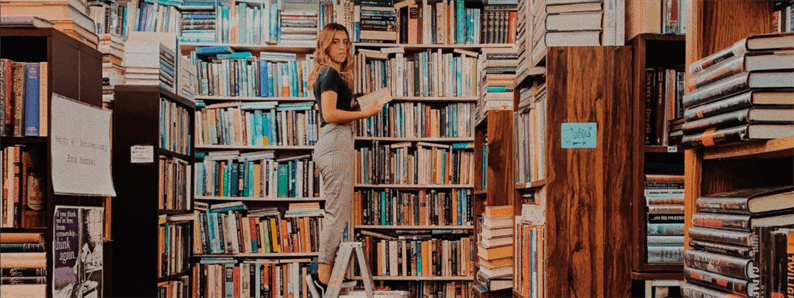
Shoot from the hip, use a wide-angle lens and no flash! This is the specificity of reportage shooting!
Where is the reportage footage used?
First, let's figure out what makes up the cost of reportage shooting. Main components:
- Duration;
- Number of photos;
- Additionally: studio rental, overtime work.
Regarding the shooting format: it is advisable to know in advance the purpose of the reportage shooting and what quality the customer is claiming. The RAW format takes up a lot of space on the memory card, is suitable for shooting major events, JPEG is suitable for secondary events.
Materials from reportage filming are used as illustrations in blogs, on personal websites, and in the media.
It is advisable to accompany the photo reportage with explanatory text, a story that will enhance the visual perception of information, attract the interest of the audience to the material presented.
Important points when filming a reportage
Photo reportage is a special genre that includes almost all types of photography: landscape, portrait, panoramic view, family and household photos.
The key point is the reflection of events in a “live” format with a sense of the energy, atmosphere of the event. It's like an online mode: “moment of truth” here and now, without any “you, girl, stand a little to the right” or “hold hands and smile.” This is how this art form differs from traditional photography. A real professional simultaneously shoots, thinks and looks around, so as not to miss an important detail – this is the only way true masterpieces are born, filled with meaning and feelings.
It is also important to work with soul … The result of a non-trivial approach to the art of reportage photography can be seen in the works of Nikolai Yakubovsky's photo studio. Yes, we all think that all the best, iconic moments of our life are reliably stored in our memory, but sometimes we really want to “repeat” them, flipping through the family album and reliving all over again, looking at magnificent pictures, full of life and warmth. A story in photographs is a “memory diary”, entrust its design to a professional photographer.
Practical advice
When filming an event report, one must first understand to oneself what exactly is happening, then, in the course of the action, choose the key, culminating moments and shoot them, if possible, from different sides and angles, catching the decisive moment. It is good when a photographer-reporter knows in advance how an event is developing and feels its inner logic, then he will not miss the main points and will be at the right point at the right time. What can be of interest to both the photographer and the viewer? First of all, any manifestations of emotions, unexpected reactions, movements, gestures, the most characteristic types, semantic discrepancies, for example, characters and background. And in the head at the same time, let the composition take shape, the point of shooting is chosen, an internal continuous creative process takes place.
Structurally, the reportage should contain general, medium and close-ups so that it is not visually boring to watch a series of photographs. A reportage consisting of only one medium shot is tiresome and inexpressive. On general plans, where the situation in general is visible, it is desirable to give an address as well – recognizable symbols of the scene: buildings, monuments, characteristic silhouettes in the background. In addition, you can stylistically diversify the reportage by including, for example, a portrait as a close-up, a landscape as a general one, and a genre shot as a middle plan. The entire reportage should contain the main shot – the most expressive and generalized frame-symbol, the quintessence of what is happening. If it was not possible to take such a picture, then the whole reportage, one might say, did not take place.
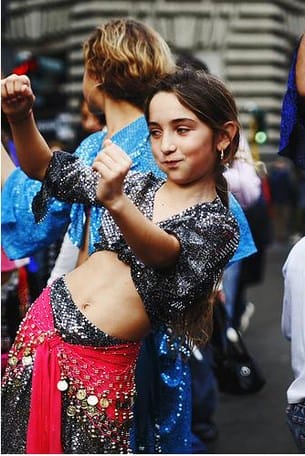
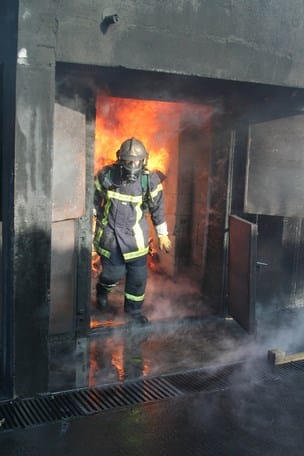
It's hard to shoot an event from a distance, as the saying goes, “if your shots aren't good enough, then you're not close enough.”
Tips: how to shoot a reportage portrait
The main purpose of reportage portraits is to illustrate the story of the person you are photographing. You don't have to make him look good.
In this article, I want to share with you ten tips for editorial photography. They will help you better understand what editorial portraits are and how to shoot them.
They also provide practical ways to use when you need to illustrate someone's story with a single portrait.
Find out the story of the person you will be shooting
Reportage photography, used in newspapers and magazines, is often an integral part of an article. Often, articles are devoted to individuals and some interesting aspects of their lives. Their work, hobbies, achievements. In such cases, the reportage portrait should visually complement the story presented by the author of the article.
Photographing a soccer goalkeeper in athletic uniform, goalkeeper gloves and holding the ball may be appropriate when creating an artistic portrait. But such a photo would not look entirely appropriate when illustrating an article about his dispute with a neighbor.
When you shoot a reportage portrait, you need to know the story of the person you are photographing and be sure that your photograph is relevant.
Regardless of whether you know anything about who you will be photographing or not, it is a good idea to interview them. If you are filming someone who will be interviewed by a journalist, listen to their conversation. This will help you understand how to create a more effective reportage portrait.
Feel free to ask questions. People usually like it when you show an interest in who they are and what they do. If your models are passionate about the story you're about to cover, they usually speak quite openly.
Focus on the person, not the camera
When shooting a reportage portrait, do not rush. Enjoy the process of creating a photo that tells a story. As mentioned above, it is very important to pay attention to communication with your model.
Get to know the person you're filming, find out his interests. The ability to ask questions and meet the people I photographed helped me create more interesting and effective portraits.
Naturally, the camera settings are also important. Once you have established contact with the model and are comfortable with each other, take out your camera.
Think about your shooting plan, but be prepared to deviate from it.
Come up with a few different concepts for how you would like to photograph your model. Think about who they are, what their story might be and where it might be filmed.
Suppose that you are preparing a reportage portrait for publication, then you may have a summary (or terms of reference) from the journalist or editor of what they would like to see in the photo. If so, then follow it.
If you have your own ideas and time to implement them, be sure to film them as well. Editors love photographers who not only know how to follow instructions and work with terms of reference, but also take initiative.
But if, upon arriving at the shooting location, you understand that your idea will not work, give it up. There is no point in trying to translate an idea into reality if it's not worth it.
Use props to reveal the image
Props can be very useful, especially if you have to shoot in an inconvenient location. Make sure that all of the props that fall into the frame relate to the story you are about to tell. Avoid using overly obvious or expected subjects; instead, try using somewhat abstract objects that can generate additional interest for the viewer in your portrait and its story.
Before, I often shot reportage portraits for an IT magazine. The editors of this publication gave me a fairly wide creative freedom when creating photographs. But none of my pictures were supposed to have a computer.
I could understand and accept the meaning of this limitation. If it weren't for him, every photo in their magazine had at least one computer. It was a good rule of thumb to make me think outside the box. I had to come up with interesting, creative concepts that could tell a story without relying on the most obvious things.
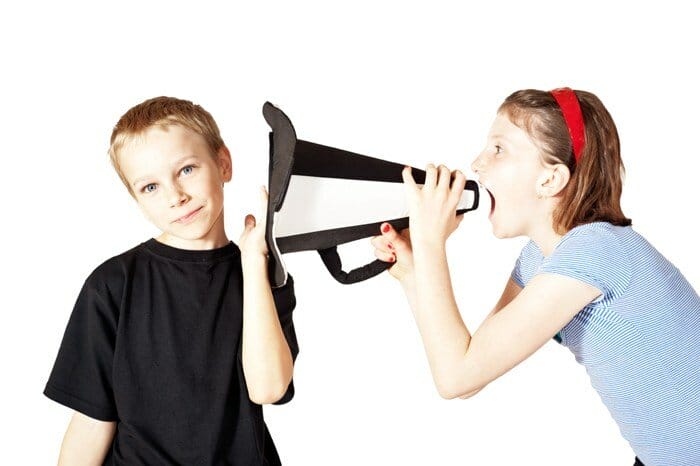
In an environment where the environment cannot illuminate the story to be revealed, well-used props can make a huge difference. Here's another example, which you can see below: I photographed children in a theater club to illustrate an article on effective communication methods.
Compose the correct composition of the reportage portrait
Include in the frame only what is relevant. Remember, this is a portrait. Your photo should tell more about the person and their story than anything else. Don't lose sight of this when you compose your photograph.
Sometimes the hero of your photo can take up the whole photo. Sometimes, on the contrary, the person in the frame can be very small. Always use what's inside the four corners of your viewfinder frame to further expand the story you want to tell.
Change the focal length to change the atmosphere of the picture. Experiment by giving the background more or less area of the frame. Often I choose a 35mm lens for reportage portraits because my full-frame DSLR combined with wide-angle lenses does not produce noticeable distortion. This lens allows me to include more background in the frame without moving away from the subject.
Using longer lenses will cause you to fill most of the frame with your subject or have to move away from it. The further you are from the person you are filming, the more difficult it can be to communicate and keep in touch with them.
If the background is too colorful, your model may get lost on it. You hardly need this, right?
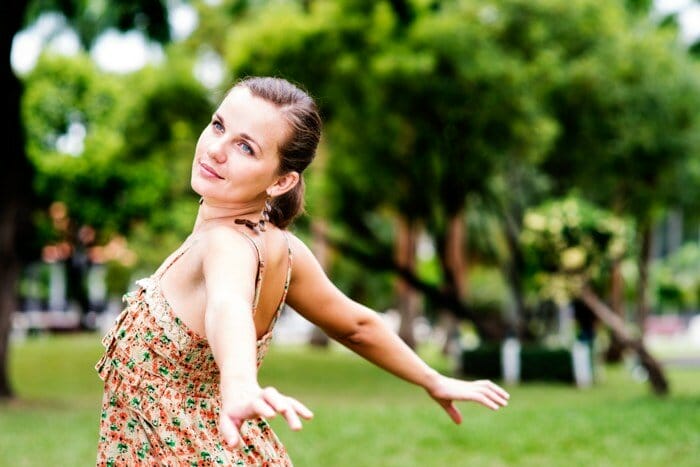
Careful choice of lens and aperture size will allow you to control the sharpness of the background. Ideally, your subject should be in focus, while the background should be blurred. It is sometimes useful to maintain a balance between blurring and informative background elements – especially in cases where such elements can help better tell the story of the hero of the portrait.
Learning how to choose the right amount of background blur can help you draw more of the viewer's attention to your portrait.
Do not experiment with unfamiliar equipment or shooting methods
I have repeatedly mentioned how important it is for you to focus on the character in your portrait. To achieve this, you need to have a clear idea of what and how you are doing with your camera.
Choose the settings that are most comfortable for you. If you are used to working in aperture priority mode, you shouldn't switch to manual mode. If you have a manual focus lens but are not used to using it, opt for an autofocus lens. The easier and more comfortable the shooting process is for you, the higher the likelihood of creating a spectacular portrait.
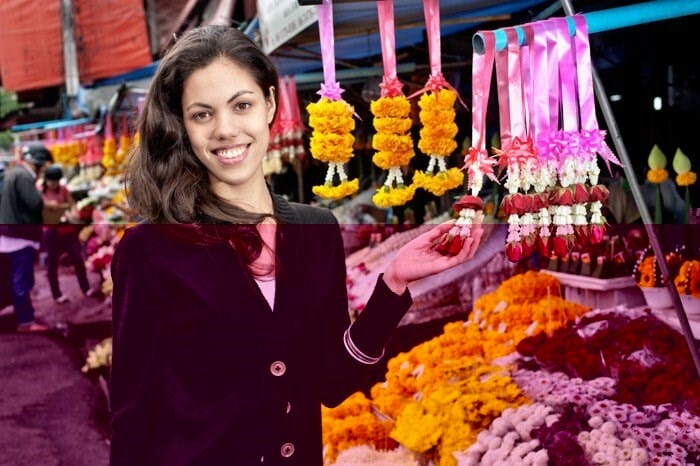
If you have the opportunity, prepare for the photo shoot in advance. A preliminary study of the location in which you plan to create your portrait will help you find out and choose the most suitable background, lighting conditions, etc. In addition, if you arrive at the location at about the same time of day in which you plan to shoot the portrait, you can experiment with your camera's exposure settings to determine the most appropriate setting.
If you're unsure which lens to use, start with the standard zoom. Chances are, within its zoom range, you should be able to get what you need.
If you prefer to use a fix, you need to keep in mind the distance at which you should be from the hero of your photo shoot, as well as his position in relation to any background that you intend to include in the frame.
Do all this before you start shooting. This will allow you to focus on your subject, not your equipment, and end up creating a more impactful portrait than if you fiddled with camera settings.
Outcomes
Recently, real reportage and documentary photography has become less and less popular in newspapers and magazines; it has been replaced by the so-called press photography – an image used for editorial or design needs. The illustration is necessary for the newspaper strip to be read and look good, and the quality of the plot itself is a matter of second concern. It is believed that a good photographer is not the one who takes great pictures, but the one who takes pictures smoothly, of acceptable quality, who is always at hand and returns to the editorial office from the assignment on time.
But this has nothing to do with photography lovers, you just pick up the camera and go out into the streets to record the passing time. And there is absolutely no need to think about the terminology, how one can call this or that genre. Everything that you shoot will be appreciated by the audience, and you just need to make reportage masterpieces.
Sources used and useful links on the topic: https://Prophotos.ru/lessons/7831-s-emka-reportazha https://ynikolay.ru/blog/osobennosti-reportazhnoy-semki/ https://mofoto.ru/2020 / 01/06 / v-chem-sostoit-specifika-reportazhnoy-sjemki / http://top100photo.ru/blog/sovety-po-organizacii-semok/istorija-v-detaljah-kak-fotografirovat-reportazh https: // zen.yandex.ru/media/fotosecret/top-10-sovetov-kak-snimat-reportajnyi-portret-5c5529e122d89d00adadabbb
Post source: lastici.ru