
What is a principle and how to form it? Human life principles: creating a foundation for ourselves

What are the principles of life?
We have already noted that in a system of self-organization, principles play the role of boundaries in which we move towards our goal. Moreover, it is more like heaven and earth, top and bottom. The width of the channel is determined by the formulation of the mission and life purpose.
Principles are the rules of the game for achieving your goals. If players start to break the rules, the game loses its meaning. A footballer who made his way to the opponent's goal using hand grenades and a Kalashnikov assault rifle is unlikely to receive a prize for winning the game.
We are playing in exchange. The main idea of this game is to provide the world with something useful.
If we destroy our planet in pursuit of success, the game will lose its meaning. If we destroy our values (family, health, friendships, etc.), victory, whatever it may be, is unlikely to be able to please us.

You can give such an image. Values are the inner circle, our zone of happiness. What we want to always see in our life. Principles are a circle, an outer border, which we will not cross in our actions under any circumstances.
How do you find your principles?

The principles are formed along two vectors.
- Which I will not do under any circumstances.
- What should I do.
The method of modeling limiting situations will help us to determine. We take each of our values in turn. And we are looking for a border that we will not cross, neither for the sake of the highest result, nor in order to avoid complete failure.
For example, let's take value – wealth, material security, money. Let's ask ourselves:
What am I not going to do even for one hundred million (billion) dollars? What will I not do, even if I have no means of subsistence left?
I must warn you that extreme situations, even imaginary ones, are always an uncomfortable zone. Don't try to avoid awful and uncomfortable questions. They will show you where your inner boundaries are.
The gradient might look like this:
- For the sake of wealth, are you able to deceive a colleague, kill an animal? Human? Your child?
- So as not to starve to death, can you steal, rob, kill, prostitute? What if your family's life is on the line?
After the pendulum of possible situations swings in your head from one extreme to the other, it is necessary to formulate the emerging principle in an acceptable, positive form.
The positive form implies the absence of any negatives in the text. If you come to the definition: “I will never cheat, for the sake of money,” you should write down as a principle: “I conduct my business honestly.”
Acceptability implies that you choose a framework that makes practical sense for you to adhere to. Honesty increases your self-esteem and customer confidence in you. And the principle “I will not kill my children for money” can hardly be needed by a mentally healthy person.
Principles are not easy to follow
Following the principles means observing the football rules in the match, even if the opponent pulls out a vigorous bomb from his wide trousers.
The one for whom the principle is more important than life can be truly principled.
At one time, I was struck by an episode from the movie “The Battle of the Red Rock”.
The hero swears with his head that he will get ten thousand arrows by the morning, and when in the morning the recount shows that there are only 9,900, he is ready to accept execution without trying to make excuses.

From our point of view, what's the difference 9900 or 10000: the task of providing the army with arrows has been completed. But for a person who value honor is more important than life, it does not matter how many percent the promise is not fulfilled. To live without keeping your word is unthinkable.
- Jesus went to the cross, affirming the principle of love for God.
- Giordano Bruno chose a fire to prove the true structure of the solar system.
- King Leonidas led his Spartans to Thermopylae, following the duty of a king and a warrior.
Why are principles necessary if they are so difficult to keep? What is the use of them? Why play by the rules when many people don't?
To begin with, imagine two people standing side by side. One is principled, the other is unprincipled. Who would you like to do business with? Go on reconnaissance? To live next door?
Yes, it is possible that it is more difficult with a principled person: he will demand that you fulfill your duties precisely. But in general, it is safer to live surrounded by principled people than vice versa.
So, principled people stabilize society, make it safer, more understandable, and predictable. Okay, but why should we be like that? Life is not an easy thing anyway, why complicate it further by introducing additional restrictions? I will answer.
What are you getting

The main purpose of the principles is to ensure movement towards the set goals. This is a belay that prevents the climber from falling into the abyss when the toes slip and the legs lose support. Additional guidance for situations where there are no landmarks. The basis that allows you to stay on your feet and not lose sight of the goal in a flurry of oncoming life events.
Let's go further. The presence of principles makes a person, undoubtedly, more valuable to society. And if we are focused on sharing and serving, adhering to the principles is a worthwhile investment. By following the principles, you become better.
By following the principles, you become stronger.
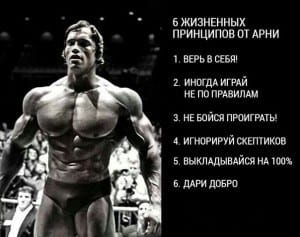
Imagine someone who always keeps their word. He promised that such and such a project would be completed by tomorrow morning. And so he comes to you and says – “I need you to do such and such a part of the project. Now”.
It is likely that he will not even have to pull the bazooka out of his pocket and hit you on the head in order for the necessary actions to be performed. But if necessary, he will do it. His life is at stake, and often responsibility for other people. It is impossible to refuse.
The principle in this case creates the pressure needed to achieve the goal. Ordinary water from a high pressure unit cuts steel and concrete.
Strength is required in order to follow the principles. Winning by rules is more difficult than winning without rules. This means that you need strength more than other people. You begin to consciously develop it in yourself. The power of persuasion, the power of example, physical strength, etc.
Principles streamline. Order is a prerequisite for effective performance.
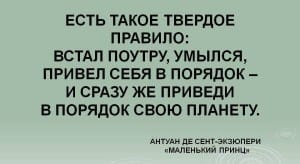
By observing the principles, you make your contribution to the creation of a reasonable society in which you live and your children will live.
Lack of principles can lead to immediate benefits, but always losers in the long run. An unprincipled person who loses friends, partners, relatives, employees. Nobody wants to work with him. And it is almost impossible to create anything noticeable in this world alone. Any big project is a team effort.
The place of the principles of life in the system of self-organization
Let's take a table of our values and key areas of activity and equip it with principles.
| VALUES | Key areas | Operating principles |
| Mindfulness | TM | Continuous improvement in efficiency |
| Health | Physical Education | Adherence to the daily regimen Healthy eating Regular exercise |
| A family | Family (wife, children, parents, brothers) | Mutual respect Attention Notice the good. |
| Development | Self-education | Consistency Gradual Consistency Don't skip misunderstood words Provide mass |
| A business | Project 1 | Creation (Service) Efficiency Professionalism Collaboration Responsibility Honesty Excessive Sharing The greatest benefit for the speaker |
| Project 2 | ||
| Creation | ||
| Safety | Be ready. | |
| Land | House, garden, vegetable garden, field, forest, auto | Environmental friendliness |
| Wealth | Finance | Income exceeds expenses |
| The brightness of life, a hobby. | Cinema, Hud Literature, Tourism | Business time, fun hour |
| Spirituality | Spiritual practice | Progress towards God |
The principle should be defined as precisely as possible. In this tablet, we have indicated the names of the principles. But it is necessary for oneself to determine what exactly we mean by this.
For example, “Healthy food” is understood by one as the first, second, third and dessert; the second, as a balanced amount of proteins, fats and carbohydrates; the third considers a healthy diet, in which there is a lot of meat, the fourth is vegetarianism, and the fifth is a raw food diet. Expand your principles, Describe them.
| Operating principles | |
| Name | Description |
| Value – Health | |
| Compliance with the daily routine | I get up at 4:30 every day. I go to bed no later than 23:00 |
| Regular exercise | Charging every day. Evening workout at least three times a week. |
| Healthy eating | I do not eat: meat, fish, eggs, tea, coffee, onions, garlic.
Avoid snacks between meals if possible. If you really want to, I have a fruit snack. I drink a lot of clean water. |
Using your knowledge and common sense, describe exactly what you mean by each principle. In the future, your understanding will certainly change, but first you need to at least look at it from the outside.
Do not try to jump over your head ahead of time. Write down what you actually observe in your life. The most hardworking are allowed to dream up and additionally describe how it would ideally be.
| Operating principles | ||
| Name | Description of the applied principle | What principle could ideally be used |
| Healthy eating | I do not drink alcohol, cola or hamburgers. | I only eat food without heat treatment, grown on my site, no more than one type of food per meal (raw food diet). |
That's all there is to it. Several hours of hard work and your individual system of life principles is created. I give a ready-made list of principles as a guideline, options from world authorities and feedback on your work on the course “RPD time management”. But the above is more than enough to get acceptable results.
Principles for Success
- The principle of Freedom of Choice. The more conscious choices you have in your life, the more you are the master of your life. Conscious choice differs from unconscious knowledge of the answer to the question “why”, why do you choose it.
- Principle of Circumstances. Desires are more important than circumstances. Circumstances are material for possibilities.
- Energy Principle. Life is energy. By controlling energy, you are controlling life. Strong energy always wins over weaker one. Effort is required to accelerate.
- Principle of Interest. Passion, enthusiasm, interest – they tend not only to preserve, but also to multiply our strength. In contrast, lack of interest leads to inevitable and irrevocable loss of energy and strength.
- Principle of Cause and Effect. You reap what you sow. Good results cannot come from bad actions, and vice versa.
- The principle of small and large. The small is embodied in the big, and the big in the small.
- Relaxation Principle. In a relaxed state, we can achieve much more than in a tense state (lethargy and relaxation are two different things).
- The Principle of Concentration. Concentration is the key to the success of any action.
- The Habit Principle. Rhythm, organization – these are habits that help remove unnecessary stress.
- Result Image Principle. The presence or absence of motivation is determined by the degree of attractiveness of the image of the result, which we present at the beginning of the action.
- The Principle of Fear and Experience. Until he began to act – difficulties can seem insurmountable and even daunting. But this dissipates with recognition and experience.
- Principle of Quantity and Quality of Actions. The richness and richness of life is determined not so much by the quality as by the amount of real actions.
- Principle of Interaction with the Outside World. The key principle of interaction with the outside world is the position of selfless giving and grateful receipt.
List
To make it clearer how to live, a person has to create boundaries for himself. And then in various situations he is guided by them, knowing how to act and behave. He correlates the behavior of other people with his own laws and norms. Principles, in their essence, perform a demarcation function, that is, they help to draw a clear boundary between concepts such as good or bad, white or black.
Such a symbolic litmus test. And I want to give you examples of basic life rules that correspond to the norms of human morality and morality, perhaps some of them will work for you.
Boomerang
Remember, in the article about the boomerang law, I talked about how everything done or planned comes back to us? Only good returns threefold, and bad returns tenfold. This is the law of the universe. Slightly transformed in everyday life, this law sounds like this: “Do with others the way you want to be treated with you.”
Be authentic to yourself
That is, true under any circumstances. You shouldn't adjust to other people, trying to match them or to get recognition. If you value yourself, then others will notice your individuality. Inner freedom is about accepting yourself for who you are.
Never give up
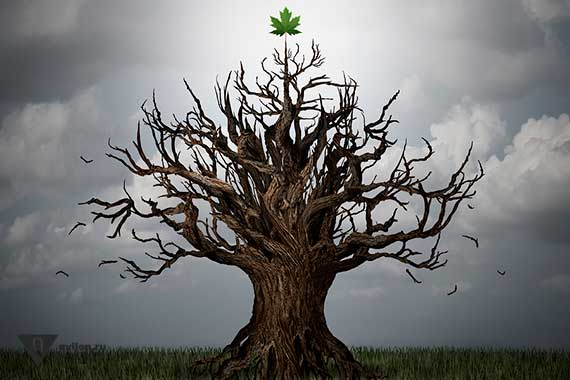
You remember, success depends on perseverance, it never happens that life develops like clockwork. Everyone always has limitations and difficulties, and the difference between successful and unsuccessful people is that the former continue to move under any circumstances, even if they cannot walk, they creep in the direction of their dreams. This is the basic law of great people, and I am sure that purposefulness will not hurt anyone. In addition, mistakes help build experience that you can rely on in the future.
Learn to forgive
This is the philosophy of a healthy life, since resentment destroys the body and significantly worsens the emotional state. If expressed with the help of a metaphor, the feeling of living with resentment is similar to constantly carrying a bag of stones behind your back, and, moreover, absolutely unnecessary. Keeping it inside, you do not make the offender worse, but yourself, so learn to forgive and let go.
There are no perfect people, besides, we can often injure another without realizing that we are hurting him, so everyone can stumble, do not deprive someone of the right to be forgiven, especially if he is ready to atone for his guilt.
Don't waste your time
Yes, it is important to rest, but excessive passivity leads to various destructions, both in personal life and professional activity. TV, social networks and computer games are the main killers of your time, because of which life passes by.
Control yourself, because every minute is priceless, no one knows how much time he is destined to spend on earth. Therefore, try to live every moment, take everything from it, and not run away into the virtual world.
Only forward
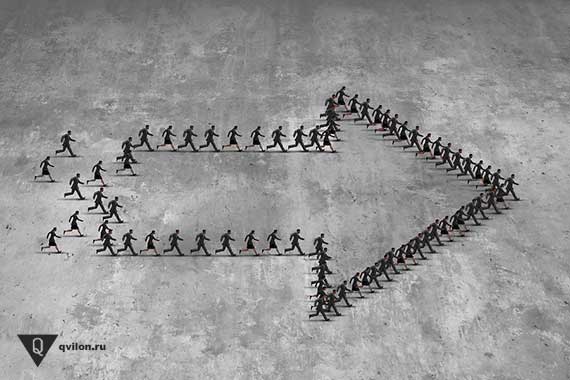
Development is actually very important, no matter how smart a person is, everything is constantly changing in the world, and it is important to be, if not on the wave of changes, then at least just in the know. And no one knows at what point the knowledge gained can help, it is only clear that they will definitely not be superfluous. So read books, learn foreign languages, and develop a keen eye for new information.
Respect
You can get it if you yourself are able to respect other people's boundaries and give recognition, instead of living anger because of the surging envy. Even a small child deserves to be listened to his wishes and opinions, only in this way he will learn tact in relation to other people.
Philosophical principles
They have embedded centuries of experience and deep meaning. Each life principle has its own name, which aptly, concisely and truthfully reflects its essence:
- Boomerang. By causing harm to another, you will receive a similar gift in return. By doing good, you will increase the good in your life.
- Mirror. Do not judge others and you will remain without trial.
- Reincarnation. To understand someone, put yourself in their place.
- Pain. Feeling it, a person infects others with it.
- Charisma. People who are interested in you are always interesting.
- Elevator. The opinion about a person changes in the process of communication.
- Situation. It shouldn't become more important than the relationship.
- Rock. Trust is a solid foundation for everything.
- Training. Everyone can share knowledge with others.
- Agriculture. Relationships need to be cultivated.
- Trench. As you prepare for war, dig a trench for yourself and your friend.
Introverts
These are life principles and values aimed at developing oneself. They are professed by many great people who, with the help of these credos, have achieved success in the profession, have become respected and popular in society. The most important one sounds like this: “Live in the present.” Of course, we must remember the past, plan the future, but we must emotionally experience only what is happening at the moment. This principle helps to become more collected, teaches us to concentrate on the present moment.
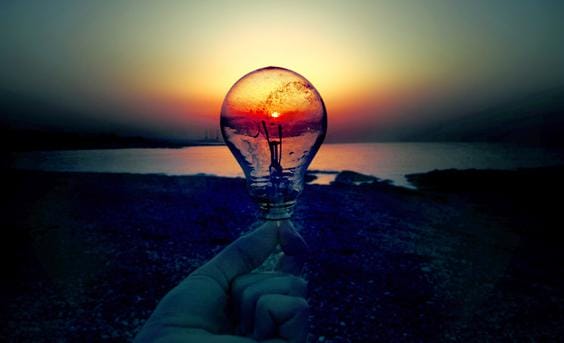
Be persistent is another popular life principle. No, this does not mean that you need to brazenly walk over your heads in the direction of the goal. You just need to not give up and stay true to the decision you made. Separately, I would also like to highlight the inner harmony of the individual and her desire for self-development: these two credos will certainly be beneficial and bring positive results. And added to them sincerity and benevolence, self-control and the ability to forgive will multiply the result several times.
How to formulate your life principles?
Personal laws exist, whether we are aware of them or not. And life becomes easier if we are still aware.
Principles: general and individual.
General principles represent laws that theoretically work for most. As a rule, many people know them, but not everyone uses them:
- You can't easily catch a fish from a pond.
- There are no big things without great difficulties.
- Do to others what you want to be treated to you.
- Give more than you receive.
- Everything done / planned comes back.
- I promised – do it.
- Be true to yourself.
Individual principles are the most effective and valuable, because everyone formulates them for himself. How to express the rules of life so that they help to live?
Personal principles are effective if they:
- Formulated by you personally. This is the result of education and inner work on oneself. Most clearly, life is influenced by the principles that a person has found and determined on his own.
- Working. That is, those that are effective in practice. And in your personal practice.
- Individual. Someone else's rules can be not only useless, but risky. It's like a blood transfusion that is not suitable for rhesus.
- Flexible. A rigid structure is typical for stones and minerals. All living things are changing. Sensitivity to new concepts, conditions, beliefs, yourself helps to rebuild thinking and find a new “I”.
- Balanced. Excessive extremes lead to devastating consequences for relationships and your own psyche. Therefore, in your life rules it is worth including the concepts of “good-and-bad”, “truth-and-reality”, “assumptions-and-objectivity”, “mistakes-and-perfection”.
- Relevant. Remember how long ago you reviewed your internal settings? How significant are they when they got started, what do they protect? Sometimes principles are the frozen experience of past failures with which we defend ourselves against new failures.
By solving a puzzle like this, you are rewarded with a personal principle that you can adhere to in order to live a fulfilling life.
Tomorrow starts today
Your “today” is the result of what you have done in the past. Don't be lazy to think about the future and analyze old mistakes. Feel free to dream of great achievements, wealth and fame. There is no guarantee that dreams will come true. But without them, nothing will work out at all.
Don't wait for a better day to do what you have wanted for a long time.
Quit smoking, playing sports, finding a new job, proposing or getting a divorce – don't be afraid to take the important step today. The longer you pull, the harder it will be afterwards.

7 steps to align life principles with inner values.
Life principles that coincide with inner values are a powerful driving force. But everyone has their own values. We have collected tips from self-development coaches and psychologists in a manual that will help you determine what is really valuable to you.
- Make room for your thoughts: turn off your phone, TV, try to relax, do not think about current problems.
- Write down the moments of the greatest joy and the deepest sadness: remember how you felt in those moments and why they were remembered.
- Review the universal values: physical well-being, health, warmth in relationships, empathy, freedom of choice, humor, joy.
- Choose the most important from the previous list and add your own: make sure that the list is tailored perfectly and resonates in the shower.
- Think about how your values are being realized in life: they are most clearly manifested only when making decisions.
- Divide the internal rules into three categories: basic, controversial, and additional. Give yourself time to think it over again.
- Remember that this list can always be corrected, because change is the only constant in our life.
What are the principles, everyone decides for himself. But formulating them for yourself is only half the battle. Let them penetrate your consciousness. But the main thing is to act without delay in accordance with your inner values.
Probably, each person should have some certain principles of their own. But there are also universal ones that suit everyone!
1 Start every morning with prayer, and stay awake until you pray. Try to do this as often as possible. They hear you, just say everything that is in your heart. Pray for those who have already died, they will find peace.
2 Be tolerant. Jealousy, anger, pride, hatred, ignorance – greatly drain the human soul.
3 Be an open person. And you should not let others control you, you yourself know what you want to achieve and get in this life.
4 Be a welcoming person. Respect the people who came to visit you, surround them with comfort, treat them to the dishes that you have in the house, respect the guest.
5 Never take something that does not belong to you.
6 You need to respect what nature has created – plants, animals, people.
7 Respect the principles and opinions of others. Do not interrupt the interlocutor who is enthusiastically telling you something, do not be rude, do not be arrogant. The human right to freedom of speech should be respected.
8 Do not offend people, do not tell them unpleasant things. Indeed, in this way you yourself will stain your soul. The negative energy that you “spew” will surely come back to you, but only in an increased amount.
9 Learn to admit your mistakes. Everyone can do them, and there is nothing wrong with that. Forgive people for their mistakes, nobody is perfect.
10 Think good, because of negative thoughts in your head, not only the mind suffers, but also the body, and even the soul. Look at the world with optimism.
See also: 5 ways to protect yourself from the toxic influence of others
11 Everything that nature has created is part of the “family”, and nature itself is a mother.
12 Raise children in love and care, teach them what can be useful to them in adult life. And do not be afraid to let go of grown children, do not protect them from growth and development, give them free space.
13 Do not harm other people, remember that there is a “boomerang law”, even if you do not believe in it.
14 Don't lie, be honest with others and with yourself. The universe will reward you for your sincerity and honesty.
15 Go to harmony. Be beautiful not only in body but also in soul. Engage in self-development and grow spiritually!
16 Learn to make decisions on your own, and take responsibility for all the actions you take.
17 Do not violate the boundaries of someone else's personal space.
18 Do not try to change everything around and make everyone happy. Start with yourself. If you change, the world around you will also change.
19 Never impose your faith on others. Everyone has their own faith, and their own opinion, do not strive to be a righteous man who instructs on the true path.
20 Share what you have with others. Charity purifies the soul, making us better.
21 Learn something new every day, learn, set goals and go to achieve them.
22 Do not put off until tomorrow matters that need to be addressed today.
23 Treat people the way you would like them to treat you.
We are the masters of our own destiny. It is much easier to live when you adhere to these simple but very useful principles. It is not so difficult to be a good person and find harmony of soul, mind and body.
How principles come about and why they teach us
Where do these principles come from? Where did the concept of honor come from in a young nobleman? This concept, of course, was communicated to him. It was brought up. Naturally, any principle that a person follows is either brought up and instilled from childhood or arises as a result of life experience.
The principles are very different. So starting from the usual: never call (write) first, do not eat meat or drink coffee, use things of only one and the same manufacturer and others; to rather unusual and radical ones: for example, it is customary for Muslims to avenge the death of their relative, cannibals in Africa teach children in principle not to eat their fellow tribesmen, but to feast on enemies only. That is, the principle can be either a restriction (honor for an officer, appetite for a cannibal), or encourage action (blood feud among Muslims).
What, then, do principles teach if they can be so varied? What then unites them under one concept?
Everything is quite simple: honor makes an officer always act in his own interests, a Muslim who is ready to take revenge also does it for the sake of a higher goal, because he believes that it is right (of course, from the point of view of the safety of other people, this is not very good). Both one and the other sacrifice much for the sake of their principles, both are ready to give their lives for their beliefs. Yes, an example, a little radical, and if there are better ones, please give them in the comments to the article.
Often, principled people are ready to give up a comfortable chair in the office and a tasty sandwich for the sake of an idea, although nowadays this is also a very rare occurrence. Our principles are generally more down-to-earth and relate to food, clothing, relationships, and people.
Problem
To observe the principles in life, you need to remember them, think, make independent decisions. But modern man is used to living mindlessly guided by habits or emotions. People remember that it is possible to follow the principles in case of a situational need. They come up with them on the go to justify their impulsive actions.

The main problem of a modern person is a lack of understanding of why principles are needed and how one can follow them. And also the inability to correctly determine your position.
Principles of Harmonious Relationships
- The Point of Reference Principle in Relationships. Happy unions do not come about when you find the right person, but when you become that person.
- Principle of Idealization. Ideal is a projection in the external world of what you lack inside.
- The principle of self-sufficiency. A truly intimate relationship is a conscious choice, not an emotional addiction.
- Relationship Purpose Principle. The only universal purpose of a relationship is to learn to love.
- The Principle of Needs. Each person has needs that cannot be satisfied without the presence of a truly loved one. We cannot experience complete satisfaction from life without satisfying these needs.
- The principle of blunting emotions. Any initially acute emotions, sensations and feelings dull over time.
- The Principle of Giving and Receiving. A truly harmonious close relationship is the result of the ability and drive to give unconditionally and receive unconditionally.
- The principle of non-judgmental thinking. It is impossible to love the one you are evaluating, just as it is impossible to evaluate the one you love.
- The Principle of Leaning on the Best. To build harmonious relationships, you need to rely on the best in each other.
- Principle of Understanding. It is impossible to be understood without first showing a desire to understand.
- Principle of Care. Taking care of a loved one means doing what is important to him, and not what seems important to you.
- The Principle of Responsibility. Responsibility is a natural feeling that arises from the connection with what is important and dear to you.
- The Proximity Principle. We experience the greatest satisfaction in relationships when we go beyond ourselves.
Basic principles
Each person has his own personal subjective vision of life. Despite the individuality, some credos become “public property” – they are common to the masses of people. The basic principles of life, which are professed by the majority of representatives of the modern world, are constancy and proportionality.
The first implies loyalty and unwavering dedication to something. It is also loyalty, reliability, poise and firmness. A person tries to cultivate all these character traits in himself in order to be one of the best: an unconditional leader, a successful leader, a valuable employee, a competent parent, an ideal spouse. When an individual is consistent in his decisions, despises betrayal and does not betray himself, he is worthy of admiration and inheritance.

Proportionality is proportionality. That is, a person tries to act within a certain framework of decency, where the principle of justice prevails: “you are for me – I am for you.” Proportionality does not allow him to relax, it spurs the personality on the way to the goal.
Think first, then do
How often do we blame ourselves for rash actions. Unfortunately, spontaneity can lead to fatal consequences that can be suffered for many years. Make it a rule to think first and then act.
This applies to everything. Weigh the pros and cons, look at the situation from the outside, think about the ulterior motives of other people and your benefits. Only then will you know exactly what to do in a given situation.
Don't ask other people for advice on what to do. For you, no one can be held responsible for your actions.
By the way, when people ask for advice, more often than not they just want to be listened to and sympathized with.

Can principles change with age
There is only one answer to this question – of course they can. Moreover, they must change, because it is impossible to adhere to the same beliefs as a teenager and an adult.
Changes in principles usually occur for three main reasons:
- Change of world view.
- Growing up of a person, both age and mental.
- Under the influence of other people, whose life core (beliefs) turned out to be more significant.
In general, adolescents are characterized by maximalism, so whims and principles are often intertwined here. The abandonment of such considerations will take place on its own, with age. Different principles help us at different stages of life. Some of them remain, others we refuse because of their possible failure.
The question of adherence to principles and lack of principle is very interesting and the main thing is to find a middle ground in it. It is impossible to have a bunch of principles and constantly follow them, because in this case, the time will come when none of your friends and family will want to put up with them, and you will be left alone. At the same time, one cannot be an “invertebrate” and go with the flow of life, hitting the coast, and without drawing any conclusions from this.
Usually, a person's adherence to principles presupposes his uncompromising attitude a priori. He is not ready to deviate from his rules, even when it comes to people dear to him. This is definitely wrong! Of course, different situations happen in life, and if you do not neglect your own principles for the sake of friends and dear people, then why are such principles necessary at all. It turns out the same as not giving a damn about everyone and being unprincipled.
Remember that whatever principles you have, use them wisely. They should not offend, harm, or annoy you or those around you. Be ready to give in, compromise, and disregard your own principles, especially for the sake of loved ones.
By the signs of the zodiac
Mostly the characteristics of the signs are full of humor. But nevertheless, they accurately reflect the behavior of people and their position in life:
- Aries. Better not to argue with me. Stubbornness is not a vice.
- Calf. A thin world is better than a good quarrel. I don't need someone else, I won't give mine.
- Twins. I am different every day. Whoever did not have time, he was late.
- Cancer. He who seeks will find. My home is a fortress.
- A lion. Nice manners are half the battle. To do – so big.
- Virgo. Everyone lives for himself, but serves others. Patience and a little effort.
- Libra. Only fools are principled. Win by agreeing.
- Scorpio. Not everyone can stand my gaze. The world disappears without knights.
- Sagittarius. The main issue is scale. There should be a lot of good people.
- Capricorn. Do not break the law: it will do for another, you will be caught. No man is an island.
- Aquarius. It's hard to be an angel, but you have to. A good intention is more important than the deed itself.
- Fish. Don't put off until tomorrow what you can do the day after tomorrow. A promise is fun, and a bad one is joy.
Summing up all of the above, we can draw the following conclusion: what life principles to profess, each person decides independently. The main thing is that they make the best not only you personally, but also the world around, bring good to people and serve for the good of society.
Sources used and useful links on the topic: https://donpi.ru/otnosheniya/osnovnye-zhiznennye-printsipy-cheloveka-razvitie-i-primery.html https://man-to-man.ru/52-printsipa-zhizni /pravila-schastya/52-principa-zhizni.html https://Qvilon.ru/psihologiya/zhiznennye-printsipy-cheloveka.html https://FB.ru/article/174815/jiznennyiy-printsip-i-tsennosti-jiznennyie -printsipyi-cheloveka https://WikiGrowth.ru/chto-takoe/printsip/ https://www.belnovosti.by/poleznye-sovety/4-vazhnyh-zhiznennyh-principa-kotorye-prigodyatsya-kazhdomukps : // kabluatsya-kazhdomukps: // kabluatsya .me / psihologija / osnovnye-principy-zhizni-kotoryh-stoit-priderzhivatsya-vsem.html http://www.oleksandrdadak.com/ru/psychology/human-principles-principialnost-i-besprincipnost.html
Post source: lastici.ru