
The mistakes novice cyclists make. Top common mistakes novice cyclists make
Content
Search for like-minded people
A situation when a person is looking for someone to start doing something. In my opinion, you should not specifically look for a company with whom to ride, because sooner or later you will find people who are close in spirit. Even if now there is no one who would agree to share your desire to start cycling, it's okay – the main thing is to start.
Ignore traffic rules
The cyclist is a road user, albeit less protected than the same motorists. Stick to the following rules.
- When driving on the road, a helmet and bright clothing are required. In the dark, there are lanterns.
- Move as far to the right as possible in the direction of traffic. Driving against the stream is strictly prohibited. Watch out for cars parked at the curb. A driver who stops to smoke can suddenly open the door and run over a cyclist.
- Since April 2015, you have every right to move along the dedicated lanes for public transport, if you do not interfere with the embarkation and disembarkation of passengers.
- Cyclists are prohibited from driving on highways, take detours.
- It is forbidden to turn left or make a U-turn on roads with tramway traffic or more than one lane width. In such cases, dismount, turn into a pedestrian and cross the intersection on the “zebra”.
- Be extremely predictable. Be sure to signal the drivers who are following you about possible maneuvers: turns (an outstretched hand points in the direction of a turn) or a stop (a raised hand).
- At an intersection, if you plan to drive further in a straight line, stand in the far right lane, but slightly in front of the cars. Thus, you insure yourself against a possible turn of the car to the right, to your side, and demonstrate your intention to continue moving in a straight line, without turning anywhere.
- Let pedestrians pass at crossings! If a cyclist crosses the road on a “zebra” on horseback, then he is automatically considered a driver and in the event of an accident, most likely, he will be guilty.
The wrong approach to collecting information
At this stage, I see two mistakes: 1) random choice, lack of basic ideas about the bike, 2) too deep immersion in the study of theoretical information.
With the first, everything is clear: a person does not have the time and desire to collect information, so he entrusts the selection process to friends / sellers. This is a lottery – maybe they will advise you on a good bike for a reasonable price, but most likely not. Cycling acquaintances, being savvy in the matter, will try to pick a really good (and expensive) bike, but does a beginner need one? And the seller will sell what needs to be sold.
There is no big problem in both cases, it is just that most likely you will have to spend more money than was required. It is worse when everything is bad with money, and after walking with familiar friends at bike shops, looking at the terrible price tags, the applicant decides to spit on everything and buy the cheapest bike, for example, in Auchan.
The opposite situation is when a person has been hanging out on forums since winter and immersed in such layers of information that the inscription on the frame becomes important for him. Again, there is nothing particularly negative about this, if you have enough money, you will simply spend more than you need at this stage. But I have seen cases when people refused to buy a bike at all, arguing that there is no money for a good bike, and they are not going to ride any shit (less than $ 1000).
It is best to study at your leisure the available information, which bike to choose for a beginner, for the first season, and not exceed this level if money is running out. I do not advise you to go into debt or cut off pieces from the family budget in order to immediately start riding an expensive bike. The first season will just show what a bicycle is for you, whether this hobby has captured you.
Remember the need for food
If your trip is only an hour long, you don't need food (but be sure to bring water). But if you plan to spend more than two hours in the saddle, grab a snack and start eating 45 minutes or an hour after the start. Eat small meals every 15-20 minutes, even if you don't really feel like it – if you feel hungry, it means that you are already too tired.
Remember that a lack of energy can cause a collision as a result of a drop in concentration, or you can go into a hypoglycemic state. Fatigue, irritability, dizziness and nausea are not the best feelings for completing a trip.
Neglecting fluid intake
As with any type of intense physical activity, when cycling, your body is actively losing fluid. This happens especially quickly in hot weather. The loss of fluid negatively affects primarily the knee joints, which bear the bulk of the load during skiing. Therefore, always take a flask of water with you. The purchase of a flask and bottle cage should be among the first purchases after buying a bike.
Sit too low
Many novice cycling enthusiasts and even those who have been riding for several years install the seat at such a height that you can reach the ground from the saddle with two feet. Low landing is explained simply: “what if I don't have time to jump”, “if I sit higher, I will definitely fall”.
With an incorrect fit, there is a large load on the knees, since when pedaling, the stronger muscles of the hips are almost not involved in any way. As a result, you get tired faster, your knees begin to hurt, and it is difficult for you to keep pace and speed.
A correct seating position assumes that your leg is almost fully extended at the lowest pedal position.
Of course, in this case, you will not reach the ground with your feet. What if you feel sorry for your knees, but it's scary to lift the saddle higher? Raise the seat gradually! We skated half an hour – raised it by half a centimeter, another half hour – another half a centimeter up. This will gradually bring you to the correct height.
We'll have to learn to get off the bike in a new way. Determine which jogging leg you have. Snowboarders already know which leg is more important for them, for the rest we advise you to jump on one leg or on the other. The lead leg is stronger, you can jump on it for longer.
Now, to get off the bike, you will need to roll it up a little towards the kick leg. And that's all – you easily got off of it.
Treat other group members with respect
It is no coincidence that group riders follow their own rules and protocols. After all, if your behavior is difficult to predict, the risk of collision increases.
If this is your first time traveling with a new group, stay behind, watch others and ask for help if you need it.
Mistakes in the early days of skiing
Almost all beginners are not very good at shifting gears, but the process is very important. In fact, shifting gears is extremely important because it relieves unnecessary stress on the knee joints. You need to constantly operate the rear derailleur, trying to keep the cadence (cadence) in the same range.
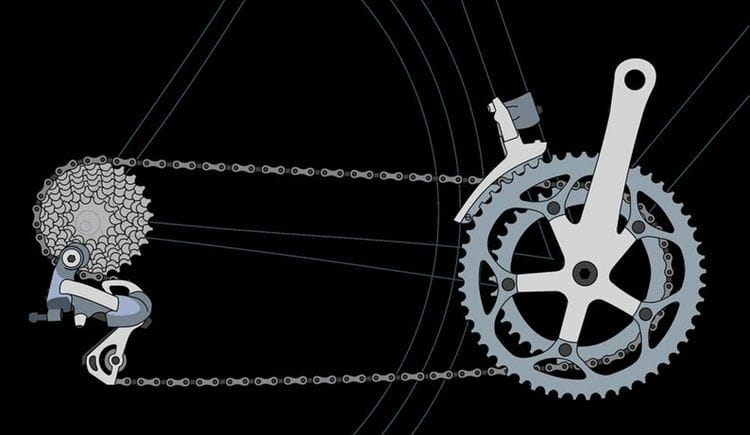
Slight Lift – Flip a switch to relieve increased pedal strain. Headwind blew out – switch. Learn how the front and rear derailleur works together.
You need to try to keep a high cadence, because the faster you pedal, the lower the stress on the joints – this is very important. Unfortunately, it seems to beginners that you need to “swing” your legs, entering the hill in high gear, slowly rotating the pedals. This leads to bad consequences.
An incorrectly positioned seat is also a very common mistake. Basic setting: while sitting in the saddle, adjust the pedal to the lowest position and put your heel on it, in this case the knee should be fully extended. From this position, you need to dance further, moving up and down a millimeter, to achieve a feeling of comfort.
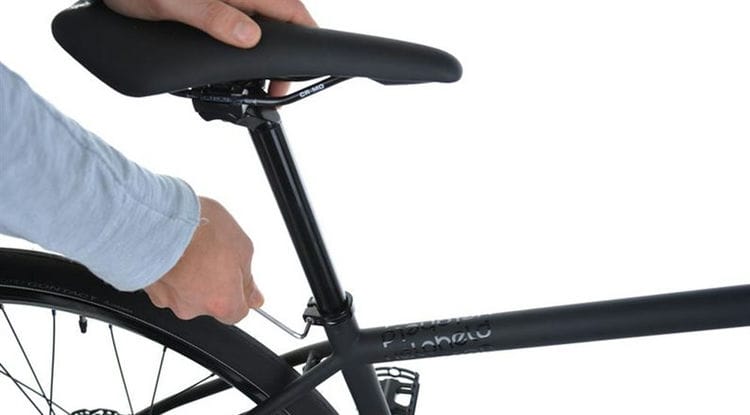
The tilt and longitudinal position of the saddle are also adjustable, I recommend setting the tilt to zero and also, by millimeter, to achieve comfort. The forward-backward position must also be “caught” in an experimental way.
Choosing the wrong frame size
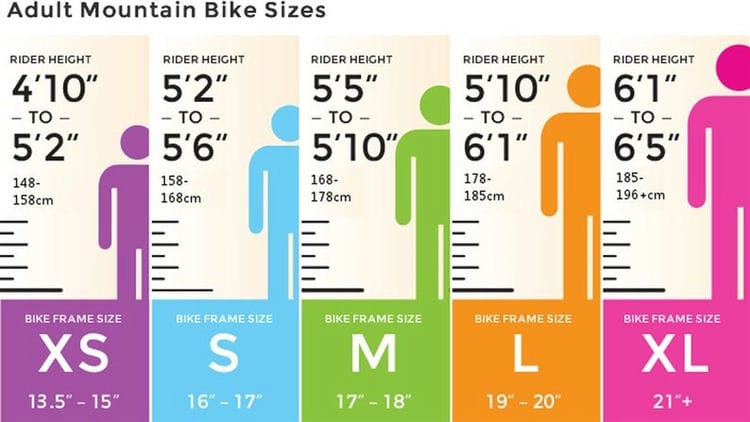
Beginners are often not serious about finding the right frame size. In fact, when buying a bike, this is one of the most important factors. A properly sized frame will provide the correct fit so you can ride comfortably and for long periods of time. Due to the incorrect size, on the contrary, during prolonged skiing, you will feel discomfort, arms, back and neck may become numb. Before buying a bike, we recommend that you go to the manufacturer's website for the model you like and familiarize yourself with the size table, which will indicate which frame size will suit your height.
Size error
Beginners sometimes ignore the importance of choosing the right bike frame size, thinking back to their childhood when everyone was great and everyone was the same size and no one bothered. Now there are at least four sizes for each model: S, M, L, XL. Before buying, go to the manufacturer's website to see the Size chart / table, it will approximately indicate which size is suitable for your height.
Don't feel like you want the best
To become a cyclist, you don't need expensive specialized clothing and shoes or a high-end bike. Sure, good gear is fun to use, but nothing beats the feel of walking around a few expensive carbon models on the climb on your old bike.
The main thing is to buy a bike and start riding it, and you can think about potential upgrades later.
Neglect to shift gears
Often, newbies try to ignore gear changes, considering this process not particularly important. However, this process is important, it helps to regulate the load, apply effort rationally and not overload the knee joints. You need to constantly operate the switches and try to maintain optimal high cadence.
Don't shift gears
One of the most frequently asked questions about a bicycle: “How many speeds do you have?” The number of speeds depends on the number of stars. For example, you have 3 stars in the front, and there could be 7, 8, 9 or even 10 stars on the back of the wheel.
It is believed that the higher the speeds, the cooler the bike. But even the most expensive bike with a lot of speeds won't make you the fastest if you don't know how to shift gears.
Find the most convenient combination of numbers for yourself and use these speeds when driving on a straight and more or less flat road.
If you meet a hill or any other rise on the way – reduce the speed enough to make it easy to go up the hill.
Have you seen how some reckless driver twisted up the hill while standing? So, this person simply does not know about the existence of gears in his bicycle. (And here we are not talking about the Tour de France or any other competition.) This method is wrong, following this example, you will greatly overload your knees. It is completely normal and not ashamed to climb on combinations 2–3, 1–2, and in especially difficult cases – and 1–1.
Once you climb up, you can enjoy the descent, and if you tune the gears to a heavier mode, you will help the momentum drive you to the next hill. For a start, it is more convenient to use a gear of level 2-3 or 2-4, gears 3-6 and higher can be used only when driving downhill or in a strong tailwind.
It is not recommended to set gears to extreme positions, such as 1-7 (if you have 21 speeds), 1-8 (at 24 speeds) or 3-1: in such cases, the chain overlaps, which leads to faster wear of the entire transmission.
Regardless of whether you are driving on a flat road, panting uphill or racing downhill – in all cases, you should be able to pedal easily.
Always shift gears on the move and slightly until pedaling becomes difficult. Switch speeds sequentially. There is no need to jump over the number: set it to 4 – and make a full turn with the pedals, set it to 5 – and make a turn.
If, after switching, an extraneous sound is heard, it means that the switching did not occur, although you can see the following number on the handle. In such a case, simply return to the previous gear reading, release the pressure on the pedals and shift again.
Lack of ride comfort
Comfort is made up of things like a comfortable fit, a suitable saddle, and the right thermal balance.
I wrote about the fit a little higher, I will say about the saddle below, and now about the clothes. Contrary to the opinion of cycling shoes, I do not believe that it is imperative for a beginner to put on a snug bike as quickly as possible. Yes, the uniform is comfortable, it wicks away sweat well, but it costs money, this is especially noticeable for the pocket, if we are not talking about a summer set, but about cycling clothes for spring-autumn.
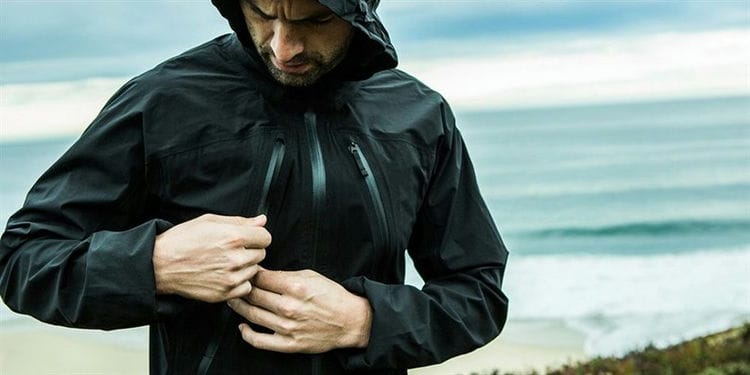
Therefore, at first, you can skate in ordinary clothes, but considering the following: in spring, the biggest danger is to sweat and be blown by the cold wind. Chances are, you have some kind of windbreaker in your wardrobe, so be sure to wear it until it gets warm.
Ignoring gears
The gears are your best friend on climbs and long, level stretches. But it takes practice to understand which transmission will be most effective in each specific situation. Here's a basic guide to using gears.
Don't forget to maintain your bike
You don't have to be a professional mechanic, but routine maintenance can save you a lot of money and extend the life of your bike. Check out these very simple maintenance methods that any bike mechanic will recommend to you.
Buying the “wrong” type of bike
The mistake at this stage is that a beginner cyclist buys a bike without really knowing where he will ride. Very often he is confused by advanced friends who have already driven everything that moves and are now looking for their “perfect” bike.
Perhaps the bike boots will bite me, but I would advise the novice cyclist to choose a mountain bike for the first season, namely a niner (with 29-inch wheels). There is an opinion in the cycling community that we have the dominance of MTBs, while this type of bike is not used for its intended purpose.
Nevertheless, the mountain bike is very versatile, suitable for all types of roads, you can ride on the sidewalks and park paths of your area (note that it is not always allowed to ride on the sidewalks and parks), or you can go on a bike trip. You do not need a different type of bike for the first season – you just can decide what is missing in an inexpensive mountain bike and if the hobby drags on, then buy something else next year. This is a completely normal process – keen cyclists are constantly trying new types of bikes.
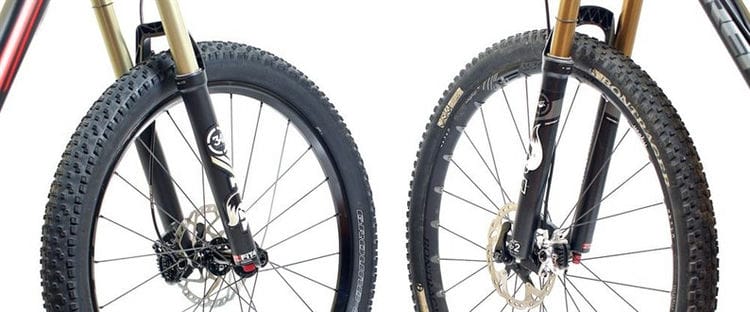
In any case, the MTB 29er will be an excellent choice, even if you realize after a month that driving on asphalt is more attractive. Put on these universal semi-slickers and you will get a tangible increase in rolling on hard surfaces, while you will still be able to turn onto park paths.
Always take a spare tire or repair kit with you
Here you are rushing forward along the trail with the tailwind and you feel great. But then the characteristic hiss of air coming out of the tires reaches your ears, immediately destroying this idyll. If your plan for such an event involves calling a friend, take a few minutes to go through the guide on how to replace and repair your damaged cameras.
You won't believe how much more confident you will feel with the right tools at hand (spare wheel, repair kit, levers and miniature pump) and the knowledge of how to get your bike back on the road in 15 minutes.
Immersion in bike fetishism
It so happens that a novice cyclist finds himself in the company of advanced Catalians, against whom his own bike seems miserable. I want to correspond to the company, to be on the same level, and then the endless race for carrots begins.
The solution is to understand why you need a more sophisticated bike. Most likely, not in order to skate, but in order to be “your own” in the company. Therefore, try to ride more than chat on the forums. Riding always puts your brains in place – as a rule, you realize that it is not the bike that limits you, but your poor physical shape.
Didn't find your rhythm
If you have ever ridden in a group, you will notice a simple thing – some of them were rushing forward, some were lagging behind, and the middle was hopelessly stretching. Why is this happening?
Each person has their own individual pedaling rhythm.
You first need to understand which gears are comfortable to drive on a straight road, and then – to maintain a convenient speed for you. Modern cycling computers or mobile apps allow you to track your cadence (cadence) in numbers, but you only need to rely on personal sensations. If the ride is comfortable, then this is your rhythm.
The correct cadence is one and a half full pedal revolutions per second and faster, which is unattainable for beginners, but this should be strived for.
Unpredictability on the roads and aggressive driving on sidewalks
High-speed arrivals on sidewalks, crowded people, slipping on pedestrian crossings, driving against traffic – all this should be avoided while riding. If you are on the sidewalk, be respectful of pedestrians, because the sidewalk is their territory. If you are on the roadway, behave as predictably as possible for drivers and indicate your maneuvers with appropriate gestures. All this will help to avoid accidents.
Sharp start
A common mistake is trying to drive too long distances at once or at a too fast pace initially. There is no need to rush, first you need to prepare your body for cycling. At the beginning, try to ride at a calm pace, gradually increasing the time and distance.
Saddle too low
 Are you experiencing pain and burning in the front of your knees? Your saddle is likely too low, causing your knees to bend more than necessary. With the correct seat height, your knees should be slightly bent at the bottom of the pedal travel when the crank is parallel to the seat tube but not perpendicular to the ground.
At the very bottom of the stroke, you should barely maintain contact with the pedals. Measure the distance between the carriage and the top of the seat. This will be the height of your seat. It should be very close to your inseam length (in centimeters) multiplied by 0.883.
Traveling light
Any bike ride can be spoiled by a trite unwound bike part or a puncture, especially when you are far from home. To quickly deal with the problem on the spot, we recommend that you take with you a minimum repair kit: a multitool or a set of the necessary hexagons, as well as a spare bicycle tube and pump.
Sources used and useful links on the topic: http://kotovski.net/10-oshibok-kotoryie-delayut-nachinayushhie-velosipedistyi/ https://Lifehacker.ru/5-oshibok-velosipedistov/ https: //www.veloturist. org.ua/10-oshibok-nachinayushhix-velosipedistov/ https://zen.yandex.ru/media/id/5e27f01afc69ab00aea20234/10-rasprostranennyh-oshibok-nachinaiuscih-velosipedistov-5efada8ddae6c96f440bf88c
Post source: lastici.ru