
Notes about Japan. What do they eat in Japan. Features of the Japanese traditional food system

Basic foods in the Japanese diet
The Japanese diet must include soy, rice and sesame seeds.
Soy.
Japanese women are big fans of soybeans, a Far Eastern legume that they consume every day. Soy has a lot of advantages. It is very rich in protein and easily replaces meat, cheese and eggs. But its main advantage is the high content of phytoestrogens (isoflavones), which effectively fight free radicals and help restore hormonal balance. Thanks to isoflavones, soy reduces the risk of developing cardiovascular disease and the level of bad cholesterol in the blood.
There is a huge selection of different soy products: tofu, soy milk (not inferior in quality to cow's milk), soy cream (quite a worthy replacement for regular cream), etc. Soy itself is practically tasteless, which makes it a universal nutritional base for a variety of culinary compositions, both sweet and savory. However, the measure must be known here as well. Soy, like other legumes, as well as meat and grains, has an oxidizing effect on the body. It is enough to use it twice a week to get the most out of it.
Fig.

Rice has many benefits. Japanese women eat this cereal several times a day, most often from wooden or porcelain bowls specially designed for this purpose. Rice is gluten-free, highly digestible, and contains many nutrients, including B vitamins, phosphorus and magnesium. Its consumption helps to reduce cholesterol levels, blood pressure and the risk of developing cardiovascular diseases. Rice helps to restore the balance of proteins, fats and carbohydrates in the body.
This cereal is widely used in Japan to moisturize the skin, giving it matte and elasticity. The virtues and effectiveness of rice water, rice bran oil, rice masks and rice cream have been proven in practice. It is not for nothing that geisha actively use them.
Sesame.

These small golden oval seeds are rich in vitamins E and B1, serve as a source of minerals and trace elements such as iron, calcium, zinc and magnesium, and contain unsaturated fatty acids. Japanese women consume sesame seeds every day. Among other things, they consider it to be a very good hair strengthening remedy. Do not hesitate to season your meals with sesame seeds and the benefits are guaranteed!
Tea in the Japanese diet
Japanese food is considered correct, because the inhabitants of the Land of the Rising Sun hardly drink alcohol, and they drink coffee even less, preferring green tea and matcha tea. The benefits of these drinks are now known all over the world: rich in antioxidants, they reduce the likelihood of developing cancer.
Green tea.

For centuries, special attention has been paid to tea in Japan. Green tea leaves are harvested while still very young. Unlike black tea, green tea is not fermented and very rich in tannins. It has a high concentration of antioxidants – the very ones that fight premature cell aging, has a tonic effect, thereby helping to fight fatigue, as well as a diuretic effect, that is, it helps to remove excess fluid and toxins from the body.
Plus, it is rich in vitamin C and caffeine. To neutralize the stimulating effect of green tea, pour boiling water over it and infuse for a long time, the tea leaves must be strong. By the way, green tea, among other things, helps to fight obesity.
In Japan, it is not customary to drink liquid with meals; they usually sit down for tea a few minutes after eating. It is recommended that you drink at least three cups of green tea throughout the day. Its preparation is a real art. Tea drinking can be turned into a simple but very healthy ritual. Learn to enjoy your tea. Vary the flavors. Turn on all your senses. Buy a teapot and a beautiful cup in the style you like and taste green tea as a rejuvenating nectar that brings you health and beauty.
Mother's tea.

Matcha tea is a powder made from Gyokuro (highest quality) or Sencha (lower quality) tea leaves. The infusion turns out to be green and frothy. This is a real storehouse of vitamins:
- Contains vitamins A, B6, C, E, K, niacin, folic acid, riboflavin, thiamine,
- Rich in trace elements: calcium, magnesium, copper, iron, zinc, sodium, phosphorus, potassium.
- A good source of amino acids that relieve stress and improve memory.
- The high chlorophyll content helps purify the blood.
- There are more antioxidants than orange juice.
- There is more beta carotene than spinach and carrots!
- Thanks to its diuretic effect, it promotes weight loss.
Vegetables, fruits and ginger in the Japanese diet
Japanese women are big fans of fruits and vegetables, which are an integral part of their daily diet and from which they try to get the most out of them.

Fruits and vegetables are a rich source of easily digestible nutrients for healthy skin and hair. Vegetables can be cooked in a wok, where there is no significant amount of fat to be added and where vegetables remain largely crispy, or steamed to preserve flavor and nutritional value. Foods that have undergone significant transformation during the cooking process make up only a very small fraction of the diet of Japanese women. As with skin care products, choose high quality fruits and vegetables that are seasonally appropriate for your health benefits.
Japanese women love ginger because it contains a lot of nutrients that make it very healthy. Rich in antioxidants, ginger acts as a barrier against free radicals and slows down skin aging. It is used for digestive disorders, helps with flatulence. It is believed to be an excellent anti-inflammatory agent.
Ginger can be used in the form of dietary supplements, but it is better to just add it ground or finely chopped into any dish. It enhances the taste of dishes and gives them piquancy. You can also grind the ginger and add it to the decoctions for an energizing effect.
Food in the supermarket
You can eat on a budget in any supermarket chain. There are a lot of ready-made dishes that will be immediately heated in the microwave. Salads, onigiri (filled rice triangles), warm rolls or sandwiches with different fillings. You can take dry noodles and immediately dilute with boiling water from a kettle. And of course coffee. Black or latte, hot or iced.
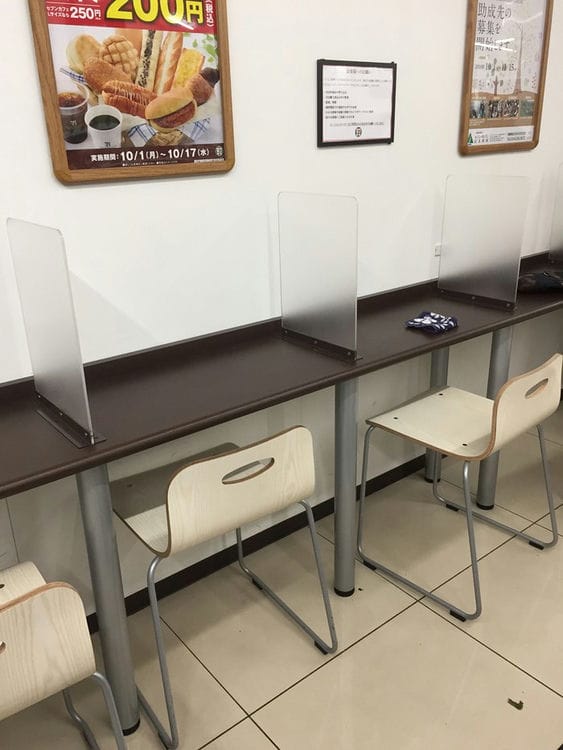 Dining areas in the supermarket are sometimes equipped with sockets for recharging gadgets.
 Automatic coffee machine, including iced coffee
There are also several chairs to eat. For several days in a row we had breakfast, lunch and dinner in supermarkets, because a good restaurant did not turn up, and there was simply no time.
And of course there are containers for separate waste collection, including a place to drain the remaining liquids (sauce, for example).

Room


Cooked soba noodles
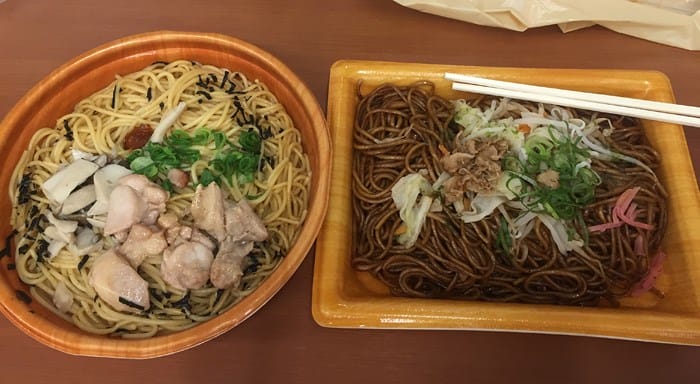 You can take not soluble, but already prepared soba, and only warm it up

Yoghurt and coffee

Tuna salad and chicken fillet – quite a European menu
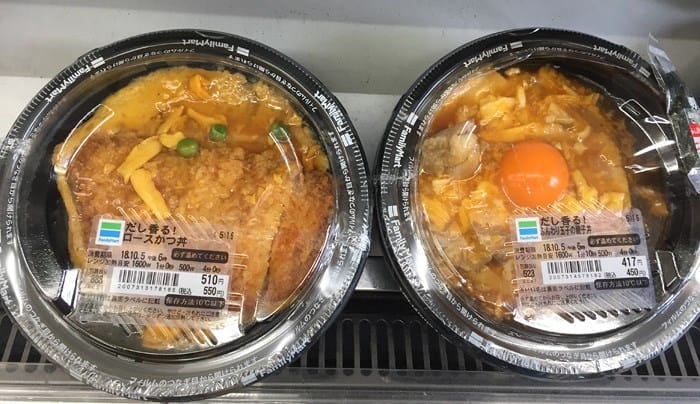 Ready dish with raw egg
 Pork sprouts
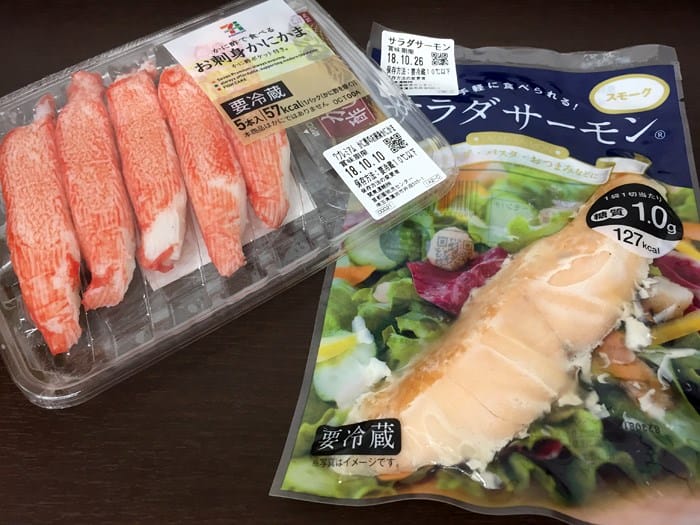 “Crab sticks” in Japan are made from rice.

Breakfast at the supermarket
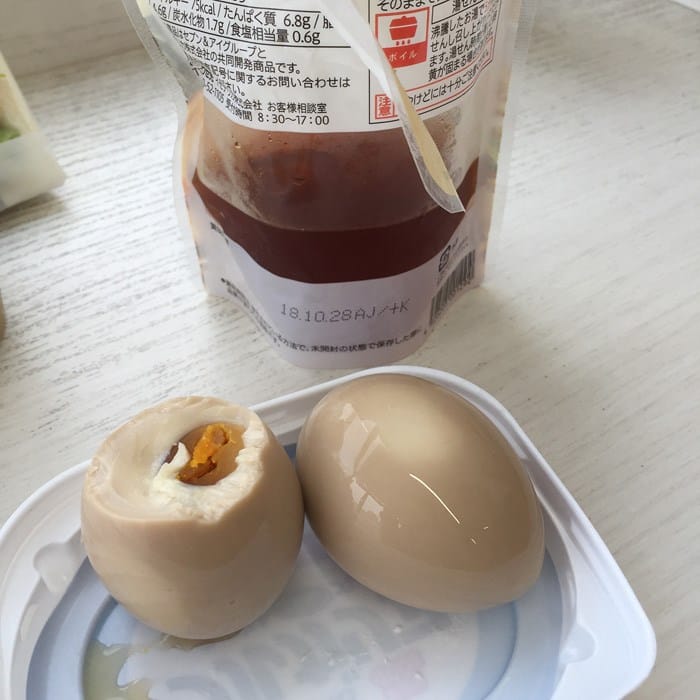 The supermarket sells boiled peeled eggs. One problem is that they are cooked in something that looks like diluted soy sauce, and have the appropriate taste.

Rice and chicken skewers can be bought at the supermarket
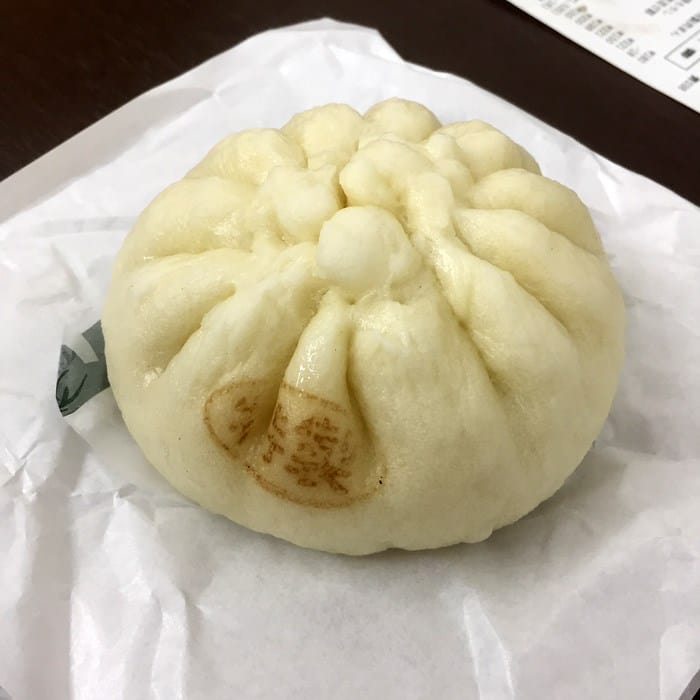 Warm pies are sold in the supermarket – nikuman
 The taste is different, depending on the filling. We liked Nikumans with meat more.

Onigiri (rice triangles) with a variety of flavors are eaten cold for a quick and cheap snack.


Flat
Ramen is arguably the most common dish in Japan. This is a fermented bean noodle soup. Sprouts, herbs and pieces of meat are added to the ramen. It is eaten with chopsticks and a porcelain spoon: noodles and other hard pieces are caught with chopsticks, and broth is sipped with a spoon. Ramen is served everywhere and is inexpensive.
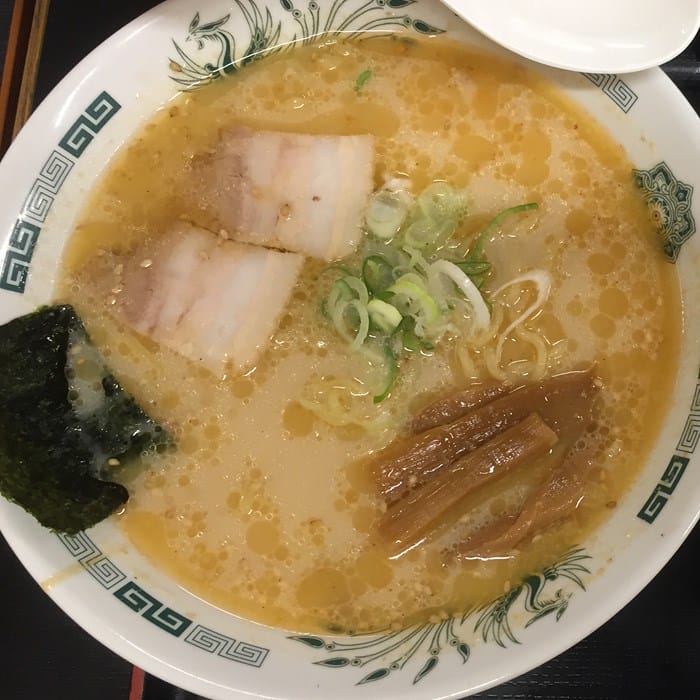 Ramen with pieces of pork and herbs

Cafe serving ramen

Showcase of a cafe with different types of ramen

The Japanese relax in a cafe after work
There is also a rather strange dish of dry noodles drenched in hot sauce. In the upper part, where the noodles come into contact with the sauce, they soften, but a significant part remains dry, and they have to crunch, which is not very pleasant.

Dry noodles with sauce
Vending machine
There are cafes offering takeaway food. You place an order through the machine, wait 10 minutes and get a neatly packaged hot dinner at a very affordable price. Not particularly tasty, but satisfying.
There are several seating areas to eat in the cafe itself. It works on the principle of self-service.
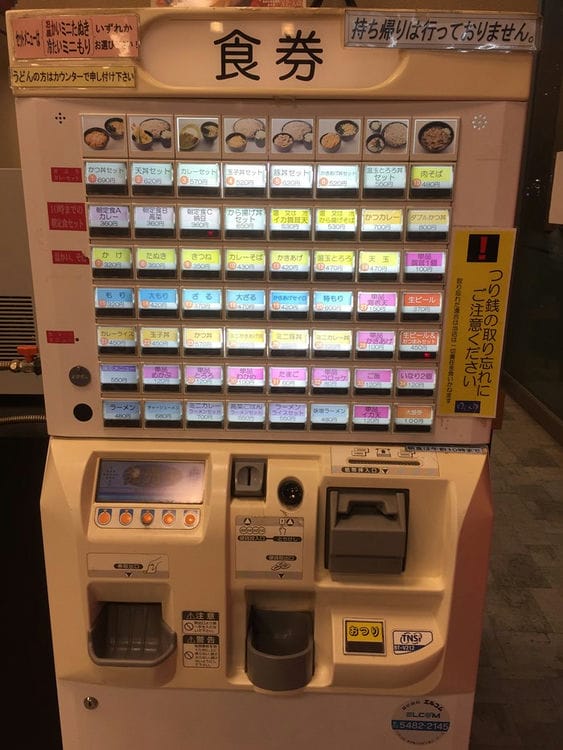 The selection process requires some effort.
 Without pictures, the use of such an automaton would be completely impossible for us.
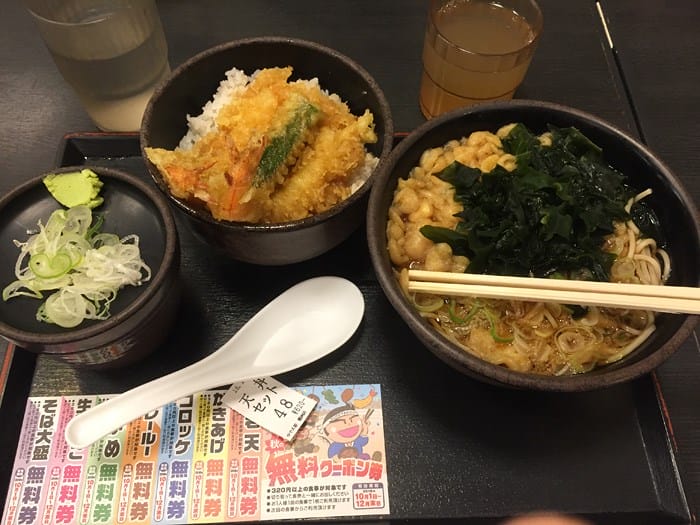 Ramen with seaweed and tempura with rice
Yakitori
One day we wandered into a yakitori restaurant for dinner. The name of the Moscow restaurant chain, from where you can order sushi and rolls with delivery, is completely untrue. In fact, yakitori are dishes made from chunks of fried chicken. This is how the word is translated. There are no non-chicken dishes in the yakitori cafe. And there certainly isn't any sushi.
It turned out to be a picturesque place. The husband compared it to the pubs in the back of the galaxy from Star Wars. Smoky and very noisy. Everyone yells to hear each other and laughs at the top of their lungs. This is how the Japanese relieve stress after a working day. Men are almost exclusively at the tables.

There were no free drinks, but they brought a plate of salad with curry sauce as an aperitif. We ordered two varieties of chicken and beer; we were served mugs, half filled with ice and for some reason water, and bottles of beer. It turned out to be good: the beer does not disappear so quickly. 0.33 was enough for the whole dinner.

Skewers on skewers are made from different pieces of chicken. For example, one only of the central thoracic cartilage. The other is made of leather, presumably from the neck. One more from the liver and only two from simple meat, gray. Breasts are fried separately, we did not order them.
There are almost no vegetable side dishes, all salad options are with chicken. So we were content with an aperitif platter.

Chicken skewers at yakitori restaurant
Ten typical Japanese dishes that are far from the sushi stereotype
|
|
|
Udon (wheat noodles)
Udon noodles are used in soups, as an ingredient in complex dishes and as an independent dish, usually in a liquid sauce, with the addition of various seasonings. Most often, noodles are made from wheat flour, but special types are made from other foods, including legumes.
Udon is usually served hot, such as in kake udon soup, which is based on dashi broth, seasoned with soy sauce and mirin, and sprinkled with green onions. Tempura, tofu fried with sugar, mirin and soy sauce, or kamaboko fish sticks can also be added to kake-udon. Shichimi togarashi can be added to taste.
Soba (buckwheat noodles)
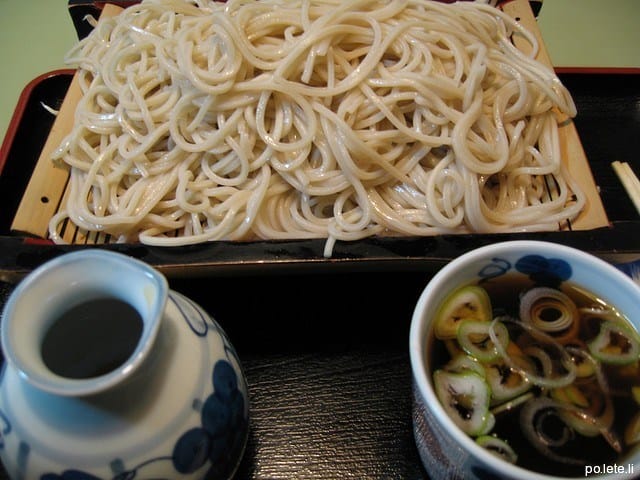
Soba is a national Japanese dish in the form of long brown-gray buckwheat noodles, known since the middle of the 16th century. It is most often served chilled without broth, with sauce on a special dish, and sometimes with hot broth as noodle soup.
One way to eat buckwheat noodles is to dip them in a sauce flavored with wasabi, pureed daikon radish and chopped green onions.
Tofu

Tofu is a bean curd made by adding a thickening agent (nigari) to soy milk. There are many varieties of tofu, but they can all be divided into two large groups:
- hard tofu (momen) – easier to cut, goes well with most foods, contains more protein than soft tofu and resembles mozzarella in consistency;
- soft tofu (kinugoshi) – better for soups, sauces and desserts, similar in consistency to pudding.
Miso
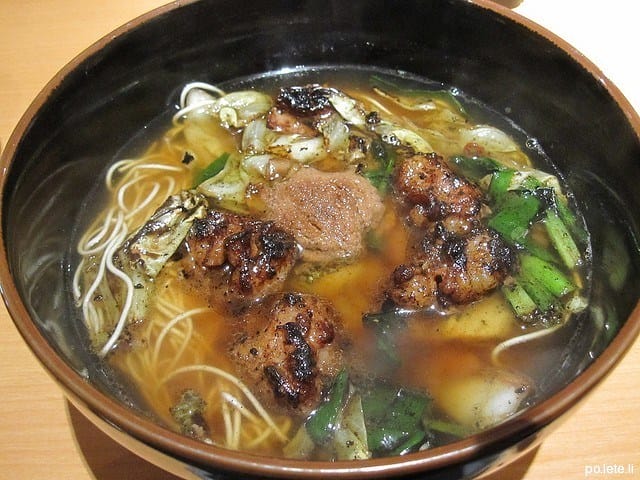
Miso is a food product used in traditional Japanese cuisine that comes from Korea. Along with rice, it is the cornerstone of Korean and Japanese cuisine, or rather, the tradition of eating. No home table is complete without miso, be it breakfast, lunch or dinner.
There are over 100 varieties of miso soup in Japan. Each species has its own distinct taste and is completely different from the rest.
Miso can be classified in various ways, such as based on rice and soybean paste, barley based on soybean paste, or based on soybean paste alone. In addition, miso also differs in color.
Rice miso
Today, 80% of the miso produced in Japan is rice miso. Miso is made from north to south in different areas, but there are significant differences between different types and varieties of miso in color and taste /
Small portion
One of the main qualities that all Japanese have is moderation. Therefore, they prefer to serve themselves as little food as possible and slowly enjoy each bite. This practice has a beneficial effect not only on the general condition of the body, but also has a positive effect on the development of aesthetic taste.
Therefore, the first step towards proper nutrition will be buying miniature cookware. No matter how much you want to fit your usual portion into it, you will be defeated. This trick can trick your brain into thinking that you have eaten enough food, because the plate was full. Restraint in appetites will not only prevent weight gain, but also prevent the onset of diseases that arise from overeating and poisoning.
The Japanese have their own food system called the rainbow. The basic rule is: there are no forbidden foods. There is only an endless palette of colors and shades. Everything that nature has created can be present on the table: fruits, vegetables, meat, fish, and so on.
By the way, in the Land of the Rising Sun it is possible and even necessary to mix different types of food, since each product has its own composition of vitamins and microelements. To saturate the body, you need to try a little bit of everything. The main thing is to know when to stop and eat in small portions, slowly and deliberately.
Seasonality and freshness
The Japanese are 100% sure that only fresh products can saturate the body with useful and necessary substances. Therefore, the dishes that are present in their menu are fully consistent with the season and are in harmony with nature. For example, in spring, Japanese people eat salmon, bamboo shoots, and young green tea. And when autumn comes, roasted chestnuts, mackerel and the first matsutake mushrooms are always on the table.
Seasonal foods are another reason for the good health and longevity of the Japanese people. Residents of other countries have long followed their example and laid the foundation of their nutrition on the Japanese diet, which is rich in vegetables, fish, nuts and seafood.
First of all, we are talking about products that include Omega-3-6-9 – an element that not only reduces the risk of cardiovascular diseases, but also allows you to keep yourself in good physical shape, preventing excess weight gain. That is why the Japanese always have salmon, shellfish, seaweed, and eel on the table.
Also, the menu of the inhabitants of Japan is compiled based on the weather conditions. For example, in the summer they prefer to eat jellies, cold soups, shellfish and octopus, as these foods and dishes bring the desired cool feeling.
And in winter, the time comes for nabe soup, which is made from pink salmon, crabs and shells. Notable is the fact that the soup is eaten directly during cooking, pouring nabe into a plate directly from a boiling pot.
Closeness to natural
The Japanese take the original appearance of food very seriously and try to preserve it as much as possible during cooking. Even if it seems to you that the waiter has brought a raw dish, do not trust your eyes – it's just that local chefs specially prepare food that way.
The main part of the diet of the Japanese are the so-called “gifts of forests”: roots, ferns, bamboo shoots. Unlike other peoples, whose eating habits change with every century, the current generation of Japanese eats everything that their ancestors preferred, in particular rice and seafood.
But meat here is a rather rare guest on the table. Firstly, it is very expensive, and, secondly, it is difficult for the stomach.
Sushi (sushi)
Sushi (maki, nigiri) is most often eaten whole. As a last resort, you can divide the sushi into small pieces with chopsticks. Women always eat sushi with chopsticks, but men are allowed to take them with their hands. Sushi (sushi) is eaten as follows:
- soy sauce is poured into a special saucer;
- sushi is turned on its side and intercepted with chopsticks;
- dipping fish (not rice) in soy sauce;
- put sushi in your mouth.
Sushi is a fairly democratic dish that has gained great popularity in many countries. For sushi, it is no longer necessary to go to a Japanese restaurant; you can order sushi at home in TOKYO-CITY restaurants and enjoy dishes made from fresh ingredients at the most affordable prices.
Sasimi
For sashimi (sashimi), a soy sauce is prepared first. Wasabi is added to it in a special saucer. Then the ingredients are mixed. The saucer should be held in the left hand, and the pieces of sashimi are taken with chopsticks (with the right hand) and dipped in the sauce.
Tempura
Tempura is a specific category of Japanese cuisine that is cooked in batter and deep-fried. Tempura is always served with delicious sauces. It is eaten with chopsticks. The plate with the sauce is held in the left hand, while the tempura pieces are separated with the right and dipped in the sauce.
Nabemono
Nabemono are dishes that are usually cooked in a pot in the Land of the Rising Sun. Europeans compare cooking nabemono to making fondue. Most often, nabemono are soups and stews. According to etiquette, a small portion of nabemono must be transferred from the common dish to your plate. Then the plate should be lifted and only then eaten from it.
The power system of the Japanese “Volchok”
The following picture can often be found on the Russian Internet.
Visualization of the “Volchok” power system in the form of an inverted children's toy
In fact, this is an incomplete visualization of this system. A real Japanese spinning top looks like this.
Original Japanese spinning top
What is the difference?
It's all about the rotation. This system has a rod that is not shown in the simplified pictures. The core is physical activity, water or tea. This is the foundation of the basics. All other recommendations are already built around this core.
Physical activity recommendations
And since we have touched on this topic, I will not fail to take the opportunity to briefly explain what kind of physical activity is meant.
The 2013 Physical Activity for Health Promotion Guidelines, approved by the Ministry of Health, Labor and Welfare of Japan, recommends that adults (20–64 years old) engage in at least 60 minutes of moderate to vigorous physical activity per day. Whereas seniors (65 and over) should engage in at least 40 minutes of physical activity at any intensity per day to maintain health and fitness. Translated into steps, 10,000 steps per day represented the optimal threshold for maintaining health.
About water
On the subject of water, you can check out the 500-page water consumption guide from the Japanese ministry, but if you want a factual opinion from the author.
Cooking method
Fried food is clearly not about Japanese cuisine. The Japanese are not used to eating this at all! Of course, you can find something breaded and fried in oil on the menu of restaurants, but in everyday life, Japanese girls eat food that is steamed or boiled. Do I need to tell you in detail why it is much more useful and does not provoke excess weight gain?
Green tea
Green tea is not only a source of antioxidants that slow down the aging process of the body, but also a faithful assistant in the process of losing weight: it is a diuretic, which means it removes excess fluid from the body. Now guess which drink is the main one in the life of a Japanese? No, not sake. And green tea! Tea ceremony traditions that have existed for hundreds of years are still popular today. Of course, an ordinary Japanese does not conjure a teapot for two hours, but it is customary to drink green tea several times a day. Take an example!
Soy
Protein-rich, lean and low-calorie soy goes with every Japanese meal, be it sauce, soy milk or tofu. Thus, in the diet of the Japanese, there is no deficiency of vegetable protein, the necessary material for the “building” of muscle.
What Japanese women eat
You probably know that rice is the basis of Asian cuisine and the most important element in the diet of any Japanese. This is not only the main side dish, but also a bread substitute. Although rice is high in carbohydrates, it is considered a staple in the Japanese diet. True, the Japanese cook rice in a completely different way from what we are used to: they do not salt it, they do not season it with oil, and, what is most interesting, they do not boil it, but soak it in water. By the way, all the benefits of rice do not apply to rolls that are served in Russian restaurants. These analogs of Japanese dishes cannot be attributed to dietary products!
Japanese women practically do not eat fatty meat, but on the other hand, they cannot imagine a day without fresh fish and seafood. It is virtually impossible to recover if there is a lot of fish, but it is easy to saturate the body with useful substances! You probably know that seafood is a source of iodine and omega-3 fatty acids, which reduce the risk of developing cardiovascular diseases, as well as thyroid problems.
Sources used and useful links on the topic: https://domosedi.ru/blog/recipes/4647.html https://materinstvo.ru/art/19281 https://po.lete.li/chto-na-samom- dele-edyat-v-yaponii-10-blyud-kotorye-stoit-poprobovat https://znaniyaetosila.ru/kak-pitayutsya-yapontsy-5-prostyh-pravil/ https://www.tokyo-city.ru/interesting / Eto-interesno / Osnovnye-blyuda-yaponskoj-kuhni-Kak-ih-pravilno-est / https://zen.yandex.com/media/mpp/iaponskaia-sistema-pitaniia-volchok-pravila-racion-osobennosti-vybora -produktov-sekrety-zdorovia-ot-iaponcev-5d949030027a1500b11826f9 https://headinsider.net/2017/02/20/chem-pitayutsya-yaponki-i-kakoj-obraz-zhizni-oni-vedut-eti-jnreti-stst prigodyatsya-i-vam / https://www.cosmo.ru/beauty/body/pochemu-yaponki-ne-polneyut-10-sekretov-stroynosti/
Post source: lastici.ru