
How to Make a Difficult Decision in Life? How to make the right decision in a difficult situation so as not to regret anything

How do you decide on Descartes' square using 4 questions?
This method was proposed by René Descartes, the famous French philosopher, engineer, mathematician, creator of the philosophy of radical doubt. His “square” method helps to understand the consequences of any choice.
Descartes' square is a simple yet highly effective technique for making tough decisions. The idea of the method is to analyze any problem from different points of view.
Before making a decision, give honest answers to 4 of Descartes's questions:
- What if this happens?
- What if this doesn't happen?
- What will not happen if this happens?
- What is not is if it does not happen?
Why is this method so effective? When a person is in a situation that requires a difficult decision, they often get stuck at the first point and cannot fully assess the situation.
Attention! Be careful when answering the last question – the brain will try to ignore the double negative, and the answer will be identical to the first. It doesn't have to be that way.
Cartesian square allows you to make a balanced decision consciously by looking at a problem from four different perspectives.
Unconscious methods
We often find ourselves in situations where we need to make a decision quickly, but we cannot analyze it, because there is no such life experience yet, there is little information and time is running out. Then we make decisions using methods that cannot be called rational in any way, because they lie beyond reason.
Intuition
Very often we almost immediately feel what choice needs to be made. This is dictated to us by an inner voice – intuition. Intuitively, we make decisions related to personal life, human relationships, emotions and feelings. These areas of life are difficult to predict, and there is nothing left but to make a decision and see what will happen next. If the inner instinct does not disappoint, then everything will turn out great. Otherwise, you will have to work on developing your intuition.
Divination
Some people who don't trust their intuition turn to fortune-tellers. They are sure that an outsider who has the gift of clairvoyance, or at least knows how to correctly lay out and interpret tarot cards, will be able to say unambiguously what to do right. It seems to me that this is just a way to avoid responsibility for the decision. After all, if it turns out to be wrong, then it will be possible to blame the fortuneteller for everything, the cards – in general, everyone except himself.
Prayer
Believers do not turn to fortune-tellers, for fortune-telling is from the evil one. With their inner contradictions and questions, they go to the temple, where they pray fervently. Of course, you shouldn't expect a miracle. However, prayer helps you focus on the problem and listen to your heart. It will just tell you the right decision.

And also in Christianity there is one amazing book – the Psalter. It contains texts for all occasions. To make the right decision, you need to choose a psalm related to the relevant area and read it several times. In the church itself, they will definitely tell you who needs to pray.
“Glass of water”
The methodology of the American parapsychologist Jose Silva is typically intuitive, and, despite its non-standard nature, it works:
- In the evening, before going to bed, we take a glass of clean, unboiled water.
- Holding it in both palms, close our eyes and concentrate on the problem that worries.
- We clearly formulate the question that needs to be resolved.
- Without haste, we sip half a glass, repeating in our thoughts something like the following: “This is all that is necessary to make the right decision.”
- We put a glass with the rest of the water next to the bed and go to bed.
- The next morning, as we woke up, first we drink water and thank the subconscious mind for the right choice.
A good idea of how to deal with the problem will come immediately after waking up or during the day.
How to make key decisions in your personal life?
There are two approaches to help you make the right choice: logical and intuitive. In the first case, you need to carefully consider all the options and consequences. Using this approach, you can think through the pros and cons, analyze the likely benefits and losses of potential options.
It is possible to rely on logic when all the initial information is available, the consequences can be predicted. Typically, the approach is used when the likelihood of risks is high and the results of decision making are determinable, for example, in business.
The following scheme can be applied:
But there are situations where it is almost impossible to imagine how events will develop in the future. There is no previous experience and the ability to obtain and analyze information from other sources. And you need to make a choice quickly. In such a situation, there is only one thing left – to listen to your intuition.
Also, to make a decision, you can use effective psychological techniques.
What to do if in doubt: change jobs or not?
If work has not been pleasing for a long time, and every morning you are horrified to imagine the production atmosphere in which you have to plunge again, maybe it's finally time to quit? Such difficult decisions should not be made lightly.
Advice from Debra Davenport, PhD, Senior Professional Career Consultant and President of DavenportFolio, an entrepreneur coaching firm. She suggests, before making a vital decision, to answer a checklist to assess the current situation:
- I look forward to going to work almost every day. (ABOUT)
- The employer treats me fairly and with respect. (ABOUT)
- I live on weekends or any days away from work. (Ooh)
- I feel appreciated as a professional. (ABOUT)
- My workplace seems to be poisoned. (Ooh)
- I can be myself at work and not worry about being judged. (ABOUT)
- I am included in the information cycle of the company. (ABOUT)
- The employer provides opportunities for development and professional development. (ABOUT)
- I am not disgusted if there is a need to work extra. (ABOUT)
- Work stimulates me intellectually and creatively. (ABOUT)
- I feel that I am making a positive contribution to the development of society. (ABOUT)
- I get paid well. (ABOUT)
- I often find myself dreaming of a new career. (Ooh)
- I feel like my work is a natural extension of who I am. (ABOUT)
- I feel successful. (ABOUT)
- I feel trapped and stuck in my current position. (Ooh)
- I can count on career growth. (ABOUT)
- I like to work hard. (ABOUT)
- My work activities negatively affect those close to me. (Ooh)
- I have a desire to try something new and different. (Ooh)
If you answered “YES” to the questions under the letter “O”, which means “Stay,” you need to wait a little longer with the change of work. If “U” – “Leave” is in the lead, it is worth taking a closer look at the vacant offers.
How to act if it is difficult to make any decisions?
The easiest way to make quick decisions in difficult situations is to put your fears aside and step forward.
The psychological characteristics of a person are such that the fear of decision-making paralyzes us. We are afraid of the result, analyzing it to such an extent that we end up freezing in misery.
Attention! The key to getting out of this deep freeze is to face those fears and name them.
Write down the worst things that can happen. For example, you have a problem with your spouse and want to voice your grievances. But you are afraid that this will lead to a big quarrel and even divorce. See if you can handle this worst-case scenario? By reflecting on this, you can see that while your fears are harsh, they can also be manageable.
10/10/10 method
Former Harvard Business Review editor and popular author, television commentator, and journalist, Susie Welch has invented a simple tool that can help you move forward. The method is called 10/10/10 and is described in the book of the same name. The author advises you to think about the choices you are about to make in three different time projections:
- How will you feel about it in 10 minutes?
- How about 10 months later?
- And in 10 years?
This tool helps you see things from a new perspective and ensures that regret doesn't become a part of life. If we can foresee the negative consequences of the choices we make now, then we can change the path to a more successful one.
How do you decide to move to another place?
Although the world is full of magical places, we spend most of our lives in just one, apart from our vacation trips. But sometimes everything gets boring, and we start to think about moving. It sounds scary, but stepping out of your comfort zone is the best way to learn and grow.
Making decisions to move is not easy. First, you need to analyze the strengths and weaknesses of the choice:
- Why You Need It? Doubt means that not all issues have been resolved yet.
- What do you like and dislike about your current place of residence? What are you afraid of losing? Take a notebook and list the pros and cons. It will be clear if you are able to neutralize such problems.
- What do you expect to find in the new location? Moving from one city to a similar settlement will essentially change little. If you want drastic changes, you need to move to a settlement with a different population density.
- What does your family expect? Evaluate the financial possibilities for the future, the availability of medical care in the new place, the availability of good kindergartens, schools and universities, the possibility of meeting other social needs.
It should be borne in mind that it is the close ones who usually prevent the adoption of an important decision to change the place of residence. Therefore, the whole family must prepare for the move, carefully discussing every disturbing moment.
Do the analysis not mentally, but on paper. This will make it easier to work through each item. For example, find penpals on social networks, find out real estate prices, visit sites with job offers and estimate the salary level in the region in your specialty. You should also calculate the cost of moving, the demand for the profession in the labor market, or the conditions for developing your own business.
How to decide to move, says psychologist Natalya Tolstaya in the video:
What to do?
Any important decision takes time to think. It is good if you have it and you can think about the problem as much as necessary. In ancient times, sages, in order to better concentrate, generally retired and carefully considered the options for the consequences of their decisions. But in the modern world, a reserve of time is an unaffordable luxury.
The pace of life is faster and faster and, accordingly, decisions have to be made at an accelerated pace. And although this can be very difficult at times, to make an important decision, you still need to stop and give yourself some time to think about the situation. To choose an option for further development of events, it is necessary to conduct a thorough analysis of the current situation, look for possible options and how they can end, reject unacceptable decisions and choose those that can have a beneficial effect on your future destiny. All these stages, when thinking about, should certainly go through. And a decision taken impulsively is often fraught with irreparable mistakes.
When looking for the right solution, you should also rely on your feelings. Sometimes our intuition turns out to be stronger than reason and can more accurately indicate which decision needs to be made out of several options. However, in this case, you need to be based not on those superficial feelings that you are experiencing at the moment – anger, fear, joy, sadness, but on those deep feelings, the inner voice of which from time to time gives a sign that we have them. You just need to isolate yourself from external stimuli and listen well to your inner world.

Recommendations for making the right decision
If someone has to make a decision that may become fateful in the future, he should do the following manipulations:
- find a quiet secluded place where no one will disturb;
- choosing an object to focus on is good if it is brilliant;
- sit comfortably and direct your attention to this subject;
- disconnect from the outside world and immerse yourself in your thoughts;
- hear only the silence and emptiness that spreads inside;
- after some time, hints of weak feelings will appear, on which you should focus your attention and let them get out to the surface of the mind, acquire certain thought forms – this will be the answer of the inner voice to all doubts.
1 Give advice to a friend
From the outside, it may look like a mild form of multiple personality disorder, but try to imagine another person (friend, colleague) in your place. Pretend that the problem of choice is his, not yours. Abstract, step aside, observe, and then give advice.
This technique helps to cast aside the emotions that have clouded your mind in the throes of choice, and a more sober look at the essence of the issue.
2 Disable information noise
It seems to us that the more information we have, the more objectively we are able to assess the situation. However, the endless flow of information only increases the tension and confuses our brain. We begin to over-emphasize insignificant facts and lose sight of the essential.
Temporarily turn off the information noise, relax and allow your mind to find the correct answer on its own, because it is not without reason that many scientists made their great discoveries in a dream.
3 Deny the obvious
By a certain age, each of us acquires our own style of behavior in general and decision-making in particular. Break the mold and challenge yourself by questioning the obvious facts about each scenario.
Take a pen, a piece of paper and write them down, then turn the sheet over and figure out what you will do in such circumstances. Very often, the answer lies outside the boundaries of habitual thoughts.
4 Take an interview
Before you finally decide on a solution, ask yourself 3 questions and answer each one within 10 minutes. So, if you follow the chosen path, then:
- How will you feel in 10 days?
- How will you feel in 10 months?
- How will you feel in 10 years?
Listen to your feelings. Feeling the prospects is just as important as thinking about them. The pleasure or discomfort of visualizing your choices often speaks louder than reason.
5 Play epithets
Choose a few adjectives for each of the solutions, and then apply them in relation to yourself. Let's say you choose between 2 proposed positions: one is dynamic, requiring communication and constant movement, the other is stable, implying a thoughtful approach and attention to detail.
Now try to use these descriptions in relation to yourself. Which one suits you best? This is extremely important: making any choice, you always determine your future to one degree or another .
7 Limit yourself in time
There are decisions that we put off from day to day, but meanwhile they become a heavy burden and interfere with the enjoyment of life. For such cases, the so-called 15 minutes technique is suitable.
When all the options are thought out and weighed, and there is still no clarity, accept the fact that all the following reasoning does not make sense. Stop wasting precious time and give yourself 15 minutes to sort things out. The decision itself (any) will remove the anxiety and help to move forward, picking up speed.
5 Stay in the dark.
One good way to make a decision by reducing the influence of your emotions is by dimming the lights.
Science has proven that lighting affects how a person reacts to various situations, and the results of these experiments are now being skillfully used in marketing.
For example, in most jewelry stores, very bright lighting is on, not only so that the buyer can see the product well, but also in order to provoke him to make a quick purchase. Therefore, if you are thinking about how to decide to take an important step, turn on the soft, dim lights in the room and stay alone with your thoughts, getting rid of excessive emotions.

Practice 360-degree thinking
Thoughts influence emotions, emotions influence decisions, and decisions influence actions. And each link in this chain can be optimally tuned. 360-degree thinking has three essential components that are also methods. They can be used to effectively analyze the situation, after which it becomes easier to make the right decision.
These are the components:
- a look into the past;
- foresight;
- insight.
By applying all three methods of thinking, you are looking at your life from a 360-degree perspective. That is, they work best together.
A look into the past
A look into the past (aka retrospective analysis) will help you critically assess your past. This allows you to comprehensively understand the situation that has already happened in order to improve your future decisions.
This mindset is helpful because it helps you learn from mistakes, problems, setbacks, and past successes. As a result of this learning experience, you can adjust your course of action to move forward much faster.
If you don't know or have never practiced self-reflection, this is a very suitable occasion. Take time to reflect on the decisions you made yesterday. Ask yourself:
- What did I do yesterday?
- What decisions have I made?
- What problems did you face?
- How did I deal with these problems?
- How did I deal with the negative emotions that arose when I faced the problem?
- How do I feel about this?
- From what other point of view can you look at my yesterday's problems?
- What can I learn from yesterday's experience?
- What could I have done differently?
- What do I need to improve to better deal with this problem next time?
Note that this is not just a simple spinning of negative thoughts (which you usually do), but self-reflection. You ask yourself the right questions, provide answers, and figure out what you can do better next time. Now you are more aware of what decisions and in what state you are making.
From now on, you will begin to relate to your problems and decision-making more consciously, rather than on autopilot. Next time, there is a great chance of getting it right. In other words, you've drawn the right conclusions from past experience – that's what all successful people do.
Remember not to use the past to make future decisions. Each situation is unique in its own way. What works today may not work tomorrow. But the process of self-reflection itself is very useful, because it makes you reflect on your thinking, actions and decisions made.
Foresight
Foresight is the ability to predict future events, changes, trends and the consequences of one's actions. Moreover, it is the ability to explore alternative scenarios that could potentially unfold.
This mindset is helpful because it helps you see and predict what might lie ahead. Therefore, you will be better able to identify opportunities and be much less likely to make mistakes when making decisions.
Foresight works great in tandem with a look into the past. This way you can use the past as a barometer to predict the future and therefore make better decisions.
To develop foresight, you need to learn how to successfully address potential threats and identify your needs ahead of time. This is planning, as well as gathering the necessary resources to help in the future.
Ask yourself the following questions:
- How will this decision affect the future?
- How will this decision affect my future decisions?
- What are the consequences of making this decision?
- What opportunities will I have after making this decision?
- What problems will arise?
- What if everything goes wrong? How will I react?
- What's my plan B and C?
- What happens if …?
Foresight is not an exact science. Rather, it is a game in which you try to make the best decision based on a combination of lessons learned from the past and ideas from the present. By considering these two factors, you can generate possible future scenarios that will help you make better decisions.
Insight
Discernment is the ability to discern the true nature of a situation. This is the ability to understand your position, as well as cause and effect relationships. In other words, it is about gaining an accurate understanding of the people, events and circumstances of your life.
Discernment is often a catalyst for creativity, innovation, and inspiration. This is what brings out the Eureka! Moments when all the pieces of the puzzle suddenly come together into something understandable. It's like you've stepped out of the fog and now finally see things in a whole new way that opens up a world of new possibilities.
However, it is worth saying that the ideas that come to your mind are nothing more than an interpretation of reality based on past experiences, as well as perceptions and expectations from the future. In short, real discernment comes only when you have mastered the other two ways of thinking.
This is the skill that the world's best entrepreneurs and politicians have. To master it, you need to read a lot, get to know yourself, understand people and be curious. But even this is not enough. You need to learn to understand the patterns of your thinking, get rid of cognitive distortions, be in a conscious state and see the essence of things. In a sense, we are talking about intuition.
Start by becoming more observant of what is happening around and within you. Be aware of the world around you and ask deep questions about yourself, others, and the circumstances in which you find yourself. For example:
- Why am I doing what I am doing? What does it matter to me?
- What do others need? Why is it important to them?
- What's happening? Why is this happening? What does it mean?
- What is the problem? How did this become a problem? Why is it still a problem?
- Why are the circumstances exactly like this and not different?
- How did this happen and why does it matter?
- What is the value of knowing about this? How does this knowledge change my point of view?
- What other way is there to look at this situation? Why is it important?
- Why did this happen? What led to this? What happened before that? Is there a connection?
- How are these two events related? Why are they connected this way?
- How was it done? Who did this? Could it be otherwise?
If you start asking these and similar questions, you will become very attentive and observant; Tyrion Lannister, if you will, who often asked himself what others needed and carefully analyzed the events of his life and the world around him.
You will learn to understand why things are the way they are and that they could potentially be different. In fact, you cease to be a passive observer. As a result, you begin to think critically about yourself, about others, and about the circumstances you are dealing with.
All this stimulates the emergence of deeper thoughts, allowing you to draw conclusions and situations that you have never considered before. This opens up new levels of understanding.
There are situations when the solution lies on the surface, you just need to reach out. Others are complex and consist of many factors. To make the right decision, you need to use 360-degree thinking, considering the problem from all angles. It will not work right away, but certain results will be visible after the first application of this technique.
2
Complete decision making process
The previous point was, rather, preparatory and theoretical. Here we will talk about the complete decision-making process. It will take significantly more time, which means that you need to use it if the problem you are facing is really important.
|
one |
Get clarity. Let's first understand the importance of the decision you are about to make. Ask yourself:
It is worthwhile to clearly understand the importance of the decision you are about to make, because it will help determine how much effort and time you will spend. |
|
2 |
Gather facts and research options. Sometimes a solution requires the collection of a lot of information. And if it is important to you, then you need to allocate enough time for this. Once you've gathered all the information you need, take the time to consider possible ways forward. Ask yourself:
For one solution, you may need money, help from other people, and a lot of time. For another, a lot of work and patience. What will be best for you? |
|
3 |
Rate the pros and cons. It's time to take a look at the pros and cons of each solution. Ask yourself:
As you ask yourself these questions, think about the sacrifices you will have to make in the first and second case. They may not be obvious: sometimes you can ruin your relationship with others by making a decision that does not affect them. It all basically comes down to opportunity cost. By taking one course of action, you may not be able to take another, and there may be advantages and disadvantages for different options. |
|
four |
Determine the worst case scenario. Remember Murphy's Law: “If some kind of trouble can happen, it will definitely happen.” Take it into account whenever you make a decision. Ask yourself, “What's the worst that could happen if I made this decision. How do I deal with the consequences? “ Of course, the worst-case scenario may not always happen. But you need to be ready for it. At least psychologically. After weighing the pros and cons, figuring out what worst-case scenarios await you, make a decision. But remember, it needs to be flexible: if something goes wrong, you can quickly rebuild and update your action plan. |
|
five |
Learn from your experience. You made a decision and now you are either reaping the fruits of your efforts or regretting your mistakes. In any case, these are all experiences to be appreciated. Ask yourself:
|
There are many questions you could ask yourself. So please don't limit yourself to just these. Come up with other options for questions that you could ask yourself, especially after a mistake, defeat, or failure.
We wish you the best in your decision making!
Practice a step-by-step decision making process
To make the right decision, in most life situations, it is enough to follow a simple algorithm.
|
one |
Get clear clarity about what you want. Your first step is to clearly understand the desired outcome and identify the resources required to achieve that outcome. Ask yourself:
Understanding what result you want to achieve is important because it (understanding) helps to direct all efforts towards achieving one goal. Then you can make better decisions. |
|
2 |
Take action to achieve the desired result. When you're not quite sure how to get to your desired destination, it's easy to panic. The important thing, however, is that you take the first step. You only need to take one step, which will move you a little closer to the desired result. There is probably still a lot of fog ahead, but it is clear that this action is necessary. For example, if you are looking to buy a car and are completely overwhelmed by the number of options, the first step might be to read specialized car forums. Having learned to understand the topic, you can make a more balanced decision. In any complex decision, there are always several actions that you can start with. At some point, you will move forward and the next steps will become more obvious. |
|
3 |
Track your results. You must always be vigilant about what works and what doesn't. There is no need to waste valuable time on ineffective tools. However, to start measuring progress, you need to understand what exactly you will be measuring. Ask yourself the following questions:
The more clarity about where you are, the better the decision. |
|
four |
Remain flexible in your decisions. The action plan will always be reworked, because it is impossible to predict all the factors in this absurd world. Therefore, you must be flexible in your decisions and actions at all times. Keep your long-term goals in mind whenever and wherever to stay on course. Ask yourself:
|
Don't lose your temper if things don't go as planned. This is normal. Find out why you are off course, be curious, not annoyed. With the curiosity of a scientist, ask yourself questions and look for optimal solutions.
Feelings of internal discomfort

When you understand the direction of movement, you can take responsibility for making decisions, for this will be the only right thing.
A very good guideline for this can be a feeling of inner discomfort when you feel vague remorse, but do not understand why. Here it is important to ask yourself the following questions: “Why did I find myself in such a situation? What's the point of this? Why should I make this or that decision? If I can't make a decision, how did I get in this situation? ” It is the meaning of what is happening that will help you understand the essence of the problem, and why it is you who are responsible for making the right decision. And understanding the deep meaning of the situation will show the way to the right choice.
Inner doubts
Sometimes internal doubts get in the way of making independent decisions, especially if the choice has to be made under the influence of other people or circumstances. It is very important that your decision matured internally, suffered through suffering and was chosen from many other options. If the decision was made in a hurry and did not go through your deep awareness of the problem, then most often it is wrong and will always pull a train of doubts and uncertainty about the correctness of the chosen path. And any doubt generates confusion and an unconscious desire for the right choice. Therefore, in order not to have an inner trouble, try to find time to think.
How to make sure not to radically change the situation?
Think about how to make sure that you do not radically change the situation, but remove some internal dissatisfaction with the development of events. There is no need to put pressure on yourself and urge on to make a decision as quickly as possible, because fateful decisions cannot be made right off the bat, swiftly and without deliberation. Even if time is tight, relax and allow yourself to consult with your inner self. This will save you from unpleasant consequences and painful doubts about the correctness of the motion vector.
Don't wait for the perfect opportunity – create it yourself
If you just sit around and wait for the perfect partner or dream job, chances are you'll be disappointed. Instead, try to take steps forward yourself. If you dream of becoming a writer, be the first to send letters to publishers. If you want to meet a couple – make acquaintances, and do not wait until you are invited on a date by an image woven from fantasies.
Listen to the signs your body is giving
Branco believes that the body gives us signals if we do something wrong. For example, if you frequently experience sleepiness, weakness, and fatigue, the cause may not be due to a busy schedule. You probably just don't like what you do.
However, if work or relationships are enjoyable, then the body will feel better. As an example, a psychologist says that before the launch of each new project, he feels pleasantly impatient, like a child waiting for a trip to a zoo.
Start small
Before diving headlong into what seems like a lifelong affair, spend more time studying it and start small. If you dream of winning the world championship in pastry art, you should not immediately tackle huge human-sized cakes. Understand the technology, bake a few cupcakes, and take small steps towards your big goal. Expectations that are too high at the start of the journey will quickly lead to disappointment.
Try to predict the likelihood of a decision.
Try to write down or think over in your head several variants of events that may occur as a result of your decisions. Calculate the most probable and start from it.
Remember that sometimes it is better to abstain from any steps at all.
There are situations when you have to make a choice, but there are also situations when you have the opportunity to do nothing. In cases where you are faced with a choice between two options, ask yourself if you have to choose.
Imagine how everything will be in a year
Imagine the best possible outcome of a possible solution, and then the worst. Then analyze for what reasons everything may end badly, this will help to avoid possible problems in the future and make the best decision.
Have a backup plan
Great, the decision has been made, but you are still worried that something will go wrong. Instead of waiting for the inevitable, consider Plan B to protect you if you fail.
Do not be afraid to make a mistake, otherwise fear will prevent you from making the right decision.
Try not to think about whether you will win or lose at all, just do what you have to.
Impartial analysis
When making a decision, you often have to give up something, sacrifice your interests to choose an alternative. So that your loss is not so bitter, try to impartially analyze what exactly you are losing and why it is being done. Does the end goal justify these losses and how important are they to you? Once you can realize what you will lose and what you will get in return, the decision may not be as painful and difficult as it seemed at first.
To realize the full depth of the loss, say something to yourself that you will never do or see again.
Awareness of the need for sacrifice on your part for the sake of a higher goal psychologically sets up a courageous decision to give up some benefits, if this choice is vital.
Compare results
What if you can't make a decision? To be sure of the correctness of the choice, compare the results that would have been obtained with the worst outcome of the event with those that you chose. This will allow you to identify those positive moments that influenced your decision. Put a beacon on your way to the goal, moving to which, pay attention to the positive aspects of the decision.
If you were faced with a difficult choice, and you doubt how to make the right decision, check out the current methods that have shown their viability all over the world.
Choosing between extremes
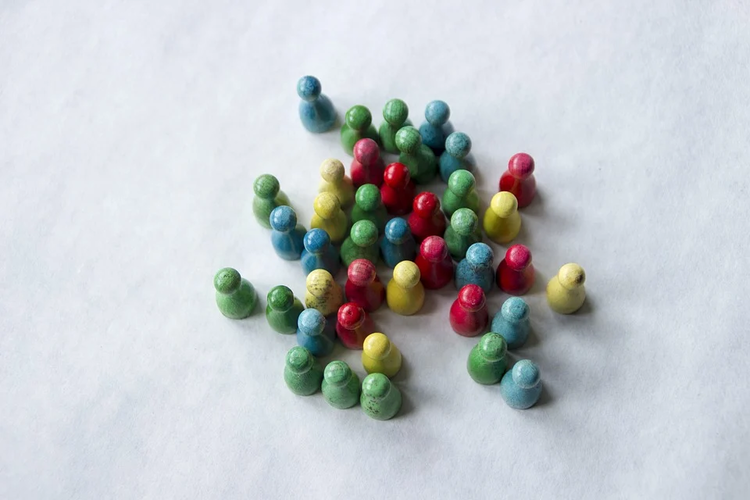
Seeing the world in black and white, we always strive to solve problems based only on the choice – yes or no. Meanwhile, in nature there are many colors and halftones that make the world more beautiful. Likewise, the trade-offs that can be used in the search for a solution can make the choice more varied and less difficult. If we can manage to find an acceptable option between yes and no, it can be a great success. When making a choice between the profession of a doctor and a musician, we mistakenly believe that this can only be fundamentally solved, choosing one profession to the detriment of another. But who prevents a doctor from being a musician in his spare time? And then a doctor is not a life sentence, but just a stage in life. If you understand that this is not your calling, you can change your profession more than once. So why go to extremes
Installation of “stretch marks”
Here we mean “mine streamers” – a term denoting conditions (most often unfavorable), when activated, you will perform predetermined actions.
Trying to make the right decision, we can easily become victims of arrogance: we can be sure that everything will be fine, but if something unexpected happens, we will not be able to act effectively, because we will be strongly attached to the choice we made.
This can be avoided with the help of “mine lines”. Let's say you decided to start your own business, and according to your forecasts, success awaits you. However, are you prepared for contingencies? If not, then you must formulate the conditions under which you will need to change your mind. For example, if after a year what you have invested does not pay off at least half, you will no longer invest in this business.
Mine streamers will save you from many difficult situations, help you see hidden risks and be prepared for them, identify escape routes and look at your plans more realistically. In addition, you will no longer be tied to the original solution, because you will have conditions under which you will need to find a new one.
You should not take this technique as if it were a manifestation of indecision, especially since it should not serve as an excuse for inaction. Stretching is essential so that you can stop being arrogant and be able to prepare for the difficulties that may arise at any time.

Expanding choice
Try not to make spontaneous decisions or get hung up on the chosen goal. Consider different options and think carefully about them. Do not act under the influence of other people's opinions – always have your own, because only you know what you want and what your soul aspires to. If you have scheduled a specific educational institution for admission and failed exams there, you should not fanatically move towards goals, trying to enter there annually. Maybe you shouldn't waste precious time and consider other alternatives? Or, when buying an apartment, you should not rely on the opinion of the realtor for everything – all his praise should be divided by the natural desire to sell this home. Take a note of his information and take time out for reflection, during which you weigh all the pros and cons of the upcoming purchase.
Make decisions in the morning
Argentine researchers Maria Juliana Leone and Mariano Sigman conducted several experiments and found that most people make the most accurate decisions in the morning.
The ability to make choices generally depends on the time of day. In the morning, people make decisions more slowly, but make more accurate choices, and in the evenings, we make decisions faster, but are more likely to make mistakes.
Take note of this and try to make the most important decisions in the morning, when you are not yet tired of work, household chores and other routine. Ideally, create to-do lists that you definitely decide to do today, and follow the list throughout the day.
More information

Before making a decision, try to get more information about the subject of desire. If you are in doubt about the choice of electronic equipment or a hairdressing salon, you cannot decide on booking a hotel or choose a university for further education, try to get as much information as possible. You can look at testimonials from former clients or applicants, talk with employees of these organizations, look personally at the work of a hairdresser, or study and analyze the characteristics of household appliances in order to make the right decision based on the data already available.
People are often asked how to make the decision to change jobs when in doubt. And in this case, you can advise not to use only the information of the one who promises you a new job with better conditions. Read the reviews, talk with the employees of the company, whether they are doing so rosy, and after that, comprehend all the pros and cons of your current job and the one that lies ahead. With this approach, your decision will be correct and balanced.
Do thought experiments
On his popular blog Wait But Why, Tim Urban advised his readers to make decisions – even those as important as getting married or choosing a career – using thought experiments.
For example, you are in doubt whether it is worth continuing your romance or whether it is better to break up with your partner. Tim Urban suggests this: Imagine a button. Clicking on it teleports you to the future, two months after the break. Your difficult conversations, public scenes and scandals in the past, your closet is free of things of the former or the former – not a single forgotten sock. All in the past. Would you press a button like this? If so, then you are not afraid of the breakup, but the hassle and troubles that accompany it.
Or, for example, you want to go on a journey, but you can't make up your mind. Imagine asking your friend to make a choice for you. One day he hands you an envelope containing your tickets for tomorrow's flight. Are you excited and adventurous or disappointed? If the latter, then you are wrong and want to go somewhere.
Urban says that such thought experiments allow people who are obsessed with logic and try to follow the voice of reason all the time to start listening to their intuition.
Use the 90% rule
In fact, delegation of choice and clock tricks are only good for little things – if you can't decide what to eat for breakfast or what tie to tie. However, not all decisions in our life are so simple. For more complex choices, there is a 90% rule.
It was invented by Greg McKeon, author of Essentialism. It consists in the following. When we make a choice, there are usually pros and cons to each of the options available. McKeon suggests that you rate each option on a scale from 0 to 100. If your solution scores less than 90, reject it.
It's just sanity. If your decision doesn't have a definite yes, say no and don't worry.
Greg McKeon.
The 90 percent rule makes it much easier to make decisions: if an option has more than 10% cons and less than 90% benefits, it shouldn't be accepted. “Think how you will feel if you score 65 out of 100 on some test,” McKeon writes. – Most likely you will be disappointed. Do you want to experience the same feelings when you make an important choice? “
Use a random number generator
Another option is to randomly choose between several equivalent options. This method is recommended by venture capitalist Patrick McGinnis. He always has to decide how to conduct his business on the stock exchange, so he hardly thinks about unimportant issues, passing the choice … to his watch.
To choose between all sorts of everyday little things, I use the “Consult the watch” method. I am narrowing down the list of options to two. Then I assign each option one side of my watch – right or left. I look at which half of the dial the second hand is at that moment. Decision is made. It sounds silly, but if you try this method, you will thank me again. It saves a lot of time.
Patrick McGinnis
You might as well roll dice or flip a coin, just like Harvey Dent.
Make the choice a habit
In fact, you don't even need the help of outsiders to convey the choice to them. You can rely on the power of habit. For example, Steve Jobs always wore the same shirt and jeans. He already had to constantly make decisions in the affairs of the company, and he did not want to spend energy on choosing a wardrobe. And Mark Zuckerberg follows his example.
You can do the same: choose the right food, clothing, or accessories once, and then just follow the habit. Or make for yourself a detailed schedule of the day and in the future, do not be tormented by the question of what to do next.
Elimination of emotions
Never make hasty decisions under the influence of momentary emotions. Quarreled with his wife – divorce, quarreled with the boss – dismissal, friction with a friend – a break. These are too important decisions to take on a hot head. Perhaps, as a result of reflection, you will come to the same conclusion, but you will do it already consciously and you can do without regrets and torments, whether your spontaneous decision was a big mistake.
To avoid the influence of emotions on decision making, you should use one of the following methods.
Know your basic priorities
Always stick to your core goals and desires. After all, often difficulties in making decisions are caused by the fact that you begin to take into account those values that do not correspond to your basic priorities, and because of this you cannot decide on anything.
For example, you choose between a high-paying, yet strenuous job, which means working outside hours, and a less high-paid (not much), but more comfortable and less labor-intensive position.
What to choose money or time and convenience? Instead of comparing two different positions and struggling with tough choices, consider why you are working? What is your goal in life?
Maybe it's not money at all, but family comfort, happiness, stability, health, raising children, etc. If you understand that it is these things that are your goals, and not money at all, which can only serve as an auxiliary means to achieve the above goals, then you will realize what you really need. You need something that will allow you to be with your family, build your own happiness and the happiness of your loved ones, take care of your health, and not sit in the office at night, even if it brings a lot of money.
In pursuit of money, people often forget why they actually earn it and are carried away by the flight of the illusion of “money for the sake of money.” Because of this, internal conflicts and contradictions may appear. To avoid this, constantly remind yourself what your core values are. And don't let side goals become top priorities.
This will help not only in choosing a career, but also move disagreements in the development of some business projects from a dead center. If people are clear about the original goals of the project, it will be easier for them to converge and come to a common solution.
I also refer to basic priorities in my life. I have been having difficulty with some of the solutions lately. And then I tried to understand what my main goal is. My main goal is to help people develop their projects. Accordingly, everything that interferes with these goals should be considered with low priority, and what contributes to the achievement of these goals with high priority. This is obvious, but before I imagined this goal, I initially misinterpreted the side goals as the main ones. But seeing my main goal greatly simplified my decision making.
Try and be wrong.
Yes, this is not a typo. Anyone who wants to know how to make a decision when in doubt should be prepared to make mistakes. We will not quote the great classics now, but experience comes precisely through the method of trial and error.
How to make the right choice without hitting a single bump? No way. Everyone has their own “rake”, and in this article we just tried to warn how not to step on strangers.
How to avoid the influence of emotions on important life decisions? Advice

When it comes to an early marriage or an equally impulsive divorce, costly spending or successful employment, in no case should you be guided by your emotions. For this negatively affects the final results, and you do not always get what you aspired to. But our emotions are very difficult to regulate. How to deal with them? There are several effective ways.
- Ask yourself three questions: “What will be my attitude to this problem in 10 minutes, 10 months, 10 years?” For example, if you are in love and are determined to leave your husband for a young promising lover, what will happen in the first time period? will not change, and love euphoria will also rage in your heart – there is no trace of regret.But after 10 months the passions will noticeably subside, the relationship will become more prosaic and from all sides can trample the flaws of the beloved, previously unnoticed passions in the heat. a guarantee that the shortcomings of your loved one will not become more annoying than your husband had? And if this annoying factor will be present in your life for 10 years, is it worth changing what you have for such a dubious prospect? The likelihood that shortcomings will appear is depressing high,therefore, it should be remembered that ideal people and relationships do not exist in nature.
- Before the upcoming serious choice, take a short pause, take a deep breath and slowly breathe in and out ten times. Spend ten such cycles, and it will moderate your ardor, will give you a look at the problem with different eyes.
- Torn between making this or that decision, imagine what the result will be if both events develop in an ideal way – which result is more preferable for you, and choose this.
- Imagine what you would advise your friend in your case, how to look at your problem with someone else's eyes – you will see a lot of things that were not noticed by you from your side.
- If time permits, just wait until the problem cools down, and only then make a final decision, because it is not for nothing that the people said that the morning is wiser than the evening.
Conclusion
All this knowledge and techniques are designed to help you make difficult, vital decisions. They should give the decision-making process the necessary clarity and clarity, but in no way should they create an illusory feeling of confidence that absolutely all problems are amenable to the union of reason with analysis. Collect more information and be attentive to the events and people around you, so that your chance of making the right decision is higher.
Sources used and useful links on the topic: https://feelwave.ru/lichnostnoe-razvitie/kak-pravilno-prinyat-reshenie-esli-somnevaeshsya https://vsvoemdome.ru/psihologiya/kak-prinyat-pravilnoe-reshenie https: //psychbook.ru/418308a-kak-prinyat-reshenie-esli-somnevaeshsya https://www.adme.ru/svoboda-psihologiya/7-prostyh-sposobov-sdelat-slozhnyj-vybor-1607765/ https: // zen .yandex.ru / media / id / 5cfe4f52254b9f00af8a920d / 6-kak sekretov–priniat-reshenie-esli-somnevaeshsia-5d036b5780030d0d86acb0c7 https://4brain.ru/blog/how-to-make-the-right-decisions/ https: //Lifehacker.ru/prinyat-reshenie-i-ne-pozhalet/ https://onedio.ru/news/25-prostyh-sposobov-nauchitsya-prinimat-pravilnye-resheniya-v-zhizni-16119 https://4brain.ru/blog/right-decision/ https://Lifehacker.ru/pravilnyj-vybor/ http://nperov.ru/razum/kak-prinyat-pravilno-reshenie-10-metodov/
Post source: lastici.ru