
What is the best way to read, aloud or to yourself? Memo for parents: how to explain to a child why you need to read

Why read books to children? The benefits of reading for children
For the youngest children who have not even learned to speak yet, reading books is a whole complex of different activities. Here you look at the pictures together, tell what is shown. The child learns to look, notice details and listen. The baby's horizons expand, an understanding of objects and actions appears. Reading is a calm and rewarding leisure activity that perfectly prepares the little fidget for bed.
In addition, there are at least 10 more reasons why you need to read to your child:
-
Reading to children has a beneficial effect on the development of creativity. Thanks to this activity, the child's imagination and imagination develops. During this process, the child introduces characters and events in their own way. In cartoons and films, there is already a ready-made picture and image, so there is no need to fantasize here.
-
Reading to the baby, moral education does not stand aside. The kid tries on the image of a hero, experiences with him, learns to distinguish good from bad, good from evil. Sometimes the child may even have conflicting emotions, and he may ask the parents to re-read the same story until he forms his own point of view. Nothing can replace such work of the soul.
-
Kids, to whom their parents often read books, in the future are able to learn to read on their own faster, and school success becomes much higher.
-
Reading contributes to the development of speech, replenishes vocabulary and broadens horizons.
-
Reading to children means teaching them to analyze, reflect. Reading helps to develop logical thinking, teaches to understand the cause-and-effect relationship.
-
Reading is a great way to improve your relationship with your child. And spending leisure time with the child in this way, warm memories will remain for a lifetime.
-
Another important plus in reading to a child is the development of intelligence and literacy. From an early age, the kid hears the correct speech, turns, learns to think and express his thoughts correctly.
-
Reading books perfectly trains memory, which will greatly help in mastering the school curriculum, and then in the university.
-
If you read a good fairy tale to a child at night, he falls asleep faster, and sleep becomes stronger and healthier.
-
Children who have been instilled in a love of reading by their parents will always find a useful and exciting activity for themselves. For them, the best leisure time is reading a book than, for example, wasting time on the Internet.
Start reading to your child as early as possible, because reading perfectly develops creativity in children.
What to read to children?
It is much easier to find a book for very small crumbs. These can be simple rhymes, nursery rhymes, songs. You can purchase any printed edition with simple, kind, bright and large pictures. Leafing through the pages, you only need to tell who or what is depicted.
With older children, it's already a little more difficult. You need to choose a book that will interest your kid. And if this book made an impression on the child, then perhaps he will ask you to re-read it over and over again.
It is also important to consider the gender of the child. Girls may be interested in one topic, and boys in another. Remember what books have read to you. Perhaps your little one will like the same.
What to read to children? What are the main directions of literature to help the baby in development?
- Fiction (classics) is more suitable for older children. Reading such books is always useful and will definitely help the child at school and university.
- Fairy tales. Choose fairy tales only with a good storyline. Unfortunately, many fairy tales are very similar to horror films. Such reading not only can worsen the baby's sleep, but is also a kind of “instruction” for crimes.
- Educational books. Here the choice is huge. The kid can read about animals, birds, crafts, phenomena and so on. Thus, the horizons of the child are perfectly expanded.
- Spiritual literature. There are books for children with which you can start acquainting a child with religion. The main thing is not to force the baby to listen if he doesn't like it. After each reading, discuss what you have learned with your child.
How to read correctly to a child? Reading interesting to children
There are some peculiarities in reading to young children that can make young mums and dads put off the book indefinitely.
According to the experience of many parents, the main difficulty is that a very small toddler does not want to listen to mom's reading. And if he listens, then a maximum of a few minutes, then runs to do more interesting things for him.
The fact is that at an early age, most children still do not have such a quality as perseverance. They can very quickly switch their attention from one object or action to another. There is only one way out in this situation – to regularly read books to the kid, and this must be done correctly and interestingly.
When choosing a book for a kid, it is important that it contains bright, colorful and large pictures. When reading to your baby, always pay attention to these images. Share and discuss together what you see in the picture. While reading, change the intonation, depicting the heroes of a fairy tale or story, your speech should be intelligible and understandable.
Be patient. If your baby is not listening to you, try reading for a while anyway. Gradually, the child will begin to listen.
If your toddler disagrees with what he's reading, discuss these points together. Praise your child when he asks you to repeat, re-read, or wants to clarify something when he does not understand.
It is important to read the book to the end, even if not in one day. Only then start a new one.
Do not force your baby to listen to you if he does not want to, is naughty or not in the mood. Find another time or a different approach. You do not need to discuss every line of what you read, highlight the main points.
For each age of the child, there are certain characteristics in reading books. Of course, there is no need to read “war and peace” to a newly born baby.
Acquaintance with the book from birth to one year
The first acquaintance begins with the simplest images. These can be black and white shapes, patterns, or large objects of the same color. Newborns are just learning to focus their gaze on a particular subject, developing vision and enhancing brain function.
Starting from 3-4 months, the child can be shown more complex pictures: images of people, animals. Be sure to tell your baby what you see every time.
At 6 months, you can already buy your baby's first toy book. As a rule, it contains no more than 5-7 dense pages. The variety of such books is huge. Their pages can be soft, rustling, there are books specially designed for swimming with children. Choose the one you like. The main thing is that the images are large and bright.
Kids at this age begin to explore the world around them, study various objects and their properties. In such a book it will be interesting for the little one to turn the pages. Along with this, fine motor skills of the hands also develop well.
Choose books with realistic objects for the correct perception of the baby. This means the frog should be green and the tomato red. It is ideal if only one object or simple action is depicted in one picture.
To deal with the baby should be when he is in a good mood. Take it on the pens, put the book in front of it and, turning the pages, tell everything that you see. For many children, this pastime becomes one of their favorite activities.
Reading to children 1-2 years old
At this age, babies have excellent memory. According to psychologists, children of this age cope with a huge flow of information, remember and understand a lot. Therefore, when reading to your baby, you need to include new teaching elements.
Pay attention to letters and words, to the main characters and to various details in the plot. At the age of two years, the book should still be with beautiful realistic pictures.
The list of the first books for reading with a baby of 1-2 years old is perfect for such as V. Bianki “the fox and the mouse”, E. Karl “a very hungry caterpillar”, “from head to toe”, Russian folk tales and darkness in illustrations. Many children love these books, and parents have to read them to their holes. They have excellent illustrations and the text is short and easy to understand.
Always focus on the images by telling your baby about her in detail. Soon, the little one himself will begin to point to the pictures, wanting to know the name of the object.
Reading with children should take place in a favorable environment, in a good mood, and extraneous sounds should be excluded (turn off the TV).
Read to children various short fairy tales, rhymes, nursery rhymes. Toddlers are very good at taking simple rhymes. Perhaps, at the request of the child, you will have to reread the same rhyme 30 times a day.
Reading books for children 2-3 years old
At this age, kids are also actively remembering and are the most grateful listeners. They begin to develop imagination and imagination, and reading books to children is excellent for the development of creative abilities.
Try to read to your child every day. Even if your baby is playing or busy with something, sit down next to it and read. Sooner or later he will develop an interest in reading and he will join you.
Children develop an interest in role-playing. Play with your baby in a home puppet theater or simple fairy tales, for example, “kolobok” or “teremok”. After reading the next book or rhyme, try to draw the plot or the main characters together.
Reading good books to children at night is good for sleep. The kid falls asleep faster, his sleep becomes stronger, and in the morning he wakes up in a great mood.
Looking at pictures remains an essential part of reading for children. The images can be more complex, invite the child to already talk about what he sees.
As for the choice of literature at this age, here it is already necessary to independently decide which book may interest your baby. Consider your baby's interests. For example, if he likes the animal world, then choose books with this topic.
Do I need to read books to children? Benefits of Reading with Parents
# 1. Strengthens relationships. In the modern world, where parents are building a career and leading an active social life, and children from an early age attend developmental classes and use devices, it is difficult to maintain closeness. Make it a habit to read a book to your child every night before bed. This is a great way to strengthen your bond with your beloved child. You will be able to share your impressions and opinions about the plot, which means you will learn more about the worldview of your little miracle.
# 2. Instills a love of reading. Children's books should become a part of your family life and as familiar a thing as dinner or an evening bath. The more your child reads with you, the more they enjoy immersing themselves in new stories. You are instilling a healthy habit that will stay with your child for life.
Number 3. More children's literature, less gadgets. Make reading together a part of your daily schedule. Free time when your child can watch cartoons or play online games, devote to literature.
No. 4. It helps to learn to read aloud beautifully. Reading children's books is an excellent developmental activity. Take turns reading aloud. This will help the child build confidence and get used to reading for others, which will be a useful skill in school. Such an activity improves pronunciation, expands vocabulary, and helps to plunge deeper into the plot.
No. 5. Develops language skills and expands vocabulary. Kids get acquainted with new words, various types of constructing sentences and dialogues, styles and ways of presenting information. All this has a positive effect on the further ability to correctly and interestingly express one's opinion, and also affects the development of speech and the richness of the vocabulary. In this case, the best children's books are classics with a beautiful and simple syllable.
No. 6. Improves imagination. While listening to children's literature, a visual picture is created in the baby's head. It represents the appearance of heroes, locations, actions. Imagination works at full capacity. In addition, fantasy is included. Toddlers begin to fantasize and invent their own stories with their favorite characters.
No. 7. Encourages Knowledge – Choose different topics to spark interest in the world around you. Let a new children's book await your child every week. A good choice for schoolchildren is encyclopedias. They will tell about the flora and fauna, planets, the history of mankind. We recommend paying attention to the Rosman encyclopedia.
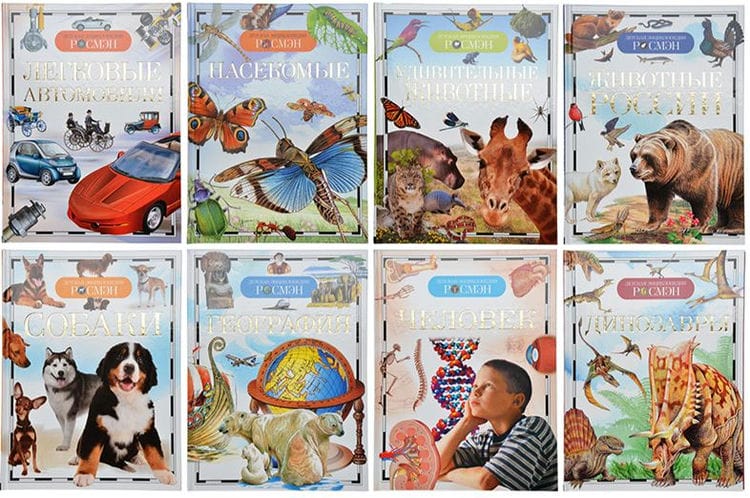
No. 8. Teaches empathy and empathy. Children have a narrow understanding of the world around them. The task of parents is to show the difference between good and evil, and how to behave with a person in trouble. A children's book is a good tool in this responsible business. It will help you “to be in someone else's shoes”, to feel the feelings of the protagonist, to assess situations, to empathize and sympathize.
No. 9. Brain training. Listening to children's literature, the child's brain works more than watching TV. And all because the kid has to visualize the plot and delve into the plot.
No. 10. Improves Concentration – Reading a children's book requires concentration and concentration. There is no picture on the TV screen to distract from. In the future, these skills will come in handy in your studies.
No. 11. If a little fidget is naughty and cannot calm down before bed, read him a children's story. Reading interestingly and with intonation, you will quickly calm your baby.
No. 12. Veselit. Literature for children is fascinating stories with funny characters that you will not see on TV. Even when they make films from books, most people admit that reading was much more interesting than watching. Children's fairy tales give fun leisure, so you shouldn't give it up because of empty online games.
How to instill in children a love of reading
#one. Suggest several genres. If your child doesn't like reading, then maybe you were wrong with the genre. After all, you may like romance, and your son – mysticism and fantasy. Arrange weeks of the book and come up with a different version each time.
# 2. Live the adventures of heroes together. When the children's book ends, the little reader thinks: what would happen if I were in the place of the main character? It's good if, after reading the literature, you come up with story games. For example, make the Harry Potter magic wand. Let the delight of the book you have read last as long as possible.
# 3. Be an example. Boys and girls copy the actions of their parents. If you force them to read, and watch TV for hours, nothing will work. Read it yourself, set a good example.
#four. Maintain your curiosity. Son just finished reading a book about space? Take him to the astronautics museum. Or maybe he just got acquainted with exotic animals? It's time to go to the zoo.
#five. Never force. They can read to please you. But the fact that they are forced to do this will rob them of their love of books for life.
# 6. Teach your children to read old children's literature from the library. Every child should experience the magic of visiting a large library containing thousands of books.
# 7. Join a book club. This is great motivation to read. Choosing children's books and then waiting for them to arrive in the mail is very exciting.
Have family reading evenings. Share stories, opinions on stories. The main thing to remember is that nothing fascinates in this life as an interesting book.
Reading aloud
As Wikipedia writes: Reading is a complex cognitive process of decoding symbols aimed at understanding the text.
When did we read aloud? Probably still in school.
Moreover, not in high school, but in primary. When forced to read aloud.
Then we all switched to reading “to ourselves. “ And in this we have achieved good success.
It is not surprising that the speakers from the rostrum cannot read the text aloud well and colorfully. Why?
Because the unclaimed function, as doctors say, it atrophies. The same thing happens with reading aloud.
I'll read it now!
It seems to the speaker:
– I'll read it now! I read beautifully and colorfully. Read hundreds of books!
And what comes out as a result?
Monotonous reading. Low expressive. Without the desired overflow of voice.
So?
In any case, this is how it is heard from the side.
Why reading aloud is good for both children and adults
1 School performance is 95% dependent on a child's ability to read aloud not by syllables, but as if he were just telling something. In schools, children are not taught to read well (fluently and expressively), but are transferred to “silent” reading (with eyes, similar to superficial reading – “speed reading”).
The school curriculum is designed to teach the rules of grammar and separate reading of words, and in order to effectively teach any skills or subject matter, you must be able to read aloud with high quality. Humanity has not come up with anything more useful for the development and prevention of brain degradation.
The main “problem” hinders the understanding of the importance of “loud” reading – it seems that when you start reading aloud, the information is not assimilated. In fact, the situation is exactly the opposite. With “silent” it flies into one eye, and flies out into the other. It's just that the brain doesn't understand it right away.
2 Expanding vocabulary. It is no secret that even an ordinary adult's vocabulary in his native language practically does not increase if he does not perform special exercises. What can we say about the rapid study of a foreign language or mastering a new specialty – this requires the assimilation of too large amounts of new information!
The practice of the SupremeLearning project shows that it is reading aloud that has a powerful synergistic effect from the interaction of different parts of the brain at the time of reading aloud: the visual, auditory and motor parts work at the same time. The more diverse sources of information, the faster and more accurately the details are remembered.
3 Reading with takes in different ways is an ideal way to learn poetry or lyrics.
Memory works according to the principle: everything that does not repeat itself is forgotten. Therefore, it is important to make takes or, more simply, repeat. At the same time, it is simply necessary to add variety to the process. The more possible options for losing a situation, the better it is remembered.
4 Loud, expressive, emotional reading aloud is one of the most effective exercises for developing children's speech. However, not only children, but also adults! Why aloud, and not as usual – with the eyes, “silent”? It is reading aloud that provides speech training, language practice, while “tacit” provides only superficial assimilation of any information by the brain. To become a dancer you have to dance, not watch others do it.
When reading to oneself, the main part of the information is perceived by the brain as “trash”, unnecessary and is quickly erased or stored in places inaccessible for playback.
“Loud” reading makes it possible to master the skill of easy and accurate expression of thoughts, “provokes” a constant increase in vocabulary, the development of good diction, intonation, emotional coloring, brightness of presentation, correctness of speech and its other components. Only by reading aloud can you and your children be able to eradicate such speech shortcomings in your speech as tongue-tied, stuttering, stutters, slips of the tongue, parasitic words, etc.
5 Psychologists are confident that reading is the main process that contributes to the formation of personality at all stages. From the cradle, when a child hears the voices of parents reading aloud to him and in adulthood, when a person overcomes various crises and grows spiritually. It's hard to overestimate the benefits of reading for teens. Reading – at least sometimes – aloud, adolescents not only seriously improve memory, thinking and develop other cognitive processes, they learn to love, evaluate actions, empathize, trace the cause-and-effect relationships between any events, analyze actions, forgive, etc. Reading is most effective “Adult” books, especially the works of Russian classics, for example, FM Dostoevsky. The formation of a harmonious person is impossible without reading.
6 From the point of view of evolution, the ability to read is a clear superstructure over the already existing structures of the brain. It turns out that most of the higher brain areas are involved in reading. This means that reading can be seen as the best exercise for keeping the brain “in shape” …
The brain of a person who can read works in a much more complex way than the brain of an illiterate person. Moreover, the brain of a person who practiced reading in childhood is better able to activate all of its resources than the brain of a person who learned to read as an adult. It's safe to say that reading is one of the best exercises for keeping your entire brain in shape. This is all the more important, given that such competitors to reading as “developing” computer games have shown themselves to be very dubious “trainers for the mind.”
Another important implication of the research results is that difficulties in learning to read and write are natural. If a child (and even more so an adult) cannot easily master this seemingly ordinary type of activity, then now one should remember that what seems elementary in appearance is actually one of the most difficult tasks that the human brain can only solve …
General conclusion: constant exercise in reading not only improves this reading itself and, for example, broadens the horizons, but also increases the efficiency of the brain in almost all spheres of human activity …
7 Fast reading or slow reading? Speed reading is a special form of reading that should not be overused. Fast reading can be useful for finding the necessary information in a large stream of it. The brain uses less energy with this type of reading and there is a great danger in this. You can get used to reading everything in this mode and then expect trouble. Fictional text will fly by unnoticed, and your speech will “jump” from topic to topic, bypassing logical connections.
8 Will reading “loud” help you get rid of accent or severe speech impairments? Yes, absolutely. The most powerful tool for correcting speech defects, such as, for example, burr, stuttering, booming voice, “collective farm” regional or foreign accent – is the parallel (simultaneous) reading with the “masters of the word”. Defects are eliminated quickly and efficiently if you try to accurately simulate all the voice characteristics of the “reference speaker”. Not so long ago, Mikhail Shestov created special correspondence courses that provide both children and adults with free entry into the “harmony of language”. That is, they make it possible to learn to read the most difficult texts, even for intelligent adults, with actors in a few hours.
9 Impact on literacy of writing – quantity can turn into quality. Of course, for the development of literacy in writing, it is necessary to rewrite literate texts, but even simple reading aloud can improve the writing style. Beautiful phrases constantly “spin” in my head, which you can add to the text at any time. And the more such phrases, the more interesting your notes become. You clearly understand the correct word order and are able to build beautiful sentences, even with minor spelling or stylistic errors.
Advice from Mikhail Shestov: It is very good to remember, pretending to be different characters and assigning them different voices and manner of speaking. Even if you are just reading a book alone, read it as if you want to interest the child. This manner of memorization becomes like a fun game, not boring cramming.
When and how to start teaching a child to read aloud?
From birth, you need to talk to your child in the correct Russian language, expressively, dramatically and emotionally. And as he grows up, it is necessary, as soon as possible, to teach him to read aloud expressively using three types of training:
- repetition for the announcer (for you, for example)
- reading with the speaker
- independent reading
By all means – out loud! With the help of these exercises, it is imperative to accelerate the speed of reading or repetition behind the speaker to the speed of fluent speech of adult native speakers. Learning to read from a model should begin at the age of three.
One of the most important exercises for the development of normal intelligence is mastering spelling – the art of freely putting words into letters, singing them out loud. And easily compose separate words from sequences of letters.
Any lessons do not need to be crammed, you need to be able to read them expressively and aloud, in a different manner, with different loudness, as if making takes (like actors and singers). All unfamiliar and incomprehensible words need to be looked for in an explanatory dictionary, spelled and read aloud their interpretations. It is necessary to learn to work with a dictionary and various encyclopedic literature from the moment when the child learns to read.
To broaden your horizons
To broaden the horizons, you need to force the child to read aloud and rewrite clever texts in large enough volumes: from five standard pages in a row. This, very quickly, will develop in him the habit of doing this on a daily basis. You will need a selection of texts written by smart (highly educated, very literate) people, including various quotes and sayings, as well as just texts in which the variety of styles of the Russian language is revealed (present). The meaning of all unfamiliar words should be searched for in a regular or electronic explanatory dictionary, spoken and written down by letter. The maximum amount of such work with the dictionary: one standard dictionary column per day.
It is also required to quickly, using stencils, to ensure the formation of calligraphic handwriting or a computer keyboard, to teach the child to accurately tracing individual words and sentences, and, in the future, dictation. Which, in turn, will lead to the formation of the ability to write independently.
For career guidance
For a child's career guidance, it is necessary to increase the volume of special terms (inherent in a particular profession or occupation) in a different manner pronounced to the child, with an exaggerated demonstration of articulation, in order to develop a persistent habit in him not only to repeat after you and other educated people, but also in accordance with orthoepy laws.
What can be done to improve the quality of reading aloud?
Usually, the speaker is associated with this way. The orator reads, a fiery speech sounds, gestures are directed forward to the audience, leaves fly from the podium … But how is it really happening?
It is useful to realize that we have not developed the skill of “reading aloud” for a long time, but practiced reading “to ourselves”. And these, albeit similar, but different skills of our brain.
And start reading aloud.
You can read different texts: both colorful texts of great writers, and “dry” texts of encyclopedias.
After all, many of the texts are well written. They are carefully thought out by writers. They contain words that are little used in everyday life, words that are useful for developing vocabulary.
How to sight-read correctly in front of an audience
Have you ever seen a speaker reading from a piece of paper? Agree – a sad sight.
Watch the video:
In Soviet times, it was customary to read “from a piece of paper”.
Remember, for example, the speeches of Leonid Ilyich Brezhnev.
As usual, the speech of the speaker takes place. The speaker is busy with the text – the audience is busy with their own business.
However, it happens that modern orators who read speeches very well.
And what, good orators do not read from sight? – They read it. And how they read it.
Remember Altov, Zhvanetsky, and other pop comedians. They read, and read very well from the sheet.
Even Barack Obama often speaks while looking at a piece of paper.
But he reads in such a way that no one even notices the reading.
For example, here is one of the videos where Barack Obama speaks using written text. But it looks beautiful. Why? – Because he can read.
What had to be done? There are two options:
- Read – and “in your own words” tell this text to the public.
- Learn the technique of “public reading”.
Correct public reading.
Why “correct” – because there is a rule: you need to look into the eyes of those people to whom speech is addressed, it does not matter whether it is written or not.
You need to read aloud so that you can see the audience and the text in front of you.
Public reading (reading in front of an audience) is really more difficult than regular speech, and requires special skills.
Why is it harder? Because, as in any public speaking, eye contact with the audience is important here, and while reading from a sheet of paper, it is difficult to create, and even more so, to maintain this contact.
And read, and see those to whom you read.
And not only to see, but also to feel how well the audience accepts and assimilates your material.
To see, to feel, whether my dear listeners understood the previous words.
Often, very often, the speaker does not notice how quickly he overloads the listeners' perception.
Let's remember our wonderful lectures at the institute …
So how do you read aloud from sight without losing eye contact?
What we pay attention to: pauses, eye contact and the speed of our speech. How fast can you read aloud? I suppose it will be fast, but we need it so that your every word is perceived by the audience.
An important technique: read during a pause, and when you speak, look into the audience. And so alternately.
It is necessary to adjust the speed of speech, the duration of pauses and phrases. All this is accomplished by exercise.
How to read aloud correctly
So, let's summarize everything written above.
1 Not a problem.
Who reads like that? Where are the emotions?
If you (or someone else) do not read aloud well, this is not a problem. This is a challenge. You need to start reading aloud, and this skill will quickly develop.
Moreover, very quickly. You just need to start doing it.
To learn to read aloud (or teach someone else), you need to read any text. As a rule, the written texts are well thought out. They contain “new” words for our colloquial vocabulary.
2 What to read aloud
You can read fairy tales, read stories, read parables.
I highly recommend reading the parables. These are short stories. And there is no desire to read quickly to read to the end. They are usually very well written.
3 How to read aloud
It is advisable to read slowly, slowly. No more than 100 words per minute. Better: 60. Better yet (although difficult) 40 wpm.
Yes. Exactly. Doubt? And – you are doing the right thing. Indeed, in the Internet there are many recommendations where it is recommended to read at a speed of “120 words per minute.” But I'm a public speaking coach, I know what I recommend.
With a normal reading speed, there is no time to pay attention to pauses, intonations, gestures, facial expressions. At this speed, 120 or more, the brain only has time to read.
And when to memorize words?
At this speed (120 words per minute), you can only read by looking at the text. But after all, you need to look not at the text, but directly, at the listener or listeners, or at yourself in the mirror
How I started reading aloud, and what's the catch

In the summer of 2019, I moved to another city and in a few months I did not acquire strong acquaintances. After a few months without regular human interaction, I began to notice that my speech was noticeably degrading. At first, in conversations with outsiders, I began to “echo” more and slow down, then I began to blunt. At some point, I found that I had to strain to formulate elementary thoughts even in conversation with the sellers in the store.
Then I decided to ask myself a little exercise: for the sake of experiment I decided to read aloud at least a few pages a week. This practically did not solve the problem with degrading oral speech. But I'm addicted! It turned out that there is a certain thrill in this. Completely separate, peculiar and very different from the usual reading to oneself.
For starters, reading aloud fits perfectly into the philosophy of the so-called “slow life” – a return to a slower pace of existence and thinking, despite modern vanity. Adepts of this movement have come up with quite a few funny concepts, like “slow food”, when you cook and eat slowly, deliberately enjoying; or “slow travel”, when you hit the road not in a hurry, but in a relaxed and spontaneous way.
One of the most beloved concepts of slow life fans has become “slow reading” – a process during which you spit on the amount of reading and surrender yourself entirely to quality. I myself have been obsessed with this topic for a long time, long before I learned about such ideas. At one time, I read a lot of literature at once, studying in graduate school, and one day I just burned out. Books began to be associated with work and routine. Fortunately, the turtle, thoughtful and even lazy absorption of books has returned my love of literature. And reading aloud is the surest way to feel “slow reading”. At least because the speed in this case, by definition, is very limited.
Reading aloud allows you to feel every metaphor, every quirk that the author allowed himself, every emotion. Suddenly you begin to understand how melodious and smooth speech turns out to be in books with good stylistics. Such a text is pleasant to pronounce, even if in itself it is not so interesting.
Another important element of reading aloud alone is that you can be monkey, which is a completely different kind of pleasure. It can be terribly funny to read a story by Poe or Lovecraft in a grave whisper, or some essay with deliberate seriousness, finally breaking down and starting to laugh. If one of the heroes of your reading matter is disagreeable to you or seems insipid, he is drawn to mimic in the most vile way. The main thing is not to get carried away, only sometimes allowing yourself something like that, otherwise it is no longer reading, but ordinary self-indulgence.
A big plus of reading aloud is gesticulation. Reading to yourself, you are unlikely to try to gesture with your free hand, but out loud – it suggests itself. Perhaps because you start to feel like a reciter in front of the public. The hero grabs his head – and you yourself involuntarily put your hand on it. He speaks of someone with contempt – and the hand makes a dismissive gesture. All this happens on its own, spontaneously, and that's why it even began to seem to me that earlier, reading quietly and sitting quietly, I deprived myself of some important share of the pleasure of the book.
And by the way, reading aloud is the best way to fall asleep if you have mild insomnia. Your own monotonous speech lulls you better than any podcasts and others
How to start reading aloud to get a kick out of it

I must say right away that I didn't go so far as to read absolutely everything aloud. It still takes up hardly a third of my “diet”.
You need to read aloud very selectively, not all literature is suitable for this. For myself, I have determined that the best options are something imaginative, with great style and expertly crafted metaphors and descriptions. That is, most of the fiction drops out right away.
Essays are perfect (most of all I got pleasure from Umberto Eco), of course, poetry (I read all sorts of ancient Chinese, like Li Bo and Du Fu – they have a very simple, clear and devoid of strain). Great visit was “Notes at the Headboard” by Sei Shonagon, written by a lady-in-waiting of the Japanese empress in the 8th century, and which I previously could not appreciate at all without reading aloud. Stories full of savory fantasy descriptions go well. Occasionally – something philosophical, but laconic. Lao Tzu and La Rochefoucauld flew like cakes into the oven.
In addition, I advise you to try reading with music, which, counterintuitive as it may be, often helps to concentrate and immerse yourself in the book, while not at all confusing speech. I chose something calm, like ambient and light jazz, but I wouldn't be surprised if something more energetic will come along. Reading aloud often comes with surprises.
Another important tip is to use deep abdominal or diaphragmatic breathing whenever possible while reading. In general, it is a physiological norm for a person, but in our time, apparently, it is not typical for everyone. It comes to the point that, for example, I have to learn to breathe correctly, and not as I'm used to, no matter how wild it sounds. We breathe too shallow and intermittently, using little diaphragm – apparently, the sedentary lifestyle and the specifics of the life of a city dweller are to blame. However, I do not pretend to have a true understanding of things. However, while reading aloud, it is very easy to set up abdominal breathing, it often suggests itself – otherwise you simply start to get tired quickly.

And most importantly, you should not try to turn slow and thoughtful reading aloud into a habit with an effort of will. It is a thing for pleasure and relaxation. Try it when you need absolute silence (yes, strange, but true), privacy and relaxation. The coolest thing about the whole process is that the most grateful, the best audience in the world, that is, yourself, will listen to you.
Children should be able to read aloud.
“MOM, read us a fairy tale!” – ask my children before going to bed, lying in their cribs.
And despite the fatigue and workload, I pick up a book and sit down next to the kids. Yet there is something soothing about reading aloud.
For a child, such moments are very important. Because this is his cherished time when he is alone with his parent. This is only their time, in which a call from work and no one else can intervene. Just you and your baby. It is worth remembering that when you read your child his favorite fairy tale, he feels your care and love. In addition, the baby will fall asleep so quickly.

However, modern moms and dads are so busy at work that when they come home, they often do not have the strength to read. Child reading is a good option for you. If you are very tired, or maybe it was a hard day, your mood is completely ruined, then ask your little daughter to read her favorite fairy tale for you. Believe me, it will be pleasant both for you and for the child. And for him it will also be very useful.
Oral reading develops speech. In the process of reading, the child hears and listens to himself, which allows him to memorize new words and speech patterns. He understands how to pronounce this or that word, where to put the speech stress and with what other words you can use it. An older child no longer reads fairy tales, so knowing the correct pronunciation of special terms will undoubtedly come in handy in school activities. The fact is that in the process of reading, you can always stop the child and correct him if he pronounced some word incorrectly. You can also discuss the meaning of what you read after you finish reading. Thus, the child will learn to understand the text. This skill will be useful to him in absolutely any job. These abilities will also be useful for an adult.
Information read aloud is better absorbed.
Teachers in educational institutions often ask their students to read aloud, especially in cases when he does not understand something or cannot learn. The fact is that in the process of reading aloud, the reader subconsciously completely immerses himself in the material and ceases to be distracted by external stimuli. Reading to himself, a person can involuntarily be distracted by extraneous noises and pay attention to unnecessary conversations.
Experts say that in the process of studying the material out loud, three types of memory work.
- Visual memory is considered the first. A person runs through the material with his eyes, remembers what his eyes see.
- The second type is called speech memory. A person remembers what his lips say.
- The third type is considered to be auditory memory. The ears hear what we say and the heard speech is involuntarily absorbed. And in combination with other types of memory, it is absorbed much better.
Using all three types of memory, students are able to assimilate voluminous and complex material, while not just memorizing it, but really understanding.
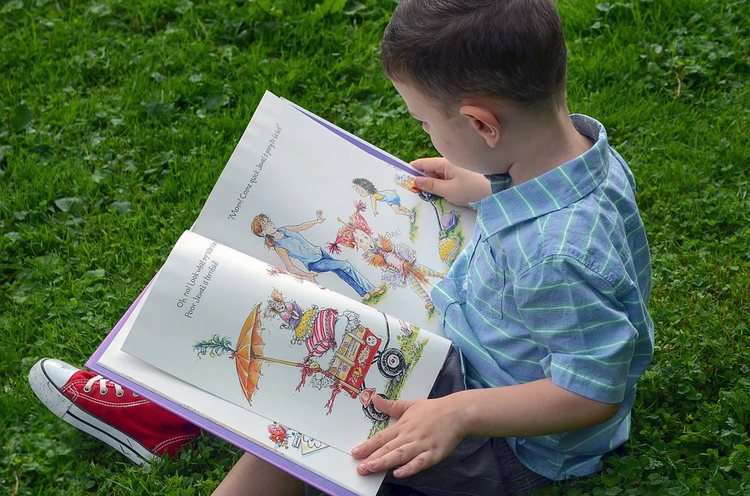
Also, reading aloud increases communication skills and develops erudition. This kind of reading helps a person to become more self-confident.
Reading aloud: how to read and what to read?
It is recommended to read aloud at a leisurely pace, pronouncing phrases and words well, expressively placing accents and pauses. Vocalize different characters artistically while maintaining the tone of a living story. Any literature will do. It all depends on your interests and preferences. Everyone determines the optimal time for reading individually. If you want to make your speech smoother and more expressive, then reading aloud should take at least half an hour a day.

A useful type of leisure.
Of course, to read or not, is absolutely every person's business. Reading aloud allows you to continuously improve your memory and speech and will forever remain one of the rewarding activities. The main thing is to properly organize your free time and spend it with pleasure. For some, there is nothing better than getting into your favorite rocking chair, picking up an interesting book and immersing yourself in reading, while moving away from all the problems and worries. Of course, reading is a very useful activity, and it's up to you to choose whether or not it is aloud.
Effective exercise
Oratory not only allows you to control the situation, but also to manage it. More often than not, eloquence is an acquired ability and can be trained. Let's find out what exercises you need to do:
- Loud reading. To develop the flexibility of the voice and its strength, you need to read the text with a change in tone. Transitions are made from a quiet pronunciation to a loud one and vice versa. In this technique, extended vowels are also pronounced. The voice may sound lower than usual.
- Retelling of the read. The works read are retold in their own words. Great attention should be paid to details, as well as trying to remember more information.
- Search for keywords. For the development of verbal thinking, it is necessary to determine which words in the text are key. We must try to find new formulations for them.
- Paraphrasing. This exercise helps you identify the main point. After reading a short text, you need to convey the information it contains with the help of one sentence.
- Simplicity of speech. To get rid of the words of parasites, you need to record the text on a voice recorder, and then listen to it and mark sentences with such words. After that, the text is spoken again, but in the correct version.
- Tongue twisters allow you to learn how to pronounce speech faster, but at the same time maintain correct pronunciation.
- Reading in warehouses. The technique helps to develop a clear and fluent pronunciation. Any text should be read slowly and in warehouses. It is important to pay attention to the clarity and correctness of the sounds.
- Reading poetry. Working with rhymed works allows you to quickly memorize the correct formulation of stress in words.
Exercise is recommended more often, but it is important to take breaks. Speech clarity and clarity can be achieved with correct breathing. And this can be developed using special breathing exercises.
No problem
Even if you can't read aloud well, this is not a problem, but a new goal. You should start reading aloud to develop a useful skill. To do this, you will need to read various texts. This is a good way not only to learn to read with expression, but also to replenish your vocabulary with new phrases and words.
What can be read aloud
You can train on fairy tales, stories and interesting parables. It is worth starting with short stories. At the same time, there is no desire to quickly finish reading the work. Such prose is well written.
Reading rules
You should read slowly and slowly. More than 100 words should not sound per minute. Better 40-60 words.
With a typical reading speed of 120 words per minute, it is difficult to pay attention to intonations, pauses and gestures. At such a speed, the brain can only read, but does not have time to assimilate words. With these indicators, reading is possible with constant peeping into the text. But you need to have time to look at the listeners.
It is important to observe the following rules:
- Read slowly. This is difficult at first, as reading to yourself is much faster.
- The words should be pronounced clearly.
- You need to read with expression and arrangement with pauses and accents.
- It is recommended to practice vocalizing the direct speech of the characters, pronouncing the text in different keys.
Reading time is also important. The optimal time is half an hour a day. After a month of constant training, the first results will be noticeable. Speech will become more beautiful and smoother. The ability to quickly find words to express thoughts will improve.
The readable text can be recorded on a dictaphone. This will allow you to pay attention to errors and note the features of speech.
Slow reading
Only when reading slowly can you control your voice and speech. You must try to change phrases. Speak words louder, faster, or quieter. It is also worth changing the intonation.
Exercise in front of the mirror
Before performing in front of an audience, you need to practice reading aloud to yourself. You can do this without a dictaphone, but looking at your reflection in the mirror. When pronouncing each phrase, you must look yourself in the eyes.
When performing the exercise, it is considered a mistake to pronounce words when the eyes are not yet visible.
Listening to recordings
In the process of reading, you need to turn on the video camera or webcam for recording. This will allow you to listen to your speech and make corrections. It is important to identify extraneous interjections – “uh-uh” and “m-mm”. The voice should not be monotonous. The sound should have a variety of intonations.
Training on one text
It is especially useful to re-read the same text rather than leafing through new works. With this approach, you can control the result.
Reaction to your voice
Many speakers dislike the sound of their voices. Such a reaction is considered normal for the subconscious. At the same time, the speakers do not like the sounds of their own voice, but other people's voices seem attractive. It takes getting used to the sound of your voice from the speakers. This process takes some time.
Perception of your own video
Also, like the sound of your own voice, many do not like their video image for the first time. Over time, speakers get used to their video image as well. In addition to getting used to your own voice and video, you need to analyze your own speech.

Public speaking rules
A good speaker must have special skills, knowledge of the basics of psychology and acting. The task of the speaker is to convey information to the audience and arouse the interest of the audience.
The following components affect the speech quality:
- Objectivity. Information must be truthful and speech must be unbiased.
- Conciseness. Too long monologues cause negative emotions and irritability in the audience.
- Clarity. It is important to be able to explain complex topics in simple phrases.
- Imagery. We recommend using real-life stories as examples.
- Voltage. Listeners need to be motivated and intrigued to maintain tension.
- Surprise. Non-standard solutions can increase the interest of the audience.
- Style. It is not recommended to use lofty and pretentious words during speech.
To negate the preparation for the performance, there can be intense excitement. Fear and self-doubt prevent newbies from expressing their thoughts. To solve the problem, it is worthwhile to deal with your fears, and determine their cause. It can be children's complexes, the consequences of strict upbringing and painful pride. Various techniques are used to overcome the anxiety. Auto-training, meditation, rest and preparation will help to calm down.
The ability to speak correctly requires a comprehensive and integrated approach, involving the use of audio and video materials, as well as printed literature. Regular training will help you achieve good results and become a professional sight reader
Sources used and useful links on the topic: https://vdecrete.ru/razvitie/doshkolnoe-razvitie-rebenka/chtenie-detyam-do-3-let-polza-chteniya-chto-i-kak-pravilno-chitat-rebenku https: //www.galacentre.ru/detstvo/articles/pochemu-vazhno-chitat-detyam-knigi-12-prichin-ot-psikhologov.php https://bolsunov.com/chtenie-vslux/ https: // zen. yandex.ru/media/learnenglishfast/chem-polezno-chtenie-vsluh-na-russkom-iili-angliiskom-5ca5c9893aaf7b00b2c31104 https://disgustingmen.com/zhizn/reading-out-loud/ https://micrusha.ru/chem -polezno-chtenie-vsluh https://www.ritorika-msk.ru/articles/kak-nuzhno-chitat-vsluh-sovershenstvovanie-navyikov-oratorskogo-iskusstva/
Post source: lastici.ru