
An introduction to strength training – why and how to do it, what to consider. What is strength training?
What is strength training for?
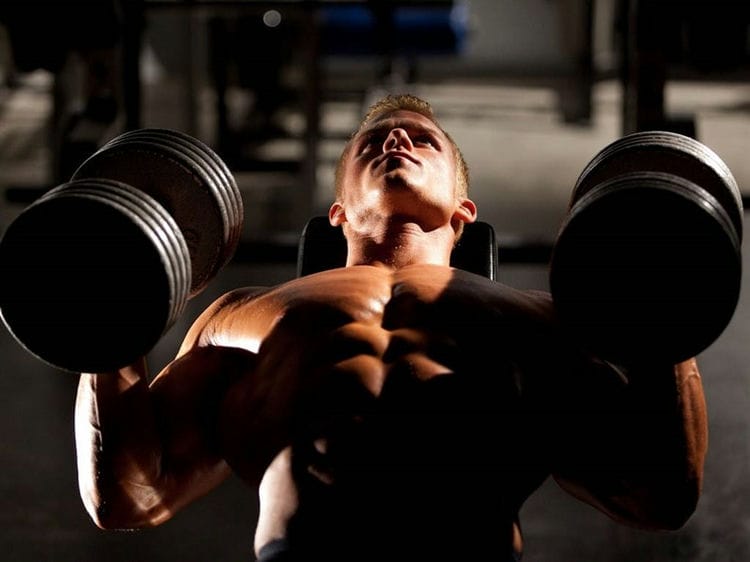
Strength training (anaerobic training) is a set of exercises aimed at developing and strengthening muscle mass, changing body shape and correcting figure flaws. Strength exercises allow you to build muscles, work out their silhouette, improving the appearance of the body.
Anaerobic exercise is done with weights. Exercise machines and free weights are used as weights – dumbbells, barbells, weights, weights, elastic bands. The working weight is selected individually, depending on the training plan and physical fitness of the athlete.
Strength training combined with aerobic exercise can alter metabolic processes, helping to combat weight loss plateaus and achieve effective weight loss with long-term results.
Variety of strength training
Sports clubs offer different types of activities, which can be divided into two categories:
- group training;
- individual training.
Quitting smoking and using the sauna
It should be remembered that exercise will have a beneficial effect on health , provided that a healthy lifestyle is followed, including proper nutrition and avoiding all kinds of bad habits (such as smoking and alcohol abuse, excessive sauna use).
Strength training is needed in order to develop muscles, increase muscle tone, form a proportional figure and improve health. Such physical activities are suitable for those who lead a predominantly sedentary lifestyle, since strength training strengthens the muscle corset and maintains the body's musculoskeletal system at the proper level.
What are the benefits of strength training and how will it affect you?
With regular and correctly selected strength training:
• The size and strength of muscle fibers increases;
• Strengthens the skeletal system, ligaments and tendons;
• Reduces the risk of joint and muscle diseases;
• The level of metabolism rises.
All of this has a positive effect on overall physical fitness, appearance and activity level.
Point effect
In the course of strength training, only the muscles that you load work, develop, grow. A plan is needed to address all major muscle groups. There must be a recovery break (one to two days) between workouts on the same muscles. If during a lesson you perform a full range of exercises for all muscle groups, then you cannot train every day. If on one day you train only the upper or lower body, then you can do it every day – provided that the workouts are alternated.
Constant pressure
For muscles to work, they need to be tense. Additional equipment helps to create the necessary tension during anaerobic load: weight equipment such as dumbbells or barbells, exercise equipment, expander. Some exercises are performed with resistance to your own body weight, such as push-ups or pull-ups.
Working to the limit
When strength training, muscles must be loaded in the truest sense of the word. By increasing working weights, you stimulate the muscles to work in an enhanced mode, they have no time to get used to or relax.
How to choose the weight? It is necessary that in each approach you can repeat the movement 12-15 times, and then, gradually increasing the working weight, reduce the number of repetitions to 6-8. It is important that the last repetitions are given with effort, be a challenge to overcome.
The need to adapt to increasing stress makes the muscles grow! After intense workouts, the muscles receive microtraumas, and the body recovers them “with a reserve”. The increase in muscle fibers is called hypertrophy.
What is strength training to build muscle and lose weight?
Strength training in the gym or at home is a complex mechanism that involves exerting physical activity on certain muscle groups with the additional use of various types of weights with a weight that is comfortable for a person.
The development of muscles occurs as a result of the appearance of the smallest microtraumas in the fibers. It turns out that the growth and strengthening are facilitated by mechanical damage obtained in the process of working out the muscles.
When the body is resting, it prepares the musculoskeletal system for such physical activity, with subsequent complication in the future. And also the damaged areas are restored to the desired level. Thus, an increase in indicators gradually occurs – the muscles increase in size.
Strength training includes two types of physical activity – basic and isolating. In the first category, multi-joint exercises that affect most of the muscles and require significant energy expenditure. And in the second – working out individual muscles (used as a supplement).
Important points
No matter how you train, before starting classes, pay attention to a number of recommendations:
- A set of strength exercises in the gym is always performed after a good warm-up. Loading cold muscles is not only ineffective, but also extremely unsafe, especially if you are working with weights. You can also get injured on the horizontal bar or parallel bars. By the way, despite the apparent simplicity, strength exercises at home should also be done after active warm-up.
- Review your diet. For hard physical training, you will need a lot of protein and carbohydrates.
- Give your body at least 2 days of rest between workouts. That is, if you trained today, the next training in the same strength style should be the day after tomorrow. Muscles take time to recover.
- Listen to your body. Sharp pain during exercise indicates an injury. You shouldn't continue to work with weights through this pain until you understand the source of it.
- A strength training program must be written by a qualified professional. Otherwise, you risk losing time or health.
Since a diploma or certificate does not always indicate the proper level of practical skills and knowledge of its owner, it is possible to collect feedback on the work of one or another coach.
It is good if a person has a medical or biomedical education, and has more than one year of gym behind him. Then he will be able, at least not to harm, but ideally to help by developing a safe and effective power complex.
Good pair: picking up dumbbells
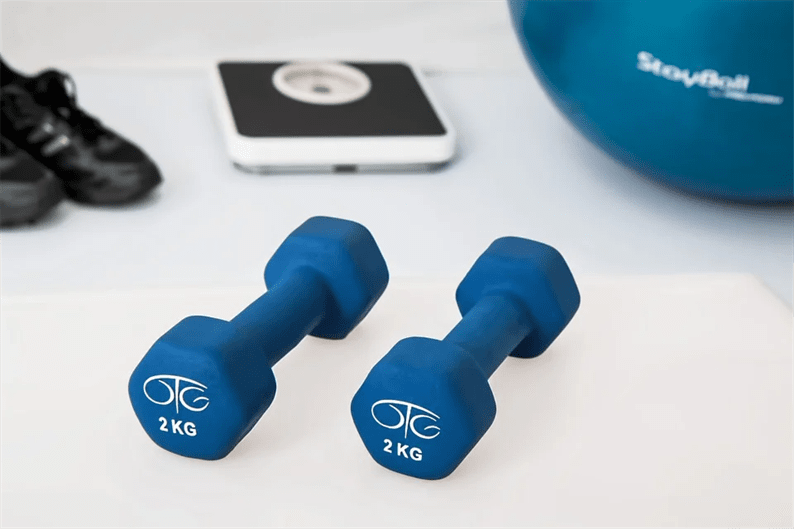
There are two types of dumbbells on sale: collapsible and non-collapsible. The first ones are ideal for those who are not going to stop and plan to continue classes, gradually increasing the load. They are made in the form of a neck and a set of pancakes. Their significant advantage is that you can choose your own weight for each set.
Non-collapsible dumbbells are sold with a predetermined weight, and if you want to increase the load, you will need new equipment.
You can see neoprene fitness dumbbells in stores. They have a budget cost and fit comfortably in the hand. However, fitness trainers claim that they are only suitable for light strength training and aerobic exercise, since their weight is minimal – 1-3 kg. However, this will be enough for a beginner!
Features of women's training
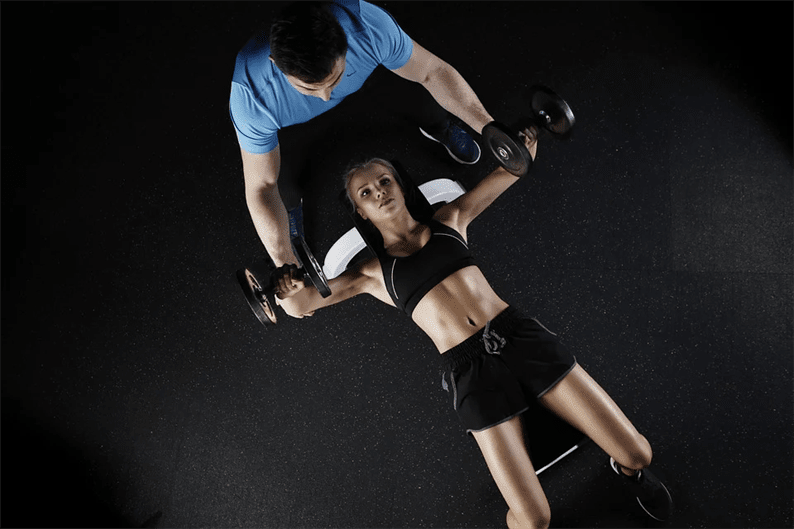
Strength training for women has some peculiarities due to metabolism, distribution of fat and muscle mass, hormonal system, and the presence of the menstrual cycle ..
The most effective workout for weight loss is long-term aerobic exercise while keeping the heart rate (heart rate) at the lower limit. Women are advised to avoid interval training.
The menstrual cycle also dictates its own rules. If you feel well, then training at the beginning of the cycle will be most effective. After the period of ovulation, the female body begins to accumulate energy for bearing offspring, and intensive training does not make sense.
Women are encouraged to work on the muscles of the upper (back, biceps, triceps), multi-repetitive training of the legs and buttocks, a balanced diet with calories and regular aerobic exercise.
Strength training in a group
This type of strength training is suitable for those who want to effectively work out all the main or individual muscle groups in a short time. The duration of the lessons does not exceed 40-50 minutes, the pace of the exercises is set by the instructor. The benefits of strength training in a group are team spirit and a competitive element as additional motivation for lazy athletes.
Most popular destinations:
- Body Pump, Shock, Sculpt – strength training for working out the muscles of the whole body. Performed with various free weights under the guidance of an instructor to music.
- ABS, ABL, Lower and Upper Body – strength training for working out certain muscle groups (abdomen, arms, legs, buttocks, etc.)
- Interval Training is a workout that alternates cycles of aerobic and anaerobic load. The duration of the cycle is set by the instructor. Interval training helps to speed up the fat burning process and tighten the muscles in the body.
Why does the head hurt after exercise and muscle pains appear?
Many complain of a deterioration in physical condition and mood after intense strength training, and some have headaches.

The appearance of these undesirable consequences indicates incorrectly selected loads.
There are the following reasons for feeling unwell after class:
- too long workout (more than 2 hours);
- excessive exercise intensity;
- weight of additional burden disproportionate to the level of physical fitness ;
- too many repetitions or approaches when doing exercises;
- training during illness;
- physical activity during menstruation (in women);
- classes in a stuffy, poorly ventilated room.
These factors provoke excessive fatigue and overtraining, which leads to systematic overeating after training and a set of unwanted pounds.
Attention! Inadequate physical activity provokes the appearance of severe headaches and dizziness due to sudden changes in blood and intracranial pressure.
The state of overtraining is usually accompanied by excessive creature, or muscle pain syndrome.
The accumulation of lactic acid in muscle fibers after heavy strength training provokes discomfort in the body.
Pulse
Fitness instructors advise keeping your heart rate at 120–140 beats per minute during exercise. For experienced athletes, it is important not to let the heart rate fall below 110 beats per minute, therefore, it is recommended to rest no longer than 1 minute between approaches.
In addition, during the respite, it is necessary to move to maintain the heart rate at the same level.
Caution, contraindications!
Before engaging in strength training, adequately assess your own health, take into account possible restrictions.
Strength training has no absolute contraindications. Even a child's age is not an obstacle to training, provided that a trainer supervises and controls the technique of performing exercises. Actually, children get acquainted with basic strength exercises already in elementary school.
Individual strength training
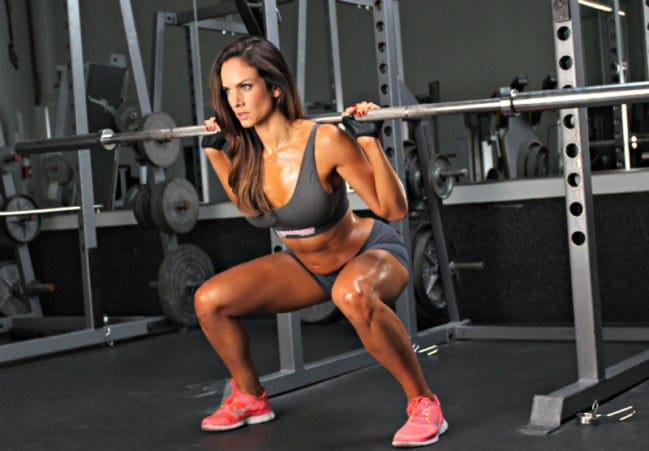
Athletes who, for one reason or another, do not want to train in a group can choose individual training. Exercises are performed in the gym or at home on simulators or with free weights. The athlete chooses the sequence of exercises, pace and weight independently.
The effectiveness of strength training largely depends on the technique of performing the exercises. Incorrect body positioning, jerking, incorrect amplitude can reduce performance to a minimum, and in some cases lead to serious injury. Individual lessons with an experienced instructor have obvious benefits for beginners and athletes who are not confident in their technique.
There are various methods of individual strength training:
- Full Body – all major muscle groups are worked out in one workout;
- Split – power loads are given to individual muscle groups on different days;
- Interval Training – alternation of aerobic and anaerobic loads during one workout.
Strength training options
Good strength training means working all the muscles in your body in a variety of ways.
Home workouts
In most cases, these are exercises without weights, reminiscent of a mixture of exercise and gymnastics. This technique of strength training is typical, in particular, for the military, and has been practiced for a very long time.
Strength exercises at home from the outside are similar to circuit training: you squat, do push-ups, swing your abs, do other exercises. Such strength fitness develops endurance, strengthens the heart, and somewhat increases strength indicators.
Strength training without iron is used in various types of wrestling as a warm-up or for general strengthening training. Often a partner acts as an additional burden.
Horizontal bar and parallel bars
The methodology of strength training of the armed forces of any country also implies exercises on the horizontal bar and uneven bars. The soldier must be able to do pull-ups and push-ups on the uneven bars. His body must be strong and flexible in order to effectively carry out the assigned combat missions.
Look at people who are into street workout. They do not look pumped up, but their muscles are an order of magnitude stronger than that of an ordinary person who is not familiar with the horizontal bar.
We can say that strength training on horizontal bars is an almost harmless physical activity. Its harmfulness manifests itself only at the moment when you jump from the horizontal bar to the ground – try to do it softly and on your toes, not on your heels. In the latter case, you create an artificial concussion for the whole body (from heel to head) and a traumatic load on the spine.
Beginners can be advised to perform a strength complex on a horizontal bar and parallel bars without weight. That is, you are doing without weights, being content with your kilograms. Further, the strength program can be complicated by the addition of various elements to it: power output, coups, etc. But all this should be mastered when your muscles can safely tolerate 15-20 pull-ups and the same amount of push-ups from the uneven bars.
Powerlifting
The entire set of powerlifting exercises is based on the chest press, squats and deadlifts, their various combinations and training exercises.
In weightlifting, the barbell snatch and clean and jerk is a mixture of the squat and deadlift. Overhead lifting is practiced separately using the army bench press.
Classic triathlon is bench press, squat, deadlift. Of course, it makes sense to work only with these 3 exercises only for those who aim to develop their maximums in them.
From the point of view of influence on the figure, this will not bring cardinal changes (strength cannot be judged by appearance). Therefore, if you want not only to develop strength, but also to change your proportions, it is recommended to include additional exercises for specific muscle groups in the strength complex.
When it comes to spinal health, people with back problems can avoid deadlifts and squats (or limit them to their own weight). The squat can be replaced with a leg press. But now nothing can completely replace the deadline. It is better to do hyperextension instead.
Heavy workouts should be planned in such a way that one muscle group experiences the load once a week. It makes no sense to train more often. Instead of a second hard workout in one week, you can give a light one in order to pump the target muscle group with blood.
The morning period is not the best time to lift weights, it is better to train during the day and in the evening. Strength training in the morning will not be as effective as at a later time, since the body is still asleep. Exceptions to the rule are people who are nocturnal. For them morning is like evening for the rest.
After a powerful strength workout, it makes sense to pedal a stationary bike or work on an ellipsoid.
Recovery
There are two concepts for muscle regeneration after strength training:
- Passive recovery during the rest period, which involves the complete inactivity of the muscle group involved during the session.
Among the advantages of this approach, there is a high rate of muscle fiber regeneration. On the other hand, the use of passive recovery, as a rule, slows down the development of an athlete's strength indicators.
- Active regeneration means doing light workouts of low intensity in between hard workouts. This approach accelerates the elimination of lactic acid from the muscles, which helps to reduce pain throughout the body.
In addition, active recovery develops muscle memory. On the other hand, such a regimen is not suitable for beginner athletes, as it will most likely lead to a state of overtraining.
Workout plan for advanced
For further progress, a more intensive regimen is required, the parameters of which depend on the achieved level and goals.
When drawing up an individual plan, you need to determine the optimal frequency of classes and such parameters as load, amount of exercise (number of approaches and repetitions), speed and duration of rest pauses.
Occupation frequency
The frequency of classes depends on the level of training. The optimal options are shown in the table.
| Level of
preparation | Training frequency |
| — | — |
| Elementary | Full body workout 2-3 times a week. |
| Middle | 3 times a week if the whole body is exercising; |
| 4 times a week if upper / lower body training is performed separately, with all major muscle groups exercising twice a week. |
| Promote- |
| you | 4-6 times a week, with all major muscle groups exercising 1-2 times a week. The body can be divided into two or three parts: one part is trained on one day, which allows you to load it more. |
| Professional |
| cash | A very high training frequency can be used, for example twice a day 4-5 days a week. |
Training goals
Muscle condition can be characterized by four qualities:
- Strength is the greatest effort a muscle or muscle group can develop.
- Power is the fastest working speed when making a certain movement.
- Mass (size) is what you can look at.
- Local endurance is the longest period of time during which any movement can be repeated.
All of these qualities will improve with any well-designed program, but you can choose one of them as a goal and focus on it.
Load measurement
The load (weight, effort) in the exercise is measured in units that correlate it with the physical form of a particular person.
To do this, use the percentage of the load at which a given person can perform a maximum of 1 repetition of the exercise. This load is designated 1RM (1 repetition maximum). If the goal of the session is muscle growth, then the typical load is 70-100% 1RM.
Another way is to calculate the maximum number of repetitions of an exercise that can be achieved with a given load. There is an approximate relationship between the two measurement methods, shown in the graph.
Goal-Based Workout Options
The following table lists the optimal workout parameters for each of the four goals.
-
Force
-
Power
-
Weight
-
Vynosli-
ness
| Parameter | Optimal value for a given goal |
|---|---|
| Load | 60–70% 1RM for beginner and intermediate levels; |
| 80-100% 1RM for advanced level | 30-60% 1RM for the upper body (work at speed); |
| up to 60% 1RM for the lower body (work at speed) | 70-85% 1RM for beginner and intermediate levels; |
| 70-100% 1RM for advanced level | Less than 70% 1RM |
| Volume | 1-3 sets of 8-12 reps for beginner / intermediate levels; |
| 2-6 sets of 1-8 reps for advanced | 1-3 sets of 3-6 reps |
| 3-6 sets of 1-12 reps for advanced | 2-4 sets of 10-25 reps |
| Pauses between |
approaches
| 2-3 minutes for intense exercise with heavy weights;
1-2 minutes between light exercises with light weights | 2-3 minutes for intense exercise with heavy weights;
1-2 minutes between light exercises with light weights | 2-3 minutes for intense exercise with heavy weights;
1-2 minutes between light exercises with light weights | From 30 seconds to 1 minute |
In strength and mass training, the average speed of the exercise is selected (about 6 seconds per 1 repetition).
In power training, the speed is increased so that you can complete the prescribed, but not more, number of repetitions. In this case, the load is less than the maximum for a given number of repetitions at an average pace.
For beginners, during the first few weeks of strength and mass training, it is enough to perform 1 approach for each exercise, since the improvement in results at this stage is weakly dependent on the number of approaches. It is better to focus on training regularity rather than increasing the number of sets (and time required). It is enough to complete 1 set of exercise and in maintenance workouts.
Increasing the load
If for two sessions in a row you can correctly and without great difficulty do 1-2 more repetitions of the exercise than you determined when drawing up the program, then you need to increase the load.
The load growth should be in the range of 2-10%. You should not increase the load too quickly in order to prevent a state of overtraining.
To avoid the “plateau” effect, you should also periodically change the composition of the exercises and training parameters, for example, alternating the goals (strength – power – mass – local endurance).
Optimal mode: how to alternate loads
Regularity helps to achieve visible results, so it is necessary to build a convenient schedule of classes and strictly follow it.
Important! The optimal frequency of exercise for gaining muscle mass is 2-3 times a week. With this mode, the body will have time to restore muscle fibers, which is necessary for the growth of strength and muscle volume.
In addition, it is recommended to alternate workouts of varying degrees of intensity (low, medium and high) in order to keep the body in good shape, but at the same time prevent the athlete from overtraining.
Most athletes alternate strength training aimed at working out specific muscle groups. This mode helps to achieve better results in the development of one's own muscles and the formation of a proportional silhouette of the figure, the weight gradually increases.
For example, two workouts per week are devoted to the lower body (legs and buttocks), and one lesson is devoted to working out the shoulder girdle and abdominal muscles.
What types of power loads can you use?
Gymnastics, in which your own body weight is used to train muscles. This type of strength training is perfect for beginners, as it perfectly trains the main muscle groups and it is enough to maintain optimal muscle strength. Examples of such exercises can be: various push-ups and pull-ups on the bar, squats and lunges, pumping the press, etc. This type of activity is ineffective for deep muscle training, but ordinary gymnastics will be quite enough to maintain general tone and a flat stomach.
Fixed weight work.
This training technique strengthens all major muscle groups and involves the use of a fixed, low weight throughout the exercise cycle. For example, if you are doing an exercise with dumbbells weighing 2-3 kg to work out the triceps (flexion of the arm at the elbow), then the weight of 2-3 kg remains constant throughout the entire workout cycle. A light weight load is used to perform the exercises. These can be dumbbells, resistance bands, and some types of exercise equipment.
Variable loading allows you to work the muscles deeply and contributes to a faster increase in muscle mass. With this training method, the load changes directly during the exercise. Some machines use different tilt angles and gravity to create different forces when lifting and lowering weights.
What are the key principles of successful strength training?
For effective muscle training, the load must be increased methodically, forcing the muscles to work harder and harder. The main challenge is to prevent the muscles from adapting to constant weight.
Variable loading allows you to work the muscles deeply and contributes to a faster increase in muscle mass. With this training method, the load changes directly during the exercise. Some machines use different tilt angles and gravity to create different forces when lifting and lowering weights.
Strength training should pay attention to all major muscle groups. This is necessary for a uniform increase and development of the muscle frame.
Periodicity.
For most people, there is no need to do strength training on a daily basis. The optimal frequency is 2-3 times a week. Another option is to work on different muscle groups on different days. It is advisable that strength training alternates with cardio loads. However, it should be remembered that by arranging too long breaks between workouts, you risk not only slowing down the rate of muscle mass gain, but also losing the achieved result: the muscles will begin to weaken within 7-10 days.
How to choose the right weight?
Determining the starting weight level is a tricky one. If you are just starting to change your life with strength training, then be prepared for the fact that it will take some time to find your starting weight and work intensity. The general principle is to focus on the feeling of fatigue. At the same time, performing the last repetition, you should feel that the muscles are tired and loaded to such an extent that you can no longer do another repetition.
The number of repetitions directly depends on what weight or load you are working with. For example, if you are doing an exercise to strengthen the triceps, then, unbending your arms raised above your head, in the elbow joint with dumbbells weighing 2-3 kg 10-15 times, you should not stop exactly at 10-15 repetitions, you must continue the exercise until you will feel complete muscle fatigue and will not be able to do another repetition. The next time you do this exercise, simply increase the weight of the dumbbells until you feel maximum fatigue at repetitions 8-10.
How many reps should you do?
There are two approaches, depending on what you want to achieve: build strength or increase endurance and tone. If you are aiming at developing strength, then you should do fewer reps (8-10) with more weight. If it is necessary to increase endurance and tone, then it will be better to perform more reps, but with less weight.
How many approaches are optimal?
Experts recommend performing 1-3 approaches, between which you should rest from 20 to 60, and sometimes 90 seconds. While resting, stretch your muscles, catch your breath, and take a few sips of water.
What exercises are included in the strength training program?
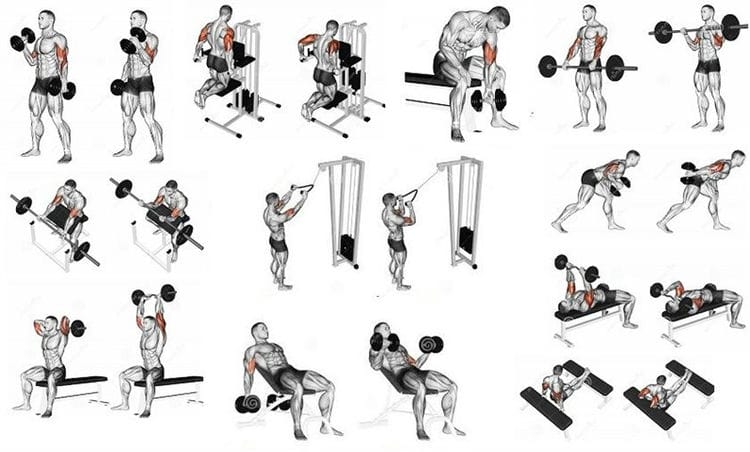
The training program for men and women in the gym includes a whole range of strength exercises. The main (basic) ones include the following:
- Bench press of a bar or dumbbell in a prone position.
- Barbell squats.
- Deadlift.
Basic exercises aimed at working out several muscle groups at once are necessarily diluted with auxiliary or isolating ones. Most often, programs include:
- Extension of the arms on the block while standing.
- Curl of arms with dumbbells or with a barbell.
- Extension of the legs while sitting.
- Crossover on the simulator.
- Seated Calf Raises.
- Bending the legs while standing or lying down.
- French bench press, etc.
The list of exercises in the complex may vary. It is optimal if the training program includes a combination of basic and isolating elements.
Sources used and useful links on the topic: https://womplanet.ru/silovyie-fitnes-trenirovki/ https://fokuren.ru/baza-uprazhnenij/silovye-trenirovki-dlya-chego-i-kak-zanimatsya-treningom. html https://prostude.net/main/zachem-nuzhny-silovye-trenirovki/ https://thebasefitness.ru/article/silovye-trenirovki-chto-ehto-takoe-i-dlya-chego/ https: // VDiete .ru / trenirovki / programmy-trenirovok / silovye-trenirovki / https://FitNavigator.ru/trenirovki/teoriya/silovye-trenirovki.html https://MedAboutMe.ru/obraz-zhizni/publikacii/stati/stati / https://sportyfi.ru/fitnes/silovie-trenirovki/ http://mhlife.ru/fitness/training/strength/
Post source: lastici.ru