
The Beauty Dictionary: How Coconut Oil Works
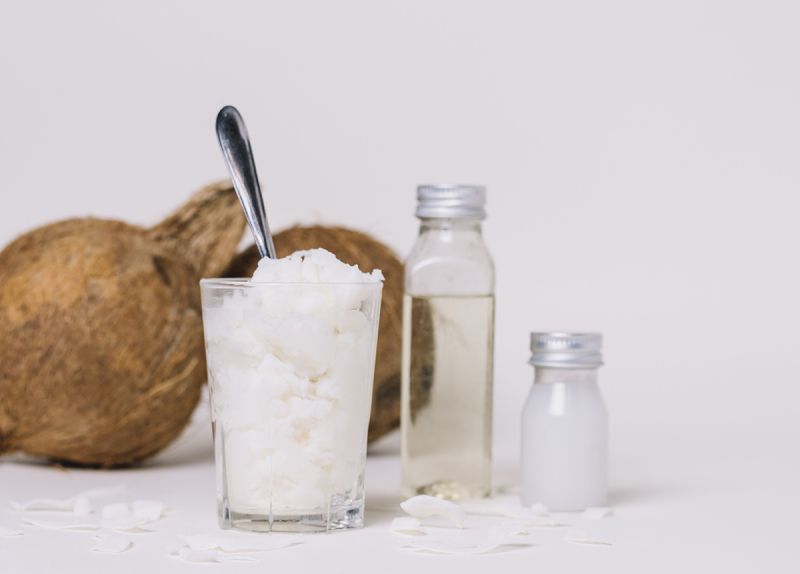
Natural coconut oil is loved for its versatility. It is applied to the skin and hair, used instead of a mouthwash. What else do you need to know about coconut oil and can it be considered a universal beauty tool?
Coconut oil has been a beauty trend for several years now: it is added to literally everything – from shampoos to highlighters. But what made it so popular and is it as universal as it is often said?
How is coconut oil obtained
It is extracted from copra: the so-called flesh of coconuts, which is 67% fat. Most often, the oil is prepared in industrial conditions, but the traditional way of obtaining it is often used by organic brands in the pursuit of authenticity. Natural raw materials are passed through a special press. This is how unrefined coconut oil is obtained, which retains its taste and aroma. In the store, you will be able to distinguish it by the inscription Extra Virgin Coconut Oil or Virgin Oil on the package.
An oil becomes refined when it is obtained by heating coconut meat and mixing it with water, various acids, or sodium hydroxide. It turns out a white, odorless vegetable fat, which is stored longer and can be used for culinary purposes. But is it necessary?
Harvard professor Karin Michels has gained millions of views on YouTube by posting a video in which she calls coconut oil "pure poison" when it comes to food. She believes that the harm from frying on it outweighs the benefits: there are a lot of saturated fats in the oil, which are dangerous for the health of the heart and blood vessels.
But as a cosmetic oil does a good job – and, of course, does not cause any harm. Of course, only unrefined oil has beneficial properties for the skin, in which vitamins and beneficial acids are preserved.
How Coconut Oil Works
Miranda Kerr, Angelina Jolie, Jennifer Aniston and Emma Stone – there are many celebrities among fans of coconut oil. But Gwyneth Paltrow managed to integrate it into her wellness routine literally at all stages. She uses coconut oil as a massage oil, sex lubricant, make-up remover, and mouthwash. Let's figure out what is worth following the example of celebrity, and what is not.

Let's start with oral hygiene. Rinsing with coconut oil or oil pulling came to us from Ayurveda. It has its own logic: lauric acid and monolaurins in the composition of the oil inhibit the growth of bacteria and the reproduction of viruses. They destroy the microorganisms that cause the appearance of yellow plaque on the teeth.
80-90% coconut oil consists of lauric, myristic and palmitic fatty acids. It covers the skin with a thin film that maintains the integrity of the lipid barrier. Coconut oil softens, nourishes and partially (no more than 20%) blocks the sun's rays.
And this same ability becomes the reason why it is better not to apply coconut oil on oily or combination skin. It is comedogenic: the film clogs enlarged pores and provokes inflammation. If your skin is prone to comedones, then it is best to use coconut oil only for massage or body skin care. But not faces.
The same saturated fats and vitamins A, E, B1, B2, B3 make coconut oil the best remedy for split ends and dry hair. It can only be applied along the length of the hair, avoiding the roots and skin. It is used as a pre-mask: applied before washing and left on the hair for 1-2 hours. By the way, Beyoncé often does this – she alternates coconut oil with olive oil and admits that she owes it to the shine of her luxurious curls.