
How fast to run? Special exercises and training program. Getting the right training a priority: how to learn to run fast

Preliminary preparation
This stage is of great importance – it depends on what conditions the athlete will run in.
- Listen to your biorhythms and only go for a run during the most active hours, when you are energized. For example, if you are a morning person, meet the dawn on the path. We recommend that owls, on the contrary, see off the sun and run at sunset. There are people who find it difficult to classify themselves in the first or second category – in this case, take care of the day.
- If you want to learn how to run fast in interval training, load your favorite music with a slow and fast rhythm into the player. During quiet songs, you need to jog, and when an active melody begins, speed up. In general, it has been proven that running with music increases endurance and improves results, so we do not recommend forgetting headphones at home.
- If you need to learn how to teach your child to run fast, buy comfortable clothes and quality running shoes for him;
- Drink water – up to 2 liters per day in normal weather, up to 2.5 liters in extreme heat;
- Eat a healthy diet rich in protein, vitamins, and trace elements. Minimize fat and reduce carbohydrates.
- Never go out on the track if you are feeling very tired or unwell. If at such a moment you load the body with physical exercises, you will quickly get sick or even more exhausted.
We recommend doing exercises for fast running at home, they help develop endurance and quickly stretch your muscles:
- Running in place with lifting the thigh forward or overlapping the lower leg back;
- Jogging in place on a treadmill (if there is a device);
- Walking uphill;
- Jumping rope;
- Squats
- Jumping in place;
- Plank;
- Exercises for the press;
- Yoga and stretching;
- Swing your legs forward, backward and to the sides.
If you want to learn how to learn how to run 1 km fast at home, here are some simple tips:
- Exercise regularly, do not miss classes;
- Use special gadgets or download an application for running and monitoring your body directly into your phone, which will track the number of steps, distance traveled, the amount of calories lost;
- Quit smoking and eat healthy foods;
- Make sure that the breaths during training were twice as deep as the exhalation – this way you quickly saturate the body with oxygen.
- Don't forget to warm up and cool down before and after running.
Learn to breathe properly
The most common and at the same time the simplest question about running is how to breathe correctly so as not to choke. Here are some basic guidelines that are guaranteed to help you.
1 Breathe through your mouth and nose together. If you breathe only through your nose, then there will be enough oxygen only for walking or for a very slow run. If you want to run longer and faster, then nasal breathing alone is not enough. And all because the patency of the nasal canal is small, and little oxygen enters through it. Yes, this oxygen is cleaner than the one you breathe through your mouth. But the analogy with water would be appropriate here. Imagine you are running, you are very thirsty. You have two bottles, one of which is pure spring water, which is enough for half a sip, and the other is regular tap water, but there is plenty of it and enough to drink. What will you do in this situation? Will you suffer from thirst and eventually move on to a step, or will you drink not very clean tap water? Here is the same situation with air. You yourself must make the choice.
2 Breathe evenly. It is important. If breathing starts to go astray and oxygen access to the body is chaotic, then it will be much more difficult to run.
3 Start breathing from the first meters. That is, start breathing from the first meters as if you had already run some distance. Few aspiring runners know this rule. Although it is very useful and really helps to improve your running skills. And it turns out that usually in the first meters, when there is still a lot of oxygen in the muscles, there is strength. And when oxygen begins to decrease, you have to greedily grab for air to make up for the losses. To prevent this from happening, breathe from the first meters.
Sprint
Sprint distances (60, 100, 200 and 400 meters) are overcome by an athlete due to maximum acceleration throughout the entire distance. The sprinter simply does not have time for a smooth, gradual increase in speed, he must run as fast as possible immediately, from the starting point. To run very fast, he must have sufficient body weight, well-developed, powerful leg muscles and explosive strength, as well as master the correct sprint technique. The following are ways to develop these characteristics.
Muscle gain
The development of body weight in general and leg muscles in particular plays one of the key roles in the training of sprinters, so they are not at all alien to intense work in the gym. Sprinters actively use exercises from both bodybuilding and crossfit.
- Barbell squats, both classic and frontal and plie, for a comprehensive study of the leg muscles;
- Barbell or dumbbell lunges
- Bench press
- Leg curls and extensions in the simulator
- Calf Raises
- Jumping onto the curbstone;
- Short acceleration with a “trolley”;
- Trasters;
- Barbell jerk and snatch.
Explosive power
Explosive strength is especially important at the start of the race, when you need to immediately take a leading position. For its development, all kinds of exercises are used to develop the functionality of the muscles of the body. In addition to the crossfit exercises listed above, barrier exercises, movements from other athletics disciplines are performed: long jump from a standing or running start and high jumps.
Also, much attention is paid to all kinds of accelerations, including interval and shuttle running.
Running exercises
The sprint technique is different from middle and long distance running. In a sprint, the knee rises higher, the stride length increases, and also the arms and shoulders are more actively involved in the work. Therefore, to hone technique, sprinters perform a huge number of approaches in exercises such as running with high thighs and with an overlap of the lower leg.
Features of correct running

There are a number of features of proper cardio training:
- Muscles should be relaxed, not constrained, not overstrained. If this is not the case, then the body will assume the wrong position in space, from which the training will not be effective.
- Breathing should be carried out evenly: full inhalation through the nose, exhale through the mouth. Thus, the body is actively saturated with oxygen, and this stimulates the muscles to take action without overstraining.
- The pulse must be monitored. It should be rhythmic, not going off scale when running – 120-130 beats per minute.
- With proper cardio workout, you feel lightness throughout your body, a desire to run and enjoy it.
How to run correctly?
There are some rules for running training that should not be ignored:
- It is important to learn to realize that the body is relaxed at this point in time. When running, stiffness will surely make itself felt in the form of quick fatigue.
- You need to carefully monitor your breathing. Oxygen should be supplied on time. Oxygen starvation should not be allowed.
Major mistakes in running technique

All people know how to run, but not everyone knows how to do it correctly, as well as with health benefits. There is a list of mistakes that beginner runners tirelessly repeat.
These errors are:
- “Sticking” the foot into the ground. Running this way significantly reduces the speed of the runner. Everything happens due to the fact that the foot is at an angle in relation to the surface of the ground. In addition to slowing down, the runner also puts some stress on the knee joints, which can result in injuries.
- “Heels to the sides. “ This bug also slows down your running speed. Due to this ejection of the legs, muscle mass grows on the lower leg from the outside. These muscles are undesirable, especially for girls, as they add visual curvature to the legs.
- Running on tiptoes. Running in this way is also undesirable. This technique is like a kind of substitute for running by “sticking in” the leg. Neither running option is suitable for training. Ideally, you need to choose the middle ground.
Correct breathing

You also need to learn how to breathe correctly. There are different simple breathing techniques.
Here they are:
- This technique is best suited for beginners. Inhales are done one-two-three, and exhalation only one-two.
- For more “advanced” runners, there is a technique based on deeper breathing. The tactic is as follows: first, take a deep breath with your entire chest for up to four, and exhale for up to three.
With both techniques, one must remember that inhalation is the enrichment of the lungs with oxygen. Exhalation is the release of carbon dioxide from the lungs. While jogging, the breathing process can be controlled at ease, thinking that oxygen washes the lungs from the inside and saturates every cell of the body.
It is worth knowing that if fatigue still catches up during training, it means that the breathing process is disturbed. You need to stop and walk, or slow down.
All this is necessary in order to concentrate your attention on the contracted muscles and try to relax them. Only after conscious relaxation, breathing can be evened out and start jogging further.
Heart rate control

A common mistake for beginner athletes is that they start to rush into this sport, make fast and long enough runs. This will not lead to anything good. The fact is that untrained or poorly trained muscles, combined with an untrained heart, can have a bad effect on the well-being and on the physical condition of a person.
It is advisable to jog at a low heart rate. The lower it is, the better for the heart. When running at a low heart rate, this muscle is pumped evenly, safely and efficiently. To start running with a low heart rate, you need to control this very heart rate. This is where the heart rate monitor comes in.
With it, you can adjust the heart rate. At first, the frequency can go off scale, but over time, the body will readjust, and the heart will give out the desired heart rate.
What time of year is it better for a beginner to start
For the first acquaintance with running, you need to choose a comfortable dry weather. Mid-April-May, August-October are suitable. There is no heat at this time, it is light at 7-9 in the morning and until 20-21 in the evening.
Check the weather forecast in advance, choose a week without precipitation and with light winds. If the first impression is ruined, then jogging can be postponed for a long time.
Distribution of your forces over the full length of the distance
First of all, you should pay your attention to the fact that in order to run this or that distance, you should learn to be sure to correctly distribute your forces absolutely over the entire distance. In track and field sports, there are 2 types of distance:
- The first type is short distances.
- The second is more than 1000 m, designed for the endurance of the athlete.
When preparing for all of the above distances, you need to find your own approach. In the event that you have chosen a distance of one hundred meters, then we will tell you how to learn how to run 100 meters quickly. In order to properly distribute your forces, you must necessarily possess certain information:
- The athlete goes through the starting 15 meters due to his excellent start, because a lot depends on the start. In the event that your starting push was weak, then the entire distance will also be weak. In addition, if you start before the shot, you will simply be disqualified.
- A further stretch of up to 40 meters, the runner's body takes a completely vertical position in space. In this run, experts recommend breathing exclusively through the nose. This section of the 100-meter race is the take-off phase.
- The athlete must overcome the further segment of 60 meters with the maximum possible speed, constantly increasing his pace. Very often people slow down when they see the finish line, and this is absolutely impossible to do.
Experts advise, before starting training, to look at several records from the competition in order to learn about the correct running process.

Start. Low start from pads
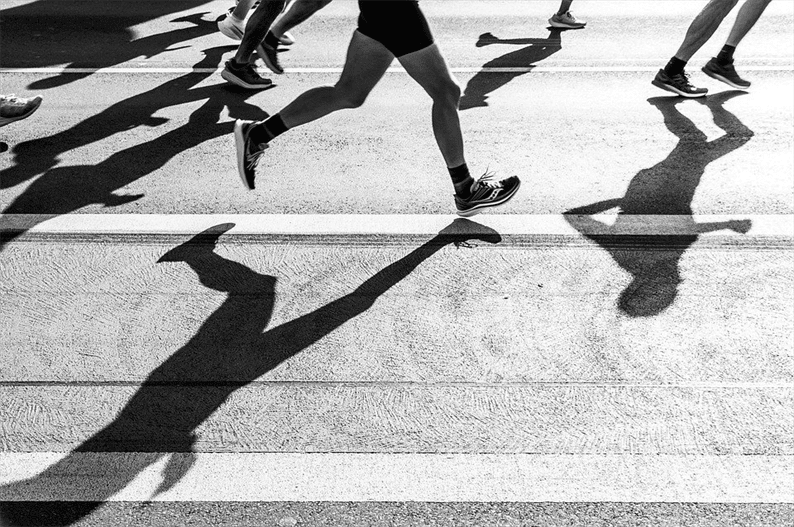
Before learning to start from the blocks, you need to master the start from the fall position. Stand up straight with your arms at your side and begin to lean forward. Take the first step just before you fall. The leg that you take a step with will be the swing leg. At the time of starting from the blocks, it will be in the back.
The next step is to start from a falling position from a low start. Lean forward, bending over in half. The flight leg is slightly behind the jogging leg. Put your hands down, but do not touch the track. Bend over until you start to fall, and only then start moving forward.
Now you can start training with starting from the blocks.
Installing the pads

We set the base of the pads, stepping back from the starting line by one foot length. Make sure it is exactly in the middle of the treadmill. Step on the base to improve its anchorage to the surface.
We set the first block at a distance of two feet from the start line. The second one is one foot from the first block or three feet from the starting line.
The angle of inclination of the shoes is set individually. Typically, for the jogging foot, which is closer to the starting line, the last is set to the bottom or penultimate position. The swinging shoe is set in a higher position.
You need to go on the pads from the front, not from the top. Stand in front of them, put your hands on the floor, then put your feet on the block and lower your knees.
Starting from the blocks
At the command “Get Started!” take the correct position on the pads. The weight is evenly distributed between five supports: arms, feet and the swing leg knee. The hands of straight arms should be in front of the starting line, resting against the surface with thumbs and forefingers.
At the command “Attention!” press the soles firmly against the pads and lift the pelvis. Keep the body straight. The head should be tilted down, and the gaze should be directed towards the track. The center of gravity is transferred to the hands and feet.
At the start signal, start an instant, explosive movement. Push off strongly from the surface, make a quick swing with bent arms. Straighten your front leg sharply and at the same time take a wide step with your back.
Regular exercise
To achieve maximum results, you need to pay attention not only to your legs. All muscle groups should be trained, paying special attention to the press and the shoulder girdle. You can do it at home, in the fresh air or in the gym. By improving your overall fitness, you will also improve your running results.
For endurance training, it is useful to run uphill, as athletes say, in Rolling Hills mode. It is worth starting with a slight rise, and then gradually increasing the angle. If you do this workout at least once a week, you can achieve much higher speed.
Finishing throw
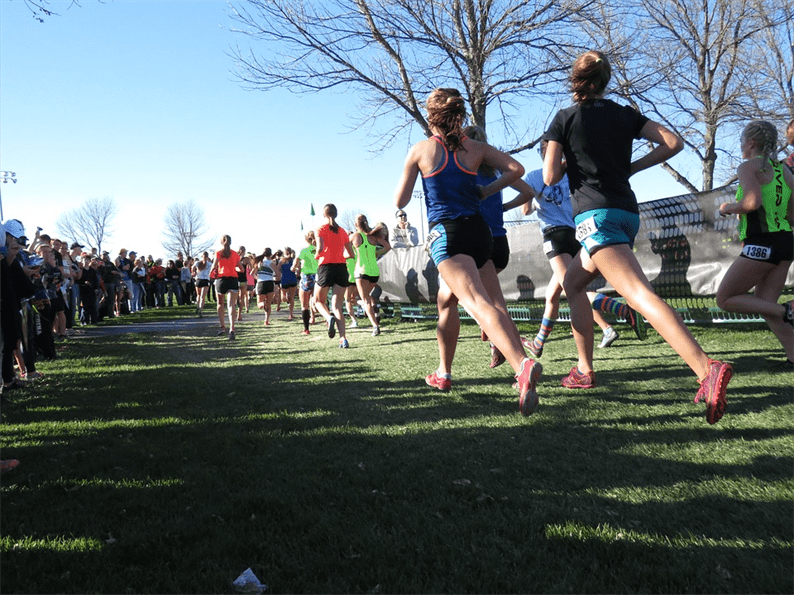
In the last phase of the race, the sprinter's speed usually drops by 3-8%. But a close finish is not a reason to pause on purpose. On the contrary, pull yourself together for the final throw. The athlete with the higher running endurance wins the competition.
The end of the course is usually marked with a ribbon that runs along the finish line. There are two ways to finish: when the sprinter touches the ribbon with his chest or shoulder. Both methods give approximately equal opportunities to be the first to reach the finish line. The choice depends on the preference of the athlete.
The so-called ” chest throw ” is performed as follows: at the last stage of the race, lean your chest forward sharply, throwing your arms back.
To touch the finish tape with your shoulder, you also need to lean forward while turning your shoulder towards the tape.
With both methods, the technique of movement is the same: the runner shifts the center of gravity forward, while the upper body accelerates, and the lower one slows down slightly. After contact with the finishing tape, you must sharply throw the swing leg forward. This will help avoid falling. “Bumping” on the leg shifts the body's center of gravity back, the runner's speed drops, and he gradually switches to walking.
Sprinters who have not mastered any of these methods are advised to run the finish line at maximum speed, without thinking about throwing on the ribbon.
Running economy
Although knowledge of VO2 max will be quite informative, in long-distance competitions it is not the maximum that can be squeezed out of oneself that is more important, but the submaximal speed that the athlete can maintain throughout the entire distance. And this speed will depend on the VO2 max, on the ability to utilize fats, on the ability of buffer systems to fight lactate “acidification”, on the running technique, which allows optimal use of the body's resources, respiration, etc. Actually, all this is united by such an integral concept as running economy. Running efficiency can vary up to 20% for runners with the same VO2 max. For well trained athletes with similar VO2 max values, running economy is the best predictor of performance.
Therefore, it is the increase in running efficiency that will improve the performance, and therefore the speed of long-distance runners.
Summarizing the above, I would like to emphasize that the athlete's running speed will be largely determined by his genetics.
At the same time, correct training allows you to significantly increase your running speed due to the adaptive processes taking place in the muscles, respiratory and cardiovascular systems.
Warm up before running for beginners
Correct stretching prior to training will keep muscles, ligaments and joints from unnecessary stress, prolong the training time, and save you from pain after training. It is enough to perform simple exercises :
- swinging and rotating hands;
- torso tilts forward, backward, right, left;
- body turns;
- squats;
- swing your legs forward and to the sides.
The warm-up takes 5-10 minutes, then you can move on to walking at a fast pace. Another 5-7 minutes and it's time to start your studies. For experienced runners, walking quickly is sufficient.
Running is a versatile workout that helps to normalize weight, tone muscles, and improve mood. You can start classes at any age, the main thing is to do it competently and not rush to see the results.
Medium distances from 800 meters to 2 kilometers

When mastering long-distance running, the bet should be on endurance, not speed or strength. Running at high speed is exhausting, so you should think about the distribution of forces. Otherwise, you will simply get tired and leave the race long before its completion. Before the races, it does not hurt to regularly go on long hikes. If possible, in everyday life, you also need to go hiking on foot, and not by car or public transport.
Good long-distance running technique starts with posture. If you do not follow her, then nothing will work. Cross-country running or uphill running can be a great workout. The duration of these runs can be limited to 15–20 minutes.
How to learn to run fast: tips for beginners
If you really want to achieve high performance, you have to be patient. You will need to make a lot of effort to prepare, try to train as hard as possible, of the highest quality.
Before you take any steps, start training, if there is even the slightest doubt about the benefits of running, go to your therapist. He will conduct the necessary tests, prescribe tests, conduct an examination, after which he will be able to give a clear answer whether you can engage in this kind of sport.
Recommendations for beginners
Professional runners never start running without proper preparation. There are simple tips, taking note of which, any beginner will be able to figure out how to run fast.
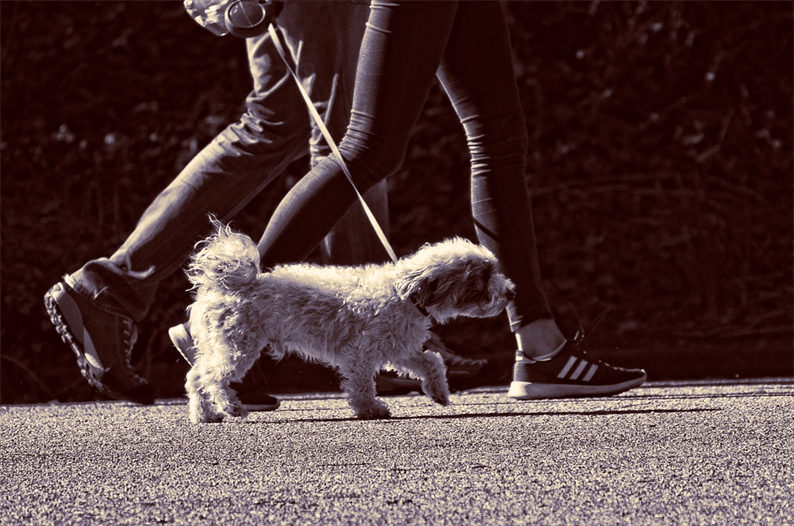
- Do not immediately load the body to the maximum. Start any workout with a light jog for a short distance from a hundred meters or a little more.
- It will not be difficult for a person who has good physical fitness to run one or two kilometers. If you find it easy, just increase the distance by ten percent in each workout.
- Professionals advise choosing not gyms or stadiums for training, but forest belts or parks. It is better to run on rough terrain than on an asphalt path.
- Eating before a run is not a good choice. It is optimal to wait a few hours before exercising.
- Choose the time to run yourself, do not listen to those who advise you to do it only early in the morning or late at night. All people are different, for an “owl” to get up at six in the morning for a run will be a mockery of the body.
- Try not to get out of breath while running. If you are gasping for breath, then you need to slow down, run slower.
- Always have a bottle of clean water close at hand. This will help keep your body hydrated.
- You cannot run along highways. During training, breathing is accelerated, as well as metabolism. Inhaling exhaust fumes can severely poison your body. Therefore, jogging is best done in a forest or park.
Workout regimen
- It is important to correctly draw up a plan (program) of training. They should be gentle at first, two or three times a week. As a result, it will be possible to move on to daily runs, which will only bring benefits.
- Before jogging, be sure to warm up, warming up the muscles and stretching the ligaments. Useful information on this subject is available in the corresponding article on our website.
- Scientific studies show that those athletes who, against the background of intense training, devote enough time to rest. Their reaction, speed improves.
How to develop the speed of thinking
To be quick thinking, you need to exercise daily. The first thing to start with is learning to focus on something in particular. There are a lot of concentration techniques, you need to choose the one that suits you best. You can do meditation and learn to stop your internal dialogue, think about one thing, without being distracted by extraneous thoughts.
Also try not to do several different things at the same time. Concentrate on one thing, do it as well and quickly as possible. At the beginning, focusing on one type of activity, in the future you will be able to do two or three actions at once, while not losing quality, but only after you learn not to be distracted and keep your thoughts under control.
To develop the speed of thinking, you can play educational games.
Control your breathing to reduce fatigue while running.
You don't have to open your mouth full width and swallow air avidly, as if you were a fish thrown onto dry land.
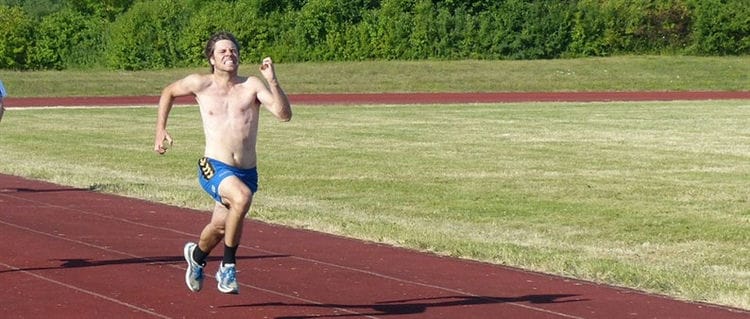
Breathing should be:
- predominantly nasal;
- deep enough;
- measured;
- rhythmic.
To establish a rhythm, monitor the frequency of inhalation and exhalation from the very beginning of your run.
Do not strain
While running, a person instinctively tries to tighten up – to tighten the muscles of the back and shoulders, to close the palms in fists … Relax and free yourself from unnecessary tension!
Let the body move easily.
It is advisable to hold your palms in such a way as if there is an invisible, weightless ball in each of them.
Study by pulse
Many athletes run by heart rate.
Get a heart rate sensor (treadmills usually have a sensor on the handlebars, but it is inferior in accuracy to meters that are attached to the arm or chest).
Remember the correct diet
Take the time to carefully study the article on nutrition while jogging. In it, we talk not only about the optimal diet, but also about the correct eating regimen.
Running on a completely empty stomach is unreasonably difficult.
If you want not to fall down from fatigue after ten minutes of jogging – either eat something light (banana, yogurt) 40 minutes before, or eat properly two hours earlier.
If your sides hurt while running
Sometimes it is impossible to run for a long time due to the fact that there is pain in the sides. When, while running, the left or right side begins to prick, then you do not need to be afraid and immediately move on to a step. The pain arises from the fact that when running, the blood in the body begins to move faster. But the spleen and liver do not have time to instantly respond to such a work of the heart. As a result, blood enters these organs in large quantities, and leaves in less. This results in excessive blood pressure in these organs. And this pressure touches the nerve receptors on the walls of the spleen and liver. As soon as the organs are back to normal, the pain will go away.
There are two very simple ways to reduce or completely eliminate this pain.
- Start taking slow deep breaths in and out as you run. It works like a massage of the internal organs by moving the abdominal and pectoral muscles.
- Massage can be done directly by drawing in and inflating the abdomen. It will also help relieve pain.
If the pain still does not subside, then you have chosen a too fast pace for which your internal organs are not yet ready. Reduce the pace a little and the pain will go away in a few minutes. In this case, it is not necessary to go one step. Be patient a little, and everything will be fine. The sides most often get sick at the beginning of the cross and when the body begins to get tired, and the pace of running does not decrease.
Medicinal assistance
Many beginners are interested in the question of what muscles need to be pumped in order to run fast, and are there any medications that help improve endurance? We have already answered the first question above, suggesting a set of exercises for home workouts, which perfectly “pump” the whole body. But we will dwell on the second in more detail.
Please note that taking any medication always begins with a doctor's consultation. Never take medications without a prescription – you can easily harm your body. There are very sad stories, some even with a fatal end. There is a great risk of provoking an allergic reaction, overloading the liver, affecting the work of the heart and other vital systems.
We have already described above what you need to do to run faster, and now we will give a list of the most popular medicines that will also help with this:
- Mesocarb and caffeine – they stimulate the release of energy, which is necessary in order to run fast and for a long time;
- Metabolic group – steroids, anabolic steroids, nootropics;
- Dexamethasone – a substance that stimulates the production of glucose;
- Carnitine, Aykar, Sydnocarb and other drugs that suppress the feeling of fatigue, cause general arousal.
Remember the substances that quickly increase endurance and are absolutely harmless to the body: coffee, green tea, natural fresh juices, nuts, dried fruits, fresh vegetables and fruits, honey, ginger. Of course, these foods should be consumed in reasonable amounts. If you include them in your regular diet, you won't have to surf the net. How to pump up your legs to run fast, we guarantee it!
So, let's summarize and answer, is it possible to learn to run fast in a week?
What determines the running speed?
- Correct running technique;
- Balanced diet;
- Regular training;
- Comfortable clothing and suitable footwear;
- Mood;
- Nice warm-up.
It is impossible to learn to run fast in 7 days, but it is quite possible to improve your result by at least a quarter of a minute. Follow the recommendations in the article, and be sure to consider everything we mentioned. And note, we DO NOT recommend preparations for fast running. No matter how pretentious it may sound – we are for natural strength and endurance!
Maximum oxygen consumption
The role of muscles in providing speed qualities is great, but, of course, not absolute. Indeed, in order for the muscles, as well as other vital organs to receive oxygen, the coordinated work of the respiratory and cardiovascular systems is necessary.
The most famous indicator describing the connection and efficiency of these systems and muscles is the maximum oxygen consumption (VO2 max), which shows the amount of oxygen (in milliliters) that a person is able to consume within 1 minute.
The average BMD in young untrained men is 45 ml / min / kg, in women – 38 ml / min / kg.
As a result of training, not only the number of mitochondria in the muscles increases, but also such physiological adaptations as an increase in blood plasma volume, systolic volume of the heart and stroke volume, tissue capillarization and, ultimately, such adaptations cause an improvement in the efficiency of oxygen transport to muscle cells and its use, and this is the key to improving performance in middle and long distance races.
BMD depends on genetic factors, age, gender, and is also closely related to muscle mass and accurately reflects the level of fitness.
Up to 20 years, there is an increase in the value of the BMD, from 25 to 35 years – stabilization and from 35 years – a gradual decrease in the BMD.
By the age of 65, the maximum oxygen consumption decreases by about a third.
Slow and fast muscle fibers
For the speed of contraction, there are “slow twitch” or slow (ST from the English slow twitch) and “fast twitch” or fast (FT from the English fast twitch) muscle fibers.
Slow or ST fibers
Thin, relatively weak, but at the same time resistant to fatigue. They are well supplied with blood and have a higher amount of myoglobin, which gives them their characteristic red color (red fibers). ST fibers contain many mitochondria and are characterized by high levels of aerobic enzyme activity. The amount of the ATPase enzyme is small, which accounts for the low rate of contraction. Slow fibers are most adapted to static or prolonged monotonous loads of low intensity: maintaining a posture, light running.
Fast or FT fibers
Fast fibers are thicker than ST fibers, develop more strength, but also fatigue faster. These fibers are less vascularized and have fewer mitochondria, lipids, and myoglobin than ST fibers (described as white fibers). Unlike slow fibers, fast fibers contain mainly the enzymes for anaerobic glucose oxidation (glycolysis). The main sources of energy are glycogen (carbohydrate) and creatine stores. Due to the high speed of contraction and fast fatigue, these fibers are capable of short-term and high-intensity work: fast running, 100m sprint, for example.
Fast fibers can be divided into two subtypes. Their difference is in the method of obtaining energy: the former (subtype A) can use oxygen to obtain energy by oxidizing carbohydrates and fats, the latter (subtype B) practically do not use oxygen.
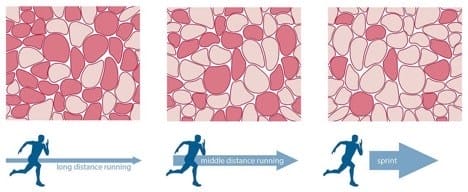
The predominance of FT or ST muscle fibers will largely determine the speed potential of an athlete. If there are more fast myofibrils in the body, you can achieve high results in short-distance running, as well as: in sprint distance swimming, weightlifting, martial arts and other sports disciplines, where impulse, explosive work is primarily important, which is provided by FT- muscle fibers. If slow muscle fibers prevail, there will be much more prospects in long-distance running, as well as: in long-distance swimming, road cycling, cross-country skiing, rowing, triathlon, etc., that is, in those sports where aerobic energy education system.

For most people, the ratio of myofibrils of different types in muscles is approximately the same: 50 to 50%. But, this is not a reason to despair. Firstly, you can try to develop in sprinting or long-distance running, gradually adapting your muscles and your body with training. And secondly, running at medium distances, cross-country, as well as swimming at medium distances, many game sports (football, basketball, etc.) and even … chess are well suited. After all, there will be much more health benefits from this than from TV, social networks or complaining about bad heredity.
Elite sprinter runners can have up to 80% of fast myofibrils in their muscles, while marathon runners, on the contrary, can have up to 80% of slow ones. But the potential is only a more favorable starting position. Without training, it remains potential!
Hand position
Many people think that running is an activity exclusively for the legs, and that hands are needed in order to hold the phone, bottle, keys, and so on. This is a big mistake: in running, it is equally important to use the strength of the body and the movement of the arms.
Correct hand movements make it much easier for the legs to work and allow you to run longer distances with less effort. The hands should be relaxed, the shoulders slightly raised, the elbows bent at the elbows, and the movement should be along the body, not in front of it.
Step length
Do not try to take large strides, the size of your stride depends on the degree of your physical activity and the duration of your training. Moreover, too wide a step will lead to the fact that the foot is ahead of the center of gravity and slows down the movement. At the moment of standing on the ground, the foot should be exactly under the knee.
Pay attention to the level position of the back, try not to swing from side to side. One of the most popular mistakes among untrained runners is looking deep down, straining the cervical spine.
How much to run for beginners
The volume of the load at the very beginning is determined by physical fitness, age, weight, the presence of diseases in a person.
You can find workout programs for beginner runners online or ask your coach for a plan to follow.
Such training programs for beginners are advised in the first days to run no more than 15-45 minutes at a calm pace. If you can't run in a row all this time, try interval jogging, for example, running for 1 minute, and then go to step 1 minute. Different loads should be done on different days. And don't forget to rest at least 1-2 days a week.
The increase in load should take place gradually – in a week no longer than 9 minutes and no more than 1 km.
What time of day is it worth running
Workouts are always tied to the daily routine. It is good if it is possible to do it when it is light and not hot. Optimal time for classes:
- Morning. In autumn, winter and spring, it is better to wait until dawn. Many people like to run in the summer at 4-5 am, while the city is asleep and cool.
- Evening. 19-21 hours are suitable for those who want to cheer up at the end of the day and fall asleep quickly.
They don't run during the day for several reasons:
- difficult to relate to lunch;
- hot in summer and spring;
- a lot of people on the streets;
- does not allow the daily routine.
If there is a desire and time, then it is useful to run for an hour or two on a sunny April afternoon.
Do I need to run every day
If we are talking about short runs of 20-30 minutes, then they can be started after the body has adapted to stress. This happens 2-3 weeks after the start of the class. With good tolerance, acceptable weather conditions, enthusiasts train every day. In rain and frost, it is better to stay at home, run on the spot or on a treadmill.
There is no benefit to an untrained body in daily long runs. It makes no sense to give loads so often, because:
- the muscles will not have time to recover, there will be many micro-tears, bruises;
- there will be pain in the legs, back, interfering with training;
- a great test for the heart and blood vessels, which is confirmed by a sharply increasing pulse
- appetite increases, which leads to weight gain.
It is enough to practice 3 times a week, if you run for 40 minutes or more, you can gradually increase the time.
Running plan for beginners
It is easier for beginners to go to the goal when there is a clear algorithm of actions. Plan for alternating walking and running for the first 10 weeks:
- 1st week – 8 minutes walk, 4 minutes run per workout
- 2nd week – 6 minutes walk, 6 runs
- 3rd week – 4 minutes walk, 8 runs
- 4th week – 6 minutes walk, 10 runs ******
- 5th week – 14 minutes of running, 6 walking;
– 6th week – 16 minutes of running , 4 walking; - 7th week – 18 minutes of running, 2 walking.
Further, the walking time is reduced to a minute, starting from the 10th week, only jogging remains. It is recommended to end the workout with a five-minute walk.
If you have strength, then you can increase the specified time by 1.5 times
How to dress for a run
Seasonality of clothing is the main criterion for choosing jogging clothing. It is important for the runner at any time of the year that the garment wicks moisture well. In summer, clothing should cool, and in winter, thermoregulation is important in clothing. Clothing for both marathon and running training should not be made of natural fabrics, such as cotton. it accumulates moisture and in winter such clothes can lead to hypothermia and cause colds. The best fit for the runner is clothing made from high-tech materials specially designed for high intensity loads.
The main criteria for the selection of clothing for jogging:
- things should be made of elastic materials;
- fit snugly to the body;
- quickly remove moisture;
- not have any internal protruding seams to prevent friction – ideal;
- clothing for running on the streets must be equipped with reflective elements;
- Clothing for running in cold weather should provide thermal regulation and protection from wind and rain.
Options for what a beginner can train in :
- in summer and in hot weather – light shorts or short tights for runners, a T-shirt, for women – a sports bra;
- in cool weather, clothes should have 2-3 layers, for example, a T-shirt, long sleeve, windbreaker, long tights;
- in winter, clothing should consist of 3 layers, for example – thermal underwear, long sleeve, windbreaker, insulated tights, gloves.
In addition, for runners with vascular or muscle problems, compression clothing may be relevant, which helps prevent vascular diseases, reduces pain in the limbs, increases oxygen metabolism, and during prolonged exertion, additional muscle support reduces the risk of injury.
Sources used and useful links on the topic: https://gtonorm.ru/uchimsya-bystro-begat/ https://scfoton.ru/kak-nauchitsa-dolgo-begat/ https://bodybuilding-and-fitness.ru/ kardio / beg / kak-bystro-begat.html https://keeprun.ru/tips/sovety-kak-begat-bystree-i-ne-ustavat.html https://health.7days.ru/sport/kak- nachat-begat.htm https://FB.ru/article/329033/kak-nauchitsya-byistro-begat-metrov-rekomendatsii https://livelong.pro/kak-probezhat-100m-bystro-taktika-i-trenirovki/ https://www.fitnessera.ru/pravilnaya-podgotovka-v-prioritete-kak-nauchitsya-bystro-begat.html https://livelong.pro/kak-nauchitsya-bystro-begat/ https://elhow.ru / uprazhnenija-i-trenirovka / kak-stat-ochen-bystrym http://beg-dorozhka.ru/zanyatiya/kak-ne-ustavat.html https://marathonec.ru/how-to-run-fast/
Post source: lastici.ru