
Fundamentals of filmmaking: fiction and documentary films. Why non-fiction films are crowding out fiction

Content
Fiction cinema
Fiction films, in fact, are stories written by people of varying degrees of sanity, which are proudly called screenwriters, and illustrated by a handful of unique ones that can reproduce the story in detail on the screen.
There are hundreds of options for how to tell artistic stories, and the rules in this ring are, for the most part, absent – hundreds of directors deviate from the path already beaten by the classics and make their way to Olympus of cinema. In fact, something new and unknown is being invented.
From the variations of fiction films – a variety of genres (ranging from classical – comedy, tragedy and drama, and ending with newfangled cyberpunk and neo-noir), stylistics and forms (short film, full length, music video, which in fact is also short).
The instrument of fiction is a story described in a definite order, with definite accents. This story is told by people – screenwriters, directors, cameramen and actors – each of whom strives to present from the right (planned, I would even say) angle. This, in fact, is the essence of the prefix “game”.
In a feature film, everything must be calculated to the details, but at the same time, if the picture is not on a historical theme, then assumptions are possible – sometimes, to get a more dramatic effect, you can sacrifice realism.
Fiction films are undoubtedly a complex and complex creation – for its implementation you need careful preparation and an understanding of what you will get as a result. Multi-page scenarios must go through fire, water and copper pipes so that as a result we get 2 hours of fascinating fantasy on the topic of life.
And I do not in the least underestimate the importance and complexity of documentary films – it is just that, in fact, the methods of production and impact in feature films and documentaries are different. And, it is worth noting that they perfectly coexist and complement each other.
Fiction films are a complex hierarchically built structure that works like a pyramid of glasses at a luxurious ball – first an idea is born, then a script, a search for people (director, producer, cameraman), a preparatory period (pre-production), clearly built and at the same time absolutely chaotic filming process, post-production and release on screens.
Read also: Is this the main trend in movie posters or are the designers out of ideas?

Documentary film
Documentary cinema, like any other cinema, is also a chain of actions, interconnected, but several links are present (or absent) in it, which distinguishes the process from the usual one.
For example, at the moment when the process of writing a script takes place in a feature film, documentary filmmakers can simply determine the topic of conversation or what they want to see in the frame at that time. Moreover, often the documentary filmmaker can only plan an approximate topic, for example, a conversation – during the filming process, it is likely that the character will be quite versatile and reveal another topic. Or he will be able to present this topic from a different angle no worse than moving along the planned early schedule. The script can be written already on the basis of the footage and corrected after the entire filming process.
Also, the conditions of the shooting process differ from the usual “staged” – it is not so important what plans and shots you choose, how you will expose the light (and whether you will expose it at all), in what clothes the characters will be and whether they will have make-up on them (here make-up and costumes are important only in real reconstruction of events during the shooting of popular science films). I would like to note that in this case it is about “true” documentary cinema (as some directors say about current trends).
Here, I think, the time has come to actually clarify the essence of the question of “truth.”
Some modern documentary filmmakers believe that as soon as a person sees the camera, he immediately starts acting – and the whole essence of documentary cinema disappears. In their understanding, a person must be taken either by surprise, or everything must be organized in such a way that the person simply does not suspect that he is being filmed.
Dokudrama
In general, mixing the two types of cinema is a fairly common practice – for example, there is such a genre as “docudrama” – seemingly documentary, but seemingly fiction. In Europe, docudrama is a subgenre of fiction films based on real events. In fact, this is a large-scale reconstruction of events with the participation of actors and a much deeper immersion in the internal conflict of characters, rather than just a display of significant days, but already past. For clarity, let's take, for example, the film “Captain Phillips” with Tom Hanks in the title role – the events are completely real and historically confirmed, but the characters are played by professional actors.
Our docudrama is a little different – most often it is still a documentary film, but with dramatic inclusions of the main characters (an interview with a real participant in the events, his comments and the point of view of the narrator).
Films-portraits
Another subgenre of documentary films is portraits or films that describe some event in history. In fact, these are films about famous people and events, but unlike popular science films, they also have this “liveliness” when everything, for example, is shown through the prism of one person (a film-portrait of the Bolshoi Theater from the point of view of a regular visitor, a former dancer and some other entertaining character) with unprepared lines and unrehearsed scenes.

“True” documentary film
There is also a slightly different definition of “true” documentary cinema – Marina Razbezhkina adheres to it (she is the main master of her own school of documentary filming, which promotes live filming, and among her students, for example, Valeria Gai Germanika) and Roman Shirman. For them, true documentary filming is filming here and now with a minimum of comments and performances. In this case, the rule applies – “I see and now I show”, voice-over text or music is not used in order to avoid imposing a mood while watching.
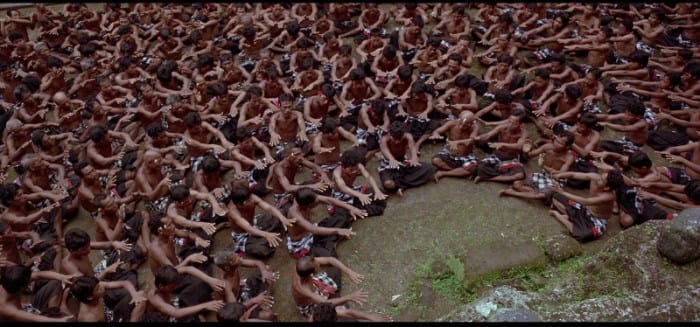
From their point of view, the person in documentary films is just a detail. They do not use interviews, and they do not tell a story in a consistent chronology – they are kind of impressionists of cinema who try to express the atmosphere with the help of pictures. A striking example is the well-known picture “Barak” – a film completely without text, but this does not prevent you from plunging into the atmosphere and understanding what you see at the subconscious level.
Mortal Kombat
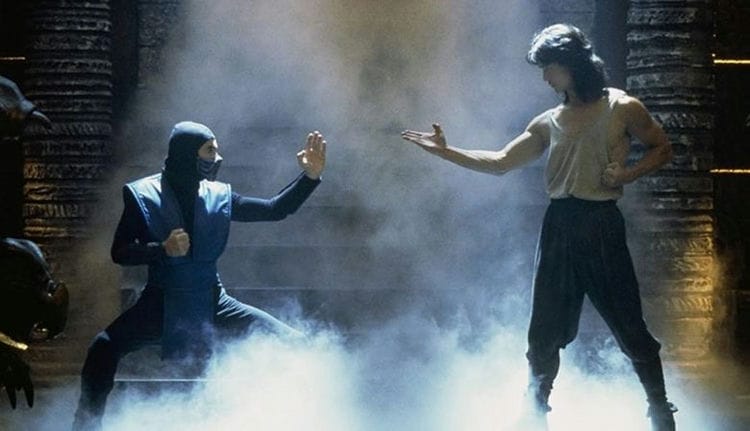
The action movie by Paul Anderson (who will later shoot “Resident Evil”), based on the Mortal Kombat fighting game series, delighted the audience with a boring plot (the script was written by MK authors Ed Boone and John Tobias), good acting, well-staged battle scenes and high-quality scenery, thanks to which the right atmosphere was achieved. Mortal Kombat may not be the best movie, but it is definitely one of the best gaming movies. The sequels, alas, turned out to be not so good, and therefore do not deserve attention.
“Silent Hill”
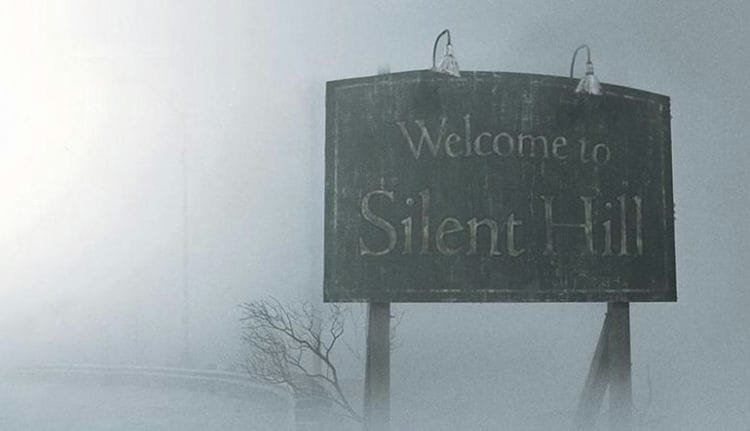
The adaptation of the first part of the Silent Hill series was definitely a success. A professional cast, catchy music (it could not have been otherwise, because Akira Yamaoka, the permanent composer of the game line, took part in the recording of the soundtrack), masterfully conveyed the atmosphere of the city covered with fog, nightmarish monsters (and the graphics were used to a minimum) – all this added up a high-quality, exciting film, which can be forgiven even for some discrepancies with the canon (for example, the presence of the Pyramid Head). The sequel, based on Silent Hill 3, turned out to be a failure, being remembered only by weak computer graphics and the role of the future star of “Game of Thrones” Keith Harington.
“Resident Evil”
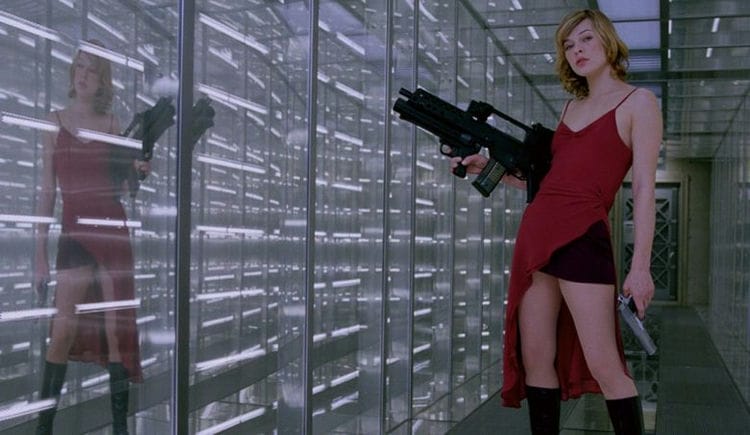
The first episodes of the Resident Evil movie series, based on the Resident Evil universe, turned out reasonably good. Paul Anderson took from the original source only the general plot outline and some of the characters, and if in the first two films he still adhered to some kind of correspondence with the history of the game line, then a complete gag with a global apocalypse, clones and immortal heroes began. As a result, you can watch only the first, second and, with a stretch, the third part, the rest are better to skip.
Warcarft
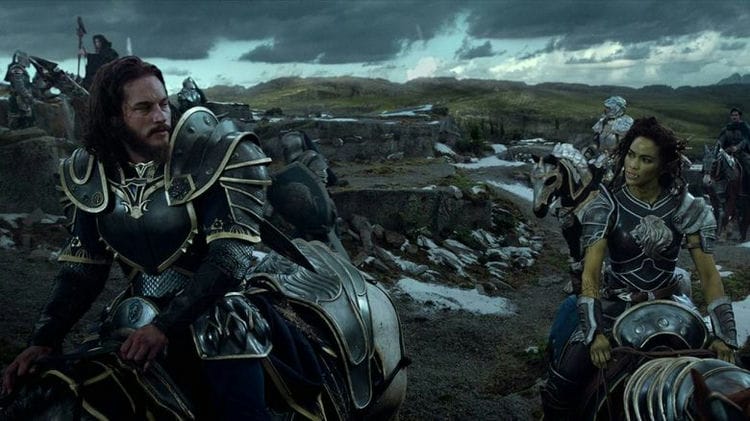
Although Warcraft is a bit chaotic and ragged, even with these shortcomings, this film deserves to be on the list of the best. Fans of the Warcraft strategy line and the online game World of Warcraft saw familiar heroes and witnessed famous events, and those who are not familiar with the original source received a large-scale, exciting, spectacular movie (albeit not always understandable to the uninitiated viewer). Alas, after a wave of criticism, the chances of getting a sequel are still very slim.
Prince of Persia: The Sands of Time
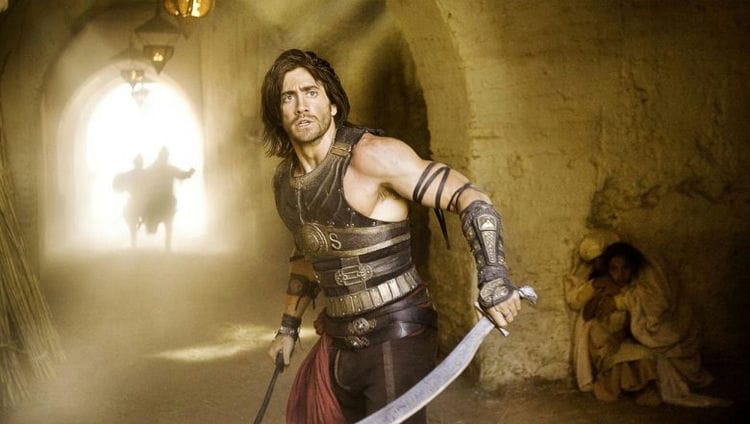
The adventure tale, based on the Prince of Persia series, transformed the story of the protagonist in a new way. Here, Prince Dastan reminds, rather, of a vagabond (it's all the fault of his origin – as a boy he was picked up from the street by Tsar Sharaman). Other attributes, however, are in place: a dagger that allows you to rewind time (it's a pity that it is used a couple of times at most), parkour, numerous combat scenes and, of course, a beautiful princess. Maybe in some ways “Prince of Persia” did not reach the title of quality cinema, but as an entertainment show it is more than relevant.
Need for Speed: Need for Speed

An entertaining action movie with beautiful cars, an easy plot and eminent actors in the lead roles – the charismatic Aaron Paul, the charming Rami Malek and the Oscar-winning Michael Keaton. If we draw parallels with the game franchise, “Need for Speed” evokes the closest associations with Need for Speed: The Run – the film demonstrates a race across America, alternates chases with fights, constantly changing cars and impresses the viewer with breathtaking landscapes.
Lara Croft: Tomb Raider

An adaptation of the Tomb Raider video game series with the charming Angelina Jolie. Both films of the line could boast of a frivolous attitude, well-choreographed action and excellent special effects for their time. The same cannot be said about the 2018 reboot with Alicia Vikander in the title role, based on the new Tomb Raider trilogy and gone into excessive seriousness. Summary: old dilogy is good, restart is not worth attention.
“Max Payne”
Max Payne is a good movie. But only apart from the game franchise, because the film is related to it only by the name and names of some characters. Otherwise, this is an independent work, intriguing with an interesting story and enticing with noir atmosphere. Alas, with such a careless attitude to the original source, the film will rather disappoint you than captivate you.
Lara Croft: Tomb Raider (2001).
She is perfection itself! There is no woman on our planet who could compare with her. She is divinely beautiful, incredibly smart and amazingly courageous. She owns all types of hand-to-hand combat, amazingly shoots from any type of weapon and is able to survive in the most extreme conditions.
After the game, to see Lara Croft live, yes, it was the dream of millions of fans. Running across the screen in her short shorts, Angelina Jolie makes the film quite watchable even without sound.
Resident Evil (2002).
In a giant underground laboratory, a dangerous virus breaks free, instantly turning its victims into gluttonous zombies. One bite or scratch of their terrible claws is enough for a person to become a maddened devourer of living flesh.
Objectively – the best film of the entire series, as it usually happens. Mila Jovovich, who looked great in The Fifth Element, seems to have completely ruined her career with this role.
Super Mario Bros. (1993)
Brothers plumbers from Brooklyn find themselves in a parallel world and try to save the princess from the bloodthirsty monster dictator. The film, as expected, got into the “Guinness Book of Records” as the first film shot for the game. However, this has nothing to do with quality.
The film turned out to be so terrible that it became a cultural phenomenon – you can watch and laugh at the top of your voice even today.
Double Dragon (1994)
The first fighting movie revealed one problem: the lack of a coherent plot in the game provides a field for the sick fantasy of screenwriters. The Li brothers hunt for the second part of the Double Dragon mascot, which is able to tear the Earth to shreds.
Cardboard characters and silly brawls are all there is to Double Dragon.
Street Fighter (1994)
Another example of a stereotyped script, “decorated” by the mediocre acting of the former “big porn star” Jean-Claude Van Damme. I think many people stopped believing in fighting movies after that. But in vain …
And yes, this is the third film in the category “so bad, it's even good.”
Mortal Kombat (1995)
I might sound like a fanatic, but I watched the original Mortal Kombat thirty times. The tournament that will determine the future of the Earth has started. The best fighters of the two universes enter the arena. Mortal Kombat has begun! Raiden, Johnny Cage, Kitana, “brothers” Sub-Zero and Scorpio have become a symbol of the era for millions of teenagers.
And there is also a simple plot, no excesses in the spirit of the same “Double Dragon” and really well-staged fights.
Halo

A full-length film based on Microsoft ‘s flagship game was planned back in the early 2010s. The very idea of a large-scale galactic war of people and covenants was begging for a Hollywood blockbuster, but the producers began to complain about the aggressive and illiterate policy of the “Mike”, who demanded the impossible. Either rewrite the script, then change the director, then increase the budget, then reduce – in the end, the project simply stalled.
Years later, Showtime picked it up and decided to turn it into a large-scale multi-part space opera. The lead role is played by Pablo Schreiber, best known for his roles as George Mendes from Orange Is the New Black and Mad Swinney from American Gods. The creators promise “their ” Game of Thrones “, only without incest.” Filming is about to begin, so the wait for the Master Chief's small screen debut isn't long.
Uncharted
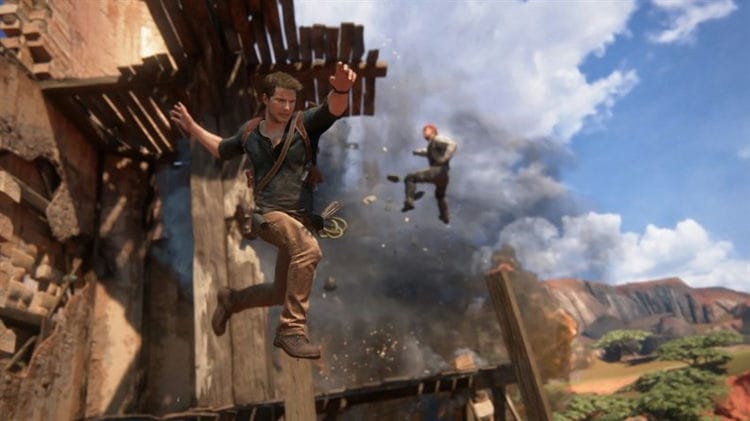
A film based on the adventure franchise Naughty Dog should, in theory, fill the niche that the creators of the movie Tomb Raider are trying to stake out. But the two competitors face a common problem: films about cheerful treasure hunters have become obsolete as a genre and turned into a target for parodies: take, for example, “Jumanji: Welcome to the Jungle” or the recent “Dora”.
Only a charismatic protagonist can save the picture from failure, and here Uncharted has a clear advantage. The eccentric Nathan Drake is played by the talented Tom Holland – not only the best Spider-Man in the history of cinema, but also just a very good actor. Hopefully we'll get a good action adventure. Well, if the creators manage to get the project out of the production hell, where it has been for several years …
Call of Duty

The exact date of the release of the film version of Call of Duty (I wonder how it will be called in our box office?) Is not yet available, and we are unlikely to know it soon. If the producers decide to shoot about modernity, they will need to find a relevant plot, which will be very difficult. However, something in the spirit of Michael Bay's patriotic militants with waving flags on the half-screen, model-looking soldiers and juicy military equipment is probably coming. The director was appointed Stefano Sollima, who became famous for the film “All the cops are bastards” and the sequel to “The Killer” by Denis Villeneuve.
Duke Nukem

So far, the cat has wept for information on the film, but the groundwork for an excellent ironic action movie is already there: the politically incorrect sexist rude Duke finds himself in a modern, tolerant world, full of concern for his neighbor and categorically not ready for a pumped-up blonde. But who else can save the world from the suddenly arriving aliens?
They plan to invite the famous wrestler John Cena for the role of the “nuclear duke” – an almost ideal candidate, apparently so exactly. So far, the film has neither a script nor a director, but if everything goes well, we may well see something in the style of “Deadpool” – a daring bloody action game with bawdy humor and mockery of the cliches of a big movie. Hopefully the film won't have to wait another thirteen years.
Minecraft
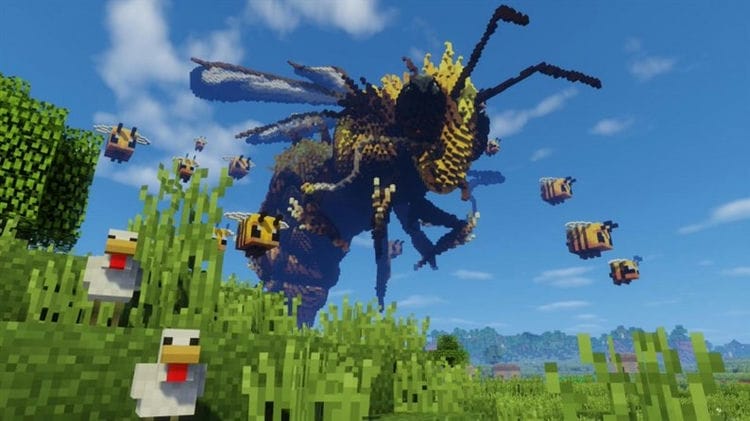
This is who will have to wait, perhaps the longest! The release of the film (we assume that it is animated) is planned as early as 2022 – by that time the film adaptations of the games will either finally turn into a laughing stock, or they will reach some new level. In itself, the idea of shoving Minecraft on the big screen is just great: it can turn out to be a skit of parodies of everything and at once in the spirit of “Lego Film”. Well, or a sad story for preschoolers.
There is still hope for the best, because the scriptwriters were the creator of the game itself, Marcus Persson and Oscar nominee Allison Schroeder: she was the one who wrote the script for Christopher Robin, which perfectly mixed fiction and reality.
Gears of War
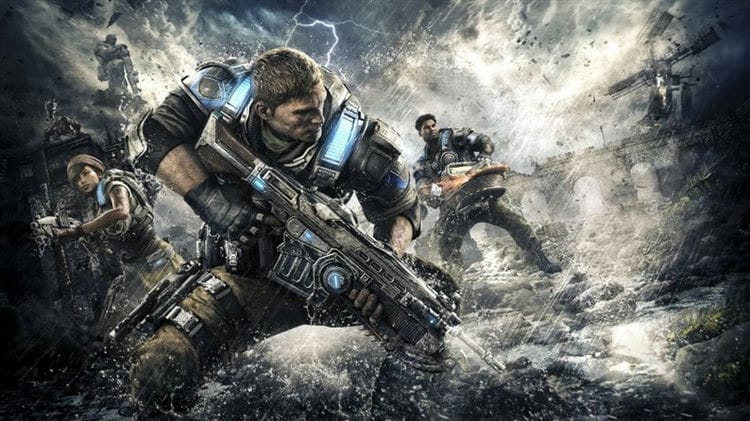
I would like to believe that “Gears of War” (we hope this is the final name) will turn out better than the cult in certain circles “Warcraft”. If with the Blizzard epic the difficulty was that the creators tried to fit the events of a huge scale in two hours, then with Gears of War everything is much simpler: the plot has never been the strong point of the series. It is only necessary to convey the atmosphere of a real meat grinder, and in terms of special effects, Hollywood has become skilled.
While the project is at the stage of developing the script: the authors of the new “Avatars”, the “Pirates of the Caribbean” franchise and the author of the script for the canceled Hollywood film based on “Metro 2033” are involved in the film. Hopefully the producers will hear Dave Batista and cast him for the role of Marcus Phoenix. In our opinion, it fits like no other!
Monster Hunter

But we no longer expect anything good from this project. To begin with, it is directed by Paul Anderson – not Thomas, but US, the director of the first Mortal Kombat movie and much of the Resident Evil series. If “Mortal Kombat” and the first “resident” were good in their own way and more or less conveyed the atmosphere of the original games, then Anderson suffered. By the sixth part, the zombie franchise under his leadership finally went into low-standard trash.
Having dealt with one brainchild of Capcom, the director drew attention to the following … And again he shoved his wife Mila Jovovich into the film adaptation, who for the last ten years has not starred in any good film. Of course, the presence of the martial arts master Tony Jah gives a faint hope for a decent action, but the footage from the set makes you lower all possible expectations.
Sonic in the cinema (2020)
The loose bright blue hedgehog Sonic from the parallel world, together with his newfound human best friend Tom, gets acquainted with the complexities of life on Earth and confronts the villainous Doctor Robotnik, who wants to capture Sonic and use his limitless super powers to conquer world domination.
Fans of Sonic games criticized the blue hedgehog's appearance in this movie. And – lo and behold, their comments were taken into account, Sonic became much prettier, and as a result, the movie about him showed a better start.

Assassin's Creed (2016)
With revolutionary technology to recall the memories of generations past, Callum Lynch lives the adventures of his ancestor Aguilar in 15th century Spain. Callum learns that he is a descendant of members of the mysterious secret society of the Assassins. Having accumulated incredible knowledge and skills, he comes into confrontation with the powerful and brutal organization of the Templars today.
The super-popular series of games about the time travel of assassins through the memory of itself is so cinematic that it hardly needed a film version. But Hollywood still insisted on a blockbuster. The collection of the picture was modest, but its output cannot be called a complete failure either.

Silent Hill (2006)
Doctors cannot find a cure for Sharon's mysterious illness, but her mother, Rose, refuses to send the child to a mental institution. Together with her daughter, she goes to Silent Hill – a city whose name Sharon constantly repeats in her dreams. Rose is convinced that this is where she will find the answers she needs so badly.
Both the game and the movie are equally scary. The director managed to transfer the atmosphere of the game to the screen, to make the viewer afraid in the same way as those who first played this game in the early 2000s were afraid.

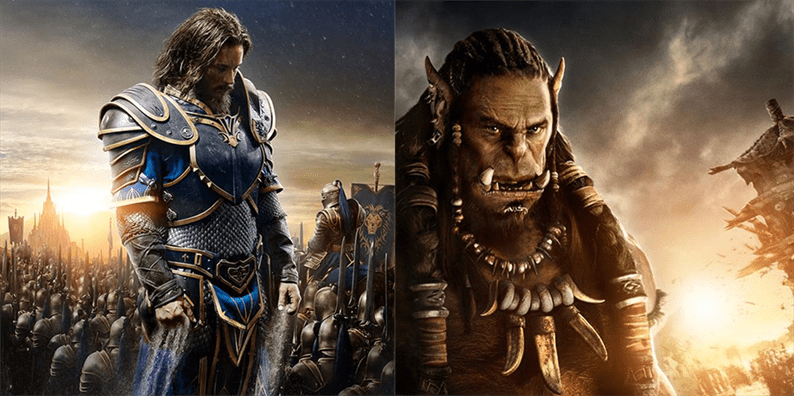
Warcraft (2016)
For centuries, magic and impregnable walls have protected people from any misfortune. But an ancient evil, defeated and forgotten millennia ago, has awakened.
A dark portal opened in the heart of the kingdom, and a race of unseen creatures flooded the lands of Azeroth. Thus began events designed to forever change the fate of this world.
Everyone expected from the film based on the Warcraft series of games something like another “Lord of the Rings” – magic, severe wars, confrontation between goblins and knights. But it turned out a little differently – with an impressive budget in the United States, the picture failed. And this led to the absence of its continuation.
Pokemon: Detective Pikachu (2019)
The story begins with the mysterious disappearance of private detective Harry Goodman, which his 21-year-old son Tim will investigate. He will be assisted in the investigation by his father's former partner, the talkative detective Pikachu, who is a mystery even to himself. After discovering that they are somehow fantastically able to communicate with each other, Tim and Pikachu set off for evidence along the neon streets of Ryme City, a modern sprawling metropolis where humans and Pokémon live side by side. The couple meet a wide variety of Pokémon and uncover a terrible conspiracy that can destroy this peaceful coexistence and become a threat to the entire Pokémon universe.
The film hit the box office and received high ratings. And Pikachu with the voice of “Deadpool” star Ryan Reynolds seemed to everyone as a very organic talking animal, capable of deduction.

Doom
The film is set around 2045. After a signal for help was received from the distant scientific laboratory of Oldway, a detachment of space special forces arrives at the place – the planet Mars – and discovers the destroyed station. It soon turns out that hordes of horrible mutant creatures are hunting people here …

Hitman
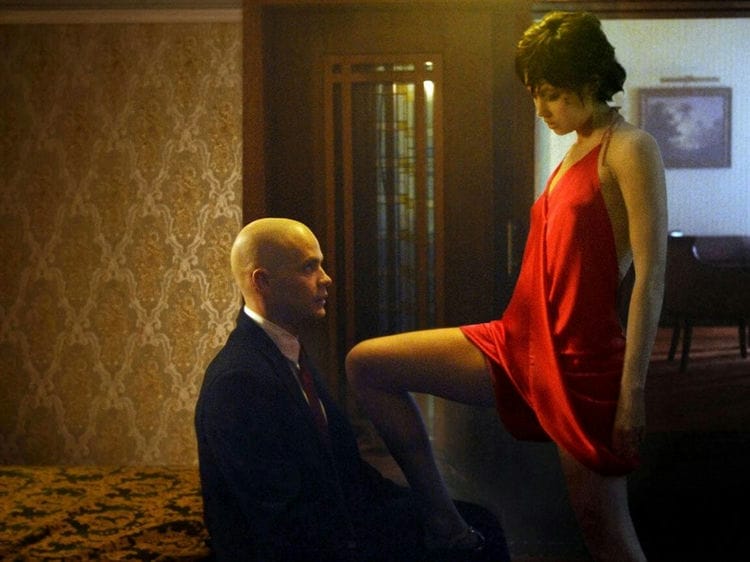
The Hitman was trained as a highly professional assassin, whose most powerful weapon is composure and immense pride in his work. 47 is the last two digits of the barcode tattooed on the back of his head, as well as his only name.
But the hunter becomes prey when 47 gets caught up in political intrigue. Interpol and the Russian military begin the hunt for the hitman throughout eastern Europe, while he himself tries to figure out who set him up and why they are trying to take him out of the game. But the biggest threat to 47 is the excitement of his conscience and unfamiliar emotions that awakened in him after meeting a beautiful girl …
Street Fighter
The crazy dictator is a vicious and rather stubborn psychopath taking innocent people hostage, demanding a ransom of millions of dollars. The only one who is able to cope with him is the fearless Colonel William Gile, whose share is on a dangerous mission – to find the secret headquarters of the failed Ruler of the World and defeat him.
Only a few friends come to the aid of a brave fighter – they are not alike, but they have one thing in common – they believe in themselves and are ready to go to the end.

Forerunners
The genre of interactive films originated from the film industry. Or rather, the desire of directors, producers and screenwriters to surprise the viewer with a non-standard format or way of storytelling.
One such adventurer was Robert Montgomery, an American actor who presented his directorial debut in 1947. It was the film “Lady in the Lake” – noir, a distinctive feature of which was shooting from the first person (the effect of “subjective camera”). Based on the novel by Raymond Chandler, the tape tells the story of a mysterious murder, and we observe the entire investigation through the eyes of the protagonist.
This also became the main slogan of the film: YOU and Robert Montgomery – solve a murder mystery together !, flashed on literally every flyer and advertising poster.
Chandler's book was written in the first person – the reception of filmmakers allowed even in the film adaptation to feel like a private detective Philip Marlowe. We saw only what he sees, we heard only what the hero hears. Before “Lady in the Lake”, such subjectivism had never been observed in cinema.
In the same year, Delmer Daves' film Dark Passage, known to us as “Black Stripe”, was released. This is also noir, a third of which was shot in the first person. At the beginning of the film, the hero escapes from prison – and we have no idea what he looks like. At some point, the character undergoes plastic surgery, we see the reflection of a bandaged face. The hero takes off his bandages and turns out to be … Humphrey Bogart! The rest of the film is shot using conventional (though no less interesting) noir camera angles.
How the character looked before the transformation, most viewers will never know – although the most eyed ones can make out the criminal's face in a tiny photo in the newspaper next to the word WANTED. The entire film was shot at a high level, but it is the first-person part that is most impressive and makes Black Stripe one of the best representatives of the noir genre, along with Deep Sleep and The Maltese Falcon.
It's not just the first-person shots of hide-and-seek with the police that are impressive. Bogart's real wife, Lauren Bacall, who plays the central female role in the film, manages to look at the camera, directly at the viewer, as charmingly as she looks at her beloved husband in traditional film angles. Thanks to the “subjective camera”, Bacall and I are establishing a connection that the viewer has never had with any screen fam. In ordinary films, actresses are forbidden to look directly into the camera, so that the viewer does not remember the existence of this very camera. Therefore, neither Ingrid Bergman, nor Ava Gardner, nor Rita Hayworth looked into your soul personally.
Interactivity seeped into cinema not only through camera experimentation. In the 50s of the last century, American director and producer William Castle filmed low-budget horror films using extremely unusual marketing tricks. So during the screening of the film “House on the Hill of Horrors” (1959) a huge plastic skeleton flew over the hall from time to time, which teenagers constantly shot with popcorn.
During the Tingler (1959) session, some of the audience members had vibrating devices under their seats that were randomly triggered during the film. To turn them off, the person had to scream, which was hinted at by the disclaimer at the beginning of the tape. According to the plot of the film, unpleasant sensations at the fifth point with a strong fright are caused by a terrible parasite, similar to a centipede, entwining the spine of each person. When a person screams, the parasite weakens, but if you get really scared and don't scream, it will just break your spine. One such monster is separated from the back of a murdered mute woman, and at the climax of the film, this tingler escapes into a movie theater, which is owned by one of the heroes.
At the same moment, in a real cinema, ALL trap seats begin to vibrate IMMEDIATELY!
The first truly interactive film appeared in 1967. It was the Czech arthouse / black comedy Kinoautomat. The tape ran for only 60 minutes, but stopped 9 times, inviting viewers to vote to choose one of two options for the development of events. It was a rather strange, but at the same time interesting performance – especially considering the fact that the film positioned itself as a satire on democracy. Accordingly, he had only one ending – even despite all the previous elections.
Full Motion Video
Like cinematography, the young (or rather, even a newborn) gaming industry has been looking for new, more powerful ways to influence the consumer all the time. In the mid-70s, Full Motion Video (FMV) appeared – games in which the plot was presented through a pre-recorded video (or even film) with scenery and live actors.
Some projects used short clips between traditional gameplay — the approach that made the first Command & Conquer episodes famous — while others played movies from start to finish.
The first FMV game is considered the arcade game Wild Gunman, released in 1974 by Nintendo. And this is really a real interactive film – a movie with several options for the development of the situation. The essence of the game is simple: a cowboy actor appears on the screen against you, and when his eyes light up, you need to raise the light pistol and shoot. A typical arcade game – however, on real film and with live actors instead of pixel ducks.
Notably, Wild Gunman was developed by Gunpei Yokoi (future creator of GameBoy) BEFORE LaserDisc (1978) and CD-ROM (1979) technologies. It is the laser discs that are considered the ancestors of FMV – after all, for the first time they allowed storing large volumes of live (albeit heavily compressed) video on a compact medium. Nintendo had its own technology: the clips were simply played on a pair of real movie projectors.
The real “birth” of FMV-games was in 1983 – with the release of the arcade Dragon's Lair. This is a grandiose interactive cartoon created by ex-Walt Disney animator Don Bluth. The game made a splash among young people and became a cultural phenomenon – both the characters of “The Simpsons” and the series “Stranger Things” stuck in it. The scenario, as in most FMV projects, is straightforward, the gameplay is also.
The focus is purely on the visuals – and the animation quality is truly amazing.
To save the princess from the clutches of the dragon, imposing knight Dirk needs to go through an obstacle course in the style of Quick Time Events – yes, QTE first appeared in this game. The player is required to choose the right doors and press the button in time to cut the monsters. The whole adventure takes about 15 minutes, but the dynamics and fun in the game are enough. And the animation of deaths in Dragon's Lair can be considered so.
In the same way, Blute's next game, Space Ace (1984), was developed. In fact, this is the same Dragon's Lair, but in a space setting. All the same caricatured hero and princess – except that the interactive has become a little more. Other notable arcades of those years include Ninja Hayate (1984) and Super Don Quix-ote (1984) – also princesses and QTE, but in an anime setting.
Subsequently, quest elements were added to the FMV games. For example, in Time Gal (1985), from time to time you can choose the actions of your character (hit with the left, with the right, or even run away), although there was still only one correct outcome. At the same time, Thayer's Quest (1984) did not have a QTE, and the gameplay consisted entirely of text solutions, which made the arcade game really playable in several different ways.
The popularity of FMV games peaked in the 1990s, when hand-drawn animations faded into the background, and full and short films with live actors began to rule the genre. One of the first hits was the adaptation of the board game of the same name Sherlock Holmes: Consulting Detective (1991).
Here interactive cinema took on its “classic” look at that time: a game menu on top of a mini-film.
In the story, you need to solve three mysterious cases, relying on newspaper articles and dialogues with civilians. In principle, this is where the gameplay ends: the player is only required to read canvases of texts and watch atmospheric clips of interrogations. In subsequent years, two more sequels were released – in which, however, you need to do the same.
In general, detective stories have become one of the most popular genres of interactive cinema. In 1994, Tex Murphy: Under A Killing Moon was released – the third game in a series of quests about the loser detective Tex Murphy. This is partly an arthouse project, which takes place in a post-apocalyptic future, where the player must investigate strange cases (say, the classic gambit with the missing statuette) and contact no less strange individuals from among humans and mutants. The distinctive features of Under a Killing Moon include an abundance of (almost) high-quality humor, self-irony, as well as a conventionally open world with a well-developed lore.
At the same time, the game Voyeur (1993), on the contrary, caught on with its “closeness” in the spirit of the Hitchcock detective “Window to the Courtyard” (1954). The player again tries on the role of a private investigator, but this time it is necessary to find dirt on the presidential candidate. The gameplay consists of spying on the windows of the penthouse from the apartment opposite. You are required to eavesdrop on conversations and observe the personal (and sometimes intimate) life of the family of a politician involved in something suspicious, who needs to be brought out into the open.
Sherlock Holmes: Consulting Detective
In addition to detectives, B-movies have taken their niche – thrash horror movies that have generated a lot of scandals in the gaming market. One of the most striking examples is the 1992 Night Trap, which was banned and censored due to overly violent scenes. In terms of gameplay, this is a trap играem-up game where you need to protect a group of young girls from vampires (more like The Gimp from Pulp Fiction) who invade the house and try to steal all the girls. The player has at his disposal a trap control panel and eight cameras installed in each room.
Night Trap's cameraman is Don Burgess, who won an Oscar nomination in 1995 for shooting Forrest Gump.
The interactive game is about spying and catching vampires – until you catch everyone and protect the teenagers. Well, at least some.
Animated games, too, did not lag behind – after the 80s they had a second wind. The cartoons were replaced by 3D modeling, but the gameplay was still poor. Sci-fi, with an emphasis on “interactive” rather than “cinema”, was the most popular among animations. Among the most memorable are Creature Shock (1994) and Cyberia (1994) – futuristic action games with high-budget computer animation of 3D scenes. The gameplay has remained at the level of slot machines, with countless QTEs and rail shootʼem-up mechanics.
The main adventure games of those years are The 7th Guest and Myst, both released in 1993. Unlike the aforementioned niche projects, The 7th Guest and Myst have become some of the most famous and successful FMVs in history – the future hits of the genre were equal to them. The first is a mystical horror full of quests with a creep, but an intriguing story. The plot is somewhat reminiscent of Agatha Christie's novel “10 Little Indians”: also a mysterious house, a congress of unknown guests and periodic murders. True, the guests have long been dead and are presented in the form of ghosts, and the detective line has been replaced with supernatural phenomena. However, such changes were only beneficial to the game.
As for Myst, this is a student project, which at the time became a cult and is still heard by fans of the genre.
There is not much FMV here (and instead of professional actors, the roles were played by the developers themselves), but the game made a great contribution to the development of interactive films in general. For its time, Myst was distinctive in everything: both in the picture and in the gameplay. This is an adventure quest on a fantastic island with several endings and original puzzles. Technically, the game combined 3D graphics with FMV inserts, and in those years it looked relatively photorealistic, which immediately caught the attention of the players.
In general, Myst has become one of the most significant games in the history of quests and interactive films.
The genre continued to develop, and by 1995 large sums of money began to be invested in interactive cinema. The first major project was Phantasmagoria (1995) – one of the most expensive games in history. In the development process, 25 professional actors were involved, more than 1000 backgrounds were drawn (the average FMV has about 100) using Hollywood special effects, and a whole choir of 135 people was hired as musical accompaniment.
Phantasmagoria borrowed the idea for the plot from Kubrick's The Shining, leaning towards a mystical component with an atmosphere in the spirit of Po and King. A young couple moves to a large estate, where a spirit infiltrates the main character's husband, who brutally killed several girls centuries ago. Moreover, all scenes with torture and murder (and even one) are shown in detail in flashbacks, which is why the game was banned in several countries.
Gameplay Phantasmagoria is a quest with a relatively linear development of events. In total, the game is divided into 7 chapters, during which the main character needs to save her husband by expelling the demon from him. The script is not as original as, for example, in The 7th Guest, but in terms of cinematography, Phantasmagoria surpassed all existing FMV projects at that time. And 4.5 million dollars was clearly spent for a reason – even if the game was not appreciated by critics.
In the same year, Beast Within: A Gabriel Knight Mystery was released, a curious interactive arthouse film that, on the contrary, was highly praised by both players and the press. This is also a detective story with elements of the mystical, this time involving German folklore about werewolves and secret sects. The budget of A Gabriel Knight Mystery was not as big as that of Phantasmagoria, but the game took on quality – an original plot and well-written dialogues.
In other words, the main components of high-quality interactive cinema.
By the end of the 90s, FMV practically died – games in this direction ruined the need for high costs for really high-quality things (after all, cinema in production is more expensive than games) and low sales of low-quality game-cinema-soap. But even in this difficult time, there are interesting projects. For example, Tender Loving Care (1998) from the future developers of TimeShift (2007) – starring famed actor John Hurt. The game is a psychological thriller divided into several episodes. After each FMV scene, the player must pass a test that examines his psyche and attitude to what he saw. A “free mode” is also available, in which you can walk around 3D locations and collect additional information about the main characters. The game has 7 variants of endings with a constantly changing story, depending on the decisions of the player during the course of the narrative.
The plot is a rather trashy drama about a young family whose child died in a car accident. Both characters suffer from a mental disorder, which is why they go to the therapist, who recommends hiring a nurse. That, of course, only aggravates the situation of the family, turning their life into a real psychological hell. Tender Loving Care did not bring something revolutionary to the genre, but it is a fresh breath in the era of detective / mystical FMV games. Well, it's also a really exciting thriller that is worth watching, if only for Hurt's sake.
Quests and rotoscopy
In parallel with FMV, pixel quests also developed – or, as they were then called, adventure games. These were mostly regular point-and-click projects, but some differed in the original plot and method of storytelling.
One of the most famous developers of such games was LucasArts (then still Lucasfilm Games). In 1987, under her leadership, the game Maniac Mansion was released – an extremely innovative project for its time, which put the name of the studio on the map of the adventure industry. The plot is entirely a cliché from films of category “B” in the spirit of the same William Castle – but the young Ron Gilbert and Gary Winnick skillfully play it all up, mocking both themselves and the player.
The whole action takes place in the mansion of a certain doctor Fred Edison, whose mind is possessed by an alien meteorite. Once Edison kidnaps a girl who turns out to be the beloved of the protagonist. The player, along with two selected partners, needs to save her and destroy the damned house. In total, there are 6 playable characters to choose from, each of whom possesses some universal skills (however, there is one useless hero). They are confronted by the family of Dr. Fred and a couple of aliens – giant walking tentacles. Maniac Mansion has several endings, and in general the quest narrative is non-linear.
As for the gameplay, there is no point in describing it in detail – this is a completely standard point-and-click. In technical terms, the game turned out to be revolutionary thanks to the SCUMM engine, which simplified the interface of the quests of the time to the state of a list of verbs. Also, the concept of cutscenes first appeared in the game – it was invented by Gilbert to describe non-interactive plot inserts in the game. Otherwise, Maniac Mansion, like other LucasArts games, is engaging exclusively with its plot and humor. As well as the cult series Monkey Island, and the game based on the absurdist comics Sam & Max.
The first significant changes occurred in Full Throttle (1995). The game is still replete with the scenario trump cards of previous LucasArts projects, but technically it has become better. SCUMM has evolved and offers the player a no longer cumbersome textual but compact pie-based selection interface. Now, instead of searching for the required verb to perform a certain action, you can simply call up a round menu with three active buttons: “look” / “talk”, “use” and “hit”. The change seems to be less significant, but thanks to it, quests finally got rid of annoying text commands.
After all, in LucasArts games, lore and plot are important, first of all, so the emphasis was placed on the cinematic nature of what is happening in order to reduce the usual user interface to a minimum.
Several years later, LucasArts went even further. In 1998, the studio developed a new engine GrimE, on which the Grim Fandango quest was released. In addition to 3D graphics, a distinctive feature of the game was the complete absence of any interface. The interactive part literally became “alive” – no menus, highlighted items, and even a mouse pointer. The player just needs to go to the object and press the button to perform the action. To facilitate orientation, the character's head always turned towards the active item.
The plot of Grim Fandango is made in the best traditions of LucasArts-quests. This is noir about the underworld in the setting of the traditional Mexican holiday of the Day of the Dead. You control, respectively, the skeleton, which is forced to “work off” his death in order to get into a better world. All in all, it comes as no surprise that Grim Fandango was voted the best adventure game of 1998.
Speaking about the development of interactive cinema, it is worth mentioning the technology of rotoscopy.
This is a technique in which animation is created by outlining frame by frame of a real-life film with real actors, making any movement on the screen as smooth as possible. In Soviet Russia, the method was known as “eclair”. In the gaming industry, rotoscopy was first used in the 1989 platformer Prince of Persia, the first installment in the iconic series. The model for the protagonist was the brother of the only developer, Jordan Mechner, and the moments with sword fights imitated the duel of real actors from the 1938 film “The Adventures of Robin Hood”.
The most famous “rotoscopic” game is the 1997 quest The Last Express, developed by the same Mechner. This is a detective story that almost completely copies the plot of Agatha Christie's novel Murder on the Orient Express. The main feature of the quest, in addition to the use of technology rare in games, is the narrative method. All events in The Last Express take place in real time, accelerated by 5-6 times: the action begins at 7:14 pm on July 24, 1914, and ends at 7:30 pm on July 26, a few days before the declaration of the First World War. During this time, the player is trying to solve the murder of a friend, at the same time getting involved in political intrigue, romance and other dirty and interesting things that take place on board the train.
In total, The Last Express has about 30 endings, and the plot changes under the influence of almost every player's action – even if you just stand still. Because life on the Orient Express literally goes on non-stop.
Sources used and useful links on the topic: https://say-hi.me/24-kadra/osnovy-kinoproizvodstva-igrovoe-i-dokumentalnoe-kino.html https://cubiq.ru/luchshie-filmy-po-motivam -igr / https://fishki.net/1494223-10-luchshih-filmov-snjatyh-po-kompjuternym-igram.html https://kanobu.ru/articles/28-filmov-snyatyih-po-igram-368468/ https://www.igromania.ru/article/31037/Yekranizacii_videoigr_kotorye_my_zhdyom(i_ne_ochen).html https://www.nashe.ru/news/luchshie-filmy-snyatye-po-motivam-videoyandex //zen.zen.zen.zen.zen.zenigr .ru / media / kinovibor / top-10-samyh-luchshih-filmov-sniatyh-po-igram-5e70fb90c1b8d96d45cc3d0b https://kanobu.ru/articles/interaktivnoe-kino-kak-izfilmov-delali-igryi-
Post source: lastici.ru