
“You are no longer a girl-bartender, but just a bartender”: how to build a career contrary to stereotypes. How to become a bartender from scratch. Life hacks
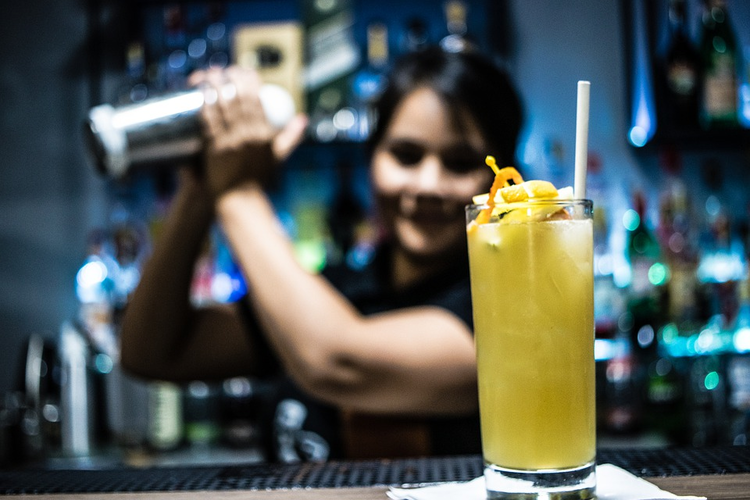
Who is a bartender: what you need to know about the profession?
The word “bartender” comes from the merger of two English words: bar (bar) and man (person). This term denotes a bar employee who is engaged in serving visitors at the bar.
The history of the profession is rooted in the era of the “gold rush” in the United States. At that time, in American stores, you could not only buy various goods, but also drink and eat. Over time, for the greater convenience of the store owner and buyers, the premises of trade establishments began to be divided into two parts with the help of a special vertical partition (it was she who became the prototype of the bar counter): the store itself and a kind of recreation area. Special people were hired to serve visitors in this area. In fact, they were the first bartenders. The profession finally took shape by the middle of the nineteenth century, and soon it penetrated into the old world: American drinking traditions were very quickly adopted in Europe.
With the advent of cocktails, the profession of a bartender from a simple craft began to turn into a real art, because their production requires a creative approach. In addition, a visitor needs to mix a cocktail or serve a drink beautifully, attracting his attention – this is also an integral part of the work of a representative of the profession.
Today, no restaurant or cafe is unthinkable without a bar. And, of course, this section of the catering establishment is served by a bartender. There are bars in hotels, nightclubs and other places of entertainment. In addition, they often exist on their own. These are, in a nutshell, the history and description of the profession.
Tasks and responsibilities
The bartender is assigned the following job duties:
- take orders from bar visitors;
- serve visitors;
- inform visitors about the range of drinks;
- advise visitors on the choice of a particular drink, a combination of various drinks;
- serve ready-made alcoholic and non-alcoholic drinks to visitors;
- to make cocktails for visitors by mixing alcoholic and non-alcoholic drinks;
- accept payment for the services of a catering establishment;
- at the request of visitors to put on this or that music;
- keep your workplace clean and tidy;
- inform the management about the shortage of certain drinks, if necessary, receive them at the warehouse;
- comply with sanitary and hygienic standards in the course of employment.
Work and salary
The salaries of the bartenders are not very high. In Moscow and St. Petersburg, they receive from 30,000 to 50,000 rubles. In provincial cities, their income is even lower: from 20,000 to 35,000 rubles. However, such a low level of earnings is compensated by the fact that a tip is often left to a representative of the profession.
The career growth of a bartender is almost impossible. Perhaps the only available step for the growth of specialists in this category is the administrative employee of the institution where the bartender works. Upon receiving this position, he will coordinate the activities of several other employees.
In addition, an experienced bartender can realize himself in the field of teaching and teach other people how to work at the bar.
Self-employment, entrepreneurial activity is also inaccessible for a representative of the profession. The fact is that the knowledge and skills possessed by a specialist in this area are difficult to apply outside a catering establishment. And for its independent opening, firstly, a significant amount of money is required, secondly, certain organizational and entrepreneurial abilities, and, thirdly, compliance with many standards for catering organizations established by the state. These standards are often quite strict.
Bartender is a very popular profession. If you turn to current job search sites and popular ad resources, you can see that such specialists are offered work both in the capital and in provincial cities of Russia. Among the huge number of such offers, you can choose the most suitable one with favorable terms of remuneration and a convenient mode of work for the applicant. A big plus when looking for a job is that many organizations are ready to employ specialists without experience.
Pros and cons of the profession
The advantages of the bartender profession include:
- a large number of vacancies;
- ease of learning;
- the need for creativity.
However, this specialty has many disadvantages:
- low salary;
- lack of career prospects;
- constant footwork;
- work with people.
What skills are needed?
These are the skills and qualities a bartender will need in his work.
- Ability to be well versed in various alcoholic and non-alcoholic drinks and their combinations. People come to the bar mainly for a drink. And one of the main tasks of the bartender is to offer the client the most suitable drink or cocktail. Therefore, a specialist should know literally everything about various types of alcohol. Also, he must clearly understand how different alcoholic drinks are combined with each other and with soft drinks (juices, soda, syrups, and the like).
- Ability to mix and serve drinks beautifully. A bartender's job is not just customer service. This includes a colorful performance. A good bartender should be able to toss bottles, mix different ingredients beautifully in a shaker, pour drinks into glasses in an original way and serve them in an unusual way. It is these details that attract visitors and make them come to the bar again and again.
- Sociability, ability to communicate with people. Dozens of people visit the bar every day, sometimes even hundreds. A specialist must find an approach to each of them, he must listen to everyone and understand what a particular client wants. In addition, it is not uncommon for visitors to communicate with the bartender on everyday topics that are not related to his work. Therefore, he must also be sociable enough and be able to maintain a conversation.
- Resistance to stress and the ability to resolve conflict. A bartender's job is primarily working with people. And with such work, disagreements, dissatisfaction on the part of clients, and conflict situations often arise. All this leads to a fairly high level of stress. Therefore, the specialist must be resistant to it. In addition, he must be good at smoothing out contradictions, as well as resolving conflict situations. This is very important in the work of a bartender.
What kind of education is needed and where can you go?
You can become a bartender by studying in a secondary special educational institution. However, such education is undesirable. The fact is that the curricula of Russian secondary specialized educational institutions often do not keep up with modern trends, so a person who has received the specialty of a bartender in college will not be able to do much.
There is another option to master the profession. These are special courses. Although they last much less, the knowledge they give is more relevant than in college. There they will teach you how to make all the most popular cocktails, and the basics of juggling with bottles and shakers, and many other skills so necessary for a bartender that cannot be mastered in traditional educational institutions.
In addition, many courses offer employment assistance to their graduates.
Choose direction
There are four main directions: the first is to move in the restaurant direction. This is a calmer option for those who prefer to work more at the bar service, give wine, brew teas, interact more with their colleagues (with administrators and waiters) and less often with guests at an active counter.
The second option is, of course, clubs. And this is a completely different story, there are mostly not cocktails, but mixes. Mixed drinks are whiskey-cola, rum-cola, gin and tonic and all kinds of vodkas with energy drinks. Also, there are usually shots in the map that you can quickly layer (if we are talking about some B-52, for example). Previously, they often set fire to sambuca and loved all these rituals associated with fire, but, fortunately, now they are already moving away from such rituals. Now from the popular – after a drunk shot to beat a guest in a construction helmet on the head with a bat.
The third area is pubs. There you will not have to mix anything at all, you just have to be well versed in beers, carry heavy kegs up long stairs and, of course, communicate with a lot of bearded men who love rock, football, motorcycles, cars and stuff like that.
And the fourth option that I have chosen for myself is bars. I think this is the most difficult path out of all the ones suggested above, because you need to communicate with guests as often as possible and make complex drinks. And where there are complex recipes, there is always a complaint. Claims not only for mixology, but also a complaint from the guest – “it's dry”, “it's strong”, “it's tasteless”, “it's sour”, “it's a lot”, “it's not enough”, “it's in the wrong glass”, “It's with ice” and stuff like that.
Learn the theory
You need to understand alcohol, know the main drinks, understand what is produced and how. You can start with a simple and ubiquitous vodka. For myself and for those bartenders whom I train, I distinguish three areas. The first is, of course, spirits. These are alcohol, liqueurs, vermouth and everything that, roughly speaking, burns. The second is the ingredients we work with: fruits, vegetables, herbs, berries in various guises and their taste characteristics. And the third is, of course, cocktails. First of all, I would like to focus on the history of cocktails and their proportions.
Not a single cocktail was invented, let's say, for the sake of pleasure, there was always some pressing problem – for example, the need to drink a tasteless medicine. This is how gin and tonic was born. Quinine is a medicine against malaria and all sorts of parasites that can enter the intestines of a person, especially one who has arrived in a new country, where there is an infection against which he has no immunity. Sailors who went to Africa and Asia from Europe (in particular England) had a daily ration of gin, they had quinine, which tasted disgusting, and sometimes sugar. What did they start to do? Drink it all together. Sweetness always sets off bitterness, which is why it is so easy to drink Negroni.
1) About cocktails – Imbibe by David Wondrich. How did this or that drink appear, what ingredients are included in its composition, why is it called that.
2) “Intoxicating Botanist” Amy Stewart about botanists, that is, about berries, citruses, roots, herbs, how to work with them, how much to add, what to combine with.
3) “Spirits” by Erkin Tuzmukhamedov. The book is good, but it contains a lot of author's remarks. They may be superfluous, but they are compensated by detailed explanations of how different types of alcohol are produced. For example, to speed up the production of cognac, you need oak extract, which is cut into small pieces of chips to speed up aging.
4) “Taste” by Bob Holmes. He talks about how the human brain and taste buds work.
5) “Social Psychology” by David Myers, which will help you understand how to communicate with people, how to help them make choices. And no, I'm not talking about manipulation, but only about successful communication, from which everyone is good.
Follow current trends
Books are cool, but it's important to understand that bartender trends change as quickly as fashion. Today I just opened a book from four years ago, so 90% of the decorations there are zest, mint and cherry. And now they practically don't do that. The fashion for zest and mint is gone, the arsenal of bartenders has become wider, and many bars prefer a minimalist presentation.
Therefore, in addition to books, watch bartender blogs on YouTube, follow contests, subscribe to their winners on Instagram and, of course, travel and go to the best bars in the world to see how successful bartenders work.
Know english well
To read books not only in Russian, because the overwhelming majority of classrooms are written in English and are not translated. To communicate with foreign bartenders, ask them about cocktails, mixology and technological nuances. And, of course, to communicate with guests, including foreigners.
Monitor your appearance
You don't have to be born handsome. But we must take care of ourselves. In general, even if you are not going to be a bartender, you still have to. For me, there are four main factors in the appearance of a bartender that I pay attention to when hiring a person:
1) Clothes – you must match the place where you came to work. If you go to a bar where bartenders wear suits, you shouldn't show up in sweatpants.
2) Neatness – well-groomed beard or clean-shaven chin, trimmed nails, neat hairstyle.
3) Hygiene – people get drinks from your hands, and your problems with breathing or sweating, for example, believe me, will definitely discourage the desire to try it. Almost every person disgusts unpleasant odors.
Work on technique
Have you seen how the girls on the other side of the counter look at the bartenders in fascination? And they thought for sure: “Why are all the girls ready to surrender to bartenders, and not to me – a successful banker?” It's all about sleight of hand, elegantly tossing bottles, shaking and mixing drinks. Just like in sports, you don't start to get things right right away. Everything will fall out of hand, dishes will beat, cocktails will not mix well, and the speed will be such as to only have time to fight off customer complaints. Exercise and learn constantly – at home or at the bar after hours. But remember that the best practice is during your shift, when you are being watched by hungry for bread (although here it is more likely – wine) and spectacle clients. It's a funny paradox, but people are sure that if you make a cocktail beautifully, it will taste better. For this reason, they may come exactly on your shift, and not your colleague.
In addition to the skills of handling a shaker, you need to think about the physical and chemical processes inside it. If you know what's going on with the drink, then you know for sure how long and how intensely you need to shake the cocktail. You don't want to disappoint your guests with its taste after a beautiful show at the bar. The procurement and work with the production of individual components require special diligence and experience. For example, a “rotor”, which is needed for distillation at low temperatures.
Characteristics of the profession
The profession first appeared in the United States during the Gold Rush, with the emergence of recreational areas called bars in stores, where certain people poured alcoholic beverages in stores at the time.
The bartender must know the names of all drinks that are sold, and be fluent in the technology of preparing various cocktails. Also, the profession of a bartender is the responsibility for the design of prepared drinks and compliance with the conditions for their storage.
The bartender is an important employee in bars, restaurants or nightclubs. They choose the person for this position with special care, because the microclimate in the establishment can directly depend on the bartender. Sometimes at the bar there are people who can masterfully juggle various objects in the process of making drinks. Only highly qualified bartenders can demonstrate such skill. Such a bartender is a godsend for the establishment. He is able to become the hallmark of any bar.
A professional bartender should have a love of life and sociability, endurance and composure. There are times when visitors come to the bar wishing to talk about the most intimate. You need to listen to them carefully, help with advice.
The profession of a bartender is often work at night, as bars are most in demand at night.
Qualities
People on duty at the bar must be resilient to stressful situations. They should not be afraid of difficult working conditions, because the nature of the visitors is different and bartenders have to do their job in noisy and smoky rooms.
The bartender does his job, standing on his feet for many hours, all his attention is focused on the visitors and the process of preparing drinks. He must have work experience, a creative streak, a good mood, a sense of humor and sociability. Then clients will appreciate his professional level and will come to the bar more and more often.
Without these abilities, work can become a punishment for the bartender.
Experience and salary
The salary of the bartender can be attributed to quite good. It directly depends on the category of clients. In prestigious establishments with high prices, the work of bartenders is highly valued.
The bartender is a pleasant person who can respond to all customer requests. In addition to high-quality drinks, it helps visitors to relax and get rid of emotional stress. Success in this profession can only be achieved by a person who has abilities in the fields of music, chemistry, psychology, humor and acting. A bartender with such a set of qualities (there are enough vacancies in this specialty on the labor market) will never be left without work.
To master the skills necessary for the job, you should complete special courses or work as a bartender's assistant with extensive experience. And in order to masterfully communicate with visitors, you must have natural talents. Correct understanding and response to the needs of the bar visitor is the key to success in this business.
The bartender must also distinguish between the main types of alcoholic beverages, know the measures of their volume, have an idea of what glasses different drinks should be served in and how to mix them.
Profession benefits
The advantages of this profession include the following factors:
- Bars often open much later than shops and offices, so the bartender does not need to wake up early.
- You can get training in the profession on short courses or on an internship with a professional bartender, without spending a lot of time and money.
- Bartender is a profession filled with fun and communication with customers. Many friends and acquaintances appear.
- Shine at any party thanks to the prowess in mixing cocktails.
- Without spending a lot of time in a boring office and not working hard physically, you can really get a decent material reward for your work.
Disadvantages of this profession
The disadvantages of this profession are:
- Irregular working hours, if the bar is open until the last visitor.
- Fighting the urge to taste prepared drinks.
- The need to politely serve visitors with a smile on their lips, regardless of their state of mind.
- The bartender must have a good memory.
- After finishing work, the bartender may get tired of being in the club, surrounded by a noisy crowd.
- Material liability for dishes, drinks and appliances.
What a bartender should be able to do
To become a bartender, one desire is not enough, you must follow the functional rules prescribed for this profession.
These include:
- Know the entire bar assortment by heart. By name, year of issue, place of origin.
- Keep in mind the recipes for all the cocktails that this establishment offers;
- Be able to prepare cocktails of any complexity and decorate them beautifully;
- Know and follow the rules and conditions for storing various drinks;
- To be a sociable and sociable person who has great self-control and is able to find a common language with any visitor.
- Remain calm in any situation.
- Be balanced and resistant to all kinds of provocations.
- Must be in good health and free from chronic diseases of any nature.
You have to understand that we have listed the qualities of an ideal bartender, and in fact, not all of them are. But even without this strict list, there are many excellent representatives of this profession.
Bartenders who know how to catch the mood of the guest, catch his emotions, pick up a delicious cocktail, and even please with an excellent musical composition, will never be left without a tip that is much higher than the earnings itself.
Short description: who is a bartender?
The bartending profession is believed to have originated in America in the mid-nineteenth century. It was the time of the “gold rush”, and in the settlements of the miners there were shops selling literally everything they needed. Over time, it was decided to divide them into a shopping area and a recreation area, and it was the latter that turned into a bar. Accordingly, the person who serves it was named a bartender. Cocktails appeared in America in the form in which we know them now. This is an interesting, albeit rather peculiar, profession: the bartender must be well versed in alcohol, but he has no right to use it while working. His main responsibility is making drinks, but without communication skills and the ability to maintain a conversation with clients, he will not last long at work.
Features of the profession
Everyone knows who a bartender is, if not from their own experience, then at least from numerous films and series in which such characters are presented. The cinematic image of the representatives of this profession is not so far from reality, although their specific work tasks may differ depending on the institution. In the average version, the duties of a bartender include:
- Preparation of alcoholic and non-alcoholic drinks (including hot and soft drinks).
- Development of recipes for drinks.
- Implementation of snacks.
- Keeping the workplace clean.
- Making calculations, working with the cashier.
- Registration of applications for the supply of missing ingredients, products, dishes.
- Interaction with suppliers.
- Communication with customers.
Occasionally, the bartenders also put on well-known freestyle shows with shaker juggling, fire and other gimmicks. However, even the usual preparation of cocktails and their pouring into glasses performed by a professional bartender can look quite spectacular.
pros
- Interesting work, not devoid of a creative component.
- Communication with a large number of people.
- No need for higher education.
- Opportunities for a decent income.
Minuses
- Quite a heavy work schedule.
- Communication with a large number of people.
- Working with expensive drinks (if you accidentally break a bottle, the cost will most likely be deducted from your salary).
- The psychologically exhausting need to listen to stories about other people's problems.
Do not rush!
I did not immediately understand this common truth, and therefore, I am very sorry. You need to take your time in everything, from looking for a job, and ending with dismissal from it. The bartender's craft does not tolerate fuss. When choosing your future place of work, you should carefully study all the available offers, weigh all the pros and cons, ask around, find out, try, so to speak, taste. Offered an internship – no need to rush. Sometimes it can drag on for a couple of weeks, or even more, but since the owners of the establishment need it so much, it is better to put up with it, of course, if the situation does not smell bad.
In work, you should completely forget about haste. Resign yourself to the idea that many things will not work out at first – patience will help to overcome any barrier. First you need to patiently get used to workdays, to capture and study as much as possible. More experienced partners will help with this, so it is better to go first as a bartender's assistant, and only then stand at the bar yourself. Over time, your movements become sharpened, correct, balanced and carefully considered. If you immediately grab onto everything, nothing good will come of it.
Now in essence:
- Before embarking on your first work shift, try to find out as much as possible from the working bartender in the establishment as many working moments as possible. This is where you have to be persistent and not be afraid to ask questions. Find out where what lies, who is in charge of orders, how the goods are received, how this product is counted. It is imperative to find out your powers and responsibilities, since in some establishments a bunch of incomprehensible duties are dumped on the bartender. It will not be superfluous to learn about the preparation of branded drinks, if any. In addition, it is worthwhile, just in case, to clarify the preparation of some well-known cocktails, since some bars use their own recipe.
- During your first days of work, try to get used to the environment. It is very important to be imbued with the workplace, to love it, whatever it may be. In general, the bartender should feel like a fish in water at the counter. From my own experience, I can say with confidence that the adaptation usually takes about 2 weeks. After that, you already have a complete picture of the chosen profession and place of work.
- During working days, you must always be balanced. If the bosses pressurize, just agree with them, but still do everything as before, of course, if they, that is, the bosses, are really wrong. Brought a client out – ask your partner to serve him further. The client is always right – this is a true statement, but he is your guest, so let him deign to behave like a guest. Rudeness and bad behavior are welcomed in few places.
- Calmness is the main requirement from the bartender during a steamy period. You are the master of the situation. It is clear that guests want to get their drink faster and rest further, but the hustle and bustle will only make it worse. I lost my temper – everything immediately starts to fall out of hand, drinks are spilled, the layers in the shots do not lie down, everything behind the bar ends instantly. It is better to ask your partner to stand on the front line for at least a couple of minutes, and then leave and calm down, smoke or just sit and breathe deeply. Working behind the counter with a partner is the finest thing about the bar craft. You always feel support, you always know that they will insure you and will not be offended – you need to cherish this.
Anyway, do everything quickly, but at the same time and slowly. You will immediately find your rhythm. If you understand that you are not made for certain conditions, it is better to look for a new place. But, nevertheless, any difficulty can be overcome, adapted and adapted.
Get ready!
Oh, that's the great bar truth. The bar should always be as prepared as possible for any situation. This is especially true when the steam comes. Even running out of cream in a bottle can cause so much trouble that you can't even imagine. The most dangerous thing is to lose the rhythm – if you lost it, then everything, write – is gone!
- Start the bar to the max. If the warehouse with products is far away, then it is worth placing as much as possible behind the counter itself. Display everything that can be displayed in the window. Fill all cabinets and shelves with the most popular elite, wine and other drinks. Fill refrigerators as much as possible with juices, vodka, beer, champagne and other drinks that are served cold, but without ice. In a 24-hour establishment, this is usually done by a night shift of bartenders, most often one. In Crimea, we worked only at night, but one person stayed for the day, so to speak, in the establishment (this refers, by the way, to the first advice – we still performed the duties of watchmen). His job was to stock up the bar and make it completely clean. The work environment depended on how well it was done throughout the evening and night, so we fought a lot with our partners,
- Prepare all sorts of little things. In summer, it is better to pick mint in advance for Mojito. So that it does not fade in the evening and remains in its original form, put it in some container and cover with a damp cloth or cloth, periodically moistening it as it dries. I would not recommend cutting the fruits in advance – they will lose their appearance quickly enough. Fill the cream siphon (bottle). Pour coffee into the hopper, pour water into the boiler, put the straws and skewers in the organizer.
- Prepare consumables. Press a small bottle of lemon juice (so that it does not turn sour quickly, add a small amount of vodka to it, of course, if it will not go into soft drinks), prepare sugar syrup if there is no factory production (0.5 liters of water per 0.5 kg of sugar – boil for 3 minutes and cool). In Caffeine, we also prepared a small bottle of orange juice – it helped a lot, since we had some cocktails with fresh juice.
- Clean up. Wash all bar equipment before work, rub the dishes, if you do this in your establishment (in some, dishwashers do it). If you have a coffee machine, soak and then thoroughly wash the holders. If necessary, clean the system itself in the car – I'll tell you later how. Soak overnight or put on (as you will have there with the schedule) a cappuccino maker. Wash the bar counter well. If it is wooden, then it should be rubbed with polish, if from other materials – first with a damp cloth, then with a dry one, and then with alcohol – we did this in Crimea, rubbed the counter once a day with vodka. Then the stand will shine, all kinds of stains and other husks will disappear on it, and most importantly, it will become perfectly clean.
- Lay out the dishes. In coffee shops, it makes sense to immediately preserve a certain number of saucers: put a napkin, sugar, candy (if served). This is very helpful – no need to waste time serving. And during work, you can reserve empty spaces on the counter.
Remember!
This advice, of course, I already mentioned in the first one, but here I mean something else. First, do a good job of reading the bar list and costing for all cocktails. It should take seconds to remember the ingredients and their quantities. In a good way, you should not go to work until you have learned the ingredients of all cocktails.
Second, remember your customers. What and who drinks, how he behaves, what you can talk to him about. Regular guests of the establishment are a real gift for any bartender. There is no need to waste time guessing the order, the guest of the establishment, as a rule, already knows what it will be. We sometimes get to the point that a person is still parking the car, and you are already starting to prepare his favorite drink. This is a real time saver. In addition, such guests constantly go to the institution for a reason – it means they like everything, and if they like it, then you can count on a good tip.
Clean up after you!
This really pisses me off. A very, very big minus of working with a partner arises when he is DIRTY. The workplace should always be clean, no matter how steamy occurs. Spilled – wipe, dropped – lift, turn on – turn off, get dirty – wash, tired – no time =). These are common truths of teamwork. One of your oversight will come out sideways a few from your partner. And if you work on your own, then even more so – there is no insurance, you have to rely only on yourself, so if you please do not make your life worse – there is no need!
Be handsome!
Here I mean neatness. People love it when the other person looks good, and the bartender just has to look good. Clothes are clean and ironed by default. I didn't work in restaurants, and I probably wouldn’t want to, but there you still need to be well-shaven, cut and combed. In clubs or coffee houses, you can afford a modest stubble and hair on your head, the main thing is that it looks like a hair, and not like a bum's hair =).
Of course, the shoes are not visible behind the bar, but all the same advice from the ladies: put on closed shoes, preferably with dense material on top. It would be nice if this material can be washed or at least wiped off with a damp cloth. This I mean that something will constantly spill and fall on your feet – it's better to be ready for anything. Of course, the shoes should be comfortable – your feet will thank you after you stand another 15 hours at the counter. In fact, in almost all institutions, people can be fined for their appearance, and if they are completely insane, they can be fired.
Learn to communicate!
Uncommunicative for the staunch is not the place. Many guests come to establishments not to drink something, but only for communication. Train competent speech – mate is not welcome. Notice what topics regular guests like to talk about, if you are not strong in it, then it makes sense to fix it. They talk about football – read about football, about finance – read a couple of Forbs magazines, about women – just talk about women, a woman says – just listen =). You should not enter into heated arguments with guests, if you think that the client is wrong on some issue, it is better to remain silent. Agreeing with everything is also stupid, but spoiling an attitude is not the best idea. Stick to the neutral side.

Learn to prioritize!
Everything is simple here: children are served first, then older people: first ladies, then men. If there are crowds of guests at the counter, then it is worth serving the lonely guest first, and only then the company. If there are several people sitting at the counter at once who want to communicate with you, then there are several options. You can be torn between everyone and talk to everyone a little bit, or you can just introduce them and already have a conversation with everyone at once, most often this happens by itself.
I'm tired. You can still write and write here, but for today I will probably stop. Here I have touched on only the main aspects, some of which deserve special attention, but this is later.
Personal qualities of the bartender
In order to become a bartender, a person must have such personal qualities as a good eye, attentiveness and excellent memory. After all, it is necessary to remember which of the visitors ordered which cocktail. Since this work is an eternal relationship with drunk people, a sense of humor is also welcomed. Business communication skills or just the ability to avoid conflict situations will be useful. And also a person of this profession must be in excellent physical shape and not be prone to alcoholism.
The bartender should be friendly and sociable, able to keep the conversation going. Often people come to such establishments who have problems that they would like to forget about with the help of alcohol. The support of a person in difficult times can be a guarantee that he will become a regular visitor.
What should a bartender do?
The duties of a bartender imply the following: he must learn commodity science, know his entire range of alcoholic beverages, as well as the correct storage conditions. In addition, you need to understand the rules for preparing and dispensing cocktails.
A bartender's responsibilities include the following skills:
- He must make excellent use of the equipment provided for his work.
- You must be able to prepare drinks according to previously created recipes.
- It is imperative to quickly and efficiently calculate the proportions of alcoholic beverages.
Job description of the bartender
Upon admission to work, each new employee is provided with instructions for study, which clearly indicate the job responsibilities of the bartender and other employees of the drinking establishment. This document also specifies the work schedule, wage conditions and much more. Based on this document, we can say that the bartender's job responsibilities are as follows:
- take orders and consult on drinks;
- serve visitors without leaving the bar, treating them with drinks, as well as ready-to-eat meals;
- prepare alcoholic and non-alcoholic drinks;
- make a calculation;
- keep the bar counter and showcase with drinks clean and tidy;
- monitor the quality of musical equipment.
Where can I get a job as a bartender?
You can work as a bartender in various institutions, which include service bars, ordinary cafes, grill bars, clubs, restaurants.
The duties of a bartender in a cafe and a waiter-bartender do not differ much in terms of their functional saturation. These two specialties imply practically the same working conditions. The duties of the bartender-waiter are to receive the order from the client. In case of any difficulties, the employee must offer the visitor a dish or drink at his discretion. The duties of the waiter-bartender are also in the preparation of the order, its registration, as well as serving the client his finished dish. The work surface must always be clean and tidy. The duties of a bartender in a cafe also include settlement transactions with guests of the establishment.
Bartender work in a restaurant
The duties of the restaurant bartender are to prepare the bar for receiving visitors, store the necessary utensils, and provide customers with the necessary alcoholic and non-alcoholic drinks. The bartender of the restaurant must greet guests according to certain rules and regulations that are adopted in this institution.
The history of the profession of a bartender
The bartender is an employee of the establishment who serves the guests at the bar counter, as well as prepares and dispenses drinks for the waiters. Quite often, the bartender also combines the professions of a cashier, sommelier or waiter.
The bartender profession appeared in the United States during the “gold rush” in the 19th century. For the miners returning from hard work with gold in their pockets, it was necessary to create places where they could socialize, have a good time, drink and chat.
This is how saloons appeared, in which a bar was built, behind which there was a bartender. On demand, he was ready to pour you a portion of whiskey and listen to your quivering life stories.
In Europe, the bartender profession appeared a little later and was formed from the maitre liquoriste (French) (literally: “master liquor”) and became quite popular also in the 19th century.
On the territory of the post-Soviet space, we learned about bars, cocktails and bartenders only in the 80s of the last century. At first it was only in bars for foreign guests, later the profession became more widespread and now there is a bartender in every cafe, bar, restaurant and nightclub.
Personal qualities that a bartender must have
If you decide to choose the profession of a bartender for yourself, then keep in mind that you need to have the following personal qualities:
- Mindfulness, have a good memory and an eye. These qualities are necessary in the manufacture of various cocktails and inventory of goods.
- Sociability, since you have to communicate with a large number of guests with a different character
- Resistance to stress, the ability to control oneself and resolve conflicts in the stage of their inception
- Politeness, friendliness, knowledge of the basic rules of etiquette
- Wit, good sense of humor;
- Knowledge of foreign languages will be a huge plus when applying for a job as a bartender
- To be resistant to alcoholic beverages and narcotic drugs, since the temptation is rather great to skip a glass of second while working and after a few years get alcohol addiction
By and large, almost everyone who has the qualities listed above can, if desired, master this profession. Now there are quite a few different courses where you can master this profession, and it is best to do an internship in a real institution and at the same time study the necessary literature, of which there is a huge amount on the Internet.
In our time of the Internet, if you want, you can get almost unlimited knowledge, but you can only apply it in real practice. So go through training and find institutions where you will be accepted for an internship, and then hone your skills to a high level.
As in any business, perfection can be achieved only if you do what you love.
Job responsibilities of the bartender
Next, we will look at the main responsibilities of a bartender in the workplace.
At the workplace, the bartender must:
- Be neat, neatly dressed, thoroughly know the rules of serving guests at the bar.
- Clean the bar before the start of the shift and keep the workplace clean during working hours.
- Provide storage, preparation for work and keep records of utensils and equipment necessary for work.
- Serve visitors in accordance with the rules of service, etiquette and characteristics of the institution (bottling and serving alcoholic and non-alcoholic beverages, preparing and serving hot drinks, serving snacks, desserts)
- Correctly calculate visitors at the bar, observe cash discipline, work at the cash register in strict accordance with the instructions.
- Correctly hand over the shift, prepares barware and equipment for transferring the shift to a partner.
- Timely submit all the necessary reports on sales and product balances to the accounting department.
- Receive products on time at the bar and monitor their safety in accordance with standards and instructions.
- Constantly improve your professional skills
- Observe the safety and labor protection regulations.
- Receive goods from the warehouse to the bar in a timely manner and in the required volume, as well as clearly know all the characteristics and taste characteristics and the procedure for preparing cocktails and drinks presented in the menu.
Bartender's responsibility
In addition to the duties that are assigned to the bartender in the restaurant, he is also responsible for certain actions and non-compliance with certain rules.
The bartender is responsible for:
- Improper fulfillment of job descriptions, which are presented above.
- Liability for shortage during stocktaking of goods.
- For offenses committed during working hours on the territory of the enterprise.
- Causing material damage to an institution in accordance with applicable law.
- Calculation of visitors without using a cash register.
- Appearance at the workplace without uniform and intoxicated.
- Loss or damage to material assets entrusted to the bartender in the workplace.
- Failure to comply with the internal regulations at the enterprise.
At the end of the post, I want to say that all professions in a restaurant are important, and the bartender, of course, is a key figure in the institution. Now you know what job duties he performs, what personal qualities he should have and what he should be responsible for at work.
Sources used and useful links on the topic: https://specworkgid.ru/obuchenie-professiyam/barmen.html https://www.gq.ru/success/kak-stat-barmenom https://FB.ru/article/ 288927 / barmen-eto-kto-takoy https://irg77.ru/pravo/lyudi-i-pravo/professii/barmen/ https://www.profguide.io/professions/Barmen.html https: // therumdiary. ru / sovety / 7-sovetov-nachinayushhemu-i-ne-tolko-barmenu.html https://FB.ru/article/164617/doljnostnyie-obyazannosti-barmena-osnovnyie-obyazannosti-ofitsianta-barmena https: // oficianty. com / barmen-dolzhnostnaya-instruktsiya.html
Post source: lastici.ru