
How to learn to meditate. Information for beginners. How to meditate at home: a complete guide for beginners
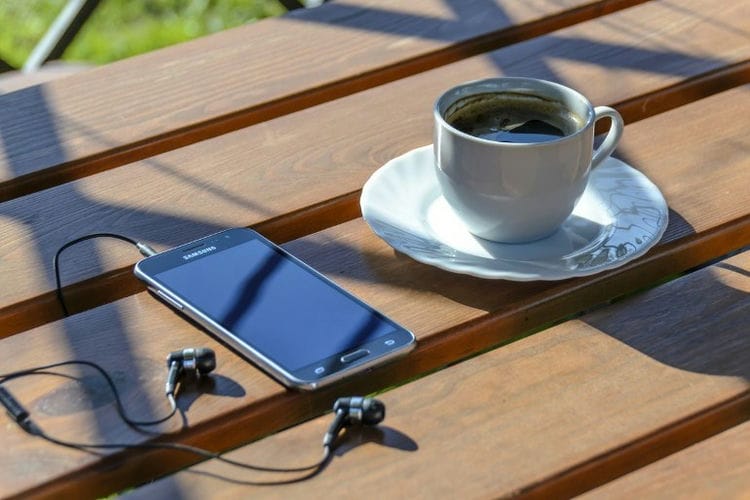
Can you practice at home?
There is an opinion that one should meditate in special centers for meditation, in monasteries or ashrams. However, it is completely unnecessary to go somewhere. You can easily practice on your own – at home.
Let's find out what you should pay attention to in this case:
- Time
When choosing the time for meditation, first of all focus on the situation – when there are fewer people at home, when you will not be distracted.
If we talk about the time of day, then the most common are 2 options: early in the morning and in the evening. Morning meditation will energize you for the whole day and provide clarity.
Evening meditation will allow you to digest the events of the day and calm down. Some people advise doing it before bed. But I don't recommend doing that. It is better to finish the practice at least 1-2 hours before bed, otherwise it will be difficult to fall asleep at night.
ATTENTION! Another important note: you can't practice right after eating. Must pass at least an hour before starting classes.
Sometimes I am asked how often one can meditate. There are no restrictions here. You can even meditate 8 hours a day. However, it is obvious that such days should not be repeated often.
A balance must be found between daily activities and practice. It is best to meditate every day for half an hour – once or twice a day. This will give the most powerful effect and help improve the quality of life.
- A place
Meditation should be done in a place where you can be alone and where you will not be disturbed by your household. In principle, any room, terrace, balcony is suitable.
Over time, you will become a habit of meditation and create a corner for yourself where it will be most convenient to practice. But believe me, you can start without it.
BTW! It is desirable that there is fresh air in the place for meditation. Try to ventilate the area before starting your practice. The fact is that you have to take deep breaths and exhalations, saturating the lungs with oxygen.
It is preferable to choose a place where there is a minimum of extraneous noise. However, in our modern realities, it can be extremely difficult to find a quiet place. So look for a compromise.
- clothing
Choose clothes that are comfortable and loose. It is important that she does not press anywhere, rub or hinder movement. Otherwise, it will be difficult for you to tune in to practice.
Also, dress so as not to feel cold or sweat from the heat. If you get cold or overheated, the effect of the practice will be weak.
- Pose
If you do not have much experience in meditation yet, then I recommend choosing one of the following poses:
- Sitting on a small pillow with crossed legs. This pose is also called Turkish.
- Sitting on the edge of a chair.
It is very important that your back remains straight during meditation. And also so that the position is comfortable for you, but not relaxed.
Benefit
Regular daily entry into meditation has a number of positive qualities for a person's condition, therefore, before learning meditation, one should realize that it will give:

- meditation acts as a sedative for the mind, removing depression, fears, aggression from it;
- in a short period of time helps to get out of stressful situations;
- the process allows you to move away from the hustle and bustle of life, focus on the inner world and feel a sense of belonging to God;
- during and after practice, a surge of cheerfulness and joy is felt, self-esteem and emotional state improve;
- the immune, nervous and cardiovascular systems are strengthened;
- helps to fight bad habits, eliminating cravings for them;
- awareness of actions and deeds increases, as well as a simplified attitude towards life;
- during practice, creativity develops;
- the process makes it possible to find your own “I”, as well as answers to many philosophical questions.
The sooner a person begins to master this process, the sooner he will feel an improvement in the state of the body.
Correct meditation has a beneficial effect on both the psycho-emotional and the physical condition of the practitioner.
How to start yourself and get it right?
There is a huge variety of techniques and types of meditation. In this article I will tell you about the classic technique – very simple and effective. It is about being aware of the breath.
This is how people have meditated for thousands of years. For this practice, you do not need any devices or special conditions. All you need is already there. This is your breath.
Why is this technique so effective? The fact is that when we are aware of the breath, we are not able to simultaneously think about something else. This means that after some training we can achieve inner silence, which clears the mind and calms.
What's the point?
For centuries, people have indulged in meditation in search of peace, happiness, transformation or control of their own consciousness.
If a person really feels satisfied with what he has and who he is, then more often he does not think about the need for self-knowledge.
But in most cases, people come to yoga, meditation, when they feel an inner hunger – a feeling that there is something light inside, something vast and divine, but a person does not have access to this. This inner hunger comes from a spiritual need.
The goal of meditation is to learn how to control the most valuable tool of every person – mind, attention. After all, the state of mind is a determining factor in feeling happiness and achieving success in all areas of life.
A person can have all the blessings and still feel unhappy, or, on the contrary, have very little, but feel in harmony with himself and the world around him.
Look around, observe yourself and loved ones, media persons in the field of sports, politics, show business – no amount of material wealth, physical skills and resources will help a person become happy and peaceful if the way of thinking is negative and unconstructive.
Meditation will not solve your problems at home, at work, in society. But it will give you much more – the potential to cope with any events (good and negative) that occur in your life, will give you strength and teach you to let go of unnecessary emotions, feelings, thoughts.
Meditation helps you master your own mind by working on one of its key aspects: attention. After all, everything that we draw our attention to exists for us.
Having mastered the ability to fix your attention only on what you need, you will be able to filter and not skip negative points, as well as everything that is not useful for you.
Thus, meditation for beginners is a powerful tool for working with consciousness, which will ultimately enable you to create and receive what you want.
How do you enter meditation?
The process itself includes several steps:
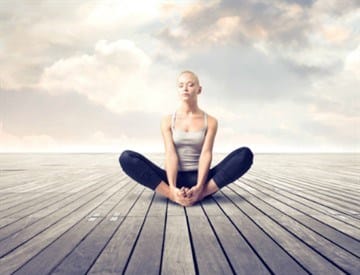 position selection. The basic rule of meditation is that the practitioner should be in a position comfortable for him, while the back should be kept in a straight position. This position will allow you to breathe deeply, saturating the lungs with air, and also makes it possible to maintain a state of awareness, attention and concentration. Often, beginners are interested in the question of whether it is possible to meditate lying down. The answer is not recommended as it increases the likelihood of falling asleep during practice. The optimal position is a sitting position – on the floor in the lotus position or on a chair, without touching his back. Many people may feel uncomfortable sensations in the muscles of the back, since they are rarely used in everyday life. But with regular practice, these sensations will disappear as the muscles become stronger;
- relaxation. To learn how to meditate properly, you must also learn to relax the physical body. Usually, pleasant calm music helps with this. You should also close your eyes and try to relax all parts of the body as much as possible. If at the first lesson it does not work out, then there is nothing wrong with that, because with further regular practices this step will become familiar;
- concentration on the subject. It can be any object that can be visualized. Beginners are advised to concentrate on the tip of the nose. You can also focus on the mantra or the breath. The main thing is that when any distracting thoughts appear, attention should be returned to the object of concentration (breath, mantra, tip of the nose);
- correct breathing cycle. It is an important step in correct meditation. The main principle that should be adhered to and controlled during the practice is even, cyclical breathing, with which one feels the filling of the body with energy. With regular exercise, such a rhythm of the respiratory cycle will be tuned;
- control of thoughts. It will be problematic for beginners to master such control, so you should gradually let in constantly coming thoughts, problems and ponder them;
- exit from the meditative state. After completing the practice, the person should remain in a state of awareness and lightness.
During correct meditation, the practitioner must accept the existing order of things, let go of desires and thoughts, while achieving a special state.
Adhering to the rules of meditation, the practitioner will quickly learn to get positive sensations and achieve the desired effect from this procedure.
Dissolution
Sit in a Turkish pose, close your eyes and start counting to yourself: one is the first inhale-exhale, two – the second inhale-exhale. And so on until thirty. Counting is the stage of entering meditation. During it, relax as much as possible and immerse yourself in a state of calm, banish all thoughts and experiences from consciousness.
When you are finished counting, concentrate on your breath and whatever you hear. If you have a good stretch, you can use the lotus position instead of the Turkish pose. The next time you practice meditation, reduce the count first to 20, then to 10. You should not count less than 10.
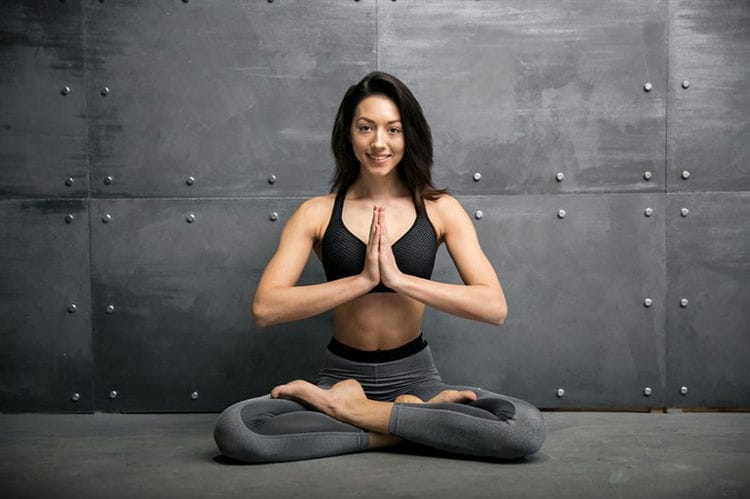
Lotus position
From a certain moment, the state of disappearance will come. As if there is only your breath and various sounds (or silence) and nothing else. This is the main goal of meditation practice – to completely dissolve in the process of concentration. It is believed that in this state, a person gains unity with the Universe.
If suddenly you do not understand what is the difference between the lotus position and in Turkish, pay attention to the position of the legs.
Meditation
There are other types of meditation practice. For example, meditation aimed at solving a problem. As you count, focus on the painful issue. After you count to 10, watch your breath and at the same time start slowly thinking – where this problem came from, consider different ways to solve it.
Then speculate, maybe there is another, unexpected way to get rid of the difficulty? At a certain moment of meditative analysis, you will find the best way out of the situation.
If you play sports, add meditation to your workouts – at the beginning of the activity. It will energize you.
Proper meditation for beginners. Fiery path technique
Are you ready for meditation practice? Let's start with two simple techniques that beginners learn well.
To achieve concentration quickly, the Fire Trail technique is proposed.
Meditative state when walking in severe frost
Even in very warm clothes, the cold still makes itself felt and only one thought is spinning in my head: “Faster to run to a warm place.” Meditation is very similar to this state.
After all, when meditating, you should only engage in breathing and thoughts about your breath. Other thoughts and deeds should not bother you. Due to this, calmness and relief from stress is achieved, because no other deeds and thoughts lead you into it.
This also happens during an hour's walk at –30 ° C. It is impossible to think of anything else but warmth and brisk walking.
Some similarities with meditation have been found:
- Breathing and thoughts of breathing;
- Warmth and thoughts of warmth (walking briskly to keep warm).
Advice: “At least sometimes you need to be not somewhere in thoughts about the past or the future, but 100% in the present moment.”
To empty yourself of other thoughts and achieve a state of calmness, you need to limit yourself from other unnecessary actions. In meditation, you should just breathe, and while walking in the forest, you should just go and enjoy the surrounding nature, without being distracted by life's problems.
Meditation and Sports
In sports, there is such a type of exercise as cardio training: repetition of monotonous actions for a long time. At the same time, the cardiovascular system is trained. If you exercise for more than 20 minutes, then fat begins to be burned.
That is, a simple walk without stopping can be considered cardio training. And if to this is added some limiting circumstance or inconvenience like cold, which must be overcome without fail, then it becomes like meditation. The main thing here is not to overdo it, and soberly assess the situation so that there are no critical inconveniences.
Successful people begin work 3-4 hours after waking up in order to gather all their thoughts together and make some important, key decisions before starting work.
Step 1: Timer
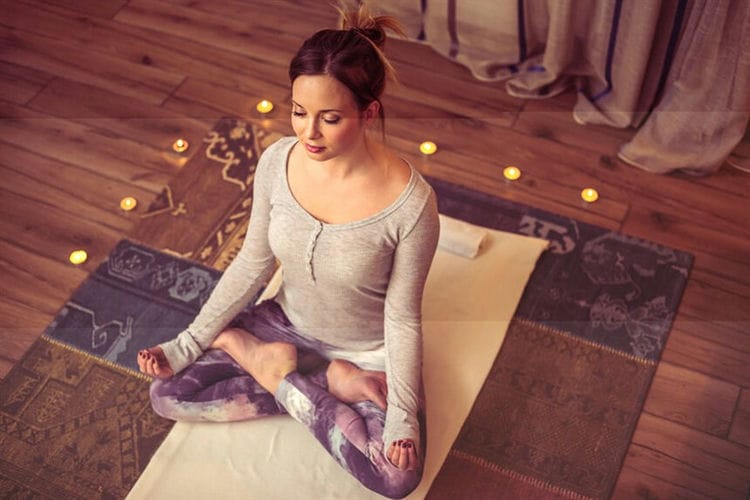
I recommend that you always use a timer for meditation.
The benefits of the timer are as follows:
- Don't fight the temptation to stop meditating too early.
- You know for sure that you will continue the session until the signal sounds.
- Extra doubts about whether you should end the session right now will not distract you from your practice.
- Easier to Develop the Discipline Needed for Quality Meditation
- It is easier to consistently increase the meditation time
If you set the timer for 20 minutes, then you will do the practice for 20 minutes, even if there is emotional resistance. Thus, discipline and the ability to accept current experiences, including unpleasant ones, develops.
If you use a timer, then you will not be able to end the session when the mind tells you to do so.
You will have to stay with thoughts and feelings, whatever they may be, until the allotted time is over.
And since you sit with them to the end, why not learn to fully accept them? This is the essence of meditation.
Which timer should I use?
- App on the phone
- Online timer on the computer
- Separate physical timer
There you can set intermediate signals (for example, do a meditation for 20 minutes with a signal every 5 minutes).
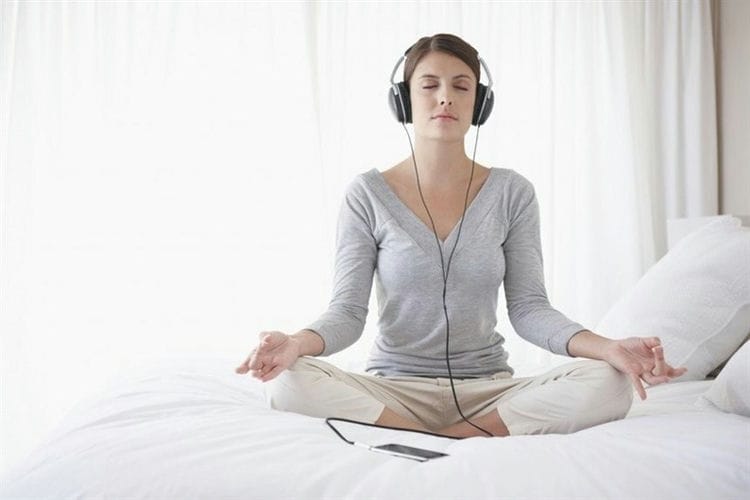
You can turn on unobtrusive ambient music in the background. Together with headphones, this helps to drown out external sounds – especially useful if other people are present in the room.
The signals themselves are pleasant. There are session statistics.
How long does it take to meditate?
For beginners, a 5 minute session is fine.
The session time can be gradually increased to 10, 15, 30, 45, 60 minutes. You can, for example, increase the meditation time by 1 minute every week.
Nowadays, I usually meditate for 30 minutes at a time. But I recommend trying different time periods for yourself and determining which duration of meditation is the most effective.
Place for meditation
The meditation room should ideally be comfortable: not cold, not draughty and ventilated, not hot, clean, quiet, empty, and so on.
First, silence for at least 15-20 minutes.
Here it is necessary to clarify. For meditation, absolute silence is not a key requirement.
There is, for example, the Dzogchen technique, where it is considered normal to meditate, for example, at an airport or at a construction site, that is, we are not looking for special conditions, but are ready to be here now, wherever we are.
Also, this is not always possible. You can live in an apartment with your family and with your parents, there is a grandfather, there is also a brother or sister, or both. And finding a secluded, quiet corner is impossible.
In this case, you should not be irritated and angry with your loved ones, they are not to blame for anything. You just need to accept everything as it is. And find a place where at least no one can go for a while, even if you cannot provide yourself with silence.
It's enough. But at the same time, I am still talking about silence, meaning that if there is such an opportunity, then it is necessary to use it and sit down to meditate in silence. Especially in the early days of practice for beginners.
But if these minutes of silence are interrupted, in no case do you get irritated and do not swear at what is bothering you, because meditation teaches you to accept everything as it is.
And let this also become part of the practice.
Maximum comfort.

Convenient and comfortable
This place should be such where you can comfortably be in the desired position (most often sitting, and for a start, I would recommend this option).
For example, you can only retire in the bathroom. Also an option.
If you sat down to meditate before everyone woke up or after you have already fallen asleep, then we choose a place where there is no one and calmly meditate. It is important that you can meditate without any additional constraints.
If you have a meditation cushion, then everything becomes much easier both in terms of comfort and relaxation when meditating, which is extremely important, but also with a place, because with a pillow you can sit right on the floor.
If not, then meditate where you can sit.
Using music for meditation
Some people may like to use, while others prefer to just meditate in silence.
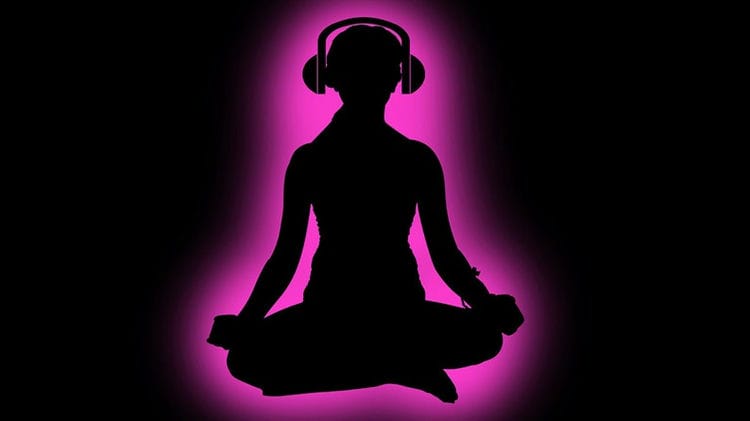
helps to move into a higher consciousness for two reasons.
First, the music provides a focus so you don't wander through your thoughts.
Secondly, meditation music vibrates at a higher level than normal music, and this switches you to a higher vibration than what you normally are in. This is why meditation music can also be called “consciousness raising” music.
The correct posture for meditation at home.

There is an article about this.
Well, I will say a few words.
First, sitting, lying or standing.
Lying.
You can relax here without a doubt. But the probability of falling asleep is very high, especially for a beginner.
I periodically practice lying down meditation, and over time I was able to learn to direct my focus of attention to sensations without fear of falling asleep. Even entering a certain borderline state, I was able to observe and fix this state as if from the outside. But more often than not, the desire to fall asleep is present throughout the practice.
Sitting.
You can meditate in any position of the body.
But in a sitting position, we can both relax and at the same time remain focused, without fear that we may fall asleep.
Although even here such a catch can await us if we sit on a seat with a backrest and fall over on it. Therefore, it is recommended to sit on the edge of the chair with your back straight. This is the best option if you don't have additional meditation accessories.
A pillow is ideal. You just sit on the floor and meditate. The back is relaxed, but straight. Sitting on a chair, you will have to periodically feel tension and back pain. A little more in the article, the link to which is above.
Standing. This option is more likely in order to more efficiently spend time on public transport, for example. Either waiting for someone you can be in a state of mindful meditation. Rather, it is in addition to the basic sitting practice.
The main thing to know about the correct posture is that the back should be straight, and the whole body should be relaxed in order to be distracted by pain and discomfort during meditation as little as possible.
Step 2: sit down

- We sit on a chair, armchair, sofa, bed, bench
or
- Sit in a cross-legged position (for example, on a yoga mat)
For some people, the cross-legged position can give a sense of sublimity and dignity during the session. You feel a bit like a yogi.
This creates a more respectful and responsible attitude towards the practice, which in turn improves the quality of meditation.
However, the opposite effect can also occur – some people have negative associations with anything “spiritual” or “religious”.
Therefore, the need to sit “like a yogi” can create unnecessary internal resistance during practice.
Accordingly, it is permissible to sit in any comfortable position during meditation.
I usually sit on the edge of the bed or on a chair.
You can alternate both of these options. That is, sometimes sit cross-legged, and sometimes in a “normal” position. It will depend on your:
- Moods
- Intuition
- Selected technique
- Session intentions
- Health conditions
- etc.
You need to sit with a straight back
When meditating, it is best to keep your back straight and sit as comfortable as possible.
You should relax too much so as not to slouch, but also not to strain too much.
Over time, sitting with a straight back will become easier and easier. It takes patience. It is better not to use any back support.
Why sit with your back straight and unsupported?
For the fact that:
- Less sleepy
- Clarity of Mind Increases
Meditation is most effective when you are alert. If you are sleepy, the mind will often “slip away” into thoughts.
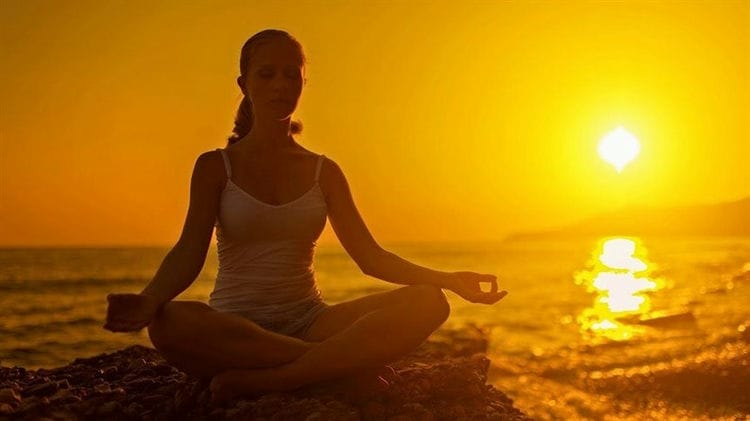
You can sit with your eyes open or closed.
- Meditation with closed eyes helps you more subtly experience sensations and thoughts
- Meditation with open eyes helps to stay awake and in a state of greater clarity.
- You can also sit with your eyes half closed.
For beginners, I would recommend meditation with closed eyes – this way the visual experience will distract less from awareness of thoughts and emotions.
It is advisable to move as little as possible.
In my experience, sitting still during meditation improves the quality of the practice.
Even sitting still for a long period of time alone can have a meditative effect (some meditation techniques are based on this).
Sitting still can be challenging at first. You need to consciously not respond to the urge to scratch or change your posture.
However, you shouldn't be too hard on yourself.
Just have a general intention to move less.
In general, treat yourself during meditation with special understanding and kindness.
Over time, it will become easier to sit still.
How long do you need to sit
Experience has shown that the average time to start practice is 20 minutes. Try to start with it, if more or less rushing, meditate for 20 minutes all the time. If you want, you can add a second and third meditation for 20 minutes a day. After a few months, you can start adding minutes or sometimes temporarily prolong the meditation for up to an hour to shake things up.
If something is wrong with 20 minutes, try 15 or 10. But remember that the shorter the meditation time, the more intense the concentration should be: if you set the timer for three minutes and go around, gathering your strength, you will not even have time to start. But three minutes are great for complex visualization of objects. But this is already for the next stages of mastery.
Step 3: counting in and out
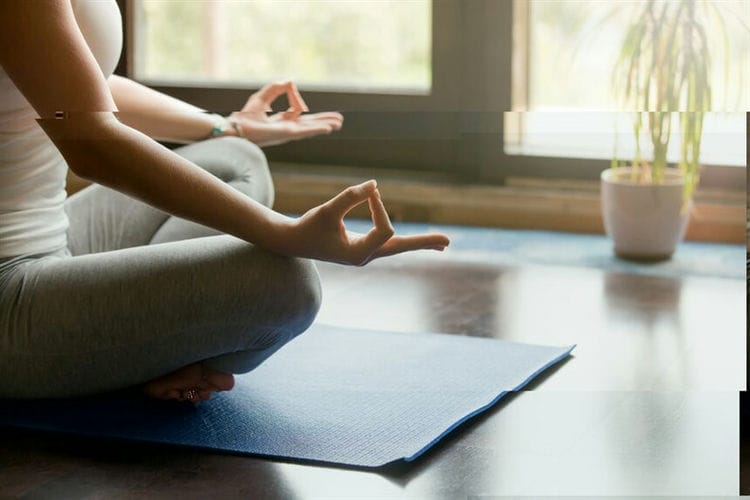
- Become aware of the breath and focus on it gently
- We begin to count the breaths in and out
- If we are distracted by thoughts and emotions, then we return to breathing again.
- We do this until the timer runs out.
Distracted – back to breathing
As long as we count our in-breaths and out-breaths, we are guaranteed to be distracted.
Attention will not be constantly held on the physical sensation of the breath. It will slip away into thoughts, images, fantasies, memories, physical sensations in the body, and so on.
Every time you notice that you are distracted, you just need to return to the sensation of breath and start counting it again.
This is how our meditation will go. Cyclically:
- Concentrating on breathing
- Inevitably distracted by thoughts and emotions
- Back to counting breaths
Breathing awareness
Sometimes people do not understand what it means to be aware of the breath.
It just means that you need to follow with your attention every inhalation and every exhalation.
Try to check if you have a tongue in your mouth. Right now. Is there a language or not? How do you feel about it? Feel the tip of your tongue, direct your attention to it.
Breathing is the same.
Just direct your attention to it.
You don't need to control your breathing. Let it go the way it wants.
Sometimes directing your attention to the breath alone will make it feel fuller, deeper, and slower. And sometimes not.
What does it mean to “concentrate”
Hold the object where you put it: in front of your eyes or in front of your mind's eye. Maximize the signal from the sense organ by which you perceive your object, and try not to notice others. Your main task for the first time is not to forget what you are sitting here at all (this happens all the time and more than once during one meditation). The second task is to continue to perceive the selected object. This is your effort to concentrate.
Do not study it, do not think about it – try only to perceive it and not be carried away into the space of dialogue with yourself about the object. Probably, most of all, this feeling may be similar to those cases in childhood, when you enthusiastically kindled a fire. It got dark, you stared at the flames, unable to break away from their dance. You did not think about anything else then, but only tried to grasp with your attention the appearing and disappearing forms. Even a real static object in front of your nose will also “dance” after some time of meditation (of course, it is not it, but your brain is “dancing”) – and you will have to make an effort so that it does not drift away from your close attention. As soon as you are stuck, return to the effort.
Step 4: Repeat the next day
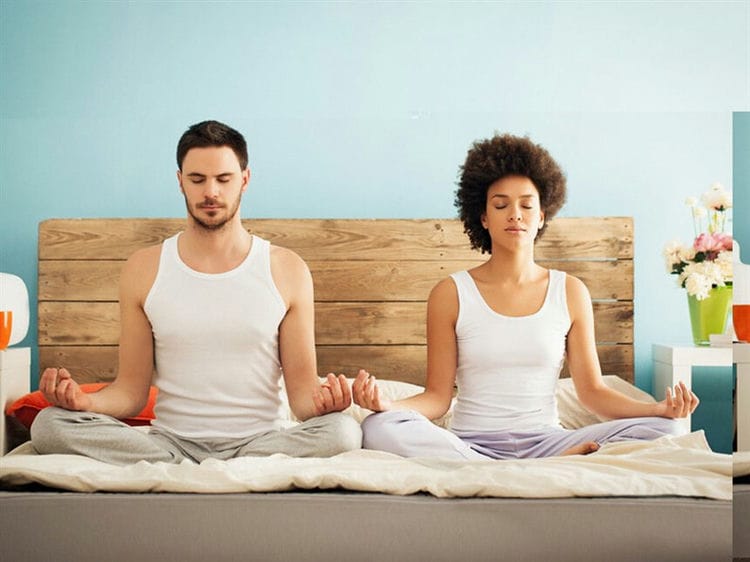
Our attitude should be this: meditation must be practiced every day.
This is perhaps the most important rule for those who want to know how to learn how to meditate at home for beginners.
It can be compared to brushing your teeth.
If you brush your teeth once a week, there is little point in it.
You need to brush your teeth every day. Until the end of life. Otherwise, it won't work. It's the same with meditation.
So there are two pieces of news.
- The good news is that practicing meditation really has such a positive effect on your life that you don't have to force yourself to do it every day. Over time, you yourself will begin to want to practice every day.
Let's imagine that you never knew that your teeth can be brushed. And then I read an article on the Internet about the benefits of brushing my teeth and began to do it myself every day. After a couple of months, the results will speak for themselves.
You do not have to force yourself to brush your teeth, because the benefits of this activity will become too obvious.
So, meditation is a cleansing of the mind, the benefits of which are too obvious to ignore the practice.
You just need to start.
- Bad news: you need to create a habit of daily meditation practice from scratch.
This can be tricky.
It is difficult for a beginner to understand how sitting still for half an hour in a chair will change his life for the better.
You can, of course, try to explain in words what meditation will bring to your life:
- Improving overall satisfaction
- Peace of mind
- Reducing suffering
- Breaking free from limiting beliefs
- Harmonization of relationships with oneself, with other people, with the world
- Stopping self-destructive behavior
- Deeper understanding of other people's behavior
- Empathy, empathy
- Strengthening physical health
- Stopping addiction to negative thoughts and emotions
- Deep understanding of yourself
- Forgiveness and self-love
- Strengthening the connection with your life purpose
- Acceptance of the circumstances of life
- A clearer sense of direction in life
- Easing the fear of death
- Inspiration
However, the real motivation to practice meditation every day will only come when you experience the results firsthand.
And this can happen only after you start practicing. Even if at first you do not understand exactly how meditation will help you specifically.
So start meditating and don't stop. It's worth it.
Once again, a brief description of the technique:

- Set a timer for 5-60 minutes
- We sit with a straight back, but not too straining
- We concentrate on breathing and begin to count the breaths in and out (if we are distracted by thoughts, then we return to breathing) Repeat the practice every day until the end of life
Bonus: What Can Help Create a Daily Meditation Habit?
- Remember that meditation automatically brings results. Even if you think the session went badly. Even if you only meditated for 1 minute. And even if the mind was full of thoughts. Each session cleanses you and helps you grow. If the changes are not obvious to you now, this does not mean that they are not there.
- Read people's positive opinions about meditation. How she changed their lives for the better
- Listen to teachers who inspire you (on YouTube, for example)
- Watch movies that mention meditation
- Start small. Even if it starts from 1 minute a day
- Don't get hung up on time and quality of practice. The beginner's goal is to do the practice every day by all means. Even “super-bad” (as it seems to you) meditation is already a test and a benefit.
- Don't be too hard on yourself. Habit building is not easy. Save time on the timer, treat yourself with love and understanding, don't be a perfectionist
- Use programs and sites that allow you to track progress (I used chains.cc for a while, for example) or mark every day of practice in a diary
- Perform guided meditations (audio meditations), including using apps on your phone
- Join an online or offline meditation community (forums, groups, sites, retreats, etc.)
And one more tip for those who want to know how to learn how to meditate at home for beginners
Try meditating on headphones with this kind of binaural music like this video for a change. Personally, this often helps me concentrate better:
We begin to count the breaths in and out
We count each inhalation and exhalation from 1 to 10.
“The breath is one. Exhale – two. Inhale is three. Exhale – four. “
Etc.
When you count to ten, start again with one.
At the same time, we count the breaths and breaths not mechanically, but fully aware of the physical sensation of breathing. There are two options:
a) You can be aware of the whole process of breathing as such
At the same time, we pay attention to how the lungs are filled, the chest and back expand, to the air that touches the nostrils, to the rising and falling abdomen, and so on.
Gently and without undue stress, we direct our attention to the whole process of breathing as a single object of perception.
b) You can concentrate on a separate element of breathing
Without undue stress, we concentrate our attention where the breath is felt most clearly.
For some, breathing is best felt in the nostrils. For some, the brightest feeling is the rising and falling of the chest.
Both options are fine.
You can alternate or combine them. You can also count only inhalations or only exhalations. In the future, you can concentrate on the sensation of breathing, not counting the inhalation and exhalation at all.
But for beginners, I recommend starting by counting.
Other Meditation Techniques for Beginners
There are many meditation techniques, if you try to try at least some of them, then there is a possibility of wasting time and not finding anything suitable, what you need. Therefore, here are outlined the universal methods of meditation used by many beginners, as well as some tips for choosing the right technique.
There are dynamic and static methods of meditation. For beginners, as a rule, it is difficult to concentrate in movement, therefore, a dynamic practice is suitable for people who already know how to correctly enter a meditative state and monitor the stability of breathing. For a beginner, the static method is suitable, it has fewer complex actions, and accordingly it is easier to relax.
The static technique is divided into internal and external (not confused yet?).
The internal method involves directing thoughts to processes that relate directly to the object of meditation (emotional, mental or physical). This can be observation of thoughts, or emphasis on breathing, or concentration on feelings.
The external technique focuses on the object of the environment, facilitating the process of meditation: mantras, rosary beads, the scent of oils, the fire emanating from candles. In this case, a person relies on the sense organs, in accordance with which of the channels of perception he has more developed.
1 Belly
The generally accepted way. Focus on air circulation in the abdomen. Internal observation of the process of inhalation and exhalation.
7 Analytical. Rushen is self-pleading. Dzogchen, Tibetan Buddhism
Take a comfortable position for you, go into a trance with the question “Who am I?”, Explore the question of the existence of people, how and why this or that process takes place in the world.
9 Attention. Open observation. Buddhism
Stay focused on your thoughts, study them, analyze, feel any mental processes that do not leave you alone.
8 Mindfulness. Open observation. Buddhism
Here, a second concentration on any thoughts that arise in you is important. Let the stream rush through your head; don't focus on any of them.
6 Loving-kindness to yourself. Metta bhavana. Buddhism
Visualize mentally in front of you a loved and respected person, concentrate on his personality and direct loving-kindness to him, choose the words for this person. If a feeling of happiness emerges in you, hold on to it.
3 Breath of Flame. Kundalini
Impulsive breathing through the nose. Exhale through the mouth, noisily using moola bandha (squeezing and unclenching the anus, but in our case, squeezing with a noisy exhalation), inhale with a relaxed one.
Breathing exercises are mostly used by beginners. This kind of technique must be performed freely, without effort and counting, otherwise your mind will be continuously distracted by extraneous things, the main thing here is to immediately switch its attention to the subject of meditation. Over time, you will feel that the body becomes more relaxed, and the breathing is slow and even.
5 Quiet thanks. Visualization. Buddhism
Recreating mentally in front of you the face of a person to whom you feel a feeling of great gratitude, tell him, still in your mind, “Thank you.” Do this with 4 more people.
4 Loving-kindness to yourself. Metta bhavana. Return of love. Buddhism
The technique is built on awareness of sensations, expand kindness to yourself personally. Program your feelings by asking yourself “Can I be” (happy, loved, healthy, etc.). Save these thoughts.
7 common mistakes beginners make in meditation
Many beginners in meditation make the same mistakes. I propose to talk about them so that you do not make these mistakes.
- Very often beginners take great pains in the process of meditation. However, this is not a time to strain. On the contrary, one should drop any tension and simply observe.
- Trying to turn off thoughts completely is also a dead end. It is impossible to turn off thoughts, and when you try to do this, you will only create additional chaos in your head. But we can observe them from the perspective of an outside observer.
- High expectations are another common mistake. You may have already read in reviews that meditation brought harmony to life for some people, for others it was the first step to a new job, and so on. However, you should not expect anything specific from the practice. It will bring something of our own to each of us, and it will not necessarily be an outstanding result. Just meditate, just enjoy the state of your mind as a result of training.
- Sometimes there are days when meditation does not go on, thoughts overwhelm, and it turns out to be unexpectedly very difficult to sit in one position. Aborting the lesson will be an error. Each day is unique and the practice of each day is important to the individual. If you understand that today is “not glued”, challenge yourself. Let it be a meditation for extreme conditions, such an experience is very useful, even if the result is not satisfactory.
- Having once achieved a feeling of bliss or euphoria, some try with all their might to repeat it. And when this feeling cannot be returned – neither the next day, nor a week later, beginners think that they have turned off the right path, something goes wrong. However, in meditation, one cannot really attach to the results. You also remember that your task is observation and nothing more.
- The next mistake some beginners make is lengthy meditation. If you can't meditate regularly, don't try to lengthen the practice time and do it once a week. Meditation for several hours is simply useless for beginners. Better to spend half an hour of practice, and spend the rest of the time on other things.
- And finally, having achieved the first successes, some people begin to feel special, advanced, and received special knowledge. Real experience and spiritual development do not need to be talked about or to be proud of. Meditation does not make a person the chosen one. True knowledge is the inner light that illuminates the path.
Difficulties
Let's find out what typical difficulties can arise along the way:
- The appearance of anxiety during the beginning of the practice.
Often beginners report that as soon as they sit down to meditate, anxiety arises. A bunch of thoughts, ideas, worries are spinning in my head. Therefore, they ask a reasonable question – how can it be, because meditation should calm me down, not excite me?
However, the point is not that new thoughts arise as a result of meditation. It only allows you to consciously look at your mind and understand what is happening there. Many different things emerge from within, including strange thoughts, obsessions.
ADVICE. You don't need to blame yourself for this. Every person has something like that, accumulated over the years. Another thing is important – with the help of meditation you can get rid of that mental junk that clogs your mind.
It happens as follows: first you need to realize, and then let go of unnecessary ideas, beliefs, emotions. Therefore, meditation is comparable to the purification process.
- Swelling of the legs, back and other sensations in the body.
Often, during practice, the legs or back become numb, there is a desire to change the posture or slightly correct it. In general, this is normal. However, to achieve the best result, you can use the following guidelines:
- If you chose the Turkish pose, place a small, dense pillow or a blanket folded in several layers under the buttocks.
- Try to sit in a position that is stable and comfortable enough. Take a moment to find the right body position.
In addition, during the practice, other sensations often arise: for example, the nose itches, the hair tickles the neck, or the hand rubs the edge of the clothing.
In this case, you do not need to suffer or endure for a long time. Do what makes you feel better and then get back to practice.
- Lack of quick results.
Meditation is a process. It is very important to enjoy the process itself. If you are an “achiever” by nature and have set a goal to master the art of meditation perfectly, then you have to upset you. This approach doesn't work.
Meditation actually invites us to let go of obsessive desires. Modern people often live in the future: they make plans, work for the eternal “tomorrow”, dream of a better life. And the practice of meditation develops patience and the ability to enjoy the moment.
What if it doesn't work?
Perhaps you are not doing well – it is difficult to concentrate, it is difficult to maintain a pose? Or maybe you think that you are doing nonsense?
I can assure you that if you try to meditate and still remain in the pose for at least 10 minutes, then you will succeed.
Let it not be perfect and let it be without any visible result. But it turns out. The ability to meditate is a skill. Similar to the skill of cycling. It can be trained over time. The main thing is not to give up and continue.
However, it happens that it is really difficult for beginners to meditate: they cannot sit for 10 minutes in a row, or it is difficult to force themselves to practice every day. Without this, proper meditation will not work. If so, here are some tips.
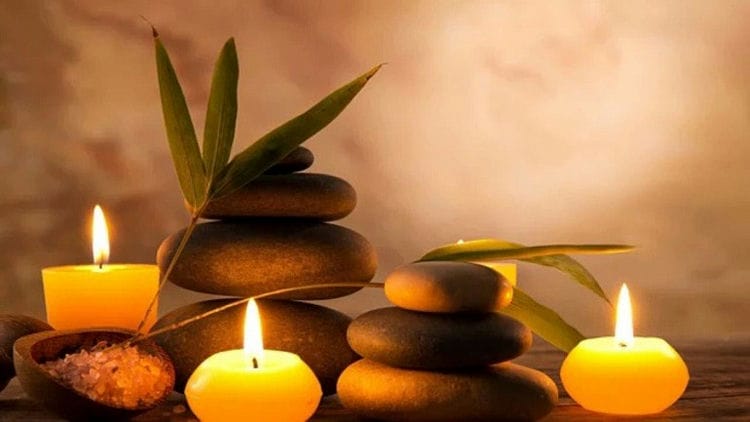
- Equip the meditation area with various attributes that will create the right mood. These can be candles, incense sticks, a special lamp, or some kind of accessories. The main thing is that you personally associate all this with meditation.
- Change the practice time. If you usually practice in the morning, start in the evening. And vice versa.
- Try practicing after exercise such as fitness, yoga, or jogging.
- Well, and the very last option, which is recommended to be used only as a last resort. Play some meditation music while you practice. However, keep in mind that in this case you will not be meditating, but listening to music. But this kind of listening will be the first successful step towards correct meditation.
Thus, it is not at all difficult for beginners to meditate at home. The meditation technique described above will help you experience the positive effects of this amazing ancient practice.
Recommended Meditation Literature

Many books have been written on how to learn meditation. Here are some examples:
- John Kabat-Zinn “Meditation for Health: 108 Lessons Using a Unique Method”, “Practice Meditation: Anytime, Anywhere.” For a long time he studied the effect of meditation on people with diseases that are caused by frequent stressful situations. In his books he talks about what meditation is, how it affects the body. The first piece describes in detail various breathing techniques, focusing on the present moment, which will help reduce stress. John Kabat-Zinn's methods are based on neurophysiology. This is why they are very effective in practice.
- Madonna Goding “Meditation. General leadership”. Here you will find over 100 meditation techniques based on the spiritual practices of the West and the East. This includes awareness, relaxation, calming, and exercises for concentration. There are many meditation tips for beginners in the book. They relate to the choice of the place, the posture of the place, creating the right atmosphere. This edition is useful for both beginners and experienced people. It will teach you how to get rid of stress, analyze your inner self and grow spiritually.
- Titus Nat Khan. “Peace at every step. The Way of Mindfulness in Everyday Life. ” The author is a spiritual leader, a Zen master. In his opinion, finding inner harmony is not so difficult. Even with severe stress or depression, you can develop awareness, learn to enjoy the moment. Happiness and satisfaction from life close by. You just need to look around.
Read also Mindfulness – what are these practices
For books to be useful, you need to apply what is written in them in life. Otherwise, the information on how to meditate correctly will not be of any benefit.
Sources used and useful links on the topic: https://108lepestkov.com/praktiki/kak-pravilno-meditirovat.html https://ezoterica.club/meditatsiya/kak-pravilno.html https://mymind.yoga/meditaciya. html https://znaniyaetosila.ru/kak-nauchitsya-meditirovat-novichkam-v-domashnih-usloviyah/ https://regressionsoul.com/kak-pravilno-meditirovat-doma-dlya-nachinayushhix/ https://StressX.ru / zozh / meditaciya https://zen.yandex.ru/media/id/5d37fced35c8d800ad143cce/meditaciia-dlia-nachinaiuscih-v-domashnih-usloviiah-s-chego-nachat-5d404e7d92414d1b398a69cfmedia https://toknife.media -meditate / https://vdushu.ru/meditaciya-dlya-nachinayushchih.html https://zen.yandex.ru/media/variis/kak-meditirovat-5-prostyh-shagov-5b9768acc586d600aa83a2be https://108lepestkov.com/praktiki/meditatsiya-dlya-nachinayushhih.html https://lifemotivation.ru/ meditation / kak-nauchitsya-meditirovat
Post source: lastici.ru