
AMERICAN LITERATURE OF THE FIRST HALF OF THE XX CENTURY. 10 of the best American writers
TOP 10 books from American classics
American classical literature is multifaceted and beautiful in its originality. She gave the world thousands of masterpieces and hundreds of great authors. Twain, Hemingway, Faulkner, Collins and many others. It is not possible to list all of them, but among all the diversity, the works stand out brightly, without which it is already difficult to imagine the literary world of America. And we've handpicked the 10 best American novels for our beloved readers.
Mark Twain's The Adventures of Tom Sawyer
The provincial town of America in the 40s of the 18th century appears before the eyes of readers. Young Tom Sawyer and his friend Huck Finn are ordinary boys, quite smart, mischievous and mischievous. They cannot be made to sit still, because the whole world is open in front of them, and an adventurous vein beckons to set off.
Against the background of their adventures, we see the life of a small town on the banks of the Mississippi and, although slavery has not yet been abolished, and the rest of the country's problems have not gone anywhere, life here follows its own rules, where age, racial and property differences do not matter.
Mark Twain said that he put his childhood memories into Tom Sawyer, described himself by and large, and this is felt, because the main character is perceived as a lively and bright, ordinary boy. And that is why it is so easy and pleasant to read “The Adventures of Tom Sawyer”, because in his experiences and worries we see ourselves.
Harper Lee “To Kill a Mockingbird”
Jean Louise lives with her father, lawyer Atticus Finch, and her brother in the sleepy little town of Maycomb, Alabama. She is a good girl who is at an age when the question “why” is being asked more and more often, and the world around her becomes an incomprehensible place, where adults behave extremely inconsistently. If they condemn Hitler that way, why are they treating blacks like cattle? Why do they talk about rights, but do not recognize the possibility of Tony Robinson's innocence and judge him only, it seems, because of his skin color? Jean Louise has so many right questions, but there are enough answers. A variety of answers.
Harper Lee told a scary story, raised the issue of racism and did it with the help of a girl, yes, our friend Jean Louise. Her view of the accusation of rape of a white girl by a black man can be seen in the pages of the novel. She does not analyze, she is too small for that, she only sincerely reacts to what is happening around her, through her we feel the injustice of the situation, we see this vile falsehood of adults.
To Kill a Mockingbird is a highly social novel, but presented on behalf of a child who is not afraid to ask questions, who learns himself and teaches us the good, the eternal, the present.
Jack London “Martin Eden”
 Jack London wrote the novel “Martin Eden”, putting a piece of his biography into the main character. The difficult path that the character goes through personifies the enormous strength of the human spirit, the ability not only to survive hardships, but also to grow, despite the environment, in spite of all circumstances.
Martin Eden is trying to grow from a simple sailor into a talented writer in order to fight his way out of the poor lower classes. His character is multifaceted, because he does not like to bow before other people's opinions. What for? He has his own. But not only internal observations and the desire to become someone pushes Eden on the path of self-improvement, love is also involved here, which acts as a powerful catalyst for change.
London endowed its hero with the gift of development, and throughout the novel we see how Eden is changing and this is wonderful. After all, a person cannot get stuck in one place and at the same time grow talent in himself. But are all changes for the better? Who knows. So far, two goals shine in front of Martin Eden: his girlfriend and fame.
Theodore Dreiser “American Tragedy”
It is no exaggeration to say that “American Tragedy” reflects the urgent problems not only of the past, but also of the present. People don't change from century to century, especially people of a character like Clyde Griffiths.
Do not think, there is nothing extraordinary in him, he is a simple 18-year-old boy, eager to reach a beautiful life, which seems to him bright, attractive and charming.
Griffiths, like a moth flies into the bright light of lamps, while maintaining a fairly hard and cold mind, he realizes that he will not regret anything, will not disdain anything to break into high society.
As you can see, the story is not new, in every era you will find such a Griffiths, but in this case, meanness, betrayal and greed lead to completely unpredictable consequences. Will Clyde be ready to pay the price indicated by fate? Dreiser, in the best tradition of American literature, will tell you in detail, and at the same time harshly, without unnecessary sentimentality.
John Steinbeck “Grapes of Wrath”
The Great Depression raged across the country like a plague, destroying people, breaking up families. Hunger, despair, poverty – this is a terrible period in American history, which is reflected in literature. And John Steinbeck showed him almost the best. It is not without reason that his “Grapes of Wrath” have earned such popularity not only among compatriots, but also abroad. In this book, he tried to reflect all the pain of the common people. Perhaps it sounds pretentious, but after reading everything will fall into place.
An ordinary family, farmers, Joads are forced to leave their home due to drought, due to changes in legislation and, of course, economic hardships caused by the Great Depression. They have nowhere to go, they are in a desperate situation, so they decide to go to California, hoping to find a place there. But nothing comes out. And in such conditions it becomes more and more difficult to remain human.
Nathaniel Gothen “Red Letter”
Nathaniel Hawthorne stands at the origins of American literature and his “Scarlet Letter” work is canonical, truly classic, and at the same time, burning brightly among his fellows.
It would seem that the story is simple, the main character, Esther Prien, has been living without a husband for some time, let's face it, she doesn't even know her faithful is alive or not. What can the loneliness of a young woman lead to? To love.
Passionate and mutual love flares up for the local priest and Esther surrenders completely to her feelings. And as a result, she gives birth to a lovely child, a little girl, from her lover. The townspeople, ardent Puritans, pious and sinless, cannot forgive Prien for such a dishonorable act. They came up with a rather peculiar punishment: all her life Esther must wear an embroidered scarlet letter on her clothes.
And although everything seems banal, Hawthorne is an adherent of symbolism, endows his work with many hidden meanings and references. Therefore, “The Scarlet Letter” is an important, complex, atmospheric and wonderful piece.
Ernest Hemingway “For Whom the Bell Tolls”
Civil war is raging in Spain, blood is being shed, and American teacher Robert Jordan does not stand aside. He comes to his beloved country, because over the years Spain has become his home. Robert takes the side of the Republicans and receives an important assignment from General Goltz to cross the front line and blow up the bridge in the Nazi rear.
But Hemingway writes not only about the war, he knows how to tell about love. To tell beautifully, so that it takes your breath away and unexpected tears welling up in your eyes. After all, Robert, although a soldier, is still a man, and when he meets Maria, feelings flare up instantly, awakening in the hero a new thirst for life.
The novel For Whom the Bell Tolls is realistic, accurate in its details. Hemingway knew what he was writing about, because he himself was a soldier and went through all the horrors, experienced the catastrophe of the civil war. Therefore, when you open a novel, then you should know that not just a story awaits you, but a tragic story about people and their fates.
Tennessee Williams “A Streetcar Named Desire”
“A Streetcar Named Desire” is the play that brought Williams worldwide fame. It is difficult, because the characters of the writer are multifaceted, but at the same time, simple and understandable to everyone. It clearly reflects the conflict between man and society, and the hero's tragedy is despair, the lost will to live due to circumstances and environment.
Before us appears Blanche Dubois, she worked as a teacher, but lost her job and was left without a livelihood. Life brings Blanche to New Orleans, to the house of Stella's sister. But there is a person who does not like this alignment of events.
Stanley Kowalski, Stella's husband, a down-to-earth hard worker who cannot understand Blanche's sublimity, he loathes her manners, he does not understand them and considers them a game. She frankly annoys him, and he is trying with all his might to destroy Blanche's life.
It makes no sense to retell all the events, to mention each character, because it is better to read such a harsh thing on your own in order to fully appreciate the talent of Tennessee Williams.
Henry James “Portrait of a Woman”
Isabella Archer is a dreamer, a girl with a rich spiritual world, she is driven by the desire for happiness, for freedom. Left an orphan, she accepts an invitation from relatives from England and goes to Europe, and there suddenly an inheritance falls on her. The deceased uncle did not offend his niece, and Isabella becomes a rich bride, a tidbit for crooks and dishonest people. Although she dreams of marital happiness, she rejects a marriage proposal from several pleasant young people because of her lofty romantic ideals. And falls under the spell of the man Gilbert Ozmond – an inveterate swindler. Of course, the state of the newly-made wife is more interested in her than her spiritual ideals and Isabella Archer becomes a hostage in a trap from which she really wants to escape.
Henry James in his novel created a heroine, albeit naive, but strong in spirit, true to her ideals. She will have to defend her right to independence, go against the circumstances towards her happiness.
Irwin Shaw “Rich Man, Poor Man”
Irwin Shaw has a lot of literary talents on his account, and one of them is the creation of a reference family saga, which unfolded on the pages of the book “The Rich Man, the Poor Man.”
The story of the Jordach family is a life story, it is about completely ordinary people who face everyday problems and experience their inner tragedies.
The father of the family, Axel Jordach, is German, he immigrated to America after the First World War, his character is harsh and his wife Mary is unhappy in marriage with such a difficult man. They have three children: Rudolph, the beloved, support of the parents, daughter Gretchen, a lost child who lacks the love of his parents and Thomas. Thomas is not needed by anyone, he is the youngest son and in character went to his father: a bully and a fighter.
The author allows us to observe how the days of the Jordach family pass, how the brothers grow up and how they go. But they are not all prepared for the soap of twists and turns, difficulties and problems.
7 classic American literature everyone should read
American classical literature reflects the eternal truths of universal human significance. It is the duty of any educated person to read these works.
1 «Moby Dick», German Melville
Ahab never thinks, he only feels, he only feels; this is enough for every mortal. To think is insolence. This right, this privilege belongs to God alone. Thinking should be cool and calm, and our poor hearts are pounding too hard, our brains are too hot for that.
Moby Dick is the centerpiece of American romanticism. The epic story of Captain Ahab's furious, bordering madness hatred for the white sperm whale is full of Christian allusions and subtle metaphors. Through them, the entire spectrum of man's relationship with God, the natural element and himself is revealed.
In addition to its deep philosophical overtones, the novel is valuable from a cultural and historical point of view. No fiction book tells you as much about whaling as Melville's novel.
2 “Martin Eden”, Jack London
Love cannot go astray, unless it is true love, and not a frail freak stumbling and falling at every turn.
London's strongest and deepest novel can be called partly autobiographical: there are many similarities between the writer and Martin Eden. Perhaps that is why the book is so fascinating and philosophically problematic. The author tried to find answers to questions that worried him during his life.
Martin Eden is the most curious attempt in American literature to combine European Nietzschean ethics with current religious and socio-humanistic teachings. The novel gives an exact answer why it is pointless to wait for the arrival of a superman. From either side of the Atlantic Ocean.
3 “The Trilogy of Desire”, Theodore Dreiser
Financial activity is the same art, the most complex set of actions of intellectual and selfish people.
The cycle “Trilogy of Desire” includes three works: “The Financier”, “Titan” and “Stoic”. The novels are linked by a single storyline and tell the story of the life of Frank Cowperwood, a successful capitalist of the early 20th century.
Dreiser not only gives the broadest panorama of the socio-economic life of the United States at the turn of the century, but also reveals the moral and ethical problems of the capitalist world. The world in which we all live today.
4 “Farewell to Arms!” By Ernest Hemingway
Whoever wins a war will never stop fighting.
One of Hemingway's most famous novels, the themes of love, war and humanism are intertwined. A pure, light feeling between an American soldier and an English nurse arises in the face of a ruthless meat grinder. In her, the feelings are destined to go out.
This anti-war novel is a striking representative of the literature of the “lost generation.” After reading it, you are imbued with such a strong aversion to death that people sow that you understand that literature is the most effective means against war.
5 The Grapes of Wrath, John Steinbeck
A person merges into one with the place where he lives.
The Great Depression in the United States led to an acute shortage of jobs, which forced residents of poor states to migrate to more prosperous areas in search of food. The novel “Grapes of Wrath” tells about one such family, which was looking for a better life.
The miserable, beggarly existence of American farmers is shocking and creates a completely unexpected image of America. The novel reveals the reality of the Great Depression, which cannot be found in the pages of any history textbook.
6 The Catcher in the Rye by Jerome D. Salinger
The boredom was terrible. And there was nothing to do but drink and smoke.
Salinger's novel has a huge cultural impact. He is perhaps the most famous work of our time. What made it so popular?
The answer is quite obvious: Salinger in simple language (in which not the most censorship expressions have found a place) sharply and directly expressed the position of youthful rejection of social values. Each of us went through the stage of this rejection, but each eventually became a prisoner of the life imposed on him.
This book is a longing for a better world, so far from the real, with its paradoxes, stupidity and complexities.
7 Cat's Cradle by Kurt Vonnegut
– But what is generally sacred to Bokonists?
– In any case, as far as I know, not even a god.
– So nothing?
– Only one.
– Ocean? The sun?
– Human. That's all. Just a man.
Any novel by a writer can rightfully be on this list. No one has comprehended the 20th century better than Vonnegut.
The madness and irrationality that ruled at this time reveal their existence in the horror of a nuclear war. Any war in general. What is the meaning of ethics, morality, religion, if the history of mankind is the history of wars and murders?
People weave their story as if tying strings around their fingers. Let this design be called “Cat's Cradle”. Why? What difference does it make, because there is actually no cat in the cradle, as well as meaning in the historical process, in fact.
The author received a master's degree in anthropology for the novel. The work of art was evaluated according to the criteria of a scientific dissertation. It definitely means something.
10 of the most famous American writers of the 20th century and their best works that have become world classics
In the 20th century, literature reached a qualitatively new level, presenting the world with more than a dozen masterpieces.
We decided to recall the names of those who made the greatest contribution to its development, having collected a list of 10 famous American writers of the 20th century
10 Ken Kizi
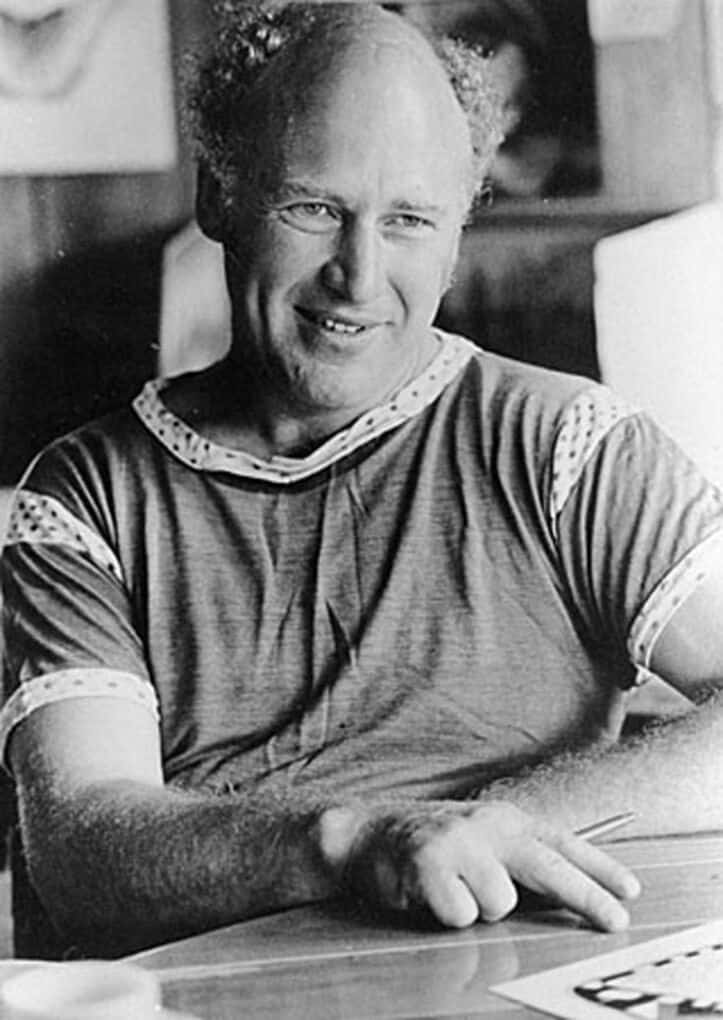
Ken Kesey is one of the leading writers of the Beatlemania and hippie era. His work was not only in demand among the participants in these parties, but had a direct impact on them.
He was born in 1935 and lived for 66 years, passing away in 2001. If not for the premature death, then he probably would have been able to contribute to the development of culture in the 2000s.
His most famous work is the novel One Flew Over the Cuckoo's Nest, written in 1962. A year later, Dale Wasserman staged a play based on his motives, and in 1975 Milos Forman shot the same film that became a classic. The film adaptation has collected a whole scattering of awards, including 5 Oscar statuettes in the main nominations, which only one film previously managed (It Happened One Night in 1934).
9 Ray Bradbury
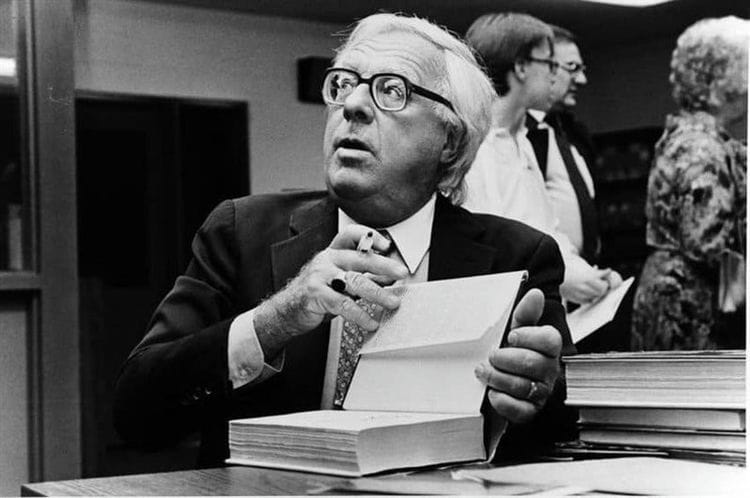
During his long life (he lived 91 years) this writer has created over 800 works, including plays, stories, poems and novels. Despite the fact that most of his work is fantasy, fairy tales and even parables, he is considered a classic of the science fiction genre.
The first truly resounding success in his writing career was the novel “The Martian Chronicles ” (1950), which made his name famous among fans of sci-fi.
Further, in 1953, the book ” Fahrenheit 451 ” was published, which finally confirmed Bradbury's talent. In 1957, the story ” Dandelion Wine ” was published, which sharply differed in mood from other works. In many ways, the autobiographical story is permeated with the personal experiences of the authors, which in those years was not expected of him, but was appreciated.
Many of Ray Bradbury's books were filmed, including in the USSR and Russia, and the most famous is the 2018 HBO dystopia film Fahrenheit 451 with Michael B. Jordan in the title role.
8 William Faulkner
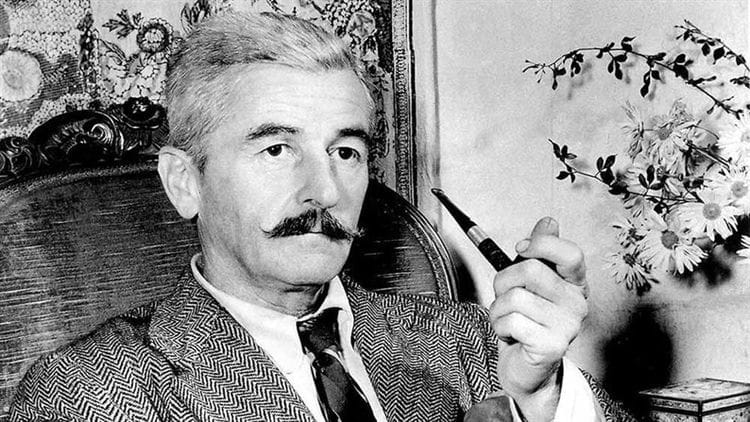
William Faulkner was a true master of new American literature, writing several immortal works. From under his pen came 19 novels, which is not so many, but this was quite enough to receive the Nobel Prize in Literature and two Pulitzer Prizes in the same field.
He began to send his works to magazines at the age of 19, and these were poems about love. He wrote his first successful novel Noise and Fury much later.
Based on his books, more than four dozen films have been filmed, most of which date back to the middle of the last century. If we take a newer one, then James Franco's drama When I Died, based on Faulkner's book of the same name, immediately comes to mind. The film was released in 2013 and was nominated for a Special Look at the Cannes Film Festival.
7 Harper Lee
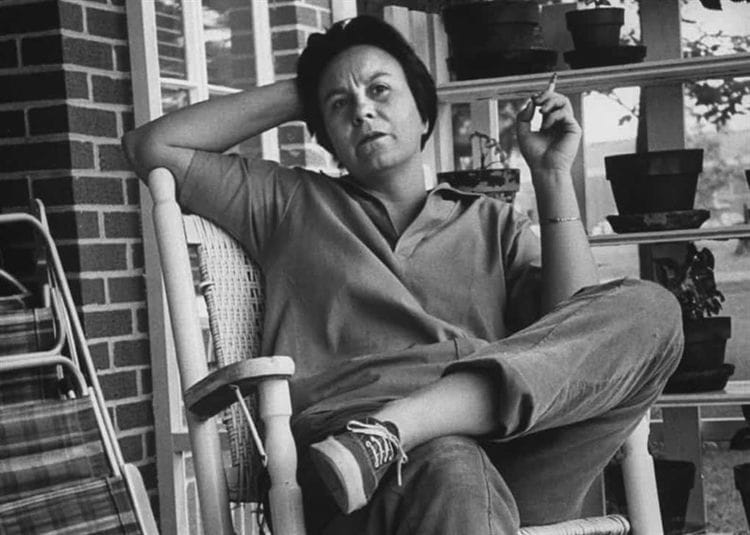
This writer lived for 90 years, having written only 2 novels in her entire life (and a few more essays), but this was enough to immortalize the name of Harper Lee.
” To Kill a Mockingbird ” – one of the greatest books in the history of American literature, has sold over 40 million copies and was repeatedly filmed (film 1962 won several “Oscars”).
Thanks for this work should be said not only to the writer, but also to her friends. They gave her a one-year paid vacation so that she could not work and devote herself entirely to literature, as a result of which a draft of Mockingbird appeared.
6 Truman Capote
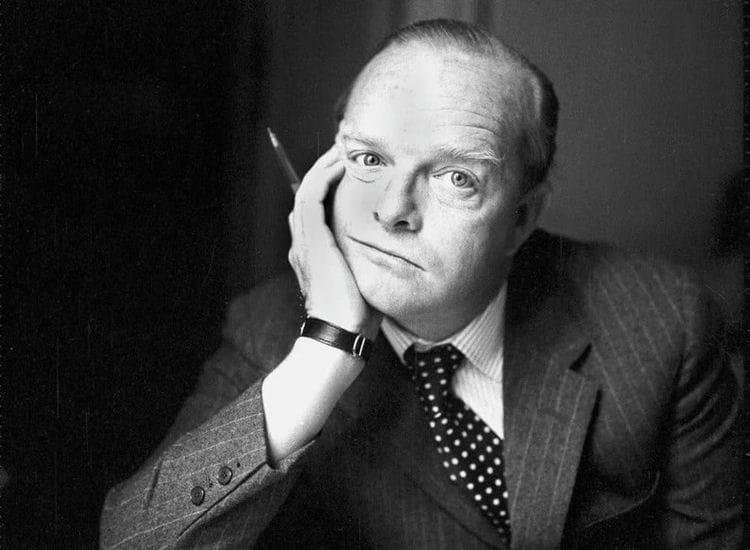
The novel ” Breakfast at Tiffany's ” and the documentary novel ” Murder in cold ” by Truman Capote are literary classics that will not lose their relevance even after several hundred years.
“Murder in cold blood” he wrote based on his own investigation into the murder of a farmer's family in Kansas, in which he was assisted by Harper Lee (they even made several films about this, in one of which – “Capote”, the role of Lee was played by Sandra Bullock).
Based on Breakfast at Tiffany's, director Blake Edwards directed the film of the same name in 1961 with Audrey Hepburn in the title role.
Francis Scott Fitzgerald
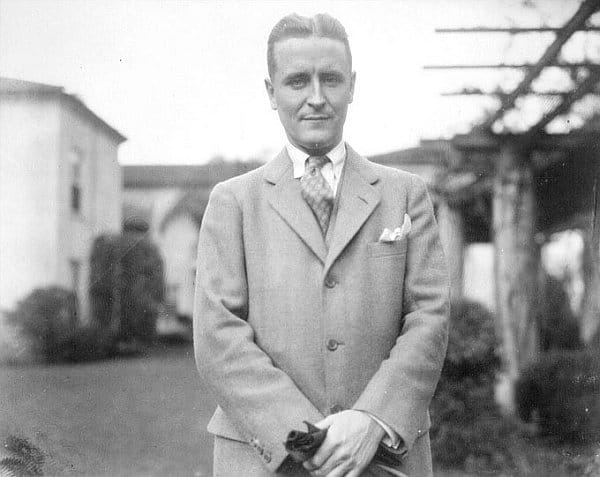
(24.09.1896 – 21.12.1940)
Born in St. Paul (Minnesota) into a wealthy Irish family. Studied at St. Paul Academy, Newman School, Priston University. Already there I began to write. He married Zelda Sayr, with whom he arranged lavish receptions and parties.
He was the author of famous magazines, wrote stories, scripts in Hollywood. Fitzgerald's first book, This Side of Paradise (1920), was a great success. In 1922, he wrote the novel “Beautiful but Doomed”, and in 1925 – “The Great Gatsby”, which critics recognized as a masterpiece of the then American literature.
Fitzgerald's works are also special in that they perfectly convey the atmosphere of the American “jazz era” of the 1920s (the term was coined by the writer himself).
4 Jerome D. Salinger
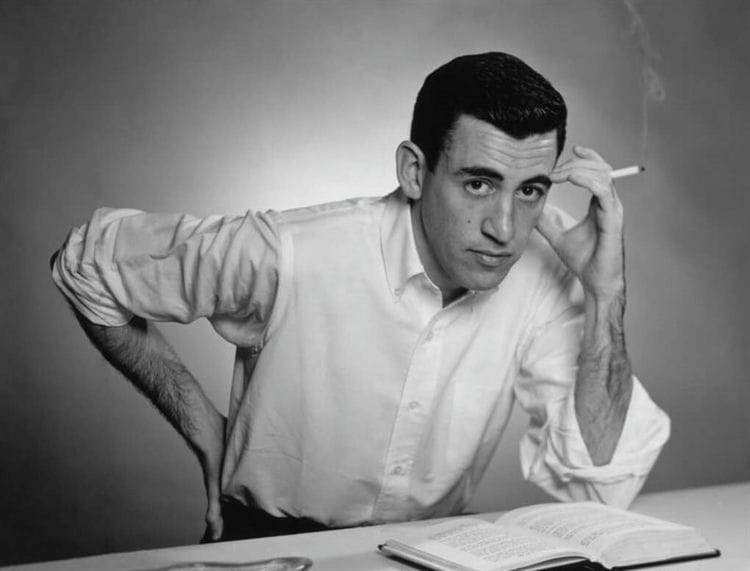
The writer was born in 1919 and began writing his first stories while still in school. By the time the Second World War began, he was not yet widely known, but was already published in magazines.
Despite the fact that for health reasons he was not fit for military service, Salinger still managed to make his way to the front as a volunteer. In his personal diary, he wrote that he was at the right time in the right place, as there was a war for the future of mankind.
After the Second World War, in 1951, he published “The Catcher in the Rye ” and the book instantly became a bestseller: 60 million copies sold were a huge figure for those years. Even now, about 250,000 copies are swept off the shelves of bookstores every year.
3 Theodore Dreiser
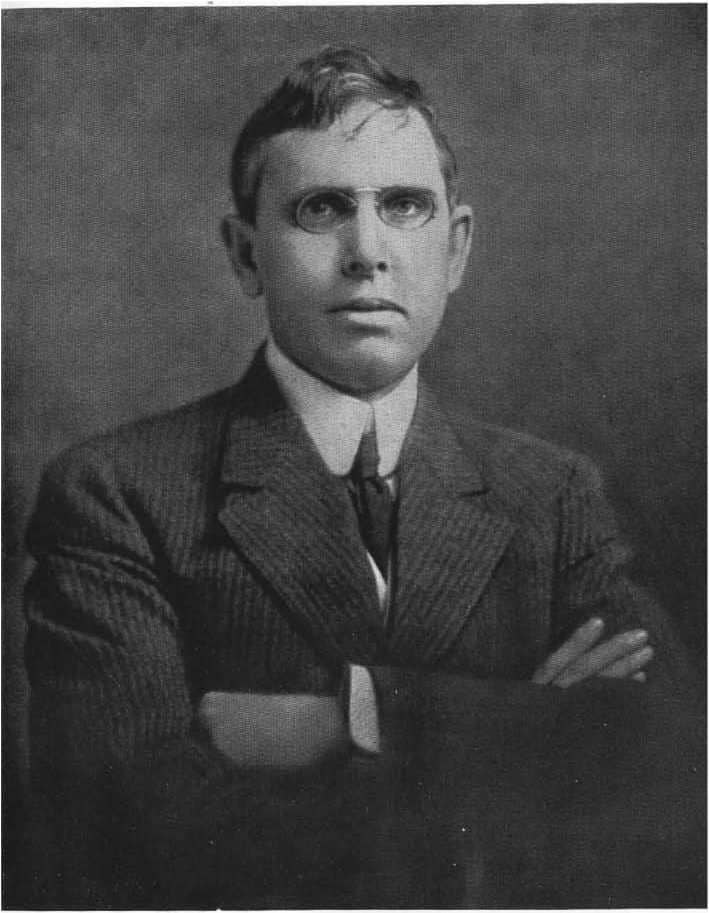
During his lifetime, Theodore Dreiser was nominated for the Nobel Prize in Literature, but he never received it. Some believe that the reason for this was his manner of “opening up the abscesses of society” in his books.
He wrote realistically and truthfully, for which he regularly received angry comments from critics who reproached him for immorality. The literary world of the late 19th and early 20th centuries was not ready for such revelations, but readers adored it.
“Jenny Gerhardt”, “American History”, “The Prince Who Was a Thief” – these and many other works formed the basis for the script of films, the best of which were shot in the middle of the last century.
If you're not intimidated by the old-fashioned picture, then 1952's Sister Carrie and 1933's Jenny Gerhardt are definitely worth the time.
2 Ernest Hemingway
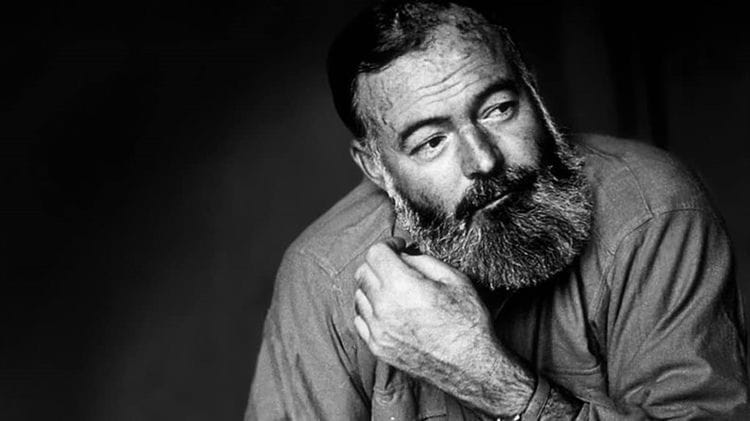
Hemingway, unlike Dreiser, received his Nobel Prize, as well as the Pulitzer Prize for Literature.
He became famous not only for his books, but for a life full of adventure. He was not yet 20 years old when he returned from the First World War as a grown man with medals and wounds. At the front, he was formed as a person, but as a writer he was “born” in Paris, where he moved in 1921.
“The Old Man and the Sea ” (an excellent cartoon by Alexander Petrov was filmed based on this story in 1999), ” For Whom the Bell Tolls ” (there is a 1943 drama of the same name by Sam Wood), “The Snows of Kilimanjaro ” (filmed by Henry King with Gregory Peck in the title role) – this is only a small part of his work.
Stephen King

(09.21.1947)
Received the nickname “King of Horrors” for his amazing works in the genres of horror, mysticism, science fiction, fantasy.
Born in Portland, Maine, the son of a merchant seaman. Since childhood, Stephen was fond of mystical comics, he began to write at school. Works as a teacher, actor. Many of his books have become international bestsellers, and some of his works have been filmed.
King is the author of scripts: “Slimming”, “Green Mile”, “The Shawshank Redemption”, “It”, “Dead Zone”, “The Shining”, etc.
Such novels by Stephen King as “Mister Mercedes”, “11/22/63”, “Rebirth”, “Under the Dome”, “Dreamcatcher”, “Land of Joy”, the epic “Dark Tower” are widely known. Now, being disabled, he continues to write.
African American Literature.
America's first black writer was a New England slave named Lucy Terry (1730–1821); survived her only work – a poem written in monotonous verse about the battle between the Indians and the colonists Skirmish at the Leopard on August 28, 1746. J. Hammon (1720-1806) and G. Wassa (1745-1801) wrote poems of pious and patriotic content. Phyllis Wheatley (1753–1784) was known in the literary circles of Boston and London as a lyricist of classically lucid style.
After the end of the War of Independence and the prohibition of the slave trade and until the outbreak of the Civil War, the movement to abolish slavery developed on an increasing scale. It brought to life the first distinctly African American literary form, the “Tale of Slavery,” which is a former slave's account of his ordeal and flight to the North. Works of this kind, belonging to G. Bibb (1845) and W.W. Brown (1847), are well-structured and by no means primitive stories of the formation of a personality in extremely unfavorable conditions. The story of the life of Frederick Douglas (1845) raised this form to the level of high literature. An excellent stylist and ardent orator, Douglas republished extensive versions of his autobiography in 1855 and 1891 and became the recognized leader of black Americans during the Reconstruction period. when, instead of the promised civil equality, segregation and economic exploitation reigned. B.T. Washington (Washington), a prolific essayist and successor to Douglas, called for patience. His views found poetic expression in the work of P.L. Dunbar, America's first black poet, whose verses in dialect were widely recognized. W.E.B.Dubois strongly opposed Washington's ideas. His collection of journalism, Souls of Black People (1903), may still be the most important book in the history of African American literature. Dubois can be called the father of the concept of “black identity”, according to which the skin color of his fellow tribesmen is a matter of pride, not self-deprecation. This concept had a profound influence on J.W. Johnson, whose novel Autobiography of a Former Colored (1912), which was published in the first edition without the author's name, stylized as the narration of a black musician, light enough to pass for white. This is a novel about a man who is trapped in the racist myth of the inferiority of his race.
A collection of poems and stories by Jean Toomer Reed (1923) about the life of the black population in the rural South and industrial North is considered the most striking achievement of the so-called. Harlem Renaissance (1920-1930). During this period, writers, primarily the inhabitants of the New York ghetto, described in detail the daily suffering and the hard-won joys of their people. The distinctive style and productivity of their work give reason to speak almost of the literary movement, the prominent representatives of which were the poets C. McKay and C. Callen, the novelist and critic A. Bontain, the novelists E. Walrond and R. Fisher, and the most famous figure – L. Hughes, brilliantly mastered almost all forms and genres and influenced both black and white writers.
R. Wright's novel Son of America (1940) shocked readers and radically expanded the “field” of African American literature. In a grossly naturalistic, sometimes physiologically harsh manner, Wright recounts the story of Bigger Thomas, a tongue-tied Chicago black man who accidentally kills a white woman, for which he is hunted down and executed. Thomas discovers the source of rebellion and revolutionary pride in his skin color and despair; he comes to an intuitive existential comprehension of freedom that transcends the boundaries of the natural and death itself in its all-encompassing rage. Wright denounced American racism in his autobiographical novel Black (1945), and in 1947 he moved to France.
R. Ellison's novel The Invisible Man (1952) is a narrative balancing on the brink of reality and vision about an unnamed black youth who seeks to succeed in the world of whites and discovers that he is truly invisible to them, since they refuse to see him as a person. J. Baldwin became the main spokesman for the protest and anger of his people in the 1950s and 1960s. In the nonfiction books Notes of America's Son (1955) and Nobody Knows My Name (1961), he describes how America disfigures the psychology and intimate life of its black citizens, however, in novels such as Another Country (1962), Tell me how long ago the train left (1968) and If Beale Street Could Talk (1974), he argues that racial problems can be solved through mutual understanding rather than revolutionary action. Similar sentiments are expressed in the plays of Lorraine Hansbarry and O. Davis,
Since in the 1960s the granting of constitutionally guaranteed rights to African Americans was either postponed or inhibited, black writers and ideologues more and more often switched to resistance positions in literature and politics, to which R. Wright had already called – he was the one who owns the slogan “Power to the blacks!” One of the leading figures in the movement under this slogan was Malcolm X, who described in his Autobiography (1965) his path from a Harlem criminal to the leader of the “black revolution”. His ideas of militant separatism found extremely sharp expression in the poetry, prose and drama of Imam Amiri Barak (Leroy Jones); he strove to invent a particular style and a new language in which only blacks could write and speak. Often unintelligible but in places the splendid prose of Dante's Hell's Device (1965) and Histories (1967) is one of the most daring literary experiments of the 1960s. Not all writers, however, branded whites as “devils,” following the example of Barak. W. Dembi's novel Catacombs (1965) combines angry denunciations of racism with a cautious admission that all people on the same planet are equal. E. Cleaver, in a series of essays written in the conclusion, Soul on Ice (1967), speaks of the need to rid Americans of racial hatred that poisons life. A.Haley showed in the novel Roots (1976) slavery in all its abomination. Cleaver, in a series of concluding essays Soul on Ice (1967), speaks of the need to rid Americans of racial hatred that poisons life. A.Haley showed in the novel Roots (1976) slavery in all its abomination. Cleaver, in a series of concluding essays Soul on Ice (1967), speaks of the need to rid Americans of racial hatred that poisons life. A.Haley showed in the novel Roots (1976) slavery in all its abomination.
In the 1970s-1980s, passions in connection with the pressure of the Power to Blacks movement! cooled down, and the voices of women writers began to gain momentum exploring the painful, sometimes violent, gender relations in the black community. This more introspective and self-critical approach is felt in Gail Jones ‘novel Eve's Husband (1976) and is especially evident in Alice Walker Fields' highly controversial novel The Color Purple (1982), which portrays the life of the black South, in particular the behavior of a man in the family, from a defiantly unconventional perspective. This book influenced Walker's colleagues for a long time. The poets who shaped the aesthetic canons of African American literature in the 1960s also moved away from militant radicalism. Nikki Giovanni turned to intimate lyrics and themes of loneliness and family; Sonia Sanchez began to write about women and their problems; E. Knight began researching traditional and family values. Other writers in the 1960s also softened: Alice Walker wrote Meridian (1976) based on her civil rights work; the journalism and poetry of June Jordan and Audrey Lord also draws on the personal and social experiences of the authors.
Many writers have revised the traditional perception of their people towards Christianity. The main characters in the novels of Toni Morrison Song of Solomon (1977), J. Baldwin's Straight Overhead (1979), Alice Childress A Short Walk (1979), Paula Marshall's Song of Praise to the Window (1983), as well as the books of Tony Cade Bambara, Gloria Naylor and Anne Allen Shockley, the spiritual search for one's own personality often leads away from the church. Despite the seeming dominance of female writers in African American literature, many writers produced excellent works in the 1970s and 1980s. Among these authors are novelists D. Bradley, D.A. Williams, I. Reed, D.E. Wideman, poets M.S. Harper and D.Wright, playwrights C.Gordon and C.G. Fuller.
Sources used and useful links on the topic: https://buklya.com/top-10-knig-iz-amerikanskoj-klassiki.html https://topliba.com/groups/5/posts/218 https: // Lifehacker. ru / 7-classic-american-books / https://top10a.ru/samye-izvestnye-amerikanskie-pisateli.html https://TopSpiski.com/10-samyx-luchshix-amerikanskix-pisatelej/ https: // www .krugosvet.ru / enc / kultura_i_obrazovanie / literatura / AMERIKANSKAYA_LITERATURA.html
Post source: lastici.ru