
How to restart a macbook from the keyboard. How to restart a MacBook

Turning on (starting up) your Mac
To turn on your Mac, press the power button, which is usually marked with a symbol. Some Mac laptops also turn on when opened, plugged into a power source, pressed any key, or touched the trackpad.
Here's how to turn on different models of Mac computers.
Mac Laptops
On MacBook Pro models with a Touch Bar, the Touch ID button (power button) is located to the right of the Touch Bar at the top of the keyboard.
On MacBook Air (2018 and later) computers, the Touch ID button (power button) is located to the right of the function keys at the top of the keyboard.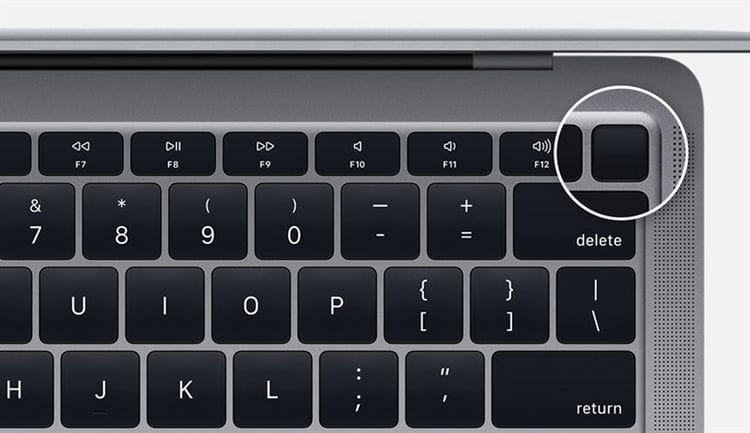
On Mac notebooks with physical function keys (F1 – F12), the power button ( ) is the key in the upper-right corner of the keyboard.1
Later Mac laptops also turn on when:
- When you open the lid of your Mac, even if it's not plugged into a power source.
- connecting your Mac to the ac power adapter with the lid open. 2
In addition, MacBook Pro and MacBook Air models (2018 and later) turn on when you press any key on the keyboard or touch the trackpad.
Mac mini
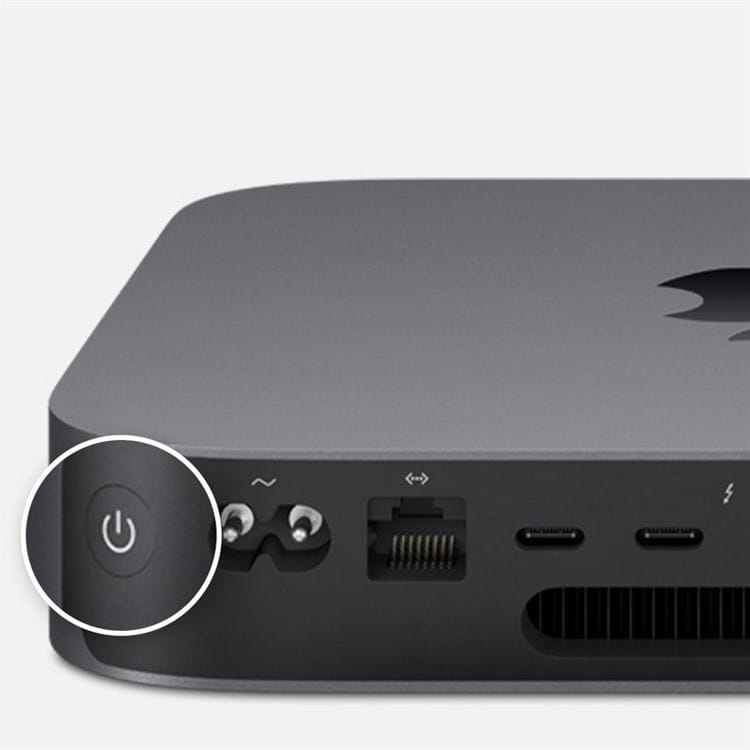
The power button () is a circular button on the back of the computer. When viewed from the back of your Mac mini, the power button will be on the left.
iMac и iMac Pro
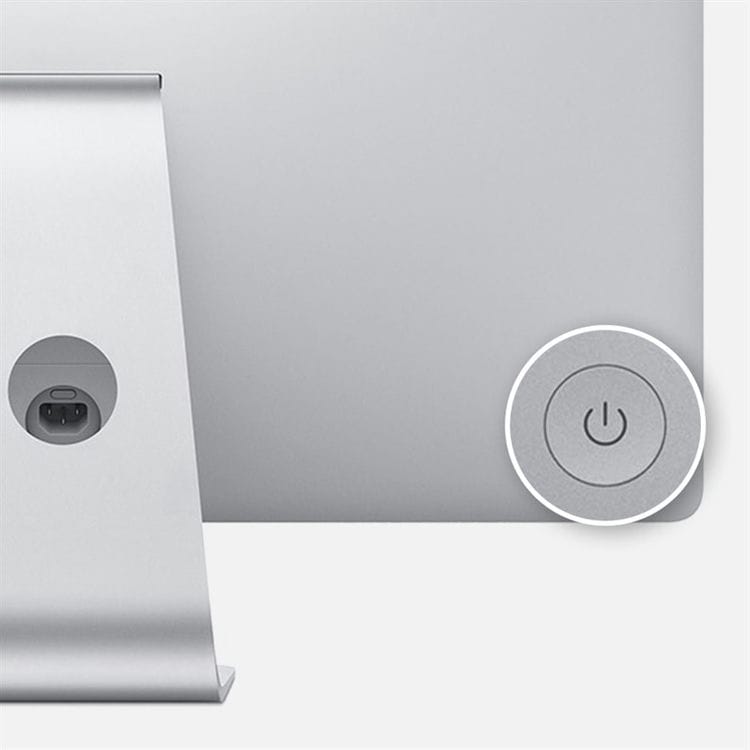
The power button () is a circular button on the back of the computer. When looking at the computer from the back, the power button will be in the lower right corner.
Mac Pro (2019)

On a Mac Pro (2019), the power button () is the circular button on the top of the computer, near the Thunderbolt 3.3 ports
Mac Pro (rackmount, 2019)
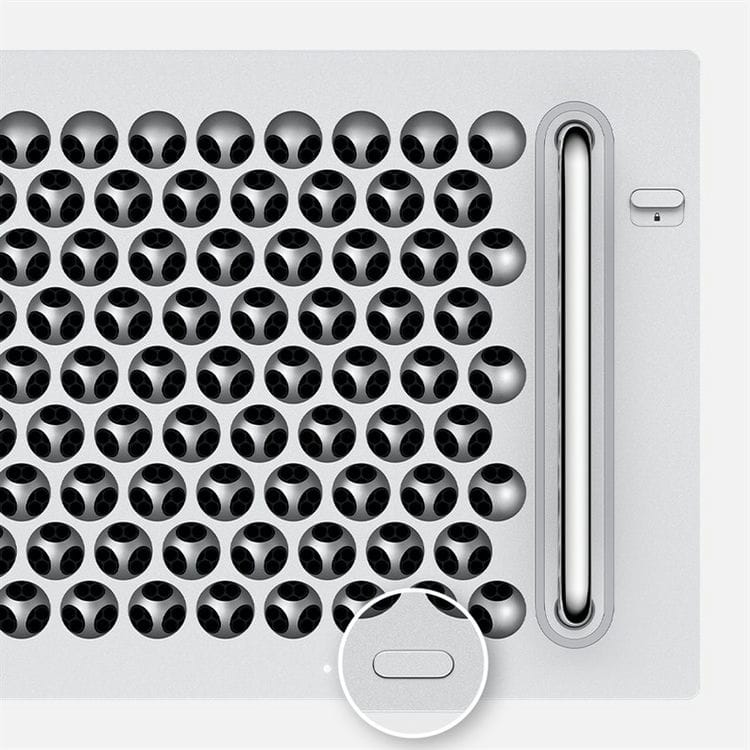
On a Mac Pro (2019 Rack), the power button is a pill-shaped button on the front of the computer, next to the status light.
Shut down (shut down) your Mac
Restarting a macbook using the keyboard

The first way is to reboot using the keyboard. This type of launch is the simplest and fastest, but it has its drawbacks, since the so-called hard reboot is performed. Such a process is not always desirable due to its aggressiveness.
How do I restart my MacBook from the keyboard? To perform this action, you need to hold down the shutdown key for at least five seconds, otherwise the system will simply go into sleep mode, after which the device will turn off. As soon as the MacBook turns off, you will need to turn on the equipment or start the recovery mode.
Restarting the macbook with the keys

For those users who wondered how to reboot a MacBook with keys, there is the following method, which is also very easy to use. But it is only suitable for MacBooks equipped with a Touch Bar.
In order to reboot the device, you need to use the Touch ID key. To do this, press and hold this key until the equipment restarts. But there is one nuance in the presented method: to turn on the computer again, you need to close and open the lid of the device.
Keyboard shortcuts for restarting the device

The best way to reboot the device is to use a combination of special keys. It allows you to safely and quickly restart the device, and the combinations themselves are not difficult, and it will not be difficult to remember them. You can reboot the MacBook with keyboard shortcuts in one of the following ways:
- You must press the Control key and the power button at the same time, and then in the window that appears, three actions will be presented to choose from: shutdown, restart, hibernation. Select the required action with the cursor.
- To immediately restart the device, you need to hold down the following keyboard shortcut Control-Command-Power (Power or Eject – the upper right button on the keyboard). The method is convenient in that the system does not ask the user for an action, but will immediately reboot.
- The shortcut Command-Option-Control-Power will turn off the device, then use the power button to launch the MacBook back. With this method, all programs that were open will automatically close, and when working with text documents, files will be automatically saved. The device will be disconnected without a prompt window.
- To reboot the device, as well as find out the cause of the problem, you must use the Command + V combination, after which the device will diagnose and indicate the problem that has arisen in the system.
- Command-S – Used to restart in single user mode. The team will troubleshoot itself.
- Often there are cases in which the reason for the freezing of the MacBook is a running program, and if the user encounters it, then there is no need to rush to restart the MacBook. You can close the problematic program using the keyboard shortcut Command + Q.
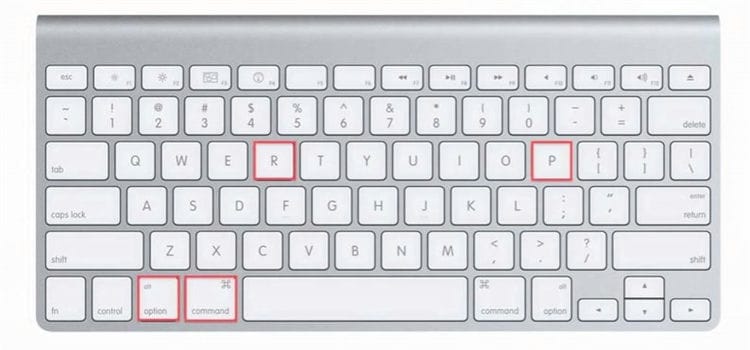
- In case of problems with audio or video (a similar situation is considered last, because it is quite rare) or incorrect operation of coolers (if the user hears the active operation of the cooling system with minimal equipment load), it is necessary to reset the PRAM settings. To do this, you need to launch the MacBook with the Option + Command + P + R keys held down, and the device will launch the last hardware settings saved in the database.
Reboot the device into recovery mode

This question does not arise often, and yet: how to restart the MacBook in recovery mode? If the device is stuck during an upgrade or otherwise, you can use a NetBoot network image to restore the system. To do this, hold down the N key when turning on the device. The method allows you to access the bootable Mac OS image that is located on the server, it will not work if you disconnect the IMac from the Internet.
The next method also requires a network connection. When you reboot the system in recovery mode, you must start the MacBook with the Command + R key combination held down. This will allow you to start working with the disk (diagnostics and formatting) or reinstall the system.
If the MacBook freezes during the update or the operating system is faulty, you need to identify and fix the problem that has arisen. To do this, you must use Safe Mode. This loads only the necessary system functions. To use Safe Boot Mode, you must restart your iMac and hold down Shift while booting until the boot indicator appears. If several operating systems are installed on the MacBook, then there is the ability to select a boot disk. To perform this operation, while starting the device, you must hold down the Option key.
Practical tips when restarting your device
Every time a user asks the question of how to reboot a MacBook, it is necessary to understand that reboot is not about turning the device on and off, it is a complex process in which the equipment must save data and make a safe shutdown. Therefore, it is not recommended to make a hard shutdown of the device, it is better to wait a little or try all safe methods, otherwise it may lead to a hard disk breakdown. Also, if the device is completely frozen and does not allow opening the command window, it is best to use a keyboard shortcut to avoid further system problems. Never remove the battery or wait for your MacBook to run out!
Mac keyboard shortcuts.
- OS recovery. Recovery mode will be needed if the computer does not start normally. Hold down the Command (⌘) + R buttons while turning on the computer power.
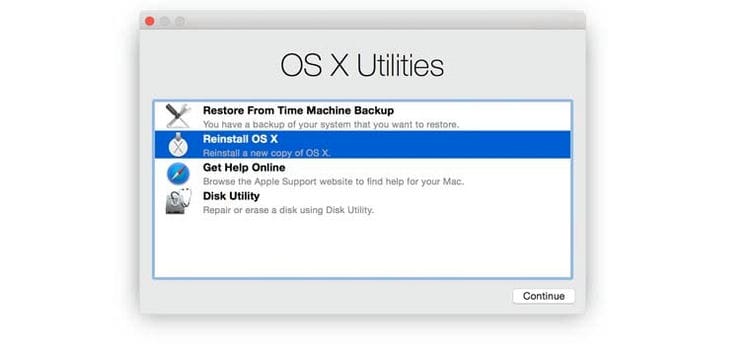
- Launch selection. If you are using two operating systems on your device, then when you press Option(), you can choose whether to boot into OS X or Windows.

- Reset memory parameters. Pressing Option + Command + P + R will reset the NVRAM or PRAM settings. These sections store volume settings, error information, screen resolution. If you observe problems with these settings, reset them.
- Safe mode. Holding down the Shift (⇧) button will start in safe mode. With such a load, it is possible to eliminate the problems that occur during a normal monoblock boot.

- Opening Apple Hardware Test. If you want to diagnose your Mac, then hold down the “D” key.

- Loading the OS. Press “N” if you want to boot OS from NetBoot server.

- Single user mode. Hold Command (⌘) + S if you only want to load the command line.

- External disk mode. Hold “T” to start in this mode. Use this hotkey if you want to use the all-in-one as an external drive for another device.
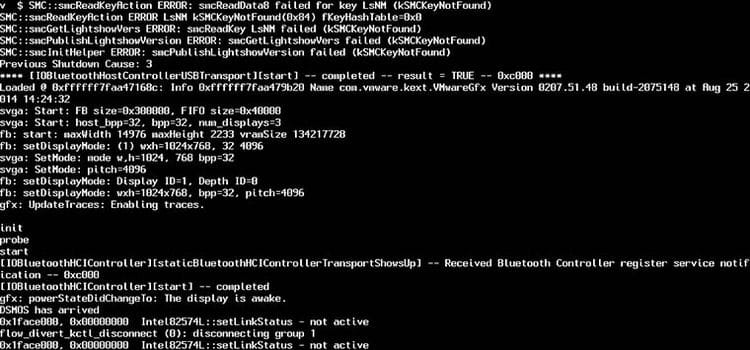
- Detailed logging. Press Command (⌘) + V to turn on the computer in verbose logging mode. It is required for advanced users. In it, it will be possible to track at what point in the launch errors occur.
- To eject removable media, press Eject () or F12 or the mouse button or trackpad button.
These Mac keyboard shortcuts help you start up your computer and catch errors if it crashes.
If your Mac won't turn on
Power supply failure
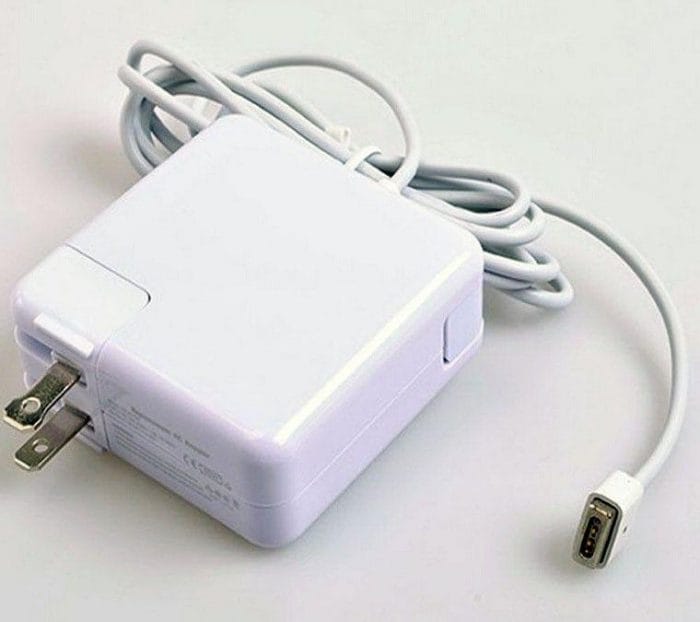
If your Macbook Air won't turn on, you need to check the power supply. Most often, the problem lies in it. The user needs to turn on the laptop to the power supply, monitor the battery charging. With slow charging and fast overheating of the power supply, you should think about changing it. Usually breakdowns occur when using non-original chargers with low power. If the power supply is weak, then the MacBook may not turn on at all.
If your Macbook Air won't turn on, it could mean moisture or mechanical damage to the charger. Regardless of the cause of the power system malfunction, it is not recommended to carry out repairs on your own. The user will need to take the device to the service center, where the master will check the unit and replace the necessary wires and capacitors.
Faulty keyboard
If your Macbook Air does not turn on for a long time, it is worth checking the keyboard, or rather the power button on it. It is located next to the touchpad and main keyboard. The power button is often exposed to physical stress, the ingress of liquid or dust, because of which it starts to jam or stops working altogether.
If liquid is spilled on the keyboard, the computer may operate for a while. System crashes usually occur later when oxidative processes under the keypad are progressing.
If the Macbook Pro does not turn on, it also indicates that the keyboard is mechanically damaged and the contacts are worn out. In case of superficial damage, it is necessary to replace the buttons. If your Macbook won't turn on , you ‘ll also need to check your device's ribbon cable. Sometimes a system malfunction occurs due to the separation of the keyboard loop. Repair work should be entrusted to an experienced master.

Deep discharge of the battery or power failure
If your Macbook Pro won't turn on or dive, it means it has been discharged for a long time. Often a system failure occurs when a laptop is not used for its intended purpose for some time and has a completely discharged battery. When not in use for a long time, the Macbook Air will not turn on or even light up. All attempts to start the gadget work lead to failure.
If the computer does not turn on and boot, you will need to remove the battery from it and wait 2-3 minutes. This time is sufficient to de-energize the battery internally. Now you can put it back in and try to turn on the laptop again. If it doesn't load again, it's best to ask a digital technician for help.

Faulty Magsafe connector
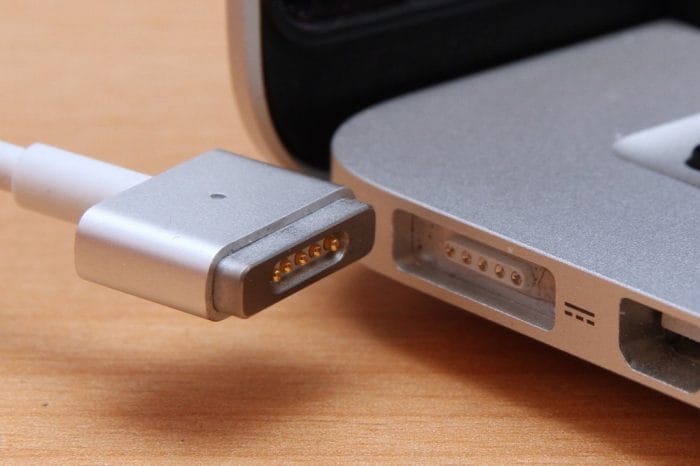
If your Macbook Air won't turn on without a button, check the Magsafe connector on the system charger. This inlet is regularly exposed to mechanical damage, clogging and liquid ingress, therefore it periodically fails. If the battery charge becomes unstable, the glow indicators light up every other time, then the MacBook does not turn on precisely because of the damage to the Magsafe input contacts.
If the connector becomes clogged, you can brush over it with a dry soft brush to remove dust. If the MacBook Air does not turn on due to the curvature of the entrance plate, then you should stop trying to start the gadget and contact an experienced technician for a thorough diagnosis. Sometimes the malfunction of the computer is the sticking of the contacts of the Magsafe input. To restore, you will need to disconnect the device from the power system and turn it on again.
Liquid ingress

When the Macbook Air does not turn on, it is worth remembering that no liquid has got on it lately. Perhaps it was shed earlier, and the consequences appeared only now. If water is currently spilled and the MacBook Air will no longer turn on, you should unplug the computer and turn it upside down to prevent liquid from flowing down and dripping onto system parts.
What to do if the gadget has been flooded with water:
- Pull out the battery;
- Disconnect the power cord;
- Wait until the parts are completely dry;
- Assemble the device and try to turn it on.
Reference! If the computer does not start again, then you will need to take it for diagnostics to a profile wizard. It is not recommended to postpone repairs and leave the gadget in such a state for a long time. Oxidative processes may begin in the system, which are fraught with complete breakdown of the MacBook Air.
Faulty motherboard
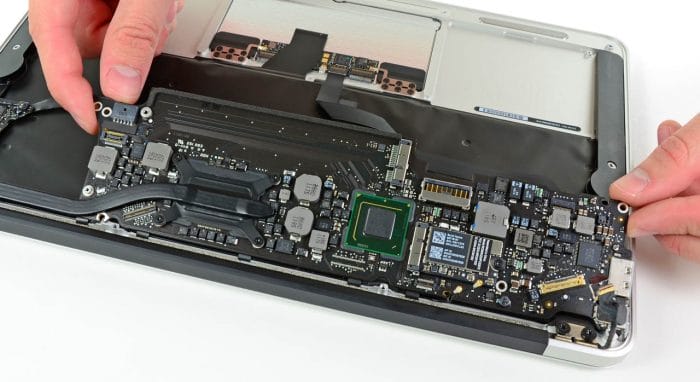
If the MacBook Pro does not turn on without a button, you should check the operation of the motherboard. You can understand that the problem lies precisely in it by the following signs:
- MacBook does not turn on and does not boot;
- The screen image becomes distorted and fuzzy;
- The keyboard is not working properly;
- The device does not charge well due to loose contacts.
If the MacBook does not turn on due to a breakdown of the motherboard, this indicates that it was subjected to mechanical stress. High humidity can cause damage. In the absence of the proper skills, you will not be able to repair the motherboard on your own. The user will need to contact highly qualified specialists. In case of minor breakdowns, the wizards will bring the device back to normal in a few hours. If the motherboard is defective, it will need to be completely replaced.
What if the computer won't turn on?
If the computer does not start after pressing the button and it is connected to power, do the following:
- Check the connection of the power cable to the outlet and to the monoblock itself;
- Check the operation of the surge protector, the working indicator will indicate the operability of the device;
- The first time you start the all-in-one, the iMac boots up long enough, the process should take about 5 minutes;
- If the above guidelines do not help you turn on your iMac, you should contact an Apple Service Center. Do not manipulate the candy bar yourself, this can lead to a decrease in the speed of the device.
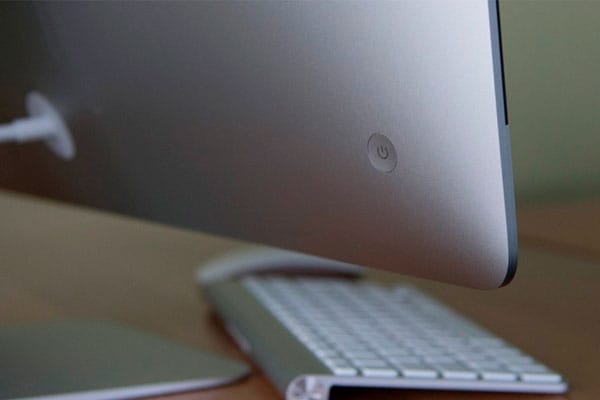
The correct way to turn off your iMac is to turn it off by pressing the Shut Down button from the Apple menu.
The shutdown process closes all running applications and programs. Also, the computer logs out of the account used. If the computer does not turn off, you should try to force quit unresponsive applications.
There is also a way to force the device to shut down. It should be used only if the shutdown does not occur, the computer does not respond to any presses and actions. A hard shutdown bypasses the shutdown phase. To activate the forced shutdown, you need to press the power button and hold it until the computer turns off.
The method should be used only in emergency cases. Suitable only for those cases when all standard methods have been tried, but have not brought any result. It should be remembered that the browser or any program will not save the data during a forced shutdown, all unsaved data will be lost irretrievably. With a standard shutdown, there is a possibility of autosaving copies of documents, restoring the work of all programs that were running before the shutdown. After the forced shutdown, the programs will not start automatically, they will need to be turned on manually.
Sources used and useful links on the topic: https://support.apple.com/ru-ru/HT201150 https://apple-rent.ru/2019/07/30/kak-vklyuchit-kompyuter-apple/ https: / /FB.ru/article/428934/kak-perezagruzit-makbuk-sposobyi-i-rekomendatsii https://mactime.pro/10-goryachih-klavish-pri-zagruzke-mac.html https://tehnofaq.ru/chto -delat-esli-ne-vklyuchaetsya-i-ne-gruzitsya-makbuk / https://AppleTimes.ru/kak-vklyuchit-imac-i-chto-delat-esli-on-ne-vklyuchaetsya/
Post source: lastici.ru