
Turnip dishes – recipes quickly and tasty: how to cook, photos, recommendations. The benefits and harms of turnips for the human body

Content
Composition and how it is useful
In Ancient Russia, turnip has always been the main product on the table. She was appreciated, loved, respected, considered the “queen of the garden”. But with the appearance of potatoes on the beds, it was undeservedly forgotten. The root crop could be found on the plots of its loyal followers.
Recently, the turnip has again begun to gain the lost ground. The once forgotten vegetable can be found more and more often on the shelves of shops and vegetable markets.
Studies have shown that in terms of the amount of nutrients, turnip is not inferior to many popular vegetables, and in some positions even ahead of them.
“Queen of the Garden” – a source of fiber, contains vitamins C, PP, E, B1 and B2, beta-carotene, vegetable fats, sugars, succinic acid, mustard oil. In terms of the amount of ascorbic acid, the vegetable surpasses citrus fruits and cabbage.
The vegetable contains such elements of the periodic table as sulfur, calcium, phosphorus, sodium, iron, manganese, iodine, potassium and magnesium. Regular consumption of the root vegetable fully covers the body's needs for these substances. In terms of phosphorus content, turnip is ahead of radish and radish. Caloric content – 32 kcal per 100 g, which makes the product very attractive for those who want to lose weight.
The glucoraphanin contained in the root vegetable is of particular value. It is a very rare substance found in sufficient quantities in kohlrabi, broccoli and cauliflower. In the body, glucoraphanin is transformed into an organic compound – sulforaphane, which has an anti-cancer effect. The substance reduces the risk of developing diabetes.
Thanks to its rich composition, the benefits of turnips are endless. It nourishes the body, saturates it with energy, and helps to get rid of many health problems.
The vegetable has long been used in folk medicine. It has a wound healing, analgesic, antiseptic, antibacterial, anti-inflammatory, diuretic effect.
List of useful properties of the root vegetable:
-
Turnip activates intestinal motility, improves digestion, activates the production of gastric juice, successfully removes toxins and toxins.
-
The root crop enhances immunity, copes with vitamin deficiency. Eating a vegetable raw is the prevention of colds.
And the inhabitants of the northern regions use the beneficial properties of yellow and green turnip for the prevention of scurvy and its treatment.
-
Turnip improves liver function, stimulates the secretion of bile, preventing the formation of stones in the gallbladder.
-
A compress from the grated pulp of a boiled vegetable or just a cut half of a fresh root vegetable, applied to a sore spot, heals cracks, wounds, purulent ulcers.
-
Warm decoction of turnips is used to treat sore throat, cough, laryngitis, bronchitis. Healing broth relieves toothache, helps with asthma.
-
Externally applied hot pulp of boiled turnip improves the well-being of people suffering from gout, arthritis or rheumatism, helps with frostbite. Compress with pulp heals sore joints, relieving pain, swelling, accelerating recovery, helps to cope with toothache, heals flux.
-
Root juice has a mild sedative effect, mild hypnotic effect. Steamed and fresh turnip improves brain activity, strengthens memory, relieves headaches.
-
“The Queen of the Garden” is a vegetable of beauty. It strengthens teeth, nails, improves skin condition, and has a beneficial effect on hair.
For the prevention of acne, it is enough to eat one turnip a day in order to make up for the deficiency of sulfur, a mineral responsible for the purity of the skin.
- The vegetable reduces the risk of developing cancer. It is recommended as a general tonic for people suffering from diabetes mellitus (but in small quantities due to the high sugar content).
- Fresh turnip juice is an expectorant, diuretic.
- As a low-calorie product, the root vegetable is indicated for obese people. It saturates well, without causing excess pounds to settle at the waist.
- The vegetable helps to get rid of chronic constipation – its pulp contains the enzyme lysozyme, a lot of fiber.
- The root vegetable is useful for pregnant women (in portions of no more than 300 g, no more than 2 times a week).
- The turnip will also be of great benefit to young children. However, it is recommended to introduce it into the children's diet from the age of two in small portions.
Potential product hazard
The vegetable has a number of contraindications. Do not consume it raw for the following health problems:
- inflammatory processes in the gastrointestinal tract;
- peptic ulcer, gastritis, enterocolitis;
- dysfunction of the thyroid gland;
- liver and kidney disease;
- chronic hepatitis, cholecystitis
- individual intolerance to the product;
- a serious disorder of the nervous system.
In diabetes mellitus, the vegetable is recommended in limited quantities and only after consulting a doctor. You should not eat the vegetable for nursing mothers so that it does not cause an allergic reaction, stomach cramps or diarrhea in the baby.
Even in the absence of contraindications, it is necessary to introduce the root crop into the diet gradually, observing the measure. Unaccustomed, it can provoke bloating, increase gas formation.
Reasonable care is also required when taking turnip juice inside. Do not overuse the vegetable – it is enough to eat a small turnip weighing no more than 300 g per day. It is best to eat it boiled or steamed.
How to use
The turnip is good in any form. Vitamin salads are made from fresh vegetables or eaten just like that. Turnips are also steamed, boiled, fried, baked, even marinated for the winter.
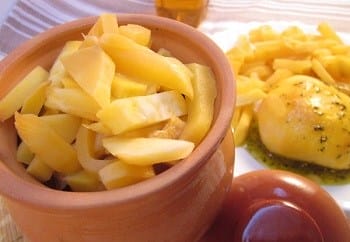
The root vegetable is combined with other vegetables, dried fruits, cereals. You can add it to meat dishes, bake with cheese. Very tasty and healthy candied fruits are obtained from turnips, honey and nuts .
There is one little secret – if you pour boiling water over a raw turnip, it will not taste bitter.
Is it possible to say that turnip tops are no less useful? Undoubtedly. Its young leaves are a good vitamin supplement to spring salads or vegetable soups.
Thanks to the mustard oil contained in the vegetable, turnip greens have a piquant aroma. It gives the dishes a special flavor.
Turnip dishes – do they help you lose weight
Simple recipes without sweet or other high-calorie additives are useful for people who want to lose weight or monitor their weight. The root vegetable is recommended because it is almost 90% water, contains only 28 calories per 100 g of product.
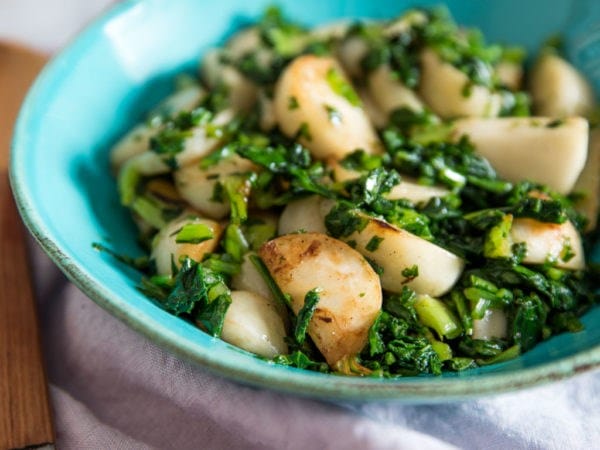
A healthy metabolism is an important factor in losing weight. The plant contains fiber, so it is able to remove toxins from the body, improve bowel function. A good metabolism is always important, especially when exercising and building a figure.
100 g of product contains:
- proteins – 1.5 g;
- fats – 0.1 g;
- carbohydrates – 6.2 g, of which sugar – 5.9 g, starch – 0.3 g;
- water – 89.5 g;
- organic acids – 0.1 g;
- dietary fiber – 1.9 g;
- ash – 0.7 g
Mineral content:
| Minerals | Contained in 100 g, mcg | Daily rate, mcg |
|---|---|---|
| Iron | one | eight |
| Magnesium | 17 | 420 |
| Sodium | twenty | 1500 |
| Phosphorus | 34 | 700 |
| Calcium | fifty | 1000 |
| Potassium | 240 | 4700 |
Vitamin composition:
| Vitamin | Contains in 100 g, mg | Daily rate, mg |
|---|---|---|
| A (beta-carotene) | 0.1 | 0.09 |
| B1 (thiamine) | 0.05 | 1.5 |
| B2 (riboflavin) | 0.05 | 1.8 |
| B3 (niacin) | one | twenty |
| B9 (folic acid) | 6 | 400 mcg |
| C (ascorbic acid) | twenty | 90 |
From a turnip, you can make a full lunch or dinner, which will satisfy the feeling of hunger no worse than potato dishes. Unlike potatoes, turnips will help to stay within the BJU. If a healthy vegetable appears on your table at least twice a week, you will feel its contribution to the creation of your slim, healthy body.
In addition, cooking a vegetable is not difficult. “Easier than a steamed turnip” – for sure you have often heard or used this expression yourself. Cooking a root vegetable is really easy. A double boiler, slow cooker, oven, baking pieces of vegetable in the sleeve are perfect.
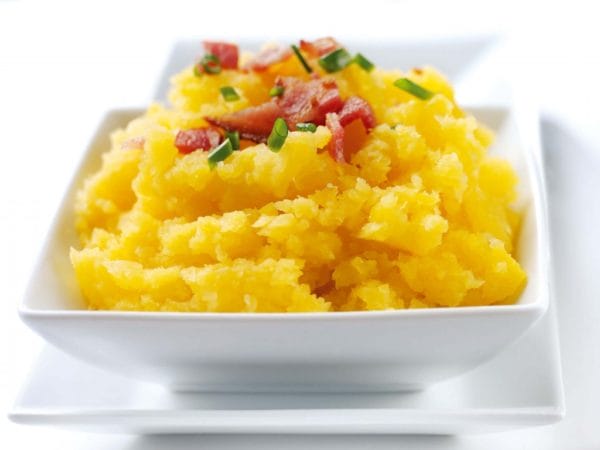
Seasonings, salt, pepper – nothing needs to be added during cooking. But butter, sauce are usually added to the finished dish, sprinkled with sugar, served with honey. It is easy to choose a dish option to your taste.
For kids
Turnip dishes can be included in the children's diet already in the seventh month of life. Vegetables in meals should only be processed – baked or steamed. Children should not be given raw to avoid a negative reaction from the gastrointestinal tract.
As with adults, children should introduce a vegetable into their diet gradually, in small quantities. Be sure to monitor your child's reaction to food. If the body does not accept the new product, the inclusion of turnips in the diet should be postponed.
The product almost does not cause allergies, except in rare cases. The vegetable is good for children for:
- replenishment of the supply of vitamins;
- improving metabolism;
- getting rid of constipation;
- as a prophylaxis for rickets;
- to improve the quality of sleep;
- help in strengthening the immune system.
Harm
Despite the fact that turnip dishes have certain benefits, there are still contraindications.
It is worth abandoning the use when:
- gastritis,
- hepatitis,
- cholecysts,
- enterocolitis,
- stomach ulcer.
People suffering from flatulence should be aware that raw root vegetables can cause bloating. It is better to use steamed or otherwise cooked turnips, then the problem of flatulence will not arise.
All people should introduce turnips into their diet gradually, if they have not tried this vegetable before.
There are a number of contraindications in which it is worth refusing to eat dishes with turnips. These include:
- kidney disease;
- individual intolerance;
- disorder of the nervous system;
- diseases of the thyroid gland.
Many healthy foods may not taste particularly good, but in the case of turnips, you shouldn't be afraid. Steamed turnip is neutral, it does not have a bright pronounced taste. It opens up in combination with other vegetables or fruits, or with the addition of sauces, butter, honey or sugar.
The vegetable is commonly used with both sweet and savory ingredients. Turnips are eaten raw and added to salads. Or steamed, boiled, fried. This makes the root vegetable a versatile product for preparing a wide variety of dishes.
Turnip-based dishes are good for the health of men, women and children due to their balanced composition and many beneficial properties. Turnip is easy to cook, and its ability to combine with salty and sweet additives allows you to cook different dishes.
Steamed turnip in modern conditions
It is enough to put the following ingredients in the roasting sleeve:
- beets (4 pcs.);
- water (6-8 tbsp. l.);
- salt (to taste).
Peel the turnips, cut into circles, which are placed in the baking sleeve, add water and salt. Preheat the oven to 160-180 degrees and place the sleeve with the contents there for an hour and a half. The same can be baked in a pot if anyone can feel the difference in these baking methods.
When the steamed turnip is ready, you have to decide how to eat it. You can add garlic, onions, mustard, greens to turnips and you will get a good salad, if you just put steamed turnips on a piece of bread, there will be a lean sandwich, turnips are also good in sour cream.
Turnip cutlets
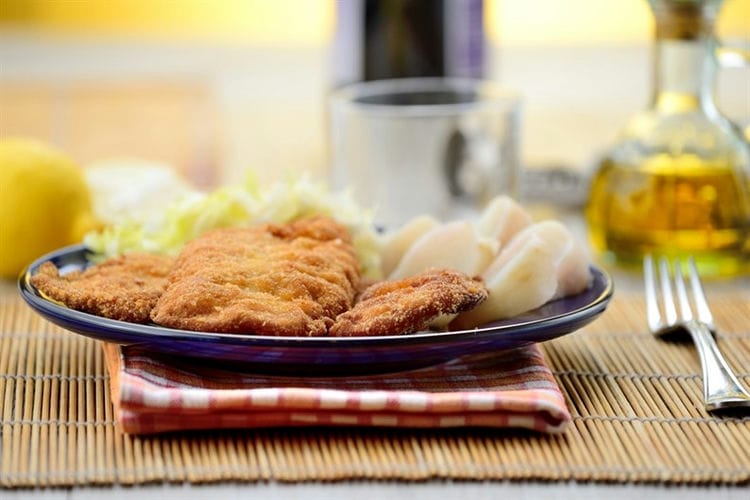
Turnip cutlets
Ingredients:
- beets (500 g);
- wheat bread (200 g);
- milk (125 g);
- vegetable oil (3 tablespoons);
- pork fat (100 g);
- chicken eggs (2 pcs.);
- onions (2 pcs.);
- flour or bread crumbs (as needed);
- salt (to taste) ..
Boil turnips until soft and mash until puree, add bread, add hot milk to the composition. Stir and beat in the eggs. Pre-fry the onion, add to the minced meat along with chopped bacon and onions. Mix the composition well again, after which you can sculpt the cutlets.
Roll the sculpted cutlets in flour or breadcrumbs, then completely fry in a pan or, lightly fried, simmer in the oven.
Pickled turnip
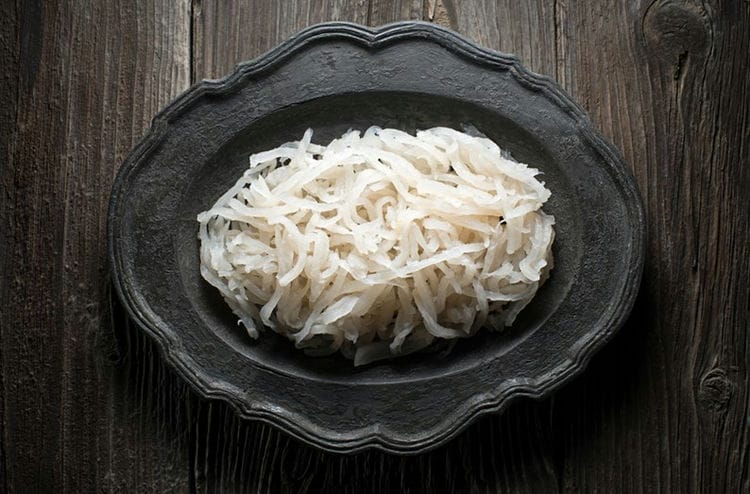
Pickled turnip
When fermented, turnip under the influence of salt releases mustard and essential oils in its juice. Thanks to these components, sauerkraut has a unique taste.
Ingredients:
- turnips and carrots (in equal proportions);
- red hot pepper (to taste);
- brine (for 1 liter of water 60 g of salt).
Thoroughly wash the carrots and turnips under cold water, trim the tails, peel the carrots, you do not need to peel the turnips, but only cut them into two or four parts. Bring the water to a boil and cook the brine, then let it cool.
Prepare a suitable container. Put turnips and carrots in it in several layers between which place red hot peppers. Pour the contents of the container with brine so that it completely covers it.
Put the oppression and place the container in a cool, dark place. In a month and a half, the pickled turnip will be ready. It must be remembered that it must be stored in brine, while you can transfer the turnips in a smaller container, but, again, completely cover with brine.
Turnip pots with mushrooms
This recipe uses turnips as a natural baking pot.
Ingredients:
- forest mushrooms (300 g);
- onions (2 pcs.);
- sunflower oil (30 ml.);
- spicy tomato sauce (125 ml.);
- salt and spices (to taste).
Boil the turnips, remove the inner pulp with a spoon, leave the walls in this natural pot, 1.5 – 2 centimeters thick. At the same time, the pulp is not thrown away. The number of turnips depends on the size of the fruits, you need to calculate so that all the minced meat fits in them.
Wash and peel the mushrooms, chop finely, mix with chopped onions. Send the mass to the pan, season with spices, wait until the liquid that appears has boiled away, and the mushrooms are slightly browned.
Mix the resulting roast with chopped turnip pulp and fill natural turnip pots with these contents. Pour the tomato sauce over the contents and bake in the oven at 190-200 degrees for a quarter of an hour. It is better if the dishes with the pots are covered with foil.
By the way, tomato sauce in this dish can be replaced with another one, for example, based on sour cream. It all depends on personal taste preferences.
Steamed turnip – cooking recipes
Two options:
- Cut the root vegetables at random, pour with oil, put in a clay pot, pour 2-3 tablespoons of sour cream, send to the oven. Close the top with foil. Withstand 1-1.5 hours.
- Wash vegetables, chop, salt, add cream, black pepper. Put in the multicooker on the “Quenching” mode. We set the standard time, in my unit it is 1 hour. If you wish, wait another half hour, but this is not necessary.
The benefits of steamed turnips are that they are easy to digest.
The root vegetable takes a little longer to cook than potatoes. But in terms of the balance of nutrients, it is significantly ahead of it. This dietary meal will suit everyone.

Baked turnip – recipe
You will need:
- 2 medium-sized root vegetables,
- 50 g butter
- lemon zest,
- ground ginger on the tip of a knife.

What to do:
- Peel the vegetables.
- Cut into irregularly shaped slices.
- Stir in with the rest of the ingredients.
- Salt.
- Place in a fireproof dish.
- Top with heavy cream if desired.
- Bake in the oven until soft.
How to cook turnips so that they are not bitter?

For cooking, try to take young root vegetables (they are light with a thin skin), they have the least bitterness. You can boil them whole (peeled) or pre-cut them into slices or circles. How long does it take to cook turnips if you plan to use it as an independent dish? Remember this hint.
Time for boiling turnips on the stove:
- large roots – from 20 to 25 minutes;
- medium-sized – 20 minutes;
- small – 15, maximum – 20 minutes.
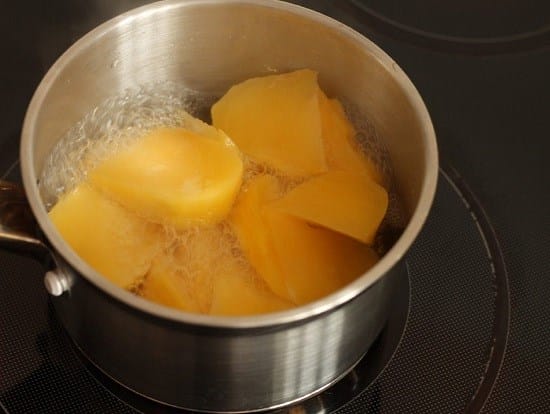
Modern housewives use various kitchen appliances for cooking. Consider how much to cook turnips until tender in a double boiler. It will be ready in 20 minutes. Before you start cooking, peel the root vegetable, cut it, put it in the bowl of the steamer. Fill with water. If after the specified time it turns out that the turnip is still not soft enough, then increase the cooking time by another 5-8 minutes.
You can also boil this garden product in a multicooker – and this technique will allow you to cook turnips both in the usual way (in the “Cooking” mode) and steamed. How much to cook turnips does not depend on the selected mode. The dish will be ready in 20 minutes.
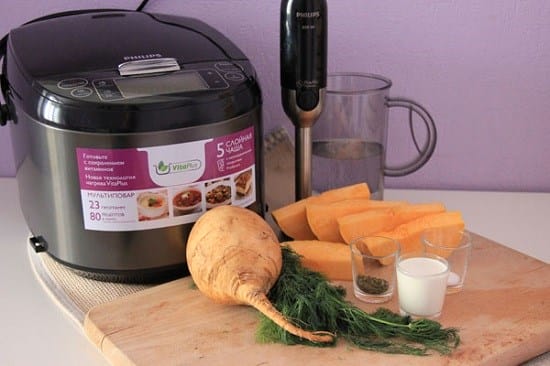
If the turnip will be an ingredient in another vegetable dish, boil it separately, and then add it to the rest of the ingredients a few minutes before the end of cooking.
It is generally believed that turnips have a bitter taste, in fact, they taste like pumpkin and potatoes. The main thing is to cook it without the skin! Turnip will feed and cure (relieve cough, improve digestion), so do not forget to buy this vegetable when you go to the grocery store.
How to cook a turnip deliciously for a child
Turnip products – 1 kilogram
Prunes – 200 grams
Milk 2.5% – 1.5 cups
Sugar – 30 grams
Butter – 30 grams
Flour – 30 grams
How to cook turnips with prunes for children
1 Wash a kilogram of turnips, remove tails and peel and cut into small pieces.
2 Put the root vegetables in a saucepan, cover with boiling water and let stand for 5 minutes. Turnip processed in this way will not taste bitter.
3 Put a pot of turnips on moderate heat, boil until softened and drain in a colander.
4 Wash 200 grams of prunes and remove the seeds.
5 Fry 30 grams of flour with 30 grams of butter in a thick-walled saucepan.
6 Pour 1.5 cups of milk into the flour, stir quickly with a wooden spade and let it boil.
7 Gently put boiled turnips, prunes in milk, add 30 grams of granulated sugar, let it boil again and cook for another 5 minutes.
Calorie content of raw turnip
It is useful for people who eat turnips to know how many calories there are in this vegetable. So, the calorie content of raw turnip is only 30-32 kcal / 100 g, because 90% of it consists of water. You should not get carried away with turnips, since they are classified as foods with a high glycemic index (70 units). After heat treatment, the calorie content of the product increases to 33 kcal, and the glycemic index – up to 85 units. Also, the vegetable contains 0.5 g of fat, 2.9 g of carbohydrates and 3.2 g of protein.
Important! The root crop must be excluded for young mothers during lactation, and it is also not worth introducing it into the diet of children under 2 years of age, since the baby may experience unexpected reactions from the gastrointestinal tract.
How to eat turnips raw
Do not overuse this root vegetable in your daily diet. It will be enough for an adult to eat 200-300 g of vegetables a day. To avoid digestive problems, it is advisable to use it boiled or steamed.
Turnip use
The nutrients in the vegetable have a healing effect on the internal organs of a person. Not only the root vegetable has healing properties, but also the green tops of the plant. For the preparation of salads and borscht, it is recommended to use foliage as a vitamin complex. The root crop can be stored for a long time without losing its healing qualities, and it is also easily absorbed by the human body. It can be pickled and dried. Due to its bright taste, it is recommended to cook it without adding spices.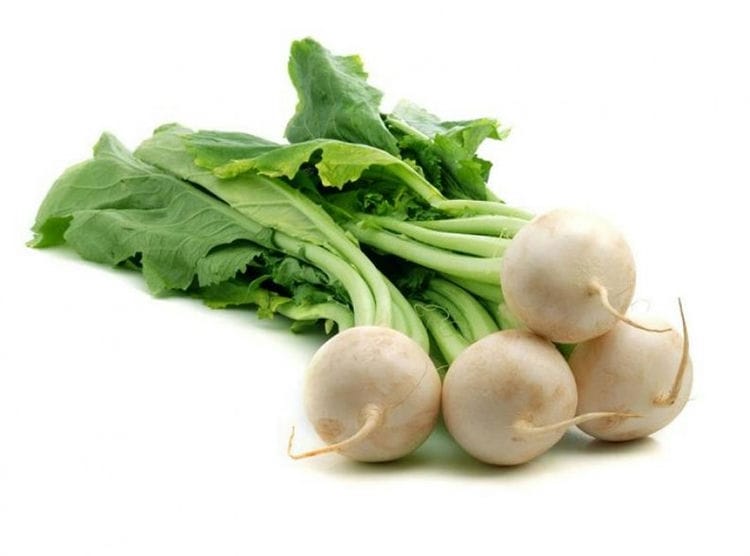
In folk medicine
It is customary for traditional healers to use the most useful product from turnip – its juice. When boiled, it is an excellent expectorant. The vegetable is perfect for smokers and those who suffer from lung diseases. Healers are recommended to use raw turnips to improve the cardiovascular system, as it brings the pressure back to normal. Turnip decoction also treats toothache and insomnia. To fall asleep faster at night, you need to drink 1 glass of broth before going to bed.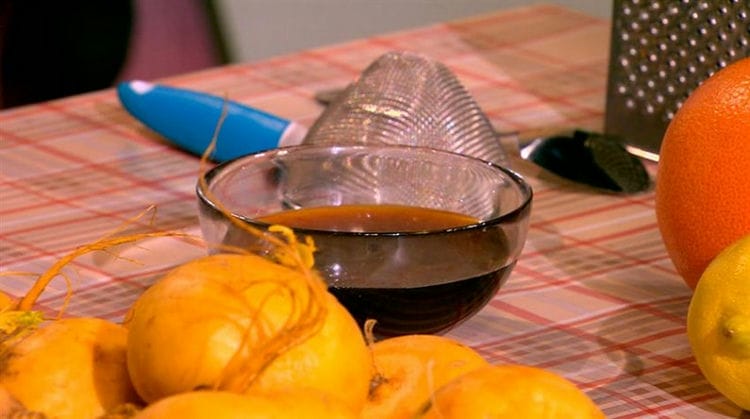
Basic rules for selection and storage
Most often, three varieties of this root crop can be found on the market:
- garden (with yellow pulp),
- white,
- the black.
Yellow fruits consist of coarse dietary fiber and have a rich taste, white ones have a delicate fiber structure and a less pronounced aroma. When choosing a root crop for consumption and storage, you should pay attention to its size. Better to take a small vegetable that can fit in the palm of your hand. Such a root vegetable will not taste bitter. You should also pay attention to the skin of the root crop. It should be free of damage and stains.
The most basic characteristic of a vegetable is its ability to keep fresh for a long time. Before the onset of the first frost, the root crop must be dug up and stored. Supercooled roots are not suitable for storage. Turnips are also not susceptible to rotting and mold formation. Before storing it, it must be dried under a shelter, since it will begin to fade under the open sun. 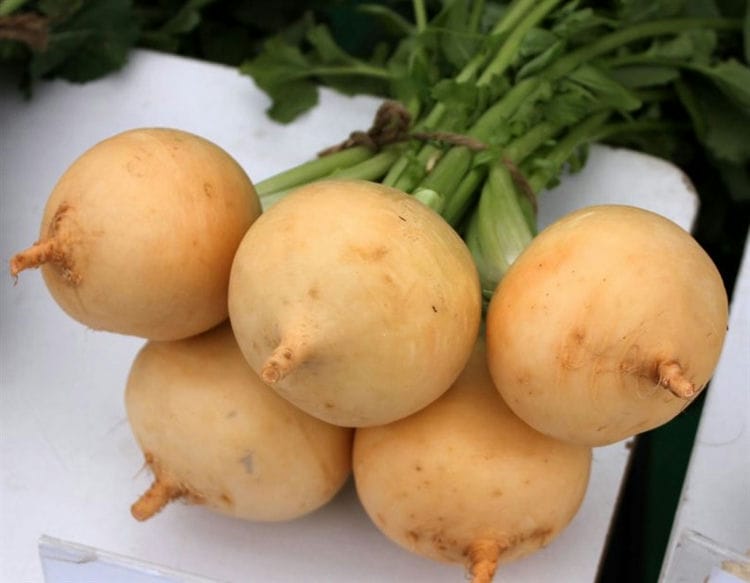 There are several effective ways to store a vegetable:
- Root vegetables are stored in the refrigerator for up to 1.5 months.
- In order for the turnip to be preserved as long as possible in winter, it must be covered with dry sand, having previously cut off the tops.
Turnips should be a staple on the dinner table. Due to its usefulness and availability, its presence in the diet can be permanent.
Sources used and useful links on the topic: https://foodexpert.pro/produkty/ovoshhi/repa.html https://VrednoPolezno.ru/ktegoriya/blyuda-iz-repy-polza-i-vred.html https: // www.chefmarket.ru/blog/bljuda-iz-repy-recepty-s-foto/ https://100polezno.ru/poleznye-retsepty/chto-prigotovit-iz-repy-bystro-i-vkusno.html https: / /needtimes.ru/ovoshhi/skolko-varit-repu-po-vremeni-kak-vkusno-ee-prigotovit https://www.timeboil.ru/vegetables/turnip/ https://fermer.blog/bok/ogorod/ repa / polza-repy / 2817-mozhno-li-est-repu-syroy.html
Post source: lastici.ru