
How to properly self-massage the neck: basic rules and techniques. Self-massage of the neck

Content
Contraindications
Before starting the massage, you should make sure that it is not harmful. There are a number of contraindications in which the procedure is prohibited:
- skin diseases in the cervical spine;
- back injuries;
- malignant and benign tumors;
- blood diseases;
- cinga;
- tuberculosis;
- diseases of the cardiovascular system;
- pregnancy;
- hypertensive crisis;
- bleeding.
It is also not recommended to conduct a session for infectious diseases of the body.
If you do not have these points, you can safely start studying the techniques of self-massage of the cervical collar zone (SHVZ).
Execution techniques
Self-massage of the cervical-collar zone includes massaging not only the neck itself, but also the areas adjacent to it. It is important to remember that movements are performed from top to bottom synchronously, i.e. with both hands. If, for any reason, synchronicity cannot be achieved, then the hands should be alternated.
There are several basic techniques for self-massage of the cervical spine:
- sufficiently strong stroking of the back of the neck;
- circular rubbing with fingertips;
- “Pinching” of the skin;
- pulling off skin folds with a shift to the side;
- light patting over the entire area of influence;
- soothing strokes with two hands at the end of the session.
However, these massage manipulations will help relieve muscle tension and get rid of headaches only if you adhere to a certain sequence of actions.
Sequencing
The session should begin with pre-warming the muscles, which will also help prepare the skin for active exposure. To do this, with light stroking of the palms, gradually descend from the hairline of the back of the neck to the very back, touch the area of the shoulder muscles and slowly move to the front side. We massage it gently and smoothly so as not to injure, and then return back to the back of the head. For the effectiveness of massage, movements in a circular direction are repeated several times, each ending in the area of the collarbones.
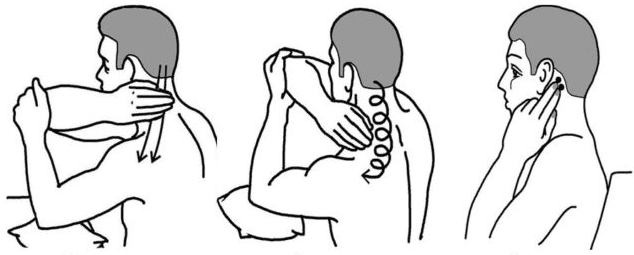
A very important rule: it is strictly forbidden to massage the protruding cervical vertebrae, lymph nodes and carotid arteries. Their damage can have a sharp, negative impact on health, lead to loss of consciousness and even death.
If during the procedure you feel severe pain, you should immediately stop self-massage. To catch negative changes in the state of the body, listen to your body, perform all movements carefully and thoughtfully, without being distracted by extraneous thoughts. This will be facilitated by a calm atmosphere without harsh sounds.
After getting ready, it's time to start the main part of the session. Start at the back of your neck:
- With the ribs of your palms, draw from the hairline at the back of the head to the shoulder blades, gradually increasing the pressure slightly.
- Rub the skin with stroking movements of both hands (palms move from the back of the head to the earlobes and back).
- Using light “tweaks”, gently knead your neck muscles from top to bottom.
- Finish the back massage with gentle strokes.
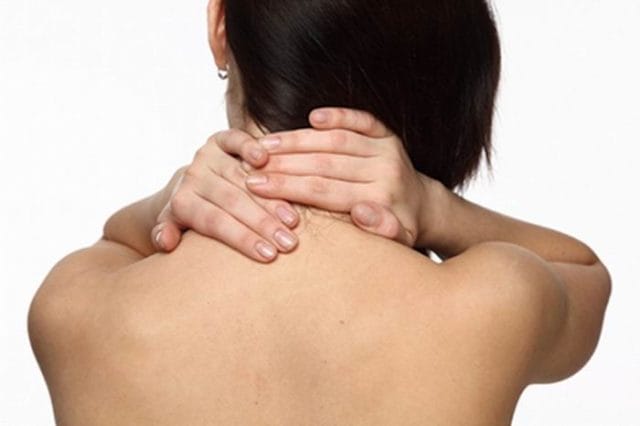
Then you should go to the anterior and lateral areas of the ShVZ, acting extremely carefully so as not to touch the carotid artery or lymph nodes:
- Gently stroke your neck with the backs of your hands, also touching part of the sternum.
- Use your fingertips to rub the skin, anterior chest and shoulder muscles.
- In a circular motion, knead the lateral regions of the cervical spine, moving from the earlobes to the shoulder joints.
- Finish the massage stage with gentle strokes.
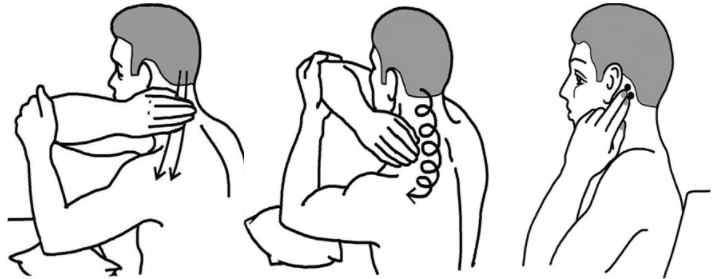
The classic procedure ends there, however, with an integrated approach, self-massage of the head and neck should be combined. The head is treated with clean, warm hands, with well-trimmed nails. This also includes self-massage of the face, so be very careful not to damage or leave marks on delicate skin.
The procedure should be carried out somewhat differently than in the classic version:
- Place your left palm behind your right shoulder and press down on the center of the muscle that connects your back and neck.
- Move slowly to the collarbone and then repeat with the other hand.
- Place your bent thumbs in the fossa behind the ears and massage them with vibrating movements.
- Using gentle finger strokes, work over the brow ridges, placing the indexes on the lower part of the forehead and the middle ones on the upper part of the eyelids.
- Place your palms on your cheekbones and knead them in gentle up and down movements.
- Place your bent thumbs into the depressions under the back of your head, interlacing your hands together and touching your skin.
- Connect and disconnect the hands while massaging the muscles of the head.
- Use your fingertips to slowly knead the frontal and occipital areas.
- Place your chin on the backs of your intertwined palms and, pressing them on your hands, gradually bring your palms to your chest.
The therapeutic massage is completed by shaking the hands necessary to relieve tension from the hands, as well as squeezing and unclenching the fingers. After the session, it is recommended to drink hot tea and lie down under a warm blanket for about twenty minutes to have a warming effect on the muscles.
How to do neck massage correctly
Now you will be offered exactly the self-massage of the neck. A very useful and visual video tutorial from Vladimir Mardinsky.
It is simple to perform and will quickly help relieve neck muscle tension. It can also be used as a massage for cervical osteochondrosis.
Taking the time to do it on a daily basis will prevent and reverse the signs of skin aging that already exist.
- Place your hands on your neck and stroking from top to bottom.
- Then begin to rub in a circular motion.
- You can feel the pain points in the shoulder area and massage them too.
- Then you start kneading
- We pinch the points of attachment of the neck muscles to the head. They are quite painful.
- You can also massage your shoulder joints.
- Use vibration reception
- And finally, do some exercises: turn your head forward – backward – right-left.
What are the benefits of self-massage?
The procedure is aimed at relieving tension and relaxing muscles, helps to cope with fatigue and prevent painful spasms.
Useful properties of self-massage of the neck:
- Blood circulation and metabolic processes are stimulated, which improves tissue nutrition and saturates them with oxygen.
- Morning session helps to wake up faster and invigorate.
- Thanks to the relaxation of the nervous system excited after a working day, sleep is normalized.
- Memory improves. Since the neck is a kind of “bridge” to the head, stable blood flow and access to cerebrospinal fluid in the brain enhance the efficiency of the latter.
- A positive effect on nerve fibers relieves regular headaches at the end of a working day.
- Performance is increased due to an improvement in the general condition of the body, which makes it easier to cope with stress.
- Dystrophy of muscle tissues, which irreversibly occurs with a sedentary lifestyle, is eliminated.
- The corset supporting the spine is strengthened, which acts as a preventive measure in the prevention of some diseases directly related to the skeleton.
- The mobility of the joints in the intervertebral regions is restored.
- Connective tissues are rejuvenated.
Neck massage helps if you are diagnosed with osteochondrosis in the initial stage, it also reduces pain after an injury, with a hernia.

Some complex physiotherapy practices in the treatment of diseases of the musculoskeletal system provide for the impact on the cervical spine as a mandatory procedure.
Thematic material :
- Acupressure massage for migraines
- Self-massage of the head for headache
- Self-massage feet
The mechanical effect on the front of the neck has a good cosmetic effect. Regular toning of the upper tissues of the skin slows down its aging, increases turgor, and reduces the chances of a double chin.
Recommendations and prohibitions
Neck massage is prescribed as an indispensable element of physiotherapy for posture disorders and some diseases associated with the neck, spine and head.
Psychologists, who claim that discomfort in certain parts of the body occurs due to a psychosomatic disorder, advise to carry out light preparation before the massage:
- Pull your head into your shoulders as much as possible so that they rise almost to the very ears.
- Drop them sharply.
- Repeat several times to relieve some of the tension.
Sports therapists recommend doing neck stretching exercises after a strenuous workout. This procedure is also useful for everyone as a prevention and treatment of cerebral blood flow disorders, especially with a lifestyle with low activity and sedentary work.

According to statistics, more than 70% of school-age children suffer from posture curvature. Therefore, they are also shown manipulations that relieve tension in the collar zone and neck.
Self-massage is prescribed in the following cases:
- Bad mood,
- discomfort in the shoulder girdle area,
- pain and stiffness in the neck,
- overwork,
- sedentary work,
- hypertension,
- vegetative vascular dystonia (VVD),
- insomnia,
- prolonged systematic physical activity.
- headaches,
- osteochondrosis.
Contraindications:
- high body temperature,
- high blood pressure,
- the period of decompensation of some diseases,
- exacerbation of a chronic illness,
- inflammatory processes,
- sclerosis,
- disturbances in the work of the heart muscle,
- dermatological pathologies.
Massage at home
Self-massage of the neck is a simple procedure and is often prescribed by physiotherapists to be performed at home. As a rule, it consists of three stages:
- Preparation. It consists in warming up the muscle frame and surface tissues of the massaged area. Rub the back of your neck with light downward strokes. Gradually, slowly, move your palms to the lateral zones and the front of the neck. Then return to the nuchal area (back of the head) again. Repeat the manipulations in this sequence several times, increasing the intensity. Finish this step by massaging the clavicular area and trapezius muscles.
- Basic procedure. Any self-massage technique needs preliminary preparation, so it is not recommended to go straight to the main movements. We will consider the main types of self-massage in the next section.
- Completion. Calm the treated area with light strokes and warm-ups to end the session properly.
Compliance with the sequence of actions is the key to high massage efficiency and long-lasting results.
Point
The Chinese method of dealing with various ailments. Recently it has been very popular.

Left: pressure points on the front and side of the neck. Right: on the back of the neck
Palpate the painful area. Identify the most problematic areas that look like tight nodules. Apply pressure to them with your fingertips. If you feel tense and uncomfortable, give your gestures a vibrating effect. Increase the intensity gradually.
Express method
It is a quick way to relieve tension from the neck and shoulders, which brings back vigor and strength. It is performed while sitting with a straight back. In order not to keep your hands in the air, it is better to sit at the table.
Instructions:
- Stroking. Pressing your palms tightly to your neck, slide them from top to bottom.
- Warm up your muscles. In the same way, squeeze the muscles with the edge of the palm, alternately or synchronously, on both sides.
- Trituration. Use your fingertips to move along the back of your head from your ears and back towards them. Hands should be crossed: right from the left ear, left from the right.
- Grips. Taking a muscle with your fingers, press it down, pulling it a little, and then shifting it to the side.
- The final stage. Calm the area to be treated by stroking from the back of the head to the upper corners of the shoulder blades.
To enhance the effect, do the same manipulations with the muscles of the shoulder girdle.
Cosmetic
Osteopathic cosmetology also practices neck massage, but exclusively for aesthetic purposes and using a special technique. The massage therapist acts on the skin and muscles of this area to restore their lost elasticity, speed up metabolic processes and improve blood circulation. Thus, the second chin and wrinkles on the neck disappear. With this type of massage on the back of the neck, you can get rid of the “withers”.
The session should be carried out in a calm environment in order to relax as much as possible. Before the procedure, cleanse the skin with your usual body care product and apply a little massage oil. Thanks to him, the skin will not stretch.
Interesting! Experts recommend using substances with lavender or rose extract.
The described variant of action is aimed at getting rid of fatty deposits and strengthening the skin turgor.
Sequencing:
- In a forward and upward motion, apply a few drops of oil to the massage area. If there is too much of it, you will have to wash it off.
- Start with your collarbones. Do arbitrary massage manipulations to prepare the skin for the main action. Combine them with side bends to increase efficiency.
- After warming up, we proceed to the massage: with the back of your fingers, slide along the chin in the direction from the neck. Hands should follow quickly enough, alternating one after another.
If you want to get rid of a double chin, perform the procedure twice a week and use an additional massage brush. It can be purchased at the pharmacy. Using this tool, make circular motions with medium pressure. Remember that the décolleté has very delicate skin.
In addition, there are a lot of massagers designed specifically for working with the neck and shoulder girdle.
Back of the neck
- Squeezing. Move the edge of your palm upward. When you reach the hairline, change direction towards the shoulder joints.
- Circular rubbing with fingertips. The occipital region is processed from one ear to the other. The hands go to the ears and again converge in the middle. Do not massage the vertebrae, only the muscle frame.
- Pinches. Proceed from bottom to top, and then in the opposite direction. Capture not only the skin, but also the muscle tissue. It is worth taking the latter away carefully and slowly.
- Stroking. Do them from top to bottom, moving from the back of the head to the shoulder blades.
2 Poses for self-massage of the neck
How to do self-massage correctly? And to be more precise, in what position? Standing? Sitting? Lying?
It is most convenient to carry out such procedures either in a sitting position or in a prone position, but not standing.
Self-massage of the cervical region
The effectiveness of the procedure while standing does not decrease, but due to too intense movements or simply due to the very fact of the massage, slight dizziness may develop. It is for this reason that it is better not to do such procedures while standing, especially at home, where in the event of a fall there is a possibility that there will be no one to help.
Lying down, the procedure is already safer, but it is extremely inconvenient to carry out it. A person cannot lie on his back and carry out self-massage, so there can be only one pose – on the stomach. But in this case, the hands in the process will be in an uncomfortable position, and get tired extremely quickly.
Therefore, the best option would be to perform self-massage while sitting. In this case, you need to use a chair or any chair with a solid flat back. You cannot use a stool: the back should be flat during manipulations, and it is easier to keep the posture with the back.
Of course, you can independently maintain it in an even position, but then you will get tired extremely quickly. But keep in mind that supporting your back with an even back does not mean that you need to “lie” on a chair during the procedure – this is incorrect and can negatively affect the effectiveness of treatment.

Self-massage of the neck and shoulder girdle.
Touching
Warm your palms vigorously by rubbing them together. Gently grab the back of the neck with them, gripping the trapezoid. Hold on to the count of five.
Stroking
Make stroking movements from the head to the shoulders. You can use both hands at the same time, or separately. Perform 5-7 times.
How to prepare for a massage
Preparation in the procedure is given an important role, since the patient must tune in to the session. Neck massage should be performed in a calm, relaxed environment.
To conduct a session, you must ensure that the following rules are observed:
| Conditions | What is needed |
| Illumination | Subdued, dim light |
| Sound | Quiet, calm music |
| Premises | Closed room, which cannot be accessed by unauthorized persons during the session |
| Furniture | Comfortable couch with an opening for the face or a chair with the back to the patient's face |
| Aids | Oil or cream |
The patient should take a shower before the procedure, the masseur should wash his hands. As for the choice of cosmetic (or therapeutic) means for massage, it is necessary to make a start when choosing from the problem that the massage should solve, and from the wishes of the patient himself.
So, in the treatment of osteochondrosis, preference should be given to warming massage balms and creams. They enhance the healing effect, help to achieve relaxation faster, warm up the skin and superficial muscles well. The effect is observed for some time after the end of the session, so the patient should be covered after the end of the massage and given the opportunity to lie down for 5-10 minutes.
If the massage is carried out for the purpose of relaxation, relieving stress, you can choose special oils – grape seed oil, almond, olive, jojoba. Oils are good for dry skin – they relieve irritation, soften and nourish tissues. For oily skin, talcum powder and talcum powder are well suited.
The neck-collar zone, which is massaged by a specialist with medical education, is sensitive to external influences. If someone in the family suffers from the diseases listed above, then another family member can learn the basic techniques and subsequently massage the sick person on their own, and the first sessions should be supervised by a medical professional.
What is the neck and collar zone
The cervical-collar zone is small in volume: it covers the cervical region, starting in the region of the first cervical vertebra – atlas, and the upper back. The area up to 4 thoracic vertebra and – on the anterior surface of the chest – up to 2 ribs – all this refers to the neck-collar zone.
The task of a specialist performing massage techniques is to work out groups of superficial and, if possible, deep muscles of the neck and back.
The neck-collar zone is shown in the photo. Massaging this part helps to cope with a number of diseases and symptoms.
Among the superficial muscles of the neck, it is important to pay special attention to the sternocleidomastoid muscle, which holds the head in an upright position, and is also responsible for tilting the head to the sides.
The deep muscles of the neck are the scalene muscles:
- front;
- back;
- average.
Functions: tilting the cervical spine, lifting the first and second ribs – these fascia work as the muscles of inhalation.
Superficial muscles of the back:
- trapezoidal (functions: raising and lowering the scapula, movements of the upper limbs);
- interspinous (bend the spinal column);
- deltoid (functions: flexion and extension of the shoulder, abduction of the arm to the side).
This also includes diamond-shaped, small and large (responsible for the movement of the scapula, for a beautiful posture). Deep muscles are the belt muscles of the neck and head (lifting, tilting, turning the head), interspinous (keeping the spine in an upright position).
The neck-collar zone, massage of which allows you to activate blood circulation and improve muscle function, is also an accumulation of a large number of large and small blood vessels, nerve fibers. Since this area is little involved in active movements in everyday life, congestion and dysfunction of connective tissues are often observed here.
Muscles thicken, shorten, which makes it impossible for the normal functioning of the parasympathetic and sympathetic nervous systems, impedes the flow of blood and lymph, reduces the possibility of turning the head, tilting, and the work of the shoulder girdle.
2 Indications. Session and course duration
At home, it is desirable to carry out:
- with general body fatigue (not to be confused with overwork),
- tension in the shoulders and lower back,
- muscle stiffness after exercise,
- hypothermia.
The session lasts from 30 to 60 minutes. A general back massage is carried out, the area of the shoulder blades, collar zone and shoulders is worked out.
If there are no serious problems with the musculoskeletal system, the procedure can be performed from 1 time per week for general relaxation of the body.
If there is pain in the back at the end of the working day, there is stiffness of the joints and the muscles are in a tense state, then a course of 8-10 procedures can be performed, performed every day or 2-3 times a week.
The course in this case is repeated 1-2 times a year, and if the massage is carried out as a relaxation once a week, then it is permissible to carry it out constantly.
Third movement
To perform this exercise, you must first tilt your head back slightly.
- Run your palms along the front of your neck.
- You need to start moving just from under the jaw region, gradually moving along the area of the lymph nodes.
- The massage movement ends in the upper chest.
- Using your fingertips, very gently rub the area behind the ears on both sides.
Such a relaxing and prophylactic self-massage of the neck and collar zone, as in the video below, is carried out just in the area where the clusters of the peripheral organs of the lymphatic drainage system are located. Therefore, in order not to harm yourself, you need to be extremely careful. All movements should be light, smooth, slow.
Preparation
It consists in the initial warming up of the muscles, the muscle frame that supports the cervical spine. In addition, it will provide an opportunity to prepare the surface of the skin for touching.
- Gently, stroking gestures, try to rub your neck, starting from the hairline, slowly moving down to the very back.
- Move your hands slowly to the front of your neck.
- After that, with the same stroking movements, with minimal pressure, move your hands back to the back of your head.
- After several repetitions, complete the preparatory stage in the area of the clavicle and trapezius muscles.
You need to move gradually and smoothly, but do not forget to increase the intensity of pressure. It is important. The main thing is no jerks, sudden movements, so as not to injure your own skin and subcutaneous muscles.
Basic principles
In order not to harm yourself by performing actions that you absolutely do not understand, you must first understand the main principles of manual intervention.
- You cannot massage only the neck. In the process, nearby areas must also be affected, otherwise you will not be able to achieve the effect.
- It is optimal to work with both hands, synchronously. However, if it is so inconvenient or you cannot for other reasons, then it is permissible to work with them one by one.
- The movements in the neck massage are made only in one, the only possible direction – from top to bottom.
It is enough to remember all these postulates in order to avoid obvious mistakes in the massage. This will avoid unexpected injuries, as well as give hope for effectiveness and getting rid of unpleasant symptoms.
For the front
- Using stroking movements, not with your palms, but with the back of your hands, sweep over the front of the neck, starting from under the jaw. The end of the movement will be in the neckline. You cannot press and stretch the skin, this must be followed.
- In the chest area, use your fingertips in a circular motion. They should only be oriented in one direction – clockwise. Such an effect cannot be carried out in the locations of the lymph nodes, therefore it is better to bypass them.
- With pinches, you need to massage the neck in its lateral parts, starting from the ears and ending with the shoulder girdles.
In no case should you overdo it, the principle works here: too good is not good. If, after performing all the manipulations, your neck hurts, your skin sores, you see severe redness, bruising or swelling, then it is better to immediately consult a doctor. Only slight redness and a tickling sensation is acceptable.
Massage procedure
Below we will consider the technique of performing the movement, which needs to be paid special attention to. Keep in mind that incorrect, incorrect gestures can not only not get any effect, but even harm yourself. True, it cannot be called irreparable, but why risk it if you can thoroughly study all the advice and recommendations given by professionals and experts in their field. It is recommended to repeat the manipulations from beginning to end several times, from three to five, depending on the severity of the problem.
Sources used and useful links on the topic: http://FiguraDoma.ru/massazh/priemy-i-tekhniki/samomassazh-shei.html https://anisima.ru/samomassazh-shei/ https://itmassage.ru/formy / samomassazh-shei https://osankino.ru/massazh/samomassazh-shei.html https://skin.ru/article/samomassazh-shei/ https://healthperfect.ru/sheyno-vorotnikovaya-zona-massazh.html https://hand-hook.ru/massage-spiny/ https://www.fitnessera.ru/samomassazh-pri-osteoxondroze.html
Post source: lastici.ru