
The secret and clear meaning of human sweat. Increased sweating: what diseases a person sweats a lot

Content
One big smelly myth
But what about the smell? The stench of sweat is not from toxins, but from the chemistry of our own skin. We have two types of sweat glands: eccrine and apocrine. Eccrine glands are located throughout your body, and the sweat they produce cools when you're hot. This sweat is usually odorless, but it can take on a strange odor when broken down by bacteria on your skin or if you've eaten particularly pungent foods like garlic or cabbage.
Your apocrine glands lead to more sweat. These glands are located in places that are known for foul odors, such as the groin and armpits, and are responsible for the characteristic smell of stress sweat. The sweat they produce is milky and odorless until the bacteria on your skin begin to “defecate” again.
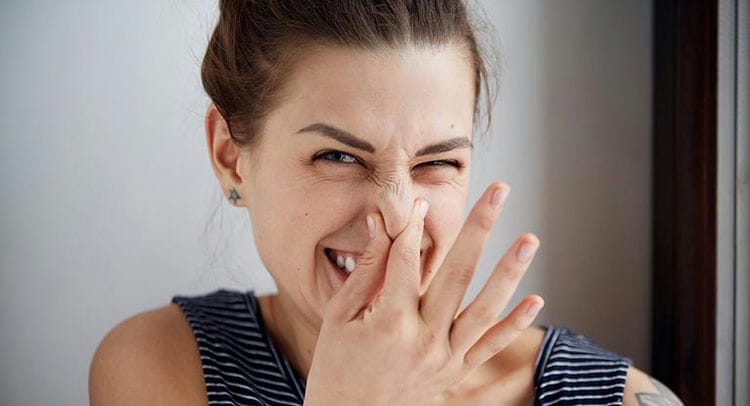
Sweat only smells when it interacts with bacteria on your skin. It is made up almost entirely of water, and there is almost nothing in this water that can be considered toxins.
How to remove toxins from the body?
The most powerful tools in this noble cause are the liver and kidneys. And they do their job very efficiently. The liver, for example, chemically alters the harmful waste products of metabolic processes, converting the same ammonia into a much less hazardous urea. Inside this organ is a wide range of powerful enzymes that can neutralize even very dangerous chemical compounds. Some types of waste, like the already mentioned bilirubin from dead red blood cells, are excreted in the form of bile.
Work kidneys also delights. They are powerful and smart blood filters. They manage to retain most of the nutrients that enter the body, and the rest is processed into urine. The kidneys filter metabolic waste products such as urea, molecules broken down by the liver, small doses of hormones, drugs, and toxic compounds. They help maintain healthy levels of minerals, water, and electrolytes in your water. So the liver and kidneys are in full control of the situation with the “toxins” of the body.
Evaporation valves
Sweat leaves the human body through two types of glands. The apocrine glands are found in the armpits, nostrils, nipples, ears, and parts of the genitals.
However, there are many more eccrine sweat glands in the body, millions of which are located practically over the entire surface of the human body – everywhere except the lips and genitals.
When the body and skin get too hot, heat receptors send a message to the brain that determines how hot it is. In the brain, the hypothalamus – a small collection of cells that controls hunger, thirst, sleep, and body temperature – sends a message back to the apocrine and eccrine glands, signaling them to begin pumping sweat.
There is also a third type of sweat gland that was discovered in 1987. They are found in the same locations as the apocrine sweat glands, but since researchers were unable to classify them as apocrine or eccrine, they are called apoecrine sweat glands.
Some scientists believe that these are eccrine glands that undergo changes during puberty.
What are polybrominated diphenyl ethers (PBDEs)?
PBDEs are found everywhere – they are found in plastics, textiles, electronic devices and building materials. In the 1960s, manufacturers used them on their products. While it seemed beneficial at the time, people later learned that the risks of PBDE outweighed any manufacturing benefits.
In 1987, scientists from Sweden identified PBDEs as global pollutants. In 1990, scientists discovered that these compounds are bioaccumulative, which means they can accumulate in human tissue.
Further research on PBDEs showed that the toxic compound has multiple health risks, including hormone dysregulation, neurotoxicity, and even cancer. What's more, they have been found in higher amounts in infants and young children than in adults.
PBDEs can enter the body in a variety of ways, including:
- through indoor air and dust (from household goods);
- from food (especially from meat);
- from breast milk.
Blood and Sweat, Important Biomarkers for Studying PBDEs
For a long time, scientists have focused on blood samples when studying the bioaccumulation of PBDEs. Scientists at the University of Alberta have investigated other body fluids and identified other possible methods for detoxifying these pollutants.
Scientists focused on three body fluids: blood, urine, and sweat. They collected data from nine men and 11 women who voluntarily gave samples. Each participant gave a 200 ml blood sample, a first morning urine sample, and a 100 ml sweat sample.
The researchers found no PBDE compounds (congeners) in urine samples, so they focused on blood and sweat samples. Their results showed that sweating contained higher concentrations of PBDE congeners compared to blood.
This allowed us to draw two conclusions:
-
Both blood and sweat can be analyzed to study the effects of PBDEs.
The scientists noted that using only blood samples provides a partial understanding of how PBDEs affect the human body. They noted that the sweat was not seen for a long time because it was difficult to collect. However, their results clearly showed that studying sweating can help in understanding this issue. -
The researchers also stressed that it was important to analyze both body fluids. Although sweat contained more PBDEs, it was mostly water. This meant that the amounts of PBDE were diluted. Thus, any data collected from sweat samples had to be examined along with information obtained from blood samples.
By sweating, the body gets rid of toxins
Sweating helps regulate body temperature. However, this study found it also has detoxifying properties, highlighting the importance of perspiration.
Scientists have suggested that by inducing sweating, the accumulation of PBDEs in the human body can be stopped. Some of the activities that cause sweating:
-
Physical exercises. Physical activity causes a lot of sweating. A busy schedule can make it difficult to set aside time for regular exercise. However, exercise is ultimately very beneficial.
-
Sauna. The heat in the sauna causes intense sweating. Moreover, the sauna does not require physical activity and promotes relaxation. Do not spend too much time in the sauna, this can lead to dehydration. A hot bath can become a kind of sauna. Read about it in article 9 detox baths for relaxation, cleansing and rejuvenation.
-
Ginger. Ginger rhizome is known to have diaphoretic (sweating) properties. Eating ginger can potentially increase the amount of sweat a person produces.
PBDEs accumulate in the human body over the years, and children are most vulnerable. However, there are ways to detoxify, especially sweating, to help flush out these toxins.
Sweating against environmental pollutants
Bisphenol-A (BPA) has become one of the most significant environmental toxicants. By its class, it is an endocrine poison, it can, by mimicking the structure, but not the function of hormones, bind to cells instead. It's like feeding a person with cotton wool or leaves: the stomach is nominally full, but the person will not learn anything and will eventually starve to death. Hormones regulate all functions of the human body, and a decrease in their activity leads to a total failure of all systems and organs.

With sweat, toxins and harmful substances are removed, which eliminates a number of diseases
BPA is also a mutagen and teratogen that affects the growth and development of the fetus in a pregnant woman, causing mutations and developmental defects that are incompatible with life (the word “deformity” is too expressive and is no longer used in science). BPA has an equally destructive effect on an already formed organism. BPA spoils sperm and causes gynecomastia (breast growth) in men, disrupts menstrual periods and ovulation in women, and causes premature puberty in adolescents and cardiovascular disease in the elderly.
Based on the results of laboratory and clinical studies on humans and animals, BPA is predominantly excreted along with sweat, even in cases when it is contained in the body in trace amounts, not being detected either in the urine or in the blood.
This means two things for doctors:
- If acute or chronic BPA poisoning is suspected from patients, sweat fluid should be taken for analysis.
- To treat patients, sweating should be stimulated, allowing the toxin to escape.
Phthalates are another group of toxins that come out with sweat; DEHP is the most dangerous among them. The specific volumes in which they are released during sweating in humans are not yet fully clear – further clinical experiments are required, but it can already be concluded that there are a lot of them.
There may be much more toxins released along with the secretion of the sweat glands – it is just that the methods of detecting them in sweat fluid at the current stage of the development of medicine have not yet been fully developed.

You can increase sweating through physical activity.
Humans tend to associate an unpleasant odor emanating from a person with the production of sweat. Sweat itself does not smell, the toxins and microorganisms excreted with it smell.
If a person is healthy, observes hygiene standards and lives in an ecologically clean region, his sweat will not smell. The opposite is also true: if a person suffers from intoxication, his sweat will have a pungent unpleasant odor, but as the poison is removed from the body with perspiration, the amber will go away.
Ways to Sweat Without Harming the Body
Sweating increases with any physical activity. In some oriental practices, such as Bikram Yoga, the exercises are specially performed in a hot, heated room. Baths and saunas are a good way to sweat without any particular negative consequences (although they also have contraindications, for example, pregnancy, cardiovascular diseases, hypertension, panic attacks – what used to be called VSD).
In addition to traditional types of saunas, new high-tech ones have been developed, such as an infrared sauna. The latter warms up the body much more strongly, according to the principle of action, resembling an oven.
By activating blood circulation, the sauna also warms up the skin, dilating the vessels and the outflowing ducts of the sweat glands (pores). Infrared saunas are much more effective in removing toxic compounds: together with sweat in such a steam room, they are released almost seven times more than in a traditional one.
Contraindicated for cores, they may become ill.
When taking a sauna, do not forget that sweat removes not only toxins and dirt on the skin's surface. Together with it, you also lose water and salts – electrolytes that are important for maintaining metabolism. Therefore, in the steam room, make sure that the skin is thoroughly moisturized so that electrolytes enter the body. Pure water with the addition of a small amount of Himalayan mineral salt helps well in this matter.
Heavy sweating: illness or norm
There are several types of increased sweating:
- Primary, in which hyperhidrosis is not accompanied by any diseases, but is a feature of the body. In such patients, excessive sweating is often a family trait. A distinctive feature of primary hyperhidrosis is the absence of night sweats. In such patients, the manifestation of the disease is observed only during the day. Sweat production in this disorder can be reduced with the help of cosmetic procedures and the use of special preparations, antiperspirants.
- Secondary, in which sweating is associated with a disease. It is impossible to try to remove increased sweating caused by any pathology with the help of cosmetics and other means. In this case, it is necessary to eliminate the disease that caused the hyperhidrosis.
- Local, in which increased sweat is observed on the palms, feet, armpits, face, groin folds, neck. It is often a congenital feature, but it can also accompany various pathologies.
- Generalized, in which the whole body sweats. This condition is often a symptom of various diseases, so it should be a reason to see a doctor and conduct an examination.
Sweat color and smell
There are two types of sweat glands on the human body. Apocrine glands begin to work only from the moment of puberty of a person and are not located throughout the body, but only in some of its parts. They secrete a whitish liquid in color.
In contrast, eccrine glands cover almost the entire body, work from birth and secrete an almost completely transparent liquid.
In a healthy person, sweat is colorless and odorless. The smell appears only after a while, when bacteria begin to actively multiply.
If the kidneys are malfunctioning, sweat can smell strongly of ammonia. The smell is influenced by spicy, fatty foods and some medications taken by a person (especially with sulfur).
In case of metabolic disorders, taking toxic products or drugs, sweat in the armpit area can change its color to yellow or some other shade. The color can also be influenced by bacteria living on the body. Iron compounds give a bluish tint to sweat, greatly affect the color of copper and iodine compounds.
Sweat contains substances that we unconsciously perceive (pheromones). They differ depending on the sex of a person and other characteristics of his body. These substances, together with other factors, can influence relationships between people and the choice of a sexual partner.
It turns out that sweat performs many functions, and its composition can be used to determine the state of health. Sweating is useful, but in moderation, and trying to completely cleanse the body only with sweating is useless, because the percentage of impurities in it is small.
Hydronex for sweating has become a real panacea for many people suffering from hyperhidrosis.
The intensity of sweating is individual for each person. Most often, the problem of sweating affects the feet.
What is the mechanism of perspiration, and why does the production of sweat increase?
Sweating is essential for the normal functioning of the body. With sweat, excess moisture and harmful substances come out – uric acid, creatinine, sulfur compounds, cholesterol, various salts.
The process regulates the center of sweating, located in the medulla oblongata and transmits commands through the nervous system to the sweat glands. The sweat regulation system works autonomously, so it is impossible to stop sweating at will.
Stress, excitement, increased ambient temperature affect the state of the nervous system and, consequently, sweating. As a result, the work of the thermoregulation center is activated, the glands begin to work hard and sweat appears on the skin.
Excessive sweating also accompanies various painful conditions – hormonal imbalance, metabolic disorders, renal dysfunction, fever. This is how the body tries to remove toxic substances through the skin.
The most profuse sweating is observed in places of accumulation of sweat glands – under the arms, in the groin, on the palms and feet. With severe hyperhidrosis, sweat runs off in trickles, and ugly wet spots appear on the clothes. Constant sweating becomes the cause of psychological complexes, stress, depression. Wet hands get in the way of musicians, doctors, teachers and other professionals.
Usually, people sweat during the day when they are most active, but excessive sweating can also occur at night. This condition indicates various diseases and requires a mandatory visit to a doctor.
Sources used and useful links on the topic: https://FB.ru/post/wellness/2019/6/27/113740 https://zen.yandex.ru/media/yznavai_ru/vyvodit-li-pot-shlaki-iz 5d6c0c96ac412400ad14d614–organizma https://www.bbc.com/russian/science/2015/08/150821_vert_fut_what_our_perspiration_reveals https://ChtoiKak.ru/potootdelenie-vyvodit-toksiny.html https://vpotu.ru/potlivost/polezno- li-potet https://unclinic.ru/povyshennoe-potootdelenie-pri-kakih-zabolevanijah-chelovek-silno-poteet/ https://otpotlivosti.ru/vidy-i-proyavleniya/chto-vyhodit-s-potom-iz -organizma-krome-vody.html
Post source: lastici.ru