
Which is better for weight loss and overall health: jogging or walking? Running or walking – which is better for your health?
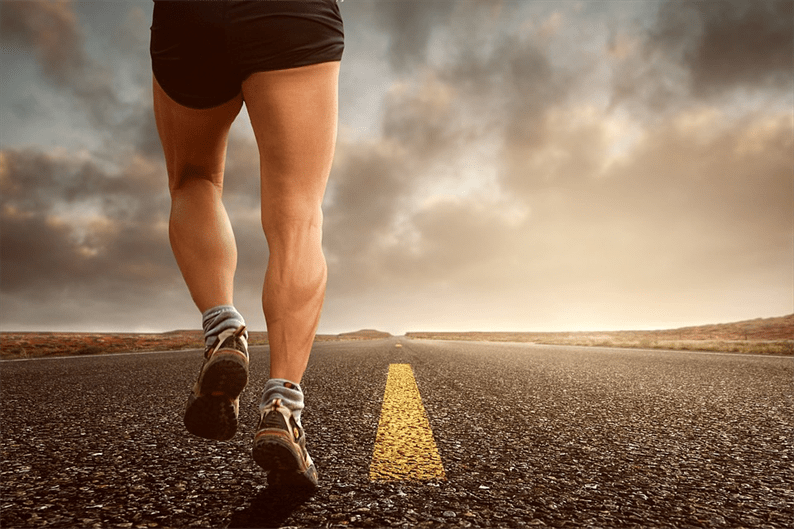
Differences between running and walking
In order to understand which exercise is more effective in a particular case, you need to know the differences.
In order to better strengthen the muscles, running is of course preferable
The main points that make the fundamental difference between running and walking are the following:
- walking involves a muscle group of the lower leg, while running, the bundles of the shoulders, chest, thigh muscles, as well as the large, middle and small gluteus muscles are included;
- while running, a person is in a state of flight for a split second, this phase is completely absent when walking. Constant jumping leads to severe stress on the cartilaginous tissue underlying the intervertebral discs and joints;
- the heart rate while walking is much lower, due to which there is rarely a feeling of coldness in the breastbone, and a person can exercise longer;
- running for more than fifteen minutes uses all the sugar that freely circulates in the bloodstream, active fat burning processes are triggered;
- walking has less effect on chronic stress, since only during running, due to the high load, a person is distracted from his thoughts and can relax mentally;
- when choosing a run, you need to monitor your own heart rate so that it does not exceed one hundred and forty beats in one minute, since it is the range from 120 to 140 beats that allows you to burn fatty tissue as efficiently and quickly as possible.
Can you compare?
To help you decide which of running and walking is better, which is more effective, we suggest taking apart both types of movement separately, identifying the common and determining the differences. Then it will be easier to understand what is needed and why. Go!
Slimming walking
This method is rarely chosen for weight loss, as most people find that low intensity walking prevents weight loss. This opinion is partly true, but if you look at it from the other side, you can lose weight by walking rather quickly. What is the reason for weight loss with prolonged walking?
But for health, walking is more useful than running, since running creates a load on the joints, heart, spine, lungs
The mechanism is very simple: prolonged physical activity, even at low intensity, affects blood sugar levels. After the depletion of these reserves, the process of lipolysis starts – the breakdown of fat with the release of energy, water and carbon dioxide. A person sweats intensively, loses water and energy, which can significantly speed up metabolism.
Surely many of us have noticed a strange injustice when a skinny person constantly eats, but does not get better, but gains weight completely even while dieting. This phenomenon is due to the metabolic rate. In order to lose weight, you need to speed up the processing of the energy that has entered the body as much as possible. What, if not physical exercise (and walking for an hour or two is a rather difficult load) can help in this matter?
Race walking: features and types
Not sure which is more effective: walking or running? Answer: all together. Walking isn't just for the elderly. Mastering her correct technique takes no less time than mastering her running technique. The forward movement should be rapid and continuous, but at the same time one foot should always be in contact with the treadmill. The foot rolls from heel to toe. The body must not be tilted. It is very important to bend your elbows and move them alternately.
Types of sports walking:
- classic race walking (7–8 km / h);
- accelerated walking (12-14 km / h);
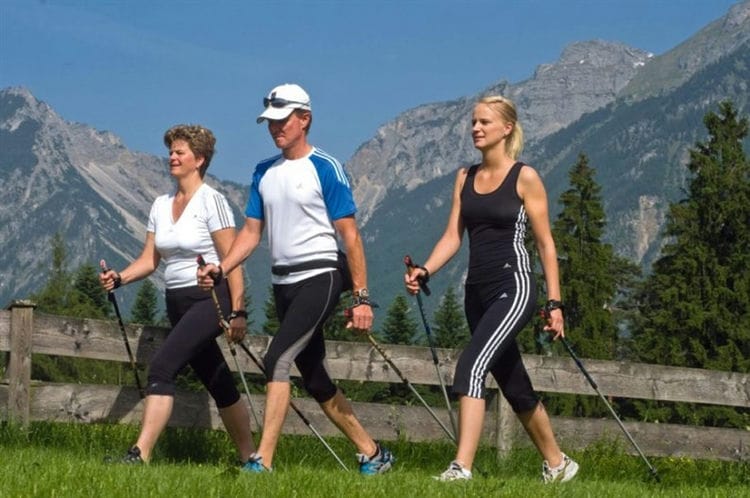
- Nordic walking with sticks (Nordics).
Fast walk
Brisk walking is very effective for weight loss. By walking quickly, a person can sometimes achieve better results than when running.
According to research, a person can burn up to 200 kilocalories in an hour of walking. At the same time, the fat does not go anywhere, and the body takes energy from glucose, which is formed during the digestion of food. This indicates that only after the body has used up all the sugar will it be able to get to fat.
Therefore, during training, such a load and intensity is needed, which would use up all the glucose and reduce fat. It becomes clear that a long, intense walk of at least half an hour is perfect for burning fat.
Nordic walking
In classic running, the main load is concentrated on the lower half of the body. The upper one does not work at full strength. For full work of the whole body, Nordic walking is suitable.
It differs in that ski poles are used for movement. In this case, the work of the muscles of the whole body increases up to 90%. The efficiency for the body and the loss of energy can be compared to jogging.
This load will allow you to achieve a noticeable weight loss without changing the diet.
How much and where to walk?
To get the most out of walking, you need to walk correctly. On a full stomach, it is better to refrain from training. You need to walk with a straight back, and in order not to get out of breath it is better to be silent. If shortness of breath appears, the pace should be slowed down, but not stopped. You can breathe through your mouth if the air is clean and not cold.
Walking along the polluted and noisy streets will not give you pleasure. Therefore, it is recommended to choose quiet alleys, parks, small streets where cars rarely pass. Ideally, of course, it is better to walk in a forest belt, but not everyone has such an opportunity.
It is not bad to walk on an uneven road that has small ups and downs.
As for the question of how much you need to walk a day, it depends on the preparedness of the person. If you are just starting to practice walking, you only need to walk for 15-20 minutes. This should be done daily and gradually the distance should be increased. Doctors recommend covering a distance of 4 km per day. At an average speed of movement, this will take 1.5-2 hours.
How can gadgets help?
The modern world cannot be imagined without a variety of gadgets. There are also for those who like walking:
- Posture Corrector is a device that is attached to a T-shirt with a magnet. It does not hinder movement, does not chafe and looks like a beautiful brooch. But if the position of the body changes – the person slouches, the device begins to vibrate. This is a very useful gadget, because the correct posture is the key to the effectiveness of the walk.
- Smart insoles – record the number of steps, mileage traveled, calories burned, and also have heating, which is especially important when walking in cold weather.
- Wireless headphones – allow you to listen to your favorite music while exercising without getting tangled up in wires.
- Health sensor – Shows heart rate, blood oxygen levels and even stress levels. Compact – convenient to take with you.
- Smart watch – by installing the application, you can monitor your heart rate, number of steps taken, distance covered, calories burned. In addition, the watch can remind about exercise, and it can also be synchronized with the phone, and receive information about calls and notifications.
Both running and walking have their pros and cons. It cannot be stated unequivocally that walking is more useful than running, it's all about physical fitness, health, age, amount of free time, goals set, and so on. But the fact that movement is life is an indisputable fact.
Apparently sticks are expensive?
– The range of prices is decent: from 700 rubles to infinity – our pros buy for 30+ thousand. An advanced user has 4-5 pairs, they differ in rigidity, weight, length, there are even curved ones. Something is suitable for the competition, something – for a certain type of training.
For the average walker, we do not recommend sticks cheaper than 1.5 thousand rubles. The normal price is 2-5 thousand. These are available in many online stores, sports hypermarkets.
It is desirable that some percentage of carbon is present in the poles – this allows you to reduce the residual vibration that occurs during repulsion. Vibration is inevitably given to the elbow joint and deforms it over time. To prevent this from happening, you need to solve a problem: the more carbon in the stick, the better for your elbow. The price depends, among other things, on the percentage of carbon in the composition.
No other special equipment needed?
– We pay attention to shoes. For proper walking, it must be flexible and light, have a soft instep support. And the obligatory bevel on the sole in the heel area – that is, the sole should not be flat, this is excluded. Otherwise, you will not get the benefit and will not be able to follow the correct technique – to roll from heel to toe.

In the summer, it can be regular sneakers, most of the running models are suitable. Only the sole should not be soft before twisting, this adversely affects the foot – a moderately hard sole will do. In winter – hiking boots for trekking. As a rule, they are insulated, with a ribbed protector. They are very different, but it is better to choose the lighter and more perceptible.
How not to overdo it with your workouts?
– Walking every day will not harm you to improve your health and maintain your tone. There is a WHO recommendation: 10,000 steps a day, this is about 4-5 km – and they can be nursed with sticks. The duration is planned according to the state – an average of an hour and a half, for the elderly an hour with a little.
With the right technique, you can vary the load yourself: choose a different pace, different landscapes, push with different efforts. Most of those who practice regularly come to such experiments, plus gadgets help. At the same time, the danger of training is almost zero. I do not know of a single case when a person drove himself or harmed his health by Nordic walking. The body quickly tells you how to behave.
Average fitness challenge: be in an aerobic mode when the muscles are maximally oxygenated. In the absence of a gadget, you can use the so-called speech test: if you can communicate freely with your partner while walking, without shortness of breath, then you are in an aerobic mode. When it's difficult to talk, it's hard to breathe – this is already an anaerobic regime, and you need to slow down.

It is clear that the training format depends on the tasks. Pros are constantly preparing for something: for example, Dmitry Erokhin, our famous ultra-marathon runner, has recently regularly updated the national daily Nordic walking record. Now he has 128 km 429 m in 24 hours. Of course, this is a special training regime – it is planned on purpose, with the participation of science and is not suitable for the average northerner.
Who Better Walking Than Running

- untrained people over 35;
- people with orthopedic problems and diseases of the spine;
- with joint pain while running;
- people who have had a stroke or heart attack;
- people with a body mass index (BMI) over 30. BMI – a value that allows you to assess the correspondence of body weight and height. It is calculated according to the formula: we divide the weight by the square of the height in meters (that is, with a height of 170 and a weight of 75 kg, BMI = 75: (1.7×1.7).
- patients with diabetes;
- smokers with more than a year of smoking experience.
Slimming jogging
In order to reduce the amount of subcutaneous fat, you need to comprehensively work on yourself. Experts recommend starting with accelerating the metabolic rate. How to do it?
World renowned fitness trainers require their clients to perform such actions as:
- break your daily diet for 5-6 times;
- to drink a lot of water;
- run.
On the other hand, while running, the heart is exercised, the blood runs more actively, breathing is quickened and deep, the lungs open
It is the last component that is key, as it allows you to get rid of excess energy, as well as speed up the process of digesting calories consumed per day. In order to reduce your weight, you need to start with simple – light jogging at a convenient time of day. Some find it more pleasant to run in the morning, while others cannot get up early and complain of sleep problems.
It is very important to monitor your heart rate while running, albeit slow – it should be in the range of 115 to 135 beats per minute. It is at this heart rate that the supply of air molecules to the tissues is ensured, which is necessary for the breakdown of adipose tissue.
The duration of the exercise may be small at first, but the required numbers are at least twenty minutes of running, because during this period the energy components contained in the liver and muscles are burned. As a result, the body requires more energy, and there is nowhere to take it, except from the subcutaneous fatty tissue.
By gradually increasing the duration of your races, you can achieve very good results. Running with pauses is even more effective – it is an alternation of fast races with slow walking. This technique allows, in addition to weight loss, to have a positive effect on the state of the cardiovascular system.
Benefit
Let's consider several reasons why you need to start running:
- Maintaining weight at the required level. Diet can certainly achieve the desired result. But after the weight is gone, the most important thing is to keep the result, which is not always the case. Diet and refusal to eat depress a person, do not bring joy. In addition, the lost weight can return very quickly if a person refuses to diet. Exercise and proper nutrition are great options.
- A beautiful figure for a long time. Any diet leads to weight loss, while the skin becomes flabby, the muscles lose their elasticity. After a diet, getting a beautiful toned body will not work. To do this, you need to perform physical activity. Running is a great solution.
- The gradual rejection of the use of foods harmful to the figure. People who systematically run or exercise are aware of the harm caused to the body by overeating and unhealthy food. The main pests of the figure are fast food, soda, fried, fatty, smoked, salted and baked goods. Therefore, the habit of eating correct and healthy food is formed in the head. And this is a victory.
- Running exercises help protect joints from the unpleasant disease arthritis. When running, the main load is on the legs, thereby shaking the muscles and strengthening them. Athletic shoes must be carefully selected to prevent injury. It should be of the correct anatomical shape and spring the foot while running.
- When you run, blood begins to circulate faster and as a result, the appearance and skin are improved. Runners are almost always in high spirits with a healthy blush on their cheeks. Running brings a sense of satisfaction.
Contraindications
Running, like any other type of physical activity, has a number of contraindications, namely:
- Running is contraindicated for those people who have various diseases of the heart or blood vessels. With heart failure, defects – the heart is not able to withstand a large amount of stress.
- Phlebeurysm.
- Inflammatory process in any part of the body.
- Acute respiratory diseases that go away with an increase in body temperature. The period of exacerbation of chronic diseases in the body.
- Peptic ulcer
- Flat feet,
- Diseases of the urinary system.
- With diseases of the spine. Running is possible only after a course of special training gymnastics.
- Respiratory system disease.
If a person plans to take jogging seriously, it is necessary to consult a doctor. And if for some reason the doctor does not recommend jogging, then there is an excellent alternative – an exercise bike or walking.
Arguments against running
Cardiologists, for example, advise people not to run, but to briskly walk, cycle, or swim to strengthen their cardiovascular system.
54-year-old “king” of jogging (jogging) John Fix fell dead during a morning jog in 1984. The famous runner's cause of death was a massive heart attack. hoping to strengthen the heart in this way The
famous French gerontologist Françoise Faret writes: “You need to be more careful with jogging, it is harmful to the knees. More benefits from walking and swimming.”
Arguments for running
Denham Harman is no less famous among gerontologists. Until the age of 82, he ran three kilometers daily. He stopped running due to a back injury not related to running.
The world famous American “life extension specialist” Paul Bragg even ran between the rows of seats on the plane. He believed that anyone has a chance to live at least 120 years if they eat right and lead a healthy lifestyle. However, he could not prove this by his own example – he died at 81, which is also quite good (According to other sources, at 95 years old. This difference is explained by the confusion in the documents with the date of birth).

Paul Bragg
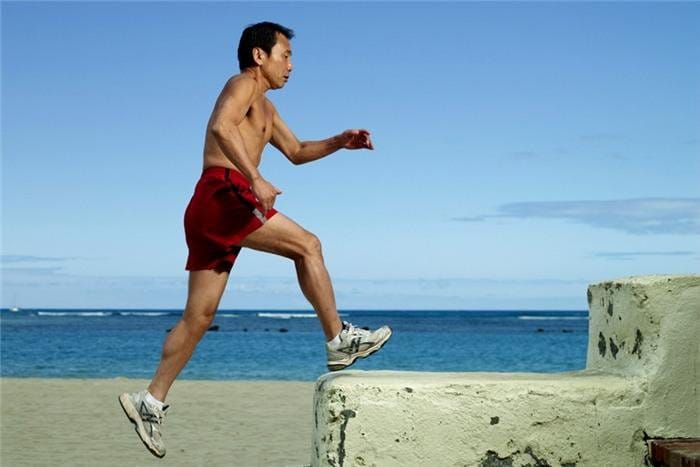
The wonderful Japanese writer Haruki Murakami has a book called What I Talk About When I Talk About Running. At the age of 70, he is fond of marathon running and triathlon, participated in races for ultra-marathon distances.
At what age can you start running?
A team of scientists decided to conduct a multi-year study. They selected a group of people who started running after age 60. And we watched them for 10 years. Of course, not everyone reached the finish line of the ten-year race. But those who did come down saw the health benefits of their exercise. The muscle mass of these people has grown significantly.
The participants were divided into 3 groups. Those who have been running for about 30 years, those who started running after 50, and those who have not been involved in jogging at all. The three groups were compared in terms of fat-to-muscle percentage, leg muscularity, and bone density.
To the surprise of scientists, they did not see much difference between the first and second groups. The participants covered the control distances for the same time. More experienced runners had little or no advantage over beginners. The muscle mass of the legs in the first two groups was 12% higher than in those who did not run. Also, the fat content in both groups was 17% less than that of their non-athletic opponents.
True, beginners with ten years of experience lost in such an indicator as bone density. Apparently, to prevent osteoporosis, you should start running as early as possible.
By the way, about the fractures when falling while running. It is believed that they occur as a result of a fall. But doctors have proven that at first a bone suddenly breaks, causing the person to fall.
Let us summarize the results of a comparative study. They showed that there was no significant difference in fitness between 30- and 10-year runners. It turns out that most seniors are able to catch up.

It's never too late to start jogging or walking
It is worth saying that running has an amazing property. It often happens that a person who has started doing it no longer gives up this business and runs five or six times a week. It becomes a habit that you don't want to give up.
Therefore, it is never too late to start jogging or walking in order to become more energetic and healthier.
Although, alas, there are people for whom running is contraindicated.
Pulse during exercise
It is best to train in the so-called. the aerobic zone, when your heart rate is 70-80% of the maximum allowable heart rate (heart rate), which is calculated by the formula (220 is your age). Only under this condition will the cardiovascular and respiratory systems be effectively trained and strengthened. This is the optimal area for endurance training.
The development of a network of small capillaries in the muscles is stimulated, which allows more efficient delivery of oxygen. The number and size of blood vessels increases, the volume of the lungs increases, the functional state of the respiratory system improves, and the size and strength of the heart increases. As a result, a gradual decrease in heart rate at rest. Training in this zone increases the efficiency of blood circulation in the heart and skeletal muscles.
On exercise bikes, bike paths, steppers, elliptical trainers in fitness clubs, as a rule, there are heart rate monitors. To keep track of your heart rate while exercising outdoors, you can purchase a fitness band or heart rate monitor with a chest strap. The latter measures the pulse most accurately. There are models you can swim with.

Running with a chest strap heart rate monitor
Precautions
If you are running and you have enough nasal breathing (inhale air only through your nose, and exhale through your mouth), then everything is in order. If you just want to gasp for air, slow down.
It is important to reckon not only with the state of the cardiovascular system, but also pay attention to how his biological clock works, whether he is a lark or an owl. It is easy for an early riser and early riser to start running at six or five in the morning. A completely different picture when an “owl” runs out so early. It is better for owls to run when the body finally wakes up, because you need to do it with pleasure, with a joyful mood.
You can often see: one is running with pleasure, the other – as if the duty is serving. There is a point of view that intense physical activity, especially for people who are not very young and not very well trained, is better to start after 12 days. So to speak, when the body finally wakes up and warms up.
Be sure to warm up to warm up your muscles and get your blood going. To do this, walk at a fast pace to increase your heart rate. Perform swinging movements with arms and legs, rotational movements of the body, squat down several times.

Larks and owls
When running, the feet should be placed gently, without sharp blows to the heels. Protect your joints.
Running injuries to knees and ankles: prevention and treatment
Do not stop abruptly after you finish your run. Take a step and walk until your pulse recovers.
What is the best way to lose weight?
Both running and walking are physical activities of different intensity that require energy consumption. Deep ventilation of the lungs and activation of oxidative processes can speed up the metabolism and reduce the deposition of fatty tissue in problem areas.
If we compare running and walking and talk about what is better for losing weight, the choice is definitely in favor of running.
It is undesirable to choose the appropriate technique on your own, it is better to contact fitness specialists, they will help you weigh the pros and cons in order to make a choice in favor of running or walking for weight loss. In general, you need to take into account the age, physical condition of a person, the presence of concomitant diseases of the cardiovascular or musculoskeletal system, in order to avoid unwanted complications.
A little about the energy supply of muscle work
Almost any healthy person can walk a half marathon (42 km 195 m) without stopping, because at a low-intensity load, fats are consumed as a priority for getting energy. But the high-speed passage of this distance (running) presupposes a developed energy exchange, which is achieved in the process of regular training and is no longer possible for everyone.
At the same time, fats are not the only source of energy in the body. There are also carbohydrates (glycogen), creatine phosphate (creatine phosphoric acid, a metabolite of creatine) and ATP (adenosine triphosphate, the main carrier of energy at the cellular level). They are used and spent as follows1:
- – Fats – at low power load (just walking), operating time – potentially inexhaustible.
- – Carbohydrates – at medium power load (moderate running), working time – limited by the amount of accumulated glycogen in the muscles and the rate of its accumulation. Trained people have enough for 1.5-2 hours.
- – Creatine phosphate – at high power load, sprint and power work lasting up to 10 seconds.
- – ATP – at a maximum power load, these are jumps, jerks, throws, powerlifting exercises – work lasting up to 2 seconds.
This is a simplified representation, all energy sources in the body are interconnected – in detail at the level of biochemistry, their work and interaction explains the Corey cycle2. For us, something else is important – carbohydrates, creatine phosphate and ATP are consumed in appropriate cases and at a certain rate, fats – always and with the same intensity.
That is why, from the point of view of biochemistry, the question of which is better for losing weight – running or walking, sounds simply silly. Fat can be spent in hundreds of ways, the question is different – how to do it more comfortably and safer.
What we don't know about running: contraindications, injuries and the “flight phase”
Running trains endurance, respiratory system, heart muscle, stimulates blood flow, helps burn calories. It turns out to be a universal tool for healing, but there is also a downside to the coin. Running is a serious load, for which not every organism is ready, and the level of injuries while running is significantly higher than when walking.
Direct contraindications to running:
- – Myopia and glaucoma, as intense running can lead to retinal detachment (in fact, like any high-intensity exercise).
- – When running, the spine and joints experience increased tension, and therefore running is unacceptable for people with arthritis, osteoarthritis, osteochondrosis, etc.
- – When running, the load on the respiratory system increases, which can aggravate bronchial asthma, pulmonary insufficiency and similar pathologies.
- – Running, as intense cardio training, is contraindicated for people suffering from diseases of the cardiovascular system.
- – Exacerbation of chronic diseases is a contraindication for running, since any intense load leads to immunosuppression (physiological suppression of immunity).
- – Age restrictions are a conditional factor, but they do exist. Over the years, the body tends to wear out and the additional load in the form of running can become critical for the same joints or heart.
Excess weight is one of the main contraindications3, which is important to consider from the point of view of running mechanics. From this perspective, running differs from walking in the so-called “flight phase”. This is the very moment when we pushed off with one foot, but have not yet landed on the other, that is, we are in the air.
In the final part of the “flight phase”, that is, at the moment of landing, bones, joints, ligaments and muscles experience a colossal load, and for overweight people this load is destructive, especially for the spine.
That is, running has much more real contraindications than most of us imagine. Objectively, running is advisable only in three cases:
- – if you are a professional footballer, hockey player, etc .;
- – if you are a professional runner, for example, a triathlete;
- – if you use jogging as a warm-up before strength training.
And the main condition is if you are absolutely healthy. If you have chronic pathologies and / or excess weight, running can only aggravate the situation. Walking for weight loss is no less effective and devoid of the disadvantages of running, but it also needs to be approached wisely.
Two popular myths – heart rate and 40 minutes of training
It's worth starting with this – with the two most common misconceptions about fat burning while walking / running. It is believed that fat begins to “burn” at the fortieth minute of training, until this moment the body spends purely glycogen. Therefore, roughly speaking, the longer the better. And this is so, but for a different reason.
Fats are consumed at the same time as carbohydrates – we have already discussed this issue above. The nuance is that the reserves of carbohydrates in the body in the form of glycogen are small, and in an untrained person they are even less, and their consumption is associated with a sharp increase in physical fatigue. That is, when at a certain moment of walking in a moderate rhythm you feel that you are starting to get tired, it means that glycogen is coming to an end. But fats continue to be consumed, which is why it is important to walk as long as possible.
The second point is the heart rate (HR). There is a myth that in order to find the optimal indicator, you need to subtract your own age from 220. Then, in a percentage ratio: 55-65% warm-up, 65-75% training and fat burning, above 75% – professional results. The problem is that the introductory (that is, the level of training and physical development) is different for everyone. And if for one at 30 years old, the heart rate of 150 is a normal training regime, then the second one with such a heart rate simply suffocates.
There can be no universality, individual parameters and the approach must be individual. There is a much simpler and more effective way, and no heart rate monitor is needed. This is a conversational rhythm. This refers to the level of walking / running intensity at which you are able to articulate a 4-5 word phrase. If it doesn't work, slow down, if it's too easy, increase it. This is your optimal training level for fat burning.
“Calorie walking”, types of training, factors of fat burning
On average, a person weighing 70 kg, while walking at a speed of 5 km / h, consumes 260 kcal per hour. When walking backwards – 335 kcal. When descending the steps (or along a steep mountain slope) – about 750 kcal. The Scandinavian style of walking with sticks “consumes” up to 450 kcal per hour4.
Do not forget that the main criterion for losing weight is creating an energy deficit, consuming less than spending. That is, you still have to “count calories” and you cannot do without a diet in most cases – because if you walk for 2 hours a day, but don't disdain “Nutella” in the evenings, you can never get the result.
As for the types of walking, walking backwards is interesting because it strengthens the calf muscles and improves posture. But you can't walk like that for a long time, and on uneven terrain it is also traumatic.
Walking up the stairs is extremely energy-consuming, but here you need healthy joints and cardiovascular, because the stress on the body is high. The main thing is without fanaticism (follow the pulse, focusing on the “conversational rhythm”) and not practice in the entrance, where there is a lot of dust and little oxygen.
For effective fat burning, a normal walk at a speed of 5 km / h is enough. Duration and intensity are determined individually. Over time, it will become easier for you to travel more distance at a higher speed. And over time, you will burn more calories.
Speed, time, and intensity of movement determine how many calories you burn when walking. But there is no need to purposefully take these factors into account, because they will grow naturally.
There are also specific moments, for example – the lower the air temperature, the more efficient the energy consumption, since the body also has to spend on heating. Going into details, the calorie consumption depends even on the height of the terrain above sea level5.
What is the best for strengthening muscles?
In large muscles, two types of fibers are distinguished – these are white (responsible for endurance, strength) and red (volume and storage of glycogen). Both types of cells can be strengthened with exercise, only their growth rate differs markedly. Whites strengthen and grow very slowly, their growth can begin over several weeks, while reds gain volume rather quickly with proper nutrition and training.
Walking and running are different types of activities in their intensity. During walking, the muscles of the lower leg are mainly involved, while sprint leads to the activation of almost all bundles of the human body. Both running and walking allow you to strengthen the muscles, only the speed of this process is different for them. On the other hand, the maximum effect is observed only when working in limiting exercises with weights in the gym.
Running: correct technique and types
Running remains one of the healthy lifestyle trends, which is good news. But when choosing a workout for healing and strengthening the body, you need to know how jogging differs from walking, how to run correctly and what type of running has a health-improving effect. You don't need to learn to run by trial and error. Correct technique is the basis of progress and the best way to protect yourself from injury.
Among athletes, there is such a thing as “correct running handwriting”:
- straightened back without bending forward;
- the shoulders are lowered and symmetrical;
- easy step and smooth leg extension;
- legs move almost in one straight line;
- distribution of the load from the center to the entire foot;
- average step width;
- when the right leg is moved forward, the left arm is swung, and vice versa.
Running is classified according to:
- speed of movement;
- distances;
- type of running surface;
- ascent angle;
- the number of participants.
Recreational types include:
- Jogging (jogging):
- differs in slow pace and small running steps;
- suitable for beginners and professionals as an independent exercise, warm-up before training or as the final stage of training.
- Aerobic running:
- running with a pulse of 115–125 beats / min, in which there is enough inhaled air to fully provide the body with oxygen;
- used at long distances, can be alternated with power loads.
- Interval running:
- fast running at the limit of possibilities alternates with jogging or walking according to a pre-scheduled program (in minutes or meters);
- suitable for advanced athletes.
- Sprint run:
- extremely fast pace at short distances;
- practiced by athletes with experience.
- Fartlek:
- alternation of running at different speeds without a predetermined program;
- suitable for inexperienced runners, used when running on terrain with descents and ascents.
Walking and running: comparison of benefits in terms of weight loss effectiveness
The best way to fight excess weight helps with proper nutrition: exercise contributes 15–20% to building a figure, and an adequate diet – 50%. The share of sports accounts for a small part of the calories burned – 10-30% of the total energy consumption. More energy is consumed during the day.
The body also adapts to stress and learns to take energy from fat stores. In the future, he will store them as soon as possible. As a result, a person becomes more inclined to be overweight. This explains why many ex-athletes are highly obese.
An integrated approach and an active lifestyle are important in losing weight. In addition to aerobic 40-60 minute workouts, strength training is needed to speed up metabolism and help maintain muscle. If a person gets tired after jogging and refuses to go out with friends or family, cleaning or shopping, then they will not be able to lose weight. First of all, it is necessary to deal with lack of movement, overeating, excessive consumption of unhealthy food and lack of water balance.
If you still compare the fat-burning effect of walking and running, then high-intensity exercise helps to burn more calories in much less time. In this case, it will be an interval run, which “melts” extra pounds faster and shifts the metabolism so that calories continue to be consumed even after a run.
But in untrained people, the pulse easily leaves the “fat burning” zone (50–70% of the maximum heart rate) into a zone that is hazardous to health. Subtract your age from 220 to determine your maximum heart rate. A beginner can accelerate his heart during race walking, while a marathon runner may have a low heart rate while running. Therefore, when choosing between walking and running, take into account your health, physical fitness, weight.
Advantages and disadvantages of walking
Oddly enough, walking can also help you lose weight. But on condition that you will not walk with the speed of a snail.
The advantages of walking include the fact that it is absolutely safe for health. You do not need a track with a special surface for walking, you can walk on asphalt. In this case, the knees and spine will not be affected.
Also, walking is much easier than running, so your first eagerness for a new body will last longer than 30 seconds. This means that in the first couples, walking burns even more calories than running.
The main disadvantage of walking quickly is that even if you are a primary school teacher and, in general, a dandelion in appearance, from the outside you will still look like a maniac who is trying with all his might to catch up with the victim, but he cannot run, because everyone around will understand. that he's a maniac, so he just walks really fast. Add to that a calm face hiding a wild zeal for weight loss, and you get a few calls to the police station.
Another disadvantage is that walking, whatever one may say, consumes fewer calories than running. But I would not see this as a key factor, given the fact that you will be able to walk much longer than you can run.
Effects of running and walking on the body
Running and walking have an equally beneficial effect on all systems and organs. If you are in excellent health and are ready to train three times a week – run! If the body is not ready for such loads, give preference to race walking.
Health Effects of Running and Walking:
- The supply of trace elements to the connective tissues increases.
- Reduces blood sugar and cholesterol levels.
- The respiratory system is strengthened.
- The heart becomes stronger and the pulse at rest ceases to “beat”.
- Immunity is strengthened.
- The metabolism improves.
- Efficiency and resistance to stress increases.
- Will and faith in one's own strength is brought up.
- Emotional stress is relieved.
- Recovery processes are improved, especially for those who work the night shift.
A study conducted by American cardiologists with the participation of people aged 18–80 years has shown that regular running and walking for more than six years reduces blood pressure, the level of bad cholesterol, the risk of developing heart disease and diabetes. However, walking was found to be healthier for people over 40 and overweight.
But walking has a drawback – low intensity. This means that the runner will quickly strengthen the immune system, leg muscles, improve heart function, etc., than the one who prefers walking. If there are no contraindications to running, it is better to periodically use both types of load or combine them in interval training.
Effects on the nervous system
It's no secret that a good run helps to relieve stress, unwind, “run away” from the oncoming depression. Walking is also energizing and has a positive effect on mood. But only when you run, stress and negativity are replaced by stress, and during a walk – by pacification and relaxation. Yes, walking can also be very tired, but nevertheless, you will still have the strength for introspection, making plans, and emotional calmness. But which way of getting rid is better specifically for you – choose for yourself.
Load types, or why one won't replace the other
Different types of cardio loads are typical for certain types of running and walking.
Aerobic metabolism occurs during:
- jogging (jogging at a speed of 7-9 km / h);
- running on the spot or in an aerobic rhythm (pulse up to 125 beats per minute, no shortness of breath, oxygen is supplied in sufficient quantity for the body);
- all types of walking (sports, Scandinavian, hiking, long walks).
These exercises combine:
- aerobic type of energy expenditure, the fuel for muscle activity is oxygen;
- the formula for calculating the maximum heart rate: heart rate = 220 – age (while the norm is no more than 90% of the received number);
- the average class time is 1 hour or more;
- moderate intensity;
- many calories are consumed.
Anaerobic metabolism occurs without oxygen, when muscle tissue lacks nutrition due to high stress. Ready-made fuel from muscles is used, fats are consumed more. An example of anaerobic cardio workout is interval jogging, sprint, fartlek.
Types of cardio workouts.
Features of such classes:
- the heart rate is normally 50% of the heart rate during aerobic exercise;
- muscle tissue develops, strength increases, resting metabolism increases;
- the concentration of glucose in the blood is regulated;
- high intensity, while not so many calories are spent;
- periodization (active phase of running 1-3 minutes, calm pace 5-10 minutes).
Does cardio really help?

Some are convinced that only cardio can help with weight loss. After all, energy is consumed in this case according to the aerobic type, that is, oxygen is present, and the fat inside the muscles is actively used. Therefore, people torture themselves on exercise equipment, dancing, aerobics …
But they are wrong. You can only lose weight during the workout itself. If you constantly try to lose weight only with the help of cardio, the body will try to make a reserve, which will lead to a gradual increase in weight. And with the energy-saving mode, the body with the same volume of loads will spend much less calories.
If you don't reinforce cardio with dietary changes and strength training, you can't lose weight. Therefore, if you want to lose fat quickly and efficiently, you need to correctly combine cardio exercises with strength training.
To lose weight faster, you need to choose a run. But there are some limitations, and overweight people will be negatively affected. Walking is a little less effective and should be done at a fast pace to achieve results.
In any case, the effectiveness of both methods is beyond doubt!
Which is safer
Walking is a gentle load on the body; during such activities, the likelihood of injury is lower. Suitable for elderly people or those with poor physical fitness, since it does not overload the heart, blood vessels, musculoskeletal system.
Injuries while running are associated with improper technique, inappropriate equipment, excessive stress. The cardiovascular system works actively, blood pressure rises. This can lead to tachycardia, pain in the region of the heart in an untrained person. Often, runners suffer from joints (knee, ankle, hip), spine, lower back, tendons and muscles, especially when overweight.
Thus, it is safer to start cardio training with walking: this adapts the body to the load, increases endurance, prepares the muscle corset for intense movement and running.
What's the bottom line?
So, we see that running and walking are equally beneficial for improving health, provided that you spend the same amount of energy.
Therefore, if you have excellent health and endurance and are ready to go to workout at least 3 times a week – run! You will part with extra pounds faster, however, you will have to put in much more effort.
If you are not ready for such excessive loads, then introduce walks into your life. You can walk anytime, anywhere, in any weather, and it is safe for your health. In doing so, you will get rid of fat without harming your muscles. And you don't have to force yourself and make any effort!
While you are just walking at a brisk pace, your body is undergoing tremendous changes – blood pressure normalizes, blood cholesterol levels decrease, memory improves, immunity and stress resistance increase. And if you practice interval walking – that is, periodically change the pace of movement – then calories will be burned even faster, even after the end of the workout.

Well, if running and walking are equally appealing to you, why not combine them in interval training? Start with a brisk walk, then increase your speed slightly before jogging, and then push yourself out at maximum speed. This will help you burn fat faster.
In any case, whatever type of physical activity you choose, stick to regularity – exercise for 30-60 minutes at least 3 times a week. And then the result will not be long in coming! Happy and comfortable workouts!
Sources used and useful links on the topic: https://mensup.ru/sport/beg/beg-ili-hodba https://FitNavigator.ru/kardio/chto-luchshe-beg-ili-hodba.html https: // trenirofka.ru/vidy-trenirovok/kardio/chto-luchshe-beg-ili-khodba.html https://keeprun.ru/tips/chto-effektivnee-dlya-poxudeniya-beg-ili-xodba.html https: // mybegom.com/hotba/chem-hodba-mozhet-byt-poleznee-bega.html https://www.sports.ru/tribuna/blogs/russiateam/2463642.html https://help-yourself.ru/uprazhnenija/ beg-ili-hodba-chto-vybrat-dlja-zdorovja / https://protein.company/blog/beg_ili_khodba_chto_luchshe_dlya_pokhudeniya/ https://zen.yandex.ru/media/vzale/chto-effektivnee-dlia-pogudeni ili-hodba-neojidanno-no-fakt-5e3af6b1e66b194beca629a3 https://gtonorm.ru/chto-luchshe-beg-ili-hodba/ https://ZozhMania.ru/trenirovki/beg-ili-hodba-chto-poleznee-dlya-pohudeniya-ukrepleniya-myshts-chto-bezopasnee- i-vybor-nagruzki https://wefit.ru/hodba-ili-beg-chto-luchshe-dlya-pohudeniya/ https://run-studio.com/blog/hodba-ili-beg-dlya-pohudeniya
Post source: lastici.ru