
Normal human heart rate by year: Tables by age for adults. Indicators of a normal heart rate and the factors on which they depend

Basic concepts of heart beats
Heart rate is a physiological characteristic that reflects the normal rhythm of the heartbeat, widely used both in the field of medicine and in professional sports. Heart rate is determined by a number of many factors and can fluctuate significantly due to the influence of various reasons, however, it is important that these indicators do not exceed the established limits. A decrease or increase in the frequency of heart oscillations in a pathological form often leads to an aggravation of diseases of the endocrine, nervous and cardiovascular systems, and can also cause serious health consequences.
The mechanism of a pulse wave in a vessel.
Pulse rate is directly related to heart rate. Our heart beats constantly at a rate of about 60-80 per minute. By contracting, the heart pushes blood into the vessels. In this case, a pulse wave is formed, which spreads from the heart through the arteries. A pulse wave can be compared to the wave that occurs when you throw a stone into water. It spreads from the source of its origin, that is, from the heart, through all the arteries.
What do heart rate and heart rate have in common?
Both terms – heart rate and pulse, refer to the processes occurring in the system of the heart and blood vessels. These indicators can be the same, provided that everything in the body works without the slightest disturbance. They make it possible to diagnose various malfunctions in the functioning of the heart and blood vessels.
What is the difference between heart rate and heart rate?
Most people think they are the same thing. But it is not so. Heart rate reflects the number of contractions made by the heart, and specifically by the ventricles (lower sections), in one minute. Pulse rate, or pulse, is the number of arterial dilatations during the discharge of blood from the heart, also in one minute. As the blood passes through the vessels during heartbeats, it creates a bulge in the arteries that can be felt by touch. Heart rate and pulse can be of equal magnitude, but this is typical only for a healthy person. For example, with rhythmic disturbances, the heart begins to contract irregularly. When it contracts twice in a row, the left ventricle does not have time to fill with blood. The second contraction, thus, occurs already with the empty ventricle, and blood is not ejected from it into the peripheral vessels and into the aorta. In this regard, the pulse will not be felt in the arteries, although a heartbeat occurs. During atrial fibrillation and a number of other pathologies, there is a discrepancy between the pulse rate and heart rate. This phenomenon is called pulse deficit. In such cases, it becomes impossible to determine the heart rate through heart rate measurements. This can only be done by listening to heartbeats, for example, using a phonendoscope. It is important to know how to measure your heart rate correctly. using a phonendoscope. It is important to know how to measure your heart rate correctly. using a phonendoscope. It is important to know how to measure your heart rate correctly.
What is the heart rate measured for?
The heart rate (HR) is measured to determine the work of the heart muscle, this is important for diagnosing:
- tachycardia (the number of beats per minute from 90 per minute) – is physiological (without diseases) with physical and emotional stress and with heart disease;
- bradycardia (pulse up to 60) – normally appears in well-trained athletes, but is more often found in pathology of the heart muscle.
Medications, caffeine, alcohol, and smoking have an effect on heart rate. There are also congenital diseases that occur with an accelerated or slowed pulse.
Norm in indicators
Normally, pulse rates depend on age (see table).
|
Age |
Heart rate interval (beats per minute) |
Average indicators |
|
1-3 years |
95-170 |
140 |
|
4-6 years old |
85-130 |
105 |
|
6-12 years old |
85-120 |
90 |
|
12-18 years old |
75-110 |
95 |
|
18-50 years old |
60-90 |
70 |
|
50-75 years old |
65-95 |
75 |
What allows the measurement to be set
Heart rate measurement allows you to determine the severity of diseases:
- tachycardia – heart failure, angina pectoris, myocarditis, defect, extracardiac pathological conditions: excess of thyroid hormones, adrenal glands, anemia, pain attack, temperature;
- bradycardia – heart attack and its complications, weakness of the heart muscle, non-cardiac causes: poisoning, renal failure, typhoid fever, brain contusion, inflammation of the meninges (meningitis).
How to record the result correctly
Correctly record the measurement results in the form of impact indicators for one minute. If the heart rate is being monitored, then the measurement time is also indicated. For example, a record might look like this:
- 8-00: heart rate 82 beats / min;
- 12-00: Heart rate 78 beats / min.
Which option is the most accurate
The most accurate way to measure the heart rate is an electrocardiogram, only it can show the true rate of contraction of the ventricles of the heart. This is especially important for rhythm disturbances. For patients with complex forms of arrhythmia, it is impossible to correctly calculate the pulse beats, since not all waves of contractions reach the peripheral arteries (a symptom of pulse deficit).
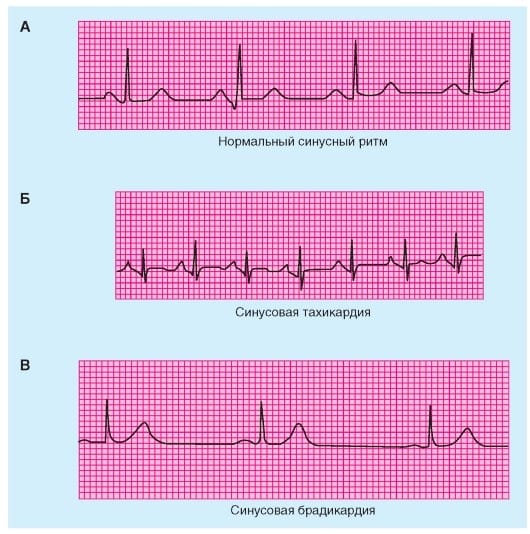
If the pulse is rhythmic and well filled, then counting beats per minute gives a fairly accurate result. When using hardware methods, reliable measurements can be obtained only with the help of medical devices (tonometers, pulse oximeters). All other gadgets are suitable for monitoring the work of the heart during sports.
Indicators of the norm
In adults, the normal heart rate ranges from 60 to 80 beats per minute. With a frequency of less than 60, this phenomenon is called bradycardia, more than 80 – tachycardia. The rate of heart rate by age is indicated below.
At rest, the indicator will differ depending on the following factors:
- age;
- the gender of the person;
- fitness;
- body size.
In newborns, this indicator most often ranges from 120 to 140 beats per minute. In a premature baby, the value is higher – from 140 to 160. By the year it decreases and reaches 110-120, at five years old – up to 100, by ten – up to 90, by thirteen – up to 80. The rate of heart rate by age will help to understand this …
Ordinary people
The rate of heart rate in an ordinary person who is at rest ranges from 60 to 90 beats per minute. Moreover, if the indicator goes beyond these limits, then it is imperative to pay attention to this and respond in time to avoid negative consequences for human health.
Athletes
Those who lead a more active, non-sedentary lifestyle, who are constantly engaged, train and do sports at all, which, especially, associated with endurance, has a fairly low heart rate.
So, a completely normal and healthy indicator for an athlete is 50-60 beats per minute. It would seem that those who endure physical activity, on the contrary, should have a higher pulse, however, due to the development of habits and endurance, the body, on the contrary, the indicator is lower than the norm in an ordinary person.
What does the heart rate depend on?
The heart rate indicator depends on many factors: age, gender, lifestyle, immunity to diseases, the presence of various heart and other diseases. Depending on this, norms are most often established.
However, it is not at all necessary that the rate of heart rate speaks of a good level of health. After all, this is just one of the important indicators.
In a trained person
If a person constantly trains, then his heart rate is below the norm and averages about 50. If a sedentary lifestyle is conducted, then up to 100 beats can be achieved at rest. The heart rate of women is approximately six beats higher than that of men, and increases even more before the onset of menstruation. The normal heart rate in a healthy elderly person is most often 80 beats. With an increase in this figure to 160, one can judge the presence of a serious pathology.
Many people are interested in the technique of measuring heart rate.

When changes
The value is not the same at different times of the day. The indicator changes during the day depending on the following factors:
- during physical activity;
- in moments of anger, fear, excitement and other emotions;
- depending on the position of the body (lying, sitting, standing);
- after eating;
- after taking certain medications.
The heart rate rises after meals, especially hot and protein foods.
When the body temperature rises to 37 degrees, it increases by 20 beats.
During sleep, it decreases by five to seven units.
The heart rate increases by about 10% when a person is sitting, and by 20% when standing.
Heart rate rises:
- when in a stuffy, hot room;
- during stress;
- with physical exertion.
Increased heart rate: what to look for the cause, what depends on
An increased heart rate can occur at different times of the day and depends on several factors:
- during and immediately after physical activity;
- strong emotional experiences – joyful excitement. fears, anxiety, irritation;
- body position – lying heart rate will be lower than standing;
- immediately after eating;
- after taking certain medications.
With an increase in body temperature, the heart rate increases by an average of 20 beats, during sleep it decreases by 7-10 units, and these are all normal conditions that do not indicate any health problems. The same norm is considered if a person's heart rate is increased by 10% while sitting and by 20% while standing, as well as when being in a stuffy room, during and after walking in hot weather, during stress.
If, taking into account all these factors, the heart rate is increased, then the doctors diagnose “tachycardia” and prescribe a complete examination of the patient.
Tachycardia
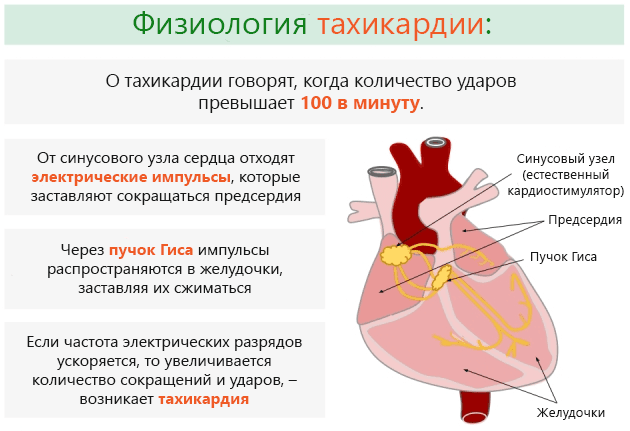
If tachycardia occurs against a background of shortness of breath, general weakness and dizziness, then doctors consider the following possible causes of this condition:
- active course of the infectious process;
- heart disease;
- the onset of hemorrhagic or ischemic stroke;
- any disturbances in the work of the endocrine system;
- diseases of the central and peripheral nervous system;
- the presence of neoplasms of a malignant or benign nature;
- progressive anemia.
Bradycardia
Bradycardia is a low heart rate that can appear against the background of physiological provoking factors:
- a person is professionally involved in sports;
- heavy physical labor is constantly present;
- I was taking some medications.
But bradycardia may also indicate the development of serious pathologies:
- poisoning with poisons, chemicals;
- myocardial infarction;
- stomach ulcer;
- hypothyroidism (decreased thyroid hormone production);
- inflammatory process in the myocardium.
Causes of tachycardia and bradycardia
If the heart rate in a calm state does not correspond to the norm, then this may be a sign of a disease. Usually, other manifestations of the disease are also present.
If tachycardia is accompanied by symptoms such as dizziness, shortness of breath, weakness, fainting, then it is possible:
- infectious disease;
- heart disease;
- the onset of a stroke;
- endocrine disorders;
- diseases of the nervous system;
- tumor processes;
- anemia.
Bradycardia can normally occur in the following cases:
- for athletes (40 strokes);
- in people engaged in hard physical labor;
- while taking certain medications.
It can also be a sign of illness:
- poisoning;
- heart attack;
- stomach ulcers;
- hypothyroidism;
- inflammation of the myocardium.
How to measure
Heart rate is measured at rest in a quiet and warm room. For the procedure, you will need a stopwatch and an assistant. About an hour before the measurement, you need to exclude physical and emotional stress and smoking. It is not recommended to take medications, drink alcoholic beverages.

To measure heart rate, you need to put your palm to your chest
The person to whom the heart rate will be measured can lie down or sit down. After he takes the necessary position, he must lie down quietly or sit for five minutes.
The assistant places a clean, dry hand on the chest below the left nipple in the man and under the breast in the woman.
It is necessary to determine the impact on the chest in the region of the apex of the heart, which is called the apical impulse. It is bugged in half of healthy people in the fifth intercostal space, if the person is standing. If it is not possible to determine it, it means that it falls on the edge.
After that, you need to take a stopwatch and start counting a person's heartbeats for a minute. If the rhythm is wrong, you need to do this for three minutes, then divide the resulting number by three.
The heart rate can be measured in other places, where the arteries come close to the surface. Ripple is well felt:
- on the neck,
- under the collarbone,
- at the temple,
- on shoulders,
- on the thigh.
When measuring your heart rate, to get more accurate results, you need to do it on both sides of the body.
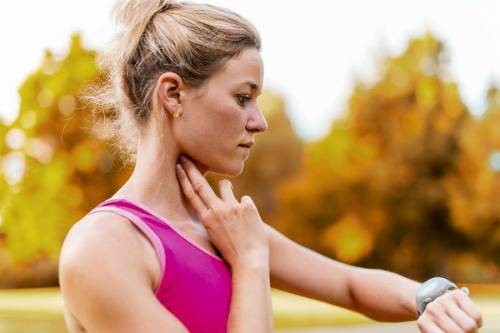
Athletes need to monitor their heart rate during exercise
Pulse determination methods
You can measure the pulse on any artery in the body that can be felt. Thin people even feel the throbbing of the abdominal aorta. However, in practice, this technique is practically not used. It is much easier to feel the peripheral vessels.
Manual way
The pulsation is best felt where the arteries are close to the surface of the skin. Most often, the indicator is determined on the wrist. This method is called radial. The algorithm for determining the required parameter is quite simple. To calculate the pulse, it is worth placing 4 fingers on the forearm slightly above the wrist joint and pressing it against the radius.
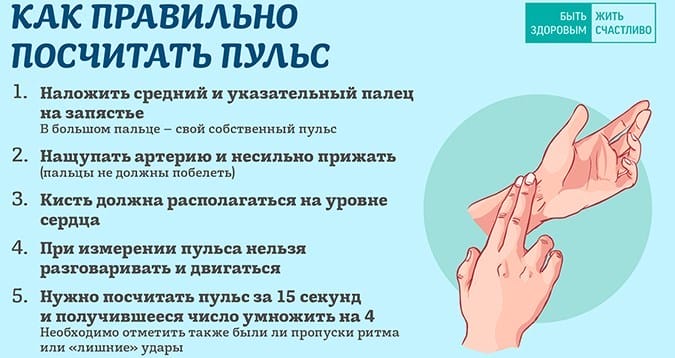
After that, it is recommended to count the number of beats for 30-60 seconds. Many people are interested in how to count the pulse in 10 seconds. To do this, it is enough to determine the number of strokes for a specified period of time, and then multiply the resulting value by 6. However, doctors do not advise using this method. In the presence of arrhythmias, this leads to inaccurate results.
In addition, you can manually calculate the heart rate in the following zones:
- in the bend of the elbow;
- in the groin;
- on the front of the neck (carotid artery);
- in the popliteal fossa;
- on the inside of the ankle;
- in the area of the temples;
- on the foot.
How to read the pulse on the neck
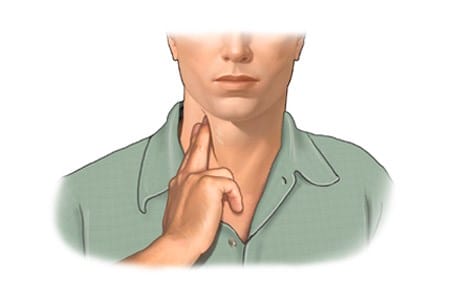
The pulse in the neck is considered specifically on the carotid artery, for which you need to place your index and ring fingers next to the trachea. Even without pressure, the pulsation will be clearly felt, but for more accurate results, you need to lightly press the artery with your fingers.
You need to count the number of hits per minute. For this method of measurement, the standard rules apply: it is better to carry out the manipulation at rest, and sit directly in front of it and try to relax as much as possible, not to take deep breaths and exhalations.
Calculation of heart rate on the wrist or elbow joint
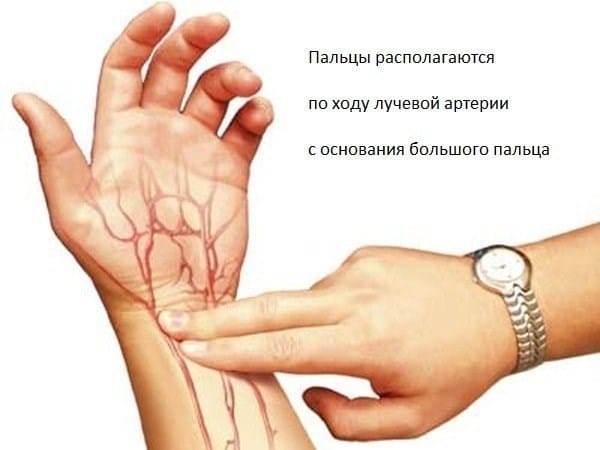
You can calculate your own heart rate by performing the following sequence of actions:
- Grasp the left hand with the right in the area of the wrist joint.
- Place your thumb on the back of your forearm and the rest on the palm side.
- Feel the artery with your fingers and press it so that the pulse beats are felt as clearly as possible.
- Determine how rhythmic the pulse is – the beats should be the same in strength and appear at regular intervals.
In the same way, the pulse is measured in the area of the elbow joint – you just need to lightly press the vessel with your fingers, which is located as close as possible to the bend. This place is considered not the best choice for measurements, because the vessels are located deep enough here, you can get unreliable results.
How to calculate your heart rate quickly
To quickly calculate your heart rate, you need to determine the place of measurement, perform the necessary actions and count the beats within 15 seconds. Then the result is multiplied by 4 – there will be the desired indicator per minute. You can keep counting for 10 seconds, but then you have to multiply the numbers by 6.
This method of quickly obtaining reliable results can be used only if the pulse is rhythmic, there is no prolonged “silence” or additional, barely noticeable, tapping.
How to calculate your heart rate per minute while exercising
During training, you can count the heart rate per minute on the wrist, in the anatomical location of the heart and under the knee – it all depends on what kind of training takes place, but the measurement rules are as follows:
- it is imperative to know the heart rate at rest – it is measured in the morning, immediately after waking up and without getting out of bed;
- Heart rate should be measured immediately before the start of classes – before the warm-up;
- the next measurement is taken immediately after the load – for example, it is convenient to measure the pulse under the knee if the exercises were performed in the supine position (you do not need to change it, you do not need to get up);
- the final calculation of the indicator is 1-2 minutes after the end of the class.
Such cyclicity will help to determine a safe level of physical activity, adjust the intensity of already performed workouts.It is assumed that after exercise, the heart rate of a healthy person can increase by 50-70 beats per minute. For example, if “at rest” he was 70, then after the load it may well be 130-140 and this will be considered the norm.
Using heart rate monitors
People with different forms of arrhythmia and athletes need to constantly or periodically monitor their heart rate parameters. In such a situation, special devices will come in handy – heart rate monitors. They can be presented in the form of watches or bracelets.
Such devices accurately record the heart rate. They are also able to process data and show the average value over a certain time period. Fitness wristbands usually allow you to set five-second intervals and display your heart rate per minute.
Wrist devices have vibration or sound sensors that alert a person when the maximum parameters are exceeded. Thanks to the use of such devices, it is possible to monitor the pulse while running and control the process of fat burning.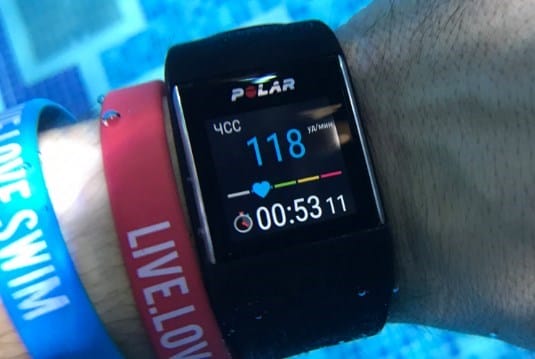
Professional medical devices
To correctly read the pulse rate, use an automatic or semi-automatic tonometer. The device records the parameter of heart contractions and helps to measure blood pressure. It can be used alone at home or in a hospital.
Electrocardiography is also used to determine the parameters. With the help of special sensors, the rhythm of the work of different parts of the heart is assessed. The frequency of contractions is determined by the number of peaks of its activity.
In rare cases of arrhythmias, conventional methods do not make it possible to identify violations of the heart rhythm and pulsation. In such a situation, daily monitoring according to Holter is shown. It involves performing an electrocardiogram recording throughout the day.
Pulse is considered an important parameter in assessing a person's health status. Therefore, it is necessary to control this indicator. To do this, you can use a variety of techniques. If deviations from the norm are detected, it is worth consulting a doctor.
Why know your maximum heart rate
Knowing the maximum heart rate is necessary for self-assessment of well-being and determining the moment when calling a doctor or an ambulance team becomes necessary. In general, the pulse has several parameters for assessment – tension, filling, rhythm, shape and height, but only a specialist can determine them.
Usually, people rarely measure their pulse, but you need to be able to do it in order to timely pay attention to the deteriorating health condition. For example, a sharp increase in heart rate may indicate the development of certain pathologies of the heart and blood vessels, the progression of infectious diseases and other disorders. It is especially important to measure the heart rate for those who regularly go in for sports in a certain mode – this will help to adjust the load so that training is not dangerous to overall health.
Age heart rate norms
Indicators of normal heart rate by age are shown in the table.
|
Human age |
Lower and upper heart rate limits |
Average acceptable value |
|
0 – 1 month |
110 – 170 |
140 |
|
1 – 12 months |
102 – 162 |
132 |
|
12 – 24 months |
94 – 155 |
124 |
|
4 – 6 years old |
86 – 126 |
106 |
|
6 – 8 years old |
78 – 118 |
98 |
|
8 – 10 years old |
68 – 108 |
88 |
|
10 – 12 years old |
60 – 100 |
80 |
|
12 – 15 years old |
55 – 95 |
75 |
|
15 to 50 years old (all adults, regardless of gender) |
60 – 80 |
70 |
|
50 – 60 years old |
65 – 85 |
75 |
|
After 60 years |
70 – 90 |
80 |
It is important to know your heart rate and generally accepted values, since in childhood, 150 beats per minute will be normal, but for adults this indicator serves as a signal for urgently seeking qualified medical care.
What does heart rate reserve mean?
The concept of “reserve heart rate” means the difference between the indicators of heart rate at rest and after (or directly during) physical activity.
This indicator makes it possible to determine what kind of intensity of physical activity the human body will withstand, for example, during training, performing heavy physical labor. That is, it is possible to allow an increase in the pulse rate by exactly this difference, and then the heart, the vessels will perfectly cope with the increased blood flow, there will be no increase in blood pressure, tremors of the hands and attacks of dizziness, darkening in the eyes.
Only healthy people can use the “full” heart rate reserve, because any developing pathologies make the body weaker.
Maximum heart rate
This is the largest number of beats per minute that a heart can make. This indicator is used by athletes to know what maximum load the heart can be subjected to.
It is best to determine the maximum heart rate clinically, that is, a cardiologist should do this using a treadmill and an electrocardiograph.
There is another simplified way to find out the capabilities of your heart, but the result will be approximate. Maximum heart rate is determined by the formula:
- for men – 220 minus age;
- for women – 226 minus age.
If your heart rate is high, what to do

If a high heart rate is not a common symptom of previously diagnosed heart pathologies, then at rates of 100 beats per minute and above, the following measures can be taken:
- drink a glass of cool water in small sips;
- lie down in a darkened room and close your eyes;
- take a few deep breaths and exhalations.
After 15 minutes, you should take a control measurement of the heart rate and, even with a slight decrease, continue to help yourself on your own – take 30 drops of tincture of valerian, motherwort or valocordin. You can put a Validol tablet under your tongue, open the window wide open, providing yourself with fresh air. Doctors recommend measuring blood pressure as well – tachycardia often occurs against the background of its increase.
If a person has not previously been diagnosed with ventricular tachycardia, then the following measures can be taken to restore heart rate:
- Take a deep breath, hold your breath for 1-2 seconds and exhale. On the latter, you need to strain and actively cough.
- Without too much effort, press your fingers on the eyeballs and stay in this position for 30 seconds.
- With your thumb, press firmly into the area of the fossa on the inner side of the wrist and hold in this position for 1 minute.
- With gentle massage movements, stroking work on the neck in the area of the anatomical location of the carotid arteries.
- Wash with ice water.
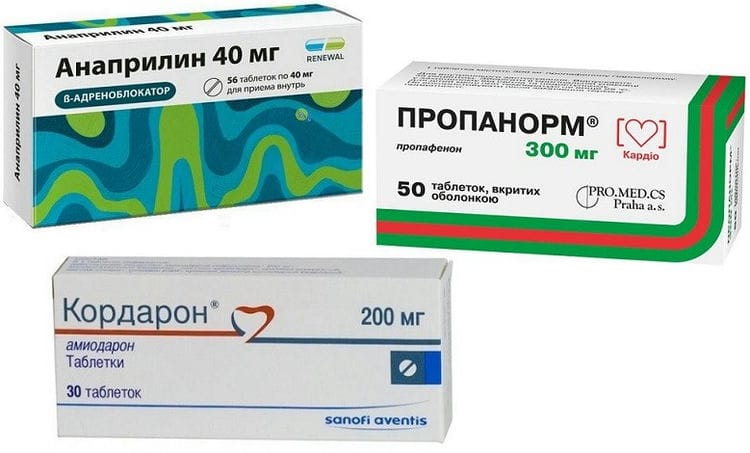
- Take an Anaprilin 20 mg tablet – it is placed under the tongue until it is completely absorbed.
- Take 1 capsule of Cordarone or 150 mg of Propanorm.
If the heart rate is more than 120 beats per minute, then you cannot take any measures to stabilize it on your own. It is necessary to call the ambulance team and wait for it in a prone position with free access of fresh air. Doctors will provide medication, carry out emergency diagnostics and send the patient for examination or hospitalization if a stroke is suspected. If experts do not identify pathological processes leading to an increase in heart rate, then the person will have to:
- adjust the diet, giving up fatty foods, a large amount of sweets, coffee, strong tea;
- completely exclude alcoholic beverages, energy drinks;
- normalize sleep, adjust the daily routine;
- constantly monitor blood pressure readings;
- give the body moderate physical activity.
Heart rate and pulse in medicine are considered as two completely different concepts, although you can take only heart rate indicators and draw conclusions about heart rate using the data obtained. An increase in indicators without previously diagnosed pathologies can be corrected independently at home, but if the heart rate is 120 beats per minute, then you need to call an ambulance and get qualified medical care.
How to determine your own heart rate?
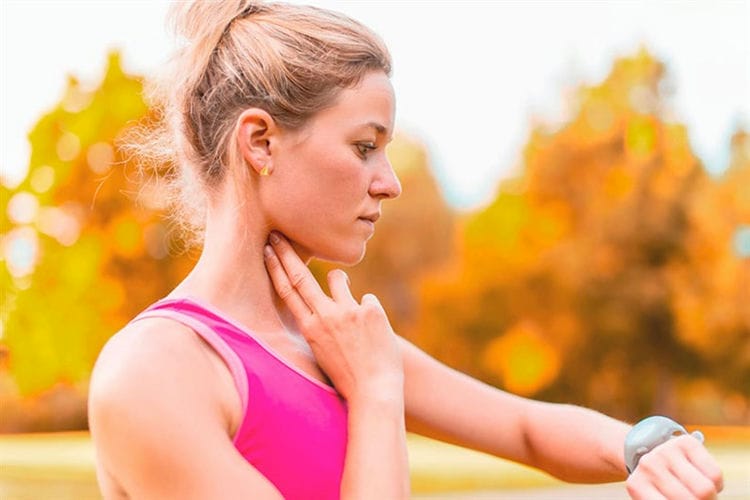
Heart rate can be done not only by a mandatory visit to a doctor or calling an ambulance, it can be done independently, both with the help of improvised means, and with the help of a special apparatus that can measure the pulse.
On which parts of the body can you measure?
- Wrist;
- Near the ear;
- Under the knee;
- Inguinal area;
- Inside the elbow.
As a rule, it is in these areas that blood pulsation is best felt, which allows you to clearly determine your own heart rate.
Sources used and useful links on the topic: https://FB.ru/article/368852/kak-izmerit-chss-chastota-serdechnyih-sokrascheniy-u-zdorovogo-cheloveka-chss-i-puls-v-chem-raznitsa https: //ritmcardio.ru/puls/chastota-pulsa/ https://otlichaet.com/medicina-i-zdorove/chss-i-puls-v-chem-raznica/ https://pulsvnorme.ru/kak-izmerit -puls / https://keeprun.ru/health/chss-i-puls-otlichie-i-metody-izmereniya.html https://icvtormet.ru/spravochnaya-informaciya/norma-chastoty-serdechnyh-sokrashcheniy-detey- vzroslyh https://pulsvnorme.ru/chss-i-puls-v-chem-raznicza/ https://davlenienorm.com/puls/kak-pravilno-poschitat.html https://pulsvnorme.ru/kak-poschitat- puls /
Post source: lastici.ru