
How to study philosophy. Acquaintance with Kant. Life hack for beginners
History of origin
Scientists believe that philosophy as a discipline originated in Ancient Greece around 6-7 centuries BC. This time in history was marked by an active technological and economic upsurge. The result of such a rapid development was the emergence of a separate class in society, which moved away from exhausting physical labor. Its representatives were given the opportunity to devote themselves entirely to cultural and spiritual life.
The rapid development of trade linked different peoples with economic relations. But at the same time, it gave rise to an ideological conflict. Spirituality and religious affiliation, the specifics of the internal way of life of people began to conflict with the first discoveries in the fields of astronomy, medicine and other branches. At this moment, philosophy received a powerful impetus to increase its importance. A demand arose in society for scientists who could rationally explain the essence of being and other metaphysical concepts.
Description of the profession
Who is a philosopher and what does he do? In a nutshell, this is a qualified thinker. Its main task is to study the science of the most general laws of the development of nature, human society and thinking, its objects, methods and concepts. A philosopher is, first of all, a theoretical scientist who explores worldview issues, the principles of constructing reality, the laws of development of society as a whole, as well as complex processes of cognition, perception and thinking.
Not everyone can become a philosopher. Successful work in this specialty requires a penchant for analytics and scientific activity, love for history, sociology and psychology. At the same time, today scientists are inclined to believe that a philosopher is not just a name for a profession, but a definition of a person who has a special mindset, which allows him to think freely, going beyond the usual and evaluating various phenomena of life in a complex manner.
Most modern Russian philosophers are philosophers. What does it mean? They are not working to create their own directions in science. Instead, they engage in detailed studies of strangers.
Places of employment and possible positions of professional philosophers:
- publishing houses (editor, journalist, writer, correspondent, reviewer, etc.);
- radio and television (presenter, columnist, analyst, screenwriter, reporter, plus the same positions as in publishing houses, etc.);
- agencies: communication, advertising or PR (creative workers of different specialties, speechwriter, for example);
- educational institutions of all levels (teacher);
- archives and libraries;
- cultural organizations;
- research institutes.
By and large, a philosopher is a universal soldier who can work anywhere and by anyone, since his enviable erudition and analytical skills allow him to find himself in any branch of the humanitarian and socio-social sphere.
Where to study
The Philosophy Faculty is one hundred percent there in almost any large humanitarian higher educational institution. This direction of training belongs to the classic.
Education in the specialty “philosophy” today is carried out according to various educational programs that help students to plunge into different aspects of the professional environment. Study involves compulsory practice and internships. Full-time undergraduate study for 4 years, part-time – 5 years. The next step is a 2-year master's degree.
You can learn to be a philosopher by entering one of the major universities in Russia. For example, here are a few of them:
- Moscow State University M. Lomonosov (Moscow State University).
- State Academic University for the Humanities (GAUGN).
- Peoples' Friendship University of Russia (RUDN).
- Russian State University for the Humanities (RGGU).
- Saint Petersburg State University (SPbSU).
- Ural Federal University the first President of Russia B. Yeltsin.
To enter one of these universities or any other applicant must pass the exam in Russian language, history and social studies.
Responsibilities
Philosophers do not necessarily work only in institutions of higher learning. As mentioned above, the range of employment opportunities for such professionals is quite wide. Therefore, it is difficult to talk about any clearly defined set of responsibilities. After all, for each position he will be his own.
Once settled in the publishing industry, a philosopher is required to read and review manuscripts, follow up on authors, and develop new media products. On radio, television or in the media (both print and digital), he is responsible for the creation of quality content (reports, reports), and also edits the finished material.
In the field of public relations, the main responsibility of a representative of this profession is to prepare press releases and press conferences. In addition, the philosopher can conduct thematic educational or informational events.
In science, philosophers analyze and interpret the works of their predecessors, both classics and contemporaries. Independently conducting research activities is possible only for holders of a master's degree or after graduating from graduate school and successfully defending a thesis (work on it can be combined with teaching).
Who is a philosopher?
This term came to us, as is already clear, from Ancient Greece and appeared in the 5-6th century BC. For many centuries of its use, there were no modifications, and the word retained its original meaning in its original form.
Based on the concept of “philosophy”, a philosopher is a person who is looking for truth, understanding the world and its structure.
In the explanatory dictionary, you can find the following interpretation of the term: this is a human thinker, whose main activity is the study, development and presentation of basic concepts of the worldview.
Another interpretation of the term can be called the following: a philosopher is an individual who, in his way of thinking, belongs to one or another philosophical school, shares its ideas or lives according to them.
The origin of philosophy and the first philosopher
It is believed that the first person who began to use the term “philosopher” was the ancient Greek thinker Pythagoras in the 6th century BC. This is because it was necessary to divide people with knowledge into two categories: wise men and “not wise men.” The first philosopher then defended the point of view that a philosopher cannot be called a wise man, since the first only strives to cognize wisdom, and the second is the one who already I knew her.
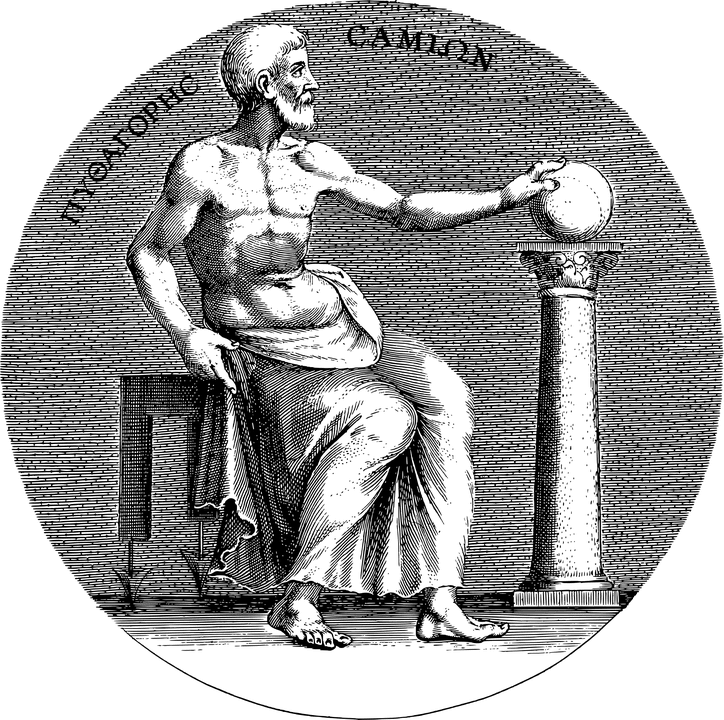
The works of Pythagoras have not survived, therefore, for the first time on paper, the term “philosopher” is found in the works of Heraclitus and Plato.
From ancient Greece, the concept spread to the West and East, where initially a separate science did not exist at all. Philosophy here was dissolved in religion, culture and politics.
Features of Russian philosophy
Features of a philosophical trend, a school, however, as well as the views of an individual philosopher, may depend on different conditions. This is the place of residence, national characteristics, socio-political structure, history and development of the country, traditions and so on. Great differences between the philosophy of European and Eastern (Chinese, Indian) are observed in relation to religion.
Russian philosophers occupy a prominent place in the historical and philosophical process. It is believed that this science appeared in Russia much later than in Western countries. It was largely influenced by Byzantine and ancient philosophy, later Western European, in particular, the German classical type of thinking. But one of the most important factors influencing the originality of the Russian form of consciousness was precisely the national peculiarity, specificity, traditions and history of the country.
Are philosophers needed these days
All the questions that the ancient philosophers investigated have long since become separate sciences. Are philosophers needed in our time? After all, the world around us, human relations, society are studied by other scientists.
Today's philosopher is a person who investigates questions that modern science does not answer. Consider, for example, the problem of consciousness. There is the Institute of the Human Brain of the Russian Academy of Sciences, which is engaged in the study of gray matter, provides information about the structure, composition, principle of operation. But the results obtained cannot even approximately answer what consciousness is. This question requires philosophical reflection. There are a lot of such problems. For example, the problem of survival.
Our world is organized according to the principle of strength, where the stronger, dexterous, and quick-witted survive. Natural disasters, man-made emergencies, how to survive, what qualities are dominant in the world – these problems are dealt with by the philosophers of survival.
Contemporary philosophical questions
Life does not stand still. A person develops, his views, society and relationships. A philosopher can comprehend and describe how modern society understands the eternal questions of being, the essence of man, meaning and life itself in general. The relationship between man and society – which philosopher avoided studying this problem?
Today there are many contiguous areas where philosophy interacts with other sciences, such as ecology, psychology, linguistics, neurophysiology, bioethics. The issues of genetic engineering and cloning are relevant both for modern society and for science, in particular, for medicine.
In politics, the issues of feminism, urbanism, migration, refugee rights, and the study of everyday life are now relevant for philosophers. Modern aesthetics even study anime – Japanese animation.
A frivolous, at first glance, popular topic concerning children and youth is the subject of thorough research. The key function of modern philosophy is to study the world around us, identify the problems of humanity and propose ways to solve them.
What lies behind the observable universe?
We know that our solar system is part of a huge galaxy. We also know that there are roughly 100 to 200 billion galaxies in the “immediate vicinity” of Earth. This is what scientists call the observable universe.
But the question is: what lies beyond what is observable? Are there even more galaxies and these galaxies go on forever?
Are these galaxies part of one universe, or are they part of many other universes?
In this regard, another question arises: is our Universe all that is or do we live in a multiverse? Is the universe / multiverse just incredibly large or is it infinite?
Are there more than three dimensions?
The question of why we live in a universe with three visible dimensions in itself makes you wonder. However, it also makes you wonder about the possibility that there are more than three dimensions.
Daily life shows us that we clearly live in a three-dimensional world. Height, depth and width affect everything we do. But is there something else besides what we see?
The theory of everything suggests that there can be more measurements – much more. Interestingly enough, when string theory is applied to nine spatial dimensions, things start to wobble. All mathematical theories assume that the fabric of the universe will disintegrate without these nine or more dimensions.
Is your perception of reality akin to someone else's experience of reality?
Of course, we all live completely different lives. We all grew up in completely different conditions and have different opinions about almost everything.
But what's really interesting is the question: Do we all perceive reality the same way?
For example, due to different differences in our brains, each of us perceives colors differently. Of course, we all know what a red or yellow t-shirt looks like. But does everyone perceive this particular color the same way? Unlikely.
At the same time, everything that we experience in life is not objectively interpreted. Instead, the events of the world are always subjectively interpreted by our brain. Based on our views, beliefs, and the culture in which we grew up, we may perceive these experiences in a completely different way.
What is the nature of reality?
Some of the greatest minds have thought deeply and are contemplating the nature of reality. This is the highest philosophical question that cannot be answered so simply. For centuries, men and women have tried to understand the nature of being, life, consciousness and reality. But few have found convincing answers.
Is life really just a physical manifestation of matter and energy? Or is reality a completely mental manifestation?
If life is completely physical, it can only be investigated empirically – scientifically. However, if there are also psychic aspects of reality, introspection can be another way of exploring.
Why do the sun and moon appear to be the same size?
We know that the sun is much larger than the moon. However, when viewed from Earth, the Sun and Moon appear to be about the same size.
The reason for this is that the Sun is about 400 times larger than the Moon, but at the same time about 400 times farther away. As a consequence, the Sun appears to be the same size as the Moon.
But isn't it a strange coincidence that the Sun is 400 times larger and 400 times farther away? Is this just a coincidence or a thought-provoking question?
Are you shaping your own destiny?
Another interesting question to think about is the theme of fate. Do you think that you are in control of your destiny or do you believe that your future has already been shaped and you are simply moving along a path marked by someone or something?
This is a thought-provoking question about free will and the power to shape your destiny.
Human morality studied?
Where does morality come from? Is this what we absorb from our families, friends and teachers? Or is it something innate that lies within us?
If we absorb morality from our families, then how did it appear one day, from our most distant ancestors?
Is life better now than in the past?
When we look at this question superficially, we can come to the conclusion that life is much better now than, for example, 50, 200, or even a thousand years ago. However, this judgment is based largely on advances in various areas such as technology, health, human rights and ease of life.
But if we subtract these advances from our consideration, is modern life much better than in the past? Are we happier today than people were 50 years ago? Are we leading a more fulfilling and meaningful life?
Is it possible that our ancestors were also content with their lives, despite much harsher conditions?
Man will never be able to inhabit other planets?
With impressive advances in space technology, it seems very real that humans will eventually start living on other planets. We are preparing to send a manned mission to Mars. Are these plans just the beginning of the Great colonization of other planets?
This development does not have to be limited to Mars alone. Perhaps people will be able to identify earth-like planets in other solar systems and live on these planets as well.
Small changes can dramatically improve people's lives?
Often, even small changes can have a huge impact on people's lives, be it economic or political changes, or the discovery of new drugs. Do you think there is something that can be changed in this world that can benefit hundreds or even thousands of other people?
What is the most important question in the world?
There are many questions that humanity needs to solve. But what do you think – what is the most important question that must be resolved immediately? What question is so important that all other issues seem less important?
Eternal or basic philosophical questions
- Is human personality shaped by nature or nurture?
- What is freedom? Is real freedom possible?
- Can we know what happiness is without suffering?
- What happens to a person after his death?
- Can we understand good without evil?
- What is truth and reality?
- Do animals have souls? What is the difference between human souls and animal souls?
- What is the meaning and purpose of life?
- What is love?
- Is there such a thing as free will and the right to choose?
- God exists? How do you know that God exists?
- How did life begin?
- What is happiness?
- Are we alone in the universe?
- What makes us human?
- Can we live forever?
- Is time travel possible?
- What is the difference between justice and revenge?
- How to determine what is evil and what is not?
- Is poverty in society inevitable?
10 ridiculous philosophical questions
- When you go to the cinema and there are armrests on the seats, which one is yours and which one is your neighbor?
- Can vegetables feel pain when you bite them?
- Why do women open their mouths when they apply mascara?
- How many times should a person use a disposable razor?
- Why do we call coffee without cream and sugar “black” when it is actually dark brown?
- If wool shrinks when it gets wet, why don't sheep shrink in the rain?
- Why do we consider chubby children to be healthy and curvy women to be fat?
- At what age does a person become “elderly”?
- Why does a dog hate being punched in the face, but loves to stick his head out of the car window?
- What color of hair should be listed on a bald man's driver's license?
10 philosophical questions
- Does studying philosophy provide answers or raise more questions?
- What is more important: to help yourself, your family, society or the world?
- What is the most important goal of humanity?
- Does knowledge have value without practical use?
- Does the universe obey logical laws or only physical and mathematical ones?
- Can a person comprehend the true depths of reality and existence?
- What is the best way to find the truth: science, mathematics, art, philosophy, or something else?
- Is math what people created or what they discovered?
- If we learn and improve from our mistakes, why then are we so afraid of making mistakes?
- How is it possible that the whole world is in debt?
Is there a Supreme Being?
If so, what is His nature? Did he create the universe? Does He control her, and if so, at what level? What is His connection with man? Can He interfere in the affairs of a person? Is He good? If He is so good and omnipotent, then why is there evil?
What determines the fate of every person?
Is a person the creator and driving force of his life, or does he live under the influence of a force over which he has no control? Is there free will or is our life determined by external factors, and if so, what are these factors? Is there some higher power that can interfere with our lives? Or is everything predetermined from the beginning of time? Or is our life a random collection of events, phenomena and incidents? Is there some other mechanism to control life that we are not aware of?
What are good and evil?
What is morality? What is ethics? Who has accepted the boundaries of good and bad, right and wrong? By what principle? Is there an absolute standard for defining good or bad regardless of personal opinion? What if the decisions of other people (society, government), defining the framework of good and bad, contradict personal convictions? Should we obey others or follow our own conscience? If, as an answer to the fifth question, we assume that we do not have free will, then what difference does it make how we act in life, good or bad? If we don't have a choice, will something change by being good or bad?
Why is our life the way it is?
What should an ideal life be like? What would a utopian society or heaven on earth look like? Is it even possible to create a utopia? If so, how? Will utopia provide personal freedom? What will need to be done with those who oppose the utopian system? If you start to control or punish them, will it remain utopia?
What happens after death?
Is death the end of everything, or does a person have a soul that continues to exist after death? If there is a soul, is it immortal, or will it eventually cease to exist as well? If the soul continues to exist after death, what does this existence look like? If existence after death is possible, will those who behaved “well” be rewarded and will those who behaved “badly” be punished? If so, how can this be reconciled with the predetermination of fate?
Methodological
It helps to get to know the environment better and provides effective tools for learning about it.
Thought-theoretical function
Generalizes the acquired knowledge, offering new forms of mental activity.
Epistemological
One of the main ones. It makes the process of obtaining new information more consistent and correct.
The role of the critical function
It consists in questioning everything that happens around. She is called upon to consider everything new that appears in the world, and also fights against obsolete facts.
Axiological
Assesses the existing points of view, and also, as if making a selection, leaves the most valuable, discarding the obsolete and unnecessary.
Plato Peer
Everyone knows the name of Plato from childhood. This is one of the 3 giants of ancient Greek philosophy, a student of Socrates and a teacher of Aristotle. Almost all of Plato's works are written as a dialogue, and this work is no exception. The plot is simple: Socrates, at the invitation of his friends, came to a feast, at which a conversation about love began. The guests, among whom, for example, Aristophanes and Alcibiades, expressed their opinion in turn. Their opinions about the reasons and qualities of love are very different from modern ones, which makes the dialogue interesting. This work of Plato is one of the most famous, it is easy to read, even if, for some reason, you are not comfortable or do not like to read in paper form, it can always be found in audio format, where its duration is over 2 hours.
Death of Socrates by Jacques-Louis David
State of Plato
If you have read Dialogue Feast, and, moreover, you even liked it, then most likely you will also like this work. The state is considered the main work of Plato, and this work is much more serious and important than Pir. It is based on the question: “What is justice?”, Smoothly flowing into the second: “Which state would be the best? “. Both of these issues are discussed by the same Socrates and his friends. The work is very important for world culture. It sets out the famous myth of the cave, It contains a taxonomy of the types of government. According to Plato, in any state, the division of labor is necessary, so everyone should do their own craft and not meddle in other people's affairs. The ideal state is an aristocracy, and philosophers should rule in it.
Immanuel Kant
Confucius
Chinese philosopher who lived around 500 BC. e. He focused on relationships and how important and necessary the family was to society. His views later shaped Chinese thought and led to what is now called Confucianism.
David Hume
A Scottish philosopher, Hume was a strong skeptic and empiricist. He argued that our beliefs do not come from our minds, but rather from our feelings and ideas about how the world should be. In fact, Kant took many of his ideas from Hume.
Rene Descartes
Descartes, considered “the father of modern philosophy”, is famous for his statement: “I think, therefore I am.”
Socrates
You have already met the most famous disciple of Socrates – Plato, but Socrates himself was a very famous philosopher. He is famous for the Socratic method, which asks a series of questions to lead the listener to a conclusion.
Niccolo Machiavelli
Living during the Italian Renaissance, Machiavelli is known for his contributions to political philosophy. His book The Prince explains to rulers how they can stay in power at any cost.
This book shocked people because until that time everyone thought that the rulers were (or should be) virtuous. He argued that “strength is right and it is better to be afraid than to love.”
John Locke
An English physician, Locke is known for believing that all knowledge comes from our senses. His ideas influenced later philosophers such as Hume and Kant. He is also known for using very simple words in his letters. When asked how we can know that external objects really exist, Locke said that it is enough to just stick your hand into the fire.
Diogenes Sinope
The ancient Greek philosopher Diogenes is famous for arguing that Aristotle perverted the teachings of Plato. Diogenes believed that Athens was corrupted by vanity and wanted to restore a virtuous life.
He even walked the streets of Athens, holding a lamp in his hands and saying that he was “looking for an honest man.”
Thomas Aquinas
Combining Greek thought with Christian theology, the Italian philosopher and theologian Aquinas is known as the most famous philosopher of Medieval Europe.
Thales. (640-550 BC)
Ancient Greek thinker, one of the founders of ancient philosophy. Founder of the Miletus school.
Anaximander (610-547 BC)
Ancient Greek philosopher, representative of the Miletus school. The author of the first philosophical essay in Greek “On Nature”. Thales' disciple. Created a geocentric model of the cosmos, the first geographic map.
Anaximenes (6th century BC).
Disciple of Anaximander. The origin of everything was considered air, from the discharge of which all things arise.
Parmenides (6th century BC)
Ancient Greek philosopher and politician. He expressed his views in the poem “On Nature”.
Pythagoras of Samos. (about 570-500 BC).
Ancient Greek philosopher from the city of Regia, religious and political figure, founder of Pythagoreanism. In the city of Crotone he founded a school of his followers (about 2 thousand people), which is at the same time a philosophical – scientific school and a religious – magical union. Of the written works of Pythagoras known: “On nature”, “On education”, “On the state”, “On the world”, “On the soul.” Pythagoras was the first to call the Universe “space”. He singled out number as the basic principle of all existence.
Xenophanes (570-478 BC)
Ancient Greek wandering poet and philosopher. Satirist, denier of the authorities of Hellenic culture. The main work – Sills (satire) in 5 books, directed “against all poets and philosophers.”
Heraclitus of Ephesus. (544-483 BC)
Ancient Greek philosopher, founder of the first historical or original form of dialectics. The main essay is the book “On Nature”, which consisted of three parts (“On Nature”, “On the State”, “On God”).
Leucippus (5th century BC).
One of the founders of ancient Greek atomistics, teacher of Democritus. Allowed the existence of nothingness, i.e. emptiness.
Gorgias (circa 480- 380 BC)
Ancient Greek sophist, the largest theorist and teacher of eloquence of the 5th century BC e .. The author of the essay “On nature, or about nonexistent”
Democritus (circa 460 – 370 BC)
Democritus of Abder – famous ancient Greek philosopher, one of the founders of atomism and materialistic philosophy
Zeno (circa 490-430 BC)
Zeno of Elea is an ancient Greek philosopher, a disciple of Parmenides, a representative of the Elea school. He is famous for his aporias, with which he tried to prove the contradictory nature of the concepts of motion, space and multitude. Aristotle considered him the founder of dialectics as the art of comprehending the truth by arguing or interpreting opposing opinions.
Protagoras (480-410 BC)
The most prominent of the sophists. He put forward the thesis “man is the measure of all things – existing in their being and carrying in their nonexistence.” He gained fame thanks to his teaching activities during his many years of travel.
Socrates (circa 470 / 469-399 BC)
Ancient thinker, the first Athenian philosopher. Socrates' doctrine marks a turn in philosophy – from the consideration of nature and the world to the consideration of man. I preferred oral reasoning during dialogues in squares and in palaestra. One of the founders of dialectics as a method of knowing the truth by leading questions. Became the embodiment of the ideal of a sage.
Zeno of Kition (c. 334-262 BC)
Zeno of Kitis, Zeno the Stoic – an ancient Greek philosopher, founded a school of Stoics in Athens.
Diogenes (circa 404-323 BC)
The philosopher is a cynic. He practiced extreme asceticism. He considered himself a citizen of the world. According to legend, he lived in a barrel.
Aristotle (384-322 BC)
The most influential of the philosophers of antiquity, a student of Plato, educator of Alexander the Great. The founder of formal logic. Aristotle was the first thinker who created a comprehensive system of philosophy, covering all spheres of human development: sociology, philosophy, politics, logic, physics. “The first philosophy of Aristotle” (later called metaphysics) contains teachings about the basic principles of being. Major works – “Metaphysics”, “Organon”, “Physics”, “On the origin of animals”, “On the soul”, “Ethics”, “Politics”, “Poetics”.
Epicurus (341-270 BC)
Ancient Greek philosopher, founder of Epicureanism in Athens (“The Garden of Epicurus”). In his youth, he considered the pleasure of the body to be a true pleasure. And in old age he recognized the highest pleasure – the development of oneself, the knowledge of reason.
Epictetus (circa 50-138)
Ancient Greek philosopher; slave in Rome, then a freedman; founded a philosophical school in Nikopol. He preached the ideas of stoicism: the main task of philosophy is to teach to distinguish between what is in our power to do and what is not. Excerpts from his teachings, known as Conversations and Guidelines, have been preserved in the records of his pupil Arrian.
Marcus Aurelius. (121-180 years)
Marcus Aurelius Antoninus – Roman emperor, representative of late Stoicism, follower of Epictetus. He left philosophical notes – 12 books, written in Greek, with the general title “Discourses about oneself.”
Lao Tzu
This mysterious philosopher lived around the 6th century BC. in China. He is credited with creating such a movement as “Taoism” (or). The main idea of this teaching is Tao, that is, a special Path to Harmony. These thoughts have become very important for Buddhism, Confucianism and other philosophies in Asia.
Gottfried Wilhelm Leibniz

Lithograph of a portrait of Leibniz
Leibniz is on a par with Descartes among idealist thinkers. Due to his technical education and a penchant for analytics, Leibniz initially believed that the brain is the most complex mechanism. However, he later abandoned these ideas precisely because of the perfection of the brain. According to his idea, the brain consisted of Monads – subtle spiritual substances.
Baruch Spinoza

Legendary “myth destroyer”
Spinoza was a Dutch Jew born in the early 15th century in Amsterdam. He is known for his research on rationalism and pragmatism in the Abrahamic religions. For example, he tried to prove the impossibility of many Christian miracles of that time. For which, as expected, he was repeatedly persecuted by the authorities.
Voltaire

The author of famous comedies and a humanist in oil portrait
A French philosopher of the Enlightenment, Voltaire advocated humanism, concern for nature and responsibility for the actions of mankind. He sharply criticized religion and humiliation of human dignity.
Thomas Hobbes

Author of the idea of subordination to the state
This English philosopher lived in turbulent times. Looking at fratricidal wars, he concluded that a citizen must obey the power of the state at any cost, as long as this power provides internal and external peace, since there is nothing worse than wars.
Aurelius Augustine
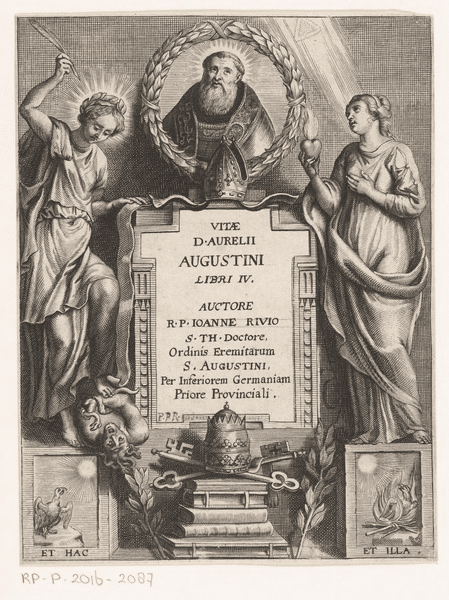
Portrait of Augustine, kept in the Vatican
Aurelius was born on the territory of modern Algeria. He is especially famous for his work “Confession”, in which he describes his path to Christianity. In this work, he often talked about free will and predestination. He was canonized shortly after his death and is considered one of the most important Christian authors of the early period.
Abu Hamid al-Ghazali
Engraving depicting a philosopher
Persian philosopher known for his criticism of the writings of Aristotle. For example, he pointed to the error of statements in the eternity of the world and its infinity. He also directly supported Sufism, the mystical direction of Islam.
Siddhartha Gautama Buddha

Gautama Buddha and his followers
Perhaps the most famous Indian philosopher. He came to the conclusion that all human suffering is the result of the conflict between the desire for constancy and the lack of constancy in the world.
Baron de Montesquieu
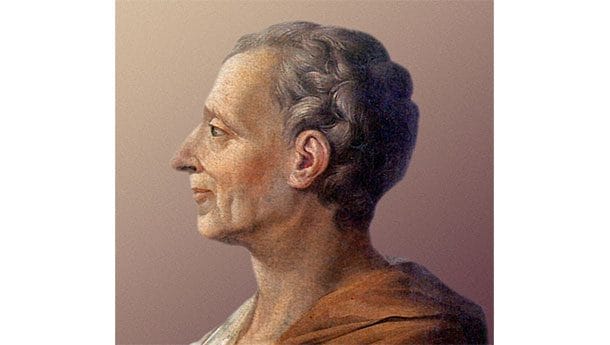
Philosopher's profile on canvas
We can say that Montesquieu is the great-grandfather of almost all Constitutions (including the American one). This French philosopher made an invaluable contribution to political science.
Jean-Jacques Rousseau

Portrait by an unknown artist
He is known not only for his works in the field of humanism, but also for his very controversial statements (though not devoid of meaning). He argued that a person is freer in anarchy than in society. In his opinion, science and progress do not develop humanity, but give more power to the government.
Instead of a conclusion
Why are philosophical questions called eternal?
Asking questions is the essence of human nature. And curiosity makes people discover and learn about everything that surrounds them. Throughout the history of mankind, people have asked many questions, but they have found comprehensive answers.
But there are questions that still remain unanswered, and they are called eternal.
What does a philosophical question mean?
This is a question to which there is no unambiguous and precise answer. Each person, answering such a question, tries to analyze and interpret his own point of view. This question makes us think and think differently, leading to a positive discussion.
Sources used and useful links on the topic: https://edunews.ru/professii/obzor/nauka/filosof.html https://FB.ru/article/213811/filosof—eto-professiya-ili-sostoyanie-dushi https: //www.syl.ru/article/327604/kto-takoy-filosof-i-chem-on-zanimaetsya-drevnie-filosofyi https://qil.ru/40-glubokih-i-navodyashhih-voprosov-kotorye-zastavlyayut -zadumatsya / https://saytpozitiva.ru/filosofskiye-voprosy.html https://vidabonito.ru/filosofiya/10-glavnykh-filosofskikh-voprosov/ https://avisi.ru/filosofiya-chto-eto-takoe- opredelenie-i-funkcii-filosofii.html https://zen.yandex.ua/media/id/5da139db92414d00b02d035d/s-chego-nachat-izuchat-filosofiiu-5-knig-kotorye-sdelaiut-vas-umnefee285da4db079 https://fishki.net/3063153-25-velichajshih-filosofov-v-mire.html https://infoselection.ru/infokatalog/religii-i-ucheniya/filosofiya/item/616-100-velikikh-filosofov https: //www.publy.ru/post/25225
Post source: lastici.ru