
How to choose the right shoes for a child?
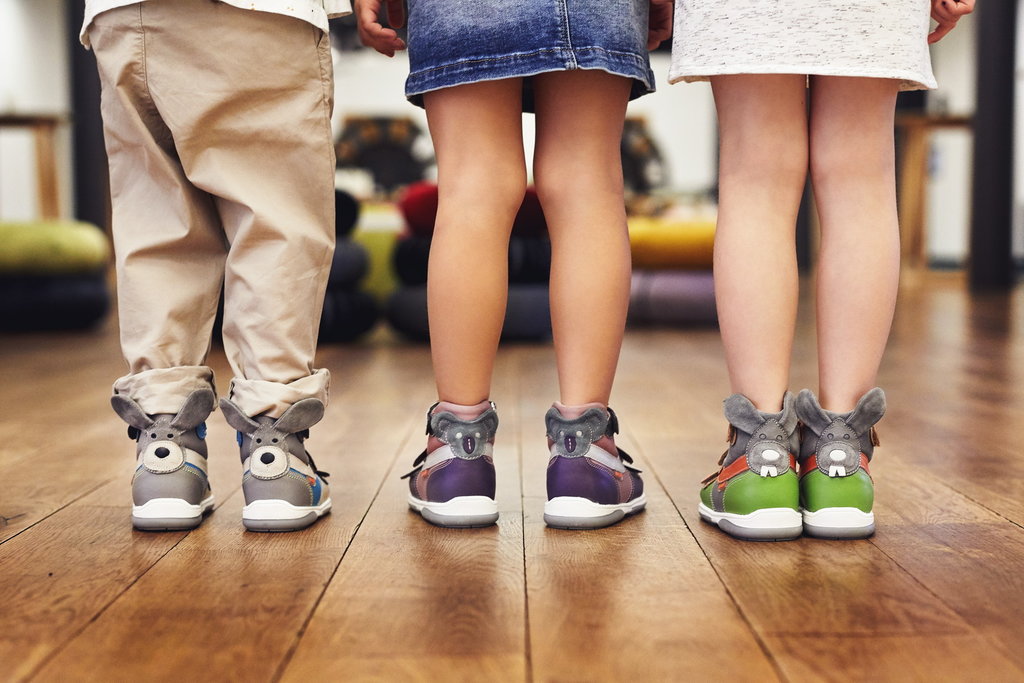
What should be the shoes in which the baby will take the first steps? Of course, the right one! But how to understand this "correctness"? What are the necessary characteristics that children's shoes should be endowed with? And what quality criteria should the baby's shoes meet?
A few simple rules regarding the choice of children's shoes are as follows:
- Shoes must be bought with the child. No shopping "at random" and "somehow fit." Shoes for the baby must be measured. The child is naughty and flatly refuses to shop? Try to turn this boring process into an exciting entertainment. In the most extreme case – when neither persuasion nor encouragement helps – you should arm yourself with paper insoles. Such a lifesaver is easy and simple: we put the child on a thick sheet of paper, circle his feet with a pencil, cut out the resulting pattern and go with it to buy shoes. The option, of course, is not the most ideal, but still better than buying shoes, shoes, sneakers at random.
- The aforementioned insoles must fit freely into the shoes. According to the recommendations of orthopedic specialists, there should be about 1-1.5 cm of free space between the insole and the toe of the boot, and at least 0.5 cm on the sides.
- Orthopedic doctors advise parents to pay attention to shoes with heels. According to them, any children's shoes should have a small heel, since this detail is involved in the formation of the gait, and also helps the baby stay on his feet, preventing him from falling back.
- Another mandatory "element" of properly selected children's shoes is the arch support. The absence of this detail can have unpleasant consequences for the health of the child in the future. For example, lead to the development of flat feet.
- The sole of a child's shoe should be tested for flexibility and cushioning properties. You can do this like this: bend the sole and try to connect the toe to the heel. Is it easy? Then the shoes are all right!
- The heel in children's shoes should be solid, without any cutouts or other decorative inserts. This design contributes to the strong fixation of the joints of the baby's legs in the shoes.
- Slippers, soft slippers, open sandals are prohibited! Orthopedists give the green light to wearing such shoes only when the child reaches the age of four.