
What can replace baking powder in baked goods and in what proportions? How can you replace baking powder in different types of dough and how to make baked goods fluffy and airy
Content
What is baking powder for dough
Baking powder is a substance that makes the dough fluffy and airy, helps it rise (as is the case with butter biscuits). The shop baking powder contains:
- lemon acid;
- baking soda;
- starch or wheat, oat, corn flour.
Before you introduce the ready-made commercial baking powder into the dough, you don't even need to dissolve it in warm milk or clean water, but just add it to the flour and mix.
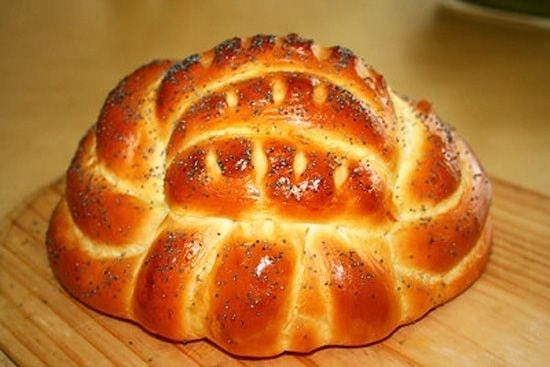
Baking powder makes the dough fluffy and airy
How to replace baking powder
Instead of a store baking powder, use pure or slaked baking soda, yeast, homemade baking powder. In shortbread pastry, it is sometimes replaced with rum or cognac. Alcohol reduces the production of gluten in flour and the dough becomes tender, more brittle and crunchy.
Baking powder is another name for baking powder.
In some cases, you can deliberately forget about a purchased or homemade baking powder. When there is already enough air in the dough from beating eggs or butter (as in the preparation of classic biscuits, muffins, diet pancakes, pancakes), it is not needed.
There are many options for replacing baking powder in baked goods, such as yeast or soda
Replacing two teaspoons of baking powder with baking soda
Baking powder is replaced with baking soda: instead of 2 teaspoons of a special baking powder, take 1/2 teaspoon of baking soda sifted through a fine strainer together 1-2 tsp. flour. There are often recipes that use both baking soda and baking powder at the same time. Citric acid and the amount of soda that is in the purchased baking powder are correctly selected in precise proportions in the expectation that the desired chemical reaction with the rest of the ingredients will take place immediately.
There are recipes in which too strong an acidic environment is initially present. It is created by dairy products, fruits, grape or apple cider vinegar, dark chocolate or flower honey, citric acid. In such cases, add soda without quenching along with other dry ingredients.
Can I use slaked soda
Slaked soda is also used in muffin recipes. The necessary reaction with the release of carbon dioxide proceeds too quickly, so it is important to immediately introduce the soda into the dough, knead it quickly and start baking.
It is better to extinguish the soda with lemon juice, but if it is not at hand, vinegar will do.
It is believed that slaked baking soda has no effect on the dough, since the reaction occurs outside the dough, and the splendor gives the finished product the soda residue that was not extinguished during the reaction that occurred. Culinary experts suggest the following move: mix dry soda with dry ingredients, then knead the dough for baking, combining the liquid and dry parts, and immediately put the product in the oven. So, soda is mixed with flour, and acidic ingredients – lemon or orange juice, vinegar, whey, kefir – with liquid components of the dough (melted butter, milk, beaten eggs).
The “efficiency” of actions is important here. If the reaction takes place immediately, then the gas is formed immediately when the dough is kneaded. In a hot oven, the process is accelerated, air bubbles increase and the dough under this influence rises, and the finished product becomes fluffy, crumbly and airy.
Soda is added to the muffin dough, mixing it with flour
There are many options for replacing baking powder. Some are often used by housewives and therefore are considered efficient and effective. Others are less commonly used, but give the dough a peculiar taste or smell. Follow these tips and your pastries will turn out fluffy and delicious!
Baking powder action
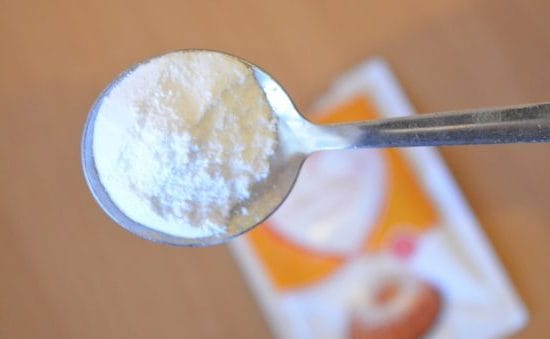
Before choosing substitutes, you need to understand how this substance “works” and what it gives to the test. In fact, baking powder is nothing more than a mix of soda, powdered citric acid and starch (or flour), combined in a ratio of 5: 3: 12. When soda interacts with acid, carbon dioxide is formed, its bubbles fill the flour mass, as a result, it acquires the desired volume and splendor. Therefore, reproducing this reaction in the dough, or finding alternative ways to saturate it with gas, it will turn out to make the baked goods soft and tender.
Alcohol for dough volume
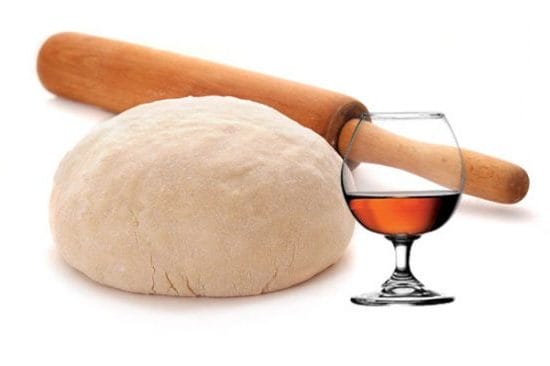
For the bulk of shortbread, yeast and yeast-free dough, alcohol is perfect. Vodka, liqueur or cognac (strong “degree” drinks) reduce the gluten of the flour, thus making the flour products more fluffy. Such additives are especially effective in the dough dough. When heated, alcohol reduces the sticky properties of flour as much as possible. In addition, liqueur or cognac will give the dough a light, pleasant aroma, which is especially important for pastries, cakes, rolls and other homemade sweets.
Homemade baking powder
Not finding baking powder at home, do not rush to despair. It is easy to prepare it yourself in your kitchen using affordable and simple products. They are indicated above in the composition, but here the main thing is to adhere to strict proportions in order to get the desired effect.
To prepare homemade baking powder, the following components are taken:
- 6 tbsp. l. soda;
- 3 tbsp. l. citric acid;
- 12 Art. l. flour.
You will have to take a dry small glass jar. Be sure to wipe the walls or dry the dishes in the air. There should not be a drop of moisture, otherwise the gas evolution reaction will begin before the composition reaches its destination.
All the specified ingredients are poured into the jar. If desired, the same amount of corn or potato starch can be added instead of flour. The container is closed with a nylon lid and shaken. In just a couple of minutes, homemade baking powder was prepared, which is no worse in quality than the purchased one. It is used when added to dough in the same amount as indicated in the recipe.
The homemade baking powder, based on three ingredients, can be stored for a long time in a dry place and closed. It is added to various doughs:
- biscuit;
- pancake;
- custard;
- for pizza;
- for pies, etc.
How is mineral water used
There are a lot of bubbles in the mineral water. The air in the composition is capable of raising the dough. The liquid is added instead of milk or regular water. In other cases, no replacement is made, otherwise a dough of a completely different consistency will be obtained. Instead of mineral water, it is allowed to use carbonated water.
What is baking powder, why is it needed
Baking powder is used to obtain an airy porous structure, to increase the volume and raise baked goods.
The special leavening agents added to the flour, when heated during baking, generate carbon dioxide and raise the dough. They are used for non-yeast dough varieties.
Baking powder or, as it is also called, baking powder is a dry mixture of the main component (most often it is baking soda – E500, less often ammonium), an acidic component (sodium pyrophosphate – E450, less often citric acid) and a component that prevents their interaction (wheat flour ).
When interacting with the liquid components of the dough, the constituent parts of the baking powder react, as a result of which carbon dioxide is formed. It is he who helps the dough to “rise” during baking. The result is airy and fluffy baked goods.
It is necessary to observe the recommended dosages so that the baked products do not have an unpleasant soda taste.
How to make a baking powder at home

You can prepare a stock of baking powder in advance so that it is always on hand at the right time. If you do everything right, then it will retain its properties for a long time.
This is practical, it saves money on the purchase of a ready-made baking powder, but most importantly, you will be sure that it does not contain unnecessary chemical components.
To make a simple baking powder at home yourself, you will need:
- flour – 3 tsp;
- soda – 7 tsp;
- citric acid – 4 tsp.
Mix the ingredients. Prepare the correct amount of baking powder in the correct proportions. It is very important that all ingredients are dry. Pour the finished baking powder into a dry jar. Also, the listed components can be stored separately, mixed in the specified proportion immediately before baking.
- Soda is the most affordable and simple baking powder. It is often replaced with ammonium, but it is quite difficult to buy it – it is rarely found on sale.
- The flour in this baking powder recipe can be replaced with starch, powdered sugar, rice flour.
- Citric acid is replaced with vinegar, chopped cranberries, currants – you need to use such a baking powder immediately, as it loses its properties very quickly.
- Other ingredients can act as an acid – fermented milk products, sour cream, whey, berry syrup, honey, cocoa and cane sugar.
- For shortcrust pastry, use soda without acidic components.
Replacing the baking powder in pancakes
To prepare dough for pancakes or pancakes in the absence of a store baking powder and soda, adding 1 tablespoon of brandy or vodka to 1 liter of pancake dough will help.
You can add a little mineral water to the pancake or pancake dough – it contains carbon dioxide, which will help bake beautiful lace pancakes or fluffy pancakes.
How to replace the finished baking powder?
It is believed that the exact composition of store-bought baking powder is a trade secret of every manufacturer. Modern baking powder recipes from popular companies contain two types of acids. One of them begins to interact with baking soda while kneading the dough. The second is activated only at a high temperature, that is, after the dough has been in a preheated oven. This prevents the carbon dioxide from escaping earlier, the baked goods rise well and bake wonderfully.
If baking powder is not on hand, replace it with a mixture of citric acid and baking soda in a 2: 1 ratio.
Soda and vinegar
Undecomposed baking soda can ruin baked goods: it can give it an unappetizing yellow-brown or green hue, as well as an unpleasant aroma and taste. Soda will not decompose if there are no acidic foods on the ingredient list. In this case, it is necessary to use a mixture of soda and vinegar instead of baking powder. To replace 1 teaspoon of baking powder, mix 1/2 teaspoon of baking soda and 1/4 teaspoon of vinegar.
There are many ways to add this alternative to a recipe. Separately, baking soda can be added to flour, and vinegar to liquid ingredients. You can also extinguish the baking soda with vinegar and add to the ready-made dough. Slaked soda is added instantly: while the boiling process is taking place. Otherwise, carbon dioxide can escape.
It is important to take into account the fact that the dough to which you added the soda slaked with vinegar must be immediately sent to the oven, otherwise the necessary processes will not start. It is different with baking powder from the store: the dough can stand for a while with it. If you don't want to rush, add the baking soda and vinegar separately to the dough.
How to use it correctly?
Store-bought baking powder is very easy to use, you need to strictly follow the instructions on the package. All that is required of you is to add the required amount of the component used to the dough.
Be sure to follow the instructions and recipe, since the composition and method of use for baking powder from different manufacturers can vary significantly.
Types of loosening agents
Lactic acid bacteria and baker's yeast are biological substances used as leavening agents. They are used to make bread and baked goods. Chemical leavening agents serve as an alternative. We are talking about carbonates and hydrocarbons:
- potassium;
- sodium;
- ammonium.
How to use it correctly?
It is important to add baking powder to flour before combining it with wet ingredients. This will prevent premature interaction of its active components.
On average, 500 g of flour requires 20 g of baking powder. When using a purchased mixture, you need to focus on the recommendations of a particular manufacturer.
What is baking powder?
Baking powder, or baking powder, is a mixture of soda, starch and an oxidizing agent (tartaric acid, or tartar, citric acid), which reacts with the liquid in the dough, and due to this, carbon dioxide begins to be released.
When heated, the reaction is accelerated, air bubbles increase and the dough rises. However, after a while the dough begins to settle, so the product should be placed in the oven almost immediately after the baking powder (baking powder) has been added to it. If this is not possible, then refrigerate the dough.
Proportion for preparing baking powder
- 6 tablespoons flour
- 2 rounded spoons of baking soda
- 1 spoon of citric acid
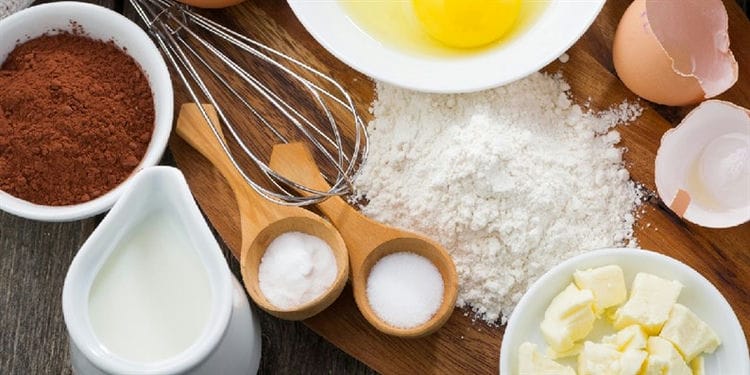
For convenience, we will translate the proportion for the preparation of the baking powder into grams (see the table below). This table is convenient to use if you have a kitchen scale. If you do not have measuring scales, it is better to use the proportion in spoons.
| Ingredients | Gram |
|---|---|
| Flour | 60 gram |
| Soda | 25 grams |
| Citric acid or vinegar | 15 gram |
If you need more or less baking powder, then use mathematical calculations. To double the weight of the baking powder, multiply the proportion by 2. Baking powder will keep well in a dry place and can be over-cooked.
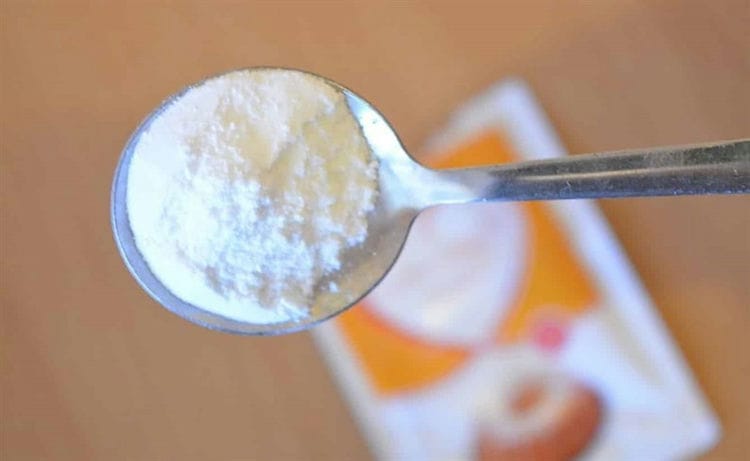
Baking powder ingredients
We need:
- Soda – 1 part;
- Citric acid – ½ part;
- Flour or potato (corn) starch – 3 parts.
These proportions can be transferred to any measuring containers convenient for you (in teaspoons, in tablespoons, in glasses, cups, etc.).
A step-by-step recipe for homemade baking powder
In a clean and dry container (this is very important), mix all the ingredients:
1 Pour in the flour.
2 Add soda to it.
3 Followed by citric acid.
4 Mix everything with a dry fork. That's it, the baking powder is ready.
5 Put in a dry bag and store in a dry place.
How to make a baking powder for dough with your own hands
You can also replace the baking powder from the store with a homemade product that will not differ in any way in quality. The main thing is to observe the correct proportions and take the right ingredients, which, upon contact with each other, will give the desired reaction. The second rule is to use only dry dishes so that the components do not interact with the liquid ahead of time.
DIY baking powder recipes
Each housewife chooses for herself how to make a baking powder at home. Some use citric acid for this, others prefer to do without it, and some even believe that the original, classic recipe is the most correct one. It is not so important what the baking powder for the dough consists of, the main thing is that it “works”, therefore it is necessary to choose a recipe with a photo based on what products are available in the kitchen.
Citric acid free
- Time: 5 minutes.
- Servings Per Container: 1 kg of flour.
- Calorie content of the dish: 35 kcal per 100 g.
- Purpose: for an afternoon snack, dinner.
- Cuisine: European.
- Difficulty: easy.
Some chefs recommend making a baking powder for the dough with your own hands without adding lemon, replacing the oxidizing component with vinegar. They claim that this method is guaranteed to help get rid of the soda odor, which the acid does not always cope with. This will not affect the quality of the dessert in any way – it will not lose its splendor and will perfectly increase in volume.
Ingredients:
- sodium bicarbonate – 1 tbsp. l .;
- starch – 1 tbsp. l .;
- vinegar -1 tbsp. l.
Cooking method:
- The dry ingredients are mixed.
- The vinegar is added during the kneading process.
DIY baking powder recipe:
For baking powder, take citric acid, soda, flour – mix everything thoroughly.
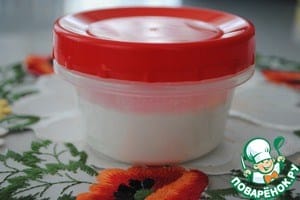
And pour into a jar. The volume turned out to be more than 100 ml, but this baking powder will not last for me for long, so I'm not afraid that it will cake, become a lump, etc. etc.
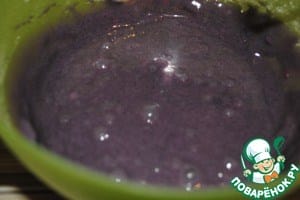
I took all the ingredients for the dough and mixed. Instead of wine, you can take milk or kefir or water. This is a dough with homemade baking powder.
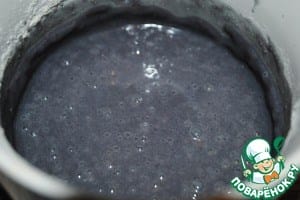
This is a baking powder dough. From the same amount of ingredients. It's a slightly different color.
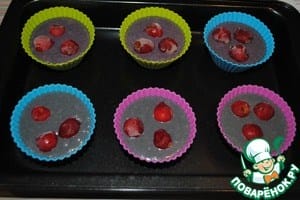
She poured the dough into molds. Top row with homemade baking powder, bottom row with shop baking powder.
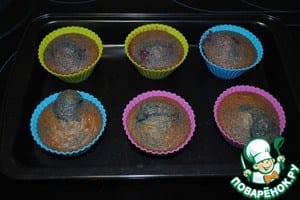
The top row (with home baking powder) rose evenly.
But in the bottom row (with the store one), for some reason, an ugly middle came out.
Left muffin with homemade baking powder. On the right – with a store.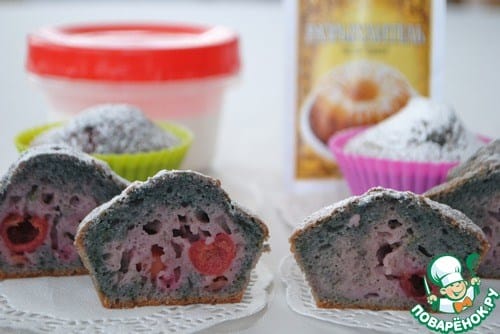
With homemade baking powder.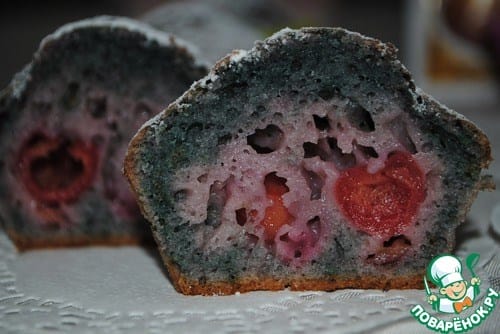
With a store.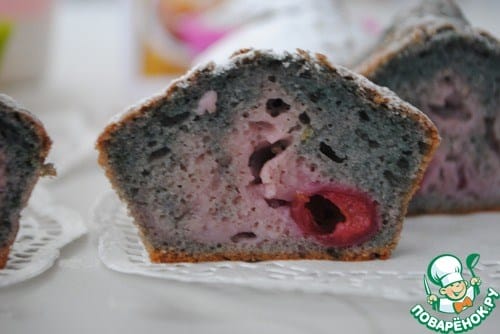
We make a baking powder from improvised products
Why is it so important? It gives fluffiness and volume to the thick structure of the dough. We will use baking soda and look at two ways to give the dough the desired fluffiness.
On a note! You will succeed, but the main thing is not to add more soda than you need. Otherwise, it will remain undissolved in the dough, as a result, the finished baked goods may turn out with a soda tint in taste.
But usually everyone succeeds, and many housewives adhere to only this way to add splendor to their baked products.
Why baking powder is good
With the invention of “artificial yeast”, the chef has much more freedom in terms of the set of ingredients for making the dough. from baking with soda, recipes with baking powder do not imply the addition of acidic products (kefir, sour cream, yogurt, whey) to the dough, since acid is already present in the baking powder itself.
What are the baking powder

Soda is considered the most affordable and simple baking powder, but by itself it does not loosen the dough, so it is used in combination with various acids that promote its decomposition into carbon dioxide and water. The evolved gas forms voids in the dough, as a result of which it becomes fluffy, light and airy. Cookbooks say that baking powder can be replaced with baking soda, but the effect will be greater if the baking soda is mixed with vinegar, lemon or fruit juice. Other products can also act as an acid – yogurt, sour cream, buttermilk, syrups, honey, cocoa and cane sugar. This rule does not apply to shortcrust pastry, since soda without sour additives should be added to it.
Specialty baking powder containing soda, acid and starch and baking powder containing baking soda and citric acid are available in stores, although some manufacturers also add rice flour and powdered sugar to this mixture.
Sparkling water

Baking powder can replace regular soda if the dough is kneaded in water – butter, custard, unleavened or any other dough. Add as much soda as the prescription water requires. To enhance its effect, you can add a pinch of salt and citric acid to the water.
When you can skip using baking powder
Making a regular sponge cake requires the addition of baking powder. However, you can do without baking soda, since the baking recipe involves the use of chicken eggs. Tightly whipped whites can replace baking powder. It is necessary to obtain an airy foam and gently add to the dough. It is important to put the biscuit in the oven right away so that the dough does not fall off.
Baking powder tips
- It is important to store baking powder (baking powder) in a glass sealed container in a dry and dark place.
- The flour or mixture of flour, starch and powdered sugar in baking powder recipes is necessary to ensure that the main substances do not react during storage.
- Baking powder (baking powder) is mixed only with flour (dry dough mixture)!
- All products from which the dough is kneaded should be at room temperature. If the recipe requires melting butter, molasses and other foods and then combining them with flour and baking powder, then first cool the melted foods to room temperature.
- Always measure baking powder carefully. If you take more of it than necessary, the dough rises too much, and when you take the product out of the oven, it will immediately settle. If there is not enough baking powder, the dough will not rise, which will ruin the taste and appearance of the product.
- If the baking dough is based on kefir, yogurt or sour milk, then it is better to use only soda as a baking powder! But if you bake pastries with water or milk, it is better to add baking powder (baking powder).
Cooking the dish step by step:
Step 1
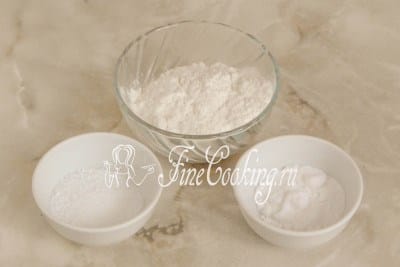
To make a baking powder at home, we need wheat flour (I use the highest grade), citric acid, and baking soda. If you want a gluten-free baking powder, use the same amount of rice flour instead of wheat flour. Potato or cornstarch is great.
Step 2
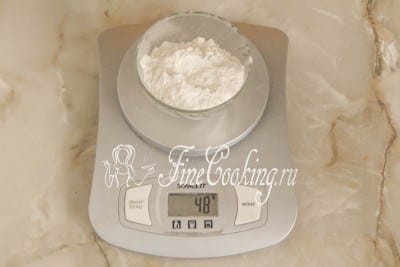
We turn on the kitchen scale, weigh the empty container, zero it and add the sifted wheat flour. We need 48 grams.
Step 3
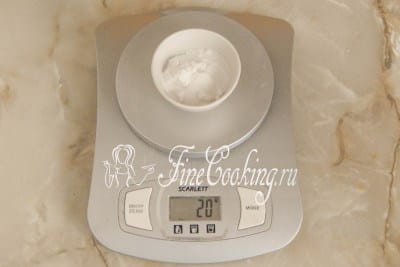
Then we do the same with baking soda – we measure exactly 20 grams.
Step 4
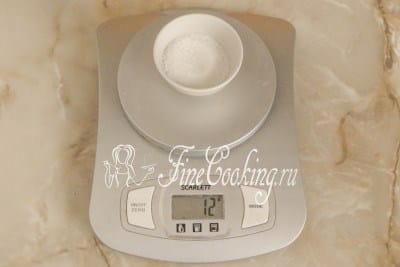
And finally, the turn of citric acid – we need 12 grams.
Step 5
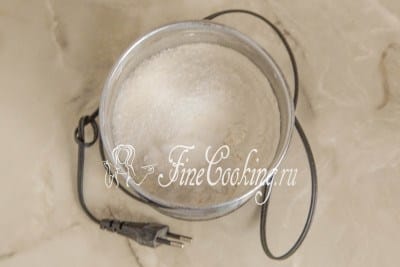
In fact, all that remains is to thoroughly mix all three components and the homemade baking powder will be ready. However, I advise you to additionally grind everything in a coffee grinder or blender, since soda, citric acid and wheat flour have different degrees of grinding. For example, citric acid has rather large crystals, while wheat flour is a powdery powder. And we need to combine all this and bring it to the same state.
Step 6
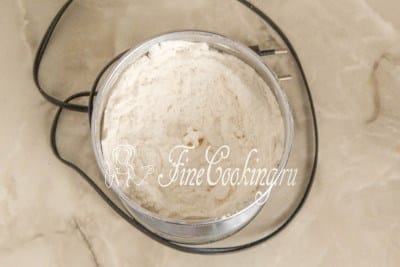
After just 30 seconds, a completely homogeneous homemade baking powder is ready. It can be used immediately for baking.
Step 7
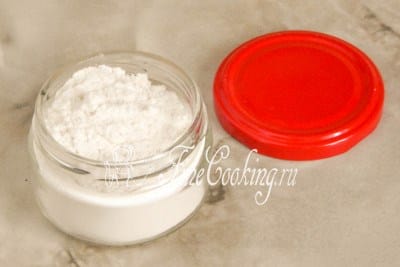
You need to store the baking powder in an airtight container, which we wash and dry completely beforehand. You can even dry it with a hot hairdryer, so that you probably don't have a drop of water left. In total, we get 80 grams of ready-made homemade baking powder. At the beginning of the recipe, I wrote 16 servings, focusing on the fact that, as a rule, this product is used in teaspoons, and we got 16 of them (1 teaspoon of baking powder equals 5 grams).
Cooking description:
There is nothing difficult in making homemade baking powder: you just need to mix all the necessary ingredients. You can add any starch or other flour instead of whole wheat flour, but remember that whole wheat flour is much healthier than regular flour. Such a baking powder must be used in the same amount as purchased, but at the same time it is absolutely harmless. Everyone is sure to have the ingredients for homemade baking powder, so here's how to make homemade baking powder.
Used sources and useful links on the topic: http://sorokulya.ru/chem-zamenit-razryihlitel-dlya-testa/ https://dolio.ru/chem-mozhno-zamenit-razryxlitel-v-raznyx-vidax-testa- i-kak-sdelat-vypechku-pyshnoj-i-vozdushnoj / https://nyamkin.ru/advice/chto-dobavit-vmesto-razryhlitelya-v-testo https://smashno.ru/kulinarnye-stati/chto-ispolzovat -vmesto-razryihlitelya-v-vyipechke https://chocoyamma.com/pekarskiy-poroshok-razryhlitel-testa/ https://food.inmyroom.ru/posts/19607-dlya-chego-nuzhen-razryhlitel-testa-i- kak-ego-zamenit-5-alternativ https://NoteFood.ru/pitanie/obshhie-voprosy/pekarskij-poroshok.html https://pripravim.com/pishhevye-dobavki/pekarskij-poroshok https://www.vedic-culture.in.ua/ru/vedic-cuisine/housekeeping-tips/1994-baking-powder https://food-wiki.ru/kak-sdelat-razryhlitel-testa-svoimi-rukami/ https://recept-bistro.ru/recept-razryhlitelya-v-domashnih-usloviyah.html https://sovets24.ru/1431-razryhlitel-dlya-testa-svoimi-rukami.html https://www.povarenok.ru/recipes/show/75670/ https://zen.yandex.ru/media/id/5c4692051498e100afc993a7/kak-samomu-bystro-sdelat-razryhlitel-dlia-testa-5c5417baf3e87e00ad21577f https://www.edimdoma.ru/kulinarnaya_shkola/posts/18281-chem-zamenit-razryhlitel-v-vypechke https://topnovoje.mediasole.ru/5_sposobov_zamenit_razryhlitel_dlya_testa https://disertiki.ru/sovety/chem-zamenit-razrykhlitel-testa.html https://finecooking.ru/recipe/razryhlitel-v-domashnih-usloviyah https://povar.ru/recipes/domashnii_razryhlitel_testa-60105.html
Post source: lastici.ru