
Proven: Creative people think and act differently. Creative people – what they are
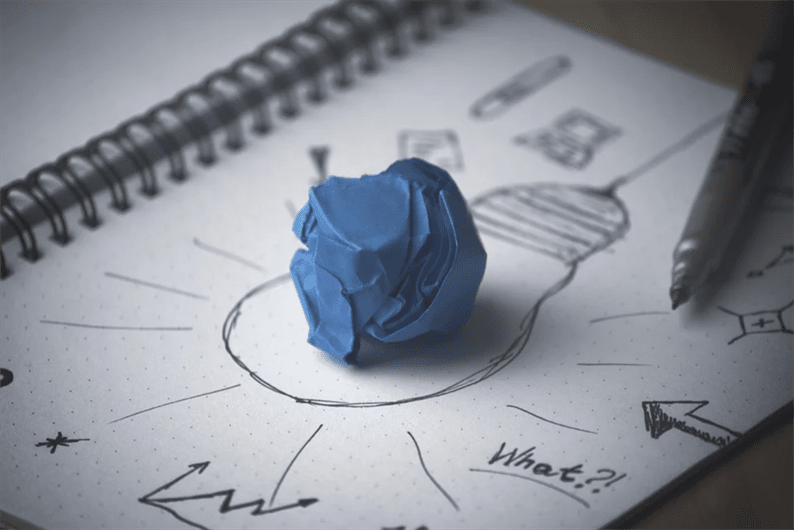
What is creativity?
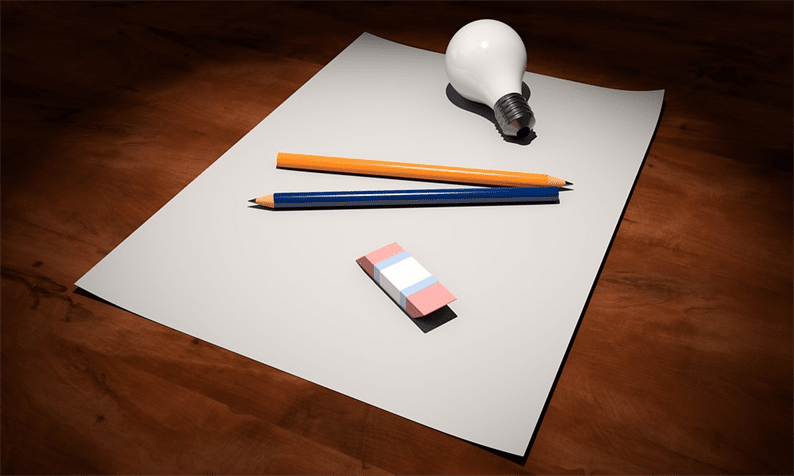
When we come to an art exhibition or visit a theater, an opera, we can answer with precision – this is an example of creativity. Similar examples can be found in a library or movie theater. Novels, movies, poetry – all these are also examples of what a person with a non-standard approach can create. However, work for creative people, whatever it may be, always has one result – the birth of something new. This result is also the simple things that surround us in everyday life: a light bulb, a computer, television, furniture.
Creativity is a process during which material and spiritual values are created. Of course, assembly line production is not part of this, but after all, every thing was once the first, unique, completely new. As a result, we can conclude: everything around us was originally what a creative person created in the process of his work.
Sometimes, as a result of such activities, the author receives a product, a product that no one but him can repeat. Most often this refers specifically to spiritual values: paintings, literature, music. Therefore, we can conclude that creativity requires not only special conditions, but also the personal qualities of the creator.
Applied value
Human creative activity is a spiritual and material practice focused on the creation of original cultural values that did not exist before, the discovery of new patterns, as well as methods for transforming the world space. It is difficult to overestimate the applied value of the last category. This, in fact, is a cognitive and creative activity that underlies deep practical application in many spheres of social life. Its results in most cases are global in nature.

Process description
In fact, no creative person has ever thought about how he manages to achieve this or that result. What did you have to go through during this sometimes very long period of creation? What stages did you have to overcome? These questions were puzzled by a psychologist from Britain at the end of the 20th century – Graham Wallace. As a result of his activities, he identified the main points of the creative process:
- preparation;
- incubation;
- illumination;
- check.
The first point is one of the longest stages. It includes the entire period of study. A person who previously did not have any experience in a particular field cannot create something unique and valuable. First you have to learn. It can be mathematics, writing, drawing, construction. All prior experience becomes the foundation. After that, an idea, goal or task appears, which must be solved, relying on the previously acquired knowledge.
The second point is the moment of detachment. When long-term work or searches do not give a positive result, you have to throw everything aside, forget. But this does not mean that our consciousness also forgets everything. We can say that the idea remains to live and develop in the depths of our soul or mind.
And then one day an insight comes. All the possibilities of creative people open up, and the truth comes out. Unfortunately, it is not always possible to achieve the set goal. Not every task is within our power. The last point includes diagnosis and analysis of the result.

Signs of a creative person.
It is possible to recognize that a creative person is in front of us by at least seven distinctive features:
- The ability to see more than others;
- Striving for beauty;
- Free expression of your emotions and feelings;
- Ability to fantasize;
- The tendency to take risks and rash actions;
- Anxious attitude to their works;
- Following your dream.
A creative person will not put material goods above his fantasies and goals. Many authors spend years of their lives creating their works, without even realizing, in the end, whether they can make money from them. The psychology of creativity is more based on satisfaction with the result or the creative process itself than on the opportunity to get rich.
Although, you should not think that a creative person will go without a penny for a soul. Talented people can achieve recognition among their contemporaries. And doing what you love and make money.
An important property that determines creativity is the ability to see what is hidden from other people. Indeed, in order to create something new, you have to imagine it, see it in your fantasies. Some look at the sky and see clouds, while others – white-maned horses. Everyone hears the noise of the engine, and someone recognizes in it the beginning of their new musical composition.
The ability and desire to fantasize determines creativity in all its forms and manifestations. Before a master creates another sculpture, it must appear in his head. And even a new original wrestling technique is often carried out mentally, and only then it is performed on the mat.
Creative people – who are they?
When it comes to people involved in creative work, they usually immediately think of artists, musicians, poets, writers, less often scientists. And since these types of activity, due to their specific abilities, are not available to everyone, it seems that creativity is some kind of unique gift.
But is it? Try to answer the question yourself: is creativity possible in other activities? For example, in pedagogy. Can't a teacher be creative? And the cook? And what about the manager, engineer, plumber? Agree that creativity is possible in a variety of activities, and it is available to everyone. The question is: will everyone take the opportunity to be creative? To understand this, it is worth understanding what creativity is.
The nature of a creative person
For many decades, scientists and ordinary people have been trying to better understand not only the process itself, but also to study the special qualities of the creators. The personality of a creative person is of great interest. Experience shows that usually representatives of this type are highly active, expressive behavior and cause conflicting responses from others.
In fact, no model developed by psychologists is an exact template. For example, such a trait as neuroticism is often inherent in people who create spiritual values. Scientists and inventors are distinguished by a stable psyche, poise.
Each person, creative or not, is unique, something in us echoes, and something does not coincide at all.
There are several character traits that are more inherent in such individuals:
-
curiosity;
-
self-confidence;
-
not too friendly attitude towards others.
The latter is caused, perhaps, due to the fact that people with out-of-the-box thinking think differently. It seems to them that they are not understood, condemned or not accepted for who they are.
Psychological characteristics of creativity
In psychology, creative activity is defined very simply. This is the creation of something new: paintings, music, scientific theories, buildings, mechanisms, culinary recipes, teaching methods, methods of activity, etc. That is, creativity is not a special activity, but its form or level. There is a reproductive activity – replication, performing operations according to the model assimilated by a person in the learning process. And if a person invents something of his own, does something in a new way, then this is already creativity.
Yes, there is artistic creation associated with specific types of activity, which are united by the general concept of “art”. But a musician can play in strict accordance with a score written by a completely different person – a composer. And a painter can masterfully make copies of paintings. And it doesn't count as creativity.
But, being possible in any field of activity, creativity requires special qualities and abilities from a person. First of all, these abilities are associated with the cognitive, cognitive sphere, especially with thinking.
The cognitive sphere of a creative person
The question of the originality of creative thinking has been of interest to psychologists and philosophers for a long time. But it was only in the 20th century that they began to study it seriously. This was due to the urgent need of society for creative personalities. Such a need has always existed, then only by the beginning of the last century society realized that creativity can be effectively used not only in the field of art and science, but also in all other areas of life, including in marketing, the creation of new goods and services, in the field of management. etc.
The result of this increased interest was the development of the psychology of creativity and the development of a theory of creative thinking. Thanks to the research of such scientists as J. Guilford, E. de Bono, G. Altshuller, S. Mednik, T. Busen, J. Ponomarev and others, the main characteristics of this unusual type of thinking were revealed.
- Divergent character. From the point of view of J. Guilford, divergence (direction in different directions) is the main sign of creative thinking. This distinguishes it from convergent, unidirectional logical thinking.
- Imagery. Creative thought is born in the form of an image, which was pointed out by A. Einstein. Creative ideas are put into words only in the process of developing and communicating them to other people. Therefore, creativity manifests itself most vividly in the field of art, which operates with images.
- Associativity. Associations are connections that arise in the brain between different elements or blocks of information. They help to connect to thinking the most different spheres of our experience, knowledge, ideas. The more such associations arise, the more interesting and original thoughts are born.
- Spontaneous activity of the imagination. A creative person not only thinks in images, in his brain they are born spontaneously, without much effort, thanks to a developed imagination.
In addition to special thinking, figurative memory plays an important role in the cognitive sphere of a creative person, helping to preserve a lot of useful information, and the ability to focus on one's activity. Well-managed, developed attention, combined with imagination, allows creative people to notice the unusual, the amazing in the world, what others do not see.
The role of the volitional sphere
Along with the concept of “creative personality”, the term “creative” is often used. The word itself comes from the English noun creativity – creativity, creative giftedness. Despite the obvious kinship of these two concepts, there is a difference between them. Creatives are people who are creative, active, and not just endowed with the ability to be creative.
For people, even with a high creative potential, such activity is not always typical. Often the creative process takes place at the level of consciousness, and its results are not always realized in practice. So you can come up with an original, fascinating story, but the book will never be written. Lying on the couch, you can develop a project of your own business, but you will never realize it. And if you only knew how many brilliant ideas, inventions and artistic masterpieces remained “on the couch”!
To become a creative, active person, creative thinking alone is not enough, you also need volitional qualities. After all, a brilliant idea needs to be developed, persistence in proving it, high efficiency in its implementation, not to be afraid of difficulties, not to give up before failures and be ready for criticism, ill-wishers and envious people. Will in the creative process often plays an even greater role than ability, level of creativity and intelligence.
Area of interest
How are new ideas born and new solutions to complex problems found? In fact, our brain cannot come up with anything absolutely new, for example, we cannot imagine what we have never seen, if there is no description of it. Creativity is a combinatorial activity, that is, the transformation and combination of elements of previous experience, knowledge available in memory, ideas, etc. The information stored in our memory is a building material, and the more it is and the more diverse it is, the better the conditions for creativity …
For a creative person, not only the volume, but also the variety of knowledge is important. This allows them to be connected to solve a wide variety of tasks. And if associative thinking is also well developed, then the combination of information creates almost unlimited possibilities for creating something new. Thus, creatives are distinguished not only by their creative abilities, but also by their versatile interests and erudition.
Now the time has come when, it would seem, the need to memorize and store large amounts of information has disappeared. After all, there are colossal Internet databases where you can find everything. Yes, but they are outside of our brain, which means they do not participate in the process of creativity, which is largely spontaneous and unconscious. This means that erudition and versatile interests have not lost their importance. Unless, of course, you want to be a creative person.
The main differences
If there is a very creative person on the list of your acquaintances, then you will definitely understand this. Such personalities are often in the clouds. They are real dreamers, even the most delusional idea seems to be a reality for them. In addition, they look at the world as if under a microscope, noticing details in nature, architecture, and behavior.
Many famous people who created masterpieces did not have their usual working day. There are no conventions for them, and the creative process takes place at a convenient time. Someone chooses early morning, someone's potential wakes up only at sunset. Such people do not often appear in public, they spend most of their time alone. In a calm and familiar atmosphere, it is easier to think. At the same time, their desire for new things constantly pushes them to search.
They are strong, patient and risky personalities. No amount of failure can break the belief in success.

Creative people see the world differently than others.
At the same time, creative people want to share their vision and interpretation with the rest of the world. For them, the world is full of many meanings, shades of meaning and complexity, and it is also filled with opportunities that an ordinary person does not have.
Creative people know that the impossible is possible because they understand that nothing in the world can be sure.
Seeing that the world is filled with limitless possibilities, they want to leave their mark here. They want to add their brushstroke to the finest of art – life itself.
When you see the world differently than others, you stand out. Many people dislike those who stand out. For some reason they are afraid of “white crows”.
Others simply prefer inertia and persistence. They are afraid of what they do not know, they do not like the unknown and related misunderstandings.
They are often introverted and tend to be alone.
This is not to say that creative people do not like all the people around. They just spend more time alone with themselves because it allows them to focus on what interests them. They can think, dream, plan and create something.
Creative individuals must constantly be in the creative process. Otherwise, their creative “itch” will be simply unbearable. Yes, they can be sincerely devoted to their friends, but in the same way they rush with their ideas and products of creativity – sometimes it even develops into an obsession
Who would blame them, on the other hand? When you have a job, you have to get it done, be productive, and meet deadlines. There is always time for socialization.
The reason creative people are often successful in competition is not because they are smarter than their competitors. The point is that they have a higher level of work ethics.
Creative individuals are accustomed to being perfectly oriented in a project, accustomed to the fact that it literally absorbs them. It's hard to compete with this.
They do not measure their abilities by the yardsticks by which others do.
They may not always be successful in school or at work (in a job that most people consider normal). It would be better for them to create than study and work. On the other hand, and for whom not?
The difference is that creative people are literally obsessed with their creativity. Their passion cannot be hidden.
If you are a creative person, it is almost certainly difficult for you to do monotonous work. When you are a creator by nature, you live in joyful anticipation, constantly trying to discover and create something new, trying yourself in various fields.
Creative people go to school and then to work, like the rest, but only because they have to do it. They tend to settle for imperfect work until they find something more interesting for themselves in terms of self-development.
They are more emotional
For them, life is louder and brighter than for most people. But this is not because creative people get more information about the world, they just pay more attention to it.
Creative individuals may be introverted, but they spend as much time “wandering in themselves” as they do in the outside world.
They pay a lot of attention to the little things and allow those little details to give them much more attention than the average (not so creative) person.
For them, the world is full of meaning. For many of us, the surrounding reality is blurred outlines. For creative people, the world is everything.
Of course, sometimes such individuals get lost in their travels. In general, being a creative person means sometimes having problems with the surrounding reality.
They are dreamers
People do not understand dreamers, because they always dream of change. A better world, a better reality, a better future. They can imagine the unimaginable and often believe they can make the impossible possible.
If you like to keep everything in its place, you will be frightened by the mess that always accompanies a creative person. The life of a creator is determined by change. Especially – the changes that he himself creates.
People have always been afraid and will always be afraid of dreamers. We prefer to stop there and be “average”. We do not like white crows and thinkers. We are a nation that is doing everything we can to create an established middle class.
It will be fun enough to fail this mission.
A peculiar relationship with time
If you are not alien to a creative approach to life, then your way of spending time can probably be called very peculiar. Sometimes you can work many hours a flight without feeling the passage of time, sometimes – in a strictly defined mode. Creative people have their periods of maximum activity during the day, and they stick to this regime unless they are too passionate about their work.
Developed sensory sphere
A creative person is unthinkable without the widest range of feelings that he is capable of experiencing. It is impossible to successfully create or have the prerequisites for this, being an emotional “cracker”. Therefore, if you are inclined to be creative, then you can probably notice a very impressive set of experiences behind you. This does not have to have a clearly expressed external manifestation: you can suppress your feelings – however, within you, all the events that take place must find a very strong response.
Risk appetite
Creativity in itself can be called to some extent a challenge, which is why people who are prone to it have a natural craving for breaking the foundations and taking risks. This is not about recklessness and irresponsibility, but about the willingness to do what others do not dare to. Naturally, expecting to get some kind of positive result from this (even if these expectations are not met).
Low dependence on stereotypes
It is impossible to find a person who would be absolutely free from patterns and stereotypes supported by society. However, creative people tend to follow these patterns the least. They, as a rule, are perfectly aware of their existence, understand what role they play in public life, but they can do without them without problems, no matter what their environment expects from them.
Love for new experiences
A creative person cannot sit in one place all his life – he needs variety and novelty like air. And if his work remains the same for many years, then at least he will travel a lot, walk around unknown places of the city in which he lives, look for new acquaintances, interesting entertainment and other opportunities to “feed” himself with new impressions.
The ability to be alone
The creative process is impossible without a kind of meditation performed alone with oneself. Therefore, another clear sign of a person who has a penchant for creativity is the lack of fear of loneliness. If at times you are even glad to be without company and think, feel something for which there was no time or opportunity in the circle of people, then it is quite possible that you are really inclined to creativity.
Continuous brain activity
The creative mind is a non-stop machine fueled by excessive curiosity. There is no dedicated button that can pause and direct thoughts in a calm direction. Creative people constantly have various ideas that may seem unrealistic to many. A talented person in his frantic rhythm of life draws more and more strength to embody funny and sometimes crazy ideas.
Liar talent
It should be noted that creative people are great liars. A number of experiments have shown that such individuals are inclined to more intricate and complex lies. In addition, they themselves can easily figure out the deceiver. One of the manifestations of creativity is the unacceptability of existing patterns and the breaking of established stereotypes. Talented people quite easily perceive the unethicalness of their own behavior, and also calmly relate to similar actions of others.
High degree of distrust
A gifted person tends to distrust even close people. Despite the fact that he quickly recognizes lies, suspicion of others is also a hallmark of talent. And this is not surprising, because in order to make a new discovery, you need to learn to look at elementary things from a different angle. That is why a talented person questions everything, because it is much easier to create something new from scratch.
Insolence
In the course of various experiments, it has been established that modesty is not the lot of talented people. Many of them, as a rule, take pride in their abilities and skillfully use them, which allows them to fill themselves with an exorbitant price. In addition, a gifted person is very eager to show how impressionable he is and how much he knows how to worry.
Depression
Often, talented people fall into depressive states. Many such geniuses have various phobias: some are afraid of getting sick with an incurable disease, others are afraid to die young, and still others faint at the sight of a spider or a cockroach. Psychologists in many countries have tried to find out if depression is really talent. After examining the data obtained from psychiatric clinics, they found that creative individuals are more likely to develop severe forms of mental illness. In addition, it has been proven that not only talent, but also such disorders can be inherited.
It's hard to believe in yourself
Even if a person is confident in his abilities, over time he begins to ask questions: “Am I good enough? Am I doing everything right? ” Creative people constantly compare their work with the creations of other masters and do not notice their own brilliance, which may be obvious to everyone else. In this regard, creative stagnation is often observed, when a person simply gives up, thinking that all his previous ideas were in vain and meaningless. At such a moment, it is very important that there is a faithful friend nearby who would help the master through this difficult period.
They always want to experience something new.
What is routine? Creative people have never heard of this. The monotonous rhythm of life – “work – home – sleep” – is the worst thing that can happen to them. They need adrenaline, they need movement, new emotions.
For them, failures and misses are a huge motivation.
Life, as we know, is in black and white stripes. Incredible success can be followed by massive failure. All ingenious inventors and artists ever have doubts, make mistakes. But, if others would abandon the case halfway through, without seeing intelligible results, creative people will not leave everything so easily. Of course, persistence is characteristic not only of people who think outside the box, but for the latter this quality is very important.
They do what inspires them.
The most important thing for creative people is to do what they really enjoy. They don't need any recognition. And they will not come up with something from under the stick either. The freedom to create everything new and new, to work better and better – this is happiness.
Creative people often put themselves in the shoes of others
It's so interesting to learn someone else's philosophy, to look at the world from a different point of view. For a moment, starting to think like a different person is a great way to develop yourself and also learn to understand others.
It is difficult for them to do one thing
Creative brains strive for diversity. They quickly get bored with doing the same type of business. As soon as they feel it, they immediately try to find something new and exciting.
They need the right environment to create.
To unleash their full creativity, they need to be in the right environment. This can be a studio, a cafe or a secluded corner in an apartment. Creative people need the right space to bring their ideas to life.
They are 100% focused
When it comes to creation, they disconnect from the world and completely immerse themselves in the process. They cannot work on several tasks at once, because it constantly distracts them. If interrupted, it is difficult for them to regain their previous level of concentration.
Attitude towards the life of a creative person
Creativity – what is it in psychology
It is impossible to unambiguously describe the attitude towards life of a creative person. He is dreamy by nature. He sees inspiration around him, he has all new ideas, aspirations, discoveries. At the same time, these people rarely recognize their creations, usually the work done does not please such a person, and at other times it even leads to depression.
Failure as a push to action
Note! For all their outward positiveness, it is creative people who are more prone to various types of depression.
However, it often happens that it is precisely the negative phenomena in the life of the creator that push him to intensified work, into which he plunges headlong.
The psychology of attitudes towards failure

Failures spoil the mood and can take away the desire to move on in their development. No one is immune from the state of fatigue and apathy, when, after failed cases, they give up and the desire to do something disappears. People in creative professions are especially worried about mistakes and mistakes, because they tend to take everything to heart – this is their general psychology.
Human psychology is reflected in the attitude towards life. The correct approach to failure will allow you not to waste precious time and not stop on your way. Only the one who does nothing is not mistaken. To begin with, it is important to learn well that absolutely no one is immune from failure. The main thing is not what happened, but a personal reaction – take mistakes as an experience through which you go through a new stage of development. Control your emotional state – do not let feelings take over you and deprive you of the opportunity to create for a long time.
General psychology: go beyond instructions
The peculiarities of the creative personality and its individual psychology go far beyond the usual perception of people. This quality of character – to see all things in a different, unusual light – allows a person to expand the boundaries of his own consciousness and develop more and more on his creative path.
Do not stop yourself in this natural ability – go beyond the instructions and rules, try to do more than you can and are used to. Leaving your own comfort zone will open up new horizons for creative victories for you, give you a reputation as a talented person, and contribute to personal growth and the development of psychology. Always do more than the instructions require – the psychology of developing your own potential has no boundaries and no end of possibilities.
Modern research
Previously, the opinions of scientists agreed that a person was either born creative or not. Today this myth has been completely dispelled, and we can confidently say that developing talents is available to everyone. And at any time in his life.
The basic qualities of a creative person, if desired and persistent, can be developed in oneself. In the only case, it is impossible to achieve a positive result, this is when the person personally does not want to make changes in his life.
Modern research has led to the conclusion that intellectual ability increases when logic and creativity are combined. In the first case, the left hemisphere is connected to work, in the second – the right. By activating as many parts of the brain as possible, you can achieve greater results.
How to communicate with a creative person
“Toxic” people – who is this in psychology
Having met a creative person, it is worth remembering that such a person tends to perceive life positions differently, stubbornly adhere to his reality, beliefs and views. In the art of communicating with her, it is recommended to adhere to the rule of “Three Ps”:
- Adjust. The society has not yet decided on the truth of the phrase “people do not change”, but one can absolutely confidently say: the representative of creativity cannot be changed. If someone wants to continue communicating with such a person, he can only adjust to his habits and character;
- Understand. Given the non-standard thinking of such people, you should not try to convince them of anything, it is easier to try to understand why they think so and not otherwise;
- Forgive. In general, these are kind, disinterested people, but they can be harsh or too carried away by their occupation. If they do not put it that way or have forgotten something important, do not hold them grudge.
Problems in communicating with a spiritualized person
A creative character is independent in everything, he is used to relying on himself. When communicating with such an individual, you should be prepared for the fact that he may be offended or offend the interlocutor with common interests. Considering how such people like to dream, it happens that the creator has already “experienced” a certain dialogue in his head, which was not in reality, and is behaving properly. Such moments are difficult to grasp, understand, explain, it is not easy to get answers from such a person.
Work for a creative person
After leaving school, the question arises before graduates: where to go? Everyone chooses the path that seems to him more interesting and understandable, at the end of which the goal or result is visible. Unfortunately, it is not always possible to realize the potential inherent in us.
What do you think is the most suitable job for creative people? The answer is simple: any! Whether you are doing housekeeping or designing space stations, you can be resourceful and resourceful, create and surprise.
The only thing that can really interfere with this process is outside interference. Many managers independently deprive their employees of the desire to make independent decisions.
A good boss will support the impulses for development and creativity, of course, if this does not interfere with the main process.

Sources used and useful links on the topic: https://FB.ru/article/220942/chelovek-tvorcheskiy-ego-harakter-i-kachestva-vozmojnosti-tvorcheskih-lyudey-rabota-dlya-tvorcheskih-lyudey https: // cosmeton .ru / karera / kto-takoj-tvorcheskij-chelovek.html https://WikiGrowth.ru/razvitie/tvorchestvo/ https://psychologist.tips/4216-tvorcheskaya-lichnost-kto-eto-v-psihologii-osobennosti- priznaki-psihologicheskij-portret.html https://www.cluber.com.ua/lifestyle/samorazvitie-lifestyle/2015/02/5-chert-haraktera-tvorcheskih-lyudey/ https://www.profguide.io/article /10_priznakov_togo_chto_vi_tvorcheskiy_chelovek.html https://FB.ru/post/culture/2015/6/23/49 https://www.factroom.ru/obshchestvo/10-facts-about-creative-people https://flytothesky.ru/tvorcheskie-lyudi/ https://srazu.pro/teoriya/tvorcheskie-lyudi.html
Post source: lastici.ru