
What is Bitcoin secured – what you need to know? What are cryptocurrencies really backed by?
Content
What is Bitcoin?
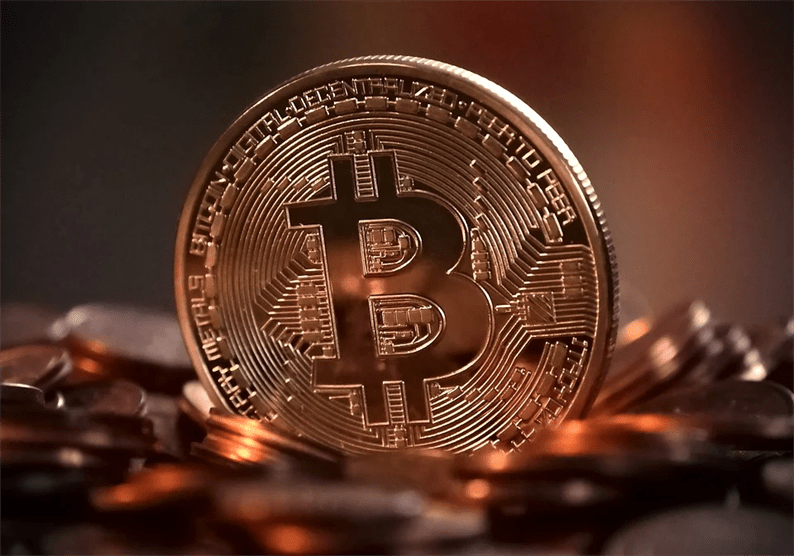
Bitcoin (BTC) is a cryptocurrency (hidden money), a form of electronic money. It is a decentralized digital currency with no central bank or single administrator that can be sent from user to user on a peer-to-peer Bitcoin blockchain network without the need for intermediaries.
Unsurprisingly, Bitcoin emerged in 2008 right after the Occupy Wall Street protest movement accused major banks of misusing borrowers' money, defrauding customers, counterfeiting, and charging huge fees.
A certain “Satoshi Nakamoto” is considered the creator of bitcoin. Nobody knows who is hiding behind this pseudonym – a real person or a large corporation.
The Bitcoin pioneers wanted to put the seller in charge, eliminate the middleman, remove interest payments, and make transactions transparent to eliminate corruption and reduce fees. They have created a decentralized system where you can control your funds and know what is happening to them.
Bitcoin has spread quite well in a relatively short time. Companies around the world, from the large American jewelry chain REEDS Jeweler, to a private hospital in Poland, accept this currency. It is also used by billion-dollar companies such as Dell, Expedia, PayPal and Microsoft.
Bitcoin is promoted by sites such as Bitcoin Magazine, publishing news, cryptocurrency discussion forums and trading coins. Bitcoin has its own application program interface (API), price index and exchange rate. By its very nature, bitcoin is a virtual currency or a link to software.
When making purchases, you can pay by wire transfer or cash in the usual way, or you can use Bitcoin by signing your purchase, which is a long string of 16-character security code.
The buyer decodes the code from their smartphone to receive your cryptocurrency. In other words, cryptocurrency is a digital information exchange that allows you to buy or sell goods and services.
The transaction becomes safer and more reliable thanks to the operation of a peer-to-peer computer network, similar to Skype or BitTorrent file sharing system.
Conclusion: Bitcoin is a computer program that allows its users to exchange the digital codes generated by it, which are “cryptocurrencies”. The program is designed to eliminate administration by governments and the central bank, as well as unnecessary intermediaries.
At the same time, no one knows the creator and “administrator” of the program. There are no guarantees of its further functioning. Bitcoin exists as long as there are computers on which this program is installed.
Where can I get bitcoins?
You can get your first bitcoins in any of four ways:
- Cryptocurrency exchange, where you can exchange regular money for bitcoins or satoshi, which are like cents like BTC. Options: Coinbase and Coinsquare in the US and Canada, and BitBargain UK and Bittylici in the UK
- Bitcoin ATM (or cryptocurrency exchange) where you can exchange bitcoins or cash for another cryptocurrency. For example, BTER and CoinCorner.
- A bulletin board where you can find a merchant to help you exchange bitcoins for cash. Resources: The main exchange site is Local Bitcoins.
- You can sell a product or service for Bitcoin on dedicated sites.
Attention! Bitcoin is known to be popular with scammers, so before using any service, look for customer reviews or ask questions on the Bitcoin forum.
How does Bitcoin work?
Without getting into the technical details, it can be said that Bitcoin operates with an extensive public ledger, also called blockchain, where all confirmed transactions are included in what are called “blocks”.

When each block enters the system, it is sent to the users' peer-to-peer computer network for verification. This way, all users are aware of each transaction, which prevents theft and double spending – when someone spends the same money twice. It also allows blockchain users to trust the system.
There is no way for the central bank to release a stream of new bitcoins and devalue those already in circulation.
Unlike traditional currencies that are issued by central banks, bitcoin lacks basic monetary authority. Instead, it relies on a peer-to-peer computer network of its users' computers, akin to the networks that underpin BitTorrent, file-sharing systems, and Skype.
To see how the system works by example, let's imagine that a certain Cyril decided to try the system. He will subscribe to a cryptocurrency wallet to deposit his bitcoins.
Bitcoin wallets
Kirill can use three different applications:
- A full client is like a separate mail server that handles all aspects of the process without relying on third party servers. Kirill himself will control the entire transaction from start to finish. However, this is not for beginners.
- The lightweight client is a stand-alone mail client that connects to a mail server to access your mailbox. It will store Kirill's bitcoins, but it will need a third-party server to access the network and make a transaction.
- A web client is the opposite of a “full client” and resembles webmail in the sense that it depends entirely on a third party server. The third party replaces Kirill and manages his entire transaction.
Wallets come in five main types: Desktop, Mobile, Internet, Paper, and Hardware. Each has its own advantages and disadvantages.
Bitcoins are generated mathematically, as computers on this network perform complex number-processing tasks – “mining” (from the English mine – to extract, dig, mine) bitcoins.
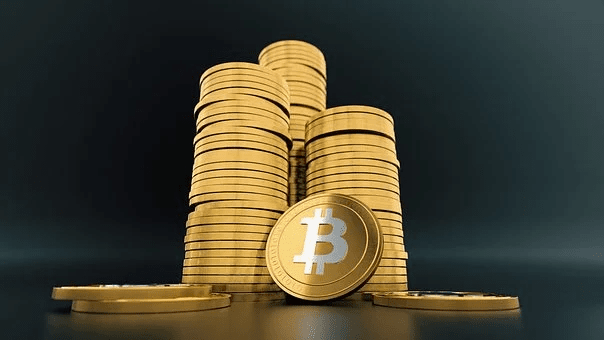
The math of the Bitcoin system has been tuned in such a way that over time it becomes more difficult to “mine” bitcoins, and the total amount that can be mined is limited to 21 million.
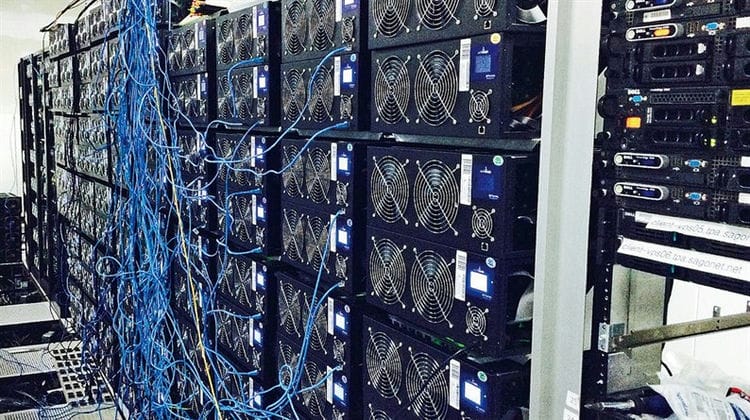
Modern “mines” that produce bitcoins are large-scale rooms lined with racks with powerful processors (computers) that solve the “tasks” of a bitcoin program and mine bitcoins.
Conclusion: Cyril does not need to go into a real mine – they pay little there now. He just needs to select a server, connect to the desired program and you can “mine”, albeit fake, but “real” money.
How is money backed up?
Traditionally, we are used to thinking that money and its purchasing power depend on some other value. For example, oil, gold, other assets. The more expensive these resources are, the higher the rate of money. Bitcoin is not backed by a gold fund or oil rigs, which is often questionable. In practice, everything is not so commonplace. For example, the value of a pound was previously pegged to gold held by the bank that issues banknotes. Over time, this tradition became history and banks began to issue banknotes “on trust”, regardless of how much gold is actually in reserve. This also applies to the dollar, the fiat value of which is actually 7-10 times lower than officially announced. Therefore, gold reinforcement is no longer relevant.

The difference between bitcoin and the usual fiat money is the absence of an institution that issues “bills”. They cannot be painted over and the cost can be reduced. Bitcoins are “issued” by miners, which completely makes the process decentralized, which means that it is impossible to artificially create a deficit and a crisis.
Bitcoin reinforcement
How to determine the value of a cryptocurrency if there is no issuing company that can be responsible for it? In order to determine what Bitcoin is backed by and how its value is calculated, it is necessary to take into account :
- Cryptocurrency is a combination of numbers that is obtained in the process of mathematical operations. For this, resources are expended, which determines its initial cost, which is constantly growing.
- The number of bitcoins is limited – by 2034 there will be 21 million, which will stop mining, and the amount of this currency will decline.
- The higher the demand, the higher the price, this is the law of trading. Since bitcoin is given for real fiat currency, it has a certain value.
- Bitcoins are already calculated and paid on a par with other assets in some countries – coins can be used to pay for an order in an online store, transfer funds through PayPal or WebMoney.
Who is a miner and how to become one
New bitcoins are emerging due to a special computing process. The term originated from the English. “Mining”, which means “mining” in translation. Due to a special algorithm, additional blocks are gradually formed (for Bitcoin, this is SHA-256, for Ethereum – Ethash, for Dash – X11). Each type of cryptocurrency has its own characteristics, but they do not make a fundamental difference. The main thing is to figure out how to mine bitcoins on your home computer in 2018.
PC owners who mine BitCoin digital coins are called miners. They, by analogy with gold miners (in English miner), are engaged in the extraction of cryptocurrency.
Bitcoins are often called virtual gold, which is close to reality. The currency is mined digitally and has great value.
As with minerals, cryptocurrencies are becoming more competitive. Every year it becomes more difficult to obtain new coins, and the equipment required for this becomes more expensive. But the process is still available. The owner of a computer with a powerful video card, who knows how to set up the easiest-to-use mining programs, can become a miner.
What equipment is needed for bitcoin mining
There is only one option for how to earn bitcoins using a computer. This is one or more gaming video cards (from the TOP-3 at the time of assembly of the system unit). The higher the power of the video chips, the faster the calculations of the algorithm will go and the more efficiently the program will work. Alternatively, specialized technical means are produced.
The following ones have an affordable cost:
- ASIC devices. Computers on processors adapted for computing the algorithm of a particular cryptocurrency. Suitable for mining a limited number of varieties, but more efficient than video cards on a PC;
- FPGA matrix. Programmable devices that allow you to get the most out of mining. Difficult to set up, therefore they are not widely used.
On an industrial scale, cryptocurrency mining is carried out by dozens of servers in racks. They are combined into a single pool capable of processing one single program – according to the calculation of the next block, from which a “coin” is ultimately collected. Equipment for individual use is created taking into account the cost of components and the current rate of the same bitcoins. This allows you to count on profit after several months of work for payback. In home computers, the miner must perform such calculations on his own.
Cloud services for mining
To minimize the worries of setting up a computer, monitoring the state of technical means working for computing cryptocurrency, cloud services of miners have appeared. In fact, these are the same servers designed for industrial production, but with the ability to connect ordinary users to them. Such equipment is called a “farm”. Anyone who wants to pay for the connection and maintenance of “their site”, and depending on the rented server capacity, he receives coins to his personal wallet.
In the absence of funds to invest in equipment, it is recommended to use rented facilities. From the very first profit, you can think about buying your own.
The benefits of cloud services are clear. The question “How to get bitcoins on your computer” almost disappears. In addition to the absence of the need to purchase expensive equipment on your own, it turns out to earn much faster. After all, servers are much more powerful than home computers and calculate blocks much faster. All that remains is to take care of the monthly payment for the service and regularly check the bitcoin wallet. Popular farms include Hash Flare, Genesis Mining.
If this option does not suit you, you can connect to the miner pool. Such associations are aimed at bringing together the power of many stand-alone computers and thereby speeding up the receipt of new coins. At the end of each stage, the profit is divided among the participants in proportion to the capacity provided. Co-mining makes earning bitcoin on a computer a breeze. The more users in one pool, the faster the next crypto coin will be calculated.
Cloud mining site that don't pay.
Perhaps you will find other sites in this direction that you like. But first, check out the list of unscrupulous sites that have stopped paying their users.
Bitcoin mining process
The creator of the first cryptocurrency, Satoshi Nakamoto, composed the program code in such a way that digital money was protected from inflation. For this, it is provided:
- Limit on the number of coins (21,000,000 BTC).
- Correlation of computational complexity.
- Reducing the reward to miners after every 210,000 blocks mined.
Payments are halved, but this is only beneficial, because due to the scarcity of Bitcoin, it is constantly growing in value. To mine bitcoins yourself, you need not only special knowledge, but also start-up capital to purchase computing equipment and pay for electricity costs.
You can immediately exchange the earned coins for fiat. But, in a period when the bitcoin rate is significantly lower than the historical maximum, it is inappropriate to spend cryptocurrency. Check out the materials on the Internet, look at the prices and decide for yourself whether such a business is profitable for you. After all, crypto mining is a business, not a hobby. Mining bitcoins at home is a commercial enterprise that is organized for the purpose of making a profit.
Equipment selection
Once upon a time it was possible to mine bitcoins on a home computer or even on a laptop. With the growing popularity of digital currencies, mining equipment began to improve. In principle, this was the initial concept of Satoshi Nakamoto, the inventor of the first cryptocurrency: “one processor, one vote”. He probably imagined the Bitcoin network as a community of equal owners of ordinary PCs. Although some experts believe that Satoshi foresaw the possibility of mining on GPUs, and hence the launch of mining farms.
But progress went even further and, for a long time, central processors and gpu-rigs are no longer suitable for bitcoin mining. After all, the more miners dig digital gold, the faster the complexity of computations grows and equipment of low power ceases to cope with the task at hand. There was a need for miners able to iterate over long cryptographic chains at high speed. Therefore, special integrated circuit computing devices (ASICs) were released.

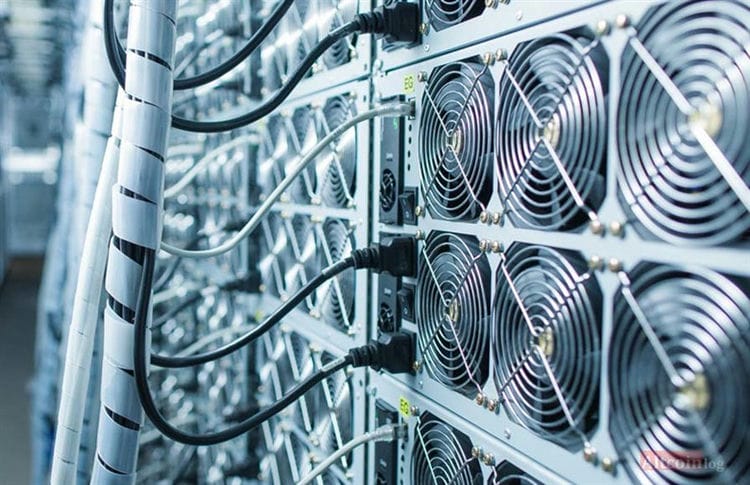
ASIC is a highly specialized computer that performs only one operation, mining cryptocurrency on a specific algorithm. ASIK is arranged very simply.
The rectangular metal case contains a control board and one or more hash cards with chips. At the end there are cooling fans, and the power supply can either come with the device or be sold separately. When choosing an ASIK miner, you need to pay attention to the following parameters:
- Hashrate
- Power consumption;
- Price.
The higher the hash rate, the faster you get money. But if you can buy a model with a lower hash rate, but more energy efficient and cheaper, then the choice is obvious. ASICs for Bitcoin mining can also mine its forks operating on the SHA-256 algorithm. But, it is impossible to dig Litecoin or Ethereum with their help.
Using the instructions, you can configure the equipment yourself, but you will hardly be able to operate it at home. ASIK makes a lot of noise, it is intended for non-residential premises. In addition, in the room where the ASIC miner works, it is necessary to observe the temperature regime and humidity required in the instructions. Do not allow a lot of dust to settle on the device, this will lead to overheating and premature failure. If you do not have a non-residential, detached, clean building with good ventilation, to which the power grid and the Internet are connected, immediately after the purchase, take ASIK to the mining hotel.
Wallets and software

Okay, you bought the mining hardware, but how to get the money you earn if you don't have a bitcoin address. You can easily create a personal crypto wallet yourself by downloading the appropriate application to your home computer or smartphone. There are web resources on the network, by registering on one of them, for example, on Blockchain info, you will receive a personal page with an address and a set of tools for performing transactions. There are also physical wallets for storing cryptocurrency offline. They guarantee the complete safety of your funds, but they are not cheap (minimum $ 50).
In addition to a crypto wallet, you need a personal computer to prepare ASIK. First, download the IP Reporter application, and further settings are made through the browser. When bitcoin was mined on cpu, and then on video cards, the installation of special programs was required. Some of them, for example, BFGMiner, are still available for download. Such software can be used to set up production on ASIKs in solo mode. But, nevertheless, it is better to join a pool for collective mining.
Pool selection
A pool, in miner slang “mine” or “mountain pool”, is a server to which many miners are connected, working in a common boiler. Miners receive the task and send possible solutions of the block hash (share) to the server. When the block is signed, the award is divided among all participants, in proportion to the share of the sent ball. The pool organizer makes a profit by charging a commission from each member.
The more miners work on the pool, the higher the chances of finding a block faster than competitors. However, you should pay attention to the stock accounting system, the size of the commission and the reputation of the site.
The ASIK firmware already contains leading pools, for example, the same mining machine manufacturer Bitmain has its own Antminer pool. But if something does not suit you, you can work with another server by changing the hardware settings.
Equipment start-up and control
The setting options depend on the specific ASIC model. Instructions for launching and connecting to the server of many popular ASIK models for Bitcoin mining are on our website. You can give some general recommendations regarding any device on integrated circuits.
- After a new miner is sent to you, carefully inspect the packaging and the device itself for external damage. Then, keeping it suspended, gently turn the device over several times. If something rattles inside, it means that one or more chips have fallen off and the device cannot be started.
- The power supply must match the power consumption of the device. It is necessary to carefully check all connections before starting.
- ASIK can only be connected to the Internet via cable.
- The optimum air temperature in the room is from +5 to + 25C. If it gets hot, the device will overheat and fail. You cannot operate miners in high humidity conditions.
- The noise level of the ASIK is 75 dB. It is almost impossible to sleep with him in the same room or even in the next one. Some craftsmen equip noise-absorbing boxes, but it is better to place them in a garage or hand them over to a mining hotel.
- ASIC configuration is performed through a PC, as well as router configuration. It is necessary to determine the IP of the miner and hammer it into the top line of the browser. Then enter the interface, execute and save the settings, restart the miner and mining will start.
The work on the pool is monitored via a computer or a special application for a smartphone. In order for the device to serve as long as possible, it is necessary to regularly clean it from accumulating dust.
The difficulty of mining bitcoins
In the Bitcoin network, the difficulty of mining a new block is recalculated every 2016 blocks, that is, approximately twice a week. The difficulty level can increase or decrease depending on the time spent creating a new batch of blocks, and how much it differs from 2016 minutes (20160 * 10). On average, it takes 10 minutes to generate 1 block. The reward for one block found is now 12.5 BTC.
The likelihood of a miner receiving a reward during this time is the ratio of his computing power to the computing power of the entire network. If it is small, then the chances of picking up the award are also not high.
Since the complexity of Bitcoin mining is constantly increasing, users are invited to organize mining in several ways:
Solo loot
Assumes independent purchase and configuration of equipment. The user takes the reward for the found block. At the moment, Bitcoin solo mining has practically outlived its usefulness, since it does not make a profit.
Cloud mining
The most relevant option for mining bitcoins in 2020. Provides maximum profitability without requiring the user to participate in the technical part of the process. All you need to do is buy a cloud contract, top up your balance and wait until you can withdraw funds obtained in the cloud.
It is difficult to calculate how much solo miners and those who join pools or rent equipment earn from mining. In the first case, the reward for the mined block goes entirely to the miner, while the group mining assumes that it is divided among all the participants in the pool. And the cloud method implies rental costs.
But there is too much total power in the world now, and no large miner can compete with the pools.
Investments in third-party services are also quite reasonable: what is the point of buying your own equipment if it will still be inferior in capacity to production equipment ?!
Extraction in pools
Many users unite into communities and jointly mine and divide cryptocurrency according to their share of participation. Thus, the speed of mining increases, as well as the chances of each participant to receive a part of the reward.
Bitcoin mining software
To mine bitcoin on your computer, you can download and install special miner programs on it, such as MinerGate. They are easy to use, allow easy pooling, and are compatible with most operating systems.
Cons – high requirements for equipment and modest earning opportunities: the cost of BTC coins mined per day is about half a dollar.
Is home Bitcoin mining profitable?
The concept of home mining was popular in the early 2010s. Is Bitcoin Home Mining Profitable in 2020? Probably not. The complexity of calculations does not allow us to talk about adequate profit when working with low-performance equipment, which is a PC.
But if you mine on your home computer not bitcoin, but some promising altcoin, for example Ethereum, then perhaps after some time the equipment will pay off, and the miner will be a plus.
But even in this case, there are no guarantees that the coin rate will not collapse and the venture will not bring anything but losses.
Like any other business, mining only makes sense when the earnings pay off the money spent on the video card and electricity.
You can calculate the profitability on the Bitcoin mining calculator, which will give an average figure of how much you can mine with a specific card. The calculator window will display the data on the consumed electricity. This will let you know if mining will pay off.
In the future, mining cryptocurrency using the classical method will no longer be relevant. The cost of equipment will be guaranteed to grow, and it will be technologically obsolete and ineffective. The difficulty level in solving blocks will increase, and eventually home mining will become completely useless.
Sources used and useful links on the topic: https://pro-consalt.com/bitkoin-eto-chto-prostymi-slovami/ https://mycrypter.com/tutorials/chem-podkreplen-bitkoin/ https: // alpari. com / ru / beginner / articles / bitcoin-how-mine / https://inworker.net/cripto_bitcoin/dobit_bitcoin_na_compyutere.htm https://altcoinlog.com/maining-bitcoina/ https://cryptonisation.ru/majning-bitkoinov -sut-processa-s-chego-nachat-vidy-i-dohodnost-zarabotka /
Post source: lastici.ru