
Picked up a puppy on the street, what should I do? What to do if you find a dog on the street
Content
I see a puppy on the street. How to understand that he has no masters, and how to help him?
Everything is simple here: if you see a puppy on the street, next to which there is no owner, it means that he needs help for sure. This is either a “lost”, or a puppy born to a stray dog.
Dogs are companion animals. They need a person's company and his help. Especially kids: for them, due to their gullibility and inability to protect themselves, there is a particularly high risk of being hit by a car, at a catch point or into the hands of dog hunters.
You probably know that there are special organizations created to help animals. Of course, they can help you out with advice, but they won't solve the problem for you. In Belarus, these are simply associations of caring people, under the tutelage of each of whom is not one puppy, but a dozen dogs and cats.
People often take cats and dogs found in Minsk to the Fauna Gorod State Enterprise on Gursky Street, thinking that they are doing a good deed. In fact, they send the animals to the place of euthanasia. Even if someone donates a home to the kids before they are euthanized, the dogs are guaranteed to collect a bunch of infections. And it will be very difficult for a young body to cope with them without vaccinations.
Therefore, if a puppy rushed at your feet, his only chance for a happy future is you.
There are several puppies, but I can only shelter one. What to do with the rest?
If you meet such a large company, you might panic. Allow yourself this emotion: you can even call your friends and tell how terrified you are. Tested: you can find a good overexposure this way. We often underestimate our own environment, which is ready to help in times of need.
If your friends are in no hurry to help, you can publish posts on social networks. Supplement them with nice, non-blurry photos and spread them to communities followed by people with a passion for animals.
Where to take the puppy first: home or to the vet?
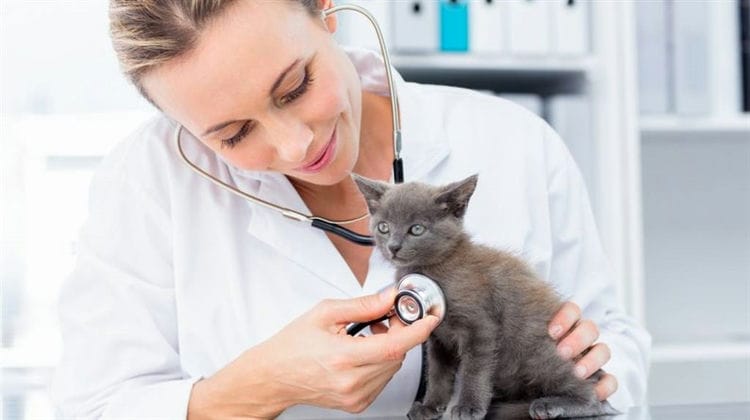
A puppy picked up on the street should be taken to the veterinary clinic immediately. The doctor will examine the baby, measure the temperature, advise you about his age and condition. Ask your pet to take a blood test and illuminate it with a LUM lamp. The first will help to identify diseases that the examination will not show, the second will allow you to find out if the pet has lichen.
If this unpleasant disease is found, the doctor should tell you about the treatment, precautions and handling of the apartment. An experienced veterinarian would never recommend putting your pet to sleep in such a situation.
Also ask your healthcare professional how to get rid of fleas and worms. External and internal parasites not etched in time can harm the animal. Often people prefer to “google” this information and buy the wrong drugs or calculate the wrong dosage. The result is sad: intoxication of the body. Therefore, take information not from forums and dubious sites, but ask as many questions as possible to a specialist with a veterinary education.
Veterinarian examination and necessary tests
- Go to your veterinarian for a chip check. Devices for reading them are available in all clinics. It happens that the chips do not contain information, but this is rather an exception. If successful, you will have the owner's contacts! It is advisable to immediately go to the veterinary clinic with a hospital, this will save a lot of time, read about this in the chapter “search for overexposure.”
- Let the doctor examine the ward barbel and tell us under what circumstances he was found.
- Be sure to pass basic tests: parvovirus, coronavirus, plague, adenovirus (500-600 rubles for each analysis, depending on the laboratory). The term of completion is 2-3 days. Unfortunately, there are no tests for rabies. And the only thing that remains is to monitor the symptoms for 14 days.
- The doctor should inject serum as a short-term protection against infections.
Set up a cozy place
Each animal, especially one picked up on the street, needs its own cozy corner in the house. To do this, you need to choose a quiet, non-passable place, away from drafts and heating appliances. A good option would be the far corner of the room, where households go least often. A new home is stress for the puppy and at first you shouldn't disturb him, if he is hiding in his corner and does not want to go out, then you need to give him time to adapt.
In the room where the puppy lives, it is necessary for the first time to remove the carpet, hide the wires and electrical appliances to avoid damaging them and injuring the puppy.
The bedding can be made by hand, or can be purchased at a specialized store. The main thing is that it should be the size of the animal, comfortable and easy to clean.
Clean water and food should be available 24/7.
In addition to the couch, you need to purchase:
- bowls for water and food;
- collar;
- harness;
- toys;
- furminator (if the puppy is fluffy and requires combing).
At first, the baby will need a lot of love and attention so that he begins to trust people and can get used to a new home. In order for the puppy to remember the owner faster, you can put personal things in his bed, so he will remember the smell of the owner.
Take care of education
Some believe that it is possible to start raising and training a puppy only at the age of 8-9 months, and before that it is enough just to look after him and walk him in a timely manner. But this is not so, education should be started from the first days of the baby's appearance in the house.
The first step is to give the dog a nickname and accustom it to it. You should not choose long and complex names, it will be very difficult for the puppy to remember it. Every time you call a puppy by name, you need to give him a treat, stroke or play, then he will learn very quickly.
The first days at night, the puppy may cry in his sleep. Many owners make a huge mistake – they feel sorry for the baby and take him to their bed, but this is absolutely impossible to do! The dog very quickly gets used to sleeping with the owners and then it is almost impossible to wean it from this habit. If a puppy is crying in a dream, then you need to pick him up and stroke him until he calms down, and then put him back on his bed. In just a week, he will get used to sleeping in his place.
It is strictly forbidden to give the puppy food from the human table. This is not only dangerous for his health, but also develops the beggar's syndrome in the animal. In the future, if begging is not stopped, the puppy will not let any family member eat in peace.
Never and under no circumstances should you physically punish a puppy, otherwise you can get not a faithful friend, but an embittered pest who will do dirty tricks out of spite. It is necessary to educate the dog, showing her who is the leader in the house by intonation, voice and behavior.
Do not punish the dog in its corner or send it there as punishment for a prank, as it may end up refusing to sleep there.
When veterinarian assistance is needed
Kitten sneezes: why and what to do
Often, a cat from the street gets into the house sick. Animals often suffer from rhinotracheitis. The main signs of the disease:
- mucous nasal discharge resembling snot;
- coughing, sneezing, the animal breathes through the mouth;
- watery eyes.
Important! If these signs are present, the kitten is urgently taken to the veterinarian. It is forbidden to treat the animal on your own, and the prescriptions of a specialist must be followed strictly.
What should confuse the new owner:
- sluggish, indifferent behavior of the baby;
- rapid breathing, shortness of breath;
- the kitten has difficulty swallowing;
- too dirty ears;
- reddened, watery eyes. Purulent crusts in the inner corners of the eyes;
- swollen belly;
- lack of coordination of movements;
- dirty anus, sticky hair near it;
- loose stools;
- urine or bloody stools;
- lameness.
If the owner noticed something strange and dangerous, not included in this list, it is better not to delay the visit to the veterinarian.
A veterinarian examination is required, even if the outwardly pet looks healthy
Quarantine
If the veterinarian examined the pet, he did not find any serious health problems, nevertheless, the animal should go to mandatory quarantine. The event usually lasts a week (at the discretion of the doctor).
How to tame a cat and a wild kitten from the street
The first steps after picking up a kitten from the street is quarantine. Ideally, during quarantine, the kitten should live in a separate room without contact with other pets. In most cases, people do not have the opportunity to keep a new settler in a separate room; they buy a special cage or box for him. A tray with filler, a bed in which the kitten will sleep, a bowl of water and food are placed in the box. Toys for the baby are also left here, and contacts with other pets are excluded as much as possible.
For your information! Street kittens find it easier to adapt to their new life in a confined space. On the street, such kittens live with their mother-cat, as a rule, and do not know anyone but her. It is difficult for them to get used to a person, and this requires quarantine measures. After a while, when the baby gets used to it, he is released from the cage.
Getting rid of fleas, worms and the first vaccination
What to do, first of all, if you find a kitten on the street? Take home, show the veterinarian, treat for parasites and get vaccinated.
To begin with, the pet gets rid of fleas:
- After a visit to the veterinarian, the kitten is washed with a special zoo shampoo, the hair is combed out and dried. When the coat gets wet, fleas practically do not move, they can be easily removed from the pet.
- After that, use drops on the withers from fleas (depending on the age of the animal).
- If the kitten is over 6 months old, you can wear a flea collar. Better to take the firm “Advantiks”, it has a high price, but the quality is appropriate.
The kid is sure to worm. There are tablets designed specifically for kittens from 8 weeks of age. The drug is sold in a veterinary pharmacy or clinic, it should be selected based on the recommendations of the veterinarian.
Important! The tablet is given according to the instructions in which it is prescribed how much of the drug is needed per 1 kg of the kitten's weight.
After the first dose of the pill, after the time indicated in the instructions, the pet is given the second part of the drug.
3-5 days after the anthelmintic, the baby is vaccinated. Now the Nobivac vaccine for kittens is popular, but it is necessary to vaccinate in a veterinary clinic. The owner can not always prick the pet so that the vaccine gets into the animal, and does not spill on its fur. In addition, a passport will be kept in the veterinary clinic, a vaccination record will be made there and stamped.
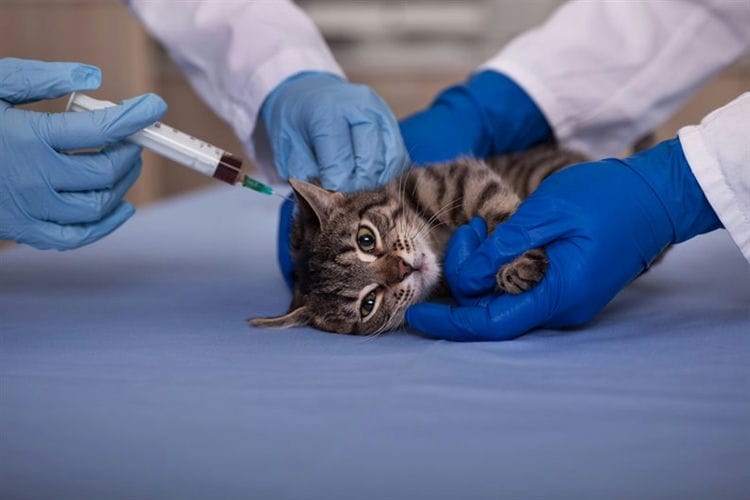
Vaccinations are done only after deworming
How to help your pet settle in a new place
Each kitten has its own character. Some kids are person-oriented, while others are indecently independent. But any of them needs socialization.
Homeless kittens do not know that a person is good. The pet needs to be shown that the owner is not scary at all, will not offend him. While the kitten is in quarantine in the box, they talk to him in an affectionate voice. If the baby responds willingly, the pet is stroked and caressed.
Note! If the kitten presses its ears, hisses and shows its hostility, this indicates fear. The pet is simply afraid of the person, in such a case, you need to choose the time and talk with the baby for a long time, sitting by the cage.
When the quarantine is over, the baby can be released into the apartment from the box. Many owners usually move the litter tray out of the box in an unknown direction for the kitten. The kid wants to go to the toilet, but cannot find the litter box. Owner actions:
- Take the pet in your arms, take it to the location of the tray.
- Put in it.
- Let the kitten leave the room in which the tray is located. So the pet will learn to follow the desired route without the help of the owner.
No matter how it sounds, homeless kittens often do things in the tray the first time. If this does not happen, the pet does not see the necessary object point-blank, it must be taught:
- When the kitten begins to squeak and fuss, spinning in one place, he is taken in his arms and put in the tray.
- After the baby has done his job, the kitten is praised, they are given to dig into the filler.
Important! At first, the tray must be kept in such a place so that the kitten can immediately find it.
It is believed that a fluffy lump is more likely to get used to the tray if it is poked into feces or urine with its nose, and then put in the right place. This is a delusion, the pet will simply be scared and will not understand what they want from him.
Games are a necessary subject in the development of a pet. The game serves not only for entertainment, but also for establishing contact between the owner and the kitten. The kid learns to trust the person, understands that it is fun with the owner, he will not offend.
It is not at all necessary to purchase expensive pet toys. It is enough to make a paper bow, tie it to a thick thread or string. The owner pulls the string, the bow slides across the floor, and the kitten catches up and catches the toy.
Alternatively, you can buy your pet a small ball or a toy mouse. The kid will be happy to play with them.
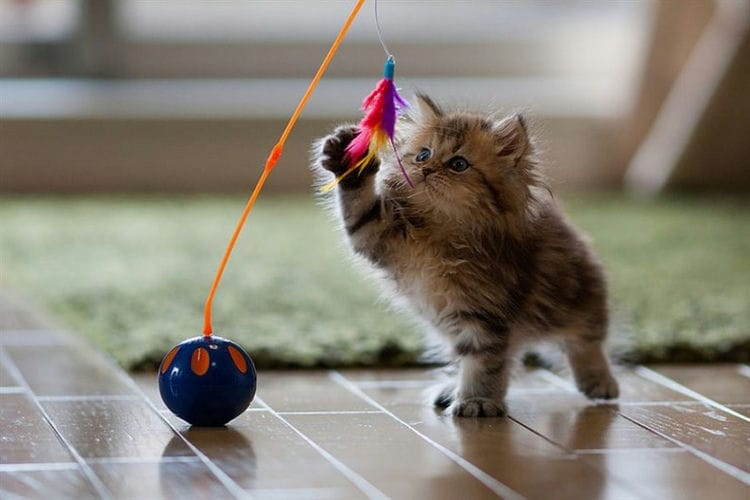
You don't need to buy a lot of toys
Are you planning to take a kitten from the street: sequence of actions
 Suppose you saw a helpless feline child who did not leave your heart indifferent. The first desire is to take it with you and bring it home. This is exactly what you need to do, but first you need to prepare a little. If possible, all the steps should be done on the same day, without putting it on the back burner – the kitten will not wait, it will either find another owner or die. So, preparation for admission includes:
- Examine the animal, especially pay attention to the muzzle and eyes – are there any discharge, are they watery. Observe the behavior – whether the kitten is running, whether it is mobile. The information received will tell you if he should be taken to the veterinarian immediately. Of course, visiting a doctor before bringing a kitten into the house is ideal, but not everyone agrees to it.
- Having made the decision to show the animal to the doctor, immediately start looking for friends who have the phone number of a good clinic or a private veterinarian. Make an appointment with your doctor, preferably on the same day, or just take the kitten to the nearest veterinary clinic.
- Go to a pet store before going to your doctor. There you will need to purchase a litter box, bowls for food, water, some litter, and specialized kitten food. If the baby is still breastfeeding, then be sure to buy a cat milk replacer. Buy drugs for fleas, worms and ear mites only if you do not plan to visit a veterinarian, since the doctor will do all this treatment himself.
- Bring all your purchases home, bring latex gloves and a resealable cardboard box with holes you can breathe through but difficult to escape. Put on disposable gloves, carefully take the kitten and put it in the box and close it tightly so that the animal does not run away in panic.
- Give him a few minutes – he will meow plaintively, as he is scared. Try to speak to him in an affectionate tone, let him gradually feel that he is not in danger. When the animal calms down a little, take it to the veterinarian, then follow his instructions.
If for some reason you decide not to take the kitten to the vet, then proceed as described in the next scenario.
Spontaneously brought a kitten from the street: what's next
You still could not resist and succumbed to your first desire – you took the kitten, and right from the street, as it is, brought it into the house. In this case, you should immediately take it to the loggia and close it there. While the baby is getting used to it, you should take care of your health and the safety of your home. Without delay, dilute the disinfectant with water, and immediately rinse with it all rooms that your new inhabitant has already visited. If you took your baby without gloves, wash your hands thoroughly with antibacterial soap. Then sit down, calm down and carefully consider your next steps, namely:
- Do you have the opportunity to visit the veterinarian today – if so, then call him, make an appointment, put your pet in a box and go to him.
- If you decide to do without qualified help, then go to the pet store. The list of purchases has already been listed in the previous version.
- In addition to bowls and food, be sure to purchase medicines for parasites. To do this, you need to know the approximate age of the kitten. It can be determined by weight: up to 800 grams – about a month, no more than one and a half kilograms – up to two months.
- When you return with your purchases, start processing immediately. To do this, put on disposable gloves, put your pet in a cardboard box, close the loggia and go out into the fresh air. There, treat the withers and skin along the ridge for fleas (be sure to apply the product under the wool, where the animal cannot lick it off).
- For very tiny kittens, use Front Line. If the pet is more than three months old, Stronghold is a unique remedy, since several drops of it can kill three parasites at once – fleas, larvae of worms and an ear mite.
- In fact, for those who decide not to take the kitten to the vet on the first day, the step mentioned above should be taken before bringing the kitten into the house. But if you still did not have time to do this on the street, do not be lazy, and again return to the air with the baby.
- Otherwise, you run the risk of flooding your home with fleas, which during processing will scatter in all corners, and then switch from the kitten to your feet. With this development of events, the whole dwelling will have to be disinfected, and not just the loggia.
- After driving out the fleas, discard the box, take the kitten in your arms and bring it back to the loggia. This place will become his home for the next two weeks, during which the baby will be in quarantine.
- Place a toilet tray on the loggia, pour quite a bit of filler into it (just a couple of millimeters), put a kitten in it, show him how to drip with his paws, and give the baby the opportunity to do it on his own. Next, introduce the cat to the bowls for food and water, which you will also place on the loggia during quarantine.
- Give your baby a cat milk replacer or specialty food. After that, leave your new pet alone. Let him slowly, without stress, sniff everything on his own and get used to the idea that he is not alone now and that he has a new house.
What is the best way to get kittens into good hands?
To find new owners for a kitten, you need PR.
- Competently compose an ad (indicate the city, contact phone number or other means of communication, describe the character and appearance of the cat), attach some beautiful photos;
- Place your free ad on various sites and repeat the posting regularly;
- Tell your friends and colleagues about the find, write in your social networks;
- Submit your ad to the thematic groups of your city.
How to determine who can give a kitten to?
Talk to a potential new owner, ask questions, what he is going to feed the kitten, in what conditions he will keep, what he will do if the kitten gets sick, and so on. If the animal is sick or has any behavior problems, be sure to warn. This will increase the chance that the cat will not end up on the street again.
Vaccinate
A vaccine is a responsibility for every respectable owner. If you picked up a kitten from the street, the vaccine will not cure the existing ones, but in the future, the vaccinated animal will carry the disease more easily. This is important for street cats, who often run away into the street again, and then return after walking in the basements.
You cannot vaccinate a bunch immediately. Vaccinations are given only to completely healthy animals. First, the cat needs to remove fleas and give an anthelmintic. Ten days after this, the cat can be vaccinated if everything is in good health.
Feed gently
A street cat, and especially a kitten, needs special food. Their stomachs are weakened from malnutrition and bad food, from parasites.
The easiest way is to give food for small kittens. It is a balanced diet with a precise dosage. Low-fat cream, cottage cheese, fermented baked milk are suitable. Do not feed your cat table food or canned fish. A cat accustomed to starving will eat everything that is given to him, but then problems will begin: constipation, diarrhea, vomiting, loss of appetite. It is best if the diet is prescribed by a doctor.
Sources used and useful links on the topic: https://news.tut.by/society/687616.html http://rtrackers.com/help-day/chto-delat-esli-najdena-sobaka/ https: // prokyr .ru / pet / podobrali-senka-na-ulice-48990 / https://gafki.ru/koshki/kotenok-s-ulitsy.html https://PorodaKoshki.ru/vzyali-kotenka-s-ulicy-chto- delat / https://zen.yandex.ru/media/id/5ca4f2c9f4bebc00b35a5db8/chto-delat-esli-nashel-kotenka-na-ulice-instrukciia-s-sovetami-volonterov-5d1a56518706ab00adcdet8690 http://www.ru / blog / sovety_veterinara / podobrali_kotenka_na_ulice_chto_delat /
Post source: lastici.ru