
Immunity. How does human immunity work? Detailed analysis
Content
Leukocytes
White blood cells, called leukocytes, circulate in the blood and lymph vessels and constantly patrol the body for harmful pathogens. all other organs and tissues prepare to repel the “attack”.
Our white blood cells are stored in different places called lymphoid organs or organs of the immune system:
- The thymus gland (Thymus) is a gland that sits between the lungs where T cells of the immune system form.
- The spleen is an organ that filters blood. Located in the upper left abdomen.
- Bone marrow – found inside the bones. Also produces red blood cells.
- Lymph nodes are small glands located throughout the body, connected by lymphatic vessels.
There are two main types of white blood cells, phagocytes and lymphocytes:
Phagocytes
They surround, break down and consume pathogens. There are several groups of phagocytes, including:
- Neutrophils are the most common group of phagocytes that are usually attacked by bacteria.
- Monocytes are the largest and most active type of phagocytes, which, a few days after circulation in the blood, penetrates into tissues and transforms into macrophages.
- Macrophages – detect and devour pathogenic microorganisms and dying cells.
- Mast cells – play a key role in combating inflammation, allergens, injury, and more.
Lymphocytes
Lymphocytes allow the body to remember pathogens and recognize them if they come back to attack healthy cells. These are the main cells that create the so-called antibodies and the body's immune response to infections. Lymphocytes are formed in the bone marrow, after which some of them remain there and turn into B-lymphocytes (B-cells). The second part is sent to the thymus, where it is transformed into T-lymphocytes (T-cells).
Each of these types of cells performs its own tasks:
- B-lymphocytes – produce antibodies and inform T-lymphocytes about the beginning of an attack.
- T-lymphocytes – destroy damaged cells and transmit a danger signal to other white blood cells.
What is the immune response?
Skin reaction to a mosquito bite
Healthy immunity distinguishes normal cells from those damaged or thrown into the body from the outside. It does this by identifying proteins that are on the surface of all cells.
An antigen is any substance that the body considers foreign and triggers its immune response.
Often these are bacteria, fungi, viruses, toxins, or foreign bodies. But it can also be our own cells that are not working properly or have already died as a result of a natural process – apoptosis.
The role of B-lymphocytes
As soon as B lymphocytes detect an antigen, they begin to secrete antibodies (antigen is abbreviated as “antibody generator”), special proteins that bind to specific antigens.
Each B cell produces one specific antibody. For example, one creates an antibody against bacteria that cause pneumonia, while the other can recognize the influenza virus.
Antibodies are part of a large family of chemicals called immunoglobulins that play an important role in the immune response:
- Immunoglobulin G (IgG) – recognizes and labels microbes so that other immune cells can recognize them and begin to fight them.
- IgM is a class of antibodies that are the first to indicate the onset of infection.
- IgA – are concentrated in various body fluids, such as the nasal mucosa, gastric juice, tears, saliva and protect the body from the penetration of pathogens, primarily viruses and toxins.
- IgE – is responsible for the development of allergic reactions and is involved in the immune response to parasites such as helminths.
- IgD – helps to activate B-lymphocytes and trigger the immune response.
Antibodies are markers for an antigen, but they do not kill it, they only signal other cells of the immune system, such as phagocytes, to begin killing the pathogen.
Role of T-lymphocytes
There are several types of T lymphocytes:
T-helpers are the coordinators of the immune response. Some of them transmit danger signals to other cells, others stimulate B cells to produce more antibodies, and others attract additional T cells and phagocytes to work.
T-killers – destroy the affected cells of the body, preventing the pathogen from multiplying further. They are especially useful for fighting viruses. By releasing interferon, killer T cells restrict its penetration into neighboring cells.
Description
Before manipulating such a common and rather simple term as the immune system, we need to understand what it is and how it works.
Immunity is the complex functioning of many body systems, which are aimed at fighting foreign bacteria, protecting and protecting us in all possible ways. Taking care of health has become extremely fashionable, especially with all kinds of pills and supplements, but not everyone knows what is actually good for health.
Each person has a number of different cells and tissues that are responsible for our health, destroying hostile and mutated cells that cause severe damage in one way or another. The complex of such defense mechanisms is called the immune system, which fight not only internal threats that have already entered the body, but also with external ones, preventing their penetration. It is required to know that immune cells make up more than 10 percent of the total number of such particles in the body. Thanks to a strong defense system, people are not afraid of most diseases. But unfortunately, in nature there is no ideal strong organism that can protect against all diseases, therefore, each person in one form or another needs to strengthen the defense system.
In turn, immunity is presented in two forms – congenital or acquired, the purpose of which is clear from the name. However, we will take a closer look at them.
What does human immunity consist of?
The body is constantly under vigilant protection, which protects it from foreign particles. The defense system is immunity. It can be a collection of organs and tissues, the cells of which are engaged in the neutralization and removal of harmful agents. Thanks to this defense system, people can fight disease. Where is immunity in humans?
There is no definite answer to this question. Immunity is an abstract concept, it is not concentrated in one place, but scattered throughout the body. Its failure leads to many adverse consequences. The person becomes vulnerable to foreign agents. He cannot fight infections and maintain his health. A number of pathological conditions arise. Depending on the mechanism of work, immunity can be:
- Cellular;
- Humoral.
Each of them carries out its protective function through special cells. The first type is by means of T cells or T lymphocytes, which are subdivided into killer T cells, helper T cells, macrophages and neutrophils. Humoral is carried out thanks to B-lymphocytes and the antibodies they produce.
Another classification of immunity divides it into:
- Nonspecific, otherwise congenital;
- Specific, which is developed throughout life.
And also the protective system can be:
- Natural, developed after an illness;
- Artificial or passive, resulting from medical interventions – vaccination.
Types of immunity
- And now that we have learned what the immune system is, that it consists of central and peripheral organs, of various cells, now we learn about the types of immunity:
- cellular immunity
- humoral immunity.
This gradation is very important for any doctor to understand. Since many drugs act on either one or another type of immunity.
Cellular is represented by cells: T-killers, T-helpers, macrophages, neutrophils, etc.
Humoral immunity is represented by antibodies and their source – B-lymphocytes.
- The second classification of species – according to the degree of specificity:
– nonspecific (or congenital) – for example, the work of neutrophils in any reaction of inflammation with the formation of purulent discharge,
– specific (acquired) – for example, the production of antibodies to the human papillomavirus, or to the influenza virus.
- The third classification is the types of immunity associated with human medical activities:
– natural – resulting from a person's illness, for example, immunity after chickenpox,
– artificial – that appeared as a result of vaccinations, that is, the introduction of a weakened microorganism into the human body, in response to this, the body develops immunity.
Congenital
Innate immunity (or nonspecific) is present from the beginning of birth. More than half of the cells of the innate defense system are passed on to the child from the mother along with genes. Congenital – begins to form even when the baby is in the womb. This is done thanks to phagocytes produced by stem cells. In order to fight diseases as efficiently as possible, phagocytes learn to distinguish healthy particles from sick ones, then neutralizing the latter. Nonspecific immunity detects and destroys any antigens quite effectively. A special skill of the innate defense structure is that it is able to fight cancer cells.
Acquired
In another way, a specific system is the type of protection that a person acquires throughout his life. Cells of such immunity, as well as in congenital ones, are formed from stem cells, but after final formation they are sent not to the spleen, but to the thymus gland. It is here that those antibodies are created, thanks to which our immune system gives a worthy rebuff to all kinds of diseases. The number of such produced particles directly depends on how many harmful microbes have entered the body, which will subsequently be destroyed. How well the immune system works depends on how many antibodies the gland produces. The more, the better for the entire immune system. This explains the fact that children who grew up in excessive cleanliness and sterility are exposed to diseases much more often than others.
Place in the body
The defense system has its main “helpers”, which include the thymus gland and bone marrow. They are engaged in regular renewal by creating and transporting cells with the help of the circulatory system. Let's take a closer look at these organs:
- Bone marrow, thanks to which absolutely all immune cells are produced. He is their home and the beginning of the path. On average, the weight of the bone marrow in a mature person reaches four kilograms, which represents a fairly large percentage of the total body weight, namely more than 4.
- Thymus gland (thymus). For a long time, no one knew its function, and no particular importance was attached to it. This gland got its name in antiquity because of its obvious similarity with the thyme leaf. Since the thymus was located behind the chest, next to the heart, in ancient times it was considered the place where the soul lives. However, with the development of medicine and science, it became clear that the thymus produces cells important for immunity, which are called T-lymphocytes. Their formation occurs in the thymus gland for twenty days. An interesting and sad fact is that the thymus reaches its maximum size at birth, and upon reaching puberty it begins to shrink. On average, over 50 full years of life, the thymus gland loses 2-3% of tissue each year, which entails a decrease in the production of T-lymphocytes,
In addition to the main organs of the immune system, a person has peripheral ones, which include lymph nodes, spleen, an accumulation of lymphoid tissue (appendicitis, tonsils, intestines).
- The spleen is located between the chest and abdomen, at the level of the ninth rib. Its size in an adult man is half a palm, and its weight reaches two hundred grams. The spleen is responsible for quite a few functions. It is a kind of filter that destroys foreign bacteria and microbes in the blood, as well as useless red blood cells.
- Lymph nodes. Lymph is a blood-like fluid, but with less oxygen and protein, and there are no red blood cells, however, it contains many more lymphocytes. Similar to blood, lymph circulates through the lymphatic channels in the body, supplying the tissues with the necessary substances. Lymph nodes act as checkpoints, filtering lymph and clearing it of foreign particles.
A large number of human immunity cells are present directly in the lymphoid tissue. They perform their functions in the small intestine, glands, appendicitis, bronchi. Its weight exceeds all the previous ones, which makes them quite effective in the fight against all kinds of diseases.
How is it produced
The role of all organs of the immune system is reduced to the only one – to the protective cells. Some form them, others differentiate, while others accumulate, the fourth are a reservoir. The most important immune cell products include:
- T-lymphocytes, which are subdivided into T-killers, aimed at neutralizing microorganisms, T-helpers, which assist in the recognition and utilization of microbes, and T-suppressors, which regulate the actions of other T cells;
- B-lymphocytes are involved in the production of antibodies. This allows you to attack foreign particles that have entered the body, that is, antigens;
- Neutrophils that destroy harmful bodies;
- Macrophages are an important component of microbial inactivation. The name speaks for itself. Macro is a lot, but phage is. These cells are capable of capturing and devouring foreign particles. And they can also carry out a transport function, transferring antigens to T-helper cells. In some cases, the microbe is not inactivated, and then the macrophage dies. A large accumulation of these dead cells leads to suppuration;
- Eosinophils aimed at destroying parasites. They are characterized by the occurrence of an allergic reaction.
Thanks to the immune organs, the production of these cells is possible. They are direct participants in the battlefield. “Soldiers” of the defense system, who carry out the fight against strangers who have burst into the body.
Functions
The main task of immunity is to defend against unwanted substances. Among the main ones are:
- Prevention of the introduction of foreign agents through the presence of biological barriers;
- Destruction of defective and old cells of the body, the life cycle of which has come to an end;
- Neutralization of a harmful microbe when it enters;
- Elimination, that is, the removal of antigens.
Thanks to these functions, the immune system allows a person to live among a huge variety of viruses, parasites, bacteria, fungi and protozoa. This fact makes it possible to place defense mechanisms at the head of the most important functions of the body. When they decrease, it is necessary to immediately take measures to strengthen. Then the patient's quality of life will increase.
What does human immunity depend on?
Defense mechanisms are formed under the influence of many factors that determine the strength of the response against antigens. An important role is played by:
- Heredity is a person's genetic predisposition, which he inherited from his parents. Immunity will directly depend on this factor;
- The environment can also influence defense mechanisms to a large extent. Two twins with similar genetic material but living in different conditions will have different immune status;
- The quality and quantity of food consumed, or rather, its vitamin and mineral composition;
- Lifestyle – his daily routine, mode of work and rest, the presence of bad habits;
- Physical activity or lack thereof. Physical inactivity leads to the fact that the patient will be in a state of reduced muscle tone, gas exchange and, as a result, is susceptible to immune disorders;
- Acquired and congenital diseases.
These factors will be the answer to the question “what does human immunity depend on?”
The reasons for the weakening of the body
The state of our immune system depends on a large number of all kinds of factors, both in the work of the body and on the part of the external environment. However, in addition to the positive effect, all the previous factors can negatively affect health. For example, if walks in the fresh air are extremely beneficial, then staying in ecologically dirty regions causes great damage to our immune system. If you notice several of the following symptoms in yourself, then you should pay attention to the health of your immune system, as it is most likely weakened. Signs:
- Frequent all kinds of respiratory diseases serve as a signal that the body is weakened and needs to be strengthened. The average frequency of such cases is 1–2 times per calendar year;
- An indicator of lowered immunity is also the fact that even an ordinary ARVI can proceed quite hard and for a long time, which also raises concerns;
- The appearance of a rash on the body with the release of pus with pressure;
- The size of the lymph nodes is greatly enlarged;
- Fungal lesions of the skin of the legs, hands, nails;
- Systematic diseases of the respiratory tract, throat, nose, bladder;
- Slow healing of wounds, often with the formation of purulent discharge;
- Chronic weakness, malaise, fatigue, lack of sleep, and so on.
As mentioned above, if several symptoms of the disease are detected, it is strongly recommended to seek help from a qualified immunologist and undergo a recovery course. You should not ignore the alarming signals of your body, since weakening can lead to all sorts of serious illnesses, after which there is a risk of death. But where to find and what does the health of the immune system depend on? We will answer this question further.
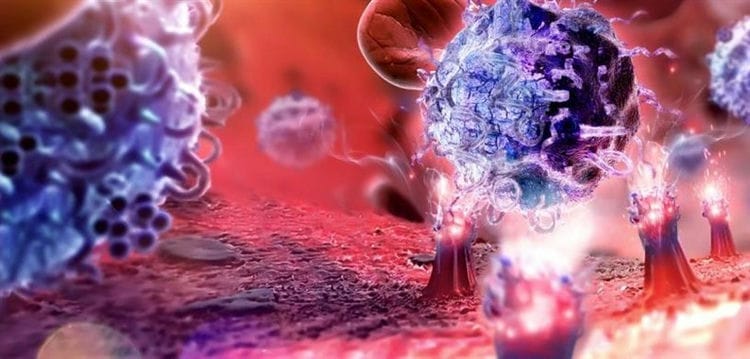
An example of how immunity works
Now let's look at a practical example of how immunity is developed against the human papillomavirus type 3, which causes the appearance of juvenile warts. Read the article on juvenile warts in detail.
The virus penetrates into the microtrauma of the skin (scratch, abrasion), gradually penetrates further into the deep layers of the surface layer of the skin. The human body did not have it before, so the human immune system does not yet know how to react to it. The virus is embedded in the genetic apparatus of skin cells, and they begin to grow abnormally, taking on ugly forms.
Thus, a wart is formed on the skin. But this process does not pass by the immune system. The first step is to turn on the T-helpers. They begin to recognize the virus, remove information from it, but they cannot destroy it themselves, since its size is very small, and the T-killer can only kill larger objects such as microbes.
T-lymphocytes transmit information to B-lymphocytes and they begin to produce antibodies that penetrate through the blood into skin cells, bind to virus particles and thus immobilize them, and then this entire complex (antigen-antibody) is excreted from the body.
In addition, T-lymphocytes transmit information about infected cells to macrophages. Those are activated and begin to gradually devour the altered skin cells, destroying them. And in place of the destroyed ones, healthy skin cells gradually grow.
The whole process can take from several weeks to months or even years. It all depends on the activity of both cellular and humoral immunity, on the activity of all its links. After all, if, for example, at least one link – B-lymphocytes – falls out at some point in time, then the whole chain collapses and the virus multiplies unhindered, invading all new cells, contributing to the appearance of more and more warts on the skin.
In fact, the above example is just a very weak and very accessible explanation of the work of the human immune system. There are hundreds of factors that can turn on one mechanism or another, speed up or slow down the immune response.
For example, the body's immune response to the penetration of the influenza virus is much faster. And all because it tries to invade the cells of the brain, which is much more dangerous for the body than the action of the papillomavirus.
And one more vivid example of the work of immunity – watch the video.
Good and weak immunity
The topic of immunity began to develop in the last 50 years, when many cells and mechanisms of the entire system were discovered. But, by the way, not all of its mechanisms are still open.
So, for example, science does not yet know how certain autoimmune processes in the body are triggered. This is when the human immune system, for no reason at all, begins to perceive its own cells as foreign and begins to fight them. It's like in 1937 – the NKVD began to fight against its own citizens and killed hundreds of thousands of people.
In general, one should know that good immunity is a state of complete immunity to various foreign agents. Outwardly, this is manifested by the absence of infectious diseases, human health. Internally, this is manifested by the full working capacity of all links of the cellular and humoral links.
Weak immunity is a state of susceptibility to infectious diseases. It is manifested by a weak reaction of one or another link, the loss of individual links, the inoperability of certain cells. There can be quite a few reasons for its decline. Therefore, it is necessary to treat it, eliminating all possible causes. But let's talk about this in another article.
How to strengthen and boost immunity
With the desire and patience, it is not difficult to increase the immunity of an adult. It is enough to know what exactly will help the body to get stronger, resist and fight seasonal infections and chronic diseases.
- The most important thing for immunity is the balance in the body of the necessary vitamins and minerals. Vitamin – “A”, “C”, “B5”, “PP”, “F”, “D”. Minerals – iron, zinc, selenium, iodine, calcium, manganese. The body can excrete them from food itself, so proper nutrition is very important.
- You need to eat regularly. The diet should be moderate in fat and preservatives. The presence of kefir is desirable. The content of bifidobacteria in it contributes to the activation of immune reactions.
- As a vitamin complex and essential minerals, traditional healers offer bee products. This is not only honey – it is propolis, a preservative for pollen (bee bread), royal jelly, etc. Their composition includes up to 50 types of enzymes, vitamins, minerals and acids necessary for humans.
- Of plant bioactive substances, the activation of immune phagocytosis is facilitated by food additives based on echinacea, licorice, lemongrass, garlic and eleutherococcus.
From the point of view of medicine, our body does not care at all where the necessary vitamins and minerals come from – from products of animal or plant origin. In the stomach, both are broken down into acids, from where the body draws useful substances for the energy supply of cells.
It is possible to raise immunity by regular physical exercises – fitness with exercise equipment, gymnastics, jogging or aerobics. You can choose any activity according to your mood, interest and wallet. Moderate exercise (without fanaticism) will bring the desired result.
Conclusion
An important factor on which the consistency of immune phagocytosis depends is the timely detection of the causes that suppress the work of the immune system and their quick elimination, before the possible causing of irreparable harm.
Sometimes even minor trifles, in the form of a lack of room illumination, together with provocative factors, cause the development of unwanted complications.
Sources used and useful links on the topic: https://zen.yandex.com/media/srokgodnosti/prosto-o-slojnom-kak-rabotaet-nash-immunitet-5e7f17ee80638b5760d44bdf http://imunohelp.ru/baza-znanij/gde -nahoditsya- immunitet.html http://imvit.ru/interesnye-fakty/immunitet-cheloveka/ http://www.DermatologVenerolog.ru/obchee/17-immunitet-i-immunnaya-sistema-organizma-cheloveka-chto- eto-ee-organy-i-funktsii https://KtoNaNovenkogo.ru/voprosy-i-otvety/immunitet-ehto-vidy-povysit-ukrepit-immunnuyu-sistemu.html
Post source: lastici.ru