
How to choose the right olive oil. How to choose quality olive oil?
Content
A bit of history
For the first time, the process of collecting olives is mentioned in the Middle Eastern chronicles dated to the 4th millennium BC. Then olive oil was already used in everyday life, cooking and medicine. There was an active international trade in this valuable product. The logbooks of ancient merchant fleets contain records of the movement of “liquid gold” between many Mediterranean ports.
Later, in the 9th century BC, olive oil production technology made a quantum leap forward. The ancient Romans should be grateful for this. They put a lot of effort into improving the methods of growing olive trees, harvesting and producing oil. It was valued so much that it was accepted as a tax payment.
The next major milestone in the history of the development of production was the Renaissance. From Italy, all over the world, delicious and valuable oils have been successfully exported from the production center in Tuscany.
In the 19th century, “liquid gold” reached America thanks to Italian and Greek immigrants. They helped popularize the product overseas, bringing their culinary traditions to the culture of the United States.
Nowadays, olive oil enjoys well-deserved popularity in many countries on different continents. Its production and quality standards are clearly defined by international organizations. We will learn to choose the most useful, focusing on these standards.
What varieties of olive oil can you find on our counters?
Selection criterion
To choose a quality olive oil, you should carefully examine the bottle. For maximum preservation of useful and medicinal properties, the product should be stored in dark glass packaging. It must be tightly sealed. The label should contain information about the method of production, date of bottling.
The shelf life in unopened packaging is no more than 2 years. Over time, the product deteriorates, so you should choose a bottling date of at least six months.
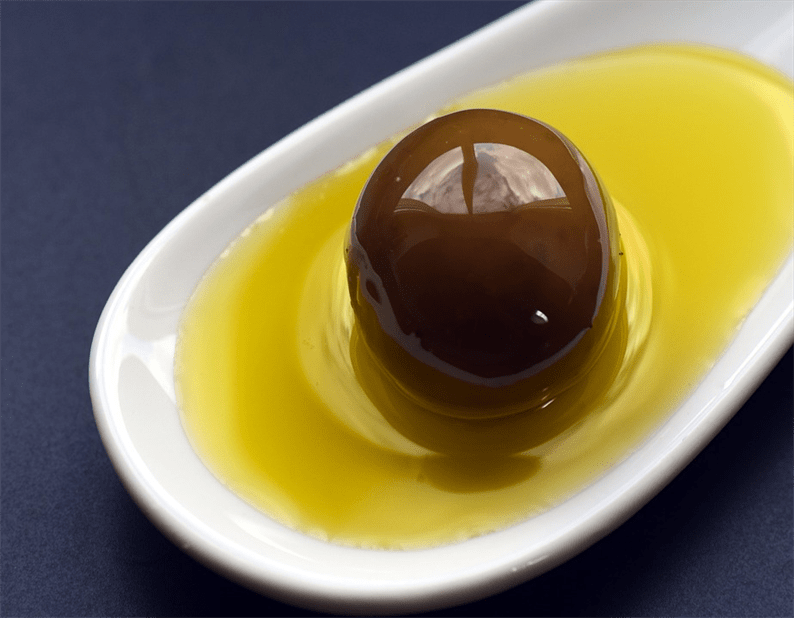
The color can be from wheat yellow to greenish yellow. The rest of the colors indicate poor quality products.
To select olive oil and check the quality of the product, a couple of drops of oil should be applied to the wrist. Natural oil will instantly become warm, and low-quality oil will remain cold.
Not all oils have a sediment at the bottom. The presence of white streaks indicates the reconciliation of chemicals in the manufacture, which affects the quality of the olive oil.
How extra virgin olive oil should taste like. 3 main characteristics
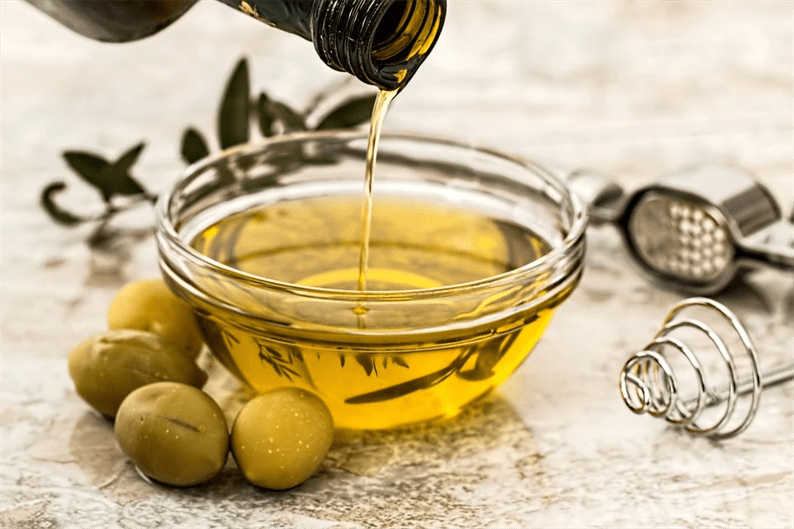 Fruitiness (bouquet of flavors and aromas), pungency and bitterness – these are the three main characteristics of the taste of Extra Virgin olive oil. They talk about the quality and freshness of the oil.
Bouquet (fruitiness) – the range of brightness of the taste of the product. It depends on the variety, the degree of ripeness of the olives at the time of harvest and the processing conditions. It is especially pronounced in the oil squeezed from fresh green olives.
A pleasant shade of bitterness is the primary taste that is felt in the upper part of the mouth and tongue. Olive oil squeezed from green olives tastes bitter.
Kinds of the best oils
To find out which olive oil is better, you should familiarize yourself with its types:
- Extra virgin olive oil is the best health product. This is an extra virgin olive oil made from the finest olives. The fruits have no defects, they are not spoiled, they are not frozen. The products are great for treating and eating.
- Virgin olive oil – created after cold pressing of olives. The product is also useful, but it contains fewer valuable components. Its cost will be lower. The acidity is higher – 2 g per 100 g.
- Ordinary virgin olive oil – acidity is 3 g per 100 g. The product is created using biological reagents.
Why is Extra virgin olive oil used in treatment? This is due to the fact that the product is natural, and it has a low acidity, which is 0.8%. And useful oils should have an indicator of up to 1%. They are not used for frying and heat treatment. Should olive oil be bitter? Real products must have this property, they are considered the most useful.
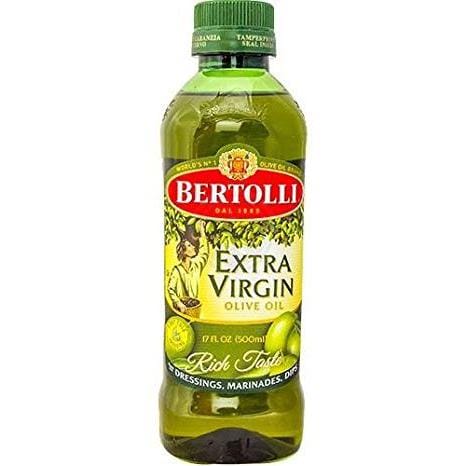
A quality product is created based on rigorous quality control. It is important that the indicators comply with norms and standards, in addition, there must be certificates of conformity. It is not easy to find oil with low acidity in stores. It is obtained by pressing the best fruits, but little product is obtained. But the olives are poured with water and squeezed again. Such oils are considered useful, then they are suitable for dishes, and not for treatment and cosmetology.
Grind everything
In order for the oil to be of the highest quality and rightfully bore the title of Virgin type, olives from the plantation must be delivered to the oil factory immediately, literally on the day of harvest. It is clear why – so that the fruits do not begin to degrade and retain all their natural freshness. At the factory, using special equipment, the olives are cleaned of cuttings and remaining leaves and washed in running water. Then the fun begins: the fruits are ground into a paste.
Before we tell you exactly how this happens, let us ask ourselves a question: from what is the oil squeezed in general – from the pulp or from the bone? The answer is both. Most of the oil is found in the pericarp pulp, and it is this oil that is rich in polyphenols – powerful antioxidants that largely contribute to the unique flavor of olive oil. The most characteristic of these is hydroxytyrosol. The bone also contains oil, but it is simpler in composition, in particular, hydroxytyrosol is absent in it. Some manufacturers experimented with pitting, and the oil, of course, came out richer in polyphenols and, one might say, was of higher quality. But adding to the production process the removal of seeds from the fruit is an additional cost, and, in addition, the oil yield is reduced by about 11%.
According to the old technology, the olives were ground into a paste with powerful stone wheels-millstones, which rolled in a circle, crushing and rubbing the fruits scattered on the bottom of the container. In more modern plants, the same operation is done using a kind of blender – two drums equipped with steel blades.
Causes of bitterness
To the question: why olive oil is bitter (and why bitterness is maximal in the oil of the first cold pressing), chemists have answered a long time ago.
Bitter because the percentage of polyphenols in its volume is incredibly high. And this characterizes the olive extract in the most positive way.
Polyphenols are chemical compounds from the class of cyclic hydrocarbons. These include many drugs with actions:
- Antimicrobial.
- Antipyretic.
- Antispasmodic.
- Anti-inflammatory.
- Astringent.
- Laxative.
Vitamins P and E, two vital chemical compounds for the body, also belong to this group. Without them, a person would be completely defenseless (both from solar radiation and microbes, and from cancer and other aggressors).
Unrefined olive extract, although bitter, is a real storehouse of all the beneficial properties inherent in the above chemical compounds. If olive oil tastes bitter, this indicates that it is natural and can be consumed by adding it to food eaten raw (salads).
Considering that not everyone likes it when the oil tastes bitter, they use a simple way to remove the bitterness. It consists in heating, in which the ethers and alcohols responsible for taste and bitterness sublime (the oil does not lose its beneficial qualities).
If the acidity is not indicated on the bottle, this is a reason to be wary of whether the oil inside it corresponds to the Extra Virgin type.
To verify the authenticity of the oil, look for a special holographic seal on the back of the label and ask for a certificate of origin. And, of course, Extra Virgin oil cannot be cheap.
Green to black
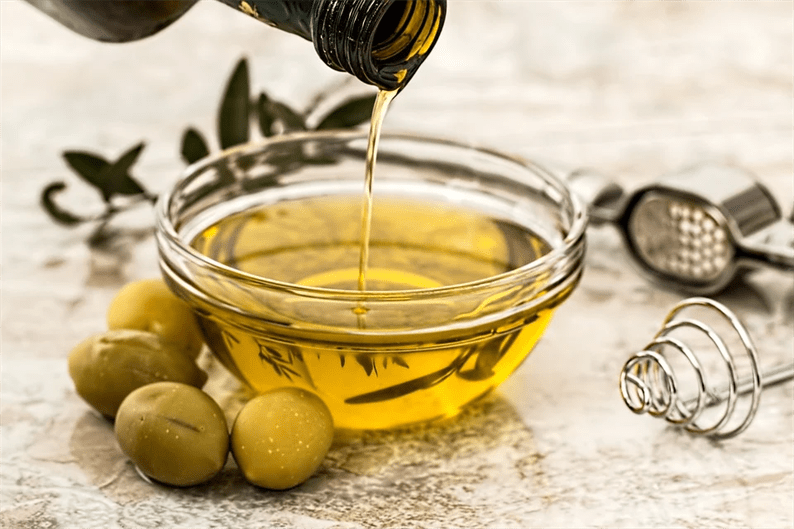
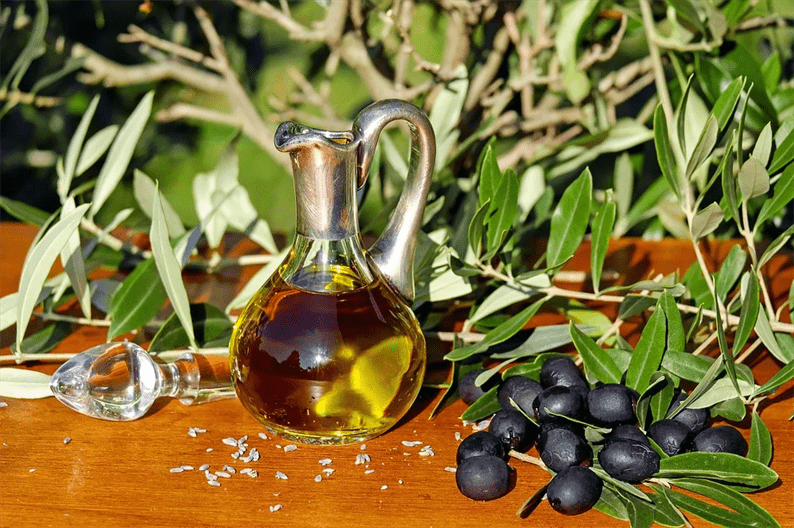
The fruit of the tree, as we all know, is the olive. From the point of view of botanical classification, an olive is a drupe-type fruit (that is, similar to cherries, cherries, peaches). The drupe is distinguished by a hard seed (bone) surrounded by a fleshy juicy pericarp. It is also no secret to anyone that green olives and black olives are one and the same fruit. An unripe fruit is green, then, as it ripens, it turns yellow, turns pink, turns purple and finally becomes completely black. So black canned olives, as many people think, are ripe olives. But this is not true. For canning olives, the fruits are also harvested unripe, and they turn black as a result of a certain chemical treatment in food production conditions.
But we are, in fact, about oil. Of course, over the millennia that mankind has cultivated oil trees, many varieties of European olive have been bred by the method of selection: the fruits of some gave more oil, others were better suited for cooking (fresh fruits of most varieties are inedible and, before turning into a snack, they require soaking in brine and fermenting). There are varieties that can be used for both purposes. The tree begins to bear fruit in the 3-4th year, and the first harvest is about 40 kg. As maturity is reached, the weight of the crop increases from year to year and can reach a centner.
Manual production
The principle of producing olive oil at home is quite simple:
- Hand picking at the rate of 5 kg of olives per 1 liter of finished product.
- The pits are removed from the olives peeled from the leaves and branches, it is not necessary to rinse, a small amount of dust does not affect the taste in any way.
- The fruits are ground using a conventional juicer or special presses, turning into a homogeneous pasty mass.
- Then the mixture is determined for settling, at least for a few hours. The settled upper oil layer is removed in a convenient way, usually a ladle is used for this.
The resulting product is stored in a dark glass container without oxygen and in a cold place. The taste of the final product can vary significantly due to storage methods and conditions, region, olive variety and harvesting technology.
Hand harvesting
We read the label. Badges and awards
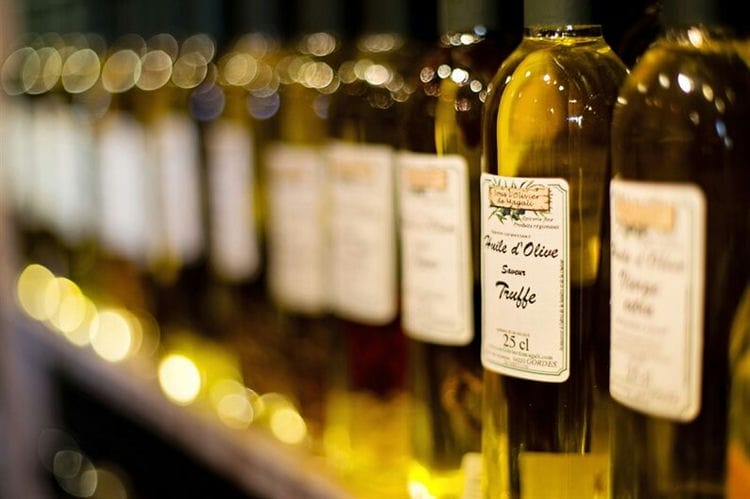
 The label tells a lot about olive oil. If the label bears the DOP (Protected Designation of Origin) or PGI (Protected Geographical Indication) marks, it means that the oil is produced according to European Union standards. Counterfeiting of these signs is severely punished.
The note “Country of origin” must be clearly visible. The name of the variety and awards from international competitions are two more indicators of high quality.
The Italian text on the packaging does not always say that the olive oil is made in Italy, and the Greek name does not always guarantee Greek quality.
Moreover, the price tag often states “Packaged in Spain, Italy or Greece”, but olives for oil were not always grown in this country. It just spills there.
To be sure of the quality of the oil and the place of its production, always buy oil with the PDO, PGI or Organic marks with the certificate number under the sign.
The acidity of olive oil should not exceed 0.8%, but according to European standards, this value is not indicated on the label, as storage conditions may change over time. The acidity indications on the label are for marketing purposes only. Look for the aforementioned signs to find out the acidity of the oil.
Grinding
Now the olives, peeled from the branches, can be washed and then grinded, in the literal sense of the word! At this stage, the olives are grinded completely, along with the pits, to release as much oil as possible.
Olives
Refined olive oil
This oil is traditional as most people are accustomed to using refined products. This category is just like that. The product undergoes many treatments, after which the unpleasant smell and bitterness disappear, so it is ideal for frying.
This type of oil does not emit carcinogens, so it is useful to use it. The cost of the product is less compared to the above products. This oil is not used in treatment, as less valuable substances remain in it due to processing. It is created after the second fruit extraction.
When buying, it is important to look at the labeling, price, acidity. You should not buy cheap products, since there is a minimum of natural oil. The rest is made up of supplements, so there will be little benefit. Why is olive oil bitter? The reason for this is the bitter taste of the olives, which persists even after pressing.
How much is good olive oil
The price of extra virgin olive oil cannot be low due to the production method.
For example, the “Koroneiki” olive, which is the most common olive oil produced in Greece, weighs only 1.5 grams. A person can pick up a maximum of 150 kg of olives by hand per day. From 100 kg of olives, depending on maturity, you can get from 12 to 20 liters of oil. One tree produces 30-40 kg of olives, and the collection of olives takes place only 4 months a year from October to January.
The higher the oil extraction temperature, the more oil is produced at the outlet. But at high temperatures, acidity rises. To obtain Extra Virgin olive oil, the pressing temperature does not exceed 27 degrees Celsius. Much less oil is squeezed out than at higher temperatures, which means that the price increases.
To preserve the unique shades of aroma and taste of olive oil, the olives are pressed within 10 hours after harvesting. The result is a thick and shiny oil. The resulting oil is only 10% of the volume that could be obtained using other pressing methods, with the addition of chemistry and an increase in temperature.
Pressing method
Extra Virgin olive oil must be pressed mechanically using a cold press, without the use of chemical or thermal treatments. With cold pressing, the temperature at all stages of processing does not exceed 27 degrees Celsius. This helps to maintain nutritional characteristics, flavor and aroma.
“Extra Virgin” is the first cold press.
We look at the harvest dates or expiration date
 Only fresh olive oil is beneficial. The product stored for more than one and a half years becomes less useful and does not fully betray its taste and nutritional characteristics. Conscientious manufacturers indicate their products have a shelf life of no more than 2 years, although with proper storage, olive oil can retain its taste and not become rancid for up to 5 years! But it is better to choose a product with harvest dates from the last season.
If there is no harvest date on the label, you risk buying old, possibly rancid oil.
An open bottle should not be stored for more than a month, as the oil will oxidize and lose its taste and useful qualities. Buy the volume that you can use up in a month.
Removing leaves
Before pressing, olives undergo another important operation: cleansing of twigs and leaves. However, it should be noted that a small amount of leaves still remains, moreover, sometimes they are left on purpose – thus, the oil acquires a characteristic greenish color and a unique smell of freshly cut grass.
Choosing a color
Ignore the color as it comes in a variety of shades, from bright green to golden to pale straw. It all depends on the ratio of ripe and green olives in the production process. Official tasters use colored glasses to avoid preference for green. The main thing is that there is no sediment in the oil. Moreover, when buying oil, you will not see the color, since a good oil will have a dark glass or tin packaging!
Remember – olives are pitted fruits like cherries and plums. Olive oil is freshly squeezed fruit juice. Unlike wine, which improves with age, oil is perishable and does not improve with age. The younger the olive oil, the more useful it is!
Olive Oil
Useful and medicinal properties
The ingredients in olive oil have a beneficial effect on the body. Antioxidant abilities cope with cancer, reducing the risk of their development by 45%.
The olive product helps with vascular and heart diseases. Its use will regulate blood pressure and can prevent the onset of atherosclerosis.
Olive oil can restore acidity in the stomach and avoid the appearance of ulcers, gastritis, restoring the work of the gastrointestinal tract.
This product also helps the kidneys. And in the old days, with its help, “mental” diseases and problems with male potency were treated.
Diseases of the musculoskeletal system can also be cured with olive oil. It can repair cartilage and is also excellent in maintaining muscle tone. If you feel pain in your back, you can mix olive oil and wax, and then rub this mixture every day on the place where it hurts.
Oil is also included in the diet of those suffering from diabetes, because it increases insulin sensitivity.
For constipation and fecal stones, you can mix 3-4 teaspoons of this product with raw yolk and dilute with a glass of heated water. Also, olive oil is considered an excellent natural laxative. To do this, you need to drink 1 spoonful of oil in the morning on an empty stomach and wash it down with a glass of warm water, squeezing a few drops of lemon juice into it. After that, you must definitely lie down for a while.
Olive oil also helps with a cold. So, for 100 g of oil, you need to take a tablespoon of chopped wild rosemary with a top, leave for 3 weeks in a dark place, shaking every day. Then the mixture must be filtered, squeezed out and dripped. For the first time, you need to drip three drops into each nostril. Then drip 1 drop three times a day. You can do such procedures for no more than a week.
This herbal product also helps with pain in the ears. It is necessary to drip only two drops of slightly warmed oil and immediately plug the ears with cotton swabs soaked in oil.
Rating of the most popular brands
Let's take a look at some of the popular brands and take a look at their main strengths.
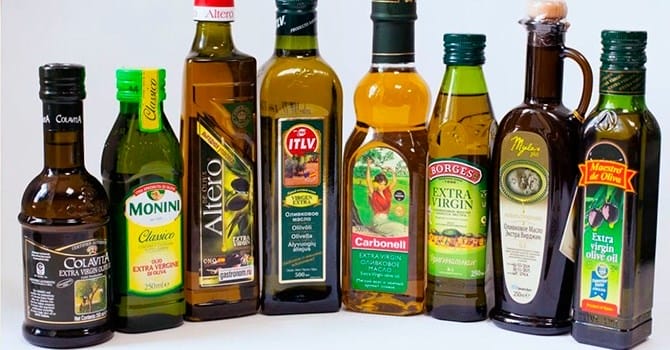
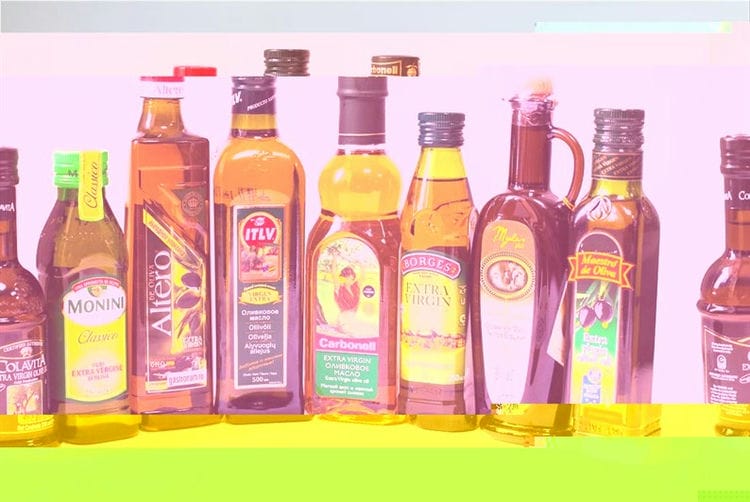
Borges Extra Virgin is a Spanish oil that occupies almost 60% of our market. The taste is rich and tart, causing numerous controversies. Some consumers find it too harsh and bitter.
All sanitary requirements are met by the manufacturers. The products are completely safe, although they contain residual traces of chlorpyrifos. This pesticide is used in agriculture to control harmful insects.
ITLV Clasico is a mix of unrefined and refined Spanish oils. The brand was developed specifically for sale in Russia and the CIS countries. Clasico's taste is softened and adapted for consumers who do not like the astringency of natural olives. Suitable for both dressing cold dishes and frying.
The brand has a wide range of flavors. Extra Virgin spin lovers will also find a decent option for themselves. Sanitary safety confirmed.
Monini Extra Virgin Pesto is an Italian flavored oil with natural spices and herbs. Deliciously flavored, ideal for making traditional pesto. Microbiological and physicochemical indicators are normal.
Alce Nero Extra Vergine Di Oliva DOP is an Italian brand oil. Manufactured entirely in one region under strict environmental control. No types of pesticides or chemical fertilizers are applied when growing crops.
The products are labeled Organic Bio. Taste with unique bitter notes of fresh herbs. Appreciated by gourmets and connoisseurs around the world.
Minerva Kalamata is a traditional Greek oil made according to an old recipe from olives from the Peloponnese. This variety is considered one of the best in the world. The taste is delicate, practically does not taste bitter, goes well with pasta, side dishes and fresh vegetables. Can be used for light browning and frying.
Gaea Green & Fruity is a recognized Greek brand that has won numerous awards in international competitions. A thick oil with a rich tart flavor is made from the famous Koroneiki olives. Manual collection and careful processing preserve the maximum of valuable substances in the finished product.
Iberica Olive Pomace Oil is a budget but very high quality Spanish product for deep frying and frying. Consists of 85% refined and 15% Extra Virgin oil. Ideally shows its qualities when used in large volumes of deep fryers, is not afraid of high temperatures. Does not burn, does not smoke, helps to achieve a delicate golden brown crust.
Of course, this rating is conditional, because each of us has our own preferences. The benefits and harms of olive oil are determined by its composition, which is the subject of constant research.
Official organizations – Rosselkhoznadzor, Roskachestvo, Roskontrol, Rospotrebnadzor periodically conduct various examinations in their laboratories. And on the basis of the data received, they compose their ratings, which we can focus on when making a choice.
Pomace olive oil
The products belong to the third category, their quality is lower than the previous ones. It is created from the cake after pressing, when it is necessary to get the remaining oil. There are few of them, so refined oil and other components are added. There are two types of product:
- Olive-pomace oil. The products include a mixture of cake and refined oil. But it is purchased for cooking. Bitterness and fumes do not appear during heat treatment.
- Refined olive-pomace oil. The product should not be purchased for food as it is of poor quality so there will be no benefit.
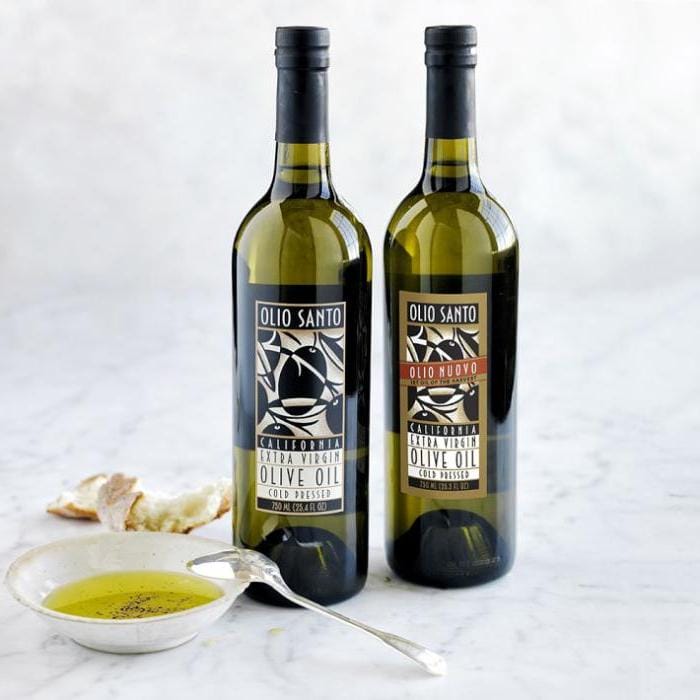
Why is unrefined olive oil bitter? The reason is the bitter taste of the olives. Even after processing, it persists. Usually, the bitterness disappears with cooking.
Storage
Let no more than 24 hours pass after collection and before spinning, nevertheless, at this time the olives must be stored somewhere. They are carefully poured into special low boxes so that they do not bump against each other too much and are damaged as little as possible. In addition, the oxidation and fermentation processes begin immediately, and therefore the boxes should be kept in a cool, ventilated area. To obtain high quality oil, however, olives should not be stored for more than 12-24 hours after harvest.
Cold pressed
Extra virgin olive oil is made with low temperature reconciliation. The purified product is placed under a press. The result is freshly squeezed olive juice. It is enriched with vitamins, retains all the properties of fresh fruits. Compression using low temperatures does not provide a large amount of ether. Due to the complex technological process, the price of the finished product is high.
This oil can be used to prepare various dishes. Good for frying. The boiling point is higher, the food is cooked faster, and all the nutritional properties are preserved.
Highly concentrated oil. It only takes a small amount to cook, so the dishes are not overwhelmed by the abundance of flavors. The product has antioxidant properties and reduces the risks of many diseases. Fatty acids are aimed at restoring the body, helping its development.
Acidity index
This is the percentage of oleic acid in the oil – the lower it is, the better the product is. Extra Virgin acidity should not be higher than 0.8%. Greek producers set an even stricter limit – up to 0.5%. For the Virgin category, this figure is 2%, for the refined Pomace it ranges from 1.5-2%.
Refined
Refined or purified – means no harmful impurities. In the process of cooking, ether is squeezed out of the peeled fruits. After receiving the first grade oil, the fruits are processed again. To obtain additional oil, which remains in the fruits themselves, chemical components are used. The pressure of the press and its temperature increase. The resulting product belongs to the low category, has a cloudy color. To give it a presentation, it is subjected to cleaning. The sediment is removed, the taste and smell disappear. This product is good for frying. Not suitable for reconciliation for health purposes.
Composition and presence of nutrients
The olive oil formula is ideal: there are a lot of unsaturated, easily digestible fats in it, and very little saturated, solid ones. The vitamins here are exactly those that are necessary for the skin – A, E and D, but various accompanying substances play a special role.
Most of all in this oil compounds containing phosphorus – phosphatides and phospholipids. The former contain a lot of sugars and help to retain water in the oil; the latter are needed to build cell membranes and participate in metabolic processes.
Carotenoids, sterols and tocopherols form the basis of the unsaponifiable fraction, which have soothing, softening and skin regenerating properties. For aging skin, they are truly indispensable, as they trigger regeneration processes and help the production of collagen.
The composition of fatty acids of this oil is diverse and rich: it contains up to 80% oleic acid, linoleic, stearic and palmitic acids – 3-15%, and recent studies have revealed many other unique acids. The fatty acid composition of the product can vary, and quite strongly, depending on the climate where the olive trees grow.
Kneading
After grinding, the olives turn into a thick brownish mass, which needs to be “kneaded” for a long time (about an hour) using a special unit to help the oil molecules separate from the water molecules mixed into one whole during the previous process. At the same time, the temperature of the olive mass should not exceed 27 degrees – that is why the process is called “cold pressing”.
Factory production of olive oil
For the large-scale production of “liquid gold”, specialized equipment is used: crushers of fruits into paste, thermo-mixing units, separation machines (presses, filters, decanters), a bottling conveyor.
The main stages of the factory production of oil:
- Collection, transportation and storage of fruits. Manual picking for large-scale production is very expensive, so special machines are used, and partially damaged fruits require quick processing.
- Raw materials are cleaned of leaves, stems, dirt, sorted and sometimes washed. Slight contamination, oddly enough, makes the taste and smell of the oil richer.
- With the help of automatic mills, raw materials are crushed to a paste state, the specific grinding method depends on the type of oil.
- Stirring is done slowly, this facilitates the process of separating the oil from the solid fractions. At this stage, the processing temperature plays a significant role.
- Separation separates the liquid phase of the oil from solid residues and water. At this stage, various types of units used are possible – filters, presses, centrifuges.
- Separation does not produce a perfect product; settling is necessary. Before a spill, the oil settles in sealed tanks for about two months, some solids inevitably precipitate and a layer of water forms.
- In order to achieve the best taste of the final product, different types of oils are mixed in some industries.
- A filtration step is not always necessary, and today unfiltered olive oil sold with sediment at the bottom of the bottle is in great demand.
- The finished product is poured into containers made of transparent or colored glass, plastic or ceramics.
Additional marking
The label often contains a three-letter code adopted by the European Union to further indicate the origin of the product.
PDO or DOP (Denominazione di Origine Protetta) – olives are grown, harvested and bottled in the same geographic region. A product with this mark meets the most stringent European certification requirements. By choosing it, we can be sure of the highest quality.
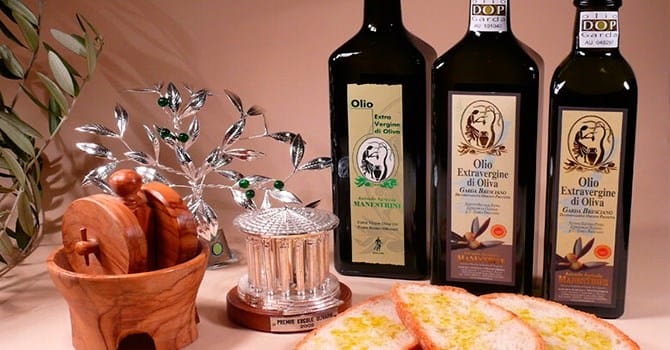
IGP (Indicazione Geografica Protetta) – it is assumed that the individual stages of the production cycle are in different regions. For example, olives are grown in one country and the finished oil is bottled in another. At the same time, this does not affect the quality of the final product, since the certification requirements remain high. Cultivation methods, olive varieties and raw material processing technology are clearly regulated and apply to the entire European Union.
BIO (biologico) – the oil is produced only from environmentally friendly raw materials. Even in the fight against diseases and pests, exclusively organic preparations are used in the cultivation process. The crop is grown without the use of GMOs, synthetic or chemicals.
Unrefined
The technology for obtaining the product consists in using only physical cleaning and mechanical processing. The finished product is not subject to cleaning with chemical components. Unrefined olive oil has all the beneficial properties and vitamins. Does not lose the characteristic smell and taste of fresh olives. The finished product retains fatty acids, which contribute to the restoration of hair, nails, and skin. Improves immunity.
Producing country
Recognized leaders in olive oil production:
- Italy;
- Greece;
- Spain;
- Turkey;
- Israel;
- Cyprus;
- Syria.
These are countries with centuries-old traditions and production recipes. They should be given preference when choosing a tasty and healthy product.
Dangerous properties of olive oil
This oil should be treated with caution in case of cholecystitis, since it has a choleretic effect.
It is not advised to eat more than a tablespoon of this product per day, and those who have problems with weight due to its high calorie content.
Benefits for the body
- The oil contains a large amount of linoleic acid. It is able to remove cholesterol from the body. Consuming fresh salad with oil can reduce the risk of heart disease.
- Improves stool. Daily consumption of a tablespoon of this product is able to soften the personnel mass and restore the intestinal walls.
- The liver function improves, toxins, toxins and harmful substances are removed from the body.
- Linoleic acid promotes cell regeneration and wound healing. New cells grow due to improved blood circulation.
- It has a beneficial effect on the central nervous system. By improving the blood circulation in the brain, new nerve cells appear. Improves memory, coordination of movements.
- Consuming this product on an ongoing basis has been shown to reduce the risk of breast cancer.
Pomeis (Romase olive oil)
Therefore, the labeling of pomace oil as “olive oil” is simply against the law.
Rakes and harvesters
Traditionally, olives were picked by beating the tree with sticks, followed by picking the fruits from the ground. Nowadays, this technology cannot be recognized as the best due to the changed quality standards. Olives are delicate, if they fall on them, dents may appear, and this is a loss of presentation, when it comes to canning, and for oil production, violation of the integrity of the fruit is an unpleasant thing – oxidative processes can begin in the pulp, which will inevitably affect the quality. Therefore, even if the tree is shaken, a soft bedding is required on the ground for the falling olives.
Sometimes the fruits are raked directly into the bag using a rake-like device, there is also an electric tool with blades that delicately knock the olives off the branches. Finally, there are harvesters – these are tractors in the form of a portal, which, as it were, “hug” a row of olive trees with their stands. Moving forward, the combine shakes each tree with a special device of two rows of pins, and the fruits are poured into a container. Nevertheless, some producers of “top” varieties of olive oil try to inform buyers that the collection of olives was done by hand, that is, as carefully as possible.
Do not store for long
The aroma of olive oil is great, but not always necessary. For example, it may be superfluous in a confectionery product. Therefore, purified, refined varieties are produced, in which components that give a characteristic odor are removed by filtration and chemical methods.
Finally, again by chemical methods, it is possible to extract some additional amount of oil from the cake, but cake oil, of course, is considered a product of the lowest grade, although it is quite applicable even in cooking.
If we go back to Virgin oil, there are quality gradations there too. An important indicator is the level of acidity – the lower it is, the better the quality of the oil. Thus, for example, Extra Virgin and Virgin oils differ.
And the main thing. The ready-made olive oil is tried by special tasters who evaluate the quality and range of aromas of the product. This makes olive oil related to wine. And the shelf life does not make it related. Over time, oil, unlike wine, does not get better, it degrades, the acid content rises in it, and the taste changes. Therefore, fresh oil is best used throughout the year, and it is not worth building up large stocks.
Bitterness
Why is olive oil bitter? This is due to the taste of olives. In addition, it can tickle in the throat. In fact, olive oil tastes bitter – that's okay. A genuine cold-pressed product must be bitter. You should look at the packaging and composition. If the acidity is up to 1%, then this product is healthy, but you should not fry it on it. It is used for salads, dressings.
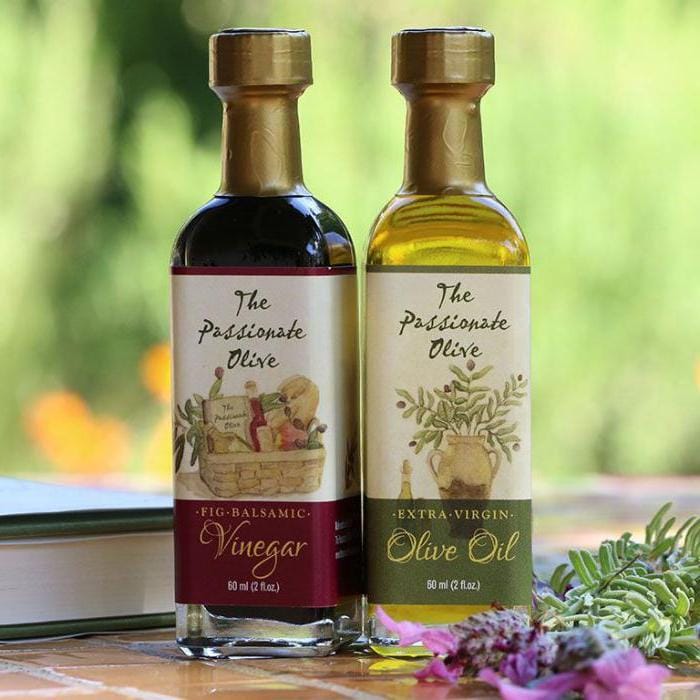
Fresh olives have a tart taste. There will be no bitterness in the dish after cooking. The food will be tasty, but many valuable properties will be lost. Therefore, refined oil should be chosen for frying and stewing. All dishes with it are tasty and aromatic.
Thus, the olive oil tastes bitter – this is normal, since fresh fruits have a bitter tart taste. This property is retained after cold pressing. It is advisable to use the product immediately, it should not be stored only for special cases. The oil will be useful only after opening the bottle.
Can I use if rancid
The question of whether olive oil should be bitter should not be confused with another topic: can a product be consumed that is really rancid (has a rancid taste).
Rancidity is a chemical process that irreversibly changes the fatty acids in a food.
Science denotes the rancidity of any fat with a special term: lipid peroxidation. The term means that one fatty acid, having changed its chemical composition, becomes another (already having a different name and other properties).
The process proceeds sequentially and is irreversible (therefore, rancid oil can no longer be called such – it can no longer be a food product).
Rancidity testifies: the oil is hopelessly spoiled and is not capable of bringing any benefit to the body.
The most common reason a product is oddly bitter is the end of its shelf life, which can be significantly reduced due to:
- Improper storage of oil (either in an open bottle, or outside the refrigerator, or when both factors are combined).
- Pouring the product into a non-sterile or unstable container.
The maximum period, even for properly stored oil, is a period of 18 months, counting from the date the bottle was uncorked. But even if the oil is stored sealed (in its original packaging), in the refrigerator, the shelf life still cannot be eternal (this is not a cognac that improves its quality over the years).
It is definitely impossible to use a product with an unnatural taste for food:
- Old hay (mold).
- Vinegar.
- Wine.
How to check the quality of olive oil. Hot potato test
First, prepare a potato. Boil or bake in your uniform.
While the potato is hot, place it on a plate, cut the peel on top and pour olive oil into the resulting space.
If the olive oil is really high quality, then it will give the potatoes a bright aroma of freshly cut grass, berries or olive greens, or any other fresh aromas. Well, if the smell is heavy and unpleasant, then this oil is of poor quality.
So, in order to choose the right quality olive oil, you should pay attention to:
- First and foremost. Extra Virgin labeling, i.e. first cold pressing
- Unrefined (the word “refined” should not be present in any form)
- Signs PGI, PDO or DOP present
- Acidity does not exceed 0.8%
- Dark glass or tin packaging. No plastic!
- No sediment
- Country of origin, manufacturer's and distributor's addresses are indicated
- The expiration date has not passed half
Sources used and useful links on the topic: https://vsvoemdome.ru/eda/produkty/kak-vybrat-olivkovoe-maslo https://roscontrol.com/community/article/uchimsya-razbiratsya-v-olivkovom-masle/ https: //povkusu.guru/kak-vybrat-olivkovoe-maslo/ https://zhetysuolive-gaea.kz/olive-oil-quolity/ https://www.syl.ru/article/353694/pochemu-gorchit-olivkovoe -maslo-kakoe-olivkovoe-maslo-luchshe-kak-vyibrat-ne-gorkoe-olivkovoe-maslo https://www.PopMech.ru/technologies/568474-i-myakot-i-kostochki-pochemu-olivkovoe-maslo- takoe-vkusnoe / https://Omasle.ru/olivkovoe-maslo/gorchit-eto-normalno-ili-net/ https://sunmag.me/interesnoe/kak-delayut-olivkovoe-maslo.html https: // zhetysuolive -gaea.kz/chose-olive-oil/ https://domashniy.ru/zdorovoe-pitanie-i-diety/kak_proizvodyat_olivkovoe_maslo/ https://edaplus.info/produce/olive-oil.html https://zen.yandex.ua/media/id/5d29bd3cdfdd2500aeab6a11/vybira -olivkovoe-maslo-5d57a77506cc4600ac805f5f
Post source: lastici.ru