
What is the name of the pressure measuring device and how to use it. Blood pressure measuring devices

About pressure measurements
With a heartbeat, blood from it is thrown into the vessels, passing through which, it exerts pressure on their walls. It occurs in the arteries, veins and capillaries, but only blood pressure indicators are of diagnostic value – they indicate how fully the supply of blood with oxygen to the tissues of the body occurs.
When the blood pressure in the arteries changes, 2 indicators are taken into account: the upper (systolic; at the time of heart contractions) and lower (diastolic; pressure in the arteries “at rest”) pressure.
Before measuring the pressure, you need to refrain from physical activity, drinking coffee, smoking – all this increases it and distorts the result.
How is blood pressure measured?
A device that measures pressure indicators is called a tonometer. Its principle of operation is that the lumen of the arteries of the hand on which the measurement is carried out is first compressed and then gradually opened. When blood passes through the narrow lumen of the vessel, turbulence occurs, which creates an audible noise. When the lumen of the vessel is fully expanded, the blood flow becomes linear, and the noise disappears.
All blood pressure monitors are conventionally divided into:
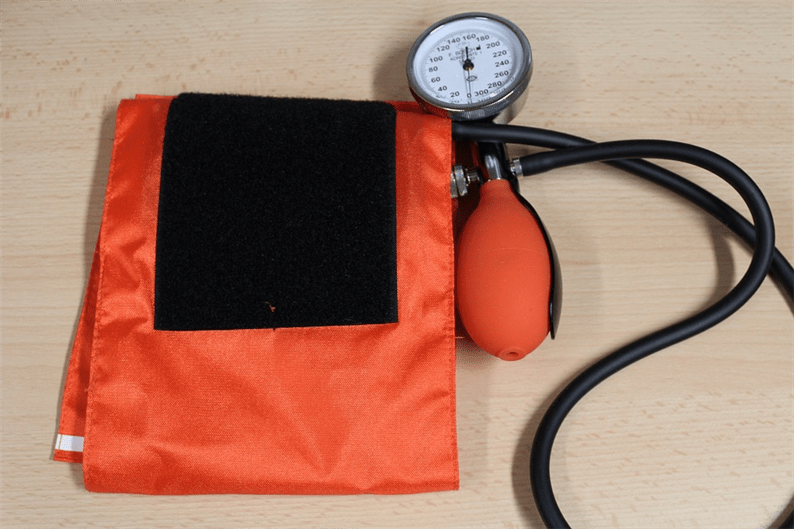
- Mechanical. The most accessible and accurate, do not require changing batteries or charging the battery. Consist of a pear, a cuff and a pressure gauge. The disadvantage is that outside help is needed, since it is quite difficult to correctly measure the pressure with a mechanical tonometer yourself.
2 Electronic tonometer. A device in which information is displayed. Among their advantages is convenience, since it is very easy to measure pressure with an electronic tonometer yourself. It also shows the pulse.
Among the disadvantages – the need to replace batteries or charge, possible errors as a result and a high price
… There are 2 types of electronic blood pressure monitors:
-
Semi-automatic. They are completed with a device with a display, a cuff and a pear for pumping it. It is perfect for constant pressure monitoring, since it is easy to measure blood pressure at home with such a tonometer, and the price for it is much lower than for automatic ones.
-
Automatic. The tonometer consists of a device with a display and a cuff. Since it is easiest for them to measure pressure at home, they are recommended to be purchased by people who live alone, but they are quite expensive.
Mechanical tonometers
They are highly accurate. In daily medical practice, aneroid devices are used, which have practically replaced the classic mercury tonometers.
Correct measurement of blood pressure with a mechanical tonometer requires certain skills and the help of a third party.
Electronic tonometers
It is better to measure pressure at home or at work with an electronic tonometer. The main advantages are convenience and ease of use, and no outside help is required to carry out the measurement.
The difference between a semi-automatic tonometer is the absence of a built-in compressor. Therefore, the use of this device requires manual inflation of the cuff. Otherwise, it practically does not differ from an automatic tonometer.
Pressure measuring devices can be operated from the mains or autonomously from batteries.
There is a wide selection of different models of blood pressure monitors:
- with high pressure and arrhythmia indicator
- with calculation of the average
- with smart metering support
- with voice dubbing of indicators
- with backlit display and buttons
- with built-in memory
- with support for multiple users to save measurements
- with motion sensor
- with indicator of correct cuff fixation
- double checked for precision
- with USB output and the ability to connect to a computer
- with Bluetooth support and the ability to connect to a smartphone
How to determine the diameter of the required cuff?
It must be remembered that measurement accuracy decreases with an incorrectly fitted cuff. When measuring a size smaller than the required size, the final result may be falsely increased, and vice versa – with a larger diameter cuff, the results will be lower than true.
To determine the size of the desired cuff, you need to measure the circumference of the shoulder in the middle between the shoulder and elbow joints using a measuring tape. Select a cuff that is sized to include the measurement.
- 15-22 cm – This small cuff is suitable for measuring pressure in children and adolescents.
- 22-32 cm – medium cuff. Usually it is this cuff that comes with the electronic tonometer. Suitable for persons without excess weight and overdeveloped muscles.
- 32-42 cm – large cuff. Used by athletes and those who are overweight or obese.
The optimal sleeve (cuff) width is 40% of the shoulder length or from 12 to 14 cm. If you do not have a measuring tape or ruler at hand, there is a way to determine the optimal size “by eye”. A matching cuff covers approximately 2/3 of the distance from the shoulder to the elbow of a person.
In the line of modern blood pressure monitors, there are models with universal cuffs with a diameter of 22 to 42 cm, which allows you to measure blood pressure for all family members, except for the youngest. They require a small diameter cuff (15-22 cm).
Wrist tonometer: what you need to know?
It is a pressure measuring device that has several advantages: ⠀
- auto
- does not require outside help;
- compact;
- portable.
However, there are significant disadvantages:
- age limit – up to 40-45 years old;
- high error of results;
- high variability of indicators (up to 8-20 mm Hg when changing the position of the wrist relative to the heart by 10 cm);
- the length of the cuff is designed for a wrist circumference of up to 21 cm.
Based on the listed advantages, active people, athletes and travelers who pay attention to their health prefer to purchase a wrist tonometer.
The use of wrist restraints is not recommended by experts, but may be considered an alternative in obese individuals with a large shoulder circumference, when the shoulder cuff is difficult to fit due to the tapered shoulder shape.
If you own a wrist tonometer, carefully follow the manufacturer's instructions when taking a blood pressure measurement. This will help reduce the likelihood of incorrect measurements.
In case of doubt or discrepancy between the results obtained, use a shoulder tonometer.
Preparing for measurement
Measurement of blood pressure requires adherence to important rules and recommendations. Often, patients refuse to use an electronic tonometer due to the discrepancy between indicators and a mechanical device. However, this is a misconception of many. When the patient fulfills the requirements, the results of blood pressure measurements can be considered reliable.
So, to obtain accurate blood pressure indicators when using a digital tonometer, you need to adhere to the following rules:
- Correct cuff size. In length – not less than 80%, and in width – not less than 40% of the girth of the arm. An incorrect cuff size distorts blood pressure readings.
- Cuff overlay. Its location should be even, distortions are not allowed, and it should not be too weak or too tightly superimposed in the girth.
- Calm while taking measurements. Maximum rest for the patient's body and emotional state ensures the accuracy of the results of the procedure.
- Refusal to carry out preliminary power loads and procedures. 1 hour before measuring the pressure, you should refuse to take a shower or bath, as well as from high physical exertion, emotional outbursts. The accuracy of the results is also influenced by the strong tea and coffee drunk before.
- Emptying the bladder. If the urea is felt full, it must be emptied, since the pressure in the organ contributes to an increase in blood pressure.
- Restriction of movement. During the measurements, the patient must be stationary, not gesticulate with the limbs, and not engage in dialogues.
- Sit calmly for 5-10 minutes before measuring.
- Refrain from alcohol, cigarettes for 1.5-2 hours.
The accuracy of the results depends on the correct preparation for using the tonometer.
Advice. If the device works normally, but at the same time shows common indicators, it is necessary to hand it over for inspection to the appropriate metrological center. When using the device at home, it is recommended to check it every 3 years.
Blood pressure is a variable indicator. It depends on a number of factors. Therefore, both in patients with a diagnosis of cardiovascular diseases and in completely healthy people, it can change several times during the day. The main factors affecting blood pressure indicators are:
- power loads;
- psycho-emotional state;
- weather;
- time of day (at night the pressure is much lower than in the daytime);
- food.
If a patient measures blood pressure several times a day and notes jumps, this is a natural, normal factor. A suitable period for manipulation is the stabilization period. Doctors advise taking measurements in the morning and before bedtime. Only these data can be considered objective, on which drug therapy can rely.
Correct posture
The position of the patient's body is the main criterion. It affects the accuracy of the results. Immediately, we note that measurements cannot be taken in a standing or lying position. The most correct indicators will be if the patient takes a sitting position.
The recommendations will be as follows:
- Choose a comfortable position on the chair, leaning against its back.
- You cannot cross your legs.
- Put the hand on which the measurements will be carried out on a flat surface, to achieve its absolute relaxation. It is strictly not allowed to keep the upper limb suspended or lower it down.
- The hand should be at the level of the heart.
- Ensure a motionless sitting position, do not enter into dialogues with anyone.
- Before the procedure, it is advised to take deep breaths and exhales several times, this allows you to restore blood flow, normalize the heart rate.
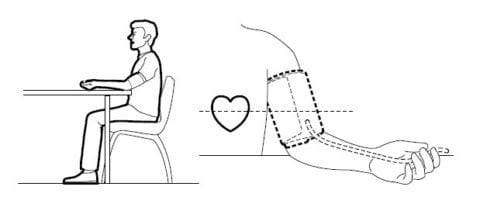
The pressure measurement procedure takes place in a sitting position.
On which hand to measure?
According to the recommendations of medical specialists, the pressure should be measured on the “non-working” arm. That is, if a person is right-handed, then the pressure is measured on the left limb, if left-handed, respectively, vice versa. At the same time, we note that reliable blood pressure data can be read when measured on both hands, the manipulations are repeated several times in a row. The interval between measurements is 5-10 minutes, so the average result is obtained, which the doctor relies on when prescribing treatment. The average indicator is calculated by entering the results obtained over several days in a notebook, where the stability of the indicators of each hand will be seen. Subsequently, it is recommended to measure pressure on the hand where the indicators will be more stable.
Preparing to measure blood pressure
Measuring blood pressure with a mechanical device is easy, even a child can handle it. But there are certain nuances that can skew the results. Therefore, it is required to properly prepare, observe a number of conditions.
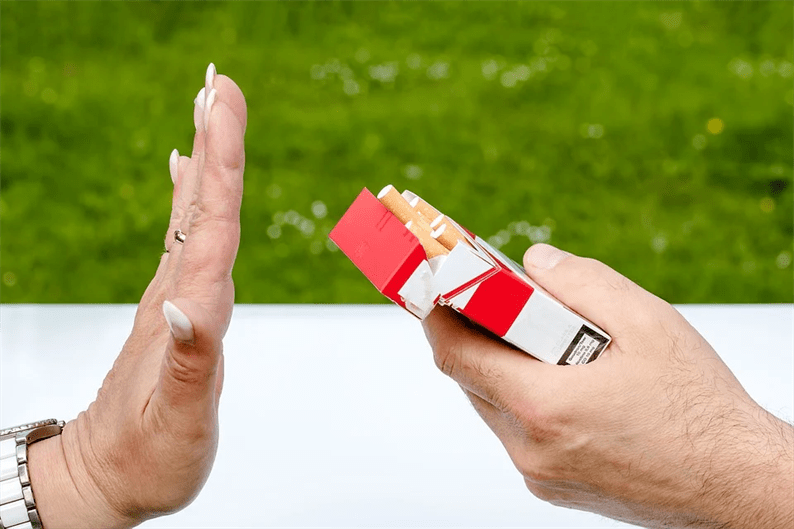 Experts recommend:
- stop drinking alcoholic beverages an hour before the procedure;
- go to the toilet if you have the urge;
- create a calm, quiet atmosphere in the room;
- do not smoke 30 minutes before the procedure;
- do not drink tea, coffee or eat chocolate an hour before using the tonometer;
- do not take medications that affect the functioning of the heart muscle a couple of hours before the measurement;
- if you had physical activity, you should rest for a couple of hours and only then measure the pressure.
If you adhere to these rules, the tonometer will show true values.
Room temperature
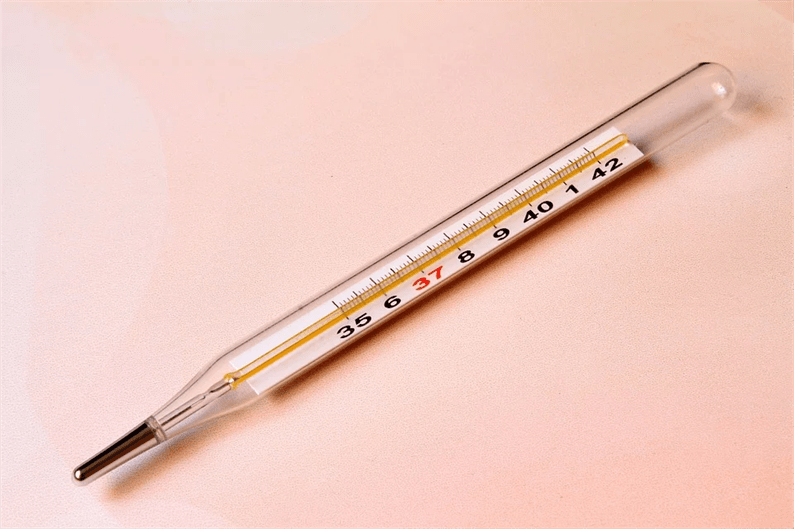 The room temperature can greatly affect the measurement result of the tonometer.
If a person is cold, the blood vessels begin to narrow. As a result, the device will show higher numbers.
In hot climates, the vessels, on the contrary, expand. Which leads to a decrease in blood pressure.
The optimum temperature in the room should be between +22 and +24 degrees.
Correct body position
Before starting the procedure, a person should take the correct body position. You cannot cross your legs. It is forbidden to talk. The pressure can be measured while sitting and standing. You can lie down during the procedure. The main thing is that the pose does not cause discomfort.
Experts recommend this position:
- sit on a chair or chair. Lean against the back;
- put your feet on the floor;
- put your hand on a hill. The elbow should be at the level of the heart.
It is recommended to sit in this position for about 10 minutes. This is enough for the body to enter the stage of calm, all the muscles relax. No need to talk, listen or watch TV, or move.
The slightest tension leads to reflex vasospasm and a slight increase in systolic, diastolic blood pressure. Therefore, the correct posture is considered to be in which all the muscles of the body are relaxed as much as possible.
Before measuring the pressure while standing or lying down, you must also fulfill the above requirements.
Algorithm for taking measurements depending on the type of tonometer
There are several types of digital blood pressure monitors. There are such:
- Automatic.
- Semi-automatic.
- Carpal.
Table # 1. Features of different types of electronic tonometers.
| Tonometer type | Features of the | Note |
Auto. |
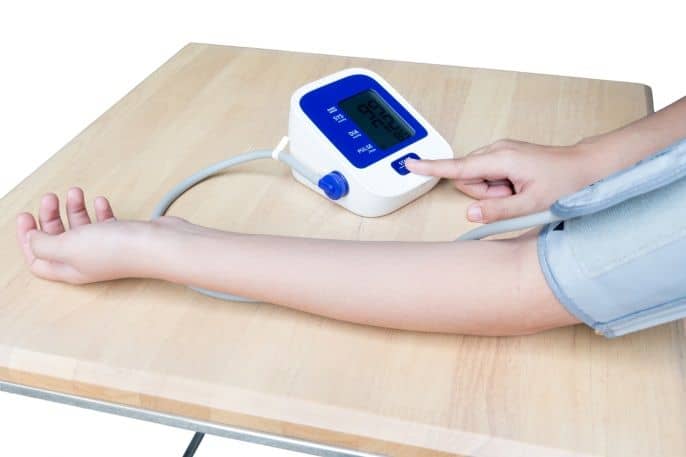
The automatic type of electronic tonometer does not require the participation of the patient or other persons. With such a device, you can easily measure the pressure yourself. To carry out the procedure for measuring blood pressure, you just need to put on the cuff correctly, press the button that activates the start of the device. | They are used by any category of patients. |

Semi-automatic. |
This type of device requires the participation of the patient. Equipped with a rubber bulb to help inflate the cuff. | Used by any category of patients. |
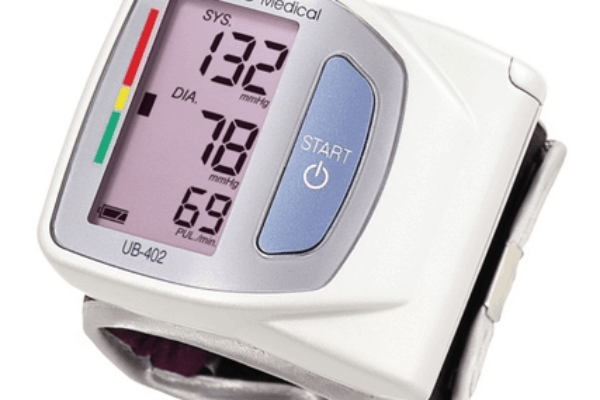
Carpal. |
They are usually fully automatic. The cuffs of such devices are put on the wrist, while the indicators are fixed on the thin radial artery. | It is not recommended for use by persons with diagnoses of the cardiovascular system, as well as by patients over 45 years of age. |
Each type of tonometer is equipped with highly sensitive sensors that respond to air fluctuations in the cuff. And the vibrations of the air, in turn, reflect the frequency and strength of the tremors of blood in the artery.
Note that the wrist devices, as we have already indicated, reflect the pressure on the thinner radial artery; therefore, the indicators of such measurements cannot always be considered reliable, they have some error. There are some restrictions for their use, specified in the table above.
Auto
It will be easy even for old people to measure pressure with an automatic tonometer. They are suitable for lonely elderly people suffering from characteristic diseases that require regular monitoring of blood pressure. Such procedures do not require outside help, any person can handle them.
The algorithm for making measurements with an automatic device is as follows:
- Sit comfortably on a chair, leaning against the back. The body should not be in any kind of tension.
- Before starting the procedure, you should sit quietly for 5-10 minutes. Take a few deep breaths in and out.
- Place your hand on a table or any other flat surface so that it is at chest level.
- Put on the cuff, while the tubes of the device should be on the inside of the limb.
- Fix the cuff, making sure that it is not too loose or too tight around the arm. A correctly worn cuff is considered when a finger can be placed between it and the hand.
- Switch on the device. This will be the “start” or “start” button.
- After turning on the device, the cuff will automatically be filled with air, then it will be deflated.
- When finished, the screen will display the upper and lower BP results, including heart rate readings.
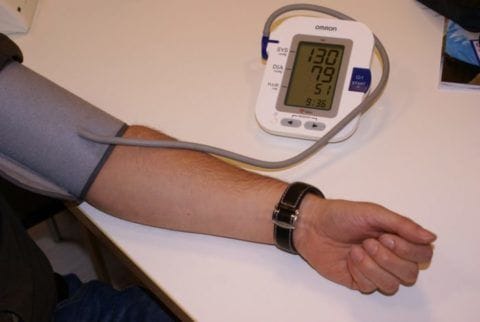
During the period of pressure measurements, the hand should be in a relaxed state.
Semi-automatic
The principle of operation of a semi-automatic device is identical to that of an automatic device. The differences are that when using a semi-automatic, the patient or his assistant needs to pump air into the cuff himself, this is done using a rubber bulb. To release the air, a special button is pressed. The values will also be displayed on the instrument monitor.
Carpal
The wrist types are convenient to use, they are compact, which allows you to take the device with you on any trip. The algorithm for taking measurements is similar to the automatic one, with the exception of some nuances, the main one is the imposition of the cuff on the forearm.
To measure blood pressure with a wrist tonometer, you must adhere to the following recommendations:
- Remove all jewelry (bracelets, watches, rings, etc.) from the hand and wrist.
- The position of the hand should be at the level of the chest, with the thumb pointing up.
- The cuff is worn over bare skin. A correctly worn cuff is considered when it is 1.5 cm above the fold at the wrist.
- The instrument display must point upwards.
- Press the start button with the other hand and wait for the device to pump air into the cuff and then deflate it. After that, the screen will display blood pressure indicators, heart rate.
Attention. When using a wrist tonometer, do not move your hand or fingers.
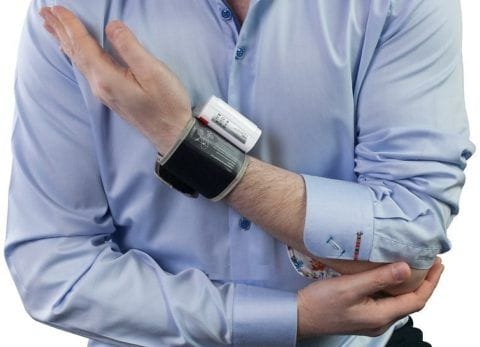
When measuring the pressure, the hand should be at the level of the heart.
If you compare the readings of the automatic and wrist tonometer, you can see slight deviations. This fact is considered the norm. For the reliability of the result, it is recommended to repeat the procedure several times after 2-3 minutes, to compare the data obtained.
How to measure pressure with a manual semiautomatic tonometer
This device automatically records blood pressure readings, but you need to manually inject air into the cuff. Semi-automatic blood pressure monitors are considered more accurate than other electronic models. The measurement process is carried out as follows:
- Wrap the cuff around your forearm 2 to 3 cm above the elbow joint. Make sure the air tube is in the correct position – in the center of your hand.
- Switch on the device by pressing the button.
- Pump air by squeezing the bulb with your free hand to 200 mm Hg. Art. or until a beep indicating readiness for measurement, if the device has this function.
- Wait for the device to fix the BP and heart rate figures. Semi-automatic blood pressure monitors emit signals indicating that the measurement is complete.
- When the screen of the device shows the data of blood pressure and heart rate, press the button at the base of the bulb so that the remaining air flows out through the valve.
- Remove the cuff, turn off the tonometer.
If there are doubts about the reliability of the results shown when measuring pressure with a semi-automatic tonometer, repeat the procedure after 10 minutes. The most accurate figures can be calculated by the average of three measurements.
Attention! When measuring blood pressure in a lying person, the results may be lower than when measuring in a sitting position. This is due to changes in blood circulation.
On which hand is it better to measure: on the left or on the right?
Most often, the pressure is determined on the left hand, although this is not a mandatory requirement. Experts advise to initially measure on both limbs and then use the arm on which the readings were greater to determine blood pressure.
Why does it show different pressure on different hands?
The most common causes are the anatomical features of the structure of the muscles and the vascular bed, arterial diseases, impaired autonomic regulation, psychoemotional instability.
Does an electronic device overestimate the numbers compared to a hand-held tonometer?
Modern electronic devices have an error not exceeding 3-5 mm Hg. Art. The opinion that digital devices consistently overestimate or underestimate indicators is a myth.
What is the best time to measure?
Cardiologists advise measuring blood pressure daily, morning and evening.
Manufacturers produce many baby devices that allow even newborn babies to measure blood pressure.
Usually these are automatic or semi-automatic blood pressure monitors that record blood pressure numbers on their own, because young children cannot always behave calmly during the procedure, which reduces the accuracy of measurements. Therefore, it is better to use devices equipped with electronic equipment, where a phonendoscope is not required.
The main difference from measurement in adults is the size of the cuff.
For this purpose, it can be bought separately, guided by the age of the child:
- For newborns, the circumference is 5-7.5 cm;
- For babies, a cuff from 7.5 to 13 cm is suitable;
- Older children – 13-20 cm.
If it is not possible to purchase a cuff, you can use a wrist tonometer, but fasten it not on the wrist, but in the shoulder area. During the measurement, you can distract your baby with verbal games or fairy tales. If necessary, the child can be put on the lap of the mother.
What is Blood Pressure – a brief educational program on Diet4Health.ru
Blood pressure is the process of squeezing the walls of capillaries, arteries and veins under the influence of blood circulation. Types of blood pressure:
- upper, or systolic;
- lower, or diastolic.
When determining the level of blood pressure, both of these values should be considered. The units of its measurement remained the very first – millimeters of the mercury column. This is due to the fact that the old machines used mercury to determine the level of blood pressure. Therefore, the BP indicator is as follows: upper blood pressure (for example, 130) / lower blood pressure (for example, 70) mm Hg. Art.
Circumstances that directly affect the blood pressure range include:
- the level of strength of the contractions performed by the heart;
- the proportion of blood pushed out by the heart during each contraction;
- opposition of the walls of blood vessels, which turns out to be the flow of blood; the amount of blood circulating in the body;
- fluctuations in pressure in the chest, which are caused by the respiratory process.
Blood pressure levels can change throughout the day and with age. But for most healthy people, a stable blood pressure is characteristic.
Determination of types of blood pressure
Systolic (upper) blood pressure is a characteristic of the general condition of the veins, capillaries, arteries, as well as their tone, which is caused by the contraction of the heart muscle. It is responsible for the work of the heart, namely, for the power with which the latter is able to expel blood.
Thus, the level of upper pressure depends on the strength and speed with which the heart beats. It is unreasonable to argue that blood pressure and heart pressure are one and the same concept, since the aorta also participates in its formation.
The lower (diastolic) pressure characterizes the activity of the blood vessels. In other words, this is the blood pressure level at the moment when the heart is as relaxed as possible. The lower pressure is formed as a result of the contraction of the peripheral arteries, with the help of which blood is supplied to the organs and tissues of the body. Therefore, the state of blood vessels is responsible for the level of blood pressure – their tone and elasticity.
Blood pressure is the norm for ages
Each person has an individual blood pressure rate, which may not be associated with any disease. The level of blood pressure is due to a number of factors that are of particular importance:
- the age and gender of the person;
- personal characteristics;
- life style;
- lifestyle features (work activity, preferred type of rest, and so on).
Also, blood pressure tends to rise when performing unusual physical activity and emotional stress. And if a person constantly performs physical activity (for example, an athlete), then the blood pressure level can also change both temporarily and for a long period. For example, when a person is under stress, their blood pressure can rise to thirty mm Hg. Art. from the norm.
At the same time, there are still certain boundaries of normal blood pressure. And even every ten points of deviation from the norm indicate a violation of the body's work.
|
Age |
The upper level of blood pressure, mm Hg Art. |
Lower blood pressure, mm Hg Art. |
|
1 – 10 years old |
95 |
60 |
|
10-15 |
from 95 to 110 |
from 60 to 70 |
|
16 – 20 years old |
from 110 to 120 |
from 70 to 80 |
|
21 – 40 years old |
from 120 to 130 |
from 70 to 80 |
|
41 – 60 years old |
up to 140 |
90 |
|
61 – 70 years old |
from 140 to 147 |
85 |
|
Over 71 |
from 147 |
up to 85 |
You can also calculate the individual blood pressure value using the following formulas:
1 For men:
- upper blood pressure = 109 + (0.5 full years) + (0.1 weight in kg);
- lower blood pressure = 74 + (0.1 number of full years) + (0.15 weight in kg).
2 For women:
- upper blood pressure = 102 + (0.7 full years) + 0.15 weight in kg);
- lower blood pressure = 74 + (0.2 number of full years) + (0.1 weight in kg).
The resulting value is rounded to an integer according to the rules of arithmetic. That is, if it turned out to be 120.5, then when rounding it will be 121.
What to do to normalize blood pressure?
These tips will help you feel energized all day if you are hypotonic.
- Don't rush to get out of bed. Woke up – do a little warm-up lying down. Move your arms and legs. Then sit down and stand up slowly. Perform actions without sudden movements. they can cause fainting.
- Take a contrast shower in the morning for 5 minutes. Alternate water – warm for a minute, cool for a minute. This will help to invigorate and good for blood vessels.
- A cup of coffee is good for you! But only a natural tart drink will raise the pressure. Drink no more than 1-2 cups a day. If you have heart problems, drink green tea instead of coffee. It invigorates no worse than coffee, and does not harm the heart.
- Sign up for the pool. Walk at least once a week. Swimming improves vascular tone.
- Buy a tincture of ginseng. This natural “energetic” gives tone to the body. Dissolve 20 drops of tincture in ¼ glass of water. Drink half an hour before meals.
- Eat something sweet. Whenever you feel faint, eat ½ teaspoon of honey or some dark chocolate. Sweets will drive away tiredness and drowsiness.
- Drink clean water. Every day, 2 liters of clean and non-carbonated. This will help keep blood pressure at a normal level. If you have heart and kidney problems, your doctor should prescribe a drinking regimen.
- Get enough sleep. A rested body will work as it should. Sleep at least 7-8 hours a day.
- Get a massage. According to experts in oriental medicine, there are special points on the body. By acting on them, you can improve your well-being. The point between the nose and the upper lip is responsible for the pressure. Massage it gently with your finger clockwise for 2 minutes. Do this when you feel weak.
What should be the pressure?
The amount of normal pressure depends on the physiological characteristics of the human body, its age, occupation, lifestyle. There are two types of blood pressure: diastolic and systolic. The first shows the level of pressure in the blood at the time of maximum relaxation of the heart muscle, the second – during the maximum contraction.
 Also, pressure is classified into:
- optimal – the tonometer shows 120/80 mm Hg;
- normal – 130/85 mm Hg;
- increased – from 135 to 139 by 85 (89) mm Hg;
- high – exceeds the mark of 140/90 mm Hg.
With movement, physical activity, blood pressure indicators increase by about 25 mm Hg. This is due to the needs of the body and speaks of an adequate response of the cardiovascular system. Blood pressure changes with age.
Exactly how it changes with age is shown in the table below:
| Age | The rate of blood pressure for the fairer sex, mm Hg | The norm of blood pressure for males, mm Hg |
| Children under 10 years old | 95/66 | 96/66 |
| Teenagers from 10 to 19 years old | 103/70 | 103/69 |
| Young people 20-29 years old | 116/72 | 123/76 |
| 30-39 years old | 120/75 | 126/79 |
| 40-49 years old | 127/80 | 129/81 |
| 50-59 years old | 137/84 | 135/83 |
| 60-69 years old | 144/85 | 142/85 |
| 70-79 years old | 159/85 | 145/82 |
| 80-89 years old | 157/83 | 147/82 |
| From 90 years old | 150/79 | 145/78 |
Increased tonometer numbers indicate a serious pathology. There is a risk of circulatory disorders in the brain, the development of myocardial infarction.
 Chronic hypertension 4 times increases the risk of heart attack, 7 times – stroke, 3 times – peripheral vascular disease and 6 times the likelihood of chronic heart failure.
Especially dangerous is a hypertensive crisis, in which blood pressure rises sharply to 200-220. If you do not take appropriate measures and do not call an ambulance, a heart attack, stroke, or death is possible.
If a person is prone to changes in blood pressure, it is recommended that he regularly measure pressure with a tonometer and correlate the results with the standard value.
Choosing a hand for measuring blood pressure
Many people are worried about the question: on which hand the pressure is measured, because the accuracy of the final figures may depend on this. Doctors advise taking measurements on both limbs, and then making another circle. Before measuring the pressure 2 times, you need to wait 3-4 minutes. The results obtained should be recorded. They will help you choose which arm to measure the pressure correctly, since from now on it will be possible to carry out the procedure on the limb on which the indicators were overestimated.
Sometimes the blood pressure readings on both limbs are the same. In this case, you can understand which hand to measure pressure on by other criteria, for example, a right-handed person, or a left-handed person.
If the right limb is used predominantly, then the measurement should be carried out on the left, and vice versa.
Difference in blood pressure
Sometimes the diagnosis of other pathologies depends on which hand to measure the pressure on. For example: the kidneys, liver, gastrointestinal tract, pancreas affect the right hemisphere, and the lungs, upper limbs and heart act on the left. That is why the reasons for different pressure on the hands are not only related to the cardiovascular system, but also to malfunctions of organs.
Finding out the algorithm for measuring blood pressure on different hands is especially important if the difference in indicators is 15 units or more. If such an increase has been observed for a long time, then the chance of complications increases. The patient needs to be examined immediately to find the cause of high blood pressure on the left arm or right.
The affected left or right side of the brain sometimes presents with the following symptoms:
- worsening reaction;
- weakness and apathy;
- headaches and dizziness.
People who do not know on which hand to measure pressure correctly often perform the procedure on one limb. Doctors advise people, especially those with hypertension, to first learn how to measure blood pressure, and then do it on both hands. In this case, there should be no error.
High pressure on the left hand is especially noticeable in left-handed people who actively use the limb. The difference can be up to 10-15 units. In people for whom the main right hand, on the left limb, the indicators can also be slightly increased. Doctors explain the deviation by an anatomical feature. On the left hand, food comes directly from the aorta, and on the right – from the brachiocephalic trunk, so the level of blood pressure is lower here.
Blood pressure on the right hand may be slightly higher than the left if the person is right-handed and actively involved in sports. Doctors explain this by the fact that constant stress on the muscles of the shoulder girdle makes them larger and denser. The arteries passing through this place are compressed, so the blood pressure in the right arm increases.
Situations in which there is a large difference in blood pressure
Often the problem is that a person does not know how to measure blood pressure correctly. Even if you do not read the information on the Internet and do not consult a doctor, each tonometer contains instructions for measuring in the box, but few people read it.
In more rare cases, the situation is aggravated by the fact that a person does not understand which arm to measure blood pressure on and constantly does it on different limbs. Gradually, the difference in blood pressure begins to increase, but the patient will not know about it until the visible symptoms appear.
Differential pressure situations are as follows:
- There is normal pressure on one limb, and high pressure on the other. In this case, the problem often lies in the development of VSD and anatomical abnormalities of the aorta and other arteries that feed the arms.
- High pressure on one limb and even higher on the other. This situation arises due to the development of hypertension, VSD, as well as due to stress, overload and lack of sleep.
- Low pressure on one limb and high or normal pressure on the other. In this case, it is often a matter of blockage or compression of an artery.
The above situations do not arise mainly immediately, but only after a long time. That is why it is important not only to understand on which hand the pressure should be measured, but also to periodically carry out the procedure on both limbs. In this case, the occurrence of many pathologies can be avoided.
Environmental conditions and other factors affecting the measurement result
You should measure pressure as part of self-monitoring in a familiar environment, in a warm and quiet room.
- Measurement in a cold room results in an upward error. For example, in one of the studies it was shown that in a cold room the error in measuring the pressure reached an average of 8-15 mm Hg.
- Smoking. A recently smoked cigarette can increase blood pressure by 10-20 mm Hg. If you smoke, the time from the last cigarette to the blood pressure measurement should be at least 30 minutes. The dependence of blood pressure on cigarettes is shown in the graph.
Data from Gropelli, A, Giorgi, DM, Omboni, S, et al, J Hypertens 1992; 10:495.
- Bladder. A full bladder, the urge to urinate can increase blood pressure up to 20 mm Hg
- Extraneous noises and conversations. The room in which the research is carried out should not be noisy, the noise, the conversation of both the researcher and the subject can lead to an increase in pressure by 10 mm Hg.
- If you have consumed caffeinated beverages (such as tea), you should measure your blood pressure no earlier than one hour later.
- Also, the hour interval should be maintained after eating.
- Do not measure blood pressure under stress or other forms of emotional stress
- Refrain from physical activity before taking blood pressure measurements.
Position in which to measure pressure
In most studies, pressure is measured while sitting in a chair with a back. The absence of a back in the chair (or if the patient does not lean on it) can overestimate blood pressure by 10 mm Hg. The leg-to-leg position gives an error of another 5-10 mm Hg. If the forearm of the hand on which blood pressure is measured is not placed on a support (for example, on a table), then the blood pressure indicator may be overestimated by 5-15 mm Hg. Especially if the hand is tense.
Sit comfortably according to the recommendations given and sit for 5 minutes before proceeding with the measurement.
When putting on the cuff, pay attention to its positioning on the shoulder. Incorrectly worn cuff is an error in measurement reaching 20 mm Hg. The layout of the cuff on the shoulder is usually applied by the manufacturer to the cuff itself. If there is no such scheme, carefully study the instructions for the tonometer.
Which arm should be used to measure blood pressure?
If you are measuring blood pressure for the first time in your life, then you should take a measurement on both hands. With a discrepancy of indicators within 10 mm Hg. in the future, blood pressure is measured on the arm on which the pressure was higher.
If the discrepancy is greater, please inform your doctor.
IMPORTANT: The hand on which the pressure is measured must be free of clothing. Sleeve should not be rolled up as this can lead to clamping of the brachial artery and significant measurement error. If you are wearing a shirt made of very thin fabric, then it is permissible to measure blood pressure by placing a cuff over it. But we strongly recommend that you free your hand from your clothes.
IMPORTANT # 2: When starting to measure pressure after a long break, measure the pressure three times in a row at intervals of one minute. Record ALL THREE recorded values in your blood pressure diary.
IMPORTANT # 3: if you use semi-automatic or manual blood pressure monitors, pump air into the cuff smoothly, if you pump air very quickly or abruptly, then the error in pressure measurement can reach 20-40 mm Hg
IMPORTANT # 4: if you place the head of the phonendoscope UNDER the cuff, it will lead to an error of 3-12 mm Hg.
The arm with the cuff applied to it is at the level of the heart. Air is rapidly pumped into the cuff until the systolic blood pressure is exceeded. The achievement of this goal can be judged by the disappearance of the pulse on the arm. Then air is released from the cuff at a speed of 3-4 mm Hg per second and the moments of appearance and disappearance of Korotkoff's noises are recorded. Too high a rate of decrease in pressure in the cuff can lead to a distortion of the result by 5-10 mm Hg.
Common mistakes
Below is a list of the most common mistakes that can lead to an incorrect result after measuring blood pressure, and, as a result, to an erroneous diagnosis:
- Improper preparation for measuring blood pressure. It is very important not to overload the body with physical activity before the procedure (including brisk walks and light jogging).
- Roll up sleeves. In this case, the wrapped cloth compresses the hand, blocking the natural circulation, which will lead to an incorrect result. The best solution is to put on a short-sleeved T-shirt or sweater in advance. But if you have already come to a medical facility with a long sleeve, then you can simply pull your hand out of it.
- Wrong cuff. It is important that the cuff of the tonometer matches the circumference of your arm. When measuring blood pressure, it should fit snugly around the hand and not slip.
- Hand position. Your hand should be on a horizontal surface, roughly level with your heart. It is unacceptable for it to hang down or tense. This will give a false result.
We hope that this information will help you understand the question of how to measure pressure with a mechanical tonometer. It is enough to carry out the procedure yourself several times or apply the obtained theoretical knowledge to your loved one. You will succeed!
Can there be errors in the measurement results?
Failure to comply with the preparatory measures leads to frequent errors during the measurement of blood pressure
Yes, errors can be due to a number of reasons:
- Wrong cuff selected.
- Wrong position of the hand, body.
- Incorrect cuff placement.
- Incorrect preparation for the start of measurement.
- The pressure is measured in a rush or immediately after exercise.
If the pressure is not normal
Pressure can periodically deviate from the norm under the influence of adverse factors. However, if you more and more often notice that the pressure is higher or lower than normal, you need to make an appointment with a doctor. A change in blood pressure can be a symptom of a serious medical condition.
First of all, you need to make an appointment with a therapist. The doctor will make a preliminary diagnosis or refer to narrow specialists for its clarification: a cardiologist, a neurologist and others.
Is it possible to measure pressure without a tonometer
If, for some reason, you urgently need to get data on your pressure, but you do not have a device at hand, you can try to take measurements yourself with the help of improvised means. You will need a ruler and string.
Feel for the pulse on your arm, place the ruler towards the elbow. The arm should lie on a smooth surface, slightly bent, so that the ruler rests on it by itself and does not try to fall.
Then take a threaded needle so that you are holding the thread and the needle hangs loosely. Move it carefully along the ruler so that the needle does not wobble from your jerks. The moment it starts to oscillate on its own, it will indicate your bottom pressure. Then she will come to rest again and begin to twitch already at the top pressure.
In order to get reliable results, multiply centimeters by 10. Keep in mind that most rulers have markings not from the very beginning, but from the indentation – count this indentation as well.
Such diagnostics should be used in extreme cases and cannot be relied on – just see if there is a strong increase or decrease. Refer to the factory unit for exact numbers.
How to measure blood pressure with a stethoscope
The method in which a person listens to heart sounds requires some experience and habit. The first time it is difficult to hear everything and at the same time notice the values shown by the tonometer arrow. It is even more difficult to measure pressure for yourself. Therefore, if you decide to use a stethoscope, practice properly.
- The person should sit as straight as when measuring pressure with an automatic tonometer, the cuff is applied to the same place.
- In the fossa of the elbow bend or slightly higher, in the place where the pulse is best heard, you need to position and slightly press the membrane of the stethophonendoscope.
- Inflate the cuff and at the same time listen for the pulse while looking at the arrow of the tonometer. At some point, the pulse will disappear – it will not be heard. After that, you need to pump up the cuff so that the tonometer needle rises another 20–30 mm Hg. Art.
- Open the valve of the pear slightly so that the tonometer arrow slowly crawls down. Slowly – this is 2-3 mm Hg. Art. per second.
- Listen carefully when the heartbeat sounds again in the stethoscope. Remember the value that the arrow showed at that moment. This is systolic, that is, “upper” pressure.
- Then you need to wait for the moment when the sounds disappear again. The number that the arrow will point to at this moment is the diastolic, “lower” pressure.
Pressure above 140/90 is high, below 90/60 is low. To understand what is normal for you and what is not, measure your blood pressure every day at the same time and under the same conditions and record the readings. In this case, if you sense that something is wrong, you can determine if you have a pressure problem.
How often to measure pressure?
Doctors – cardiologists recommend measuring blood pressure at least twice a day. The first measurement should be taken in the morning, immediately after waking up, the second – in the evening. It is advisable to keep a “blood pressure control diary” where all BP values should be recorded. Normal pressure is considered to be in the range of 110/70 mm. rt st. up to 140/90 mm. rt. Art. If you deviate from this norm, you should immediately consult a doctor.
Millions of people live unaware of the serious consequences of uncontrolled surges in blood pressure. And this is along with the fact that many, for various reasons, neglect regular examinations, prophylaxis, and sometimes treatment – either there is no time or money, or they cannot find a good specialist, or they simply feel the fear of “white coats”.
Meanwhile, hypertension is one of the diseases that does not have vivid manifestations, but can lead to the most serious consequences – heart attack or stroke. Unstable pressure surges may indicate kidney disease or hormonal imbalance. Blood pressure below normal values (we'll talk about them later) is often the result of heart failure, infections, endocrine gland disease, or dehydration.
Correct blood pressure measurement is a simple, affordable and painless way to monitor your health and well-being at home. Let's figure it out:
- What is blood pressure, and what values to focus on.
- Who needs to measure blood pressure regularly in the first place?
- The better to measure the pressure.
- How to correctly measure yourself.

Why measure blood pressure?
Heart attack, stroke, kidney failure, blindness – these are all precursors of hypertension. And there is only one way to avoid serious complications – to maintain normal blood pressure with medication.
Hypertensive patients need a home blood pressure monitor to prevent the risk of possible complications. It is very important to measure blood pressure in a calm environment to obtain the most accurate data.
The pressure readings of sick and healthy people are influenced not only by external factors and various diseases, but age and gender are of particular importance.
According to the data indicated in the table, blood pressure increases with age, and this is normal, since the body is aging and age-related changes occur, which provoke disturbances.
Buying a tonometer – is it really necessary
Do you need a blood pressure monitor at home if you have blood pressure problems? And if they are not? The answer in both cases will be yes. A tonometer is necessary for everyone, even those who have never experienced problems with well-being due to pressure.
The fact is that both hypertension (high blood pressure) and hypotension (low blood pressure) do not manifest themselves in the initial stages. You may feel great, but the numbers on the device will tell you unambiguously – you have hypertension / hypotension. According to the law of meanness, it is at these stages that the disease is better amenable to treatment and correction. The more the patient starts the problems that have arisen, the more difficult it will be to compensate them in the future.
Therefore, the measurement of indicators is necessary not only for those who already have problems. But also for the lucky ones who managed to avoid them. Remember that seeing problems on time is half the success of treatment.
Which tonometer to choose?
Before choosing an apparatus for measuring blood pressure, you should understand the range of devices offered by medical equipment manufacturers. These are electronic and semi-automatic machines. Each device has its own advantages. It is believed that a semi-automatic device is more accurate, as close as possible to mechanical devices.
An automatic machine that blows air from pressing buttons is easier to use in the case of self-measurement. It is better to use a semi-automatic tonometer with an assistant, since when the pear is inflated, physical activity is carried out independently, which can affect the accuracy of the device's indicators.
All compact pressure measuring devices are equipped with monitors, which, in addition to diastolic and systolic pressure, display the heart rate. The figures of the previous measurements remain in the memory of the device, which allows you to monitor the dynamics of the patient's condition. Measuring blood pressure with an automatic tonometer is extremely simple and does not require medical skills. The device itself knows very well how much air to pump into the cuff.
Important! If the normal pressure of a person is unknown, the pear is pumped up to 200 mm Hg. Art. If the data on the usual blood pressure are known, 40 mm Hg is added to the upper pressure. Art. and stop the pumping process.
Basic selection parameters
Before proceeding with the choice of the model of the device, it is necessary to decide for what purposes it will be used. To do this, you need to take into account several points.
How to determine the model of the device:
- Is it possible to use the help of household members to measure blood pressure. If there is a person at home who is ready to learn how to work with a mechanical tonometer, then you do not need to buy more expensive and modern options.
- The amount that you are willing to allocate for the purchase. If the budget for such a device is limited, then it makes sense to find a simpler but high-quality option than buying a cheap electronic Chinese blood pressure monitor.
- Existing diseases. Some abnormalities in the work of the heart can lead to the fact that the pressure meter will show incorrect results. If your hearing is impaired, a mechanical tonometer will not work.
- For whom the device will be used. If there is a need to measure blood pressure for a child, then you need to purchase an apparatus with replaceable cuffs and a baby cuff.
When everything is already clear with the model, it is necessary to learn the rules that need to be used when choosing a tonometer. They will help you to purchase high-quality and durable goods.
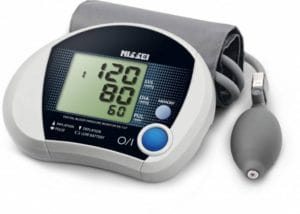
How to choose a quality tonometer:
- You need to pay attention to the pear. It should not be very tight and not damaged. The valve should tighten tightly.
- When choosing an electronic device to determine its accuracy, you need to compare its results with those of a mechanical tonometer right in the pharmacy.
- The cuff should also be free of damage. It is important that the sticky tape works well.
- You need to understand that the more famous the company is, the better its devices will be. Therefore, when buying an electronic and electromechanical device, you must read the reviews about its manufacturer.
Which is the best one?
Blood pressure control using tonometers is carried out according to indications or for prophylaxis. Today there are many models of such devices: mechanical, semi-automatic and automatic, equipped with additional functions. It is not easy to choose an automatic blood pressure monitor among the many devices.
Additional functions of such devices
For most people, a simple but high-quality device is enough. However, at the moment there are additional functions that will facilitate the use of the tonometer. And when choosing a pressure meter, you also need to pay attention to them.
Additional functions of the tonometer:
- Possibility of self-shutdown of the device. This is convenient as it won't run out of power if you forget to turn it off.
- Determination of average pressure. Such electronic assistants are highly accurate. They take readings several times, after which they display the average value.
- Remembering past results. Such blood pressure monitors can maintain the pressure readings of one or two people for a long time. This will be needed for those who keep a “pressure diary”.
- Determination of the presence of heartbeat disorders. In this case, the device displays arrhythmia data on the display.
- Heart rate measurement. This is convenient for people with tachycardia attacks.
- Voice playback. The option is required for blind and visually impaired people.
- Possibility of linking the tonometer with a mobile device. This option is convenient for those who want to monitor the blood pressure readings of relatives.
- Wrist thermometer with self-periodic pressure measurement. He will turn on himself, make changes in blood pressure and fix them without the intervention of the person wearing it.
It will be rather difficult to choose the best device from all the described variety. However, knowing the basic rules, and paying attention to the manufacturer, it is not difficult to acquire a high-quality and not very expensive one today.
Which devices are suitable for which category of patients
The most accurate tonometer is in the hands of a specialist. Doctors consider mercury to be the most accurate. There is no calibration required, the sensor is automatically zeroed. But due to shortcomings, these blood pressure monitors are no longer used. A mechanical pressure gauge shows a good result, but in the hands of an experienced specialist. For inexperienced people, such a device will not work.
For visually impaired patients, a model with voice duplication of the result is suitable, or rather an ophthalmic automatic non-contact tonometer, which duplicates the measurement results with a voice.
For hearing impaired patients, it is best to use an automatic hearing aid.
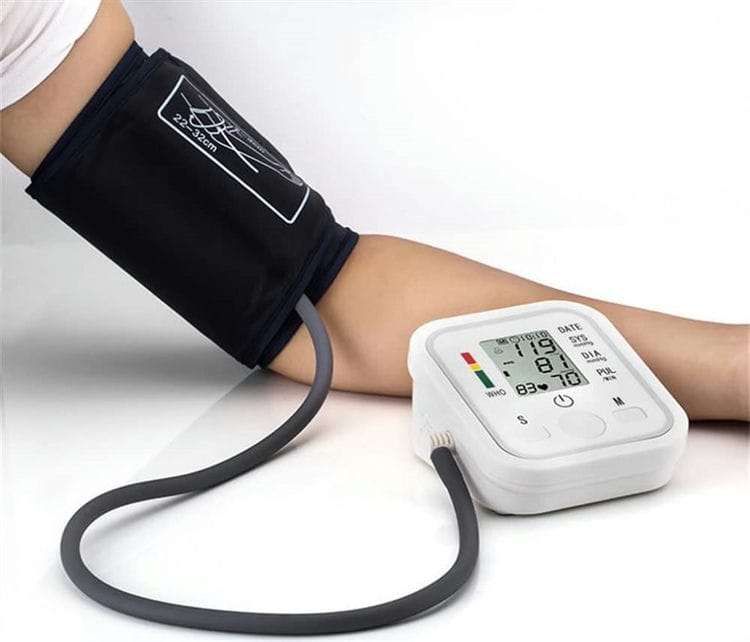
For the elderly, doctors recommend automatic devices for the shoulder, because the artery in the wrist is poorly audible.
Athletes or outdoor enthusiasts will find a tonometer better than the one that is attached to the wrist. It is compact, lightweight, comfortable. The family doctor prefers a mechanical device because it is more reliable and does not require battery power.
If the device is needed for home use, it is better to choose a tonometer “with memory”, that is, with the function of storing several results, or an automatic tonometer on the forearm.
If it is necessary to choose a device for a patient suffering from arrhythmia, it is better to choose a device with the function of counting the pulse and its rhythm in order to measure the heartbeat.
When choosing a tonometer, the size of the cuff sleeve should also be taken into account. If the arm is large, it is necessary to choose a device with an enlarged cuff.
How to choose an automatic blood pressure monitor for home use?
Today there are many models and brands, and the choice is quite difficult. An inexperienced person may think that the best tonometer is simply to choose: buy the latest model of a famous brand, but it should be noted here that each option has different advantages and disadvantages, and special attention should be paid to the choice.
The first thing a person pays attention to is the price. And this is correct – it is the price that will be the first indicator of not only quality, but also the functionality of each model. Before purchasing, you can first study all the advantages of cheaper models, and determine how relevant the acquisition of budget options will be. First of all, in addition to the price, you need to pay attention to the following parameters:
- When choosing an ophthalmic automatic non-contact tonometer, an important factor that must be taken into account is the presence of Russian-language instructions so that a person can easily learn how to use the device and understand the principle of its operation. Considering that such equipment is usually purchased for the elderly, this is a very important parameter, since older people have difficulty adapting to modern technologies.
- Build quality will be another important parameter. All parts of the device must hold firmly enough, and must fit perfectly together. The battery compartment in an automatic device is an important element, and it should close tightly enough, but still be easy to open when needed.
- Additional functions are the most difficult question. Such an additional function can be an electronic clock and calendar, or even smart analyzers that avoid excessive squeezing of the hand while working. Here you should first think over whether the patient needs these functions or not, because if additional functions are simply not needed, then you can choose an automatic tonometer cheaper.

To check which automatic tonometer is better, you need to carefully study the presented models of different brands. The Japanese tonometers Microlife, Reichert 7 and Omron have proven themselves the most in this regard in Russia, but these manufacturers also supply the most expensive models. Of the cheaper options, models from the American manufacturer AND have good technical characteristics – they are much cheaper than Omron and Microlife, but at the same time they are of high quality, and the price reduction is achieved by the rejection of expensive unnecessary additional functions.
Additional functions of the devices
When buying a device for measuring blood pressure, you should pay attention to the presence of additional functions. Among the most useful of them are the following:
- PAD technology – the ability to diagnose pulse arrhythmias;
- MAM technology – calculating the average value of three consecutive blood pressure measurements;
- diagnostics according to the WHO scale;
- increased memory size;
- timer;
- clock and calendar;
- battery saving system;
- the possibility of sound notification about the results of diagnostics, which is relevant for people with poor eyesight.
When buying, you should pay attention not only to the functionality of the device, but also to its accuracy. The accuracy class must be confirmed by clinical studies, as evidenced by the inscription “The highest accuracy class is confirmed by clinical studies” or “Clinically validation”.
Cuff selection
Semi-automatic blood pressure monitors and many automatic ones are equipped with a cuff made of synthetic material, which is attached to the shoulder with Velcro. The choice of the size of this element of the device depends on the accuracy of blood pressure measurements. The same device will not be able to correctly measure the pressure in a teenager and a large elderly person due to the difference in the thickness of the arm.
The optimal size is determined by measuring the thickness of the arm above the elbow. Are there several people in the family who require regular blood pressure monitoring? Today you can purchase a cuff that will fit as much as possible in size, you can separately.
The recommendations are as follows:
- if the shoulder circumference is from 22 to 26 cm, the size of the canvas should be 22×12 cm;
- for a hand with a circumference of 27–34 cm, a cuff is suitable, the dimensions of which are 16×30 cm;
- cuff 16×36 cm, relevant for patients whose shoulder circumference is 35–44 cm;
- the largest cuff size – 16×42 cm – is designed for people whose arm circumference is 45 cm or more.
Advice! Some manufacturers supply the medical equipment market with devices equipped with a frame cuff that allows you to measure pressure to a person of any age and build.
Devices with a wrist cuff are also popular. This solution is recommended for use by people under the age of 50 and not suffering from severe hypertension or complicated hypotension. The age range is associated with the fact that the vessels of the wrist begin to undergo atherosclerotic changes early enough. Do not use the device if the wrist was previously injured, as the result may be inaccurate.
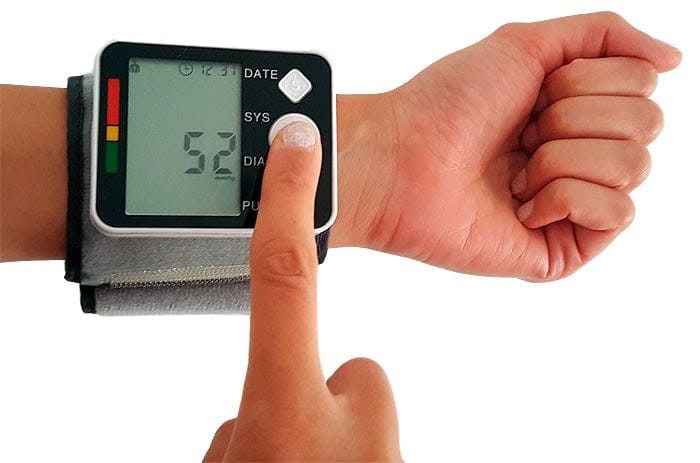
It is convenient to take blood pressure monitors with a wrist cuff with you, use them to monitor your condition while playing sports, etc.
Advice
- Keep a diary of your blood pressure readings. Pay attention to the time you took the measurements, whether it was before a meal, before or after training, or when you were aroused.
- Show this diary to your doctor next time you see him. Your doctor can see important details in your blood pressure fluctuations.
- Measure your blood pressure when you are relaxed: this will give you an idea of your lowest blood pressure. But also force yourself to take your blood pressure when you're upset. As frustrating as the thought is, you need to know how much your blood pressure rises when you are angry or upset.
- You can check your blood pressure fifteen to thirty minutes after exercise (or meditation, or other stress-relieving activity) to see if there is an improvement in your values. There should be an improvement that will be a good incentive to continue these exercises! Diet, for example, is the main way to control blood pressure.
- It would be a good idea to measure your blood pressure in different positions: standing, sitting and lying down (maybe someone can help you do this). This pressure is called “orthostatic blood pressure” and is useful for determining how your blood pressure changes with your body position.
- Bear in mind that the first time you use a sphygmomanometer, you are likely to make mistakes and get frustrated. It will take a few tries to get the hang of it. Most kits come with instructions. Be sure to read them.
Warnings
- Your blood pressure rises when you smoke, eat, or drink caffeinated beverages. You can wait about an hour after smoking, eating, or drinking coffee or cola before taking your blood pressure.
- Conversely, you can check your blood pressure immediately after smoking – an increase in the value will encourage you to quit smoking. The same goes for caffeine: if you know you are addicted to coffee or caffeinated sodas, or salty foods, or chips and salty croutons, that's your Achilles heel.
- Self-measurement of blood pressure with non-digital blood pressure monitors is unreliable. Better to have a friend or family member who knows how to do this help you.
A little conclusion
The pharmaceutical market provides measuring instruments for determining the pressure of various brands and models. Therefore, it is easy for the consumer to choose a tonometer that meets individual requirements. Each person, choosing a tonometer, takes into account the price and functionality of the device, as well as ease of use. Draws attention to the manufacturer's warranty obligations, selects well-known brands. Before buying, you need to consult with a cardiologist and get expert advice on choosing a tonometer.
Sources used and useful links on the topic: https://medprostor.by/articles/kak-izmerit-davlenie/ https://yandex.ru/health/turbo/articles?id=6263 https://Cardio-help.ru / davlenie / kak-merit-davlenie-tonometrom https://diet4health.ru/poshagovaia-instrykciia-kak-pravilno-merit-davlenie-mehanicheskim-tonometrom/ https://serdce24.ru/davlenie/kak-merit.html https: //www.neboleem.net/stati-o-zdorove/18850-kak-pravilno-izmerjat-davlenie-jelektronnym-tonometrom.php https://infoserdce.com/davlenie/kak-pravilno-merit-ruchnym-tonometrom/ https://cardiograf.com/napor/izmerenie/kak-pravilno-merit-davlenie.html https://yandex.ru/health/turbo/articles?id=2609 https://SilaSerdca.ru/davlenie-puls/kak-merit-davlenie-ruchnym-tonometrom https://zen.yandex.ru/media/health2/kak-pravilno-izmeriat-davlenie-raznymi-tonometrami-5e84427360f2aa3581260cd0 https://kardiodocs.ru/vessels/davlenie/kak-pravilno-samomu-izmerit-arterialnoe-davlenie.html https://Lifehacker.ru/blood-pressure-measurement/ https://no-zppp.com/raznoe/izmerenie-ad-mehanicheskim-tonometrom.html https://cbh-beauty.ru/raznoe/kak-pravilno-merit-davlenie-avtomaticheskim-tonometrom https://davlenie.guru/izmeritel-davleniya-cheloveka.html https://gipertenziya.com/izmerenie/kak-pravilno-izmerit-davlenie-avtomaticheskim-tonometrom.html https://ru.wikihow.com/%D0%B8%D0%B7%D0%BC%D0%B5%D1%80%D0%B8%D1%82%D1%8C-%D0%B0%D1% 80% D1% 82% D0% B5% D1% 80% D0% B8% D0% B0% D0% BB% D1% 8C% D0% BD% D0% BE% D0% B5-% D0% B4% D0% B0 % D0% B2% D0% BB% D0% B5% D0% BD% D0% B8% D0% B5 https://LechiDavlenie.ru/diagnostika/651-chem-izmerit-davleniya-cheloveka.html
Post source: lastici.ru