
Vienna sights. What to see in Vienna
Content
What to see in Vienna?
The glorious history of the Austrian capital has enriched the city with unusual and ancient sights. In Vienna, any tourist will find for himself what he will like.
Aesthetes will appreciate the Viennese opera and ballet. Naturalists will be delighted with Vienna's gardens. People interested in architecture will not want to close their eyes until they have seen all of Vienna's palaces and embankments. For everyone, Vienna will take its “trick out of its sleeve” to engrave itself in the memory for a long time.
Where to go
The main attractions of Vienna are located in its historic center. It is best to start your acquaintance with the city from the Town Hall Square. One of the brightest Christmas markets in Europe takes place here. From here, all important cultural and historical sites of Vienna will be within walking distance.
Culture
This is the cultural center of Europe, it is also called the musical center. It was here that great geniuses lived (Beethoven, Mozart, etc.), who left behind works that are still listened to.
Vienna is famous for its theaters. Tickets for musicals and dramas are sold out instantly. Performing here on stage is the dream of many classical performers.
Art galleries are no less famous. Personal collections served as the basis for the creation of world famous museums.
City districts
The first thing that tourists visit is the city center. This is the first area. Actually, it was this territory that the polis occupied in the 19th century. Only then did they begin to erect buildings outside the fortress walls.
There are 23 districts in total. These are the settlements that have joined the capital as a result of its growth.
Each area is famous for its own attractions and can be interesting from a historical point of view.
28 Cafe Sacher
The world famous Viennese coffee house, located on the first floor of the five-star hotel of the same name. The cafe is open to everyone and has fairly affordable prices. Here you can drink magnificent Viennese melange and taste the famous Austrian Sacher cake, the recipe of which is still kept in strict secrecy (only the confectioners of the cafe own it).
Vienna's palaces and parks
Palaces and chic park ensembles are the pride of Vienna. It is with them that I advise you to start your acquaintance with the capital of Austria. Ideally, if the weather is favorable for you and conducive to walking in the parks. Then I'm sure you will like Vienna even more.
Schönbrunn Palace
Schönbrunn Palace.
The luxurious summer residence of the Habsburgs is currently a museum, but of the 1441 rooms of the palace, only 40 are open to the public.
During the Imperial Tour, you will visit 26 of them, including the private apartments of Franz Joseph and his wife Elizabeth of Bavaria, known by her diminutive name Sisi.
The Grand Tour covers all 40 rooms, which means you will have the opportunity to look at the chic interiors of the 18th century from the time of Maria Theresa. Schönbrunn Palace, together with the adjacent park, is a UNESCO World Heritage Site.
Адрес: Schönbrunn Palace, Schönbrunner Schloßstraße 47, 1130 Vienna, Австрия.
11 Plague Column
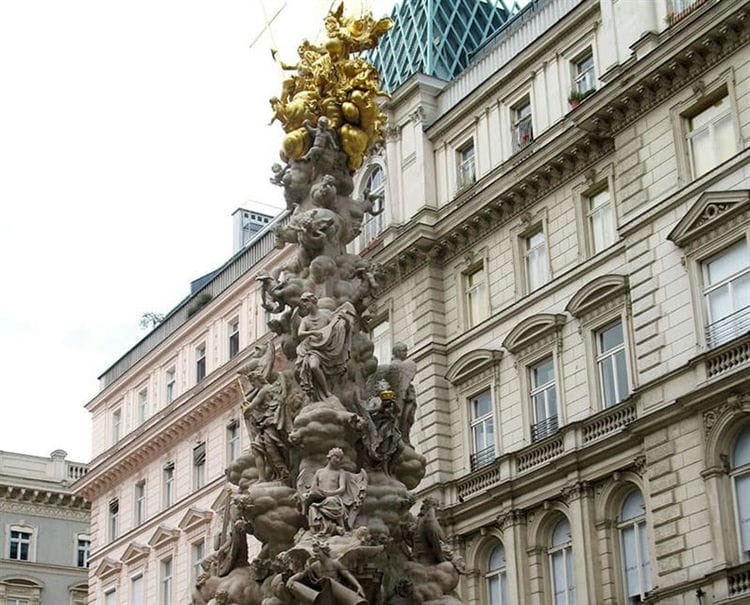
Fragment of the Plague Column in the center of Vienna
The Marble Plague Column appeared in the center of Vienna in 1683 in memory of the numerous victims of the epidemic that raged here in 1679. Such columns can be seen in the central squares of many European cities where the plague has passed.
The column is made in the Baroque style. It is richly decorated with figures of saints and angels. Some elements are gold plated. Near the church of St. Peter.
2 St. Stephen's Cathedral

St. Stephen's Cathedral (Stephansdom)
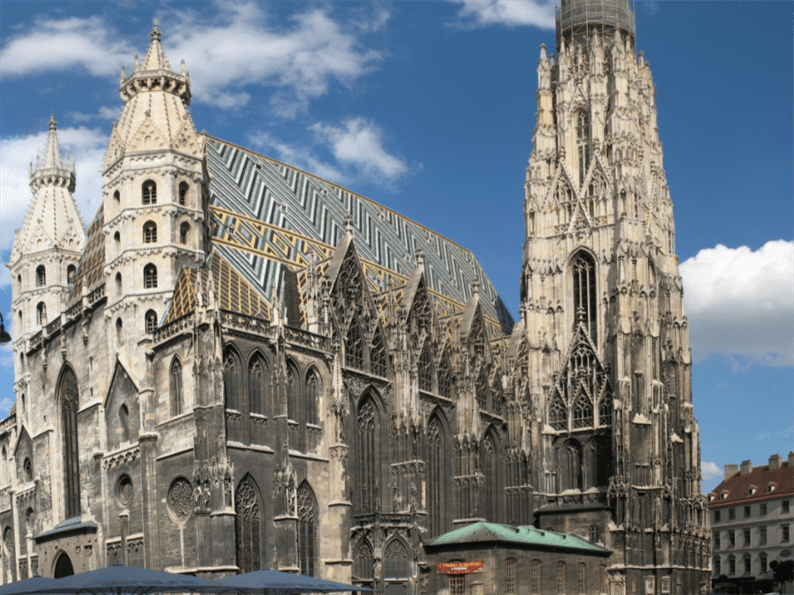
The Catholic Cathedral of St. Stephen (Stephansdom) is a symbol of Vienna and Austria. The first temple of the cathedral was built in 1137 – 1147. The south tower is the highest 136.44 m. The length of the base of the cathedral is 198 m, width is 62 m. During the reign of the Habsburgs, not a single church in the country could be built higher than the south tower. There are 3 organs installed in the cathedral. The new one, instead of destroyed in 1945, was installed in 1960 and has 10 thousand organ pipes. The largest organ in Austria.
8 Karlskirche

Karlskirche / photo from the official website
Catholic temple, which is interesting for its unusual architectural appearance.
A huge dome and two columns painted with bas-reliefs give it a resemblance to a mosque. A mixture of styles can be traced in the architecture: an ancient Greek portico, ancient Roman columns, baroque elements and a magnificent dome in the style of St. Peter's in the Vatican. It is very beautiful inside – a lot of stucco, gilding.
The temple was built in the first half of the 18th century. Dedicated to St. Carlo Borromeo, who helped people during the plague epidemic of 1575-1578. The work was supervised by the architect von Erlach (the one who built the palace in Schönbrunn). Located near Belvedere.
The entrance is paid: € 8.
You can take an elevator up to the dome and see the frescoes. But, they say, they are not clearly visible from the elevator car. Therefore, I advise you to admire the temple from the outside.
7 Museum of art history

A rectangular building with a huge 60-meter dome stands in Maria Theresa Square. There are 91 halls in the main building. The interior is decorated with a relief of marble and plaster and strikes with the complexity of the architectural concept. The Vienna Museum of Art History has a collection of archaeological sites, antiques and numismatic objects. But the museum's paintings are of particular value for connoisseurs of man-made masterpieces. The variety of the exhibition includes the creation of authors from different eras, starting from the time of Ancient Greece. The rich collection of paintings includes works by Titian, Rubens, Tintoretto and other masters of painting.
Visit the art gallery
You can visit the halls of the art gallery in the History and Art Museum, and at the same time taste Viennese cuisine and famous pastries every Thursday evening. Visitors decide for themselves when to sit down at the table and when to give preference to spiritual food. In this original restaurant, you can combine a birthday celebration and an introduction to the art of Ancient Egypt, Ancient Rome, as well as the art of the Middle Ages.
Vienna Opera
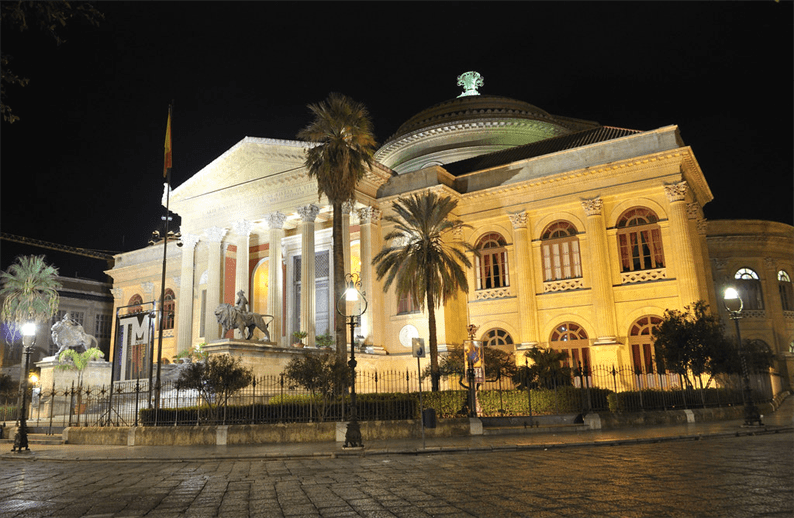
Vienna Opera
The Vienna Opera is another iconic symbol of the Austrian capital. This is one of the first operas not only in Austria but throughout Europe. The majestic building on the Ringstrasse was built at the end of the nineteenth century. It is distinguished by its monumentality and excessive pretense. In 2019, events will be held to mark the 150th anniversary of the Vienna Opera.
Dozens of ballet performances and operas are held here every year. The repertoire is unmatched in terms of saturation and intensity throughout the world. The cost of visiting the Vienna Opera depends on the production and the season, but you can save a lot if you buy a ticket right before the start of the performance or for standing places. In addition to the show itself, every visitor can enjoy the rich interior decoration. There is a red carpet, magnificent chandeliers, spectacular candelabra, mirrors in high gold frames.
5 Prater
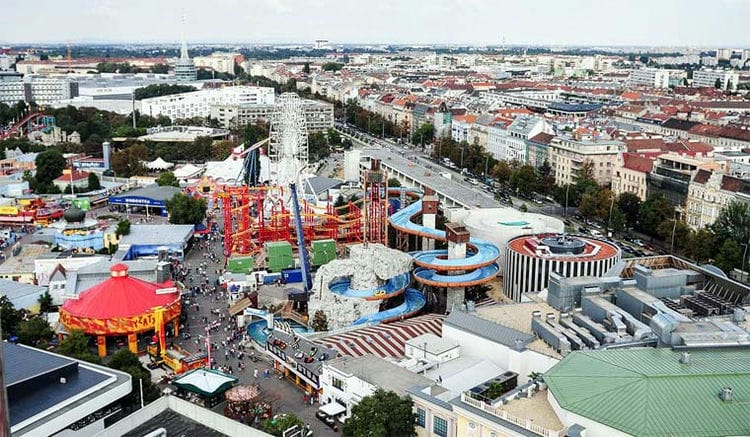
The Prater amusement park covers more than 6 square kilometers. on the banks of the picturesque Danube River. Most of the park is avenues and bike paths. In the north, there are attractions, including the most famous in Austria the Ferris wheel, as well as the chain carousel. Tourists will appreciate one of the many brasseries serving delicious foamy drinks and local cuisine. At the entrance to the Prater is the famous Madame Tussauds. Wax figures of famous personalities are located on 3 floors of the museum. Replicas include Michael Jackson, Albert Einstein, Angelina Jolie, Johnny Depp, Johann Strauss and others.
Enter the Museum of Music
For many, Vienna is associated with classical music. It is no coincidence that since 2000 in the building of the former palace of the Habsburgs a museum, the House of Music, has been functioning in this city. In addition to acquiring knowledge about the principles of musical instruments, you can visit this museum as a conductor with a virtual orchestra. Interestingly, the orchestra members act as the judge of the newly minted conductor, welcoming the excellent performance with applause.
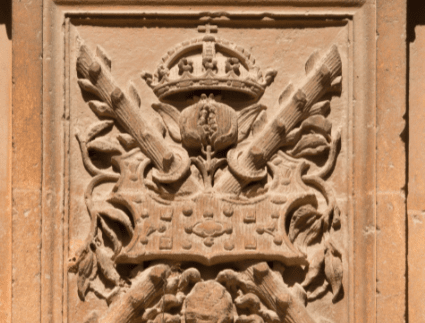
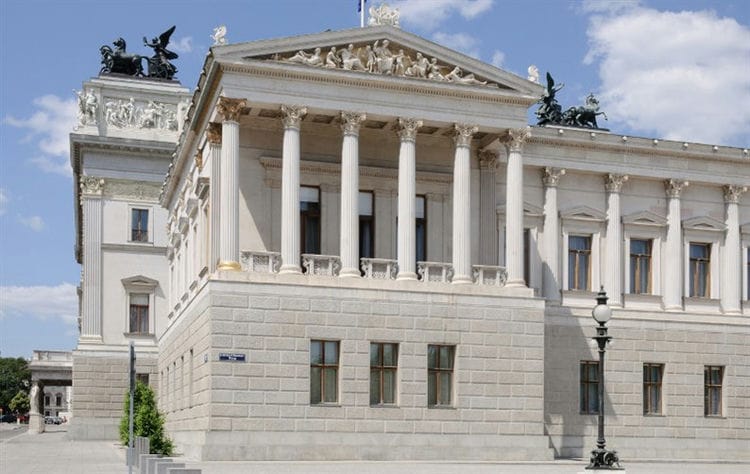
See the building of the Austrian Parliament
Certain symbolism is embodied in the building of the Austrian Parliament. The style of ancient Greece, borrowed by the architect Theophilus Hansen, points to the Greek origin of the concepts of “politics” and “democracy”.
In addition, the building was created from building materials brought from each Austrian province, which personified the unity of interests and their submission to the emperor. The independence of the legislative function of parliamentarians was reflected in the autonomous regime of the parliament. As in most European countries, the most important state events take place in the Parliament building.
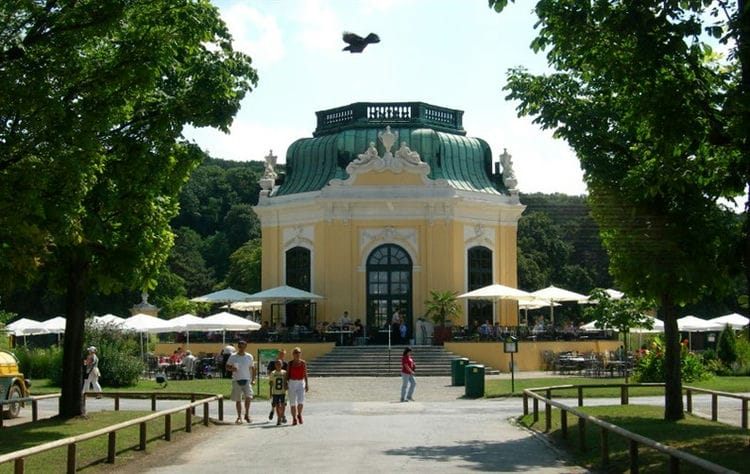
30 Schönbrunn Zoo
The zoo appeared in the 18th century at the request of Emperor Franz Stephen (the monarch had a craving for natural sciences). Nowadays, the zoo is recognized as one of the best in the world; several hundred species live here. We are especially proud of the giant pandas, a rare endangered species of animals. Newly born panda cubs are sent to China at the age of 2 years, because this country is the owner of all pandas by agreement.

29 House of the Sea
An aquarium and a terrarium in the same area, where a wide variety of marine life and amphibians are represented. It contains jellyfish and stingrays, rare fish species, sharks, turtles and snakes, crocodiles, spiders and lizards. Aquariums and tanks are home to about 10,000 animals. The House of the Sea is located in the building of a 45-meter tower, at the top of which there is an observation deck.

1 Town Hall Square
As in many European cities, the square near the City Hall in Vienna plays a significant role in the life of the city dwellers. Only if in ancient times important legislative changes were announced to the people here, now many perceive this square only as a venue for a traditional Christmas fair – perhaps the largest and most festive in all of Western Europe.
Vienna City Hall
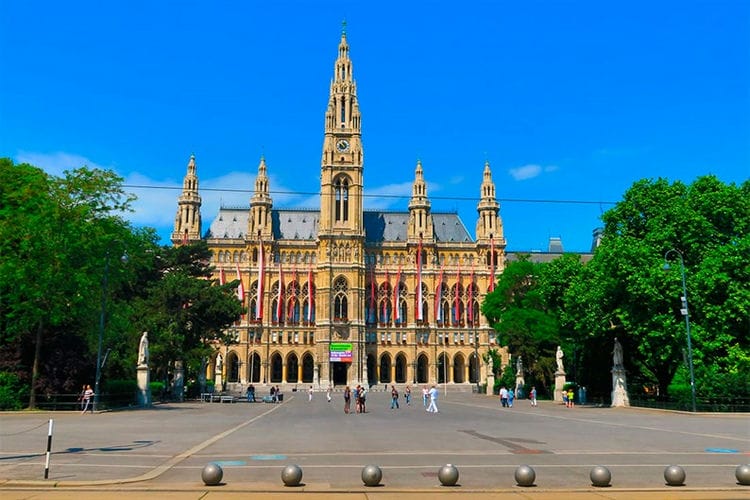
Vienna City Hall.
The crown of the 19th century architectural ensemble, located on the Ringstrasse boulevard, is Vienna's neo-Gothic town hall, built in 1883 by Friedrich von Schmidt, modeled on the Flemish town halls.
From the fountain-filled Town Hall Park, where Joseph Lanner and Johann Strauss I, the fathers of the Viennese waltz, are immortalized in bronze, you can view its facade with openwork stonework, windows in the form of pointed arches and spindle-shaped turrets.
Museum Imperial Apartments
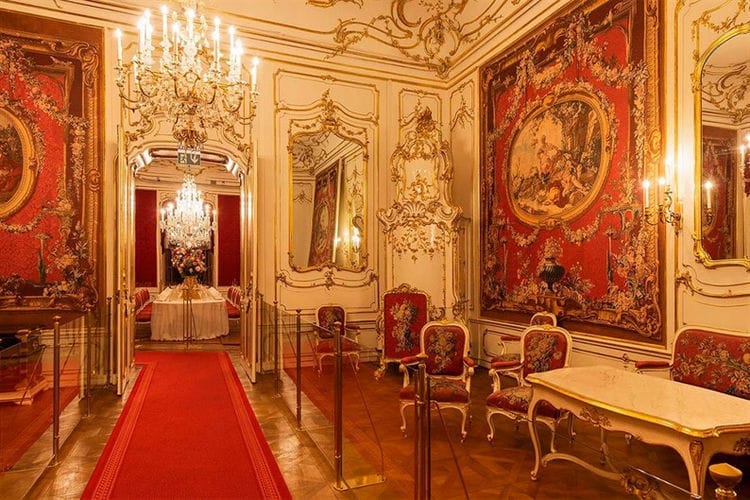
Imperial apartments.
The imperial apartments, which once belonged to Franz Joseph I and his wife Elizabeth, dazzle with their luxury, illuminated by huge chandeliers. They are located in the Hofburg Palace.
During a tour of the palace, in addition to the imperial apartments, you will also visit the Sisi Museum, dedicated to the most beloved Austrian empress, as well as the Silver Collection, where, among other things, a huge silver service is presented for 140 guests.
2 Schönbrunn
Summer residence of the Habsburgs, built in the pompous Austrian Baroque style. The palace is surrounded by a huge landscape park, especially picturesque in spring and early summer. It is home to hundreds of species of flowers, shrubs, trees and exotic plants. 40 rooms and halls of the residence are open for visiting, where you can look at the imperial bedrooms, reception rooms, ballrooms.
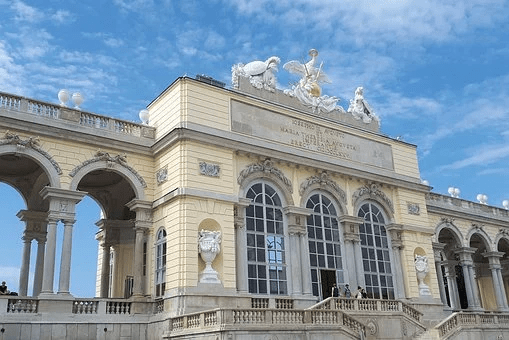
Burggarten garden
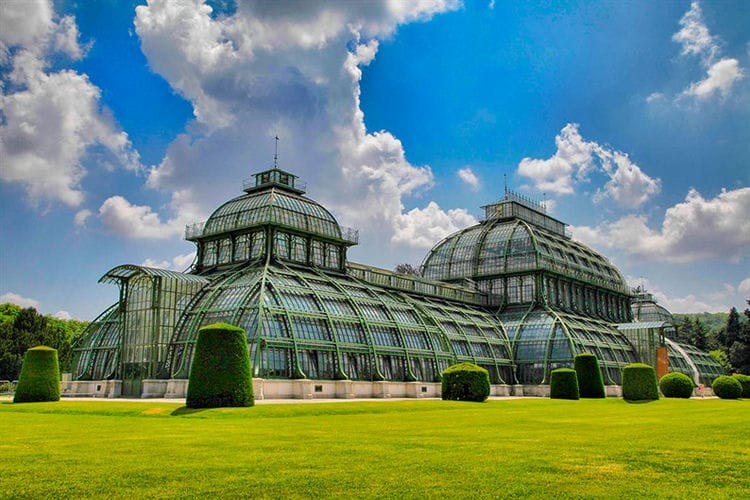
Glass Palm House.
Burggarten was once a private garden of the Habsburgs, today the entrance is open to everyone (just think: Franz II himself once planted trees in this garden, and today you can have a picnic here in the fresh air). In the corner of the garden you can find a memorial dedicated to the greatest Austrian composer Wolfgang Amadeus Mozart.
In the northern part is the magnificent glass Palm House. The left side of this house is occupied by the Butterfly Pavilion, where visitors can see delightful tropical butterflies, as well as bats (less adorable, but nevertheless provoking a storm of emotions for modern city dwellers).
Kohlmarkt street
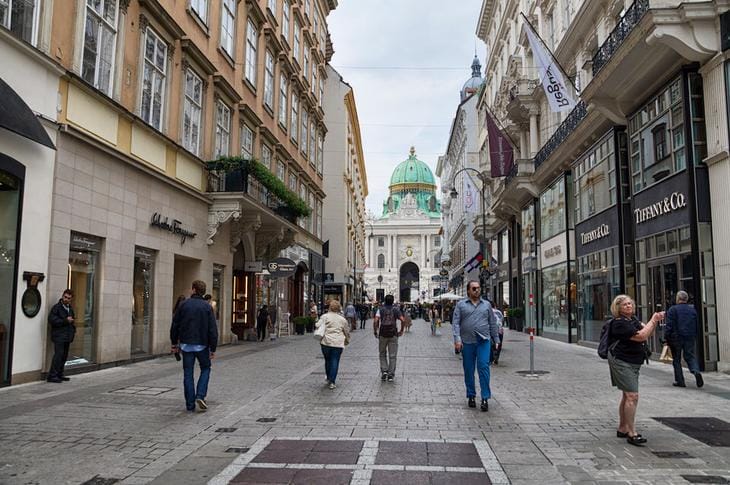
Elite Graben rests against the even more pompous Kohlmarkt. In the 16th century, there was an active coal trade (Kohlmarkt translates as “area of coal”). After the construction of the Hofburg royal residence, this place was chosen by wealthy merchants and manufacturers of exclusive goods. And today the buildings of the glamorous street adorn the windows of designer stores, including Bulgari, Cartier, Armani, Chanel, Gucci, Louis Vuitton.
At the end of the Kohlmarkt, on the right side of the street, the Demel confectionery, the former official supplier of desserts to the imperial court, has been selling breathtaking sweets for over 200 years. The menu of this temple of pastries includes candied violets, apple strudel, gingerbread cookies, the famous Sachertorte and a rich selection of coffees. You will have to stand in a long queue to taste local delicacies.
District Schwedenplatz
The starting or ending point of the route, depending on where you managed to find accommodation. If you managed to rent a house in the same way as I advised in this article, then this will be your end point.
Why final and not initial?
The fact is that all the main museums are located in the area of Maria Teresa Square and you are tied up during their work.
There are no limiting factors here, and entertainment such as walks along the Danube canals and dinner in one of the most rare restaurants in Vienna Griechenbeisl with cute Augustine are best done at the end of the day.
Swedish Square is a popular tourist spot on the banks of a river channel. Collection point for ice cream parlors, pleasure boats and a transfer point between trams 1 and 2.
Near the square is the oldest church in the city – the Church of St. Ruprecht (Ruperchtskirche ). Admission is free, but you will be expected to donate a couple of euros.
20 Military History Museum
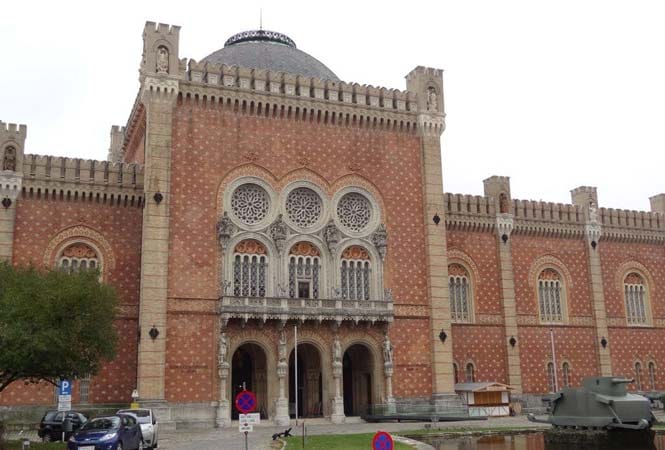
Few museums in the world can boast such an extensive collection of weapons and military uniforms. The Military History Museum is one of the oldest in Vienna, built on the site of the former Arsenal. The shape of its facade reflects the features of the Byzantine, medieval and Islamic styles of architecture. During a tour of the museum, visitors will be able to learn the history of the victories of the Habsburg dynasty and the entire Austrian monarchy. There is a large central hall at the disposal of tourists, as well as 4 additional small ones. Particularly impressive are the collection of tanks, aircraft and cannons from around the world and the exquisite uniforms of Austrian soldiers at different times.
“Albertina”
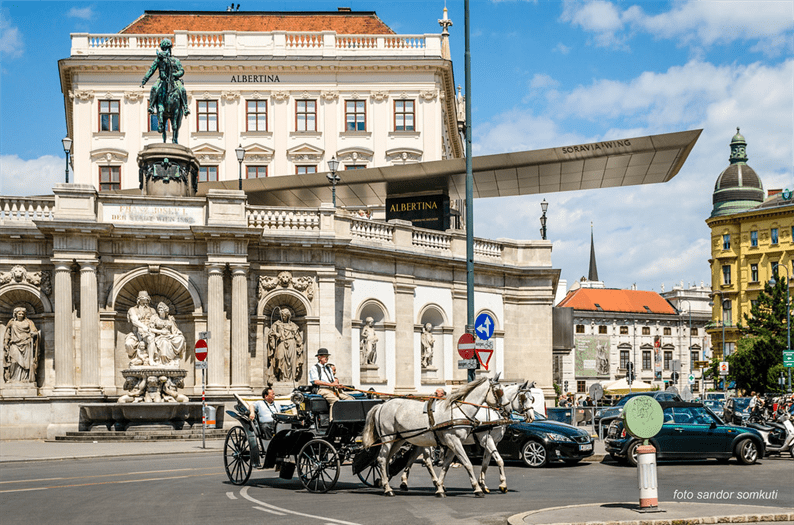
The museum, named after Duke Albert, was founded in the 18th century. The museum collection is based on the largest number of graphic paintings in the world. There are also more than 10 thousand simple drawings in the museum.
Renoir, Monet, Picasso are the highlights of the Albertina collection. In 2003, a slab was erected next to the museum, which from a distance seems to be floating in the air.
The museum is open daily. Visitors under 19 years old are admitted to exhibitions free of charge. On Wednesday you can see one of the exhibitions at a substantial discount.
Flag and coat of arms of the city
There are two emblems. One is called the big one and serves as a symbol for the administration and the land, which is also called Vienna. The second is represented by a shield and belongs to the city of Vienna.
The metropolis also has its own flag. It is a panel with two wide red and white stripes. Used for the city. Vienna has its own official symbol.
Confusion often occurs. It is not always clear what is meant: an administrative city formation or one of the districts of Austria.
Architecture
The architecture is represented by baroque, medieval buildings. You will be able to get acquainted with the monuments when you visit the palace complexes. Also majestic buildings are based in the Ringstrasse boulevard area.
Residential buildings are not high. There are no skyscrapers. Observation platforms are equipped at objects erected on heights. Cozy city with gardens and parks.
Food and drink
Vienna boasts one of the most renowned culinary traditions in the world. A varied but truly harmonious assortment of dishes reflects the combination of national and cultural traditions in the past of a multinational empire. First of all, the capital of Austria is famous for coffee, desserts – the famous sacher cake, strudel, salzburger nockerln.
Traditional Viennese fast food – hot dogs and hot sausages, which can be bought at numerous Würstlstand eateries. Various Balkan and Turkish fast foods are also common. From traditional dishes, it is worth highlighting schnitzel with potato salad, pieces of boiled beef with a side dish.
Geographical position
Vienna is the Austrian capital. Located in the eastern part of the country. The populous city of Austria is located in a picturesque location. It is based on the Danube. On the one hand, the metropolis is surrounded by the Alps, and on the other, by the beautiful Vienna Woods.
How to find your way in Vienna
Hofburg, Schönbrunn, Habsburgs, Belvedere, Hundertwasser, Pieterkirche, etc. You can enumerate the whole evening accompanied by only 3 questions:
- How to separate one from the other?
- To understand where you manage to get, and where not?
- How to build an optimal route without idle runs?
The first thing that comes to mind is such a reliable assistant as Google maps. Having a bucket of spherical Internet at home, it is worthwhile to estimate the distances by eye.
The trip itself, I recommend to use the offline maps maps.me. Without them and a reliable GPS receiver, you can easily feel the space and uncertainty. To what you can bring the skill of using cards, see here.
After that, from a low start, you can begin to run between the sights with an easy gallop. If you have a few days or even hours to get to know Vienna, then the gallop is the only method of transportation.
A little later I will throw in a transparent picture of the main landmarks in the Old Town of Vienna. Now let's mark 5 landmarks around Ringstrasse that you should know about.
Vienna attractions on the map

- Information about the city
- Vienna map
- Where to go
- Book a hotel in Vienna
- Search and book cheap flights
- Reviews of tourists
- Pictures of Vienna
- Tips about Vienna
- Question answer
- Excursions in Vienna
All the religious buildings and museums of the city are concentrated along the Ringstrasse street, which makes it possible to cover a large number of iconic cultural heritage sites in a short time.
Walking around the quarter, in addition to the above-described opera and the Museum of Art History, you will certainly see the Vienna City Hall, the architectural ensemble of the Parliament, the oldest in Europe (after the Comedie Francaise) Burgtheater, the University of Vienna, the Imperial Tomb, the Votivkirche church and much more.
Separately, it should be noted the Hofburg palace ensemble, which served as the imperial residence for a century. Nowadays, the Imperial Apartments, the Sissi Museum, the Silver Museum, the National Library of Vienna, the Habsburg Treasure Museum, the Amalia Castle, the Butterfly House, the Spanish Riding School, the Church of St. Augustine, the Papyrus Museum, the Imperial Armory, the Vienna World Museum and a dozen other interesting and historically important sites.
The Ringstrasse surrounds the Innere Stadt area in a tight circle. The entire area was included in the UNESCO list. Also within the district, you can visit such iconic exhibitions as the high-tech interactive museum “House of Music”, the theater museum, the museum of applied arts and the museum of natural history.
The Innere Stadt area as a whole is only 2.88 km², but in order to get around all the sights and thoughtfully visit the exhibitions, one day will not be enough.
Close to the Ringstrasse is the picturesque Vienna City Park (Stadtpark), where the monuments to Strauss and Schubert are erected, as well as the Kursalon concert hall. Other “green oases” in Vienna are the Volksgarten and Burggarten parks with the Mozart monument. The neatness and beauty of Vienna's parks amazes and inspires even seasoned travelers. A uniquely beautiful place is the Vienna Botanical Garden, whose history goes back to the reign of Maria Theresa.

Belvedere Palace
It is noteworthy that the old Viennese streets resemble an open-air museum. It seems that every house, street, square remembers historical events and is saturated with the spirit of the times. There is a monument to Soviet soldiers on the Schwarzenbergplatz square in Vienna. The “Plague Column”, a 17th century monument, erected by Emperor Leopold in gratitude to God for getting rid of the plague, is erected on the pedestrian walking street Graben.
One of the central walking streets in Vienna is Kärntnerstrasse. The decoration of the street is the Esterhazy and Todesco palaces. Behind the Vienna Opera is the famous Sacher Hotel with the eponymous cafe and dessert, first prepared in the Demel court confectionery. Both cafes are very popular with tourists.
Another famous cafe is Central. It was here that Viennese bohemians, cultural figures, scientists and politicians gathered. Today Cafe Central offers excellent haute cuisine, piano evenings and a cozy atmosphere.
Vienna's numerous museums cover all facets of human development. The leading exhibition complex of world significance is the Museum Quarter in Vienna, on the territory of which the largest galleries and museums of the city are compactly located – the Leopold Museum, the Mumok Museum of Contemporary Art, the Kunsthalle and the architectural center of Vienna.
The house of Mozart, the Sigmund Freud Museum, and the Military History Museum are very popular. The Secession House will surprise you with its unusual architecture. A white cube with a huge golden ball can be seen from afar. The most extravagant building houses the gallery.
Vienna is also rich in narrowly focused museums, the names of which speak for themselves – the Furniture Museum, the Coffee Museum, the Film Museum, the Globe Museum and even the Museum of Funeral Supplies.
Perhaps the most terrifying and chilling museum is the Tower of the Mad in Vienna. The museum building itself is already awe-inspiring. A huge cylindrical building with five floors and identical rooms served as a refuge for the mentally ill. From the very first days of the house's existence, an unhealthy atmosphere reigned here. Oddly enough, this attracts a huge number of tourists.
Today the tower serves as a museum of pathology. Since the museum building is currently undergoing reconstruction, part of the collection can be seen as part of an organized group.
The cultural program includes a visit to one of the theaters in Vienna. In addition to the Staatsoper (Vienna Opera), if possible, it is worth visiting the Vienna Folk Opera, listening to classical music concerts in the Philharmonic or Konzerthaus, and also seeing performances in the old Volkstheater and Burgtheater with your own eyes.
If you are traveling with a child, the Zoom interactive children's museum is worth a visit. On a huge territory, there are several thematic zones where children can learn the basics of professions in a playful way. You can get to the virtual history show at the Time Travel Vienne Museum. It should be noted that this interactive exhibition is also suitable for visiting with children.
Children can be taken to the snowball factory. World famous souvenirs have been produced here for several centuries and have a unique design and history. The factory also has a museum and a shop. You can hardly miss visiting Vienna Zoo and the Sea House aquarium with your children.

Swiss courtyard of the Hofburg
The religious symbol of Vienna is St. Stephen's Cathedral. Like many medieval buildings, the temple underwent constant renovations and alterations; it acquired its modern appearance only in the 16th century. According to legend, its northern tower was not completed due to the fact that the architect, having made a deal with the devil, violated the contract and crashed in the fall.
Each of the temples and cathedrals in Vienna has not only high religious, but also historical and architectural value. Thus, the Karlskirche church has absorbed elements of the Greek and Roman styles. Peter's Church in Vienna is attractive not only for its Baroque architecture, but also for organ concerts on an ongoing basis (works by Bach, Vivaldi, Mozart, etc.). Also, classical organ works can be heard in the Church of St. Michael.
The churches of the Minorites and Francis of Assisi will admire the majestic architecture, but the most amazing creation is the temple of Votruba (Church of the Holy Trinity). The building of the Roman Catholic parish is made of numerous concrete blocks arranged in an asymmetrical pattern.
On the outskirts of the city is the Vienna Woods, which received the status of a biosphere reserve in 2005. Unique flora and fauna, picturesque nature, clean air and tranquility attract thousands of tourists and local residents to the reserve.
The Grinzing district is located near the Vienna Woods. Seeing the old streets and houses of Grinzing, you seem to get into a “time machine” and find yourself in Vienna in the 17th century. The appearance of narrow alleys, traditional taverns, unchanged over the centuries, helps to travel back in time and plunge into an indescribable atmosphere. By the way, I want to photograph every square centimeter here.
Another iconic place near Vienna is the Wachau Valley. The river valley is rich in historical sights, castles, ancient monasteries and vineyards.
You can feel the spirit of the city by visiting one of Vienna's markets. The Naschmarkt is visited to taste the products of local farmers, and Vienna's flea market can be called an open-air museum. Here you can walk for hours and see unique examples of private collections of antiques and much more.
Of course, there are not many castles in the world that would be equal in beauty to the castles of Austria. Their historical value is beyond doubt, and the soaring spirit of past eras delights. An example of this are the castles of Liechtenstein and Kreuzenstein in the vicinity of the city.
Authentic medieval fortresses have gone through hard times, have a rich history, which will be interesting to learn during the excursion. Interesting sightseeing tours in Vienna in Russian are available as part of the project.
Look at the clock at noon
Once on the oldest square in Vienna at noon, you should pay attention to the “Dancing Clock” that adorn the buildings of the insurance company and form a kind of bridge between them. It is at noon that twelve figures of famous personalities, including Empress Maria Theresa, Prince Eugene of Savoy, composer Joseph Haydn, appear on the bridge and pass to the sound of the music of the era in which they lived.
Taste Viennese coffee
It is impossible to visit Vienna and not taste Viennese coffee. Therefore, during a tram tour of the city, you should get off at any stop and go to the nearest cafe. Coffee has a symbolic meaning for the Austrian capital. It was here in the 17th century that coffee was first made as a homemade drink, and a little later the first coffee shops were opened in the city.
It is no coincidence that Coffee Day is celebrated annually on October 1 in Vienna. Viennese Coffee has become a real brand symbolizing the growing popularity of this drink in Europe thanks to Viennese coffee houses.
Improving access to vein
The key to a correct injection is the availability of the vein and its visibility. Many people improve access to it incorrectly, this is due to conflicting information from dubious sources. Experienced doctors advise to focus on 5 methods.
Sources used and useful links on the topic: https://AustriaLife.ru/dostoprimechatelnosti-veny/ https://7daytravel.ru/chto-posmotret-v-vene/ https://GoZakordon.com/europe/avstriya/vena- gorod https://top10.travel/dostoprimechatelnosti-veny/ https://Dorogi-ne-dorogi.ru/avstriya/33-dostoprimechatelnosti-veny.html https://tripplanet.ru/dostoprimechatelnosti-veny/ https: // venagid.ru/dostopr https://www.topkurortov.com/dostoprimechatelnosti-veny/ https://GuruTurizma.ru/10-veshhej-kotorye-nuzhno-sdelat-v-vene-avstriya/ https://tripmydream.com / media / podborki / 20-mest-kotorye-stoit-posetit-v-vene https://turizm.mirvokrugnas.com/1565449089116277294/chto-posmotret-v-vene-za-2-dnya—28-samyh-interesnyh- mest / http://samivkrym.ru/kak-samostoyatelno-razobratsya-vo-vseh-dostoprimechatelnostyah-v-tsentre-veny.html https://traveller-eu.ru/vena https://www.tourister.ru/world/ europe / austria / city / wien / placeofinterest https://medinhome.ru/stati/kak-postavit-kapelnitsu-i-najti-venu-top-5-sposobov-i-nebolshie-hitrosti
Post source: lastici.ru