
Top of the highest peaks in our solar system. The highest mountain in the world

The highest mountain in the world above sea level
Everest is the tallest mountain in the world. Since Sir Edmund Hillary reached the summit of Chomolungma in 1953, every climber in his heart dreams of repeating this feat. The name “the highest mountain in the world” was not given to Everest for a simple reason – the height of the mountain is 8.85 thousand meters. Every year a lot of tourists and climbers from all over the world flock there.
Everest is the tallest mountain in the world
When people talk about something extremely high, they assume a distance above sea level. However, judging only by this parameter, the exact height of the mountain will be 8 kilometers 849 meters. There is no competition for altitude on the planet at the moment. The mountain extends into the atmosphere much higher than other mountain peaks.
Interesting fact: at the moment there are 18 routes along which you can climb the mountain, making your dream come true.
Highest mountain in the world from the center of the Earth
At the same time, the highest point, in terms of proximity to the center of the planet, is considered to be the summit of Chimborazo. Rising above sea level is 6 kilometers 384 meters. Chimborazo is a layered volcano located in Ecuador. The volcano is part of the Andes mountain range.
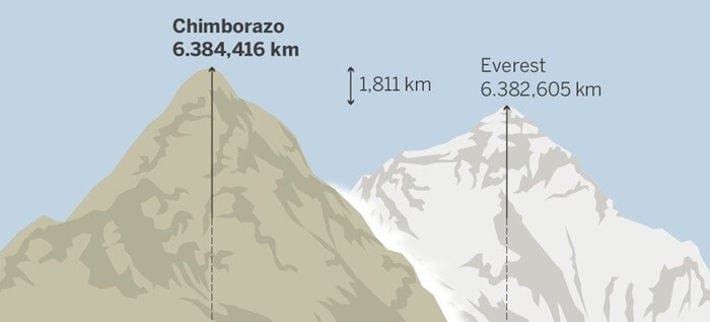
Chimborazo is the highest mountain in the world from the center of the Earth
The earth is not a smooth ball, it rises on the sides of the equator and flattens a little at the poles. Thus, the mountains near the Equator are located farther from the center of the planet than those at the poles. Chimborazo is closer to the Equator than Everest. This means that it is closer to space than even the highest point of Chomolungma (another name for Everest).
The highest mountain in the world from bottom to top
Chomolungma is the highest mountain peak above sea level, but the highest mountain from the base to the top is the Hawaiian mountain Mauna Kea, the local people call it the White Mountain. The distance above sea level is 4 kilometers 205 meters, but the mountain goes down another almost 6 kilometers, since most of Mauna Kea is submerged at sea depth.
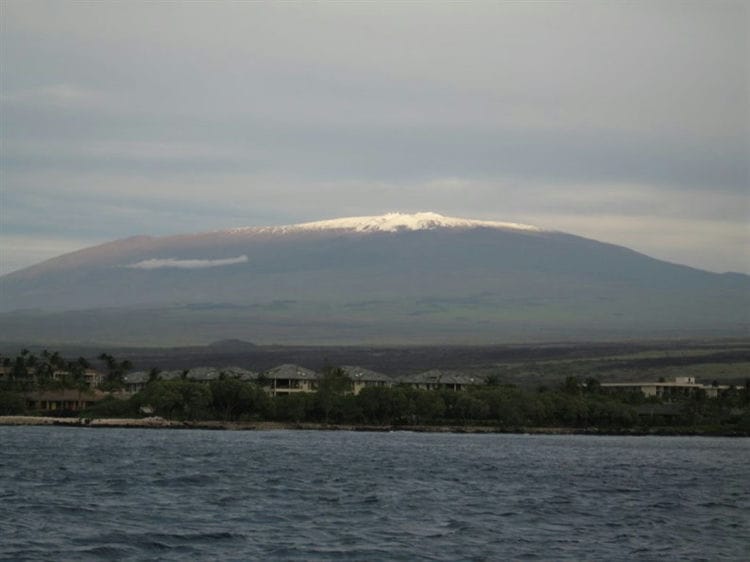
Mauna-Kea
The entire height of the mountain is more than 10 kilometers, which is 1345 m more than the size of Everest. In fact, this is not quite a mountain – Mauna Kea is an extinct volcano that arose about a million years ago. It was then that the tectonic plate on which the island is located moved above the trail of the hot mantle inside the planet. The last volcanic eruption occurred about 2.6 thousand years BC.
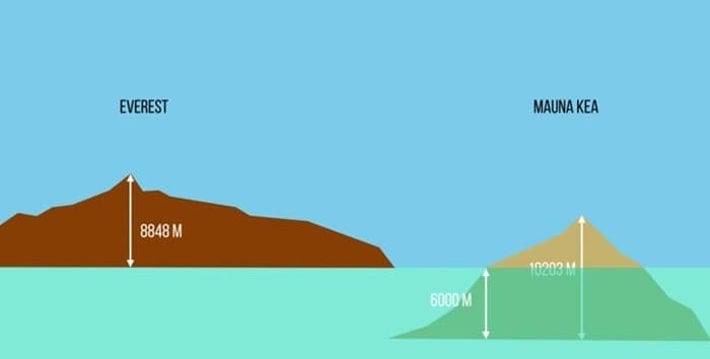
Mauna Kea and Everest
The White Mountain Peak is a real find for astronomical observations. The humidity on it is low, the sky is predominantly clear, and the nearest light sources are at a decent distance, not illuminating the night sky. Thus, at the peak, an excellent view of any celestial body opens up. At the moment, about 13 telescopes are installed on the top of the mountain.
It is also worth noting that officially Everest remains the highest mountain just above sea level. Using this parameter, the rest of the mountains cannot even claim to be the insurmountable peak of the Andes, belonging to the top of Mount Aconcagua, which rises 6 kilometers 961 meters above the sea. However, even she is not a rival to Everest.
What does Everest look like?
Everest looks like a three-sided pyramid with a more gentle southern slope. It is because of this that on the southern part of the mountain and on its edges, coarse-grained and fine-grained snow simply does not hold, so a stone protrudes under them. The northeastern shoulder of the mountain reaches 8393 meters in height, the distance from the top to the mountain foothills is approximately 3550 meters. Mountain peaks are usually composed of sedimentary rock deposits.
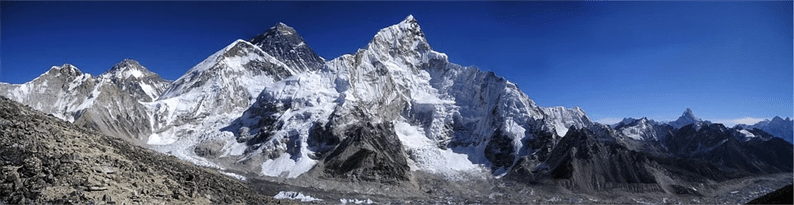
Everest
The southern part of the mountain passes into the South Saddle Pass, located at an altitude of 7906 meters, and also from Lhotse – 8516 meters. Some call it the South Summit of the mountain.
Interesting fact: the youngest climber who climbed to the top was 13 years old, and the oldest was 80.
Lhotse (right) and Chomolungma
In the north of the mountain is the North Col, 7020 meters in size, connecting the mountain with a separate summit Changze, 7553 meters high. To the east, the Kangshung wall ends abruptly, 3350 meters. Glaciers constantly flow down from the entire mountain range, which end quite high – at an altitude of 5 kilometers. Part of the mountain belongs to the National Park of Nepal, the rest belongs to the PRC.
An interesting fact: to climb the top of the mountain will take from 40 days to two months.
Mount Everest Climate
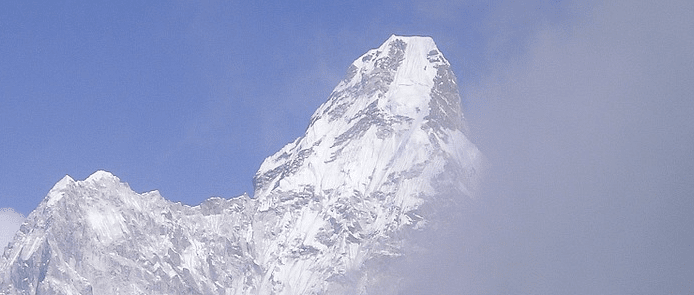
Mount Everest Climate
The summit of Everest receives climbers aggressively. Constant winds are raging there, the rarefied atmosphere does not allow to breathe normally. The speed of some air streams develops up to 80 m / s, maybe even more. The strongest winds and storms often blow here. The air around is very cold – the temperature drops to -60, which feels like -100 degrees Celsius. In summer, the mountain is slightly warmer than usual – the temperature rises to -19. There are never positive temperatures at the top. It is not possible to survive on the mountain without special equipment and acclimatization.
The flora and fauna of Everest
The climate is too aggressive for the mass of animals and plants to appear on the mountain. From the flora, you can find small shrubs, mosses, lichens and some conifers there. Animals on Everest are also not very common: jumping spiders, grasshoppers, flies and some birds.
Every year on the planet less and less places not spoiled by mankind, the region of the mountain is also ranked among them. During the climb, tourists are surrounded by picturesque landscapes. From the side of Nepal, the mountain is fenced off by two more mountain ranges, so for good visibility you have to walk several thousand meters
1st place – Reyasilvia crater (Vesta)
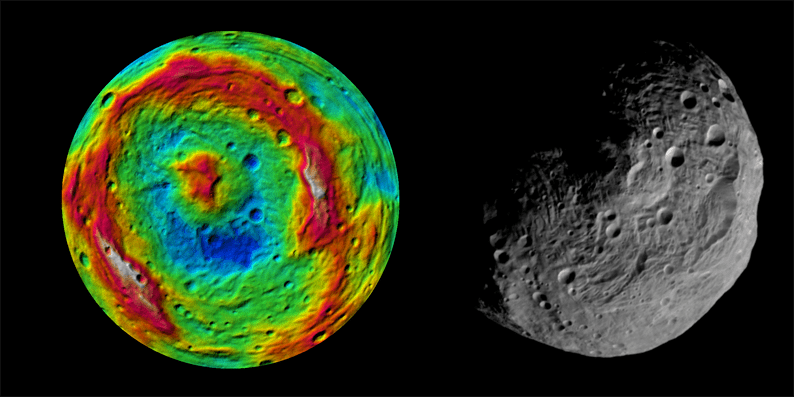
Reyaselvia is a crater (impact) on the asteroid Vesta, which sits snugly in the main asteroid belt.
The crater has a diameter of about 500 kilometers, making it one of the largest impact craters in the solar system. It is believed to have been formed by the impact of a huge asteroid about 2.5 billion years ago. An interesting fact is that most of the craters on the Moon, Earth and Mars were also formed during this period.
2nd place – Mount Olympus (Mars)
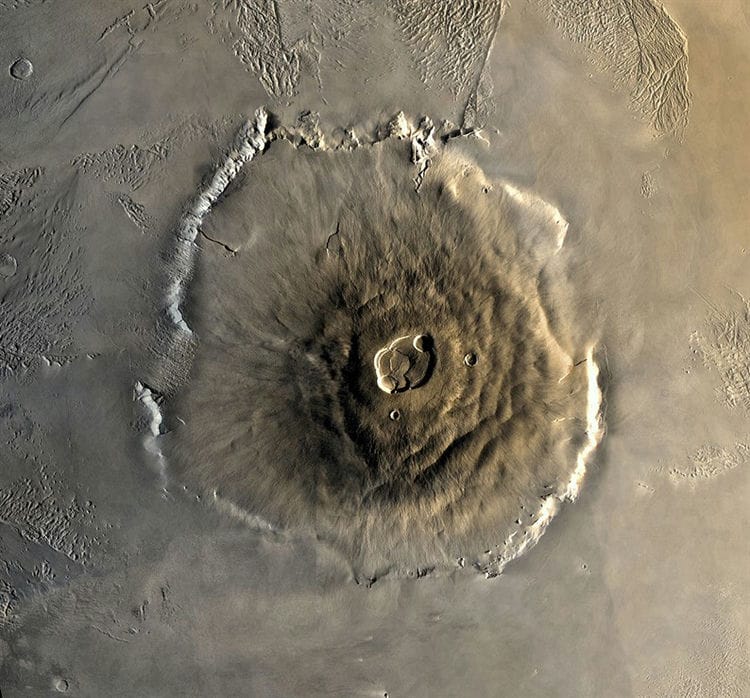
The height of Mount Olympus reaches 21.2 km from the base. The diameter of Olympus is simply unimaginable – about 540 km. This hill has very steep slopes along the edges – up to 7 km. There is no unified theory of the origin of such steep slopes, but according to one of them, they were formed by the erosion of the slopes of the volcano by the ocean that once existed on Mars.
Olympus is an extinct volcano that was formed by lava flows. According to the analysis of images of the mountain, it was found that the freshest lava on the slopes of the mountain is about 2 million years old. Consequently, the volcano could start erupting again.
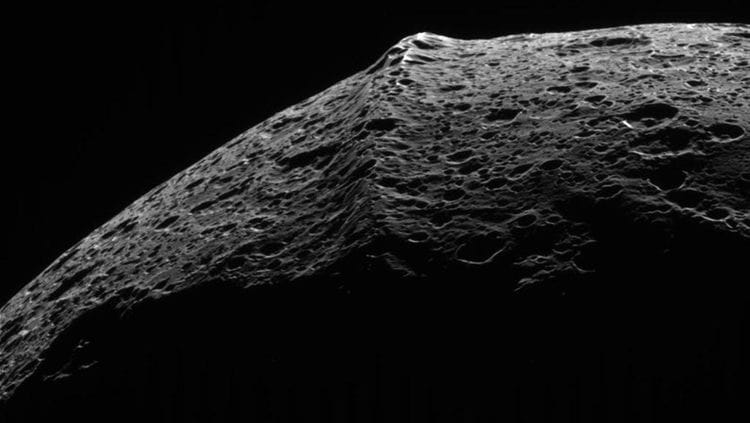
3rd place – wall of Iapetus (Iapetus)
4th place – South Boosavla Mountain (Io)
South Boosavla has a relative height of 18.2 km and is one of the top 5 highest mountains in our solar system. The mountain is located on the moon Io.
5th place – Mount Askrian (Mars)
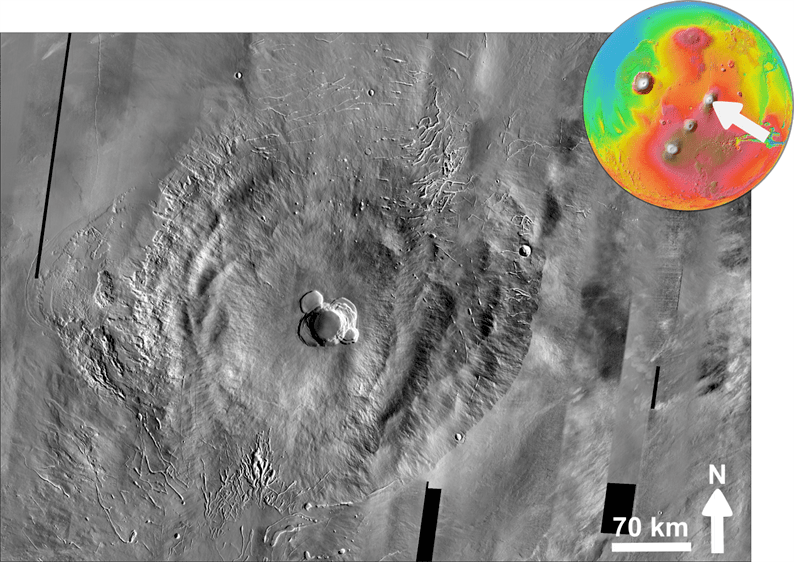
Mount Askriyskaya is an extinct volcano located at the equator of the planet. The mountain has a height of 14.9 km.
6 Elysium, 16 km
This volcano is much smaller than the Tarsis volcanoes. Its height is only 9 km, and its diameter is about 240 km. Thus, it is almost the same size as the largest Hawaiian volcanoes. However, like Tarsis, Elysius “sits” on a large number of lava flows. This allows it to rise 12 km above the average altitude of the planet. It slopes so smoothly into the surrounding lava plains that its base is difficult to see.
You can also see a smaller volcano, Albor, partially buried by the lava plains surrounding Elysium. Also in the area of the mountain, apparently, ground ice is widespread (100% accurate data is not yet available). Such ice melts easily near hot magmas, so melt water is, in theory, a ready source of erosion in the Elysium region.
7 Arsia, 19 km
It is an extinct volcano in the Tarsis region near the equator of Mars. Its name is the classic name of the object and comes from the corresponding albedo feature on the map by Giovanni Schiaparelli, which he in turn named after the legendary Roman forest of Arsia Silva.
Researchers have found a lot of evidence of glaciers on Arsia, in particular seven cave entrances on the sides of the volcano. These caves may contain reserves of water ice or even life.
8 Evia, 10.5 km
Euboea is a mountain on Io, the moon of Jupiter. It is about 10.5 km high and was formed by tilting a block of the earth's crust followed by modification by a very large landslide.
The mountain is shaped like a rugby ball (175 km by 240 km) and is located about 40 km east of the Creidne Patera caldera.
There is a curved ridge that divides Euboea into two parts: a steep southern flank with an uneven surface of rounded mounds and a smoother northern flank that slopes about 6 ° to the northwest.
9 Mauna Kea, 4.2 km
Mauna Kea in Hawaii is considered a dormant shield volcano. Eruptions of underwater volcanoes began to build Mauna Kea from the seabed about 800 thousand years ago. The volcanic basalt shield stage began at least 300 thousand years ago. Alkaline activity began about 60-70 thousand years ago, and the most recent eruptions occurred about 4000-5000 years ago.
The composition of Mauna Kea is mainly tholeiitic basalt covered with alkaline lavas ranging from Hawaiian to benmorite compositions. Remnants of the ice sheet from the last global ice age (about 20,000 years ago) can be seen at the summit of Mauna Kea.
Mauna Kea is well known to the locals as a great place for skiing and snowboarding, although it sounds strange. Many people go up the mountain every winter because it often snows at the top and a road leads to it. In fact, it is because of the snow cap that the Hawaiians named the mountain Mauna Kea (or “White Mountain”).
10 Verona, 3 km
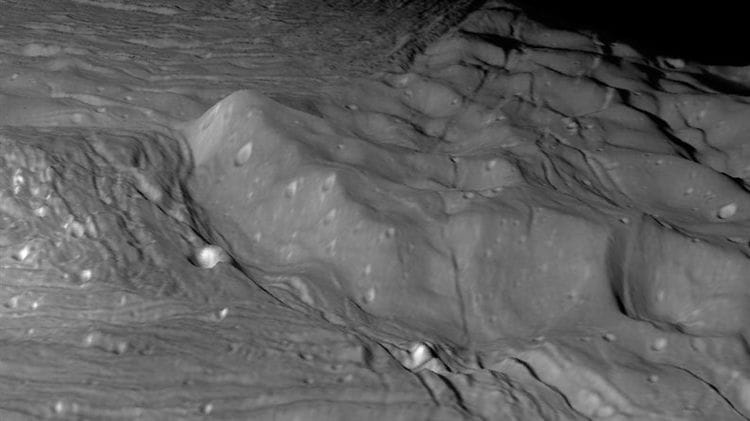
Verona is a rock on Miranda, a satellite of Uranus. The most amazing thing about it is not the top, but the cliff, which was previously considered to be from 5 to 10 km high, but as of 2016 is considered to be 20 km high, which makes it the tallest known cliff in the solar system. The cliff could have been created by a violent blow that caused the satellite to collapse and reassemble, or the earth's crust burst.
Given the low gravity of Miranda, it will take about 12 minutes to fall from the top, and you can reach the bottom at a speed of about 200 km / h. The most striking thing is that even in this case, a person could survive with protection and airbags.
Where are the eight-thousanders?
All 14 eight-thousanders of the Earth are located in Asia in two mountain systems. 10 of the eight-thousanders are in the Himalayas, and 4 are in the Karakorum. Peaks higher than 8000 meters rise in the territory of Nepal, China, India and Pakistan (disputed Kashmir).
All eight-thousanders of the planet are located in Central Asia, if we take the region as defined by UNESCO. Then, in addition to the CIS countries in Asia, the region also includes Mongolia, northwest China, part of Asian Russia south of the taiga zone, Afghanistan, northwest India, north of Pakistan and Iran.
Eight-thousanders on the world map
What happens at an altitude of 8000 meters and above
Eight-thousanders are the highest mountains on the planet. With increasing altitude, the temperature and the amount of precipitation change. At first, on the slopes, there are evergreen deciduous forests with rich fauna. Above are subalpine coniferous forests. They are replaced by alpine meadows and shrubs. Then, mountain deserts covered with moss and lichens. Moss can be seen at an altitude of 6,480 meters. Of the animals, the jumping spider, found at an altitude of 6700 meters, climbed the highest. Eight-thousanders are crowned with eternal snow and ice.
The Death Zone is located above 8000 meters. There is low pressure, not enough oxygen, which can cause severe altitude sickness, edema of the brain and lungs, and death. Passenger planes fly at this height (8-12 kilometers).
List of eight-thousanders by height
| No. | Vertex | Height | Mountain system | Location |
| one | Everest | 8848 m | Himalayas | Nepal, China |
| 2 | Chogori K2 | 8611 m | Karakorum | Pakistan, China |
| 3 | Kanchenjunga | 8586 m | Himalayas | Nepal, India |
| four | Lhotse | 8516 m | Himalayas | Nepal, China |
| five | Makalu | 8485 m | Himalayas | Nepal, China |
| 6 | Cho-Oyu | 8201 m | Himalayas | Nepal, China |
| 7 | Dhaulagiri | 8167 m | Himalayas | Nepal |
| eight | Manaslu | 8156 m | Himalayas | Nepal |
| nine | Nangaparbat | 8125 m | Himalayas | Pakistan |
| 10 | Annapurna I | 8091 m | Himalayas | Nepal |
| eleven | Gasherbrum I | 8080 m | Karakorum | Pakistan, China |
| 12 | Broad Peak | 8051 m | Karakorum | Pakistan, China |
| 13 | Gasherbrum II | 8035 m | Karakorum | Pakistan, China |
| fourteen | Shishabangma | 8027 m | Himalayas | China |
For 14 years, climbers climbed 14 eight-thousanders
The first eight-thousander that people climbed is Mount Annapurna. In 1950, French climbers Maurice Herzog and Louis Lachenal proved that eight-thousanders were reachable.
The race for the first ascent began. For five years, climbers have climbed six more eight-thousanders. On Chomolungma – climbers from New Zealand and Nepal Tenzing Norgay and Edmund Hillary. Nangaparbat was climbed by Herman Buhl from Austria, Chogori – climbers from Italy, Cho-Oyu – Austria, Kanchenjungu – Great Britain and Makalu – France.
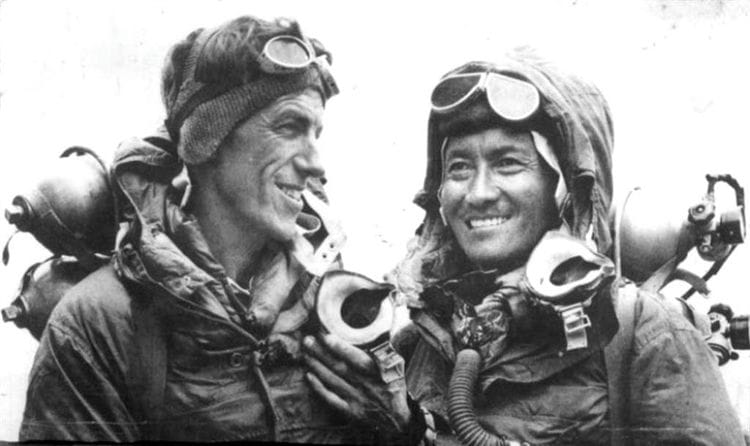
Edmund Hillary and Tenzing Norgay
In just 14 years, ascents of all eight-thousanders took place. The last was Shishabangma in 1964. On average, one mountain came out a year.
List of eight-thousanders by order of ascents
| When | Where to | Who |
| 1950 | Annapurna 8091 | Maurice Herzog, Louis Lachenal (French Expedition) |
| 1953 | Everest 8848 | Norgay Tenzing (Nepal), Edmund Hillary (New Zealand) |
| 1953 | Nangaparbat 8125 | G. Buhl (Austria) |
| 1954 | Cho-Oyu 8201 | Herbert Tychy, Josef Jochler (Austria) and Sherpa Pazang Dava Lama |
| 1954 | K2 Chogori 8611 | Lino Lacedelli, Achille Compagnoni (Italy) |
| 1955 | Kanchenjunga 8586 | Joe Brown, George Bend, Norman Hardy, Tony Streeter (British Expedition) |
| 1955 | Article 8463 | J. Franco, J. Cousi, L. Terray, … (French expedition) |
| 1956 | Manaslu 8156 | T. Imanishi, K Kato, M. Higeta (Japan), Gialtsen Norbu |
| 1956 | Lhotse 8501 | Ernst Reiss, Fritz Luchsinger (Swiss Expedition) |
| 1956 | Gasherbrum II (K4) 8034 | F. Moravec, Z. Larch, G. Wilenpart (Austria) |
| 1957 | Broad Peak 8051 | M. Schmuck, F. Wintersteller, K. Dimberger, G. Buhl (Austria) |
| 1958 | Gasherbrum I, K5 8080 | P. Schoenning, A. Kaufman (USA) |
| 1960 | Dhaulagiri 8167 | A. Schelbert, E. Forrer, G. Weber, … (Austrian expedition) |
| 1964 | Shishibangma 8027 | Hsu-Ching, Van Fohou… (KNR) |
“Crown of the Earth” – all eight-thousanders, program 14 × 8000
Climbing all 14 eight-thousanders of the planet – “Crown of the Earth”, reaching high-altitude mountaineering. At the end of 2018, 43 climbers (38 men and 5 women) managed to do this.

Reinhold Messner
The first to climb all 14 eight-thousanders in 16 years (1970-1986) was the Italian climber Reinhold Messner. The second in a year was the Polish climber Jerzy Kukuczka. His record is all eight-thousanders in 8 years, twice as fast (1979-1987).
The list of owners of the “Crown of the Earth” continued to grow only from the mid-90s. And Jerzy Kukuczka's record lasted longer – 26 years. Only by May 2013, Kim Chan Ho from South Korea climbed 14 eight-thousanders, spending less time – 7 years, 10 months and 6 days.
The next record holder is Nirmal Purja from Nepal. It took him less than seven months for all 14 eight-thousanders! More precisely 6 months and 6 days (190 days). The last eight-thousander of his marathon on October 29, 2019 was Shishapangma (8027 m). Moreover, Nirmal Purja climbed six eight-thousanders (Annapurna, Dhaulagiri, Kanchenjunga, Everest, Lhotse, Makalu) in 1 month and 1 day – by May 24, 2019.
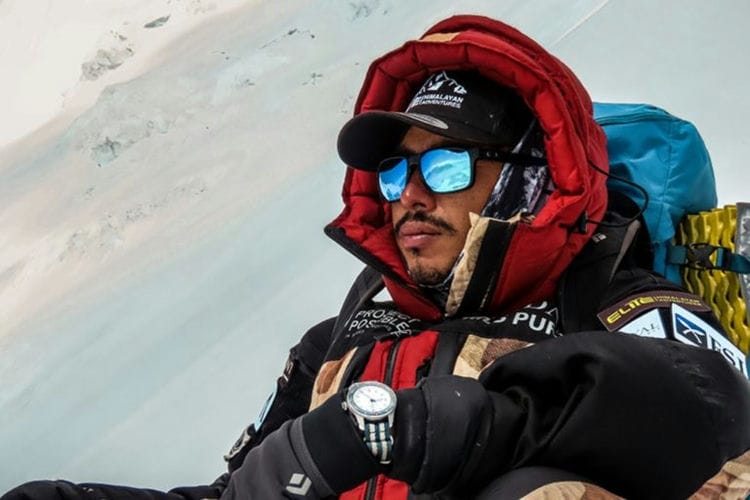
Nirmal Purja
Kazakhstan climber Denis Urubko was the first among the CIS countries to climb (2000-2009) all 14 eight-thousanders. Moreover, without using oxygen.
A serious struggle unfolded for the right to become the first woman on 14 eight-thousanders. The first woman and 21st in the general list was the Korean woman Oh Eun Son, who ascended the last eight-thousander Annapurna on April 27, 2010. Not everyone is sure that she reached the top of Kanchenjunga and that the Spaniard Edurne Pasaban is trying to claim the leadership. The Spanish woman was 20 days behind, climbing Shishabangma on May 17. Among the applicants were the Austrian Gerlinde Kaltenbrunner, the Italian Nieves Meroi, and the Korean Miss Gow who died while descending from Nangaparbat.
More than 10 thousand ascents have been made on 8 thousanders. About 7 percent of the ascents ended tragically. The bodies of many climbers remained at their height.
Kanchenjunga
The third highest mountain on the planet is Kanchenjunga (Kanchenjunga, Kanchenfanga) – 8586 meters above sea level. Members of the English expedition Joe Brown and George Bend first reached the Main Summit on May 25, 1955, and on May 26, Norman Hardy and Tony Streeter climbed. They ascended from the southwest from the Yalung glacier. More than a dozen routes have been laid to the peak. According to legend, Kanchenjunga is a mountain-woman that does not allow climbers to climb. Only in 1998 did the British woman Jeanette Harrison manage to do this.
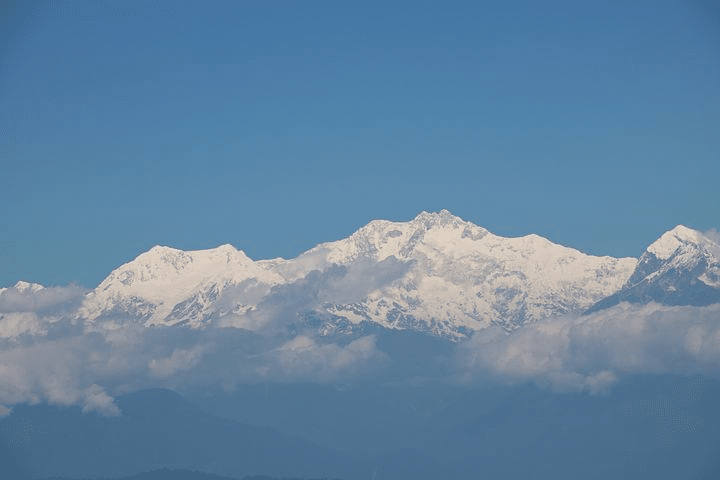
Kanchenjunga
Kanchenjunga – in Tibetan “treasury of the five great snows”, because there are five high peaks in the massif. Four of them are over eight thousand meters. Located in the Himalayas, along the border of India and Nepal.
Until 1852, Kanchenjunga was considered the highest on Earth. Later it was determined that Everest and K2 are higher. Partially belongs to the national park of the same name in India. These places inspired the work of Nicholas Roerich.
Lhotse
The fourth highest peak on the planet is Lhotse 8516 meters above sea level. Part of the Mahalangur-Himal mountain range on the border of China and Nepal. Lhotse Peak is a three-sided pyramid with steep slopes, along which avalanches often descend.
Lhotse
The first successful ascent of Lhotse was made by the Swiss Reiss and Luchsinger in 1956.
Lhotse and Everest are separated by 3 kilometers and the South Col pass. Lhotse is sometimes considered part of the Everest mountain range.
Makalu
The fifth highest peak of the planet is Makalu – 8,485 meters above sea level. Located on the border of China and Nepal, more than 20 km southeast of Everest. Also included in the highest mountain range of the planet Mahalangur-Himal.
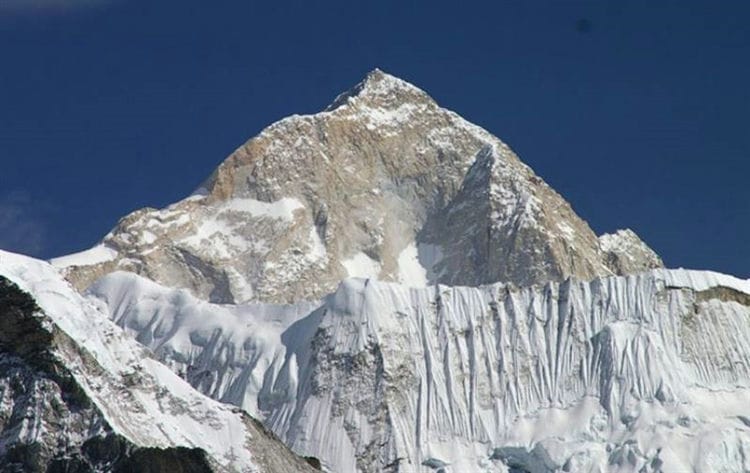
Makalu
In 1955, French climbers Lionel Terray and Jean Cousi climbed to the top of Makalu. Difficult to climb, less than 30% of expeditions to the top were successful.
Snow does not hold on the sharp edges of the mountain, Makalu looks like a black granite rock, known as the “black giant”. Located in the Makalu-Barun National Park and Preserve in Nepal, an area of 1,500 square kilometers
Manaslu
Located in Nepal, part of the Mansiri-Himal mountain range
Height: 8156 meters
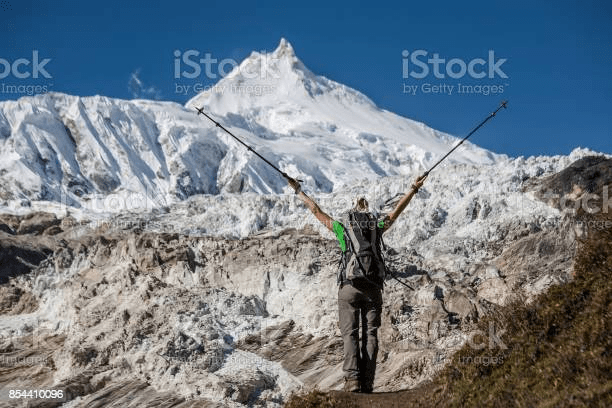
She was first conquered by a Japanese expedition in 1956.
Cho-Oyu
Located on the border of Nepal and PRC
Height: 8201 meters
It is considered not the most difficult to climb, but, nevertheless, 39 climbers died.
Mount Edgar
Located on the satellite of Uranus – Oberon. Oberon is the second largest moon of Uranus. The height of Mount Edgar is approximately 11,000 meters.
Such data were presented using the Voyager 2 spacecraft, which flew past Uranus in January 1986. Scientists still cannot identify the cause of the mountain massif on Oberon.
The main hypothesis for the appearance of Mount Edgar is considered to be a consequence of the displacement of the Oberon crust.
Elysium volcano
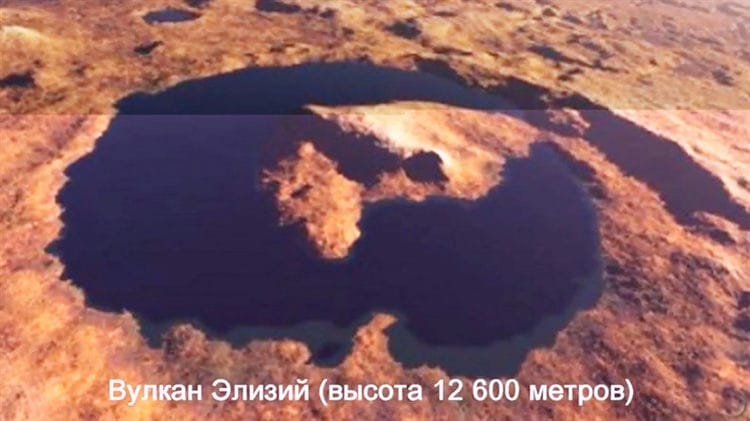
Martian volcano, the top of which reaches 12,600 meters. The volcano opened in 1972 thanks to the Mariner spacecraft. According to scientists, the volcano Elysium was formed about 1 billion years ago.
Ionian mountain
The height of the Ionian Mountain is 12,700 meters. The mountain is located on Jupiter's largest moon Io. Despite the fact that the Ionian Mountain is much closer than Mount Edgar, it remains the least studied among the other highest mountains in the solar system.
Reyasylvia Peak

Finally, the first place in height is occupied by Peak Reyasilvia (22,000 meters). It is located on the asteroid Vesta. Discovered in 1997 with the Hubble Telescope. High Peak appeared due to the impact collision of the asteroid Vesta with another unknown asteroid.
Part of Vesta broke away, leaving an elongated part (Reyasylvia Peak) on the asteroid.
Why is Everest called that?
For the first time, a map of Tibet was released in 1719, it was drawn up according to the results of Chinese intelligence. Exploration was carried out by lamas on the orders of the ruler of China. The European copy of the map reflected only the approximate location of the mountain, its name was not the same as on the Chinese original of the map.
From the Indian point of view, the mountain was called Discovery, but the last name was determined only in 1856. The mountain is named after the previous head of the expeditions of the geodetic service of India, colonized by Britain, George Everest. Until about the 20th century, a lot of names of the mountain could be heard from India, but geography as a science did not take them seriously due to inaccuracies in their location. The first representative of the Indian survey, who was able to visit the area near Everest, was Natha Singh. It was he who first heard the name of Everest as “Chholungbif”.
1906, large old map of India and Tibet
At the beginning of the winter of 1920, thanks to the employee of the British mission, Charles Bell, who at that time was trying to settle the issue related to the ascent of the first English explorers to the mountain, a parchment was presented. This parchment was presented by the Dalai Lama along with the permission to climb. In Tibetan parchment, the words were written that a monastery was located on the mountain. Part of the sentence was “Cha-Mo Lung”. This excerpt of the phrase interested the researchers. A little later in Lhasa, the researcher was told that this is not a set of words, but the abbreviated name of Everest “Cha-Dzi-Ma-Lung-Ma”, next to it was the prefix “Lho”, which translates as the south side.
In a special document that allowed the British expedition to climb the mountain peaks, issued by the official representatives of the Tibetan authorities, the mountain was called “Chha-Mo-Lung Ma”. Later, this name was found in all documents with permission to climb, issued by the Tibetan government until 1936.
The new name of the mountain became official many years later – in the 1960s. it was then that it became the documented geographical name of the area. Many translations of the name Chomolungma from Tibetan say that the mountain was called the Divine Mother of the Earth or Wind. Local residents call Everest among themselves as “A mountain over whose peaks birds cannot fly.” Judging from the Nepalese side, the mountain was called “Sagannatha”, a similar name occurs since the 1960s, when the territories of Nepal and China were divided along the top of the mountain.
The meaning of “Chha-Mo-Lung Ma” is translated as “Divine Mother of the energy of life.” Everest is so called in honor of the deity of one of the schools of Tibetan Buddhism, Sharab Chamma. The name of the goddess can be translated as the wisest and loving mother. Thus, for certain schools of Buddhism, the mountain personifies maternal energy. Also, the mountain is sometimes called “Chomogangkar”, which is also translated “Holy Mother”. Because of the snow on the peaks, the phrase “white as snow” is added.
Everest as an object of mountaineering
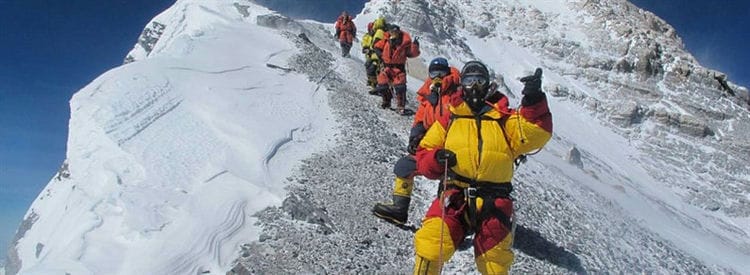
Everest as an object of mountaineering
Chomolungma is the highest mountain. This fact makes tourists from all over the world come to this place. Climbing takes place regularly, but not every climber can survive the ascent.
You will have to climb to the top within two months. This is subject to acclimatization, as well as the regular breaking of tourist camps. When climbing, climbers lose about 15 kilograms. The countries around the mountain charge fees not only for the ascent to the peak, but also for related services such as an interpreter, transport and communications. Each expedition climbs according to the order, the cheapest ascent is from the Tibet side. The most standard climb to the mountain starts from the north.
Basically, the rise is carried out in the spring and autumn. Then there are no monsoons, so climbing is a little easier. The most suitable season for conquering Chomolungma is spring. In the spring, it is much easier to climb the opposite slopes of the mountain. In autumn it is much easier to climb the south side.
Basically, each ascent takes place with the help of specialized companies, all ascents are carried out only in groups. Each client of the firm pays for additional and mandatory services, as well as training and insurance.
Now the infrastructure of Nepal, aimed at tourists, is constantly evolving. Every year more and more tourists climb the mountain. Earlier, in 1983, only 8 people climbed the peak of Everest for the whole year, after seven years their number increased to 40. Since the beginning of the XXI century, more than 200 people ascend to Chomolungma in just one day. During the ascent, tourists encounter traffic jams, climb only in turn, sometimes climbers even arrange fights among themselves.
According to experts, a successful expedition can only take place under good weather conditions, as well as taking into account the correct equipment of tourist groups. Climbing the mountain, everyone experiences significant difficulties, they have to fight the cold, wind, fear of heights. Even well-trained, experienced climbers do not easily get through adversity along the way. Acclimatization during the hike is considered important. Standard expeditions from southern countries spend about two weeks climbing to the base camp at an altitude of 5364 meters. Further, it is important to acclimatize to the conditions. For acclimatization, tourists spend more than a month, during which they are in the camp. Climbing attempts are possible only after complete acclimatization.
The last 300 meters of the mountain are the most difficult to conquer, popularly called it the most difficult mile on the planet. To cope with the site, you have to overcome an extremely steep smooth slope, which is completely covered with powdery snow. A rarefied atmosphere has a negative effect on the human body, since the amount of oxygen in it is relatively small.
Temperatures at the peak drop to -60 degrees, while strong winds can make it seem as if everything is -100 degrees Celsius. Frostbite can occur due to the low temperature. At its peak, aggressive solar radiation is wielded, which is not felt on the ground. These features include steep slopes, ice, avalanches and various crevices that you can fall into.
Ecological situation
There is an assumption in the circle of scientists that ice melts over time. On the summits of Everest, the amount of ice has decreased significantly. Tourists come to the mountain every year in the millions, they leave trash behind. According to some reports, Everest is gradually turning into a large trash can. It is sometimes called “the world's highest landfill.”
Back in 2007, more than 40 thousand tourists visited the Chinese side of the mountain. Researchers estimate that they left behind more than 200 tons of various waste, about 3 kilograms per person. The Nepal airline was collecting garbage at a mountaineering transfer point. The total weight of the waste was over 17 tons. It took a lot of effort to collect such a large amount of garbage. A lot of plastic bags, bottles, plastic and aluminum utensils were found at the transfer point. It took hundreds of people and two months of work to collect all the garbage.
A year later, in May, the Tibetan Autonomous Regional Office, established to protect and safe the environment in the region, put in a lot of effort to collect 8 tons of garbage. Three years later, the amount of waste increased to 11 tons. The question of the burial of the dead climbers is very topical. This is important for the local population – the Sherpas.
In 2014, the Nepal Ministry of Tourism issued a decree that all climbers who want to climb the peak of the mountain must bring back at least 8 kg of waste.
List of tallest mountains in the world
The tallest mountains in the world
- The highest mountain in the world Everest (8848 meters, Himalayas)
- Second place Chogori (8611 meters, Himalayas)
- Third place – Kanchenjunga (8586 meters, Himalayas)
- Fourth place – Lhoztse (8516 meters, Himalayas)
- Fifth place – Makalu (8485 meters, Himalayas)
Sources used and useful links on the topic: https://kipmu.ru/samaya-vysokaya-gora-v-mire/ https://fishki.net/1500804-top-11-vysochajshih-vershin-v-nashej-solnechnoj- sisteme.html https://top10a.ru/samye-vysokie-gory-v-solnechnoj-sisteme.html https://alpagama.org/14-vosmitysyachnikov-vysochajshie-gory-zemli.html https://boombate.com / boomagazine / samye-vysokie-gory-v-mire-133542 https://zen.yandex.ru/media/kosmo/10-samyh-vysokih-gor-solnechnoi-sistemy-5bc046c4e9bf0f00ac35fdc0
Post source: lastici.ru