
The first days of a newborn’s life: advice from a pediatrician. What a newborn baby should look like

What do newborn babies look like in a maternity hospital in the first minutes of life?
What newborn children look like, young parents know only by hearsay and represent such an angel. It's all the fault of photographs in magazines, when the baby was just born, and already is a pink-cheeked toddler. However, such expectations begin to come true only by the third month of the baby's life. Therefore, the first meeting of a child and his mother sometimes happens quite excitingly, and stress is added by an unusual look, for which the parents are not ready. Often they are frightened and suggest various non-existent diseases in the child. But usually such fears are completely unfounded, which is why it is so important to understand how newborn babies look in the first minutes.
What does a healthy newborn baby look like?
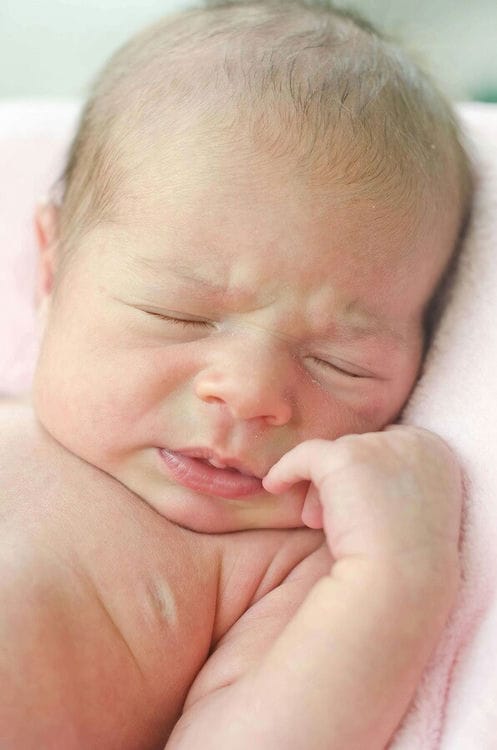
What does a newly born newborn look like? In the first days, the delicate skin of the crumbs has a red color with pronounced small-scale peeling, but after 7-10 days it will become pink and smooth. The skin of a newborn is rich in blood vessels, more than half of the total blood volume is in the skin. The sweat glands are underdeveloped, and the function of the sebaceous glands is enhanced even before birth, producing a lubricant that covers the baby's body and facilitates movement through the birth canal.
In the photo of how newborn babies look, it can be seen that the lubricant is in both the axillary and inguinal folds:

Take your time to thoroughly cleanse the skin from it, it plays a protective role and will disappear as the baby bathes. All over the skin, especially on the shoulders and back, you will find soft vellus hair that will gradually fade away.
Sometimes, if a child is restless, some ancient old woman or an ignorant neighbor will say: his bristle on his back is prickling, so he screams. And he will offer a folk remedy for removing the “bristle”: to mold a lump from the bread crumb and roll it on the back. After this procedure, hitherto invisible vellus hair, twisting together in several pieces, really resembles black prickly stubble, which the “healer” presents as proof of her innocence. Do not fall for the bait of ignoramuses: a human cub cannot have stubble!
In the photo of a healthy newborn baby, it can be seen that he almost always lies in a boxer position: the handles with clenched fists are bent at the elbows, when you try to straighten them, you feel resistance:
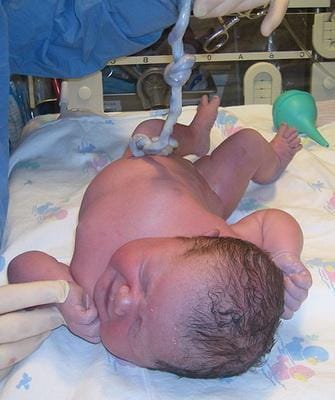
The legs are also bent at the knee and hip joints and do not want to straighten. And do not try to do it. In my mother's tummy, this position allowed him to take up as little space as possible, and now the usual posture is supported by the increased tone of the muscles of the upper and lower extremities.
The arms will straighten by 2-2.5 months, and the legs by 4 months. And do not try to swaddle the baby tightly, forcibly straightening the legs, supposedly to form harmony. Tight swaddling is once and for all recognized as harmful, disrupting deep breathing, contributing to the appearance of diaper rash on the skin, suppressing the freedom and development of the child's personality.
Look at the photo of what a newborn baby looks like – at first glance, the baby seems disproportionate, he has a large head on a short body with thin arms and legs:
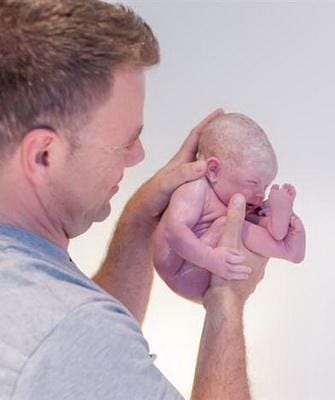
This ratio will change soon, but for now his head is relatively large. In a full-term newborn, it is 1/4, in a premature newborn, 1/3, and in an adult – only 1/8 of the body. The head circumference of a full-term baby is 34-35 cm. Stroking the baby's head, you will feel a small depression over the forehead, devoid of bone tissue, and you will feel the pulsation of this area. This place, located between both parietal and frontal bones, is diamond-shaped with sides 2 cm long and is called the large fontanelle. So that after birth the child's brain had the opportunity to grow and improve, nature did not limit its freedom with a dense cranium, but left connective tissue between the bones, which allows for the flexibility of the skull during passage through the birth canal and provides the brain with conditions for further growth and development. Extensions of connective tissue at the border between the bones form the so-called fontanelles, of which only two can be identified – large and small. The small fontanel is located closer to the back of the head and closes in the first months, and the large one remains open until 9-12 months.
Immediately after birth, the doctor examines the baby's genitals and perineum to make sure the baby has an anus and vagina. And now let's take a closer look at the condition of the external genital organs. In girls, the labia majora may be swollen, and spotting is often noted from the genital fissure. This is due to the influence of maternal hormones and will pass without a trace in 2-3 days.
Feel the little son's scrotum: are the testicles in place? They are defined by dense, bean-sized, rounded formations. If only one testicle was found or none were found, you will have to contact a pediatric surgeon. In the fetus, the testicles are located retroperitoneally on the back of the abdomen. From the 6th month of the prenatal period, the process of lowering the testicles through the inguinal canal into the scrotum begins. For most boys, this process ends before birth. But sometimes there is a delay in this process, and the baby is born with one testicle or with an empty scrotum. This condition is called cryptorchidism. If the movement of the testicle stops in the inguinal canal or in the abdominal cavity, where the temperature is 1.5-2 ° C higher than in the scrotum, then the development of spermatogenic tissue may be impaired. And this can lead to irreversible consequences in the future. Timely seeking medical help and moving the testicle to its rightful place contribute to the restoration of its normal structure and the fulfillment of reproductive function in adulthood. Sometimes the testicle descends into the scrotum on its own. In any case, the child should be examined by a pediatric surgeon in the first months of life.
Now let's look into the baby's mouth.
Pay attention to the photo of what the mucous membrane looks like in a newborn – it is bright pink in color due to the many blood vessels, it is somewhat dry, because the salivary glands are not yet active enough:
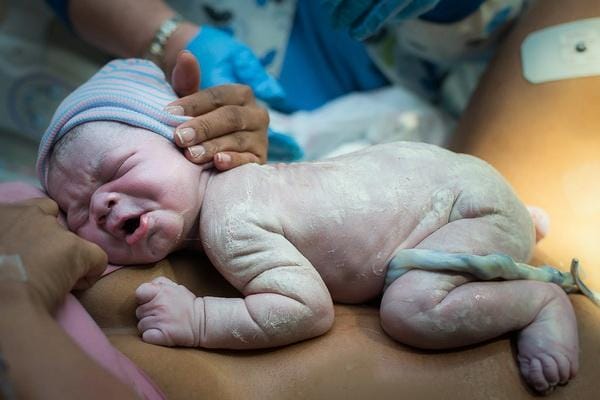
The oral cavity is almost completely filled with a relatively large tongue. So nature took care of the baby, equipping him with an instrument for extracting milk from the mother's breast. The chewing muscles and muscles of the lips, as well as dense fatty pads located in the thickness of the cheeks, take part in the sucking act. They are called “Bisha's lumps” and are present even in low-weight premature babies, making it easier for them to suck. The salivary glands function from birth, but their activity is low, and little saliva is released, therefore the mucous membrane of the mouth is dry and easily undergoes pathological processes, primarily the development of thrush. If, when you cry, you find 2 symmetrically located white peas on the palate, do not be alarmed. This is another feature of the neonatal period, the so-called Epstein pearls, which will soon disappear.
Every mother should know how the eyes of a newborn child look like, because they are almost always closed by swollen and heavy eyelids. But an attentive mother can sometimes discern hemorrhages under the conjunctiva, which have arisen due to increased pressure on the head at the time of passing through the birth canal. To protect the eyes from infection by microorganisms, mainly from gonococci, which can enter when passing through the birth canal, the midwife instills a solution of silver nitrate into the conjunctival sac or puts an antibacterial ointment.
When palpating the abdomen, the doctor determines the state of the liver, spleen and is sure to ask whether the newborn had stool. On the first day of life, the original feces are usually excreted – meconium, it has a creamy consistency and a dark green color. Being in the womb, the baby swallowed amniotic fluid with cells of exfoliated epithelium and metabolic products in it. Now he brings it out. After a few days, the stool will take on a normal character for a newborn: a yellow liquid porridge with a sour smell. From the first minutes of life, the intestines are colonized by microbes, forming their own microflora.
The doctor will not ignore the hip joints and feet of your baby to exclude congenital dislocation of the hip joints and congenital clubfoot. These pathological conditions, detected in the first days of life, are easily amenable to correction, and late diagnosis leads to more complex and long-term treatment.
Now you know what a newborn baby should look like, it's time to find out what unconditioned reflexes a baby has from the first days of life.
Newborn ears
In newborn babies, the shape of the outer ear can be deformed due to the position that the baby took in the uterus. Since the ear cartilage is not yet dense, this is a fairly common and completely normal situation. After a while, the ears will become even, such as those of dad or mom.
Newborn nose
Due to the fact that the nasal passages in newborns are narrow, even a small accumulation of mucus in them can lead to breathing problems and problems with breastfeeding. To avoid problems, it is advisable to rinse the baby's nose with an isotonic solution of sea water and clean the nasal passages with an aspirator or cotton wool soaked in oil, if necessary. Sneezing is completely normal for all newborns. This is a normal reflex and is not associated with infection, allergies, or other problems.
Newborn's mouth
When your newborn opens its mouth to yawn or cry, you may notice small white patches on the upper jaw, usually near the center. These small clusters (cysts) are called Epstein's pearls. They can also sometimes be found on the gums. During the first few weeks, these cysts will disappear.
Newborn's neck
Yes, she is! Usually, in newborns, the neck looks short, since it hides behind the chubby cheeks and folds of the crumbs' skin.
Newborn's chest
Because the chest wall of an infant is thin, with each heartbeat, you can easily feel and observe the push in your baby's upper chest. This is normal and not a cause for concern.
In addition, both boys and girls may experience enlargement of the mammary glands. This is due to the female hormone estrogen, which is passed to the fetus from the mother during pregnancy. It looks like a disc-shaped lump in the area of both breasts. Sometimes a small amount of milky fluid (called “witch's milk”) is released from the breast. Breast enlargement disappears on its own within the first few weeks and does not require treatment.
Nails, hands and feet of a newborn
After birth, the posture of full-term newborns is similar to their position in a cramped uterus: arms and legs are bent and clasped to the body. Hands, as a rule, are tightly closed in fists, so that it is sometimes very difficult to open them.
Newborns' nails can be long enough to even scratch your baby's skin. If so, then you can neatly trim your child's nails using small, rounded scissors.
Sometimes parents are concerned about the curvature of the baby's feet. But if you remember the usual position of the fetus in the womb during the last month of pregnancy – the baby's legs are bent at the hips and knees and crossed in the abdomen – it is not surprising that the newborn's legs and feet are usually bent inward. The limbs are gradually aligned. But sometimes there is such a condition as congenital clubfoot. In this case, the doctor will definitely point out to you the presence of such a defect and give all the necessary recommendations.
Many parents are also worried about whether the baby has a congenital dislocation of the hip joint. Normally, the baby's legs, bent at the knee and hip joints, should be easily parted to the sides. In addition, the doctor will conduct two special tests to identify this congenital defect (Ortolani's symptom and Barlow's symptom) and exclude pathology.
Do you want to see how your baby “knows” how to walk? If you put the baby on his legs, supporting him under the armpits, and tilt his body slightly forward, you will see how the baby begins to step forward with his legs. This unconditioned reflex is called the automatic gait reflex. All newborn babies have it.
The kid also already “knows how” to crawl. If you put it on your tummy, and put your palm in the form of a support against the piles, the baby will automatically start to push off from it and crawl forward. This is an unconditioned crawl reflex.
Baby skin
The main indicator of the baby's condition immediately after birth is the skin. After the special natural lubricant with which the baby is born has been removed from it, the baby's skin seems:
- reddish
- ruddy
- smooth.
But by the second or third day of life, she becomes:
- dry
- scaly to the touch
- and pink.
From the third to the seventh day in normal children, as a rule, the skin turns slightly yellow. This is a physiological phenomenon – jaundice of newborns, it should not frighten.
After birth, your baby may also have bluish feet and palms. This color will change over time. In general, in the first hours of a baby's life, you should not be afraid of blue shades, they can cause anxiety only after 12-24 hours.
In addition to blue discoloration on the baby's body, you can also find real bruises. They usually indicate:
- difficult childbirth
- or careless handling of a newborn.
In some cases, they indicate an infectious disease. Therefore, if you find bluish spots on the baby's body, you should definitely consult a doctor. The same goes for tiny bruises on the skin. If they do not go away within 24 hours, bring this to the attention of a neonatologist or pediatrician.
Often, young mothers are frightened by the fluff, which can be seen on the body of a newborn – thin hairs, sometimes quite thick. There is nothing wrong with that, fluff occurs in all newborns, and especially in premature babies.
Fluff is generally best seen on:
- shoulders
- back
- forehead
- cheeks.
It disappears within a few weeks. An inexperienced mother can also be frightened by the so-called milia that are common to all newborns. These are small white pimples measuring 1–2 mm on the chin, nose, cheeks and forehead.
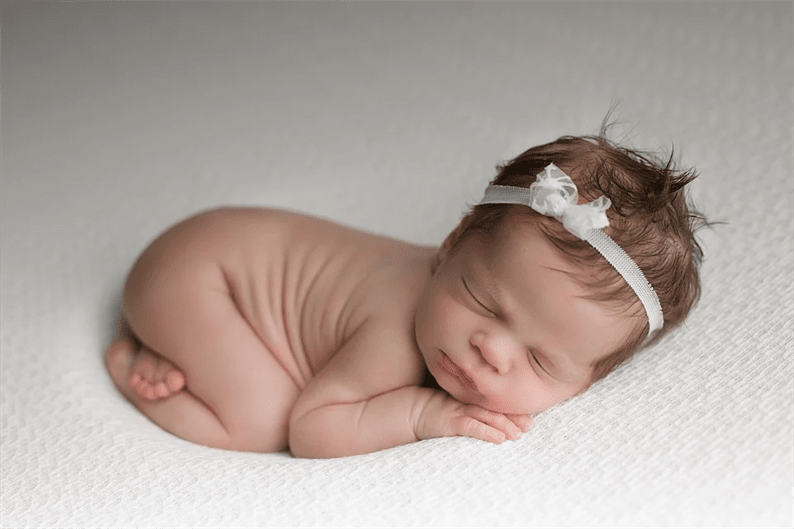
The average head circumference of a healthy newborn is 33-35 cm
This is how enlarged sebaceous glands look. They will cease to be noticeable and will disappear spontaneously in a few days or weeks. You should not be afraid and delete them.
The presence of original grease
Not everyone knows what newborn babies look like. The photo conveys the appearance in more detail, it can be seen that the baby's body is covered with a grayish grease. It consists of dead epithelial cells and fat. While in the womb, the fetus floated in the amniotic fluid; a protective layer was needed to protect the skin from getting wet. In addition, the lubricant has a sliding effect and helps the baby through the birth canal.

The doctors of the maternity hospital know how newborn babies look in the first minutes and warn the mother that the lubricant does not harm the child, but performs many functions. In addition to protecting the skin and helping in childbirth, it is possible to single out such a feature: it has a bactericidal effect and prevents infection from entering the skin from the outside.
If you look closely at the baby, you can see that most of the lubrication can be observed in the ears, in the armpits, the cervical fold and on the back of the body. The midwife removes the original plaque while still in the delivery room, since it has already fulfilled its role and becomes useless.
Skull features
Knowing what newborn babies look like in the early days is important because babies have a lot of features that indicate their health. So, the head is always large and significantly exceeds the size of the body. If usually the girth of the skull of a healthy baby is 33-35 cm, then the girth of the chest is 30-33 cm. But if the head is much larger than the prescribed norms, then this signals an illness and requires a doctor's consultation. By about three months of life, the indicators of the size of the skull and the girth of the body level off. Further, the chest increases and always exceeds the size of the head.
Parents can be frightened by how newborn children look in the first minutes of life, because their skull is elongated. But the bones are still mobile and displaced relative to each other. This is necessary so that during the passage of the birth canal, the head is able to pass such a difficult barrier. But with active squeezing during contractions and attempts, the baby's head takes on an egg-like shape, which the mother sees after childbirth. But after a few days, the bones of the skull fall into place, the head gradually acquires the usual rounded features.

Attention to the baby's face
Almost all parents, especially new fathers, are worried about how the face of a newborn child looks. They peer into the features of the baby and try to see the resemblance to themselves. However, after giving birth, the baby may have such a swollen face that even the eyes are closed all the time. During the passage of the birth canal, constant squeezing occurred, which disrupted the outflow of venous blood, resulting in swelling. There is no need to worry about this, this condition goes away after a few days.
Some newborns may have red spots on the face. They are just bundles of blood vessels that shine through the baby's thin skin. They are usually recorded:
- between the eyebrows;
- in the area of the eyelids;
- behind the ears;
- on the neck.
Sometimes spots can appear 2-3 days after birth, and some are born with them. Medical intervention is not required and go away on their own by the age of three.

Eye color
The photo clearly shows how newborn babies look. Sometimes all babies are similar in eye color. It is this indicator that always worries parents, and they wonder who the heir will go to. But it is known that up to six months, the color of the eyes can change, so you should not say that you have a blue-eyed boy before six months of his life. Most newborns are united by this color, but by the month the iris begins to change.
The baby still has little pigment, which is why many newborns have the same eye color. But as it grows, the eyes darken, but there may be a reverse situation, if there is a corresponding heredity.
The whites of the eyes may be red immediately after birth. This is due to the ruptured blood vessels during childbirth and hemorrhage. The symptom goes away on its own within a few days.
Baby body characteristics
We find out further what newborn babies look like. The body of the baby is usually dressed up, the fists are tightly clenched and pressed to the chest, the legs are also bent. This position is close to that in which the fetus was still in the womb. Doctors always diagnose increased tone in a newborn baby, and this is normal. But it is important that gradually the palms begin to open, the legs move. There are certain medical standards by which the development of the baby is judged:
- hypertonicity of the upper extremities should pass by the fourth month of life;
- increased tone in the legs – in the fifth month.
If the problem persists, then massage, physiotherapy exercises and other procedures are prescribed.
Is there hair
All parents are interested in how newborn babies look. The appearance sometimes makes you smile when a newly born baby has a thick head of hair. Yes, a child may well have hair, but their complete absence is considered the norm. It is noted that during the first year of life, the first hair is gradually replaced by permanent hair. In addition, their color may change slightly.
The presence of fontanelles
All newborns are characterized by the presence of several fontanelles on the head. These are the places where the bones of the skull are mobile and converge during childbirth, facilitating the passage of the head. Distinguish between a large fontanelle and a small one. The large one is located at the very top of the head and has a diamond shape. Most often, it has dimensions of 2 x 2 cm. According to its parameters, the condition of the baby is judged. If you put your palm on it, you can feel a slight pulsation. It should close completely by the year of the child's life.
A small fontanel is located in the back of the head and resembles a small triangle. Its side can be no more than 0.5 cm. It should completely close by 2-3 months.
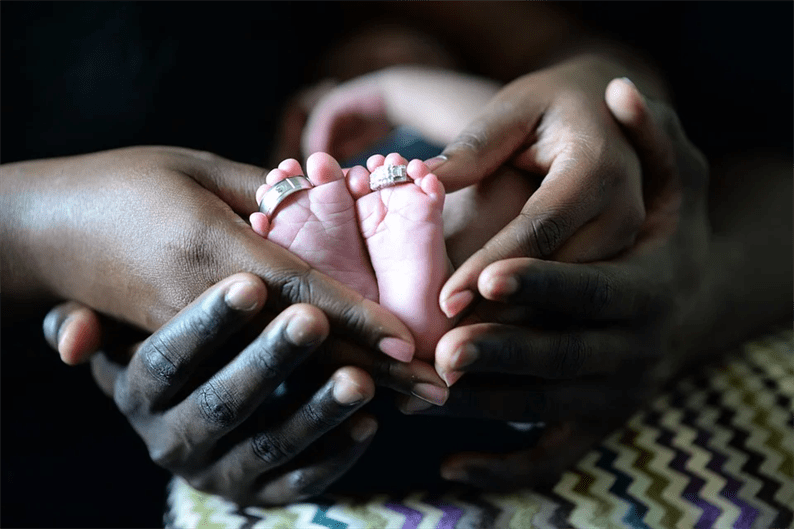
Infant arms and legs
The baby's feet and palms should be examined to rule out malformations or traumatic injuries.
Sometimes it happens that the sixth, extra finger is attached to the lateral surface of the little finger and looks like a thin leg. As a rule, it is removed surgically, and in the future, the hand or leg looks like a normal person. Fusion of the fingers is observed more often on the legs. This is also easy to correct by surgery.
Parents should be aware that all changes in the structure of the hands or feet are mostly hereditary. And in order not to faint at the sight of an unexpected sixth finger, find out from grandparents, moms and dads, if they had this kind of problem.
Special features of the genitals
Of course, many people find out the sex of the child even before birth, but for confirmation of the information, they always look at the genitals after birth. Here many parents can expect a surprise, but not related to the appearance of a girl instead of a boy, or vice versa.
Immediately after birth, babies of both sexes appear to have very large genitals. If boy dads can even be proud of it, then sane parents worry. But the problem is usually associated with the presence in the blood of the newborn of a large amount of estrogen obtained from the mother. The edema is temporary and disappears without a trace after 2-3 weeks. If the pathology persists, then a doctor's consultation is required.
We continue to consider how newborn babies look like in a maternity hospital. The main distinguishing feature of a baby who has just been born is his navel. During childbirth, the umbilical cord is cut off in this place, and the remainder is tied up and a so-called clothespin is put on. For 2-3 days, it is removed, and the umbilical wound must be treated for another month at home.
In the maternity hospital, all mothers are taught to take care of an unhealed navel. To do this, use hydrogen peroxide or the usual brilliant green. In order not to infect an infection, at first it is recommended to bathe the baby in a weak solution of potassium permanganate.
Signs of infection can be:
- redness of the edges of the wound;
- white or yellow discharge;
- unpleasant smell.
If at least one of the symptoms is noticeable, it is important to show the child to the pediatrician.

Moles, spots, hemangiomas, rash in newborns
In children, at birth, various types of rashes, spots, including birthmarks, can be observed on the skin. Most of them disappear by the end of the neonatal period or during the first years of life and do not pose a threat to the health of the child.
Jaundice in newborns
The yellowish color of the skin and sclera appears in children by the middle of the second day and disappears within 2-3 weeks. This is a normal, physiological phenomenon associated with the accumulation of bilirubin (a breakdown product of red blood cells) in the blood, skin and other tissues of the child, due to the temporary inability of the child's immature liver to cleanse the body of this substance. This condition usually does not require treatment, but supervision by doctors.
What are the congenital physiological reflexes in a newborn child?
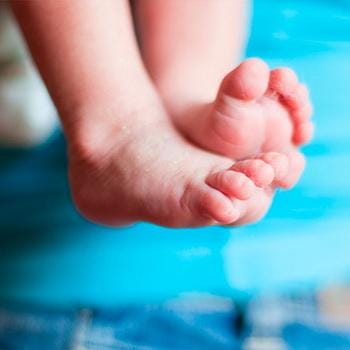
The doctor assesses the state of the newborn's nervous system by the presence of congenital reflexes and muscle tone. In the first months, the life of a newborn is conditioned by congenital reflexes, the most important of which are sucking and swallowing. No one taught him how to extract milk from his mother's breast, but look how deftly he grabbed the breast, began to suck and swallow the life-giving moisture. If you touch his cheek with a nipple, he will immediately find the breast – this is a search reflex. If you touch his mouth with a finger, he will pull the lips forward – this reflex of newborn children is called proboscis. Place your finger in his palm and he will grip it tightly – a grasping reflex. Also, a newborn child has a withdrawal reflex – he will certainly pull back the handle if he pricks his finger with a needle. The protective reflex is well expressed at birth, expressed in the blinking of the eyelids, and indicative, consisting in the movement of the eyes behind the light source. Place the baby on its belly and place it on its sole
m your palm. He will immediately push off from your hand, as if he was going to crawl. This is a crawling phenomenon.
What other reflexes do newborns need to check? Raise the baby so that his feet touch a hard surface, and you will be surprised to find that he rests with a full foot and, as it were, stands on bent legs with a straightened body. This is a reflex of support. The step physiological reflex of newborns is triggered if you hold the baby under the armpits and put the legs on the table. He will step over his legs, as if he is trying to walk.
A healthy full-term newborn has a well-pronounced sucking reflex, which is easily triggered by the nipple touching the baby's lips.
The presence of well-pronounced unconditioned reflexes indicates that the spinal cord in a newborn is better prepared for functioning than the brain. Some unconditioned reflexes accompany a person all his life: swallowing, coughing, sneezing. Others gradually and not simultaneously fade away, having fulfilled their role during the first 3-6 months: search, proboscis, sucking, etc.
Borderline conditions of the newborn
Borderline, or transient conditions of newborns are called temporary symptoms that arise in connection with the adaptation of a small organism. These conditions do not need special treatment. As a rule, by the end of the neonatal period, that is, by the 28th day of the baby's life, everything passes without a trace.
These include:
Physiological weight loss
The baby's body weight decreases due to the restructuring of the baby to a new type of nutrition. When leaving the aquatic environment “on land”, there is a kind of shortage of milk and water on the first day. Also, the baby leaves the original feces (meconium), the rest of the umbilical cord dries up.
To replenish energy costs, in the first days, the newborn's body uses its own depot of special brown fat, which is concentrated in the neck, kidneys, and upper back. Weight loss should not exceed 6-10% of the original birth weight.
After 3-4 days of life, the baby begins to gain weight (from 10 to 50 g per day). By the 12th day, a healthy baby should have regained the lost weight.
Toxic erythema
Occurs more often 3-5 days after childbirth. It is a pink, patchy rash with yellow lumps in the center. Elements of the rash can be of different sizes: from point to centimeter, do not itch.
The rash appears most often on the chest, face, on the extensor surfaces of large joints and around them (elbow, shoulder, knee). At the same time, the baby is not worried about anything, his health does not suffer.
This condition arises due to the penetration of microorganisms toxins into the blood, which the baby has encountered during this time. These include even opportunistic bacteria that colonized the baby's intestines in the first days of life.
As a rule, toxic erythema occurs more often in babies who have a hereditary predisposition to allergies.
This condition usually does not require treatment. With a pronounced process, it is recommended to increase the baby's drinking regime and sometimes antihistamines (antiallergic) drugs are prescribed. Normally, the rash disappears after 2-3 days.
Other transient manifestations on the skin
- The bright red color of the newborn's skin is a kind of reaction to stimuli (removal of generic lubricant, dry air, unusually low ambient temperature).
- Large-lamellar peeling of the skin in newborns is observed due to a change in habitat and excessive evaporation of moisture from the skin. It manifests itself in almost all parts of the body, but is more pronounced on the abdomen, legs and feet.
- Milia are small white dots on the back and wings of the nose, on the chin of a newborn. The cause of this condition is a blockage of the sebaceous glands. By the 2-3rd week of life, the ducts of the sebaceous glands open, and the milia gradually disappear.
- Increased pigmentation (darkening) of the skin around the nipples and scrotum in boys is a manifestation of hormonal changes in the baby's body. These changes are associated with a massive release of female sex hormones during childbirth in the mother. The dark color of the skin disappears without any treatment by the 3rd week of the baby's life.
- Telangiectasias are crimson spots in the occipital fossa, on the forehead and in the area of the baby's nose. They are an expanded network of capillaries (spider veins). In the people, this manifestation is called “stork's mark”. Telangiectasias gradually fade and disappear by the year.
Sexual (hormonal) crisis
The reason for this condition is the high level of female sex hormones in the last days of pregnancy and at the time of childbirth and their effect on the body of the newborn.
This is manifested:
- engorgement of the mammary glands, their increase and compaction for 3-5 days. Sometimes even a light sticky secret (colostrum) is secreted from the gland. Within a week everything goes away without any treatment;
- an increase due to their swelling of the labia majora and small labia, the clitoris in girls, the scrotum in boys;
- the release of abundant mucous secretion of a grayish-whitish color from the genital fissure in 60-70% of girls. Sometimes there is a bloody discharge (metrorrhagia). They usually disappear after a few days.
Physiological jaundice
Icteric staining of the skin, sclera and mucous membranes appears on the 2-3rd day of the baby's life. The color intensity reaches a maximum on the 4th-6th day, and disappears by the 7-10th day. At the same time, the baby feels good.
The cause of this condition is the breakdown of a large amount of fetal (fetal) hemoglobin of erythrocytes (red blood cells) of the newborn. This is a natural process of replacing fetal hemoglobin with a new “adult” hemoglobin. At the same time, the breakdown product of erythrocytes is released into the blood – free bilirubin, which must be utilized by the liver.
But the low enzymatic activity of the immature liver of a newborn does not allow this to be done in a short time. The level of bilirubin in the blood of a newborn ranges from 26-34 to 130-170 μmol / l.
Premature babies are more likely to develop this condition and last longer. Also, the manifestations of jaundice are more pronounced in babies who were later fed with breast milk or with a lack of milk in their mother.
It is necessary to strictly monitor the time of appearance and increase in the intensity of the icteric color of the skin, since jaundice is not physiological. For example, with the Rh-conflict between the blood of the mother and the baby, when the mother has Rh-negative blood, and the baby has Rh-positive blood.
Transient thermoregulation disorders (hyperthermia and hypothermia)
Immediately after birth, the newborn's body temperature decreases compensatory in response to a lower ambient temperature, to the evaporation of moisture from the skin.
Therefore, to prevent even greater heat loss in the delivery rooms, the temperature is maintained at no lower than 24 ° C, the newborn is placed on a heated table for examination, then wrapped in warm diapers. During the first day of life, the child's temperature is set within normal limits.
By the 3-5th day of a baby's life, his body temperature may rise to 38.5 ° C. The reason for this is the immaturity of the centers of thermoregulation of the brain of the newborn, adaptation to dry air with a variable temperature. The child suffers a large loss of fluid with breathing. In addition, the mother has a small amount of milk in the first days of lactation.
Transient neurological symptoms
Periodic flinching, fickle squint, slight trembling of the chin when screaming, difference in muscle tone on the left and right sides, inconsistent muscle tone and reflexes, painful crying or screaming are all considered normal in the first weeks of a baby's life.
It's all to blame for the immaturity of the newborn's brain. In addition, at the time of childbirth, the baby is experiencing an acute lack of oxygen.
There is a so-called failure of the balance of the processes of excitation and inhibition in the nervous system of the baby. Therefore, he needs time to adjust and learn to perceive such a large flow of information (sound, light, tactile sensations).
Transient renal dysfunction
- Neonatal oliguria – in the first three days, urine output is less than 15 ml per kg of the child's weight per day. So the baby's body adapts to new conditions, where the flow of fluid due to unsteady nutrition is limited and there is a loss of fluid with breathing.
- The appearance of protein in the urine of a newborn in the first days of life is considered normal. This fact indicates the activation of the function of the glomeruli of the kidneys. And, like many systems, in a newborn, the filtration system of the renal glomeruli and tubules is imperfect. Therefore, the epithelium of the renal glomeruli has increased permeability, which leads to the loss of protein.
- Uric acid infarction is the deposition of uric acid crystals in the lumen of the collecting ducts of the kidneys. This condition occurs in every sixth newborn.
Since the product of the decay of many cells, for example, blood cells, is uric acid, its excess does not have time to be utilized by the kidneys of a newly born baby.
In the analysis of urine, uric acid, epithelium, hyaline casts, leukocytes appear. At the same time, brick-yellowish spots from urine appear on the diapers or diaper.
Additional drinks are recommended for such newborns. As a rule, these manifestations disappear by the 7-10th day of the baby's life without treatment.
Transient stool disorder of the newborn (dyspepsia)
A newly born baby will need time for the gastrointestinal tract to reorganize to a different type of nutrition, to populate with useful microflora. This adaptation process for almost every baby proceeds through the stages presented below:
- The first 2 days, the baby leaves the original feces in meager portions (thick tarry meconium).
- From the 3rd to the 7th day, a transitional stool appears. This is frequent (up to 10-15 per day), inhomogeneous both in consistency and in color, stool. There are mucus impurities, lumps, a liquid component in it, which manifests itself as a spot of water on the diaper around the feces. The color of the stool gradually changes from dark olive to yellow.
- After 7 – 8 days, the stool is normalized. With natural feeding, the stool is a yellow thick homogeneous gruel without admixture of greens. Whitish lumps (curdled mother's milk) may appear in small numbers.
When feeding with an adapted formula, the stool in children is denser, with a sharper odor.
Transient immunodeficiency
A newly born baby has a transient decrease in immune strength. Immunity is the body's defenses.
The reason for this is the stress experienced during childbirth, hormonal changes at the time of birth, a change in sterile conditions for an active attack by foreign microorganisms, unsteady nutrition in the first days of life, and so on.
The most dangerous period in terms of infection is the first three days. Therefore, it is so important to observe sterile conditions for newborns in maternity hospitals.
All of the above manifestations disappear on their own and do not require specific treatment. Therefore, you should not be afraid of them, but it is very important to monitor the dynamics of such symptoms in order to seek help from specialists in time.
Obviously, it is much calmer and better if mommy knows about the possibility of developing such conditions in advance.
Preparing to meet your baby at home
You need to take care of the comfort of the child at home even before his birth. Even if you are superstitious and against shopping for a baby in advance, there should be a minimum set for your arrival. Believe me: in the first days at home with a small child in your arms, you will definitely not have time to buy “little men” and sliders.
Equip the nursery
If this is not possible, then arrange a place for the newborn in your room. It should be a quiet corner. The main thing is the optimal level of humidity (40 – 60%), temperature (18 – 20 degrees), no drafts and no batteries near the crib.
If your apartment has dry air, be sure to purchase a humidifier – insufficient humidity in the room is very harmful to babies. Ventilate the room regularly.
Obligatory daily wet cleaning in the room. But do not strive for sterility – it is useless. The child must get used to the microflora of his home, family members – this is how he develops immunity.
To make the baby comfortable in the apartment:
- The room temperature should be 20–24 ° С, humidity – 50–70%.
- Air the nursery 4-5 times a day for 10-15 minutes. The crumbs must be taken out of the room for this time. After airing, the temperature should drop by 2–3 ° С.
- In the room where the baby is located, there should be no rugs and carpets. It is better to put books in cabinets with closed doors so that dust does not settle on them.
- Avoid placing the crib near electrical outlets or electrical appliances, including TVs.
- There should be nothing hanging on the wall above the crib: remove paintings and decorations.
- Take care of the bright lighting of the room: while awake, the child should have a good view of the objects around him.
Hygiene procedures:
7 Since the nasal passages in newborns are very narrow, cotton swabs should not be used to remove crusts from the nose. Dip special drops with sea water into the baby's nose or moisten a twisted cotton flag with baby oil. Gently insert it into the nasal passage to a depth of about 1 cm and scroll.
8 Use a separate cotton cord for each nasal passage.
9 To rinse the eyes, prepare warm boiled water and cotton pads. Use a separate disc for each eye. With a disc dipped in boiled water, wipe the baby's eyes in the direction from the outer corner to the inner corner. Then blot your face with a soft towel.
10 To clean the earwax from your ears, soak a cotton ball in boiled water and wipe the auricle: all curls and the area of the entrance to the ear canal. Wipe the folds behind the ears. If the skin behind your ears is too dry, you can apply baby cream to it. You can not use cotton swabs to clean the ears: they can injure the ear canal of the crumbs. After you have cleaned your ears, you can dab your baby's face with a soft cotton towel.
Thick discharge, redness, an unpleasant odor is a reason for an urgent appeal to a pediatrician.
11 After each act of defecation and when changing the diaper, the baby is washed. This should be done under running water in a sink, bath or over a basin. They wash children in the direction from the pubis to the priest. If it is not possible to wash it under running water, use special baby wipes.
12 For the first 2–3 months, the diaper should be changed every 2–3 hours, then as it fills, that is, every 3–5 hours. Unbutton your jumpsuit or bodysuit and fold it behind your baby's back. Remove the diaper, roll it up and fasten it with the side Velcro so that the dirty part is inside. After bowel movements, wash the crumbs' bottom and anus with baby soap or wipe them with a damp cloth. Blot gently with a soft towel. Apply a thin layer of cream under the diaper and wait until it is completely absorbed. Open the diaper, stretch it slightly and straighten it out. Put the baby on the back, lift the baby by the legs and put a clean diaper under the butt. If there is no recess for the navel, so that the upper edge of the diaper does not rub the umbilical wound, bend it towards you. Attach the diaper to the baby on both sides with Velcro.
13 Until the umbilical wound heals, it should be treated twice a day and after bathing. Before treating a newborn's navel, wash your hands with soap and water. Add some hydrogen peroxide to the pipette. Gently spread the edges of the navel with your thumb and forefinger and add 2-3 drops of peroxide from a pipette. The discharge will foam. Very delicately, working from the center to the edges, use a cotton swab to collect what has foamed (a new swab is used each time). The scabs remaining after cleaning do not need to be separated, this may cause bleeding. Let the navel dry a little, you can blot it with a sterile napkin (bandage). Then lubricate the umbilical wound with chlorophyllipt or brilliant green solution (brilliant green).
14 Cutting marigolds in a newborn is more convenient when he sleeps. On the hands, this manipulation is done every 4–6 days, on the legs – once every 7–9 days, and only with special children's scissors with rounded edges. On the hands, the marigolds are cut in a semicircle, repeating the shape of the finger, and a straight line is made on the legs. The trimmed marigolds should protrude 1–2 mm above the toes.
15 It is recommended to bathe your baby with soap or other detergent no more than 1-2 times a week. The temperature of the water in the bath should be 36–37 ° С.
16 When lowering the baby into the bath, place one hand under the butt, the other under the head. First, lower your legs and ass into the bath, then your body. Hold your baby firmly with one hand so that his head is above the water, and with the other hand gently wash him. At the end of the bath, you can rinse your baby by pouring water on him from a ladle. After washing, gently pat the skin and all wrinkles with a soft towel, without wiping. Dry skin can be lubricated with baby milk.
The first day after discharge from the hospital
To minimize the stress of the first days of being at home with your baby, you should follow these simple rules:
- It is necessary to postpone all existing affairs and devote all your time to adapting the baby and parents to new living and living conditions. Other problems should be left for later.
- In the first few days, you should try to minimize the arrival of guests and relatives. During their stay in the hospital, the child and the mother experienced great stress. After birth, the child had to quickly adapt to new conditions, and the mother experienced pain during childbirth and happiness after she took the newborn in her arms. Therefore, after arriving from the hospital, they need to be surrounded by care, attention and comfort.
- Upon returning home, you should maintain the same mode of sleep and feeding of the child, which was established in the hospital.
- It is in the early days of being at home that a woman should use all the skills of caring for a baby that she received from a midwife and pediatrician in the hospital.
By following these recommendations, adaptation will take place faster and with less stress for the baby and his parents.

The first hours of a newborn baby at home
Finally, the baby and mother are at home. Guests who are present should wash their hands thoroughly before approaching the child. Naturally, mom will do it first, to get the “little miracle” out of the envelope and undress it.
From the first days of life, the infant sees, hears, has sucking and grasping reflexes. Try not to let anyone in the audience make loud, harsh noises, as this may scare them. In general, ideally, invited guests should congratulate the parents and leave them alone with the child as soon as possible. We must remember that the young mother wants to put herself in order, and the young father wants to take a closer look at his baby.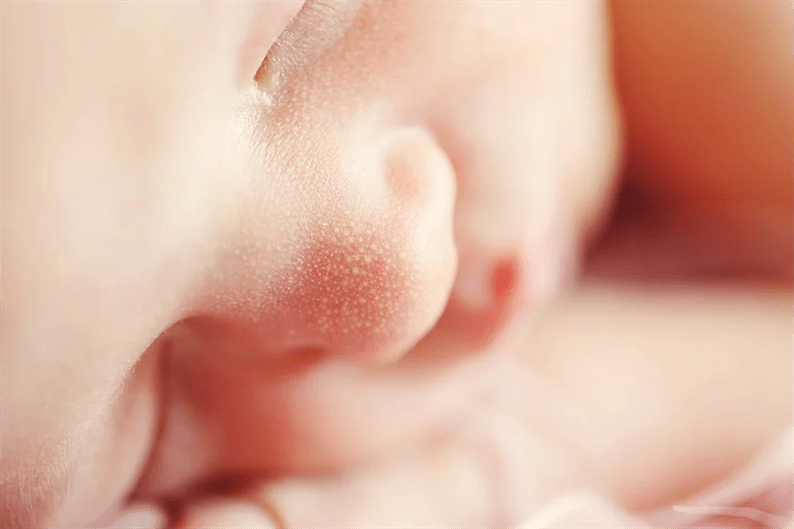
Parents' actions
After you have undressed the baby, remove the tags from him.
If the baby pees or poops, it is necessary to carry out a hygienic procedure, which consists in the following:
1 Put the baby on the changing table.
2 Wipe the stained areas with wet wipes. Also, you can gently wash it under the tap of running, warm water using baby soap. Blot wet parts of the body dry.
3 Change your baby's clothes. Clothes and diapers are selected depending on the temperature in the room. In any case, a baby's undershirt, diaper (diaper) and a cap are put on the child.
Important to remember!The newborn was discharged from the maternity hospital with an umbilical cord. When using diapers, care must be taken to keep the umbilical cord area open. Therefore, the edge of the diaper must be tucked up to the desired level.
Next, it's time for the baby to feed. If a woman is able to breastfeed her baby, then that is very good. The first feeding skills were obtained in the maternity hospital, mom knows how to properly attach a newborn to the breast.
Remember to wipe your breast before feeding your baby. The bulk of breast milk is sucked out by the baby within 15-20 minutes of feeding. If the baby is not full from one breast, shows anxiety, you need to attach it to the other breast. At the end of feeding, you need to support the baby in an upright position, pressing him to you, supporting his head. This should be done regularly after feeding so that the baby can regurgitate air.
The baby is full and ready for bed. Now the baby can be put into a crib or stroller, where a caring dad has already laid a mattress, oilcloth and diaper. Instead of a pillow, a diaper folded four times is used. You should not cover the newborn with a blanket, if the room is at a comfortable temperature, it is enough to cover it with a thin diaper.
Baby's first bath
The procedure for bathing the child is carried out in the evening, before going to bed. Do not bathe your baby immediately after feeding.
Preparation for evening bathing includes the following steps:
1 Boil the required amount of water, cool it to 37 ° C.
2 Wash the baby bath with soapy water.
3 Prepare a disinfectant solution – dilute a few potassium permanganate granules in boiled water, strain through sterile gauze. The solution should not be saturated, but have a slightly pinkish tint.
4 Pour boiled water into a dipper, which is required to rinse the baby.
5 Add the diluted potassium permanganate solution to the bath.
Bathing process of a newborn
Together, especially for the first time, it is much easier to cope with bathing a baby. That is, one holds the child, and the other bathes him.
– A child wrapped in a diaper should be gradually lowered into the water with his back down so that he is completely immersed in it. Naturally, the baby's head should be on the surface.
– In the water, gently unfold the diaper, let the baby get used to it.
– Alternately lather hands, feet, head and body of the baby with baby soap. The person holding it must ensure that no water gets into the eyes, nose, mouth and ears.
– Raise the baby above the bathtub and rinse with clean warm water from a bucket.
– Wrap with a warm towel and take to the changing area.
Important!It is recommended to use baby soap when bathing your baby once a week. For the remaining six days, bathe without using baby soap. Particular attention should be paid to the skin folds on the baby's body, they “collect” dirt.
Bathing should be daily.
It is required to boil water for bathing the child until the umbilical wound is completely healed. As soon as the wound disappears, you can bathe in ordinary tap water.
The duration of the baby's stay in the water is constantly increasing. If the first time is from 5 to 10 minutes, then later, as the child grows up, the bathing procedure increases.
When a baby has diaper rash or prickly heat, a decoction of medicinal herbs is used when bathing. What kind of herbs can be used, the pediatrician will advise.
What not to be afraid of in the first month of the baby
Now that the child is at home, the parents have the opportunity to constantly observe him. However, many things in its appearance and condition can cause anxiety and apprehension. Small rash on the skin, yellowish or reddish face, flaky skin, cyanotic limbs running from side to side of the eye and uncoordinated gaze. Also, parents are frightened by the crying of a baby without tears.
For the first month of life, these manifestations are absolutely normal and over time they will disappear. Thus, the child adapts to new living conditions after being in the mother's womb. The complexion will return to normal after a few weeks, and tears will appear at the beginning of the second month.
You should not worry about the shape of the baby's head, which is somewhat deformed. Over time, it will become normal, but for this, the child must be periodically turned from one side to the other during sleep.
A child's crying is not always a sign that something is hurting. With the help of screams, the baby can attract attention, ask for food, report that he is uncomfortable, or let his parents know that it is time for him to sleep. Within a week, parents by the intonation of crying will be able to understand what the little one wants to say to them.
Babies often cry because they have colic and gas. In the maternity hospital, the doctor had to explain how to deal with them and how long they would last. Using his recommendations, you can alleviate the condition of the baby and get through this period with minimal stress.
Features of bowel movements in children
Young parents are often intimidated by the sight of the contents of the diapers. But in most cases there is no cause for concern, especially if you are breastfeeding.
First, babies from birth to several months go “big” very often.
Secondly, very loose stools are the absolute norm. Only some time after the introduction of complementary foods, it will begin to take on some form.
Thirdly, the color of feces can be anything: yellow, brown, greenish, have a sour smell, contain a little mucus. But there should be no blood, foam in the child's feces. This is a reason to call your pediatrician.
Other physiological conditions
The first time after discharge from the hospital, you may be intimidated by some of the things that happen to the baby.
Rashes, acne and redness of the skin. Such manifestations are possible in the first two weeks after discharge. Peeling may also appear. This is due to the fact that for all 9 months the baby was in the water, and now it is suddenly in the air. He needs time to adapt to new living conditions. And after 2 – 4 weeks, acne will appear. This condition is also called flowering, and it does not require any special treatment and care. So in the body of the crumb, the hormones of the mother are destroyed.
Another consequence of the baby's hormonal changes is the enlargement of the nipples, especially in girls. This is also safe and goes away on its own.
Temperature jumps. Newborn babies have not yet full-fledged thermoregulation. The norm is from 36.5 to 37.5 degrees. What to do if the temperature:
- lowered – perhaps the crumb is frozen: dress it warmer;
- increased – if there is no runny nose and cough, most likely the problem is overheating and you need to undress the baby. If there are signs of a cold, see your pediatrician.
For children, the temperature rises up to 38 degrees. Therefore, in maternity hospitals, mothers are advised to measure it every day. But do not measure it after sleeping or crying – the indicators will be overestimated.
How to dress correctly
Grandmothers always strive to wrap up their grandchildren so as not to freeze. But overheating is much more dangerous for babies than mild hypothermia. Therefore, we learn to dress the child correctly.
There is a rule of one layer: we dress the child the same way as ourselves, but one more layer. In general, this is true, but it is still better to be guided by the weather. After all, each person has his own heat exchange. Constantly watch if your son or daughter is not cold or overheated.
If the baby is cold, he will actively move his arms and legs. Feel the back of the head: if it is cool, it means that the baby is cold and urgently needs to dress it.
If it's hot and stuffy, he won't show it for a long time. However, overheating is very dangerous. Feel the back of your head: if it is hot and wet, undress your child urgently, he is hot.
Clothes for a child in the first days of life
Dr. Komarovsky says that the baby should be dressed for the weather. However, this concept is loose. Someone thinks +15 is hot, others will wear a winter coat. You should be guided by a simple rule: the child is dressed one layer more than himself. In the first year of life, babies are not fully adjusted thermoregulation, because their arms and legs can be constantly cold. This is the norm, it is not necessary to insulate a newborn for no reason.
Winter
How to properly breastfeed your baby
First of all, it is worth getting a winter overalls. At the moment, they are producing practical options – transformers, which are converted from envelopes into full-fledged overalls for a one-year-old baby.
A warm hat is a must-have item for walking. A hat made of lightweight fabric is put under the bottom. The baby is covered with a warm blanket on top.
At home, the child wears:
- body;
- T-shirts;
- trousers;
- blouses;
- socks;
- light cap.
Change the child's clothes as needed. It is advisable to use a new set of clothing daily. They select it so that it is convenient to change the baby's diaper every 2 hours.
Important! If the houses are heavily heated, do not dress the newborn too warmly – prickly heat develops.
Summer
In summer, when the weather is hot, the baby should be protected from direct sunlight. Newborns have very delicate skin that will burn quickly in the sun. There are also pluses in the bright sun: the child will independently synthesize vitamin D. Dress the baby for the weather. If it's hot outside, then a light shirt and pants with socks are enough. If it's cool, wear a warm terry jumpsuit.

Newborn in a summer set
Fall
In autumn, the temperature is kept within the range from 0 to + 180. They buy an autumn overalls for bad weather, booties with leather lining, warm socks, a hat for autumn, mittens for hands. A light blouse, pants and a knitted set are put under the bottom. Children do not tolerate the process of dressing very favorably. Therefore, you need to try to expose them to this procedure as little as possible.
Important! It is advisable to go for a walk with the baby every day – this improves sleep.
Spring
Warm weather comes quickly in spring. However, it is still cool at the beginning of the season. They use a demi-season jumpsuit, a spring hat, mittens and booties for walking. A blouse and pants with a knitted set are put on under the bottom. Children are dressed in the same way as in the fall.

Newborn in a suit for spring
Components of Newborn Care in the First Month
The first month of a baby's life is an adaptation period for him and his parents. Responsibilities are redistributed between family members and their way of life is changing.
The most important thing that a baby needs now is care, which includes hardening and massage, feeding, walking in the fresh air, staying awake, hygienic and water procedures, and sleep.
Newborn care in the first month: Should you follow a daily routine?
If the baby is healthy, then he will regulate the mode of sleep, wakefulness and feeding himself, since he has it at the physiological level. The baby's sleep lasts up to three hours, wakefulness takes up to an hour.
The most time-consuming procedure that takes away the crumbs of strength is feeding. Therefore, you should not worry if after eating the child immediately fell asleep, violating the routine. In infants, biorhythms are clearly postponed, and in order to catch and adhere to them in the future, the baby's behavior must be constantly studied, and then it will become clear at what time he eats and at what time he sleeps.
At the end of the second month of life, the child will have a clear schedule of the daily regimen.
First water treatments
You can bathe a child for the first time only when the umbilical cord falls off and the umbilical wound heals. Until that happens, you just need to wipe the baby with warm water and baby soap. After the procedure, you should use powder and baby cream to moisturize the skin and avoid diaper rash. With the help of cotton swabs, you need to clean the nose and ears of the baby. Also, do not forget about the treatment of the umbilical wound.
The parents will work out the bathing regimen in the first month of life on their own and will adhere to it in the future. The condition of children's skin does not require daily water procedures. Therefore, at first, you can do with daily rubdowns. In addition, it should be borne in mind that not all children like to swim, but there are those for whom it is a pleasant procedure.
It is enough to bathe your baby twice a week. Useful herbal infusions can be added to the bath. You need to use baby soap only if there are no allergic reactions to it, otherwise it is contraindicated.
First Month Newborn Care: Hygiene Procedures
Hygiene procedures should be performed daily. They are represented by washing, trimming the nails on the hands and feet as they grow, washing, inspecting the skin, combing, removing crusts on the head, treating the umbilical wound and caring for the ears, nose and eyes.

Hardening and walking in the fresh air
Walking in the fresh air is very important for the formation of the immune system and the health of the child in general. The first walk, albeit short-term for the baby, was discharge from the hospital. Subsequent will depend on temperature and time of year.
Since the child's thermoregulatory system is poorly developed, parents should take seriously walking with their baby in the cold season. In severe frosts, it will be enough to take the baby out to the balcony for a few minutes, or simply ventilate the nursery for a short time before going to bed. After the baby wakes up, the temperature in the room should reach 20 degrees.
Thus, it will be possible to avoid colds and get the most out of the airing. Even when taking a child to the balcony or airing his room, the baby needs to be warmly dressed. The baby's clothes should be the same as those of an adult, but only one layer warmer.
Starting from the second week of life, massage and hardening should be connected to walks. First, the baby should be left in a vest for a few minutes, making a light massage of the whole body. If the little one likes this procedure and he does not protest, it should be carried out daily. Massage is very useful for the children's developing muscular system, which allows it to be strengthened.
By observing the newborn and its behavior, parents will be able to further learn to understand which procedures should be added to the daily routine and which should be removed.

Indicators of a child from birth to 1 month
Head circumference
34-35 cm
Chest circumference
33-34 cm
The first month, the baby spends a significant part of the day (up to 20 hours) in a dream. A newborn, as a rule, sleeps in the frog position, that is, lying on his back, with arms bent at the elbows and raised up and with legs bent at the knee joints and spread apart.
In a newborn during this period, five sleep states are distinguished:
- deep sleep, when the baby is absolutely relaxed, breathes slowly and evenly, his eyes are closed and his face is relaxed;
- shallow sleep, when the child has more rapid, not quite even breathing, twitching of the arms and legs is possible, you can distinguish how the eyeballs move under the eyelids;
- a drowsy condition that occurs during feeding or before falling asleep, characterized by half-closed eyes;
- wakefulness, when the baby is active, makes movements with the whole body, arms and legs;
- crying, indicating that the newborn is uncomfortable, such as hungry, scared, or wet.
In the first month, the baby has the following motor features – lying on his stomach, he tries to raise his head, and sometimes he even manages to keep it in this state for several seconds. In the first thirty days, the newborn will add about 600 grams to its original weight and grow by about 3 centimeters, the head circumference will increase by 1.5 – 2 centimeters.
How do the senses develop during this period?
By the middle of the second week of life, many newborns are able to keep a moving object in their field of vision, for example, a bright rattle about ten centimeters in diameter. If at a distance of 40–50 cm from the baby lying on his back, place a bright toy and begin to slowly move it to the right and left, then the child fixes the toy with his gaze for a few seconds. A three-week-old toddler is usually already able to fix more or less large fixed objects with his gaze, for example, the face of mom or dad. If you approach a newborn baby lying on his back at a distance of 40-50 cm and attract his attention with a conversation, and then shut up, remaining motionless, the baby will also freeze, carefully peering into your face. By the fourth week, the baby's eyeball movements are smoother and more coordinated.
In the first month, it is very important to establish feeding the baby.
It is obvious that the best food for him is breast milk. In the first days of a child's life, the amount of milk in women gradually increases, but in some (especially primiparous) this increase is not enough. In this regard, the recommendations of doctors to stimulate lactation are relevant. One of the main ways to stimulate lactation is to latch on more frequently at the first sign of anxiety. This method is called “free feeding” or “feeding on demand”. Thus, some mothers get 10-12 feedings per day.
It is important to properly insert the nipple into the baby's mouth.– it should cover the entire areola. It has been established that the baby sucks out the bulk of breast milk in the first 5 to 10 minutes of feeding. However, there are children who quickly get tired, fall asleep at the breast, they need to be encouraged to suck, lightly patting the cheeks, removing from the mouth and re-inserting the nipple. When sucking, the baby swallows not only milk, but also air, from which the baby seeks to get rid of, along with the nutrient fluid. Therefore, the regurgitation procedure, when excess accumulated air comes out, is very important. When breastfeeding, regurgitation is optimal every 5 minutes (or when changing breasts) and every 50 g when bottle feeding. This is usually done in three ways – upright on your shoulder, face down on your lap, or in a sitting position.
Bloating, intestinal cramps, “colic” are frequent companions of the first months of life, even in practically healthy children. Home ways to help a child with these conditions: light tummy massage in a clockwise direction; an upright position on an adult's arms or the so-called skin-to-skin contact – the baby is placed with its tummy on the mother's bare chest, reclining in a chair, covered with a blanket from above, and the mother strokes it on the back; using a gas tube, laying the baby on his stomach for 3-5 minutes, taking a plantex (containing dill in its basis). All of these methods help prevent “colic” by helping to remove gases from the intestines.
A very important moment in the first weeks of a child's life is the healing of the umbilical wound. When you are discharged from the hospital at the usual time (the fifth – seventh day), the umbilical wound does not have time to completely heal.
Traditionally, it is customary to treat the navel with a solution of brilliant green (brilliant green). And this should be done daily, until the wound becomes completely dry in the morning when the child is using the toilet and in the evening after daily bathing. Until the crust has disappeared, it is recommended to add a slightly pink solution of potassium permanganate, chamomile or St. John's wort to the water when bathing. Bathing water temperature 37–37.5 ° С, bathing duration – no more than 5–7 minutes. If the child develops discharge from the umbilical wound or redness and swelling of the umbilical ring, a doctor's consultation is needed. You should also consult a doctor if the crust from the umbilical wound does not disappear when the child reaches the age of 14-15 days.
Mental development
The baby's adaptation to the extrauterine environment is facilitated by innate reflexes. Some of them disappear in the first months of life, others are transformed into acquired reflexes, reaching the level of consciousness. Such innate reflexes as the reflex of sneezing, flinching, blinking, yawning, knee reflexes remain in the baby for life. During the first month of life, seven basic reflexes are distinguished in a child:
- Grasping – manifested when stroking or lightly touching the child's palm. Reflexively, the baby grasps and holds everything that touches his palm.
- Search – the baby turns the head if they touch or stroke his cheek. This reflex is a necessary component of the instinct for food and nutrition.
- Sucking – sucking movements of the lips are noticeable in the baby if you move your finger or nipple around the mouth. The sucking reflex, like the search reflex, is firmly connected with the instinct for food.
- Babinsky reflex – when you run your finger along the outer edge of the foot, the toes diverge in different directions along with the rotation of the foot.
- Mora's reflex – the newborn spreads and brings his arms and legs, responding to a loud and sudden sound.
- Babkin's reflex – when pressing the baby on the palm, he turns his head and opens his mouth.
- Swimming reflex – the baby makes swimming-like movements when placed on his stomach.
- Walking reflex – the newborn makes movements that imitate walking, if supported under the arms so that his legs touch any surface.
Why does the baby hiccup?
Hiccups are a natural, physiological phenomenon for newborns. He hiccupped in your stomach and continues to do so when he was born. It is believed that hiccuping in the abdomen is the process of preparing the diaphragm for breathing and hiccupping in a newborn is just an intrauterine habit. And no, your baby is not cold, no, he does not want to drink, he just hiccups.
Why does a baby spit up after feeding?
Regurgitation is an amazing defense mechanism created by nature for babies. The upper esophageal sphincter in a newborn is not closed, as in adults, and milk flows easily like from the neck of a bottle. This is a necessary mechanism to prevent the baby from overeating and regurgitating excess milk.
Normally, the baby spits up after each feeding when changing posture. And once a day with a fountain – from the mouth, nose is terribly large and frighteningly active. This is also the norm, take this philosophically. By 6 months, spitting up should normally go away completely.
It is not necessary to carry a child in a column. This will not help from regurgitation, and with proper attachment, the child does not catch air.
Why does the child often wake up and sleep poorly?
The fact is that babies sleep in a completely different way than adults. Their brains are actively developing and growing. And the most rapid development of the brain occurs in the superficial phase of sleep. Therefore, babies do not sleep deeply, often waking up to suck, pee and fall back into sleep. If the baby sleeps deeply, this is just a reason to be wary.
Why does the child sleep a lot and often?
All young mammals sleep a lot during the first days or months of their life. This physiological feature allows you to quickly develop the brain and nervous system.
Does the child sleep a lot? Excellent! Go about your business and enjoy, soon this wonderful stage will end.
Why does the child sleep all day?
Newborn babies have high bilirubin. At a high concentration, bilirubin has a hypnotic effect on the baby, forcing him to go into deep sleep.
The fact is that before the birth of the child, only one circle of blood circulation worked, and after childbirth, the pulmonary circle turns on. Before birth, oxygen in the baby's body was bound by the so-called fetal hemoglobin. After childbirth, it collapses, turning into the very bilirubin that puts our babies to sleep.
From the third day of life, newborns must be woken up every 1.5 hours from falling asleep in order to breastfeed. Otherwise, the child skips feedings, gains weight poorly, and the amount of milk in the mother drops.
Don't be afraid to wake your baby up a bit so that he picks up the breast and starts sucking. You will help him not to miss a feed, and you will help yourself to keep breast milk in the amount necessary for the baby.

Why doesn't the child sleep or does not sleep well during the day?
There is no single answer to this question. Perhaps your child has grown up, and his rhythms of sleep and wakefulness are changing, and you are still trying to put him in the same way.
If laying down every time is difficult, it is quite possible that the child has a struggle with sleep, perhaps somewhere you passed it or he woke up and did not find his mother, was very frightened and now does not want to go to sleep. In this case, a sling and gentle motion sickness will help you.
Why does a child suck a finger, a fist?
In infants, the first way of knowing the world is oral. Everything needs to be tasted, touched with the tongue. Therefore, the child starts with the fingers.
But, if your baby is sucking a finger or fist like a breast, and not just licking, this is a sign for you that the baby is compensating for the breastfeeding in this way. The finger should be removed and the breast should be offered. This substitution of breastfeeding is dangerous due to a decrease in milk supply.
Why does a child pee often and a lot?
A newborn baby sucks a lot and pees frequently. The genitourinary system of the newborn, like many of its other systems, is still immature. Urine does not accumulate as in an adult, but is excreted in small portions.
A breastfed baby pees 12 times a day. Girls pee every 20 minutes, boys every 15 minutes when awake. Children do not pee in their sleep.
Why does the child rarely and little piss?
To determine if a baby is getting enough milk while breastfeeding, a so-called wet diaper test is used. It is necessary to remove the pamer from the child for a day and count all the pee-peers for that day. If a child is over 12 days old and pees less than 12 times a day, this is a reason to contact a breastfeeding consultant. Chances are, your baby is not getting enough milk and you need to start lactating as soon as possible.
Why does the child have cold hands and feet?
In newborns, thermoregulation still does not work well and normally the hands and feet may be cold. You need to check if your baby is cold in the folds – under the knees, in the armpits, in the elbows. If it is warm there, then the child is warm and should not be wrapped up. Overheating for babies is more dangerous than hypothermia.
Why does a child cry, shudder, twitch, scream in a dream?
And that's okay too. Remember, a newborn baby does not sleep deeply, but in REM sleep, and adults often twitch, mutter, flinch and moan.
Over time, REM sleep phases will also become shorter and the baby will begin to sleep more comfortably.
In addition, it is believed that the child, for the first month after birth, experiences the stress of childbirth over and over again in a dream.
Mild adaptive bathing, correct postures for carrying the baby in your arms, sleeping with your mother, lots of hugs and strokes will help you to live faster and release the stress of birth.
And in general, the more attention and hands of the mother the child receives in the first months of his life, the faster he adapts to this new life and will be calmer.
Sources used and useful links on the topic: https://FB.ru/article/396005/kak-vyiglyadyat-novorojdennyie-deti-v-roddome-v-pervyie-minutyi-jizni https://LadyCharm.net/2018/09 / kak-dolzhen-vyglyadet-novorozhdennyj / https://teddyclub.info/ru/novorozhdennyj/malysh-v-roddome/vneshnij-vid-novorozhdennogo-v-pervye-dni https://www.pravda.ru/health/ 38425-baby / https://agushkin.ru/uxod/pervye-dni-zhizni-novorozhdennogo-ili-mama-ya-rodilsya.html https://www.BabyBlog.ru/library/article/vypiska_iz_roddoma_chto_dalshe_delat https: // www.parents.ru/article/pervye-dni-zhizni-novorozhdennogo/ https://beautiful-mama.ru/ukhod-za-novorozhdennym-v-pervyy-mesyac/ https://birth-info.ru/130/ Novorozhdennyy-pervye-dni-doma / https://kpoxa.info/sovety-mamam/nuzhno-rebenku-pervye-mesyacy.html https://www.BabyBlog.ru/cr/cr0 https://ovelena.ru/pochemu-rebenok
Post source: lastici.ru