
Pedicure and everything you need to know about it
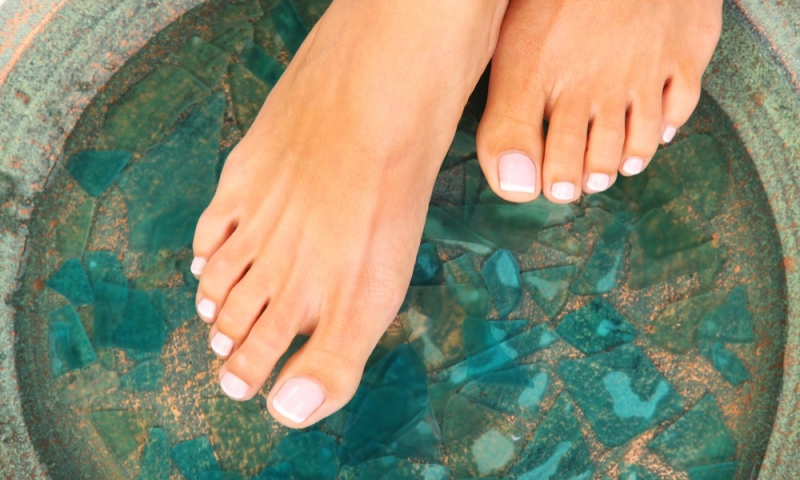
Our feet require no less attention and care than our face, body and hands. And do not think that a pedicure is just timely tinted nails. We understand how it happens.
If you pamper your feet with regular pedicures and massages, you probably know that thanks to this, your mood improves, your gait becomes easier, and fatigue does not feel much longer. So why not make foot care a must, just like showering, brushing your teeth or cleansing your face? At the same time, you can take care of it in different ways: eliminate small imperfections on your own at home, or carry out hygiene and medical procedures in a pedicure room.
Types of pedicure
Pedicure is a special care for feet and toes with cleaning, polishing and correction of nails, removing rough skin, corns and calluses. Today, the salons perform classic edged, European unedged, hardware, combined and SPA pedicures. Classic cut. The feet are steamed in warm water and treated with graters, pumice, a special blade, and the cuticle is cut off using scissors and tweezers. European unedged. The only difference from the classic version is that the cuticle is not cut off, but only softened with a special cream and then pushed back with a wooden stick. With each subsequent procedure, the skin becomes thinner. European dry unedged.The peculiarity of this method of care is that the legs are not steamed and the master does not use metal tools. Calluses and rough skin are locally treated with softening compounds, which facilitates their layer-by-layer removal. Such a pedicure is hygienic and eliminates the risk of infection with a fungus or other infections through microcracks and wounds. Mixed (combined) . This is the same classic pedicure with steaming the legs in the bath and cutting the cuticles, only grinding the heels and removing corns is carried out by hardware on a wet foot, which, however, can lead to the formation of peeling and cracks on the heels after a while. Hardware.For the procedure, a special apparatus with grinding nozzles is used to treat the surface of the nail and skin of the foot without prior soaking. The main thing is to correctly calculate the exposure time of the device and the number of revolutions of the nozzles so as not to injure the nail plate and sole. Just keep in mind: the procedure involves several stages and lasts from one and a half to two hours. But it will not seem too tiring for you – you will spend time in a comfortable orthopedic chair, in which, if desired, you can even sleep a little.Juicy and durable: fruit pedicure as the most appetizing summer 2022 trend The master will remove them entirely, together with the root, painlessly and safely. Hardware pedicure is not only effective, but also useful, because during grinding, acupressure of all reflex zones of the foot occurs. If you have not paid due attention to foot care in winter, then you will probably have to go to the salon twice a month at first. But soon you will feel that you need less and less professional intervention and you can keep your legs in perfect condition by visiting the master once every one and a half months. SPA-pedicure is able to give a real sea of pleasure. In two to three hours you will receive comprehensive care, which includes nail smoothing, foot massage and paraffin therapy, as well as the treatment of corns and corns with the help of modern cosmetics based on natural ingredients: peels, scrubs, masks, lotions and oils. This is not only a hygienic procedure, but also a real treatment. The action of the SPA pedicure is so effective that a second session is usually required no earlier than a month later. Today, salons also offer a pleasant novelty – chocolate foot wraps. At the end of the pedicure, your feet are immersed in a special chocolate paste, which makes the skin extremely soft and silky. but also a real treat. The action of the SPA pedicure is so effective that a second session is usually required no earlier than a month later. Today, salons also offer a pleasant novelty – chocolate foot wraps. At the end of the pedicure, your feet are immersed in a special chocolate paste, which makes the skin extremely soft and silky. but also a real treat. The action of the SPA pedicure is so effective that a second session is usually required no earlier than a month later. Today, salons also offer a pleasant novelty – chocolate foot wraps. At the end of the pedicure, your feet are immersed in a special chocolate paste, which makes the skin extremely soft and silky.
Calluses and cracks
Quite common problems are dryness and keratinization of the skin of the heels, the appearance of cracks or scuffs. Daily foot baths will significantly improve the condition of the feet. They not only cleanse the skin, but also increase blood circulation. You can mix baking soda (a tablespoon per liter of water) or chamomile infusion (three tablespoons per liter of water) in water. With a significant thickening of the stratum corneum (more often on the soles), painful growths of a yellowish color are formed – corns and calluses. They are recommended to be processed in a pedicure room. At home, you can make poultices from common ivy leaves, which are applied to the lesions. A good result is the lubrication of corns with fresh juice from the leaves of sundew round-leaved, as well as foot baths from decoctions of coltsfoot leaves and white willow bark. In order to avoid infection of wounds with scuffs, it is advisable to add a decoction of oak bark, nettle leaves or plantain leaves to the water (two tablespoons of raw materials per liter of water) and a crystal of potassium permanganate (pink solution). They have tanning and disinfecting properties. After the bath, the feet should be wiped dry, smeared with cream and lightly massaged. If the cracks on the heels, despite the measures taken, do not heal for a long time, you should consult a dermatologist. After all, they can serve as a gateway for a fungal infection. If the cracks on the heels, despite the measures taken, do not heal for a long time, you should consult a dermatologist. After all, they can serve as a gateway for a fungal infection. If the cracks on the heels, despite the measures taken, do not heal for a long time, you should consult a dermatologist. After all, they can serve as a gateway for a fungal infection.Sandal season: 5 tips to help solve the problem of dry and cracked skin on the heels
Supportive pedicure treatments
Traditional problem areas are the heel, thumb, little finger and pads near the fingers. It is here that the most painful corns and calluses from rough skin settle and “prescribe", causing a lot of discomfort. Indeed, shoes press on our poor fingers, and even the narrowest straps can seriously injure. It is very important not to start the process of corn formation and to take care of difficult areas constantly, maintaining the smoothness and softness of the skin. Your main assistants are softening and moisturizing creams. In summer, it is best to opt for those products that include extracts of medicinal herbs. At least twice a week, you need to treat the skin of the legs with peeling or scrub. If you wish, you can make it yourself. Mix 100 grams of table salt with a quarter cup of cream.
Evening pedicure session
Tired, "buzzing" legs in the evening can be soothed and refreshed with the help of baths, which will also be beneficial for the skin. Add six drops of eucalyptus and rosemary oil to hot water, soak your feet in it for about ten minutes. Then substitute under a contrast shower to improve blood circulation. If the skin is inflamed and flaky, it is good to make a bath of hercules infusion. To do this, pour 150 grams of cereal with a glass of boiling water, add the mixture to warm water, add to the desired volume and dip your feet into it for 15-20 minutes. Perfectly softens the skin and a 15-minute hot bath with the addition of three to four tablespoons of honey. Blue clay, which is sold in pharmacies, is ideal for preventing cracks. Dilute it to the consistency of sour cream, apply on the feet, let dry, and then rinse with warm water. If you still decide to remove the corn yourself, after the procedure, be sure to seal the intervention site with a special bactericidal pad, otherwise there is a risk of infection and further injury to the area. Another nuisance is blisters from rubbing shoes. To avoid this scourge will help disinfectants from sweat. Today there are a huge number of them on sale: talcs, sprays, deodorants with any fragrance – from a light floral scent to the aroma of a sea breeze. And if water callus still appears, to eliminate burning and pain, wipe it with a piece of cotton wool soaked in cold milk. To avoid this scourge will help disinfectants from sweat. Today there are a huge number of them on sale: talcs, sprays, deodorants with any fragrance – from a light floral scent to the aroma of a sea breeze. And if water callus still appears, to eliminate burning and pain, wipe it with a piece of cotton wool soaked in cold milk. To avoid this scourge will help disinfectants from sweat. Today there are a huge number of them on sale: talcs, sprays, deodorants with any fragrance – from a light floral scent to the aroma of a sea breeze. And if water callus still appears, to eliminate burning and pain, wipe it with a piece of cotton wool soaked in cold milk.