
London Attractions. England landmarks

History
London was founded by the Romans in AD 43. A Roman settlement was built on the north bank of the Thames and was named Londinius. In 61 A.D. during the British uprising, Londinius was burned. In the 3rd century A.D. the city became the capital of Upper Britain. At the beginning of the 5th century, the Romans left Britain and Londinius was abandoned. The modern name of the city comes from the Roman name Londinia, the origin of which is not clear. Some argue that it goes back to the legendary King Lud, others – it means a fortress, or a fortified city.
In the 6th century, not far from Roman Londinia, the Saxons founded the city of Lundenvik, which became the capital of their kingdom. In the 9th century, the Vikings attacked Lundenvik. In the 9th century, the city passed to the West Saxons, whose king moved it to the site of ancient Londinia. In the 11th century, London was chosen as the seat of the Anglo-Saxon king. From that time on, it seemed to be divided into two parts: the City (the city itself, where the modern business district is now located) and Westminster (the king's residence).
In the 11th century, the coronation of William the Conqueror took place at Westminster Abbey. In the 12th – 13th century, London became the capital of the English kingdom. In 1216, the French army entered the city during the civil war. Later, over the course of 8 centuries and up to the present time, London was never again captured by the enemy. In 1348, a plague epidemic almost halved the London population.
The era of prosperity for London began during the Tudor dynasty, during which the era of absolute monarchy began. It is interesting that the city practically did not suffer during the Reformation. By the 16th – 17th century London became one of the largest cities in Europe and a huge industrial center. The growth of the city was not always good for him. So overpopulation and the lack of engineering networks led to the strongest plague epidemics. In 1666, there was a violent fire that destroyed more than half of the old city.
In the 17th century, London becomes the world's financial capital. By the 18th century, the capital of the United Kingdom received the title of the largest city in Europe. In the 18th – 19th centuries, magnificent new buildings and structures were erected, without which it is now difficult to imagine London. In the 19th century, the capital of Great Britain became the largest city in the world and one of the most significant industrial centers. Further development of London was suspended by the First World War. During the Second World War, the city was subjected to heavy bombing, during which many residents were killed and several dozen historical buildings were destroyed.
City of London (UK)
London is the capital of Great Britain and one of the largest cities in Europe, which is the world center for culture, music, education, fashion, politics, finance and trade. It is a vibrant and bustling metropolis with a vibrant life and a wonderful cosmopolitan atmosphere. London is one of the oldest cities in Europe, which has an amazing concentration of various sights, monuments of history and culture: luxurious palaces, historic buildings, towers, bridges, old churches, attractions and world-class museums.
London was founded during the Roman Empire and has been one of the most important cities in Europe throughout its rich history. All the wealth of the United Kingdom flocked here, so its capital has magnificent sights of various historical eras. London is one of the most versatile cities in the world, which has absorbed not only the traditions of Britain, but also the cultures of many nationalities and peoples. This is a place of stunning diversity that you can discover and explore endlessly.
1 Buckingham Palace
The first step in London is to see the residence of the British monarchs with your own eyes. Queen Elizabeth II, members of the royal family and their guests of honor visit here. Also, tourists can witness the changing of the guard ceremony. Every other day from August to April, and the rest of the time – every day. The court division changes shifts at 11.30. This custom attracts hundreds of tourists from all over the world.
Big Ben and the British Parliament

Few things are associated with London more than this huge 97-meter-high tower topped with a giant clock and a sonorous bell, which is actually called Big Ben. Ben's dimensions are really impressive, and his weight exceeds 13 tons. The sound of this bell is known throughout the world as the call signs of the BBC radio. The tower is especially good at night, in the light of all four dials that illuminate it from each side. Right next to Big Ben, stretching along the banks of the Thames, is the building of the British Parliament – Westminster Palace. You won't be able to climb Big Ben yet, but you can get a tour of the Parliament building and see real political debate. Also consider taking a guided tour of all of London's main attractions.
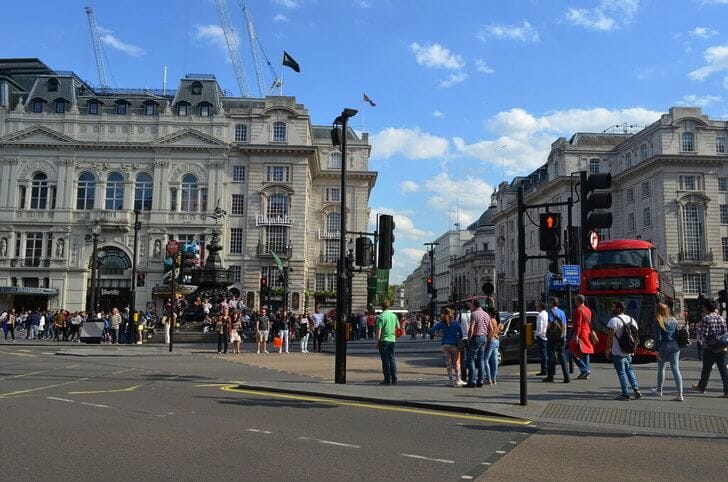
11 Piccadilly Street and Square
The street got its name from the lace collars that Robert Baker sold. It was previously called Portuguese. Piccadilly Circus is known for the fact that for more than 300 years the richest and most distinguished representatives of the world “elite” have settled here: bankers, stars, members of powerful financial clans. The most expensive and luxurious mansions, hotels and apartments are located here.
2 Tower Bridge
The British initially considered Tower Bridge to be ridiculous and ugly, but now England cannot be imagined without this London landmark, which is rightly considered the main decoration of the city. An architect inspired by the Gothic culture of the Victorian era began construction back in 1886.
It got this name due to the fact that it has a similar design to the Tower of London, which is located nearby. Eight years after the start of construction, the Prince of Wales himself and his wife attended the opening ceremony.
Theater Globe
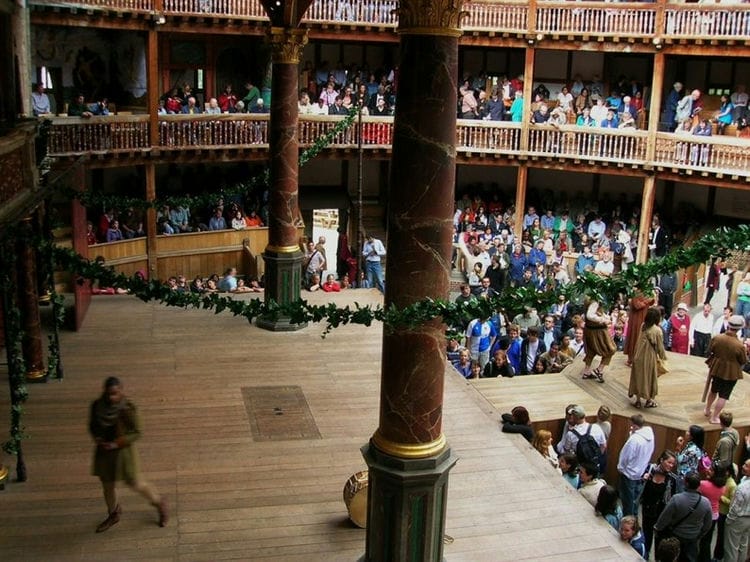
The old and famous Globus Theater holds performances and performances from April to October. The rest of the time there are guided tours.
The theater is a reconstruction of a 16th century theater building. The performances are shown there in natural light. The theater has no seating, and a thatched roof only partially covers half of the stage.
The Globe is located on Bankside Street. Despite its historical surroundings, there are always long queues at the box office.
1 Tower of London
Tower of London – medieval fortress
Like many of London's top attractions, this one has a centuries-old history. The construction of the fortress, towering on the banks of the River Thames, began over 900 years ago. The building was intended for the imprisonment of influential prisoners, including representatives of the royal families. Maria Tudor, Anne Boleyn and Thomas More have also been here. In certain years it was also used as a royal residence. The fortress lost its main purpose only in the middle of the 20th century.
3 London Eye
Such sights of London cannot be ignored. The height of the giant Ferris wheel is 135 meters. Each of the 32 all-glass cabins (excluding the floor) are air-conditioned. The number of egg-shaped booths was not chosen by chance. It symbolizes the number of London boroughs (excluding the City of London). The wheel makes one full circle with stops in half an hour. During this time, you will have time to look at many of the main sights of London (we will briefly list them for you now).
National Gallery in London
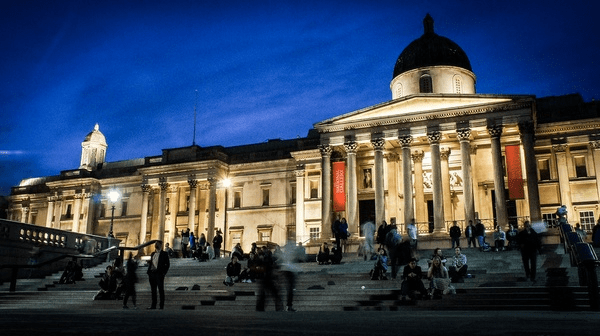
The most complete and versatile collection of paintings in England is at the National Gallery. Almost 2 thousand masterpieces of European painters have been adorned with the walls of the gallery since 1839.
At one time, the gallery moved to Trafalgar Square. The museum is located there today.
When visiting the National Gallery, it is impossible to see all the exhibitions in one visit. If the museum visitor feels tired, he can relax in the local express bar. There is a souvenir shop with books and reproductions in the museum building.
10 Oxford Street

For lovers of fashionable shops and busy traffic, Oxford Street is the best choice. This street is one of the most famous in London and the most important in the historic Westminster district. This street is especially beautiful in November, because every year it is decorated with Christmas garlands. Celebrities celebrate the lighting of the street, which delights tourists for several months.
6 Kensington Palace
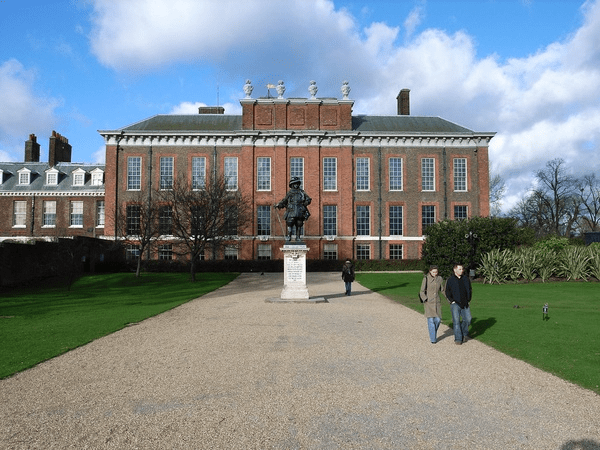
Another royal residence, the smallest of all the palaces belonging to the ruling family. The building was built in the 17th century. for the Earl of Nottingham, but King William of Orange bought it and made it his summer country estate. Kensington Palace (rather a mansion compared to other royal palaces) is located in one of the western districts of London. In our time, the families of the Duke of Kent and Gloucester live there.
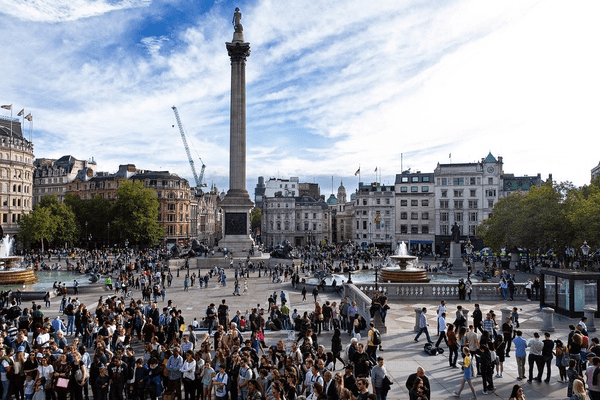
Trafalgar Square
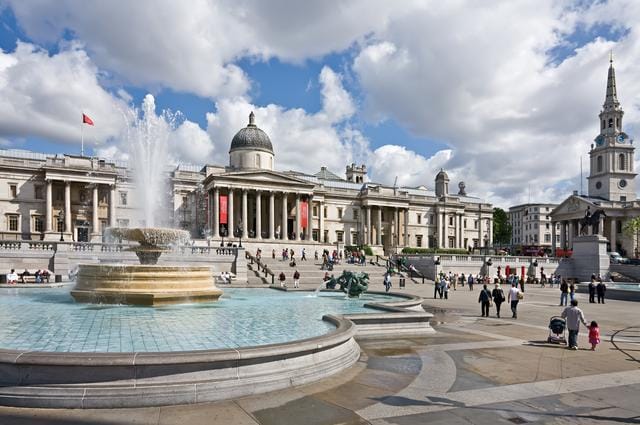
The geographical center and main square of the city, in the heart of which rises the 50-meter column of Nelson. It is worth coming here for the National and Portrait Galleries, wonderful fountains and spontaneous exhibitions of London artists.
17 Churchill's War Rooms Museum
An underground bunker from which Churchill and his entourage ran a military company during World War II. Its construction was completed shortly before the start of the war. In 1989, Margaret Thatcher inaugurated the bunker for everyone to see. Equipment, personal belongings of the country's leaders, photos and documents were left inside as exhibits. The museum is located under the Treasury building, next to Westminster Palace, and is a branch of the Imperial War Museum.

5 Westminster Palace
Palace of Westminster – a castle whose history dates back to 1042, has always served as a home for royal families. This building has become possible to visit only since 2004, so if you want to visit the oldest parts of it, then it is better to do it at the end of August, since the British Parliament sits there throughout the year. Here, solemn ceremonies are held, at which Queen Elizabeth II herself is present.
29 River Thames
The river artery of the capital, crossing the entire city and passing through its central part. Perhaps this is one of the most popular rivers in the world, passing within the city. Largely due to the possibility of navigation on the Thames, London began to develop as an industrial and later a financial center. Back in the days of the Roman Empire, there was a port here. The Thames is an independent attraction visited by millions of tourists.

4 Tower Bridge
Another correct version of what to see in London in 1 day is a must for every guest of the city. The site is only a hundred years old. However, it is also considered a true symbol of the British capital. By purchasing a ticket, you can visit the upper level of the structure – here guests are invited to watch a documentary about its construction.
2 Fortress Tower
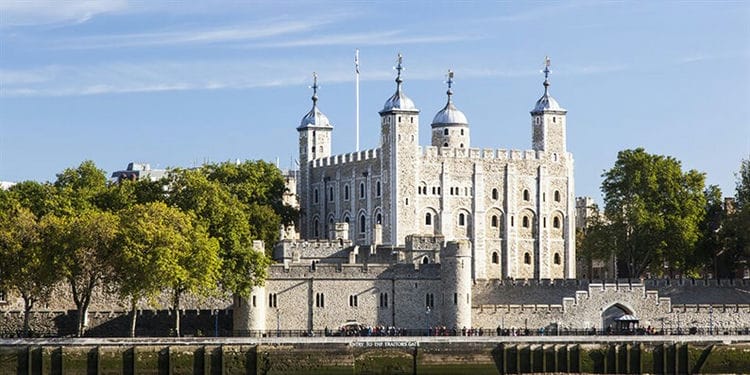
Perhaps the most important symbol of Great Britain is the Tower! This fortress was built in the 11th century by the famous King William the Conqueror. Since then, the Tower has participated in all the important events of the country, and has been a prison, fortress, palace, mint and even a zoo. Here Anna Boleyn, Catherine Howard, Thomas More and other famous personalities awaited their execution. Near the Tower, you can immediately visit the bridge!
33 Wembley Stadium
The ultra-modern sights of London also find their place in the tourist route, the presentation of which must certainly illuminate one grandiose object – Wembley Stadium with a capacity of 90 thousand spectators. By the way, according to this parameter, it ranks second on the continent. Today the stadium is used for home matches, as well as for other sporting events and major concerts. The modern Wembley was built in 2007 on the site of its predecessor – the legendary arena of 1923, which was at that time the largest in the world. The new stadium is renowned for its technical equipment – the roof is especially unique, which extends in 3 directions, and the escalators leading to the stands, with a total length of about 400 meters. In addition to football matches, Wembley has repeatedly become the arena for the performance of world stars – such as Madonna,
7 Warner Bros. Studios
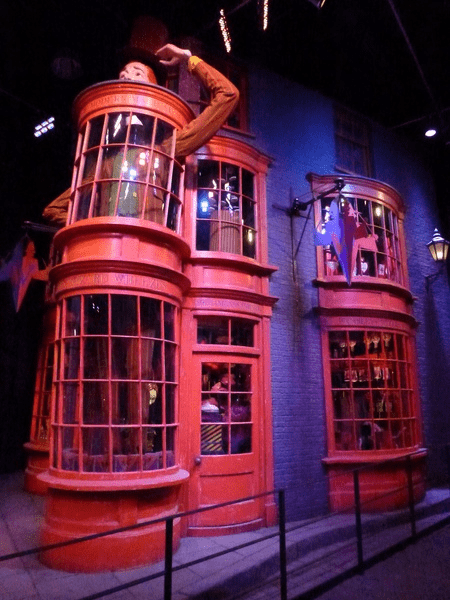
One of the compelling reasons that attracts tourists to London is to see the world of Harry Potter with their own eyes. Who hasn't dreamed of visiting Hogwarts? After the filming was completed, the studio turned into a museum, a true Potteroman's dream. It has everything, Dumbledore's office, Gryffindor living room, Diagon Alley, a Hogwarts model, and even a butter beer!
10 Oxford Street
One of London's most famous shopping streets. More than 100 million people visit it annually. First of all, visiting the street is interesting for everyone who follows fashion and loves shopping. In a relatively small area (Oxford Street is only 2.4 km long), there are more than 500 stores, including boutiques of world brands, large family supermarkets and mass-market stores.

18 Sherlock Holmes Museum
The Museum Complex of the Chief Detective Conan Doyle is located in the four-story building at number 221 b (despite the fact that the building was originally listed as number 239) on Baker Street. The furnishings of the rooms recreate the atmosphere of the apartments of Sherlock, Watson and their housekeeper. On the last level of the museum there is an exhibition with wax figures of heroes from books.
Victoria and Albert Museum (V&A)

The Victoria and Albert Museum is considered a temple of creativity and creativity. It houses one of the world's greatest collections of decorative arts and displays impressive examples of fashion masterpieces, textiles, furniture, ceramics, photography, jewelry and other fine arts. Also take a look at the patio, which has a charming café serving delicious cakes and coffee. Another secret of the Victoria and Albert Museum: in addition to interesting exhibitions, there is also a small pet cemetery, where the pets of Sir Henry Cole, the first director of this museum, rest. We recommend taking a guided tour of the museum with a local, but Russian-speaking guide.
23 Abbey Road
The famous Abbey Road pedestrian crossing in St John's Wood in London
Abbey Road is another London street where life is in full swing. Once a couple of centuries ago, a street in St. John's Wood was called a haven of love and art – exalted ladies, actresses, and true romantics lived here. Over time, establishments with alcohol and entertainment appeared here, which were in demand among respectable guests, and couples in love loved to walk in parks with lush flowers. In the 20th century, Abbey Road gained world fame due to two factors – at the beginning of the century, a recording studio of the same name was founded here, giving the world musical masterpieces from such performers as Pink Floyd, Duran Duran, U2, Radiohead and many other luminaries of music. And one more of the intersections of this street was immortalized on the cover of the album of the Liverpool Four Beatles – this album was recorded in the walls of the Abbey Road studio,
6 Hard Rock Cafe

Not far from Hyde Park and Piccadilly, there is a cafe where all rock music lovers flock. Now the famous Hard Rock Café chain is located all over the world, but the first cafe appeared in London. This happened in 1971, in the building of a Rolls-Royce auto shop. The cafe has a huge collection of music exhibits from around the world, as well as an amazing setting!
8 St. Paul's Cathedral
St. Paul's Cathedral is one of the tallest buildings in the world, with a dome of 118 meters high. Now it is the seat of the Bishop of London. The history of the life of the cathedral begins in the 18th century, when it had to be reconstructed after the bombing during the Second World War. It is also known for burying within its walls the greatest people of British history – Churchill, Fleming, Nelson and others.
21 Hyde Park
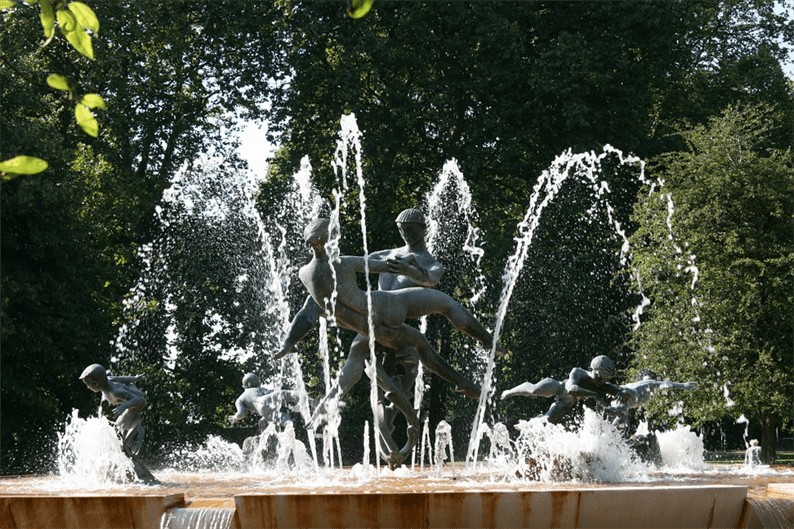
In central London, you can walk through the Royal Park. Hyde Park has a long history and was opened to the public in the 17th century. The British traditionally organize festivities, rallies, holidays, exhibitions here. On the huge territory of the park, 1.4 sq. km. there are many interesting buildings such as the Serpaintyne Gallery, the Achilles statue or the Speakers' Corner.
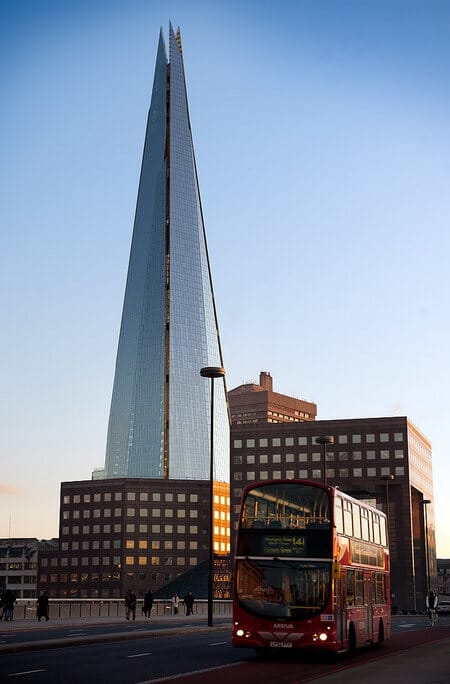
14 Shard Skyscraper
A high-rise building built for the opening of the 2012 Olympic Games. The structure is a glass pyramid that resembles a block of ice 310 meters high (72 floors). Inside are offices, hotels, recreation areas, private apartments. Tourists tend to get into the skyscraper to the observation deck, located at the 70th floor, from where you can admire London at a glance.
29 Mary Ax Tower
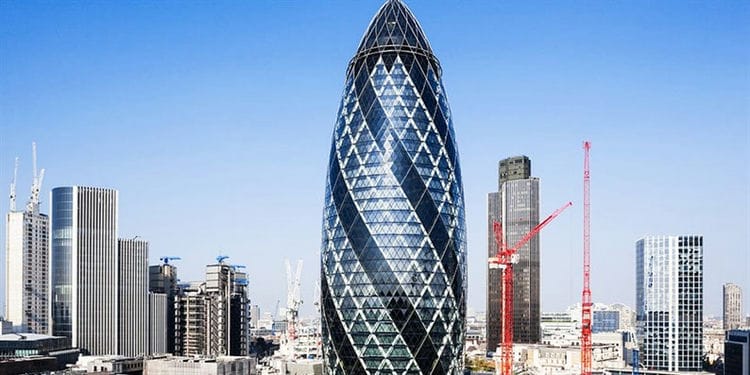
The Mary Ax skyscraper is called a cucumber or gherkin among Londoners. Such a ridiculous name for this 180-meter building (40 floors) was given from the dark green glass of the floors. Surprisingly, the all-glass structure has no corners at all. And from the top of the skyscraper a stunning panorama of London opens up.
Tower of London
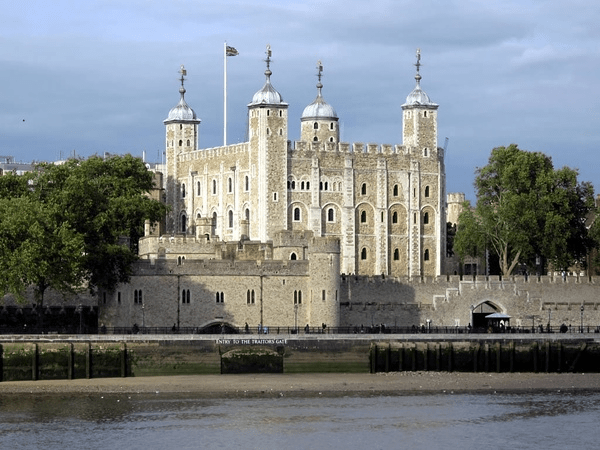
The Tower is one of the greatest buildings in the world. Its walls keep the secrets of 900 years of history, during which time it managed to serve as a royal palace, prison, place of execution, arsenal, treasury and even a zoo. It will take you at least a couple of hours to explore the secrets of this sinister, majestic tower. Be sure to check out the invaluable collection of royal jewels, meet the Tower guards – the legendary beefeaters, learn the legend of the Tower Ravens and do not forget to take a memorable photo in front of the fortress and post it on social networks using roaming right away .
Harrods Department Store
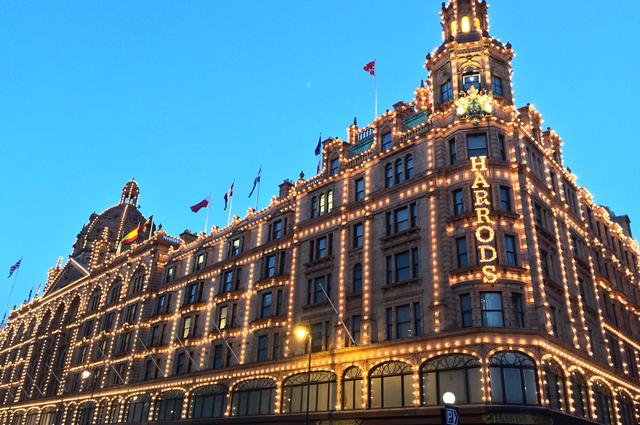
According to fashion aficionados, if you haven't been to Harrods, you haven't been to London! This department store, founded in 1849 by H.C. Harrod, is deservedly one of the three most famous landmarks in the British capital, along with Parliament and Big Ben. Today it is considered one of the most luxurious stores in the world and lives up to its motto: “To everyone, everyone and absolutely everything.”
9 Trafalgar Square
The famous square in central London, the beloved symbol of the city and the home of the British Kilometer Zero. Numerous holidays and festivals are held here, and the country's main Christmas tree is set up in winter. The square appeared in 1820 on the site of the old Whitehall stables. The place is named in honor of the victory of the British in 1805 in the naval battle at Cape Trafalgar.
35 Phone booth and double-decker bus
Red telephone booth in London Manish Prabhune
Red double-decker buses are a symbol not only of London, but of the whole of England
Even if you explore the sights of London briefly,it is impossible to ignore the two main symbols of the city and the whole of England – a red telephone booth and a double-decker bus. The appearance of red booths was associated with the invention of telephone communication at the end of the 19th century, when the first cast-iron “houses” with an arched roof and thick glass, providing ideal noise insulation, began to be erected for telephone conversations. The red color is due to the peculiarities of the local climate – against the background of London fogs, the red booth is much easier to find. The double-decker bus began its history in the middle of the 19th century – double-decker horse-drawn carriages with an open roof became its prototype. In 1923, the “follower” of the cavalry was a bus with a roof that protected from the weather. To avoid accidents in London smog, the buses were given the same bright red color.
What to see in England?
Big Ben, Buckingham Palace and Westminster Abbey are the three pillars of English tourism. In addition to these buildings, there are many museums, bridges, palaces, cathedrals and parks in England that offer fascinating excursions to tourists.
Most interesting places in England are located in London, but other cities in the country will find something to surprise their guests with. English towns and villages have a special flavor, and national parks are famous for natural beauty in all its forms.
Pier Head in Liverpool
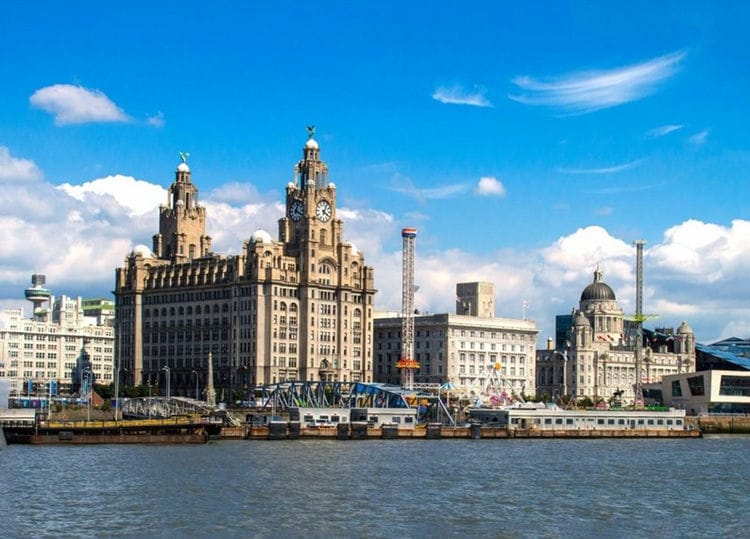
The glorious city of Liverpool has its own docks. The building located there is called Pier Head by everyone. In fact, the docks are home to a complex of three UNESCO-listed buildings.
Today the Renaissance building houses offices, the second building is known to be occupied by a trading company, and the third building is a magnificent example of Edwardian architecture.
The whole complex is made in light colors and is in perfect harmony with the docks, as well as with each other. It was in the docks of Liverpool that the documents and permits for sailing the world famous “Titanic” were drawn up. Now these docks have a memorial in honor of those killed on that ship.
Oxford University
Oxford, OX1 2JD, Wellington Square
The university city of Oxford, located northwest of London, has become famous for being one of the oldest institutions of higher education in the world. Every fifth of the city's 150,000 population is a student. However, the atmosphere of easy fun, thirst for knowledge and sincere faith in science attracts not only those who want to learn to this place.
England. Good old England. This part of the united kingdom of Great Britain is perhaps the most imbued with the spirit of antiquity, tradition and good manners.
If you want to be in the Middle Ages, then you are in York! The fortress walls of York, its cathedral, the Viking museum, the Guild House and many other buildings of the 12-17 centuries convey the atmosphere of that time in the best possible way. As if in a time machine you are carried away into distant times. While plunging into history, the question involuntarily arises in my head: why did all these lords and ladies put on jeans, T-shirts, modern costumes and accessories, taking off their wigs and hats with a veil?
In England, transport links between cities are very well developed, so getting anywhere in the country is not difficult.
The Canterbury stained glass windows make an impression! Especially when you realize that some of them have existed for over 1000 years. Cambridge and Oxford are not only the best universities recognized by the world community, but also very beautiful cities.
After a trip to England and exploring its sights, there is a feeling of tender sadness, coupled with the desire to return to these places in order to be saturated with a special state.
A magical place – Stonehenge, Sherwood Forest, London's landmark city with Big Ben and the Tower, the House of Lords and Piccadilly, as well as countless English castles fascinate with grandeur combined with simplicity and brevity. It is noticed that after a trip to England and exploring its sights, there is a feeling of tender sadness, coupled with the desire to return to these places in order to be saturated with a special state.
1 Windsor Castle
Exterior of Windsor Castle
We begin our survey with the stronghold and residence of the British monarchs, towering on a hill in the Thames Valley, not by chance. It was built in 1070, and today it is considered the most romantic building in the country. Moreover, due to the size of 580 m. By 165 m., Windsor Castle got into the Guinness Book of Records as the largest castle in the world.
10 Leeds Castle
Lake in front of Leeds medieval castle
Every tourist should see with his own eyes the most beautiful medieval building located on the lake islands near the Len River. At one time, it was used as the residence of the royal family. Here are the bedrooms of Aragonese Catherine and Lady Bailey, the banquet hall of King Henry VIII and the library of Master Boudin;
3 Stonehenge
This archaeological site is considered one of the most mystical in the world. Scientists have not yet agreed on the purpose of the building. Approximate cottage of the foundation of Stonehenge – XXX century BC Consists of stone blocks weighing up to 45 tons, spaced in rings or in the form of a horseshoe. It is estimated that several thousand people performed such labor-intensive work over 300 years. The site is protected by UNESCO.

35 Chester Zoo
Founded by the Mottershead family in 1931 with its own funds. The Chester Zoo is not funded by the state, which does not prevent it from entering the 15 best zoos in the world, according to the popular Forbes magazine. The area of the zoo is 51 hectares. About 1.5 million people visit it annually. More than 400 species of animals live in conditions as close as possible to their natural habitat, aviaries and trellises are practically not used.

24 Canterbury Cathedral
London is a true treasury of Britain, full of masterpieces of architecture, trendy clubs and other tasty finds for the tourist. But what to see in England besides London? Among the first places worth visiting is 603 Canterbury Cathedral, located in the ancient city of Canterbury in the southeastern part of the country. Unfortunately, the original appearance of the cathedral has no longer survived – it was destroyed by a fire in the 12th century, but in the process of restoration a magnificent Gothic building was erected with an attached Trinity Chapel, where the relics of the assassinated Archbishop Thomas Becket are kept. Of particular value are the colorful stained glass windows of the 12-13th centuries with biblical subjects, which can be seen in the western window. The choir of the cathedral is made in the early Gothic style, the chapels attached to it store relics, including the Chair of St. Augustine,
10 York Minster
York Minster is one of the largest cathedrals in northern Europe. The temple, located in the city of York, attracts tourists with magnificent stained glass windows. An architectural structure was built in the Gothic style. Catholic services are held daily at York Minster and anyone can enjoy their special atmosphere.
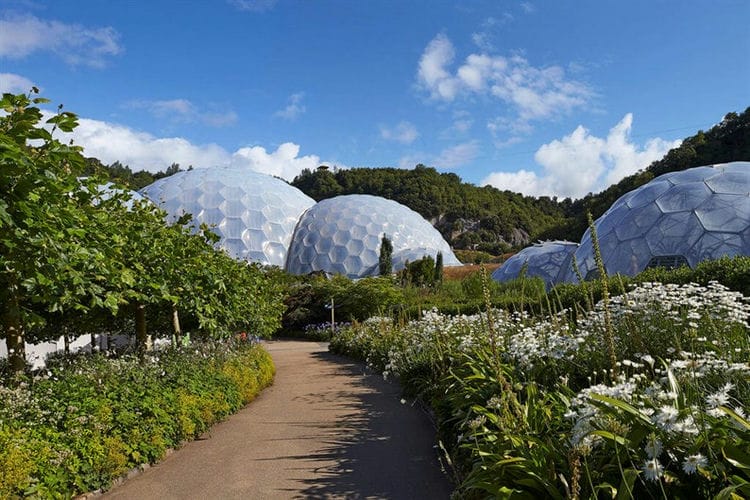
26 Project “Eden”
It is not for nothing that this place is called “the Garden of Eden. It is a botanical garden with greenhouses in which plants brought from all over the world are collected. The total area of the greenhouses is 22,000 m². They are covered with domes of an unusual shape. Each greenhouse recreates the conditions of the natural environment in which plants grow. Tap water is not even used – rainwater is specially collected to maintain humidity and irrigation.
Sherwood Forest
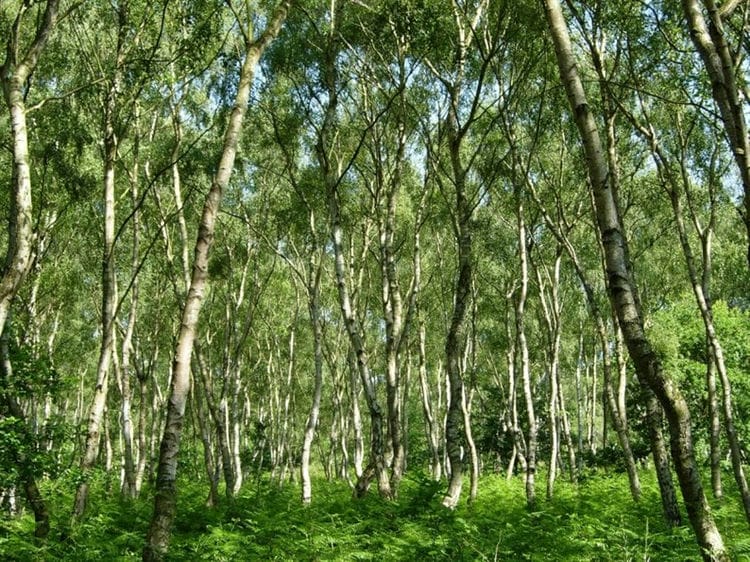
In Nottinghamshire there is a natural English landmark – Sherwood Forest. The forest is closely related to the legend of Robin Hood. It is because of this legendary character that the British and tourists regularly come to Sherwood Forest on excursions.
Approximately 50 years ago, this forest received the official status of a national reserve.
As all roads lead to Rome, all excursions to Sherwood Forest lead to a thousand-year-old oak tree. According to the legends, the famous robber was hiding in this oak. In the forest there are also places with acoustic anomalies, stones, where once upon a time the Vikings held advice. These attractions attract about 350 thousand tourists to the forest annually.
Tower Bridge in London

Tower Bridge consists of a drawbridge over the Thames. Its opening took place in 1894. When the automobile section of the bridge is raised to allow ships to pass, the pedestrian area above remains open. Today, the footpaths of the bridge are used as an observation deck. There is also a museum where you can learn everything about the history of the construction of the structure. Tower Bridge can be seen on many English postcards and souvenirs. He is one of the unofficial symbols of England.
19 Mary Rose Museum (Portsmouth)
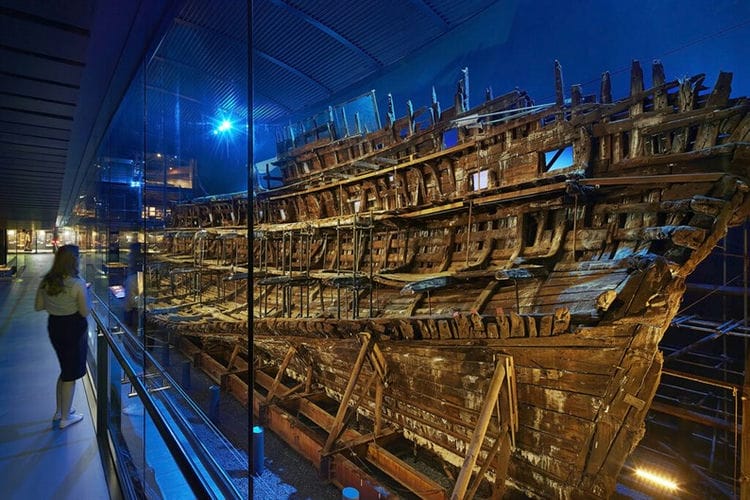
An unusual museum dedicated to the sunken ship – the flagship of the English fleet in the 16th century. Lifting of his remains began only at the end of the 20th century. The construction of the museum was difficult, the walls were actually erected around the hull of the ship. Over the remnants of the deck and masts, a complex long-term conservation work was going on. The result was that the ship, which spent several centuries in sea water, can now be viewed not through glass, but with your own eyes.
Summing up
It is impossible to give a clear and concise answer to the question of what to see in England. This country is ready to offer a lot of exciting and interesting sights to every guest. Therefore, plan the excursion route according to your own preferences in advance.
Sources used and useful links on the topic: https://traveller-eu.ru/london https://ElenaRuvel.com/dostoprimechatelnosti-londona/ https://london10.ru/30-glavnykh-dostoprimechatelnostey-londona https: // top10.travel/dostoprimechatelnosti-londona/ https://way2day.com/article/dostoprimechatelnosti-londona.html https://EnglandLife.ru/dostoprimechatelnosti-londona/ https://www.tripzaza.com/ru/destinations/luchshie -dostoprimechatelnosti-londona / https://EnglandLife.ru/dostoprimechatelnosti-anglii/ https://tonkosti.ru/%D0%94%D0%BE%D1%81%D1%82%D0%BE%D0%BF% D1% 80% D0% B8% D0% BC% D0% B5% D1% 87% D0% B0% D1% 82% D0% B5% D0% BB% D1% 8C% D0% BD% D0% BE% D1% 81% D1% 82% D0% B8_% D0% 90% D0% BD% D0% B3% D0% BB% D0% B8% D0% B8 https://www.tripzaza.com/ru/destinations/dostoprimechatelnosti-anglii/ https://top10.travel/dostoprimechatelnosti-anglii/ https://way2day.com/article/dostoprimechatelnosti-velikobritanii.html
Post source: lastici.ru