
How to store chicken eggs correctly: rules, methods, conditions and terms. How to store eggs correctly and How long can eggs be stored in the refrigerator
Content
Structure
The egg product contains the following components, depending on the origin:
- minerals – Ca, Mg, K, Fe, I, Se and others;
- vitamins – A, D, B6 and 12, E, niacin, thiamine, etc.;
- calorie content per 100 gr. – 158/663 kcal / kJ;
- protein 12.57%;
- fats 12.02%;
- carbohydrates 0.67%;
- water 73.67%.
Based on the usefulness of chicken offal, a person has a need for correct and systematic consumption. Therefore, you should know how many eggs are stored in the refrigerator (raw chicken). It is noteworthy that it is not always allowed to be kept in a cell, since under improper conditions, food products can deteriorate and lose useful micro- and macroelements.
Useful properties of eggs
Raw eggs form the basis of the diet. This is due to the following factors:
- The absence of heat treatment allows better assimilation of protein by the digestive organs.
- The vitamins included in its composition are not subject to destruction.
- Entering the stomach fresh, the testicle envelops the mucous membrane. Enzymes stimulate the digestive tract system, reduce acidity and have a preventive effect against the formation of worms.
Citizens who play sports professionally aim to increase muscle mass in a short period. Therefore, part of their diet includes eggnog and protein shakes that include raw protein. This method of saturation with amino acids is safe, and is able to maintain shape without negatively affecting the body.
In addition, the consumption of raw eggs is used in medicine as a preventive measure against diseases of the lungs and respiratory system. The yolk is used in many folk recipes for coughs together with honey and butter. Such formulations also have a beneficial effect on increasing the body's defenses, contributing to the rapid healing of colds.
Eggs from chicken and other poultry are healthy and high in nutrients. A healthy person needs to eat no more than two pieces per day.
Features of storing boiled eggs
The product, after heat treatment, is used as food on its own or in salads. In our country, it is customary to take boiled eggs with you on a trip, to the beach, on a hike, etc. In order for a spoiled product not to spoil the mood, it is important to know how much to store boiled chicken eggs in the refrigerator. After heat treatment, the product must be consumed much faster than raw.
Hard-boiled ones are recommended to be consumed within 10 days, if the shell is cracked in water, then eat it much faster. Those that are under normal conditions at room temperature, send to the table within three days. They will deteriorate in a day if stored at temperatures above 20 degrees Celsius. If you need to transport the product, for example, for a picnic, place it in the travel refrigerator. If it is absent, pre-chill the eggs strongly, pack tightly, wrap the tray in foil.
It has been noticed that eggs after Easter painting remain fresh for a week and lose their taste. The paint used for these purposes forms a protective film that prevents the penetration of pathogenic microflora through the pores of the shell. Many housewives rub the surface with vegetable oil, which increases the protective natural protective functions.
The shelf life of soft-boiled eggs is extremely short. It is important to eat them after cooking.
Factors Affecting Egg Storage
Fresh eggs retain their flavor profile depending on several environmental factors. If they are stored at home, it is necessary to ensure the optimal temperature is no more than 20 degrees, the humidity indicator is up to 80% and the minimum light penetration on the shell.
How to keep eggs for as long as possible
If six months is not enough for you and you need to increase the shelf life to the maximum, you will have to freeze them. But here, unfortunately, everything is not so simple. Eggs cannot just be taken and put in the freezer – they will simply burst when frozen.
To freeze them, you need to break them and separate the yolks from the whites. And only then freeze in separate containers.
Of course, this method should be resorted to only in case of really urgent need. Once thawed, the eggs will no longer be as tasty as they were before they were frozen.
What can happen with improper storage
If you store chicken, goose, quail eggs in the refrigerator, then a number of undesirable consequences may occur:
- Salmonellosis infection. At low air temperatures, these bacteria do not die, but begin to multiply. After consumption, they enter the body and infect it. It is possible to store eggs under such conditions only if the chicken was vaccinated against this disease or, if they were thoroughly treated with soapy water before that, then the infection will not penetrate inside through the shell.
- World scientists do not recommend keeping a protein product on the refrigerator door. They associate this with the fact that when it is opened and closed, there is a temperature difference, because of this, the process of revitalization of bacteria and rotting of the product occurs.
Accordingly, eggs can be stored in the refrigerator, but only in the lower drawer or middle shelf, but not on the door. Beforehand, you should make sure that the chickens have been vaccinated against salmonellosis. You can also store the product at room temperature, but only in a dark and cool place, avoiding sunlight.
Attention!
If the chicken has been vaccinated against salmonellosis, it is not recommended to rinse the eggs before storing the eggs. So, the beneficial protective layer is washed off, which increases the risk of harmful bacteria penetrating inside. The washed eggs must be consumed within 12 days.
Hard boiled
Hard-boiled eggs can also be stored in the refrigerator, but the appropriate temperature should vary between 2-4 degrees. Immediately after cooking, it is recommended to place the food in a cool liquid and then transfer it to a hermetically sealed plastic container. Such preservation measures will prevent the absorption of extraneous odors, since the porous shell has the property of absorbing surrounding odors. The shelf life, subject to the listed conditions, is 2 weeks.
Methods for determining that a product is spoiled
To understand that an egg is unusable and unsuitable for food immediately, an assessment of its appearance and smell will help. A rotten product has an unpleasant odor. In addition to visually determining the freshness of a product, look at the following:
- the size must correspond to the weight;
- the presence of markings on each testicle.
In large supermarkets, special devices are installed that are designed to determine the freshness of eggs. They call them “ovoscope”. With their help, the product shines through, revealing cracks, blood inclusions, dried yolk, darkening.
But when buying a large batch, there is not always the opportunity and desire to check each copy. And rotten eggs can even end up in a box with fresh ones. At home, the product is checked in the following ways:
- Before use. Immersed in a glass of water. If it floats to the surface, it means that there is an accumulation of air under the shell, and the egg is stale.
- Directly when breaking. If there is an unpleasant rotten smell (hydrogen sulfide), and the product has a dark color or unnatural inclusions, it is thrown away.
This product cannot be used for preparing other dishes. It is highly likely to cause poisoning.
Extending shelf life with any coatings
On the Internet you can find tips for preserving eggs, where they are greased with oil, petroleum jelly, lemon or lime juice, and buried in sawdust. All this is complete nonsense, which does not affect the storage duration in any way. On the contrary, it will only accelerate the disappearance. So we do not recommend getting carried away with such methods.
In most European countries, eggs are stored either directly on the counter at room temperature or on the table in the kitchen.
Why is that? European doctors say that with sudden changes in temperature (i.e. when you take it out of the refrigerator), the shell of the egg is destroyed, which contributes to a dangerous accumulation of harmful bacteria on it. And since the shell is actually semi-permeable (it only seems solid and monolithic), these bacteria can get inside.
How to check an egg without breaking – is it good or bad
If you accidentally find an unauthorized nest on the site, where your chickens secretly rush, and do not know how long they have been doing, you will need to find out if these eggs are suitable for food. Have they gone bad.
There are a couple of simple and effective ways to do this.
- Place the eggs in a bowl of water. If they fell to the bottom – everything is fine! They are fresh and edible. If they surfaced, then sad news. They should be thrown away.
- An even easier way to check the quality is to simply bring the egg to your ear and shake it gently. If you hear bursts and feel something dangling inside – feel free to throw it away. It is rotten. If everything is quiet, then it is normal, it is fresh. If you are not sure, take a guaranteed fresh one and compare its sounds with a “suspicious” comrade.
What affects storage time?
A poultry product is an essential food product, a source of useful enzymes for the stable functioning of internal organs. Therefore, the consumer should consider the shelf life of chicken eggs in the refrigerator.
Edible eggs are marketed in several categories:
- higher;
- selected;
- I, II, III.
Customers are advised to inspect the egg for shell integrity when shopping in the store. The absence of traces of droppings, blood clots, chips or other defects indicates quality. In accordance with GOST, stains, stripes arising during delivery to the store should not be traced on a commercial product.
Before consumption, testicles should be washed in a weak alkaline solution to prevent intestinal infection.
According to the regulations of SanPiN, eggs should be stored in accordance with strict regulations:
- In fresh form, the maximum period is 5-7 days when exposed to temperatures from zero to + 20 ° C.
- Quail and other dietary types – up to seven days.
- Dining category – no more than 25 days.
- The shelf life of a thoroughly washed product is ½ month.
When purchasing eggs on the market, it is necessary to use the principle of “one week”, that is, ask the seller how long the product has been stored. Then, adjust the term to 7 days – this calculation helps to reduce the risk of buying a stale product.
It has been scientifically proven that if a fresh egg is stored correctly, then it is permissible to use it even after 2 months.
Citizens engaged in housekeeping, raising poultry, are familiar with the fact that when the temperature is low on the street, the crocus is carried less often. Therefore, farmers stock up on testicles for future use.
The main condition for a long shelf life is the processing of the outer shell. After removing the goods from the warehouse, the shell must be wiped with a rag. However, wet washing, in this case, is unacceptable, since the top layer can be damaged.
Duration of storage of broken eggs
Damage to the integrity of the shell negatively affects shelf life and, over time, leads to product deterioration. Prepare broken specimens as soon as possible. It is recommended to store them for no more than 48 hours in a sealed container.
How much and how to store without a refrigerator
You can store raw eggs, observing the temperature regime, without using cooling devices. Under normal conditions, you can save chicken eggs without a refrigerator for about the same as when refrigerated.
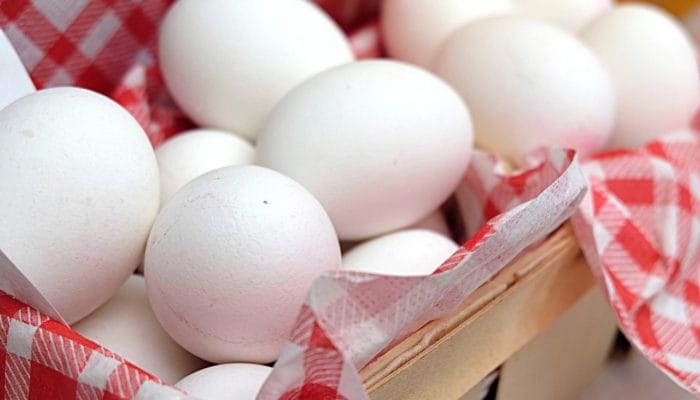
It is recommended to put all copies in a basket or box and put them in a cool, dark place out of the sun. Store at less than 20 degrees Celsius for the entire stated expiration date on the packaging. Observe a humidity level of no more than 80%.
How to store other eggs
Eggs of various birds are used for food, not only chicken, but, for example, quail. Each product has its own differences in nutritional value and shelf life. Quail have a unique valuable set of nutrients, duck and goose differ in the content of specific fats. Eggs are stored according to their ownership.
The characteristics of the strength and porosity of the shell in quail and goose are much lower, so you can keep them in the refrigerator for longer.
A dietary product at a low temperature does not deteriorate in the refrigerator for up to 11 days, and a table product for up to 30 days. You can store quail eggs for up to six months, given the good packaging and the temperature in the refrigerator not higher than 2-4 degrees Celsius. When stored for a long time, it is recommended to use them only when preparing baked goods or omelets.
Goose eggs are stored according to the above principles. In everyday life, housewives do not use ostrich eggs, but they can be purchased at the supermarket. Like others, they do not deteriorate within a month.
What is the most effective storage method
Therefore, it was necessary to find and work out a variety of ways of the best method to guarantee the safety of the final product. And we, for our part, will certainly use the proven experience, we will definitely use it.
Note. In this case, we are talking about cases where it is not possible to place eggs for storage in the refrigerator.
For example, at one time, experiments of the following nature were carried out:
For this, on July 1st, 400 completely fresh eggs were taken. All eggs were divided into 20 pieces to test 20 different storage methods. First of all, the proportion of fresh eggs was determined; it turned out to be in the range of 1.0784 to 1.0942.
Having sorted out 400 homogeneous eggs in this way, they were all stored in the same room, but using different storage methods. At the end of February, a study of eggs was carried out and the following turned out:
-
eggs stored in salt water became inedible, since the salt soaked them through;
-
wrapped in paper gave 80% bad;
-
stored in a solution of salicylic acid and glycerin — 80% bad;
-
rubbed with salt – 70% bad;
-
stored in bran — 70% bad;
-
covered with a layer of paraffin — 70% bad;
-
coated with glycerin with salicylic acid — 70% bad;
 dipped in boiling water for 12-15 seconds -50% bad;
-
immersed in a solution of alum – 50% bad;
-
immersed in salicylic acid solution — 50% bad;
-
lubricated with a solution of liquid glass – 40% bad;
-
greased with collodium – 40% bad;
-
varnished – 40% bad;
-
smeared with sod soil – 20% of the bad;
-
stored in wood ash – 20% bad;
-
immersed in boric acid and liquid glass – 20% bad;
-
immersed in manganese-sour potassium – 20% bad;
-
eggs smeared with petroleum jelly turned out to be all good;
-
stored in lime water turned out to be all good;
-
stored in a liquid glass solution turned out to be all good.
Thus, only the last three methods were found to be quite suitable for storing eggs. But it should be noted that smearing eggs with petroleum jelly takes a lot of time.
The use of lime water sometimes gives the eggs an unpleasant taste. And eggs stored in a liquid glass solution, the shell becomes so tender that it bursts in hot water.
Note. Alternatively, to maintain the strength of the shell, the water glass solution can be made less saturated. For this, eggs are placed in a container and a solution of liquid glass is poured (15 bottles of pure boiled water per bottle of liquid glass) so that it hides the eggs. The vessel is wrapped outside with newsprint and placed in a cool place. In this way, eggs can be stored for up to 9-12 months without any deterioration.
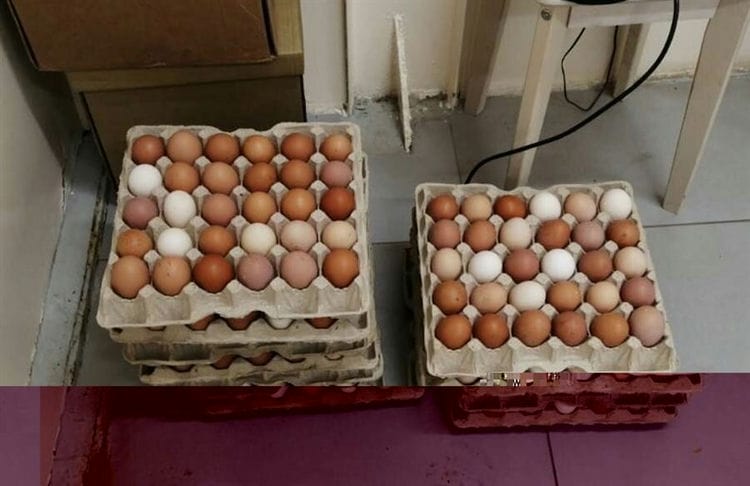
Even after long-term storage, chicken eggs are able to be tasty and not inferior in quality to fresh eggs.
It should be borne in mind that eggs in lime water can be stored for a very long time without any visible damage. Storage can last 6 months or even more. Eggs taken out of the lime water, or as they say, those in the pot, are distinguished by a completely clean shell, but the shell loses its shine and becomes dull.
In addition, it becomes somewhat thinner, and the egg gets some flavor. Such eggs are not used directly for the table, but they may well be used mainly in confectionery and bakery products.
The amount of lime is taken at the rate of 2 kg for the volume of water that can cover 1000 eggs. (The proportions are not specifically given in grams or milligrams. Since it is considered a common household situation, and not a production process according to GOST).
Wrapped in paper
Eggs last longer when wrapped in a paper towel: this will protect the porous shell from contact with humid air, the external environment. They are wrapped in food parchment, old newspaper.
Ordinary pre-crumpled sheets are also suitable. Thus, they will lie in a cool dry room for 7-10 days.
Refrigeration equipment is required only in the cool autumn and winter months. In summer, the temperature in living rooms on average reaches +25 ° C, which is 5 degrees higher than the maximum permissible norm.
The pantry is an ideal option for storing eggs in an apartment.
Immersed in a salt solution
The safety of the product is extended by immersing it in a salt solution. Salt is mixed with water in a ratio of 1 liter to 25 g. The eggs dipped in a saline solution are taken to a place protected from the bright daytime sun.
This significantly extends the shelf life of the product without refrigeration equipment, up to 26-28 days.
Soft-boiled
In the case of soft-boiled product cooking, heat treatment does not exceed 3 minutes. The method of cooking assumes that the yolk remains in a liquid state, and this affects the shelf life. The maximum shelf life is 48 hours, after which there is a high likelihood of poisoning if eaten.
Folk secrets
Before the invention of refrigerators, folk secrets and tricks helped preserve eggs for a long time. Many of them are relevant:
- Eggs are put in a bag and dipped in a saucepan with boiling water, after 5 seconds they are removed and cooled, put in a cold place. They should lie with their sharp noses down.
- Placed in a wooden box and sprinkle generously with coarse salt. Cover with newspaper, store for up to five weeks.
- Lubricate with petroleum jelly and put in a box. Store in a cool place for four weeks.
Fat
Several centuries ago peasant women came up with the idea of greasing eggs for their greater safety. The instructions for how to properly grease eggs have not changed since then, but surprisingly everything still works. The fat fills the micropores in the shell and because of this bacteria cannot penetrate there.
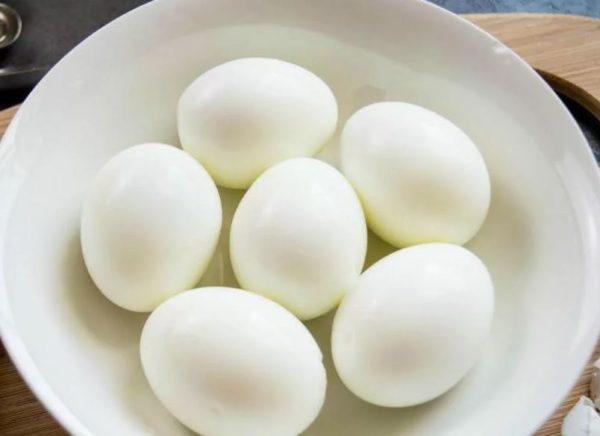
Instructions for greasing eggs:
- Pour oats at the bottom of the wooden box;
- Melt the fat, cool, carefully coat each egg with it;
- Put eggs with the sharp end down in several rows;
- Cover the eggs with oats on top, leave in the cellar;
Egg white
Lubricating eggs with white is a popular way to extend their shelf life. So, you need:
- Apply 6-10 layers of protein on the shell, apply a new layer only after the previous one has completely dried.
- After drying, wrap each egg in a paper towel or napkin.
- Put eggs in one row in a box and send to the cellar.
Paraffin / wax
Wax, like paraffin, has the ability to fill the micropores on the shell, thus creating protection against various microorganisms. For this you need:
- Melt wax / paraffin, cool slightly.
- Dip the eggs gently into the liquid.
- Then you need to cool the eggs in the refrigerator until the wax / paraffin is completely solidified.
- Wrap each egg in a newspaper, send it to the cellar.
Margantsovka
Potassium permanganate has disinfecting properties, it also kills bacteria. Potassium permanganate is especially relevant when processing eggs of dubious quality. Eggs need to be dipped for 5-10 seconds in a saturated solution of potassium permanganate. Then they can be stored anywhere.
The ideal temperature for storing eggs is 19 to 21 degrees Celsius in winter and 21 to 23 degrees in summer.
Why do we keep putting them in refrigerators? It's all the fault of popular culture. She inspired us that it is so right. And this is because industrial food production can be located hundreds of kilometers from the stores in which its products are sold.
Do eggs need to be cleaned or washed before storage
On this point, poultry farmers always have heated disputes and opposing opinions.
On the one hand, if you use eggs yourself, for your family and are not very squeamish, it is better to leave them dirty. And wash only immediately before use. But if you sell or treat relatives and friends, you can be sure that they will very quickly stop asking you for them.
So the first tip is to keep the nests as clean and fresh as possible. Use a thick layer of straw. Change the bedding often. To get the eggs as clean as possible right away.
Unfortunately, this still does not provide a 100% guarantee that you will only receive clean eggs. Sometimes they will appear dirty. In this case, try not to wet them, but to wipe them with a dry cloth to remove the adhering dirt.
If dry cleaning is not possible – only then rinse them with a soft sponge. Moreover, this should be done exclusively in warm water!
Here the physics is simple: the structure of the shell is porous and passes moisture and air well. When you wash eggs in warm water, the content increases when heated and does not let anything inside. If it is cold, the contents shrink and draws in dirty water along with pathogenic microbes.
But keep in mind that when washing, you wash off a special protective film from their surface, which prevents bacteria from penetrating inside.
Storage of eggs on an industrial scale
As mentioned above, eggs are a product with a relatively short shelf life. In the conditions of the modern market, it is simply necessary to increase this period.
On an industrial scale, the following methods are used for this :
- storage at low temperatures and in a refrigerated state;
- in a lime solution;
- in thin synthetic films;
- using a coating with special oils.
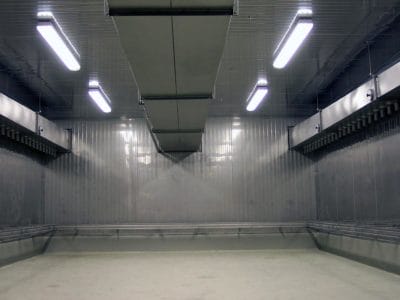 All of these methods require compliance with certain conditions :
- Low humidity level.
- High quality ventilation.
- Constant air temperature from 8 to 10 degrees.
- Temperature control (sharp fluctuations leading to condensation are unacceptable).
The most common way to provide such conditions is to use cold storage rooms.
How to store eggs in refrigerated chambers :
- Pack in cardboard boxes or wooden boxes.
- Cool in a special chamber, gradually lowering the temperature.
- After that, you can put it for storage at a temperature of minus 1-2 degrees and a humidity of 75-80 percent.
In the conditions of industrial chicken rearing, eggs are usually subjected to an ovoscopy procedure.
For incubation
Hatching eggs can be stored for 5-6 days under appropriate conditions without compromising their quality.
The optimum temperature for storing eggs is + 8-12 ° C, with a relative humidity of 75-80%. Such conditions are created in the egg storage – in a special room for storing eggs. Good ventilation is important, but there should be no drafts.
The position of the eggs during storage is also of great importance – they need to be laid with the blunt end up. If eggs are stored for more than 5 days, especially in a horizontal position, they must be turned 90 ° once a day.
In the table below you can see how the shelf life of the eggs affects the hatching of the young:
| Shelf life of eggs (day) | Percentage of young stock to the number of fertilized eggs | ||
| chickens | ducklings | goose | |
| five | 91.6 | 85.7 | 79.8 |
| 10 | 82.5 | 80.0 | 72.7 |
| fifteen | 70.3 | 73.5 | 53.7 |
| twenty | 23.5 | 47.2 | 32.5 |
| 25 | 15.0 | 6.0 |
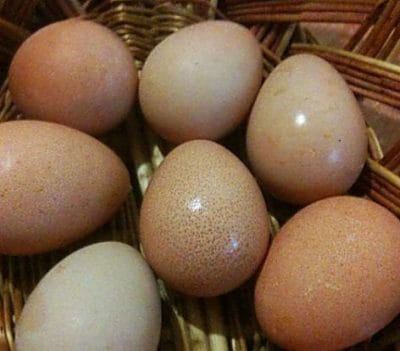 Incubation of eggs is a process that requires strict adherence to certain conditions. We have prepared detailed materials for you on this topic. Read about storage temperature, the incubation process at home, and the mode of the process.
Hatching egg storage videos:
Chickens are not the only poultry whose chicks can be hatched independently in a country house or farm. We bring to your attention a series of interesting materials about the incubation of eggs of turkeys, peacocks, Indo-ducks, guinea fowls, pheasants, geese, ducks, ostriches, quails, musky ducks.
Shelf life of eggs
How long eggs can be stored in the refrigerator depends on their type and freshness. Those that are assembled at the factory have a clear criterion for counting the expiration date – the date on the shell. For factory eggs, the shelf life is 1 month, for domestic eggs – 3 months.
Chicken eggs are also subdivided into dietary and table eggs. The former must be eaten within a week after production, the latter are allowed to be sold in 25 days. Fresh eggs in a brown shell are stored longer, since it is thicker than white.
If all storage rules are followed in the supermarket, then the shelf life of eggs can be up to 30 days. The shelf life is influenced by the type in which the purchased product is located.
| Chicken Egg Type |
Approximate shelf life
(in days) |
| raw | 28-30 |
| hard boiled | 10-14 |
| boiled soft-boiled | 2 |
| peeled boiled | 3 |
| cracked boiled | 3 |
| raw broken | 2 |
| Easter, if it was dyed with natural dyes | fifteen |
| chemical dyed | 2-3 |
| sealed in thermal film | four |
It is equally important to remember about humidity, it should not exceed 85%, otherwise the product will quickly deteriorate and not suitable for long-term storage.
After cooking, pay attention to the color of the protein, if it is gray or bluish, then it is better to discard the egg – it is spoiled. In any case, you cannot store boiled chicken eggs for more than two weeks (this is the shelf life in the refrigerator).
Storage Regulatory Requirements
The permissible shelf life of the product is regulated by the standards – GOST 31654-2012 “Edible chicken eggs – technical conditions”. The regulatory document and SanPiN provide for:
- dietary – no more than a week;
- canteens – from 25 to 90 days.
The timing of the last category is influenced by the temperature regime. If the storage is carried out in conditions where the thermometer values are maintained within the range of -2 … 0 ° C, the allowable period is 3 months from the date of production. When the temperature is 0… 20 ° C, the maximum duration is 25 days.
Does the date on the package matter
On cardboard boxes or paper inserts that are placed in plastic containers, the date of packaging is indicated. The number on the package does not mean that the egg was produced on that day. Important information is printed on the shell. On the egg, the date of sorting is indicated when the hen laid it – plus 1 day.
It is better to choose copies that are less than seven days old from the date of sorting. They contain more nutrients.
But eggs are not always dated. More often, you will find the following information on the shell:
- Category (SB – selective, C1 – first category, C2 – second).
- The name of the poultry or farm.
Quail and chicken – is there a difference?
Quail eggs are considered the most common after chicken eggs. This variety has individual properties, is characterized by reduced size and weight. A characteristic external feature is a monochrome color interspersed. Quail products are often used for cooking and making exquisite sauces of high gastronomy.
The relatively small size adversely affects the long-term storage capacity. It is not recommended to consume the product raw and half-baked after 10 days of storage.
Some varieties may not lose their taste and quality within a month, provided they are in the refrigerator.
Conclusion
How to store eggs: the safest option is to keep the temperature around + 2 ° C and 85% humidity. A refrigerator is used for storage, as well as a balcony and room conditions. The average shelf life is 25 days, in the freezer it increases to a year.
Once defrosted, food must not be re-frozen; it is used for cooking immediately. At home, eggs are stored in wooden boxes in a dark place. Vaseline, protein, potassium permanganate, salt are used as preservatives.
Sources used and useful links on the topic: https://MoiPrava.pro/produkty/godnost/srok-hraneniya-yaits-v-holodilnike https://iHouseWife.ru/sovety/hranenie-yaits https://hozzi.ru/ hranenie / syrye-yajtsa-v-holodilnike https://zen.yandex.ua/media/id/59e996c0fd96b1074734e7d9/chto-vy-doljny-znat-pro-hranenie-kurinyh-iaic-5a95510c3c50f7f3e365e077 https://sgushhenka.ru/ poleznye-sovety / yajca-v-xolodilnike.html https://yajka.ru/poleznoe/srok-godnosti-yaits.html https://korysno.pro/pochemu-nelzya-hranit-yajtsa-v-holodilnike/ https: //zen.yandex.com/media/bayoun/kurinye-iaica-kak-hranit-bolee-6-mesiacev-bez-holodilnika-5e7c4d5420c88d0211c244aa https://comp-plus.ru/hranenie/kak-pravilno-hranit-kurinye-yajtsa-pravila-sposoby-usloviya-i-sroki https://rem.ninja/kuhnya/hranenie/kurinyh-yaic.html https: //zaokotak.ru/produkty/hranit-kurinye-yaytsa.html/ https://microel.info/inform/118-save-egg https://selo.guru/ptitsa/kury/vyrashhivanie/inkubatsiya-yaits/usloviya -hraneniya.html https://KeepOK.ru/srok-godnosti-yaits
Post source: lastici.ru