
How to care for aloe at home. How to properly care for aloe at home
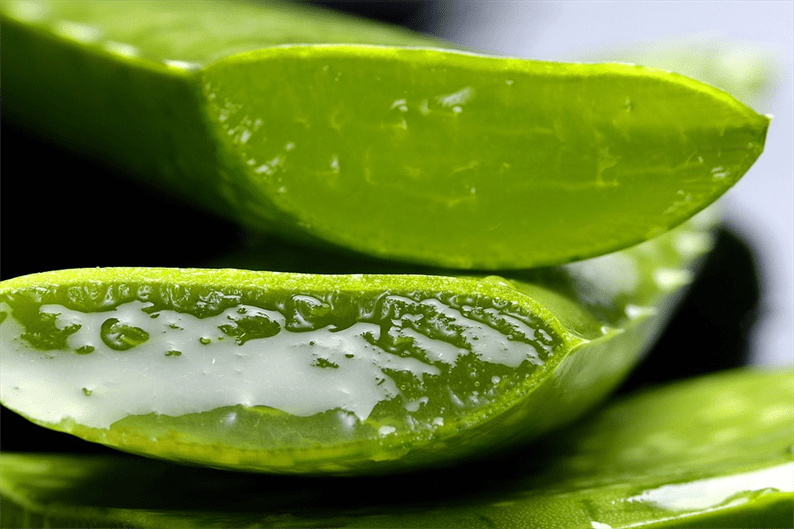
Content
Where to put aloe
Choose a well-lit place for the plant, such as a western, eastern, or southern windowsill. In the northern, especially shaded, aloe there will be little light, and over time, the flower will stretch out, grind and lose its decorative effect.
Do not put the aloe in the shade, this plant needs good lighting / greenandvibrant.com
If the plant has been in the shade for a long time, do not move it directly to the sun's rays. Adapt to bright light gradually, leave in the morning sun for half an hour to an hour at first, and then gradually increase this period.
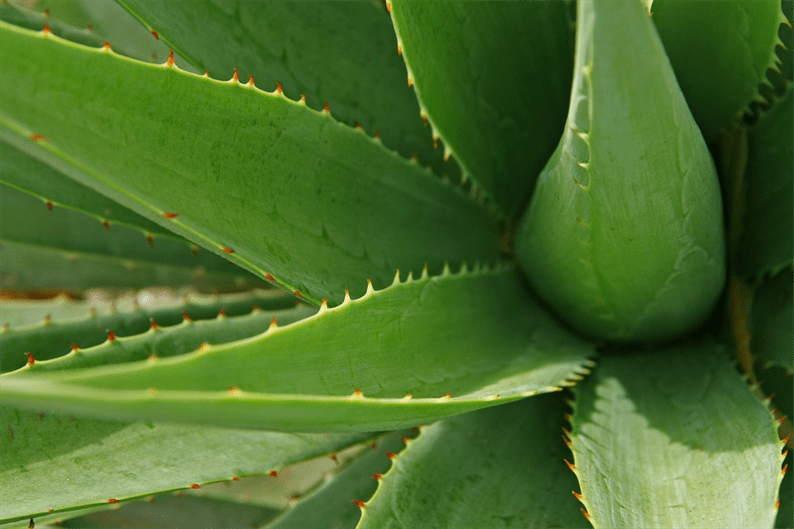
From spring to autumn, aloe feels fine at normal room temperature.
In warmer months, it can be taken out onto the balcony. Outdoors, choose a location where the plant will be protected from rainfall. Due to frequent rains, the soil in the pot will swamp and the roots will begin to rot.
Comfortable winter temperature is 13-15 ° C, but you can keep aloe even at normal room temperature. During this period, it is desirable to provide additional illumination with lamps.
How to water aloe
Use filtered, boiled or settled water at room temperature. From the cold, the roots can begin to rot, and from the usual tap water, a white bloom will appear on the soil over time.
Water in moderation. From spring to autumn, let the soil in the pot dry by about a third before the next moistening. You can check this simply with your finger or a wooden stick with a blunt end. Be careful not to damage the roots.
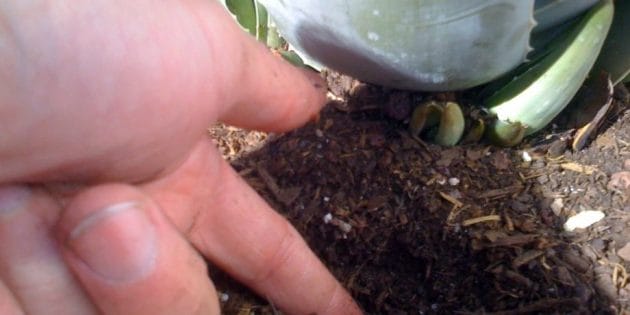
Do not water the plant if the soil does not dry out enough.
In winter, keep the potted soil cool and dry completely, and at normal room temperature, adhere to the watering schedule you follow the rest of the year.
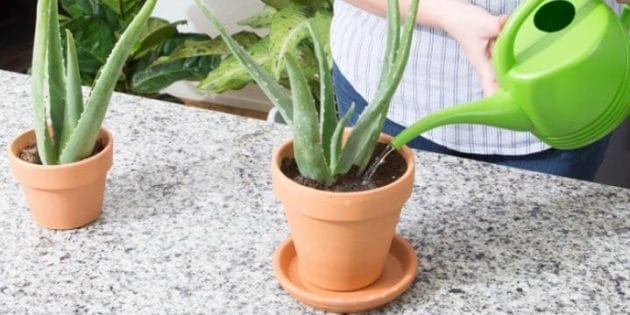
Avoid bogging in the pot
Pour water from the top into a pot or a sump, whichever is more convenient for you. After 15–20 minutes thereafter, remove the remaining moisture from the pallet.
Spraying and additional humidification of the air with aloe is not needed.
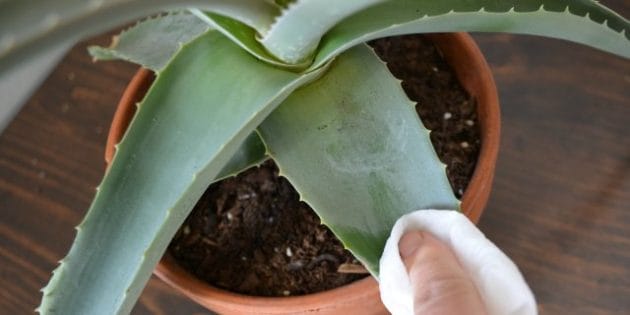
Regularly remove dust that settles on the plant / getbusygardening.com
To remove dust from the leaves, gently wipe them with a damp cloth or cotton pad. If desired, arrange a warm shower for the plant, before that, cover the ground in the pot with a bag.
Types of homemade aloe
In total, there are about 500 varieties of aloe, including wild and hybrid plants. In the wild, aloe is a shrub plant that grows 6 to 8 meters in height. Despite the fact that initially aloe grew in hot, dry climates, succulent grows well at home. Most often, in apartments and houses, you can see herbaceous specimens of a much more modest size than their wild relatives. There are other varieties of this houseplant.
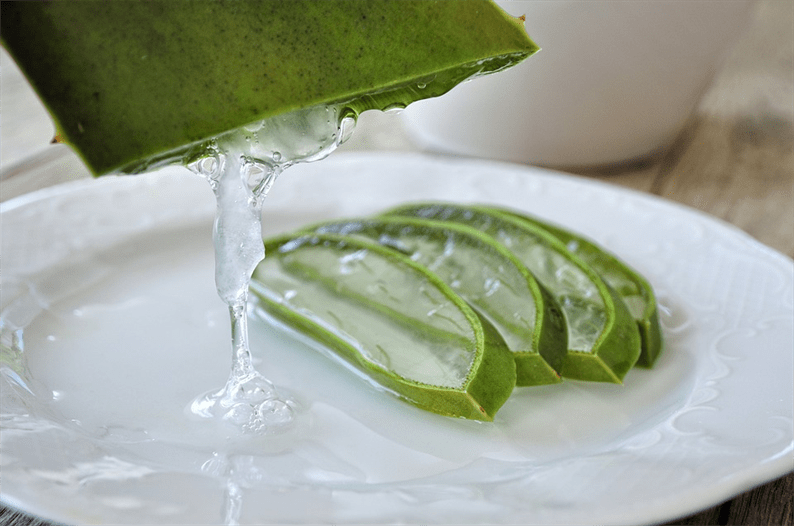
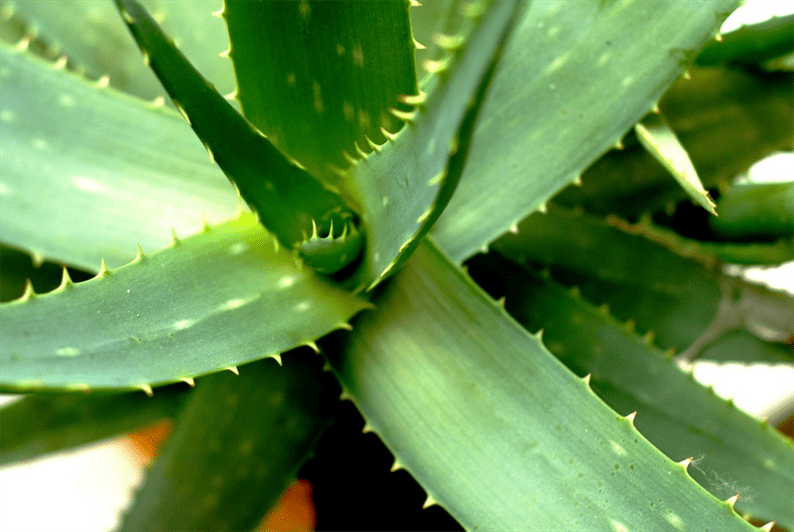
Aloe is a short trunk or stem that produces thick, xiphoid leaves that are collected in rosettes and arranged in a spiral. The length of the leaves of some species reaches 60 cm. The leaves can be smooth or covered with thorns and cilia, depending on the variety. The pulp of the leaves is divided by cells, which retain moisture during prolonged drought. During flowering, a long arrow is released from the rosette of leaves, at the end of which is a spike-shaped flower with tubular petals. The color of the petals is white, purple, yellow or orange.
| Variety name | Description |
|---|---|
| Aloe tree (agave) | The most common indoor aloe with abundant green mass. The leaves are sword-shaped, green, the surface is velvety, along the edges there are soft thorns. The length of the leaves is about 30 cm.The height of the agave sometimes reaches 1 m.With proper care, the plant lives for about 20 years |
| Aloe real (Aloe vera) | Used in the culinary and cosmetic industry. It grows in the form of lush rosettes, the trunk of the plant is weak. Leaves are grayish-green in color, the surface is slightly corrugated |
| Aloe tiger (variegated) | The plant is valued for its original appearance, and is more often used as a decorative plant. Height up to 30 cm, leaves are wide, triangular, dark green with white transverse stripes. In summer, it can bloom with yellow, red or pink inflorescences |
| Aloe awesome | A large plant with thick, fleshy leaves. The surface of the leaves is covered with numerous strong red-brown spines. Despite the unpleasant appearance, the juice of this flower is actively used in pharmacology and cosmetology. |
| Aloe soap | Nice looking flower. The broad leaves form a rosette, which in turn is attached to a small, sturdy stem. The leaves are dark green in color with numerous white spots, brownish thorns are located along the edges. Blooms in yellow, orange, red and pink flowers |
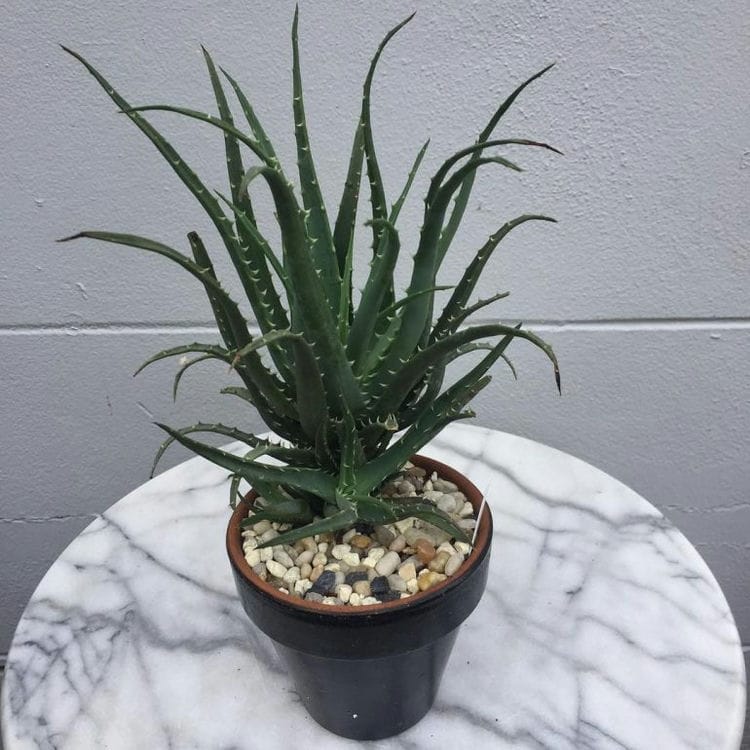
| Aloe spinous | Miniature bushy plant. The leaves are connected in a large basal rosette, gray-green with white blotches, along the edges there is a white jagged border, at the end forming an awn. It blooms with orange-red tubular flowers |
Growing aloe at home
The procedure for growing and caring for aloe is quite simple. It does without moisture and feeding for a long time due to its ability to retain water and nutrients in the leaf cells.
However, for the correct growth and development of this flower, it is necessary to follow some rules, regardless of whether the plant serves as a decoration at home or is grown for medicinal purposes.
Seat selection
Like many houseplants, aloe needs plenty of sunlight. For this reason, the place for it should be as illuminated as possible. Usually aloe is placed near windows that face the south, southeast or southwest side.
In winter, the flower tolerates a lack of light well and does not need additional lighting. In summer, the plant can be moved to a veranda or balcony, fresh air will help it harden and grow stronger. But at the same time, the flower must be protected from drafts. It is important to remember that the scorching rays of the sun can harm the aloe, so on hot summer days, especially in the afternoon, it is advisable to leave the plant in the shade.
Temperature regime
In the summer, aloe feels great at a temperature that is comfortable for all the inhabitants of the room and does not need special conditions. The average summer temperature for a room with a plant is from +22 to +26 degrees.
In winter, the flower is at rest, for proper development it is sent to a room with a temperature of +12 to +15 degrees. Cooling below +10 degrees has a detrimental effect on the condition of the plant.
Watering
Despite the fact that aloe can do without moisture for a long time, the plant must be watered regularly in order to keep it healthy. But it is important not to overdo it, as excessive watering can cause rotting of the root system.
The main reference point for watering is the moisture content of the soil in which the flower grows. The dried top layer of the substrate is a signal that the plant needs moisture. In the summer, an average of 1-2 waterings per week is sufficient. In winter, one watering per month is enough and only on condition that the earthen lump has dried out completely.
Water for irrigation should be at room temperature, separated, in the process it is important to ensure that water does not get into the outlet. It is necessary to empty the sump after watering. Some gardeners recommend that instead of the traditional method of watering with water from above, lower the pot with the plant in water for 10 minutes, and then return it to an empty tray. This helps to avoid decay of the root system and keep moisture out of the outlet.
Spraying is carried out only in summer, the sprayer should be at the maximum distance from the leaves. This procedure can be replaced by gently wiping the leaves with a damp cloth, and it will also help clean them of dust.
Content temperature
How to care for aloe? If we talk about the temperature regime, then the flower is best installed on a window from the south or east side. In this case, the plant will not be able to freeze and at the same time will receive the greatest amount of light. When it gets cold, be sure to place the pot on the warmest window. Care must be taken to ensure that the temperature does not drop too low. Otherwise, the aloe will stop blooming and developing. Since this plant originated in Africa, this means that it is dependent on sunlight, and therefore on heat. Nevertheless, home room temperature is quite enough for this flower.
If we talk about the minimum allowable temperature in the room, then for aloe in a pot it is +15 degrees. It is undesirable for it to go lower. If the plant begins to freeze, the foliage will become more lethargic and lifeless.
If it is a cold winter, then in this case it is recommended first of all to insulate the windows on which the flowers are located, and also to ensure that there are no drafts. You can put a sheet of polystyrene or other warm material on the windowsill, which will allow you to organize the elevation and prevent the pot from contacting the cold windowsill. This will prevent hypothermia through the so-called bottom ball of soil. If the plant is very cold, then in this case, the roots may begin to rot. It is very difficult for the agave to recover after this.
What kind of soil is needed
Aloe care in this regard requires careful attention. This also includes preparing the correct ground. Most experts in this case recommend giving preference to slightly acidic soil compositions. This ideal soil for aloe consists of turf and leafy soil, humus and river coarse sand. Also, don't forget about drainage. In this case, you can use ordinary broken stones. And if a transplant is made, then before this procedure it is necessary to cleanse the roots of aloe from the old earth and process them with charcoal.
Top dressing
Considering how to care for aloe, this important step should not be missed. Like any other plant that is in the room, the agave also needs to be fed periodically. It is important to consider that only healthy plants are fertilized. If aloe is sick, then first of all it needs to be cured. After transplanting a damaged flower, it is recommended to fertilize it no earlier than 3 months later.
It is also worth paying attention to the fact that any fertilizers are applied exclusively after watering. It is recommended to feed the plant exactly when it is actively growing. In order to determine how to care for aloe, the description of the plant should be studied in detail and select the optimal feeding for the agave. For example, experienced florists recommend the Power of Life, Agricola and Bona Forte products.
It is also recommended to apply fertilizers through the pallet. In this case, you can protect the plant from the possible aggressive effects of certain components.
Root pruning
This procedure is usually performed in the process of transplanting or planting a fairly mature aloe. In this case, the roots of the plant are pruned. A similar manipulation is performed so that the plant grows faster in new soil. Foliage trimming is also carried out. Thanks to such manipulations, it is possible to control how wide the aloe will grow. For example, if you want the flower to grow up or not rest against the walls of the pot, then in this case the leaves and shoots located on the sides are removed.
Reproduction
This is another important step in how to care for indoor aloe. As a rule, such procedures are performed simultaneously with plant transplantation. The easiest way to get a new flower is from an aloe leaf. To do this, during the transplantation process, you need to cut off several mature leaves, on which rather hard thorns have already formed. After that, they are left to dry for a while. In the next step, the leaf plates are planted directly into the ground. The land must also be prepared.
In this case, it is necessary to mix leafy earth, sand and slightly moisten the soil. After that, the future sprout in the pot must be placed in a fairly bright place, where the temperature is 15-18 degrees Celsius. It is worth being patient, since the first root of a young seedling does not appear quickly. This does not mean that you need to start zealous and water the plant every day. This is completely normal, so you just need to wait a little longer.
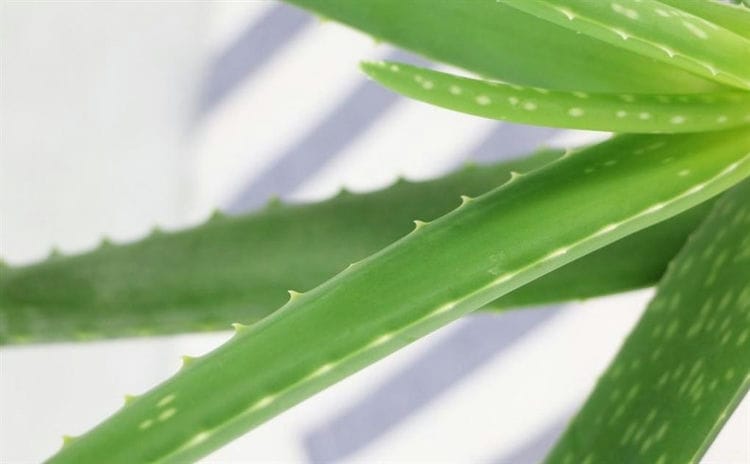
If you take good care of such a young plant, feed it and monitor its health, then after three to four years flowers will begin to appear on it. Aloe vera (how to care for it, described in the article) is really capable of blooming. Few people know about this. However, aloe pampers with its beautiful inflorescences only those flower growers who are most fortunate.
Lighting
Do not forget that the agave is from Africa, so it needs bright sunlight. The best place for a plant is a windowsill by a south-facing window. A sufficient amount of sun during the active growing season will have the best effect on the agave: the stems will be strong with rich green leaves.
In winter and cloudy weather, it is necessary to provide the plant with additional illumination using special phytolamps.
If in winter, during the hibernation period, the aloe received little light, then with the onset of bright sunny days, it should be shaded for the first time. A sudden change in scenery can harm the plant.
How often and with what to water?
You should be careful with watering – excess moisture has a bad effect on the agave. It leads to its rotting or even death.
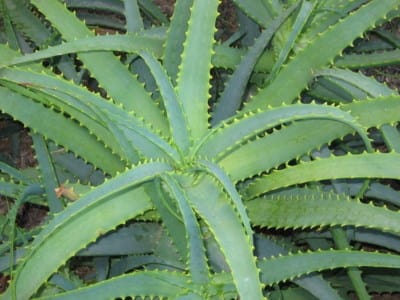
- During the active period of growth in summer and spring, watering is carried out abundantly, so that the entire substrate in the pot can be saturated with moisture. Excess liquid is allowed to drain into the pan, then it is emptied.
- The next watering is carried out only after the final drying of the top layer of the soil.
- In autumn and winter, the frequency of watering is once a month.
For irrigation, use water at room temperature, previously settled for 10 hours.
In the process, make sure that water does not fall on the rosettes of the leaves, this can lead to decay.
Soil composition
You can prepare the nutrient substrate for the agave yourself. To do this, you need to mix coarse sand, leafy soil, humus and sod in a ratio of 1: 1: 1: 2. Add a handful of charcoal to the composition, and when planting a plant, provide it with good drainage from broken brick or expanded clay.
You can also purchase ready-made soil for succulents. Make sure that it contains all the same sand, leafy and turf soil.
Pot
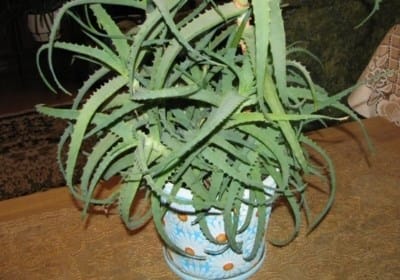 Only the size of the pot is important to the age, the shape can be any. The plant has a fairly powerful root system, the lack of space will immediately affect the appearance of the plant:
- the leaves will begin to dry out;
- the stems bend.
It is very important that there are large holes at the bottom of the pot to drain excess water. One of the main conditions for the normal development of aloe is good aeration of the roots.
How to feed?
Aloe agave is fed only in the phase of active growth (period from spring to mid-autumn) once every 3 weeks in moist soil. At the same time, complex fertilizers or fertilizing for cacti and succulents are used. Transplanted plants do not need additional feeding in the first month.
Organic fertilizers are contraindicated for the agave, from which the leaves of the plant become unnaturally swollen.
During feeding, make sure that fertilizers do not fall on the leaves, this can lead to chemical burns.
Watering methods
There are two ways to water a succulent: top and bottom. Each has its own advantages and disadvantages.
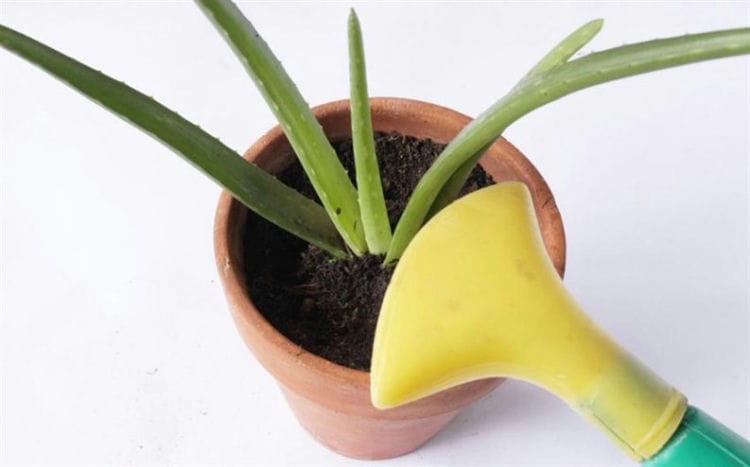
- Top, that is, with a watering can. Principle: water is poured into the pot from above. The earth is watered, but not the leaves. You need to pour until the water seeps into the pan. Pour the liquid out of the pallet. Advantage: the entire earthen lump is moistened, all roots, especially thick ones, receive moisture. Disadvantage: with a small amount of liquid, the lower layers remain dry, and the thin roots do not receive water.
How to properly water aloe at home
Aloe will develop in the best way in those conditions that are as close as possible to natural ones.
In his homeland, it rains not often, but abundantly, therefore, the following factors should influence the frequency of watering a succulent in an apartment:
- Season: in warm seasons (spring, summer, in the first half of autumn), water should be plentifully no more than 1 time in 2-3 weeks, and in cold seasons even less often – 1 time per month and in moderation. In summer, it is advisable to carry out water procedures in the evening, and in winter – in the morning.
- Succulent Age: Young flowers are in smaller pots, in which the soil dries out quickly, so they need more frequent watering (every week). Older plants are less likely to be asked to drink, but in large quantities.
- Air humidity in the room: the drier the air in the room, the faster the soil in the pot dries up and the more often it needs to be watered. If it is damp outside (rain or fog), it is better to postpone watering.
- The size of the root system also affects how many times the flower needs to be watered. The more space the root takes in the pot (especially if it has completely filled it up), the more often it needs to be moistened.
- The material from which the pot is made (clay, plastic): in earthenware, the flower needs watering more often than in plastic, since the clay absorbs a certain amount of water each time.
![How to care for aloe at home. How to properly care for aloe at home]()
Watering features
Proper care during planting and transplanting of aloe is essential. Water procedures during these periods have their own characteristics.
Watering the shoots
Most often, aloe is propagated by cuttings. Proper soil moisture is necessary for the sprouts to take root and take root.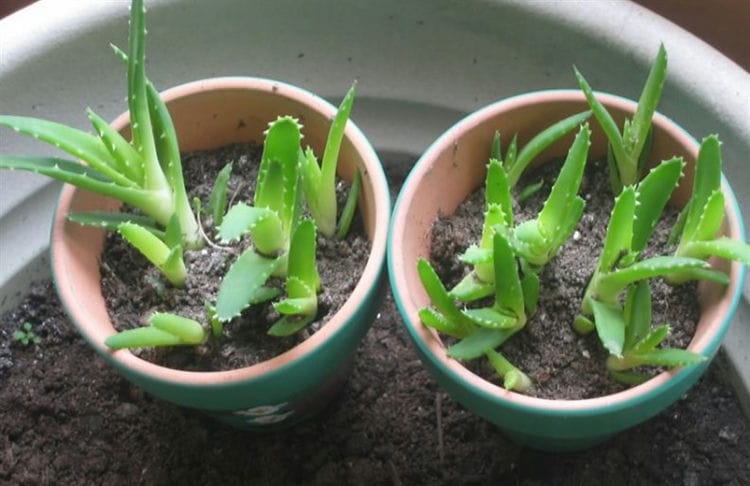
The planting process is carried out as follows:
- At a freshly cut cutting, the place of the cut is sprinkled with coal powder. Then it is left to dry for several days.
- The shoot is planted in a container with wet sand (previously disinfected) for rooting. You need to water as the sand dries, but very carefully so that the sprout does not start to rot.
- When the roots appear (after 1-2 weeks), the shoot is carefully transplanted into a pot with soil for succulents.
- The watering regime is usual for young plants – once a week.
Watering the seeds
Sowing seeds is not that popular.
It is performed in the following order:
- Pour a special substrate into a previously prepared pot.
- Slightly press the seeds into the ground at a distance of at least 2 cm from each other.
- Sprinkle with disinfected river sand on top.
- Put the pot in a container with water.
- When the soil surface is moistened, the pot is removed from the water and placed in a warm place (+ 20 … + 25 ° С).
- Make sure that the soil is damp but not wet.
- After 3 days, the first shoots should appear.
When transplanting
It is recommended to transplant aloe no earlier than after 3 years. Watering stops two weeks before transplanting. There are two types of transplantation: with a lump of earth (transshipment) and without it.
Transshipment process:
-
The plant is pulled out of the pot along with the lump.
-
A drainage layer is poured into a larger pot.
-
Insert a lump and pour in the required amount of new earth, slightly compacting it.
-
Sprinkle with plenty of water.
Aloe transplant without earth coma:
- The flower is removed from the pot, carefully removing the dry soil from the roots.
- In a new pot with drainage, the roots are carefully placed at the bottom, gradually adding the prepared substrate and compacting it.
- The layer of earth should be 1 cm below the top edge of the pan.
- Sprinkle the surface with river sand or expanded clay.
- Watering can only be done 4–5 days after transplanting, when the plant has coped with stress.
Watering and simultaneous feeding for aloe at home
Provided that the plant is planted in fertile soil, fertilization for aloe is required only a few times during the growing season. Begin to feed the transplanted plant after 2-3 months or more, or after the emergence of young shoots.
Special fertilizers for succulents and cacti are added to the irrigation water at the dose indicated by the manufacturer on the package.
It must be remembered that only healthy people can be fed aloe. Weakened, sick must first be cured. Succulents affected by pests relieve uninvited guests and give time to recover from the problem.
Before fertilizing, the soil is watered to avoid burns from the effects of nutrients on the root system. It is best to irrigate with fertilizers on cloudy days or in the late afternoon. It is important to observe the measure in feeding aloe, an excess of fertilizers is much more harmful than a lack of them.
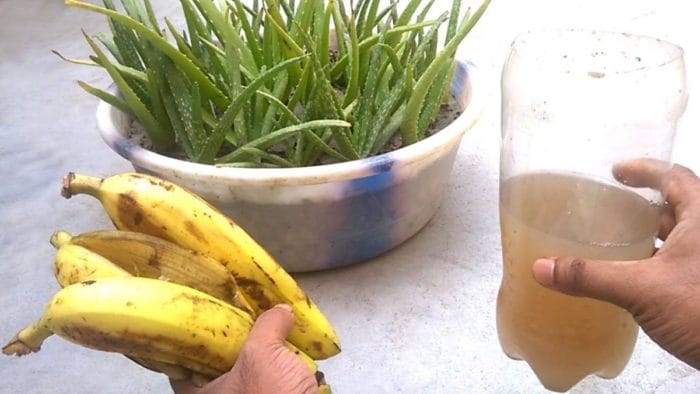
Some growers practice feeding the succulent with folk remedies. For example, water the plant with warm sweet water – dissolve 2 teaspoons of sugar in 1 glass.
Finely crushed eggshells are used as a source of mineral fertilizers. Before use, it is well washed and dried. Powdered shells are poured into 3 liters of hot water and infused for a week. The resulting infusion is watered with aloe. Many useful microelements contain water from washing various cereals – rice, buckwheat and others. It is also used to water aloe at home.
Infusion of onion peels well destroys the pathogenic microflora of the soil mixture. 15 g is poured into 6 liters of warm water and insisted for 5 days or boiled for 3 minutes. and leave to cool for 2 hours, then water the succulents.
Care problems due to improper watering regime
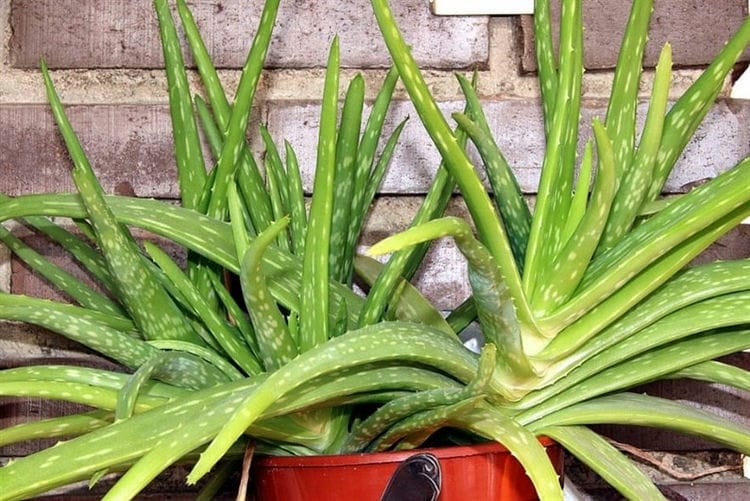
Most of the mistakes in caring for aloe are associated with a violation of the irrigation regime – a lack of moisture or its excess.
If the foliage of the succulent turns yellow and softens, it means that waterlogging is observed, and it is necessary to reduce the frequency of irrigation or the volume of irrigation water. The drying tips of the leaf plates will tell the grower that the aloe needs additional feeding, and nutrients must be added to the water for irrigation.
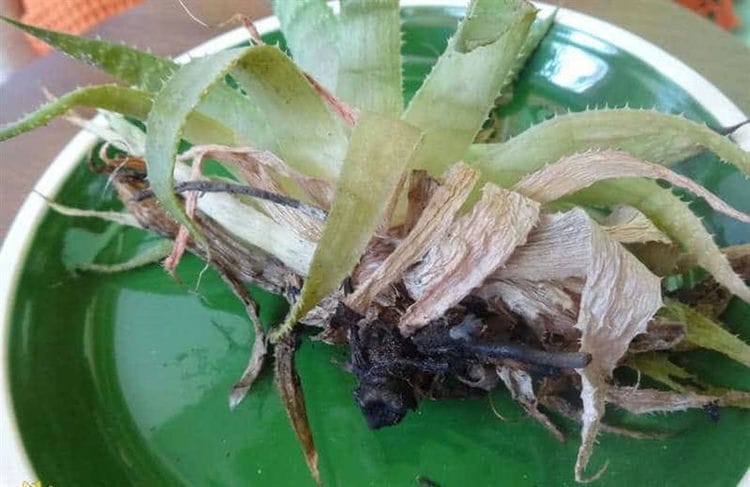
From excess moisture, rotting of the root collar begins and then the entire root system. Most often this happens when the plant is kept in winter at low indoor temperatures. Root rot can only be cured at an early stage. The succulent is removed from the pot, carefully examined, the areas of the root system damaged by rot are removed, treated with any antifungal agent and planted in a new soil mixture with a high content of sand.
Watering is rare and with a small amount of water, but they begin to moisten not earlier than 3 weeks after transplanting. If the root system is completely rotten, the plant can only be cut using healthy shoots and the top.
How to water a plant
Aloe flower: home care and main varieties
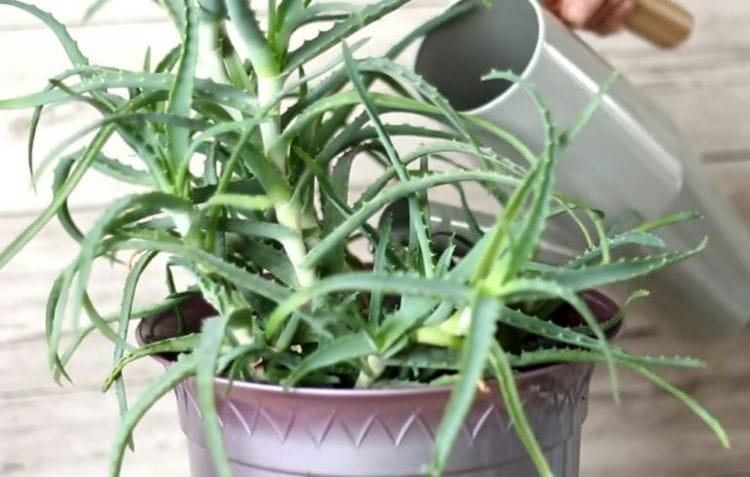
Depending on the age of the aloe, two watering methods are used:
- Young plants are moistened with preheated liquid through the bottom of the pot. To do this, you can put the aloe in a deep container of water or pour water directly into the pan. This method of irrigation is considered to be as gentle as possible, since when using it, useful substances are not washed out of the soil.
- The land with adult plants is watered abundantly from a watering can, avoiding contact with the leaves – the accumulation of liquid in the aloe sockets can lead to rotting of the stem. In order for the soil to absorb all the moisture, it is preliminarily loosened. No need to direct a stream of water to the roots – they can become bare.
Important! Aloe should never be sprayed. This will not be beneficial, but only harm the flower – the leaves may burn or begin to rot.
In case of dust accumulation, the foliage is wiped with a damp cloth or cotton pad.
An hour after watering, the remaining water must be drained from the pan.
Depending on the season
Each season has its own characteristics of watering the agave.
After winter, the plant needs more moisture, which it needs to grow. In the spring, it is watered once a week, and in the summer the interval is reduced to twice a week.
In late autumn and winter, the bush requires almost no watering, since it is at rest.
How to water seeds
Seed propagation is a difficult and not the most popular way to propagate aloe.
The germination process is as follows:
- The seeds are soaked in a weak solution of potassium permanganate and placed in a container with previously loosened soil, slightly pressing them into the surface. The distance between them should be about two centimeters.
- A small layer of sand is poured onto the ground.
- The container is lowered into a tray with warm water for a while.
- After moistening the soil, the container is transferred to a warm room. Before the seeds can sprout, the ground must remain moist.
After the first shoots appear, the plant will need to be watered sparingly once a week.
Water quality for irrigation, which is better to use
Watering aloe should only be done with soft water, the temperature of which should be several degrees higher than room temperature. In the summer, the water is additionally heated. Too hard water forms plaque on the soil, and cold water can lead to root rot.
How to water dracaena for proper growing at home
There are several ways to prepare water for irrigation:
- Pour filtered or boiled water into a container and leave for a day.
- Freeze for several hours. Then put it to stand for at least a day.
- Add a little citric or acetic acid (5 g per liter) to the purified water.
- Use melted snow.
Important! Do not use tap water. It may contain substances harmful to the plant, such as chlorine and alkalis.
A combination of watering and liquid fertilizing when growing
Feeding for a home succulent can be carried out along with watering: it is better to use fertilizers during or after watering. Such procedures are carried out only during the period of active growth of aloe – from March to September, and no more than three to four times per season.
Fertilize rich soil only once. Excessive feeding can cause root burns. The fertilizer used is humic fertilizers, potassium phosphate and special ready-made mixtures marked “for succulents”.
In some cases, aloe cannot be fed:
- young plants up to three years old;
- sick or infected with parasites;
- affected by sunlight or lack of moisture;
- plants to be used for cosmetic or medical purposes.
Interesting! Diluted aloe juice can be used as a natural supplement. Another popular “folk” recipe is sweet sugar water. To prepare it, dissolve one tablespoon of sugar in a glass of water.
How many times moisturize in winter
During the winter period, the aloe will be dormant. It is important not to disturb the plant, as this is an important stage in its life. It is gaining strength for further active growth.
In order for the plant to develop correctly in the future, it must stop growing in winter. Therefore, watering, starting in November, should be done only once a month.
Basic principles of care
Aloe is an unpretentious plant. But still, you need to provide some conditions. These include:
- Lighting. It is desirable that it be plentiful. It is best to leave the plant on a southern windowsill. In summer, aloe is allowed to be taken outside, for example, on a balcony. In winter, you need to find the brightest place in the room. In the shade, the plant is also able to take root, but the trunk will be more elongated, and the leaves will be pale.
- The temperature should be moderate. In summer – from +20 to +26 degrees, and in winter – from +15 to +17. Some growers leave plants outdoors all summer. Like other succulents, they are able to tolerate day and night temperatures well.
- Humidity is not important. Aloe feels great even in dry air and does not need moisture. Spraying is necessary only to remove dust from the leaves.
- It is important that the soil is loose and light. A special primer is suitable. The soil mixture can be made on your own from turf and leafy soil, humus and sand (2: 1: 1: 1). Expanded clay, pumice or pieces of red brick can be used as drainage.
- The container should correspond to the size of the aloe: it should not be too large or too small. It should be transplanted into a pot, the diameter and height of which is 2-3 cm larger than the previous one. The container must have drainage holes and a deep pan.
- Top dressing should be done every 3-4 weeks. It is forbidden to fertilize the plant for a month after transplanting, as well as if it is sick.
- Watering should be done rarely.
How to combine watering and liquid feeding?
If the flower is planted correctly, in fertile soil with good drainage, it will need to be fed 3-4 times per season. It is important to fertilize the soil for young growth when the plant is actively gaining strength.
Important! You should not add fertilizer to a pot of aloe, which is weakened by disease or pests, first you need to completely cure it.
Watering algorithm with top dressing:
- Fertilizers for aloe and cacti can be added to the water for irrigation, strictly following the instructions.
- You can pour it over with sweet water (2 tsp for 1 glass of liquid).
- Crushed eggshell infusion is an excellent source of minerals.
- Infusion of onion peels removes harmful microorganisms from the soil.
- Trace elements are contained in the water left after washing rice, buckwheat, pearl barley.
Feeding aloe with fertilizers can be dangerous if instructions are not followed: most often leaves and shoots suffer from burns. Combining top dressing with watering can make the process much safer.
The healing properties of aloe agave
Aloe is a real home “healer”: it has so many useful properties and is so widely used in medicine and cosmetology that it is simply impossible to talk about it in one article.
The plant has an anti-inflammatory, antibacterial, immunomodulatory effect on the human body, helps with wounds and burns, lowers cholesterol, cleanses the blood, and removes toxins. On the basis of the agave, remedies are prepared for colds, digestive disorders, anemia, liver diseases, etc.
The main benefits of aloe are concentrated in its juice, which is used both externally – for the manufacture of ointments, drops, compresses, and internally – fresh or as part of infusions and rinses.
What does the agave like?
Some gardeners stimulate the flowering of aloe. For this, it is necessary to create ideal conditions, namely:
- the air temperature should be kept at about 14 ° C. Since the plant in extreme conditions tries to multiply, starting to bloom;
- the air must be dry so that the roots do not start to rot;
- for irrigation, only a sump is used, into which water is added for 10 minutes, and then must be drained.
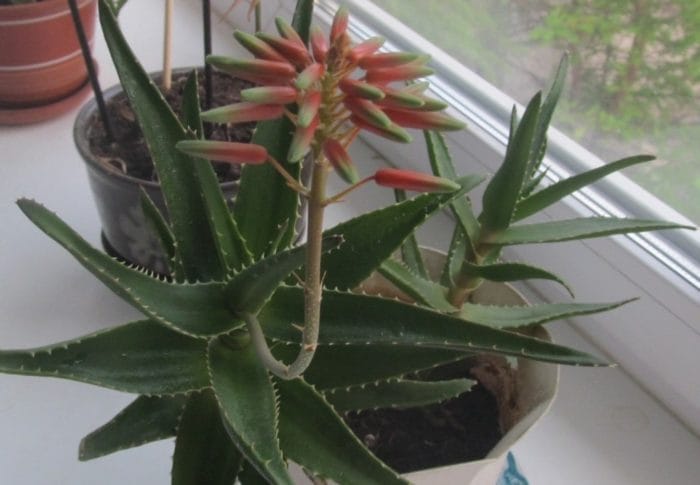
Reference. Aloe blooms for six months. For more abundant flowering, it is necessary to add minerals twice a month. In this case, the soil must be pre-moistened.
Does it grow on the street?
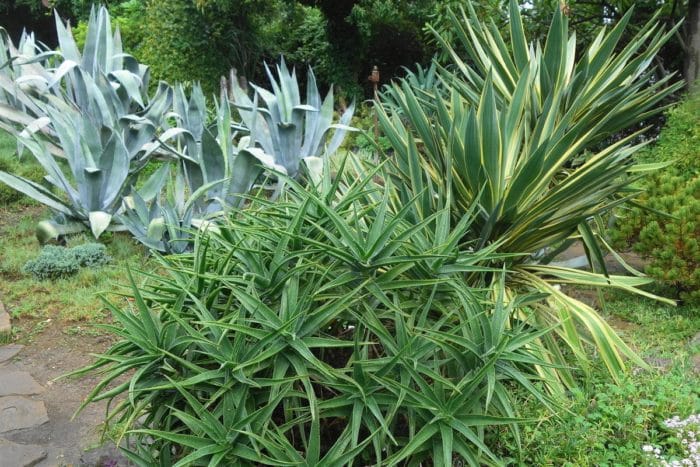
In some regions, this crop grows outdoors. This usually happens in the south of Russia. At the same time, Aloe can grow much larger than at home. Moreover, you can completely forget about the need to periodically transplant the flower.
If you plan to plant aloe outdoors, then you must provide the following:
- The soil must be loose so that the root system can get enough minerals and other nutrients.
- It is imperative to clear the space of weeds.
- The roots must be dried within three days. Only then is it possible to land in open ground.
- The area where Aloe grows can be overlaid with roots. This will prevent weed growth.
- The bait is made using the fertilizers that are suitable for Aloe Vera.
Important. The plant does not tolerate cold weather. Therefore, in regions with frosty winters, it is required to transplant a plant and transfer it to the house. You can also create a greenhouse that protects the crop from hypothermia.
How to propagate at home?
Aloe reproduces by dividing the bush. Or the emergence of new branches from the root system. Which will grow separately from the main bush. In the latter case, it is enough to take young shoots and transplant them to another place.
However, when dividing, you need to follow a certain algorithm:
- first, the bush is freed from the soil;
- then the knife is treated in an alcohol-containing solution;
- after that, it is necessary to divide the plant into two parts;
- the cut site is treated with activated carbon or other antiseptic;
- at the end, both halves must be planted in the ground again.
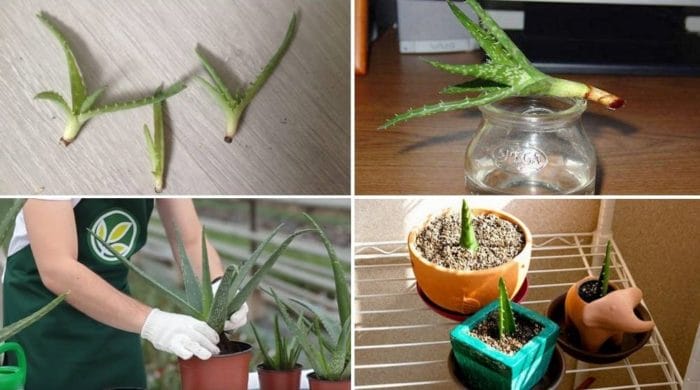
Reference. This breeding method is very popular. It can also be used to reduce the size of aloe in a pot. Since the flower grows strongly and gives a large number of side shoots. Which makes it difficult to care for the crop. Therefore, such a breeding method will simplify the care process.
We select the pot
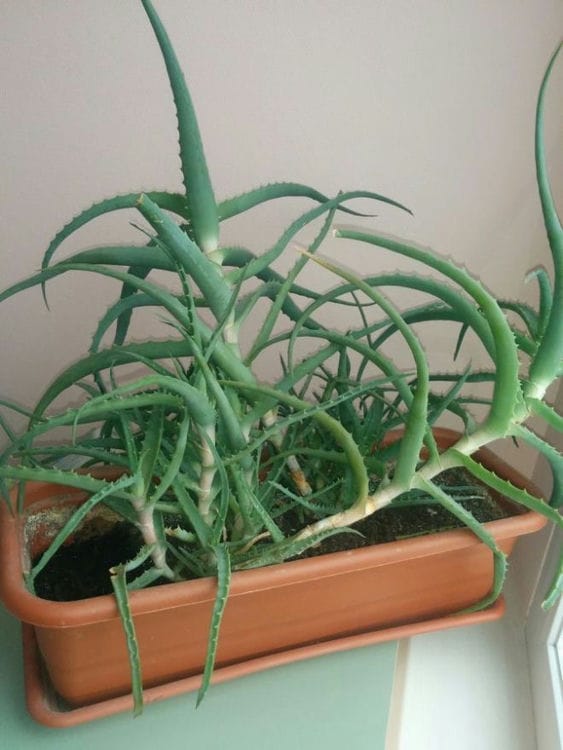 The first thing to pay attention to is the material from which the pot is made. Most often it is plastic or clay. The first is cheap and light, but its inability to pass air can be detrimental to the root system. So the pot must be earthen.
The shape does not matter, but the size and diameter must be selected depending on the volume of the roots and the height of the plant. For example, caring for indoor spinous aloe requires a shallow bowl of large diameter, since this succulent (the so-called plants that have special tissues for accumulating water) has a superficial root system, and a tall tree-like aloe (the plant reaches a meter in height) needs a deep pot.
Proper care of aloe requires one or more holes with a diameter of 1-1.5 cm in the container, through which excess moisture will leave. Before planting, old pots must be thoroughly washed with soap and water, and clay pots should also be calcined in the oven to kill harmful microorganisms.
Requirements for the substrate and feeding
Another feature of aloe care is the choice of soil. The plant is suitable for a nutritious and loose soil that is good for air and moisture. You can buy a special soil for succulents at a flower shop, or you can prepare it yourself. To do this, you need 2 parts of turf with the addition of clay, 1 part of leafy soil and 1 part of coarse sand. Broken bricks, shells or perlite can be used to increase the friability. When planting at home, a 3-4 cm thick drainage layer should be poured onto the bottom of the pot.
From March to September, you need to take care of aloe at home especially carefully: at this time, the flower is actively growing, so it requires nutrients and minerals. It is necessary to regularly feed the plant with complex mixtures containing phosphorus and potassium. In winter, you do not need to fertilize it. Top dressing is applied 2 times a month in accordance with the recommendations indicated on the package. In this case, you must follow a number of rules:
- you cannot fertilize a succulent immediately after transplanting, since during this period it is especially vulnerable;
- before applying top dressing, the plant must be watered;
- a flower planted in a special substrate is not recommended to be fed for 10 months, because an excessively high concentration of nutrients can harm it;
- the top dressing is best poured into a pan or wet soil, avoiding it getting on the leaves and stems.
How to transplant a plant
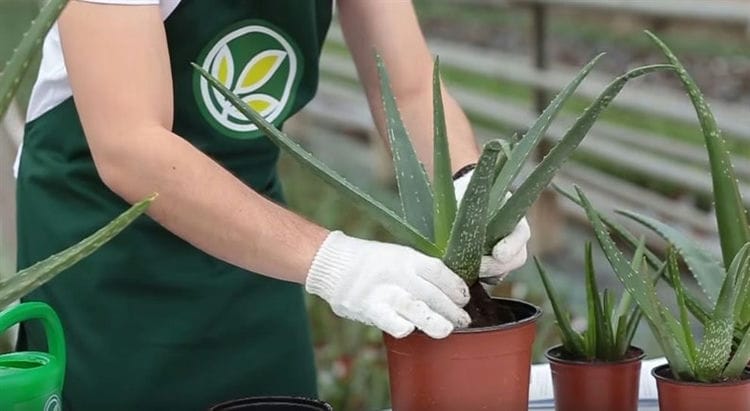 Aloe transplant is an important event. The fact is that over time, the nutrients in the substrate remain less and less, the soil is depleted, it becomes light like dust, and after watering it is taken in by a crust. In this case, it is useless to feed the succulent, since fertilizers cannot fail to replenish the humic component of the soil. The problem will be solved only by a complete replacement of the substrate. A young flower should be transplanted once a year, after the plant reaches 3 years old – less often, once every 3-4 years. The transplant includes 6 stages:
- First, the aloe must be watered abundantly: this will allow the roots to be extracted along with the ground, without injuring them.
- Preparing the pot. It should be 1/4 larger than the previous one. Drainage is poured at the bottom of the dishes, then – up to half – soil.
- The container with the plant is placed on its side, the aloe is carefully removed from it, the root is freed from clods of earth. It is important to avoid damage – let some of the old substrate remain on the roots.
- The succulent is placed in a new pot, the roots are straightened. In this case, they should be at a distance of 3-3.5 cm from the walls, but not touch them.
- From above, the roots are covered with soil so that the root collar is deepened to the same level as before. The soil should be tamped down a little.
- The transplanted plant is watered and placed in a shaded place for several days. All this time it is not necessary to moisten and spray it.
Home-cultivated aloe species
On the windowsill, this plant rarely grows more than a meter. And for decorative purposes, dwarf varieties are grown.
The most common types of aloe in apartments:
-
Aloe vera. Other plant names: real aloe, ordinary, Barbados. Due to its healing properties, it is found on almost every window sill. Juicy, tough leaves of the plant form a rosette and are located on a short stem. The peduncle brush consists of yellow or red flowers and can be up to 90 cm in length.
-
Aloe tree or agave. The tall stem reaches a height of 1 meter. The plant forms many lateral shoots. Also widely used as a home medicine.
-
Aloe folded. It got its name from the leaves folded in two rows. Long, belt-like leaves, rounded on top, can grow up to 30 cm.
-
Aloe is terrifying. Thick, fleshy leaves on the sides and bottom are covered with reddish-brown thorns. It blooms with bright red flowers, collected in a spike-shaped inflorescence.
-
Aloe spinous. Miniature aloe variety. Numerous leaves, collected in a rosette, have soft transparent thorns and are covered with white specks.
What is the difference between aloe and agave
To date, there are about five hundred varieties of aloe. The most common in homes are two types: aloe vera and aloe tree (agave).
Both of these plants belong to the genus Aloe of the Asphodeloid family, which includes about 500 more plant species. Aloe vera and agave differ in appearance and in their medicinal properties.
Aloe vera is bush-shaped. The peaks of the leaves grow from the base of the rosette, they are wide at the bottom and sharpened at the top, studded with thorns along the edges.
Aloe vera is used mainly for the treatment of human internal organs.
This plant helps:
-
strengthen immunity;
-
improve the work of the urinary system;
-
lower blood sugar levels;
-
has a beneficial effect on the cardiovascular system;
-
strengthens the gums;
-
has an analgesic and anti-inflammatory effect in exacerbations of arthritis;
-
helps in the stomach, reduces the risk of heartburn.
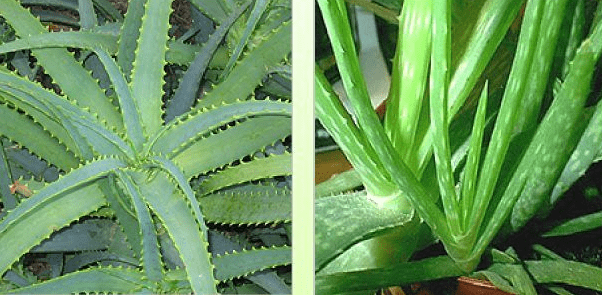
Agave. Despite the external similarity with aloe vera, the agave is more a small tree than a bush. The thick trunk, on which the fleshy leaves with thorns grow, at home can reach a height of about a meter.
The centenarian is more often used to solve external health problems:
-
wounds, scrapes and cuts;
-
boils, abscesses;
-
treatment of varicose veins;
-
use in shampoos and rinses helps to restore and strengthen hair, get rid of dandruff and enhance hair growth;
-
soothes insect bites;
-
used to treat psoriasis, cutaneous eczema and ulcers;
-
improves complexion and smoothes wrinkles.
For medicinal use, the lowest leaves are chosen, which have absorbed all the beneficial substances. The cut sheet is washed and put in the refrigerator for several days, this procedure promotes the production of biologically active substances.
How the tree aloe blooms
Despite the widespread prevalence of indoor agave, few have seen its flowering. The fact is that this plant blooms once every 15-20 years, with proper care this period is slightly reduced.
Flowering usually occurs during the cold season. The peduncle grows from the axils of the upper leaves. Flowers have a strong smell and can be one of the colors: yellow, orange, red or pink.
What if the plant starts to bloom?
Blooming aloe is very rare. It needs to be properly cared for and close to its natural habitat, with regular periods of rest when the length of the day, air temperature, lighting and watering frequency change.
Even if the plant bloomed during the dormant period, do not rush to fertilize it. You can only slightly increase the watering.
How to organize a rest period?
Conditions required for plant rest:
-
from October, they stop all feeding;
-
watering is carried out twice a month, and with the onset of winter, once a month;
-
the pot of aloe is removed in a bright but cool place, farther from the heating appliances;
-
keep the temperature not higher than 14ºC.
With a properly organized dormant period, aloe can bloom after a few years.
Plant diseases and treatments
Most often, aloe is exposed to diseases and attacks of pests, such as:
-
Root rot. Aloe is native to arid countries, so root rot can occur if over-watered. In this case, the plant must be dug up and its roots must be examined. If there are dark and soft roots, then they must be cut off, and the plant itself must be transplanted into a new soil. If the roots are severely damaged, the bush can be cut into cuttings and rooted.
-
Dry rot. In this disease, the plant looks healthy, but it infects it from the inside and the aloe suddenly dies. As a preventive measure, spraying with fungicides helps.
-
The scale insect is a small brown insect with a wax shield on top. While the pests are a little, they can be washed off with soapy water, gently cleaning them off the plant. A more reliable way is fungicide treatment.
-
Spider mite. Small insects that weave a barely noticeable cobweb on the leaves. You can also get rid of this pest with the help of fungicides.
Pests move from one plant to another and multiply rapidly. Therefore, having found them on one flower, it is worth processing all the others. Do not forget that fungicides are poisonous and harmful to humans. Therefore, use skin and respiratory protection, and ventilate the area well after treatment.

Sources used and useful links on the topic: https://Lifehacker.ru/aloe-uxod/ https://naogorode.net/aloe-uxod-v-domashnix-usloviyax/ https://sadovnikam.ru/475228a-kak- uhajivat-za-aloe-v-domashnih-usloviyah-pravilnyiy-poliv-i-peresadka https://selo.guru/rastenievodstvo/sukkulenty/aloe/vidy-al/stoletnik/kak-uhazhivat-v-domashnih-usloviyah. https://fermer.blog/bok/komnatnye-rasteniya/sukkulenty/aloe/aloe-uhod/1512-kak-pravilno-polivat-aloje.html https://flora-doma.ru/sukkulenty/kak-polivat-aloe / https://greensotka.ru/dekorativno-listvennye/kak-polivat-aloe.html https://pocvetam.ru/komnatnye-rasteniya/dekorativno-listvennye/kak-polivat-aloie.html https://sadovnikam.ru/475291a-kak-polivat-aloe-pravila-i-poleznyie-rekomendatsii-periodichnost-poliva-aloe https://ufermer.com/komnatnye-rasteniya/aloe/kak-pravilno-polivat-v-domashnih-usloviyah.html https://komnatnie-rastenija.ru/aloje-stoletnik-vyrashhivanie-uhod-v-domashnih-uslovijah-foto/ https://ufermer.com/komnatnye-rasteniya/aloe/kak-pravilno-uhazhivat-v-domashnih-usloviyah.html https://aloeinfo.ru/rastenie/uhod-v-domashnih-usloviyah.html https://hoznauka.ru/rasteniya/aloe.html
Post source: lastici.ru