
Eyebrow microblading and post-procedure brow care

To date, cosmetology has invented a quick and very convenient way to transform eyebrows in a short period – microblading. It is necessary to find out what the procedure called “eyebrow microblading" is, how to care for eyebrows during the recovery period, and who needs microblading. If you translate this word from English, then microblading literally sounds like “micro blade”.
What is microblading
Microblading is a relatively young cosmetic procedure. Its essence lies in the fact that the master, using a special handle-handle, carefully draws each hair in the eyebrows. The device resembles a pen with thin blades, but it is a cluster of small needles. The needles are different in length and depth of penetration, as well as in the intensity of the pigment. Using this tool, the master very carefully and slowly draws each hair by introducing paint under the skin, as in a tattoo. Eyebrows after such care look very natural and natural.
Microblading and its outcome largely depends on the master and his professional skills, as he carefully creates each hair, gives it a different color and shade, as well as a different direction of growth. Thus, in the end you will get perfect eyebrows, almost indistinguishable from natural ones.
Microblading can help those who:
- does not have thick eyebrows;
- suffers from bald spots in these areas;
- who has scars in the area of the eyebrows;
- has uneven superciliary arches;
- just dissatisfied with their shape of eyebrows or their density.
Effect Duration
In some cases, the effect of this procedure lasts up to several years, but most often it lasts up to a year. But if you want to keep your eyebrows in a beautiful and neat condition, then do not forget to do a correction every six months. If you are doing microblading for the first time, the first correction is carried out in a month.
Since the eyebrows are not very receptive to coloring for the first time, then after the paint can partially move away and the eyebrows will not look so bright and beautiful. Next time, adjusting twice a year is enough. So you can tint your eyebrows in time and they will always look perfect.
Eyebrow care after the procedure
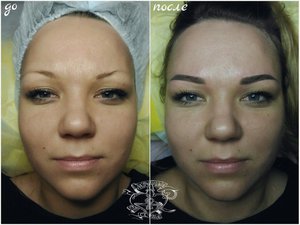
After eyebrow microblading is done, post-treatment care is very important. The result will depend not only on the master and his professionalism, but also on the correct subsequent care.
As a rule, at the end of the procedure, the beautician gives recommendations for the care of the eyebrows. It is very important to follow these recommendations. Do not forget to ask the beautician how to smear the eyebrows after microblading. Care after the procedure is aimed at restoring the skin and does not require special efforts and skills from you, everything is very simple. Different specialists may have different care tips, but if you have already found your favorite eyebrow master, then it is better to trust his advice.
In the first hours after microblading, small wounds can release ichor, as well as pigment that has not been injected deep enough under the skin. This liquid must be carefully washed with a cotton swab, because after drying it forms a crust. Subsequently, this crust will display the coloring pigment.
So in the first few hours, the following procedures should be done after microblading: treat the eyebrows with an ointment with a healing effect. For this, ointments such as chlorhexidine or others recommended by a cosmetologist are suitable. This ointment after application should be held for a couple of hours. But at the same time, you should not fanatically erase the ichor, because the formation of a light protective layer on the eyebrows is necessary for the healing of wounds. After microblading, you can go about your business, including being in crowded places, because after the procedure there should be no swelling or redness.
On the first day after the beautician, wash your face with a cleansing gel or use baby soap. Gently treat the injured area and easily rinse off the remaining product. The face is gently blotted with a towel, then Vaseline is applied to the eyebrows (and again before bedtime). In general, for the first days after the procedure, repeat the above steps several times a day.
After a few days, the hairs drawn by the master begin to acquire a darker color, so that already during this period you can already see the final version of the procedure. And after a few more days, the skin at the site of the procedure begins to peel off and itch.
The crusts that form during this time should not be washed or soaked! They will itch, but it is absolutely impossible to do this, since itching is a sign of healing processes, you need to endure it. But if you can't resist, then gently scratch around the brows, but not the brow ridges themselves, this will distract you and not hurt the healing. Also, care includes washing several times a day using baby soap.
Gently care for the superciliary arches and try not to injure the dried crust. Vaseline can remain on the skin even after washing. In this case, easily wipe it off with cotton swabs or a towel, and after a few hours, re-treat your eyebrows with petroleum jelly. Perform this procedure 2-3 times a day for a week. Usually this period is enough for the natural removal of the crust. But, in general, it all depends on individual indicators and on health. The crust may disappear after 5 days, or maybe after 2 weeks.
During this period, always carry a bottle of Vaseline with you and, in case of painful sensations in the eyebrow area, treat the skin with Vaseline. Because of this, the skin may begin to peel off, itching and tightening of the skin is possible. But there is no need to be afraid of this, because such symptoms occur due to skin regeneration. So, the denser the crust, the better the skin will heal, which means the end result will be good. If you damage this crust, then there is a risk of pigmentation disorders. The crusts should be invisible. This is how they should look with proper and complete care.
On the 5th day of care, you can change the ointment, or use them in conjunction with other ointments, such as Panthenol or Bepanthen. There are cases when during this period the superciliary arches can swell. If you are prone to allergies, then it is better to consult a beautician and drink antihistamines for the first days.
From the second week
After about two weeks, the crusts should fall off. After that, the pigment may look a little paler, but this is not at all scary. After a few hours, the pigment will begin to acquire a more saturated color. After the crusts fall off, you can stop smearing the superciliary arches with cream. So you can calmly exhale, because the most difficult stage of care is over. But this does not mean at all that you need to stop leaving for good. As a preventive measure, you can smear the eyebrows with cream once a day.
A month later
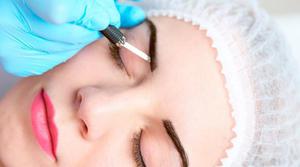
The wounds will heal completely in about a month. During this period of time, you need to save the result of care. Even after the crusts have come off, a thin protective layer still remains on the eyebrows and can be very easily damaged. So at this time it is better to abandon scrubs, peels and other aggressive effects on the face. It is also better to avoid solariums, baths and saunas. And eyebrow makeup is also better to postpone.
During this period, the skin will completely heal, and the brightness of the pigment will be fully restored. At this time, it will be seen whether the eyebrows need correction. After the end of work, the pigment reaches a brightness of about 70%. A month later, you need to go for a correction and then the pigment will be bright by 90%.
After correction
After eyebrow correction, they need special care. Care after correction is no different from care after the microblading procedure itself. But the recovery period is faster, because the skin is less damaged.
Thus, the care after eyebrow microblading is very important. The safety of the pigment, as well as the number of correction procedures, will depend on the correct care.
Pros and cons of microblading
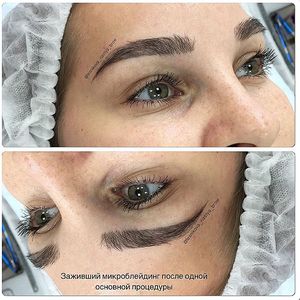
The main advantage of microblading is the result, which is almost indistinguishable from natural eyebrows. This effect is achieved due to the thoroughness of the work of a specialist. The master draws each hair, gives them a different length, thickness, direction of growth. Eyebrows will be in perfect condition for about six months or a year. So the duration of the effect is another plus of microblading. Unlike eyebrow tattooing, microblading has a more natural look in the end. This effect is achieved by shallow penetration of the pigment under the skin.
Microblading wounds are much less painful and deep than eyebrow tattoos. Even less chance of allergies to drugs and less swelling. The skin heals much faster after the procedure. There are practically no contraindications and age restrictions in microblading.
Eyebrow care products
As is clear from the above, the microblading procedure requires special care for the superciliary arches after visiting the beautician, as well as after the correction. Special care products are:
- Vaseline;
- Panthenol;
- Bepanten.
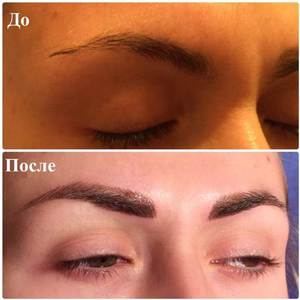
Vaseline, as a rule, is taken as a special cosmetic. It is able to moisturize the skin, make it softer, accelerate regeneration processes, as well as soften scars and crusts. This remedy is recommended by almost all cosmetologists during the recovery period.
Panthenol and Bepanthen are scar healers. They have anti-inflammatory and analgesic effects. These creams can be used almost anywhere, and even on weeping wounds. So when microblading, feel free to buy this care product.
Chlorhexidine is also an antiseptic. After a tattoo or microblading procedure, it is used to treat wounds and eliminate infection due to its antiseptic properties.
So, after microblading, you need to provide proper care for the eyebrows. It is not very complex and lengthy, but requires care and caution. If you follow all the recommendations, then your eyebrows will be perfect for a long time. Having beautiful eyebrows is easy!
Post source: salon.kr.ua