
A person who does not love people is a misanthrope. What are the names of people who hate people. Misanthrope and misanthropy: determining the type of personality
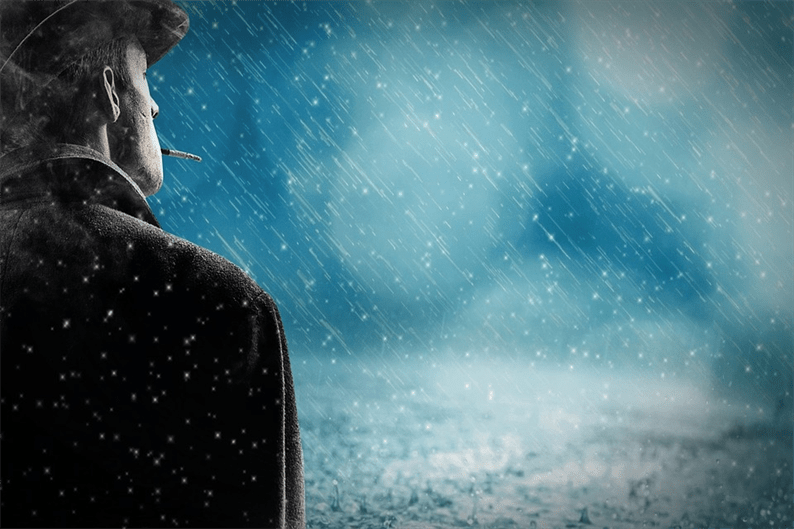
What is the name of a person who does not like other nationalities
A misanthrope is a person who avoids human society, is unsociable, suffers or, on the contrary, enjoys misanthropy (misanthropy). This tendency may be the main philosophy of life. The word became especially widespread after Moliere's comedy “The Misanthrope”.
People who hate people are called different concepts. Since their dislike has different shades of manifestation. Summing up, we can draw one clear and correct conclusion: any dislike for people is unnatural for a person. Therefore, it leads to aggression, destruction of man and the world.
Misanthropy itself is not a mental disorder. She is normal in a healthy body. However, if misanthropy becomes concomitant with another mental illness, then it can affect its manifestations.
It should be noted that the negative use of the term “nationalist” exists not only in Russia. For example, German President J. Rau in his inaugural speech explained that a patriot is a person who loves his homeland, and a nationalist is a person who hates other peoples and countries. American historian B. Schaefer gives the following meanings of the term “nationalism”
Racists
Since the colonial era, people have been called racists who do not like people with a different skin color. Of course, this phenomenon is much broader. It is based on spiritual, intellectual and physical inequalities. Racists clearly divide society into a superior and inferior race and strive to consolidate a certain hierarchy. All this turns into a beautiful ideology of the world. However, experts believe that racism is one of the forms of phobias towards the “stranger”.
Racists can be roughly divided into two groups. The first includes people who hate people of a different race and in every possible way deny any contact with them, seek to dominate them or eradicate them (extreme degree). Another group of racists behaves tolerantly towards other races. But he categorically denies a close relationship with them (marriage, kinship).
Hello, what is the name of a person who hates other nations?
Depending on the nature of the tasks set and being solved, several types of national movements are formed in the modern world [12]. The most widely used classification is made by Hans Cohn, who introduced the concepts of political and ethnic nationalism [13]. Most experts (including Cohn himself) believe that every mature nation contains both components.
My colleague claims that she loves Russia, completely ignorant of its geography, history, while humiliating everyone who is not Russian by nationality. How to name such a person and at the same time not to offend much?
The founder of the method, American John Watson, assumed that with the help of careful observation, one can predict, change or shape the proper behavior.
For the definition, “I would say” is not an argument. There are encyclopedias and dictionaries, everything is clear there: “Misanthropy – (Greek misanthropía, from miséo – I hate and ánthropos – man) dislike for people, alienation from them, misanthropy (TSB). And there is no need to invent on your own and popularize your own conjectures.
A person who does not love people, alienates them 9 letters
The misanthrope thinks that the people follow outdated moral norms, refusing to accept something new, better. But he has several people whom he distinguishes from the general gray mass. To make friends with such a person, you need to try to prove your independence and individuality. At the same time, society sincerely hates the misanthrope. But such a person does not think critically, he is smart enough and progressive and knows how to get the respect of others.
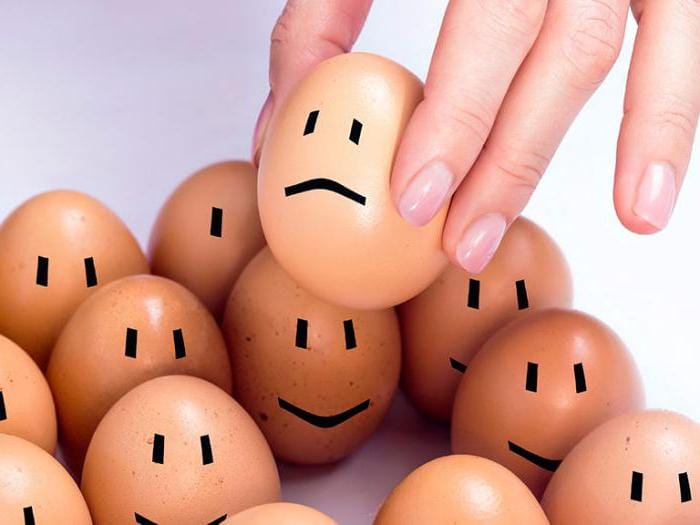
Misanthropy, as mentioned earlier, is not a disease, but a quality of character, sometimes a personal choice of a person. However, this quality can be a concomitant feature in the onset of psychiatric diseases and influence their course.
Translated from English “insight” is discernment, insight, insight, sudden finding a solution, and so on.
Almost everyone who hates those around them thinks they are harming them by doing so. However, the only one who suffers from this is the hater himself. Usually, the feeling of enmity does not arise out of nowhere; there is always a reason for it. But this does not mean at all that this reason is objective. You can look for positive moments in hatred, but they are not. It is this feeling that leads to wars, discrimination, violence and intolerance.
What are the names of people who hate people?
Misanthropy acts as an extreme form of individualism, the opposition of personality to society. Associated with pessimism, distrust, suspicion, unsociability. Sometimes misanthropy turns into anthropophobia (human fear) [4].
About the country and the state, I like one with a “good” song. Give it to your colleague, he may think about it.
A conformist is a person who changes his opinion, beliefs, attitudes, in favor of the society in which he is.
Well, she just has not yet run into such a non-Russian who will not tolerate humiliation and will stand up for himself. Such people are punished by life itself, the time will come when they will be put in their place so that they no longer want to humiliate anyone.
Misanthropes
You can often come across the question on forums: “What are the names of people who do not like people?” And among the many answers slips the term “misanthrope”. Who are they and how to recognize misanthropes? Such people either have no friends or have a very narrow social circle. They eschew noisy companies, the misanthropes themselves call their desire for loneliness a philosophy or individuality. Misanthropes are characterized by pessimism, distrust, excessive suspicion. The extreme form is to enjoy hating people. But, despite the obvious alienation and unsociability, misanthropes are harmless. Among them, history knows talented creative personalities: A. Schopenhauer, J. Swift, A. Gordon.
A person usually comes to misanthropy when he is not satisfied with the environment, communication with people, their actions. This process is often accompanied by depression and prioritization.
Lucian misanthropy is a creative force
The first misanthrope in history was called Timon, and he was from Athens. This character, undoubtedly important for European culture, appears in many works of not only ancient writing, but also the literature of the New and Modern times.
One of the earliest texts in which the figure of the Athenian misanthrope appears is the dialogue of Lucian of Samosata “Timon, or the Misanthrope.” The plot underlying this work is widely known.
The rich man Timon generously endows his friends, convinced of their sincerity and devotion, and having distributed all the treasures, he discovers that flatterers, greedy for profit, have left him. Frustrated by the betrayal of his treacherous comrades, Timon begins to hate the human race and goes into voluntary exile.
In search of roots for food, the former nobleman discovers the treasure sent to him by Zeus, and declares a new attitude in life:
“Let my name be – the most pleasant of all – Misanthrope – Hater, and the distinctive features of behavior – gloom, severity, rudeness, anger and unsociability.”
This mentality of Timon is justified by the plot, and the unfair attitude of people towards him evokes sympathy even in the host of the gods. This implacable misanthropist intends to channel his anger in a destructive direction:
“If I see someone dying in the fire and begging to put out the fire, I will put it out with tar and oil. <…> He would have gotten what he deserved. “
But the dialogue can also be interpreted in a symbolic way. In “Timon” by Lucian, a whole suite of human vices is shown, and the misanthrope's revenge on the human race takes place on two levels – real and allegorical.
This is how the creative potential of a seemingly destructive phenomenon is revealed. Misanthropy gives impetus to personal transformation: hating human vices, it is easier to get rid of them.
The constructive component of this phenomenon is discussed by the author of the book “The Monster: Outlines of the Philosophy of Escape from Humanity” Ulrich Horstmann, a German professor, specialist in English literature. He perceives misanthropy as a certain type of thinking:
“Forays into forbidden, non-tolerant, closed areas of consciousness, – says Horstman in one interview, – would not cause condemnation, if not for those who pragmatize the situation, perceive it as an imperative, a call to action.”
He notes the “preventive” effect of the misanthropic way of thinking, which can become a kind of warning and force a person to abandon destructive actions.
The destructive potential of Shakespeare's misanthropy
The destructive beginning of misanthropy is shown, perhaps, in the most famous adaptation of the plot about the misanthropist – in the play by William Shakespeare “Timon of Athens”:
I am a misanthrope, I hate people.
If you were a dog, I could love you at least a little
.
Even when a former nobleman regains his fortune, Timon's hatred of people continues.
If the protagonist of Lucian of Samosata limits himself only to reflections on the evil human nature and the desire to harm his own kind, then the hero of Shakespeare actively contributes to the destruction of humanity: he gives money to Alcibiades to wipe Athens off the face of the earth, and bribes the courtesan, persuading her to infect everyone with syphilis.
This is also the classic superhero of our time – the typical villain, for example, Penguin, Batman's adversary, undoubtedly continues this tradition.
The misanthrope's self-hatred
The perception of the misanthrope as unsociable, avoiding human society, is presented already in the dialogue of Lucian:
“Let Timon get rich alone … let him be his own neighbor and subordinate, throwing other people away from himself.”
Social isolation is the lot of the misanthrope, and he will even take care of his own funeral himself. This motif also appears in Shakespeare:
I hate this lying world!
So, Timon, prepare your own grave,
You will lie down where the
sea foam will scatter On the coffin stone.
However, in the play by the English playwright, it becomes much more complicated: Shakespeare's Timon is a suicide. The reason for his voluntary departure from life is self-hatred:
Timon Hated himself and all his own kind
! Perish the human race!
Ulrich Horstmann also speaks of this destructive trait of misanthropy directed at the misanthrope himself: “If I despise the human race, then I must be aware that I myself belong to it.”
Confirmation of the researcher's words can be considered a replica of Apemant, a kind of Timon's double from Shakespeare's play:
You rejected yourself,
even when you were yourself
Introversion is an innate trait. Introverts relax and energize on their own or in a small circle of loved ones. Social phobia, on the other hand, is an acquired quality. Life experience convinces such people that those around them are unfair, envious and treacherous.
Sociophobes avoid any contact
They rarely go to parties and public events. If, nevertheless, they decide to “go out,” they avoid face-to-face communication, try to find a secluded place where they spend time alone with their phone. Such people rarely answer calls, preferring to receive sms and voice messages.
Sociophobes can be extroverts
Paradoxically, you can be energized by communicating with people and at the same time be afraid of them. For example, you want to go out to dinner with your coworkers, but fear that they will not want to communicate with you, or are thinking of throwing a party, but fear that guests will make an unfavorable impression on you.
Clinical psychologist Helen Hendriksen notes: “It is excruciating to feel uncomfortable both alone with yourself and among people. This situation seems hopeless. “
For an introvert, loneliness and solitude are essential conditions for relaxation. The social phobia avoids communication for another reason: in order not to feel disappointment and regret. By shielding themselves from communication, such people reduce the level of anxiety, but do not experience the joy of being alone.

Sociophobes overly worry about what others think of them
Introverts prefer to be themselves, instead of thinking “what will Princess Marya Alekseevna say.” They are self-sufficient and in most cases are not prone to perfectionism.
For people with social phobia, any appearance in society is an attempt to meet certain standards and look better than they really are.
They say to themselves: “I should not be silent during the conversation, as if I have nothing to say” or “In a conversation with the owner, I must tell something amusing and witty.” Sociophobes spend so much time and energy trying to impress and deal with anxiety that they cannot focus on the conversation itself, gain useful information, or enjoy the conversation.
Sociophobes practice “safe behavior”
People with social anxiety often blame themselves for their lack of social skills. They say, “I can't keep up a conversation,” “I'm so awkward.” Because of self-doubt, they resort to “safe behavior”: hide their eyes, speak too quietly, smile all the time and talk in an ingratiating tone.
According to Helen Hendriksen, these people simply underestimate themselves. They are great listeners because they try to talk less about themselves.
If social anxiety is preventing you from living well, try changing.
- Step out of your comfort zone and force yourself to do what you fear most.
- Put an end to “safe behavior”: look the other person in the eyes, speak loudly and clearly enough.
- Switch your attention to external things: instead of worrying about how you look and what they think of you, look at the people around you, listen to the conversation and give your opinion.
The first factor is a difficult childhood
From an early age, a person did not see anything good, good, did not feel love. Usually, these are children from disadvantaged families. Due to circumstances, a persistent negative attitude towards the world is formed. These people are sure that there is a catch everywhere and, in another way, it cannot be
The second factor is a special sensitivity of character and a heightened sense of justice.
The subtle mental organization of such individuals will strive for the ideal and, be disappointed, not finding it. Also, sensitive people are rarely stress-resistant. The constant overabundance of communication with different people can negatively affect the personality.
A striking example is the well-known phrase of the poet from Germany Heinrich Heine: ” The more I know people, the more I like animals. “. Also, the reason for the predisposition to misanthropy can be internal complexes, low self-esteem, self-doubt.
At what age does the inner misanthrope manifest?
According to scientists and psychologists, usually, misanthropy occurs from adolescence. At that moment, when the child wakes up their own “I”. The ability for worldview, reflection and critical thinking appears.
When a small person begins to develop an attitude towards reality, towards people, he begins to realize that the world and people may not always be friendly, they may be hypocritical and unfair. While still a small person, but who has a heightened sense of truth and justice, he can recognize himself as a misanthrope.
Politics, wars, many negative films about death, meanness and betrayal – all this further aggravates the situation and provokes the emergence of misanthropes.
Types of misanthropes
Usually, misanthropes are divided into two types:
1 Fierce personality who shows his hatred of the whole world
This type of misanthrope, seeing only the worst side of the world, believes that humanity will not change and the best solution to the problem would be to completely avoid communication. Sometimes they choose the critical path and become recluses, hermits.
2 A fighter for justice
This is an idealistic misanthrope who, deep down, loves this world and dreams that it will become a better place. This type is a supporter of all kinds of reforms.
He takes any human injustice hard. Cruel attitude towards animals, environmental degradation, obscene words in front of children, scattered garbage – all this is acutely perceived by the misanthrope. As a result, there is a sharp categorical attitude towards certain individuals, but not towards the world as a whole.
A misanthrope is a person who hates people, who is alien to them.
Who are the misanthropes
A misanthrope is a synonym for a misanthrope in the Greek language, derived respectively from two words: “man” and “hatred.” Misanthropes do not show the usual interest in society, try to avoid the company of other people whenever possible, and can be aggressive in behavior.
If we consider misanthropy as a disease, then its definition will sound like rejection and a feeling of hatred in relation to all of humanity, moral foundations, as well as the rules of behavior established in society. This term rather succinctly expresses the essence of the life position of a person who does not like people.
What should a person who loves people do?
What is the name of charity – philanthropy, sponsorship, patronage, patronage – it doesn't matter. The main thing is not the form, but the content. A true philanthropist is a person who sacrifices his time, funds, personal comfort and convenience in order to improve and alleviate the lot of those who need it.
Modern philanthropists are far from their predecessors both in the amount of donated amounts and in the technology of assistance. Today, no one, at least in the civilized world and among really respectable, large-scale philanthropists, gives money, so to speak, “just like that.” These people have come up with whole systems of financing, which include various funds, companies, organizations that control the receipt and expenditure of funds.
Differences between a misanthrope and a sociophobe and a sociopath
All individuals with these character traits are at odds with society, but completely different reasons lead to this. Sociophobes are afraid of people, while with misanthropy, a person who does not love society and people experiences these feelings due to constant hatred towards them, rejection of the gray faceless masses, and not specific members of society.
In addition, the big difference lies in the fact that sociopathy is a mental disorder, while a certain state of mind and worldview of a person can be called misanthropy. Misanthropes have no clinical psychiatric signs. Unlike sociopaths who lack a sense of conscience, misanthropes are quite capable of empathy and empathy. They also admit their own mistakes, and sociopaths usually see themselves as unique and flawless in everything.
Answer:
Social phobia if you could not communicate. But you can, but you don't want to. Perhaps communicating with more than 4-5 people is exhausting for you. All people have different abilities to endure the stress associated with communication – informational, emotional, psychological. It is important what exactly bothers you – that you do not need frequent communication or with a large number of people, or that it interferes with your daily life, there are difficulties with work, with your family.
Every day we meet dozens of people with different personalities, problems, phobias and lifestyles. Among them, there are at least one percent with severe personality disorder and forms of individualism. People who hate people are of the greatest interest. Today this question is especially relevant, because any such deviation from the accepted norm can be harmless and dangerous. Each of these disorders in science has been given specific definitions, signs of manifestation and causes are described. Since they are called Let's try to figure it out.
The causes of misanthropy
Such an attitude towards humanity can be formed even in childhood, when consciousness and perception of the world are in their infancy, and the child absorbs all information about the surrounding reality. Of course, the development of a misanthrope is also permissible in adulthood. To do this, it is enough for a person to find a number of good reasons, which are often associated with a single or multiple negative experience of communicating with people.
A person who does not like society as a whole may transfer to him the negative traits seen in specific individuals. Often times, these feelings are triggered by the contemplation of unpleasant human activities, such as inappropriate behavior in a public place, political wars, environmental damage, or animal abuse.
Introverts prefer solitude over human society.
Until recently, they tried to hide the tendency to introversion. Everywhere it was perceived as a flaw that should be ironed out – or compensated with something else. Everything was changed by Susan Kane's book Quiet: The Power of Introverts in a World That Can't Stop Talking, published in 2012. Largely thanks to her, public opinion has ceased to put pressure on people who prefer noisy parties to peace – the mass consciousness has accepted introverts.
“When in 2011 I asked an audience of 200 students who was an introvert, only a few people raised their hands. In 2013, more than a third of them raised their hands. Is this connected with the fact that more introverts have got into the new stream? Not. Anonymous testing showed that both streams were almost the same. On a scale where 1 is complete introversion and 5 is complete extraversion, the coefficients were as follows: 3.34 in 2011 and 3.39 in 2013. “
The causes of misanthropy

To finally understand who a misanthrope is, let us consider the main reasons for the formation of misanthropic views in people. It is important to understand that misanthropy is the result of accumulated life experience, and not an innate feature. It is formed under the influence of certain life circumstances. Let's consider the most typical factors.
1 Difficult childhood
Each family has its own views on raising children. Sometimes a child is severely punished for every wrongdoing, for a bad grade brought from school, for a broken window or vase. He may well grow up to be a disciplined person and get a good education. However, he forms a firm conviction that a person has no right to be imperfect. Having matured, he sees how imperfect the world is. Almost all people in his understanding are stupid and irresponsible, for which they deserve the deepest contempt.
2 Betrayal
Often a misanthrope becomes a person who has faced betrayal, especially if it has happened repeatedly. He develops a belief in the style of “all women are the same”, “all men are the same”, “no one can be trusted.” He is convinced that the only person who can be trusted is himself.
3 Parenting gaps
Education is an individual process. In an effort to raise a child ideal, parents teach him decency and responsibility, explain that he will have to try hard to achieve success. However, they forget to warn him that all people are different. As a result, he grows up to be a maximalist, expecting from people that they will always fully correspond to his ideas about beauty. And after making sure that this is not so, he turns into a convinced misanthrope.
4 High intelligence
“He who lived and thought cannot help despising people in his soul.” This is perhaps the most famous statement by Eugene Onegin (probably reflecting Alexander Pushkin's own views). Intellectuals often become misanthropes, gradually realizing that there are few smart people in the world. They rarely show contempt for society, more often they treat it condescendingly.
5 “Thin skin”
Much also depends on a person's personal sensitivity. “Thick-skinned” people are calm about the mistakes of others. But sensitive “thin-skinned” natures are very impressionable and unstable. They always expect more from people. But constantly faced with the imperfection of human society, they move away from it and are reluctant to let strangers into their lives.
You need to separate people who hate other people and those who are afraid of them. There is a fundamental difference between “social anxiety”, as people who fear society are called, and misanthropes. Sociophobes are safer and will not want to cause you much trouble. Moreover, they need special treatment to help them socialize and feel normal in society. While misanthropes are people who do not like people, from time to time their behavior can turn into sociopathic, that is, when a person begins to deliberately harm other people. He can even become a criminal or a maniac, just because he cannot stand other people and wants to take revenge on them. You should be very careful with such people and understand the danger posed by them.
Society concepts. Elements and their relationships.
And now, if you do not celebrate Purim with a Jew, you are a nationalist, you do not adhere to Ramadan, you are also a nationalist. And we actually have our own holidays, which we celebrate with all our hearts and in a big way, and we do not force Arabs and Jews to celebrate, for example, the baptism of Rus.
We live in a society and it will not be possible to completely avoid communication with other people by closing ourselves in our apartment. Of course, an insecure person has a narrow circle of acquaintances and even friends, but his unwillingness to communicate makes him not such a good friend himself, because it is much easier for him to avoid communication and generally avoid people.
Or another example. Let's say I'm insanely annoyed by gossip that a person does at work. Then you need to track how I behave myself, and then ask: “And I myself do not gossip?”
The post of journalist Bozena Rynska about disabled people is actively discussed on the Internet. On the pages of her blog, she, under the pseudonym “Biting Dog”, is outraged that people with disabilities have more rights than healthy people.
Misanthrope personality traits
How to distinguish a person who does not like people from a common man in the street with a one-time bad mood caused by traffic jams or a quarrel with his beloved? Misanthropes have some traits that you should pay attention to when communicating:
- Do not accept social, behavioral, or religious norms. They do not like humanity as a whole, speak negatively about people.
- Often, in a defiant and provocative form, they oppose their own personality to society or to all of humanity.
- They are great for friends and close people, the number of which is calculated in a few units.
Misanthropes prefer communication with old friends to making new acquaintances. The rejection of human weaknesses and shortcomings does not allow misanthropes to fully communicate and make a favorable impression on unfamiliar people.
Sources used and useful links on the topic: https://gidroz.ru/fobii/chelovek-kotoryj-nikogo-ne-lyubit.html https://knife.media/misanthropy/ https://www.psychologies.ru/self -knowledge / chem-sotsiofobyi-otlichayutsya-ot-introvertov / https://PsyMod.ru/tipy-lyudey/2371-mizantrop-kto-eto.html https://erekto.ru/psihologiya/kak-nazyvayut-lyudej- kotorye-ne-lyubyat.html https://dnevnik-znaniy.ru/psixologiya/kto-takoj-mizantrop-5-glavnyx-priznakov.html http://psiho-zakon.ru/samorazvitie/kak-nazyivayut-lyudey- kotoryie-ne-lyubyat-lyudey https://cosmeton.ru/psihologiya/lyubov-k-lyudyam-kak-nazyvaetsya.html
Post source: lastici.ru