
Options for replacing salt during weight loss without harm to health. How to replace salt
Content
Salt replacement products
Doctors recommend that a healthy person consume no more than 6 g of salt per day. It is found in any food (vegetables, fruits) in more or less quantities. Even from additionally salted foods, a person gets 1 g of sodium per day.
People suffering from hypertension are advised to refuse additional salting of food. Sodium retains water in the cells of the body, promotes vasoconstriction, increased pressure, and slow weight loss.
On a diet without salt, food seems tasteless, bland. To avoid this problem, you can replace salt with natural flavor enhancers. They are rich in valuable substances and give food an interesting taste without harming the body.
Some foods are high in sodium. Such salt substitutes are not recommended for hypertensive patients. However, they are considered more useful than the chemical flavor enhancer that everyone is accustomed to.
There are vegetables and spices that do not contain much sodium, but have a bright taste. They make dishes more appetizing without causing puffiness. They are considered the most useful substitutes.
Potassium salt (pan-salt) contains less sodium due to the inclusion of 25-40% potassium chloride, 10% magnesium sulfate. The supplement does not increase blood pressure, the development of edema, but it should be consumed in moderation. The product is sold in nutritional stores.
Organic Celery Salt
Celery salt contains organic sodium. The composition contains vitamins C, E, PP, K, B6. The supplement is sold in nutritional stores and is quite expensive (about 200 rubles per 25 g).
You can make a celery supplement yourself. To do this, the petioles of the plant are cut into pieces, dried at a temperature of 45 degrees. Store in a dry, dark place in a paper bag or hermetically sealed container.
Sea salt
Sea salt is healthier than table salt. It is a natural product that contains iodine. It helps to increase pressure, since the composition contains sodium.
Don't confuse sea salt with iodized salt. The latter option is artificially saturated with iodine.
Himalayan pink salt
Pink Himalayan salt has a pink or red-orange hue. An environmentally friendly substance that is extracted without the use of chemical reactions.
The composition includes iron oxide, polyhalite. The sodium concentration of the supplement is lower than that of the conventional table-top counterpart.
Black salt
There are two types of black salt: Indian (Kala Namak) and Kostroma (Chetvergovaya). Both additives taste like hydrogen sulfide and contain elements valuable to the body.
Thursday salt is prepared from ordinary table salt. It is fired in an oven with the addition of rye flour and some other ingredients.
Table salt is of artificial origin. Doctors consider it to be a harmful product and recommend replacing it with more natural, useful flavor enhancers.
How to replace salt in food
Trying to find an answer to the question of what can replace salt in a diet, many do not even assume that there are products that can become a full-fledged salt replacement. You should take a closer look at them if you decide to seriously change your diet.
Even if you have to give up salt for medical reasons or take care of your family's health by using these foods and spices, you do not feel disadvantaged. So, how to replace salt in food, so as not to deprive yourself of gastronomic pleasure?
Why you can't eat a lot of salt
Of course, the body needs to get a certain amount of salt, since it contains useful substances. However, the required amount is already in those products that everyone uses regularly. But the body does not receive any benefit from an excess of salt.
Salt retains fluid in the body, leads to weight gain, increased blood pressure and, in general, has a negative effect on human health. In addition, the constant consumption of salt is habit-forming, so a person begins to add large amounts of salt to food, even if it is not necessary.
From a medical point of view, the main reason not to consume too much salt is that the body of a healthy person excretes only 25 grams of salt daily. If a person consumes more salt, then it begins to accumulate in the body. Over time, cells in the body become salty and the balance between potassium and sodium is disturbed. External signs are constant edema. Naturally, all this is accompanied by a breakdown.
The benefits and harms of table salt for the body
Man cannot exist without salt. This substance is the main supplier of essential trace elements for the normal functioning of the body – sodium and chlorine. A third of these elements are found in bones, the rest is in muscle, nerve tissues, and extracellular fluid of a person. Salt is not produced on its own. Sodium is important in intracellular and interstitial metabolism, to maintain acid-base balance, and to activate food enzymes. Chlorine is needed in the regulation of water exchange, the formation of gastric hydrochloric acid.
With the complete elimination of sodium chloride from the diet, serious health problems can ensue. Lack of mineral leads to:
- nausea;
- flatulence;
- lack of appetite;
- loss of taste;
- increased fatigue;
- lowering blood pressure;
- weakness, dizziness;
- memory impairment;
- weakening of immunity;
- problems with skin, nails, hair;
- the development of infections.
Salt enters the body not only as a separate product: a lot of it comes with food. Canned vegetables, sauerkraut, salted herring, smoked sausages, sausages, semi-finished products and other harmful products are a source of high concentration of saline minerals. Abuse of the mineral can lead to kidney problems, edema, high blood pressure, intracranial, and ocular pressure. Excessive sweating, thirst, nervous irritability, frequent urge to urinate indicate an excessive amount of sodium chloride in the body.
What salt is better to give preference
There are a lot of pros and cons of ordinary table salt. It is vital for the human body, but for a short time with a salt-free diet, it is recommended to reduce its consumption as much as possible. A good alternative is to switch from regular table salt to other types:
- marine;
- pink Himalayan and black;
- cookery;
- iodized;
- stone.
Almost 100 percent uses table salt. This processed product has almost no useful minerals, after thermal exposure only chlorine and sodium remain. Not everyone likes rock salt because of its smell, but softer, more suitable for cooking. Iodized food differs from cooked food only in that it is enriched with iodine. This product is recommended for those with thyroid problems, but this salt is not suitable for pickling vegetables.
Who can be useful
A salt-free diet is often prescribed for pregnant women to normalize the condition. This system is also useful for hypertension. What's more, a person with heart disease is advised to keep salt intake to a minimum on an ongoing basis. Salt neutralizes calcium well, so it becomes harmful for the elderly. Salt abuse leads to bone loss and increases bone porosity.
Salt also has a negative effect on the kidneys. It is because of the high salt content in food that kidney stones are formed. In turn, a salt-free diet helps to normalize the work of these delicate organs. Harm from it is possible if you self-medicate. If a doctor prescribes it, he will definitely indicate the acceptable time frame. The digestive system suffers from high salt intake. This can lead to heartburn, acid reflux, ulcers, and similar conditions.
What to give up
The hardest part is the beginning. A person cannot get used to the taste of food. This is the reason for the effect of weight loss. The average portion of food is reduced, and the person does not forbid himself to eat, he simply cannot persuade himself to eat another piece. Read the information on the package carefully. Bread, pasta, and spices also contain salt. You can not use any smoked meats and pickles. Any fast food is also incompatible with this diet. You need to refuse the following products:
- Canned food.
- Ready-made salads.
- Juices.
- Sauces.
- Mayonnaise.
- Sausages.
- Marinades.
The simpler the prepared meals, the better. This will make it easier for you to stick to the basic rule of the diet.
The benefits of such a diet
A person gets used to giving up fried, fatty, smoked and spicy foods. This has a very positive effect on human health and helps to get rid of extra pounds.
A salt-free diet means:
- Steam vegetables without adding fat.
- Fractional food.
- Reducing the consumption of butter and margarine.
In addition, a person gets used to the true taste of food. In parallel, you might think about how to replace salt with a salt-free diet. That is, it is very important to stock up on various herbs. This will help you not to get overwhelmed and not feel negative.
How to replace salt with a salt-free diet, tips
As you can imagine, eating completely bland food means eating without appetite and going hungry.
Everyone wants food to be not only healthy, but also tasty. And this is quite possible, since salt can be replaced with various herbs, seasonings, spices and seafood.
For example, in order to “salt” porridge and side dishes for the second courses, you can use:
- Rosemary;
- Thyme;
- Cumin;
- Saffron;
- Turmeric
- Basilica;
- Bow;
- Garlic;
- Horseradish;
- Parsley;
- Celery
- Mint;
- Curry;
- Ginger
- Oregano.
To add taste to meat dishes, sauces, gravies, will be able to:
- Garlic;
- Cumin;
- Lemon
- Cranberry;
- Plum;
- In other words;
- A tomato;
- Grated orange peel;
- White sauce;
- Soy sauce;
- Kelp.
Diet fish soup recipe without salt
Finely chop one carrot, one medium-sized onion and put it in boiling water for about five minutes. At this time, cut the sea fish into pieces, instead of fish, you can take any seafood, shrimp, squid, crabs, and so on.
Dip seafood into boiling soup, stir, let the soup boil. Add half a cup of cooked red or brown rice and stir. When the soup boils, add a couple of plates of pressed seaweed, boil for three minutes.
Seafood soup is ready, you can season it with spices such as thyme, mint, pepper.
There is no need to salt this soup, since seaweed completely replaces salt. After cooking, the soup must be allowed to brew a little, then, the algae can be removed from the soup.
Is salt possible with proper nutrition and weight loss
It is not worth completely eliminating the spice when losing weight, and it will not work. The fact is that a small amount of it is initially found in food (cheese, nuts, bread, sauces, fish, meat, etc.).
With proper nutrition, you can consume no more than 5 g of salt, and on a diet, the daily dose is reduced to 2.5 g. It is better to add it to ready-made meals in order to preserve its benefits.
Useful properties of salt:
- Provides the cells of the body with chlorine and sodium, which ensure normal functioning.
- Participates in water-salt metabolism, saturates cells with useful substances.
- Maintains a normal acid-base balance.
- Controls the level of water in the body.
- Provides normal functioning of the heart and blood vessels, nervous system, muscles.
- Sodium activates food enzymes, chlorine increases the secretion of hydrochloric acid in the stomach.
- Accelerates the breakdown of fats.
- Promotes bone formation and growth.
The benefits of the spice are manifested with moderate use.
Attention! Lack of salt in food while losing weight threatens with nausea, flatulence, muscle cramps, weakness, headaches, dizziness, decreased immunity, etc.
With constant excessive use of the spice, its harmful properties are manifested:
- Fluid retention in the body, edema.
- Violation of the heart, increased fragility of the vascular walls.
- Increased risk of hypertension, stroke, heart attack.
- Violation of the excretion of fats, their deposition in the body, weight gain.
- Sodium accelerates calcium excretion, which can lead to decreased bone density and osteoporosis.
- Increased intraocular pressure, visual impairment, the likelihood of cataracts increases.
Caution! It is recommended to give up salt in case of diabetes mellitus, diseases of the heart and blood vessels (for example, hypertension), pathologies of the kidneys, liver, lungs, and musculoskeletal system. The spice increases the load on the diseased organs, then the risk of complications increases. Then its amount is reduced to 1-1.5 g.
When losing weight, salt can be consumed, but in a minimum amount (up to 2.5 g per day). A complete refusal is permissible only after the approval of a doctor.
How to replace salt during a diet
The amount of salt in food should be reduced gradually. This will help the body avoid stress and breakdown.
To keep the food from appearing bland, you can replace regular sea salt, Himalayan salt, or iodized salt. It is suitable for the transitional stage, gives food a pleasant taste and aroma, and also contains useful substances.
It is interesting! Ordinary salt is processed, after which it loses most of the nutrients.
When losing weight, it is better to replace the usual spice with the sea one. Large crystals are naturally evaporated from seawater. They are rich in more than 50 useful substances, including potassium, magnesium, calcium.
An even better alternative is pink or black Himalayan salt from Pakistan. It smells good, contains 84 trace elements, but is expensive.
It will be useful for those who are losing weight to know if you can replace salt with soy sauce. It is possible, the main thing is to remember that this liquid also contains sodium chloride. It is also recommended to reduce the calorie content of the diet, reduce the amount of foods rich in salt and fats. A quality product based on natural ingredients is suitable for a diet.
You can replace table salt with kelp, celery, ginger, garlic, various spices, herbs, citrus-based marinades, natural vinegar, etc.
The optimal amount of salt substitutes is 1 pinch per serving. At first, the food will seem bland, but over time, the taste buds will get used to it.
Main conclusions
You should not completely abandon salt when dieting and losing weight. About 5 g of spice per day will only be beneficial. In case of diseases of the kidneys, heart, blood vessels, diabetes mellitus, its amount is reduced to 2.5 g. It is important to remember that some products already contain salt in the composition. During the transition phase, sea salt, Himalayan salt and soy sauce will help to add a rich flavor to dishes. Then they can be replaced with kelp, garlic, celery, aromatic herbs, spices, lemon juice or natural vinegar.
How much salt can you lose weight
It will not be possible to completely abandon salt, since it will still enter the body along with food. But it is quite possible to reduce its amount. The norm of salt intake per day for a person is 4 grams, but when losing weight, you need to reduce the dosage to 0.5 tsp per day (2.5 grams). To eat less of this product, it is necessary to salt the dishes only after cooking and get up from the table with a slight feeling of hunger, and not wait for complete satiety. Servings of food should be small, divided into 4-5 meals. The quality of the seasoning is just as important as the quantity.
Prohibited foods for a salt-free diet:
- salted butter, margarine;
- spicy, sour foods;
- smoked, canned foods (fish, meat, vegetables);
- sausages;
- snack products (chips, crackers);
- purchased sauces, ketchups, mayonnaises;
- instant products (soups, noodles and other semi-finished products);
- sweet sparkling water;
Why does salt prevent you from losing weight
Salt retains moisture in the body. The more moisture, the more weight. That is, when losing weight, it is important not only to get rid of body fat, but also to disperse the maximum amount of fluid.
In fact, when losing weight, it is water that leaves the body first. Only after the liquid has left will the fat begin to leave.
The exclusion of salt from the body is a test for many people, because we are used to salt everything that does not belong to the category of sweet, but over time it is quite possible to get used to do without this spice.
How to use salt correctly?
If you can't stop using salt at all, learn how to use it safely. Small rules will help reduce its harmful effects on the body:
- Cooked meat or fish can be lightly salted after the dish is completely cooked. Sauces or gravy can be used instead of salt.
- It is recommended to salt soups and other liquid dishes a few minutes before the end of cooking. If possible, add seasoning or sauce instead of it already on the plate.
- Vegetables must be salted just before eating. Season the salads a few minutes before serving.
Salt types
There are 3 main types of salt:
- cookery;
- marine;
- Himalayan.
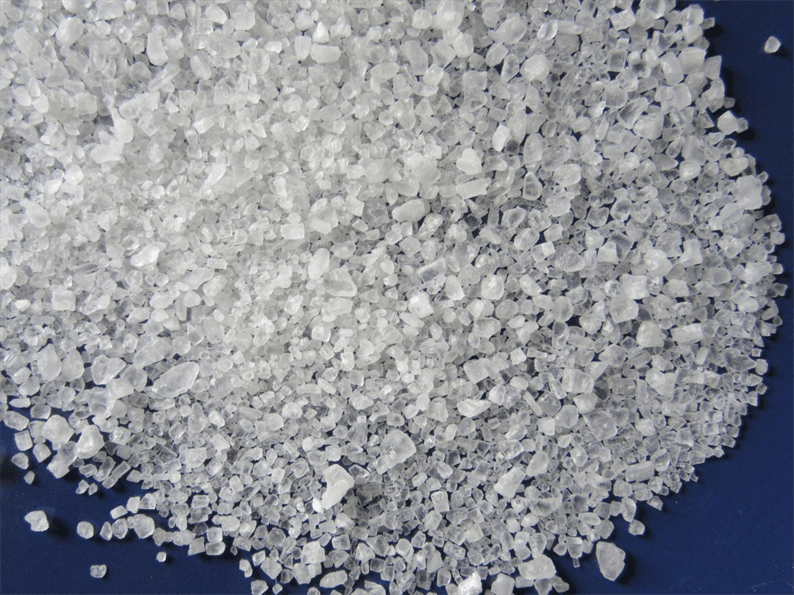
All other types of spices, for example, iodized salt, differ in the method of purification and the addition of additional components.
Lemon juice
If you fill a vegetable salad with lemon juice, you will no longer need to use salt. Especially if, in addition to the juice, add a little spicy seasonings. The citrus fruit contains a large amount of essential vitamin C, which strengthens the immune system. An additional benefit is the removal of toxins from the body.
An improved version of the panicle salad
It is thanks to celery that this updated salad acquires not only a wonderful taste, but also an additional portion of useful substances.
Why is white salt harmful?
The fact is that salt is contraindicated in a number of diseases associated with the work of the kidneys, gastrointestinal tract and heart. Also, people prone to edema, and those who are forced to follow a salt-free diet, limit themselves to the use of this popular seasoning.
In recent years, there has been a lot of talk about the dangers of white salt, but this is not entirely true.
It is not the salt itself that is harmful, but the abuse of it. The daily requirement of the body is about 4-6 grams, only about a teaspoon, but few people limit themselves to this amount.
In addition to the fact that salt is added when preparing food, many store-bought products also contain salt in the composition.
So it turns out that the body is oversaturated with sodium chloride, which can cause a lot of trouble:
- salt irritates the delicate walls of the stomach and this can lead to gastritis and ulcers;
- hypertensive patients should especially carefully control the amount of salt, because it can increase blood pressure;
- salt has the ability to deposit its excess on the walls of blood vessels, damaging them;
- tortured by swelling and excess weight? Reconsider your diet, perhaps you are eating too salty food.
- go in for sports, follow a strict diet, but still do not have the desired result? Salt and salty foods retain water in the body! So when losing weight, it should be minimized.
- salt deposition is not such a rare phenomenon, and if you notice that the joints have become less flexible and pain appears, it is time to reduce the amount of salt in the diet.
Sources used and useful links on the topic: https://pripravit.ru/v-kulinarii/chem-zamenit-sol https://www.edimdoma.ru/kulinarnaya_shkola/posts/19117-chem-zamenit-sol-v-ede https://zen.yandex.ru/media/1000sovetov/chem-zamenit-sol-v-racione-5a5e0aeb4bf161c4033ac694 https://allslim.ru/803-chem-zamenit-sol-pri-bessolevoj-diete.html https: //dietpick.ru/418978a-vred-bessolevoy-dietyi-mnenie-vrachey-chem-zamenit-sol-pri-bessolevoy-diete https://elenaprekrasnaya.ru/sovety/chem-zamenit-sol-pri-bessolevoy-diete -sovetyi.html https://gercules.fit/diety/blyuda-i-napitki/chem-zamenit-sol-pri-pohudenii.html https://sovets.net/11173-chem-zamenit-sol-pri-bessolevoj -diete.html https://adella.ru/beauty/chem-zamenit-sol-pri-pohudenii.html https://pohudete.ru/chem-zamenit-sol.html https://Gidbody.com/problemy-s-vesom/diety/smeshannye/zamenitel-soli https://disertiki.ru/sovety/chem-zamenit- sol.html https://chudoogorod.ru/produkty-i-pitanie/chem-mozhno-zamenit-sol-v-ede-7-sposobov.html https://4fresh.ru/blog/replace-the-salt
Post source: lastici.ru