
How to properly manage people and get what you want: advice from a professional. How to manage yourself, people and life?

Content
Why do you need to manage people?
Trying to achieve specific goals, people have always looked for various ways to achieve them. In pursuit of knowledge, he noticed that you can influence the psyche of other people, thereby manipulating them. As a result, an interest arose in practical psychology. When the psychology of people is known, how to manage them also becomes clear.
Applying the learned techniques in practice, I managed to understand how to manipulate people. Psychology, books of famous writers and love for them began to grow. With the help of such knowledge, a person learned to competently manage not only one person, but entire countries. The use of these skills was found in all spheres of life and more than once has already changed the fate of all mankind.
Rosalyn Carter, a powerful woman, first lady and wife of former President Jimmy Carter, once said: “A leader leads people where they want to go. An outstanding leader leads people not where they want to go, but where they need to be. “
At this point in life, you can no longer do without practical skills in business and in its organization. The success of modern management largely depends on the psychosocial competence of employees and especially in the management of an organization. Knowledge and skills are the undoubted psychological basis for effective management. Building and motivating a team, resolving tensions and conflicts, accurately recognizing the needs of clients – all these activities require knowledge and psychological techniques. The answer to these needs is the Management Psychology Program. The purpose of the study is to understand psychological knowledge and form the ability to use this knowledge in practice.
Human psychology, how to manage people, also allows a person to develop and plan his career and life path, in-depth diagnose his personal predisposition. Help those in need who need help with effective exercise and meditation.
Manipulation methods can be of a different nature and can be used for the benefit or against people. But, one way or another, they are extremely important.
How to learn to manage people?
To learn how to manage people, you first need to be imbued with this desire. A strong desire in itself is capable of directing or leading a person to the appropriate knowledge. You need to start by studying yourself, your inner “I”, your nature. Learn to manage yourself, as this lesson requires a lot of emotional stress and mental costs.
The further goal is to establish contact with the people around, “hook” them, using the emotional and psychological component, and earn trust. To study the literature on the topic of human psychology and human management, which describes the methods of management and a variety of manipulation techniques. Develop skills and apply all kinds of techniques in practice.
Ways and methods of managing people
Various methods of manipulating people are used all over the world. Based on their convictions, the goals set, direct or hidden methods of management are used. Hypnosis is an effective method. In a state of hypnosis, a person is directly influenced, due to which his state, behavior and thoughts can be controlled. Specialists in this area are able to provide assistance to people who have psycho-emotional disorders. The conducted impact returns people to a normal lifestyle, even in extremely difficult cases.
Basically, the psychology of managing people is based on the physiological needs and emotions of a person. Depending on the situation, the following techniques can be distinguished, which are used by specialists:
Limited choice
In order to force a person to make a choice in his favor, it is necessary to limit the options for his choice.
The technique is to provide the interlocutor with (for example) two choices in a supportive environment. Both of them should be beneficial and meet your requirements. Man by nature does not want to complicate his life and therefore often makes his choice from among the possible.
Representative view
The more wealthy a person looks, the more interest in him.
An appearance that suggests a high status in society causes other people to take it seriously. Also, all kinds of “gadgets” and the corresponding behavior play a significant role.
Feelings of gratitude
To win the other person's attention, give them a gift.
You can achieve the desired result or find out something important with the help of a pleasant service. A timely compliment or a gift given is able to endear a person and reveal benevolence and sincerity in him.
Chameleon effect
Repeat after the person, and he will like you.
Accurate copying of the behavior, facial expressions and colloquial speech of the interlocutor can impress him. The phenomenon has been studied in detail by psychologists who have proven that this psychological technique passes unconsciously and works in most cases.
Scattered attention
A positive answer can be obtained from a person by asking him a question in a certain situation.
A large crowd of people, a noisy place, a hasty situation – these are exactly the conditions that contribute to quick decision-making. Having created such situations, there is an opportunity to achieve the set goals.
How to manage yourself, people and life?
Skillful self-management is the most important aspect of life. Human psychology teaches how to manage oneself, how to improve self-control and self-control. The internal state determines the quality of life, controls our actions and influences the future fate of the individual. The ability to self-control and self-control makes it possible to clearly understand how to manage people whose psychology is closely interconnected with society as a whole.
Below are psychological techniques that will be useful in managing life, people and the inner state.
- What is inside, it goes outside. So that harmony always reigns around you, and your personality attracts people, you need to create a feeling of happiness within yourself.
- Remain calm in any situation. Regardless of the situation that has arisen, for example, in a heated argument, one must always observe self-control and remain calm. This technique will calm down almost any interlocutor and show you from a stronger side.
- Do not be nervous. Stressful situations can throw a person off balance. To avoid this, you can simply use chewing gum. The chewing reflex can make the brain relax.
- Give up undirected activities. Actions that create the illusion of relaxation must be removed from your life. For example, spending time aimlessly on the Internet or walking for a long time in supermarkets (when there is no specific goal), etc.
- Time management. Time management is about the ability to prioritize and put less important and urgent things on the back burner.
- Stay Confident. Under any circumstances, even when doubts are plagued, you need to maintain a confident look. People unconsciously strive for the strong and confident.
- Visual contact. After asking a specific question to the interlocutor and receiving a partial answer to it, it is necessary to establish visual contact with him, while maintaining a pause. Such a psychological trick will force him to reveal the full answer.
- Competitive instinct. All sorts of negative factors need to be considered in terms of competition. By changing your perspective on these things, an interest will suddenly arise that will completely change your life for the better.
- Business planning. When you start organizing your time, remember to schedule only 60% of your time. It is better to leave the remaining 40% for unexpected actions that arise spontaneously and almost every day.
- Demonstration of joy. To attract someone to you, show them how happy you are to see them. Another time you will be surprised how much his interest in you has grown.
- Tracking yourself. When planning your activities, consider your psychophysical state. Observe yourself when you are most focused and when you are more tired and distracted. Having understood this, you will find out at what hours you are most effective and ready to solve the most difficult problems.
- Herd instinct. A person's behavior largely depends on how other people act, especially when he is not confident in himself.
- Strengths. You need to take into account your strengths and weaknesses. You should not run your whole life after what you cannot achieve. It is worth choosing what is best for you to do. By developing a strong side, you can take what you could not take before.
- As you name the ship, so it will float. The first impression is a strong impression. To get a person interested, you need to create the ideal conditions for this. For example, make a date in an attractive place, from which only positive emotions emanate. Be sure that in the future, the person will associate such a mood with your personality and strive for this.
- Yesterday has passed, tomorrow has not come yet. Lack of self-confidence occurs when we begin to wander in the past or future. In the past, we find many unpleasant events and, on their basis, create possible scenarios for the future. At this time, what eludes us is the most important – acting here and now.
Method 1 of 3: How to Prepare for a New Role
-
one
Review the management styles you have experienced in the past. Think back to your former leaders. Which styles have been effective and which have not? Which managers have been able to do their job well and motivate people? If you are still in a relationship with them, make an appointment. Ask the questions you have. [1]
- Don't expect someone to give you a proven recipe for managing people. An effective manager can be achieved with the right patience, diligence, and experience.
-
![How to properly manage people and get what you want: advice from a professional. How to manage yourself, people and life?]()
2
Ask HR staff about possible trainings. As a manager, you will have to perform many different tasks. You will be responsible for completing time sheets, hiring employees, and evaluating team performance. Ask the HR department if you can get any training to learn everything you need to know. [2]
- Remember that you will gain more useful knowledge from your experience, not from learning. [3] The surest way to learn to manage people is to roll up your sleeves and start working.
-
![How to properly manage people and get what you want: advice from a professional. How to manage yourself, people and life?]()
3
Read books on how to become a manager. There is a huge amount of literature on managing people. These books will help you better understand the experiences of other managers and develop a management style that works for you. Go to the library or bookstore and look for the following books: [4]
- Ken Blanchard and Spencer Johnson “One Minute Manager”;
- Stephen Covey, The Seven Habits of Highly Effective People;
- John Maxwell “21 Irrefutable Laws of Leadership: Follow them and people will follow you”;
- Dale Carnegie, How to Win Friends and Influence People.
-
![How to properly manage people and get what you want: advice from a professional. How to manage yourself, people and life?]()
four
Sign up for a management course. Find out what refresher courses are available in your city. Management curricula typically cover topics such as leadership skills, labor and management relationships, and small business management. Ask your manager if the company can cover your training costs.
- If you do not have a college degree, enroll in a Bachelor's program in Business Administration. If you have a college degree, consider pursuing a Master's in Business Administration (MBA).
-
![How to properly manage people and get what you want: advice from a professional. How to manage yourself, people and life?]()
five
Consider yourself a leader. You are now a manager, which means that you now have a special role in business. It is important to understand that you are no longer an individual performer with limited goals. You will need to determine the general direction of development for your team. You are now a leader, not just an employee. [5]
- Plus, you are now on different levels with your former colleagues. Expect them to be jealous of your new job, but remember that you don't have to strive for friendship with your team members. [6] You don't have to be a snob – just try not to get involved in office gossip.
-
![How to properly manage people and get what you want: advice from a professional. How to manage yourself, people and life?]()
6
Find a mentor. A mentor will be able to answer all your questions. Having a mentor will also increase your profile in the eyes of your superiors.
- The mentor should be someone who is a couple of steps above you. [7] For example, if you have been appointed as the head of the finance department, the CFO might be your mentor.
- Many people feel uncomfortable asking others to mentor, but mentoring often develops naturally. Take an interest in what your potential mentor is doing. Offer your help, buy lunch. If you have a connection, this person may offer you to become a mentor himself. If this does not happen, ask for it yourself.
-
![How to properly manage people and get what you want: advice from a professional. How to manage yourself, people and life?]()
7
Hire a business coach. Many senior executives hire coaches, but managers can do so as well. A business coach is a specialist who helps a manager develop his own management style. [8]
- Coaching services can be quite expensive, so find out if you can afford them. They can cost differently depending on the city or country. [9]
- Business coaches can be found online and by personal referral. Search the Internet for information about the selected person to make sure they are reliable.

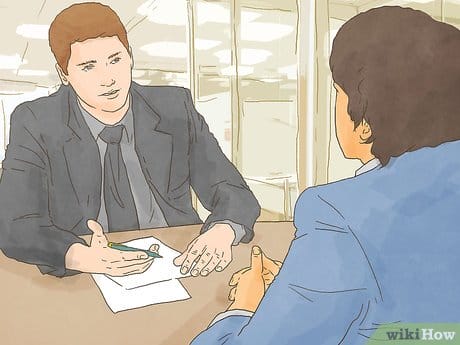
Method 2 of 3: How to Communicate with Subordinates
-
![How to properly manage people and get what you want: advice from a professional. How to manage yourself, people and life?]()
one
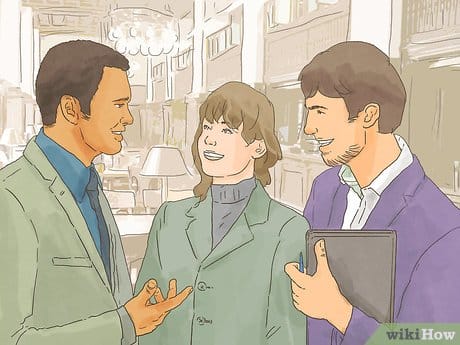
Get to know your team members better. You can't manage a team if you don't know your employees. Find out their strengths and weaknesses and what motivates them. There are many formal and informal ways to get to know employees better.
- Read the results of previous employee evaluations. They should describe the strengths and weaknesses of each person.
- Talk to people. One of the benefits of arriving first and leaving later is that you have plenty of time to talk to people. [10] Ask employees how they are doing at work and if they need help with anything.
- Host a dinner for your employees once a month and invite them to bring their spouses with them. Pay the joint bill. Talking to people informally will give you an idea of what motivates them in life.
- Elizabeth Douglas, CEO of wikiHow, advises: “Remember, you cannot manage all people the same way. Each person requires a special approach and help. To understand where the differences are, it's important to try different approaches and ask employees for their feedback. “
-
![How to properly manage people and get what you want: advice from a professional. How to manage yourself, people and life?]()
2
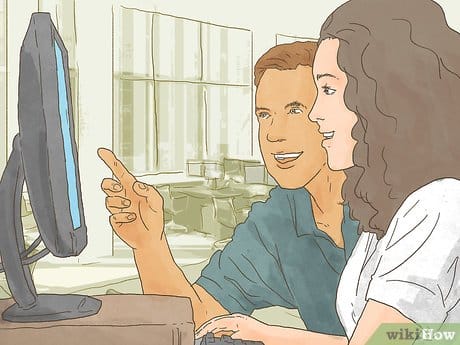
Meet regularly with your employees. You will need to find your own communication style, but you will not be able to immediately understand what will work with your team. Analyze how the team is responding to your actions in weekly meetings. Perhaps some team members hate meetings and prefer emailing. You will need to adapt your management style to suit your team, which may mean you have to make appointments with each employee separately to find out how things are going.
-
![How to properly manage people and get what you want: advice from a professional. How to manage yourself, people and life?]()
3
Learn to give effective feedback. Giving feedback is a skill that can only be learned through experience. In your reviews, try to give specific information and suggest solutions to problems. [11] You shouldn't just increase your team member's self-esteem. You must make everyone understand how they should act in the future.
- Use the pronoun “I” instead of “you”. The phrase “I believe that listening to the client's complaints is a more effective strategy” sounds better than “arguing with the client, you made the situation worse.” [12]
- Your feedback should suggest solutions to the problem. Explain to employees exactly what they need to do.
-
![How to properly manage people and get what you want: advice from a professional. How to manage yourself, people and life?]()
four
Learn to listen. People who have recently become managers sometimes feel that they should have answers to any questions, but it is important to be able to listen. Ask employees what suggestions they have for solving problems and implement what you find useful. [13] Always emphasize whose ideas it was.
- Active listening involves eye contact and full attention to the other person. Don't check your email and turn off your phone.
- Take your time to reject the idea. If you shrug off every idea, your subordinates will not want to share their thoughts with you in the future.

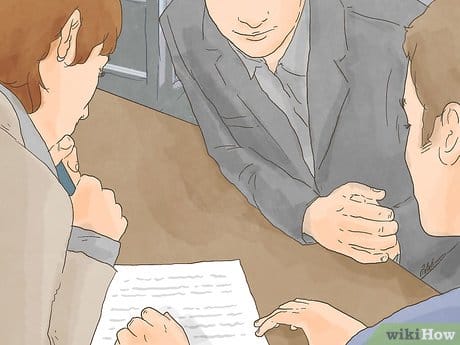
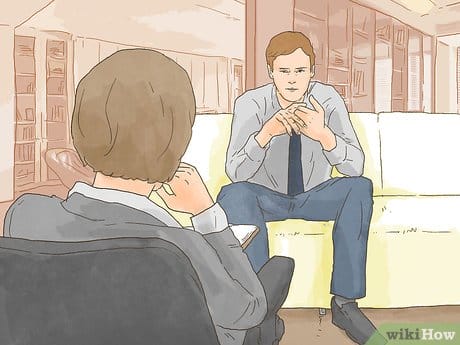
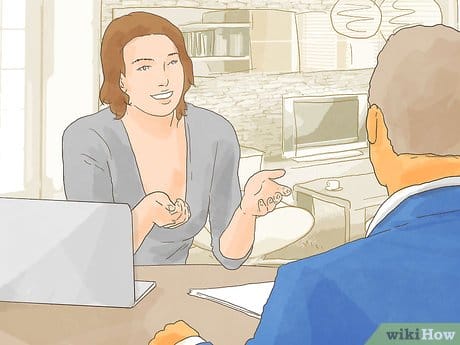
Method 3 of 3: How to be productive with your team
-
![How to properly manage people and get what you want: advice from a professional. How to manage yourself, people and life?]()
one
Decide how your team's activities align with your company's goals. Every team needs to have goals and team spirit will suffer if the team doesn't know what to do. Unfortunately, young managers often do not know themselves what the goals of the team are. Talk to your supervisor. Ask how your team's work contributes to the cause. [14]
-
![How to properly manage people and get what you want: advice from a professional. How to manage yourself, people and life?]()
2
Help employees prioritize their work. A good team should have a lot of work, but team members may not understand what tasks should be tackled first. As a manager, you are able to see the big picture. Explain to your employees which tasks should be prioritized. Communicate this information both orally and in writing so that it does not get lost. [15]
-
![How to properly manage people and get what you want: advice from a professional. How to manage yourself, people and life?]()
3
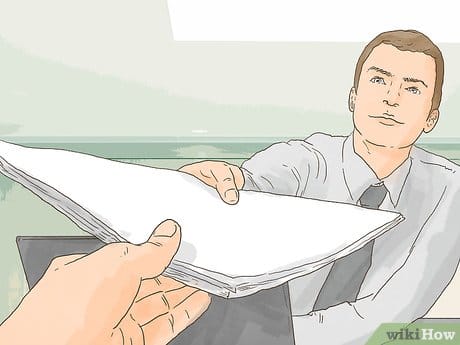
Delegate work to your team members. Many novice managers find it difficult to delegate their responsibilities, since it is still difficult for them to trust employees. However, if you do it yourself, you will quickly get burned out. [16] What's the best way to start delegating responsibilities? Small. Give your employees small tasks and check who did the best. Continue to outsource responsibilities to those performing well.
-
![How to properly manage people and get what you want: advice from a professional. How to manage yourself, people and life?]()
four
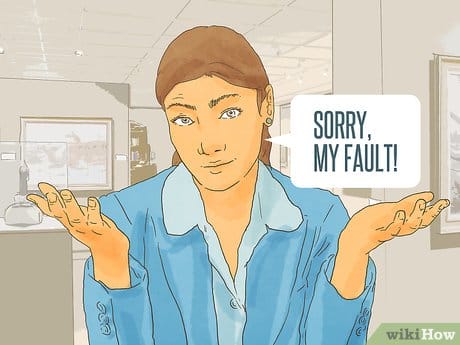
Admit your mistakes. You don't have to appear to be an invulnerable person. This can be hard to come to terms with, especially if you still feel insecure about your new place. However, if you admit your mistakes, your team members will know they can do it too and will seek help. [17]
-
![How to properly manage people and get what you want: advice from a professional. How to manage yourself, people and life?]()
five
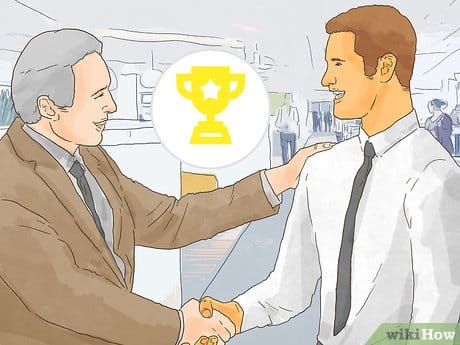
Reward great work. There are many types of rewards, and money is just one of them (although money is often the most valuable). The remuneration must be commensurate with the merit. However, you should first figure out what rewards motivate your employees. The following methods can be used:
- If the achievement was one-off, write a sincere thank you letter. Explain to the employee what they did particularly well, and thank them for their efforts. [18]
- Reward great results with praise in general meetings. Keep in mind, however, that some employees don't like to be publicly discussed about their work, so pay attention to how people react and keep that information in mind in the future.
- If you want to reward regular accomplishments, declare that person as Employee of the Month or arrange a ceremony to present the person with a more substantial reward (such as a gift certificate).
-
![How to properly manage people and get what you want: advice from a professional. How to manage yourself, people and life?]()
6
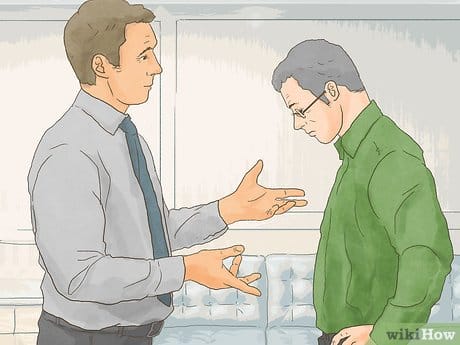
Learn to correctly suppress unwanted actions. You will probably have to suppress unwanted actions of your employees at some point. Perhaps your company has a special protocol for this: first a verbal warning, then a written one, and then a more severe punishment. [19] Check with Human Resources for this information and follow established protocol.
- However, this should be regarded not only as a punishment. By your actions, you can help the employee. If possible, explain to the employee where in the company he can turn for help in case of addiction, financial or family problems.
-
![How to properly manage people and get what you want: advice from a professional. How to manage yourself, people and life?]()
7
Learn from your mistakes. Since you will learn from your own experience, you will need to constantly collect feedback on your management methods: for example, you are not helping to achieve goals, employees are leaving you, and so on. Reflect on what you did wrong if you had mistakes. Seek advice from your mentor or coach to see what you can do better next time.

Objectives
Often, to achieve a goal, you need the help of other people, but it is not always possible to ask for it directly. Practical psychologists became interested in influencing the psyche of another individual. They managed to create techniques, with the use of which any individual can control an interlocutor, a group of people, and even an entire country.
Manipulation skills are essential in all areas of life. They help parents to unobtrusively educate, instill in children the norms of behavior. Businessmen – to establish business contacts with partners. A leader who skillfully manages subordinates reduces the level of conflicts in the team, creates a favorable environment. The seller, knowing the peculiarities of the psyche of buyers, imperceptibly pushes them to buy.
People manipulate each other all the time. But many do it unconsciously, because of which the achievement of results stretches for years. If an individual possesses management skills and applies them intelligently, he manages to manage his own life. Such people quickly move up the career ladder, achieve personal goals.
Classification
There are many methods of influencing the psyche. They differ in complexity, duration of influence. The only quality that unites all methods is secrecy: a person should not understand that he is being manipulated. Methods of exposure:
- Suggestion. The manipulator “puts” the necessary thoughts into a person's head, leading him to certain conclusions. Suggestion occurs through communication, “accidental” throwing of facts, unobtrusive discussion of a problematic topic.
- Manipulation. A complex process of influence, which requires a combination of several methods of influence. The leader becomes for his subordinates who they want him to be. He combines emotional pressure, offering a benefit, and playing on the fear of a missed opportunity. The choice of manipulation technique is individual. The influence affects both the crowd and the individual.
- NLP. This technique allows you to program the target. It is the most difficult one, requiring deep knowledge of psychology. NLP manipulation techniques cannot be overcome. They are similar to hypnosis: the individual is not aware of the control of an outsider, believes that he himself has made a decision.
All methods are effective, but the degree of influence also depends on the abilities of the manipulator, the psyche of the person who is trying to control.
Features of subordination
To understand how and what control methods to choose, you need to know the peculiarities of the work of the psyche. The manipulator must:
- Radiate positive energy. A friendly person evokes a response – others unconsciously reach out to him. The opinion of a positive person is perceived favorably, even if he expresses controversial things.
- Show no excitement. Even in a situation of fierce dispute, calmness must be observed. This will confuse the opponent, show the manipulator a strong person. If there are witnesses to the dispute, they will remember who was in a better position.
- Manage your time, be able to plan things. You cannot learn to influence other people if you cannot manage your own priorities. You need to get rid of meaningless activities.
- Always make eye contact. When an individual hides his eyes, he is treated with suspicion. The leader always looks in the face, does not look away. If it is uncomfortable to look into the eyes, you can look at the point between the eyebrows.
- Don't be afraid to get into conflict. Fear of conflict is a major obstacle to learning management techniques. Conflict is a clash of interests. You need to learn to defend your opinion. Of course, this will displease opponents, but you cannot adapt to them, otherwise you will not be able to influence the situation.
- Build strengths. You need to use and develop your advantages. If an individual tries to develop weaknesses, he is spending the time that he could have spent on strengthening strong skills. You need to pump the skills that you already have – this will allow you to quickly increase the level of efficiency.
- Make a positive first impression. Fixing a bad first impression is difficult and better avoided. In order for the object of manipulation to form positive associations, you need to prepare for the first meeting. Find out what he likes, choose a cafe with a suitable atmosphere. Give a small gift. It does not commit to anything, but it will be a good sign of attention.
When confident behavior becomes familiar, you can move on to honing manipulation techniques.
Methods and methods of influence depending on the abilities of the manipulator
The choice of the appropriate method of influence depends on the goal, the characteristics of the character of the people to be convinced, the moral values of the manipulator. You can influence through physiological needs, emotions.
Visual influencers
The leader must take care of the appearance. People study, evaluate each other by their appearance, since the main channel for obtaining information is vision. A solid appearance inspires respect, emphasizes a high social status. For men are required:
 business suit;
- neat strict haircut;
- lack of stubble;
- expensive accessories;
- impeccable posture.
Women can wear a business dress instead of a suit. Makeup is light, almost invisible. This type of appearance arouses interest, a desire to listen to words.
Visual aids also include additional materials that accompany speech: posters, videos, tables and graphs. Presentations and layouts are used in negotiations.
Acoustic influences
Impact with the help of speech features also gives a good result. You need to watch your voice: speak measuredly. He should sound benevolent, but not ingratiating. You can't speak too quickly – it is annoying, discourages interest in words.
Popular speech methods of exposure:
- repeating the last phrase after the interlocutor;
- offering two options to choose from, both of which are beneficial to the manipulator;
- leading questions, pushing to express their true desires.
To get a positive response from a skeptical interlocutor, you need to create or wait for a suitable situation. A noisy place with a large crowd of people is suitable for a conversation. In such an environment, the object of manipulation will want to end the conversation as soon as possible and quickly agree to the proposed conditions.
Manipulation requires strong willpower and the ability to control your emotions. When guiding the other person, the leader must control the situation. Otherwise, the object will take over the initiative and will not be able to influence it.
When self-control is mastered at a sufficient level, you need to start working on your reputation. It is important to create the right impression, trust, and establish an emotional connection.
First, you need to take the position of an observer: learn to evaluate people from afar, try to guess what they are thinking. In the dialogue, take the position of an active listener: do not impose an opinion, agree with the interlocutor. And only when it opens, you can proceed to suggestion.
An experienced manipulator can at first glance assess how he should behave with an object. It will take years of continuous training to develop this level of skill. To understand how to manage yourself and people, build relationships, influence the situation from the outside and from within, you need to study at least the basics of human psychology.
Why methods of influence do not give results?
Even experienced psychologists are not always able to choose a method of influencing a person. This could be due to:
- Depleted personal resource. If the manipulator is tired, annoyed, cannot concentrate, he will not be able to maintain a leadership position. In such a situation, he himself can become an object of influence. It is better to postpone the conversation, otherwise it can lead to an irreparable result.
- Psycho-emotional instability. If the target has mental illness, the manipulation can backfire. Instead of calming down, the mentally unstable person will experience an attack of aggression. This must be taken into account when choosing a management technique. It is important to remember that a sociopath cannot be controlled because he himself has an innate ability to manipulate.
![How to properly manage people and get what you want: advice from a professional. How to manage yourself, people and life?]() Uncertainty in their abilities. When a leader does not believe in himself, the object of influence is also felt. Then the desire to subjugate will lead to the fact that the manipulator is more disappointed in his abilities.
Uncertainty in their abilities. When a leader does not believe in himself, the object of influence is also felt. Then the desire to subjugate will lead to the fact that the manipulator is more disappointed in his abilities.- Incorrectly selected method of exposure. If the technique does not work, the impact must be stopped.
- Purpose not defined. When the leader does not see the result and applies the techniques of influence just like that, they will be ineffective.
 Uncertainty in their abilities. When a leader does not believe in himself, the object of influence is also felt. Then the desire to subjugate will lead to the fact that the manipulator is more disappointed in his abilities.
The main thing that the manipulator should strive for is not to allow the objects of influence to understand what is happening. If a person notices that he is being used, the consequences can be dire.
How marketers manipulate us
Before we start, let's look at examples of how other people control us. If anyone has mastered the art of manipulation, it is marketers. As an example, let's take a regular supermarket that everyone probably visits.
Imagine the situation: you came for bread, but it was not in the usual place. For some reason, the product was moved to the other end of the supermarket, which made it necessary to spend a fair amount of time to find the flour product. Why does this happen sometimes? It's simple: while you are looking for a specific product, you are looking at other products on the shelves, thus increasing the chance that you will buy something. If the bread were in the usual place, you would most likely walk right through to it, not noticing other things for sale.

The last example. Many of our readers already have children. Surely you often go to the supermarket with your baby. Were there situations that you stood at the checkout, and your child was throwing a tantrum and wanted to be immediately bought a Kinder surprise or other tasty treat from the shelf? We believe so. When the baby roared and wanted something badly, you were ashamed to refuse him, given that everyone in the queue was staring at what was happening.
Why is this happening? Elementary: children's products are deliberately placed at the very bottom, where the child's field of view is, so that he can see and want them. What is this if not manipulation of others? If someone can manipulate people for selfish motives, what is stopping you? Now comes the fun part!
How to manipulate people: from complex to simple and vice versa
The psychology of a person is such that he tends to agree to the request of another if he has already refused him something. Many people know this and successfully manipulate such knowledge. The bottom line is that you need to ask someone to do something difficult, and when he refuses, ask for something simple. A trivial example: you can try to borrow money from someone in this way. To begin with, say, ask for 10 thousand rubles, and when you hear a refusal (since the amount is rather big), ask for a thousand, promising that you will be sure to repay the debt in the near future. With this method, you put a person in an awkward position, because no one wants to refuse twice in order to maintain a friendly relationship.
This rule works and vice versa. If you go up to a passer-by and ask to take you to a certain place, he will with a high probability refuse (“I have a cat,” “I'm sorry, I'm in a hurry to go out on a date,” etc.). But if you first ask for directions, and then ask for a lead, then with a high probability you can hear an affirmative “yes, of course.”
Proximity manipulation
If the boss at work is going to scold you, the main thing is to approach him correctly. We are now speaking literally. When the moment of “shame” comes, approach the boss almost end-to-end and show that you are ready to listen carefully. Often, such a technique discourages a person, because when someone is in close proximity, many lose courage. Check it out and see for yourself!

Sex as a manipulative weapon
Many girls intuitively know how to manipulate people through sex. The bottom line is quite simple: if your boyfriend is behaving well, you should encourage him in bed, if not, punish him. If a man is guilty, you can refuse him or be indifferent in bed. When he does something pleasant, you should thank your beloved. Thus, the young person will develop the following model of thinking: “good deed = great sex.” He will strive to please you with gifts in every possible way, make surprises and other amenities, just to earn your intimate disposition. Let it be a little wrong to manipulate this way, but such methods really work, so you can sometimes afford to “indulge”.

Guilt
Learning to manipulate a person's consciousness with the help of a sense of guilt is the simplest thing, and such a skill is probably inherent in every woman. It's simple: you ask someone for something, he refuses, you walk around all so sad, showing with all your looks how much you suffer. Provided that a person is not indifferent and has at least a bit of empathy, he will feel guilty. If it is strong enough, he will certainly fulfill your request, since he will not be able to withstand such pressure. Be careful: emotional personalities can become depressed altogether, so it is better not to abuse the described technique.

How to manipulate others with beauty
If nature has rewarded you with beauty, manipulate it. Good looks can work especially well for strangers seeing you for the first time. Approach someone and ask for something with a smile. They are more likely to help you, as people are more willing to make concessions to those they like. The main thing here is to be able to present yourself correctly. Be natural: a forced smile will betray you with giblets.
Flattery – bullet manipulation
It is extremely difficult to build a relationship with an individual who has an overestimated self-esteem, but it is easy to manage him. To gain favor, it is enough to include flattery in the conversation. The problem is that it is quickly recognized, and therefore one must have a good command of the language in order to flatter naturally. Continually praise the interlocutor, compliment him, confirm his undeniable status, and then ask for what you want.
Using fear
People are afraid. Even the bravest have nightmares. Human fear can be skillfully used, and this has been practiced for many years, especially in business. A trivial example: you came to the dentist, and he says that it is necessary to remove the wisdom teeth, since they are not located correctly, which can cause complications. Why would a doctor lie? First, the specialist wants to make money. Secondly, you will not need wisdom teeth anyway, and therefore he does not see anything wrong with removing them, even if there are no problems. Thousands of such examples can be cited, but the essence is simple: human fear is exploited by those who know how to do it competently.

Now that you are familiar with the basic methods of manipulation, you can practice, and do not be tormented by your conscience that you use people, because they also use you!
Manipulation: the psychology of communicating with people
Psychological manipulation of people is a complex of various psychological methods, techniques and methods of influence.
A real manipulator is a master and expert in his field, for whatever purpose he may act.
The victim is unaware that he is in the hands of a manipulator. The psychology of manipulation is also used for positive purposes, for example, therapy of disorders, treatment with hypnosis.
Anyone can be influenced by a dexterous manipulator – he can be anyone, from a politician to the seller of the nearest store. Reason: everyone wants to achieve a result – to sell a product, buy at a bargain price, become popular, rich, make a good impression, etc.
Let's say a woman comes to a job interview. A natural manipulation of the intention to please the employer would be her smile and friendly tone of communication.
Another option for mind control is advertising the new season of your favorite TV series, the second part of the long-awaited film. The manipulation works – there is a desire to go to the cinema, buy a movie, watch a series on an advertised website, on TV.
Another example:
The doorbell rings – a consultant selling a cleaning device is on the doorstep. He immediately invites the owner of the apartment to demonstrate the product, starting to describe its positive qualities. Using the mention of a discount, a sale, the consultant acts as a manipulator and sells the device, and the buyer does not notice how he draws up a loan for the device. And only after the persistent seller leaves, he remembers that he already has a vacuum cleaner and a mop, and he did not need more for cleaning.
Most psychological manipulation is not difficult to recognize, but it is often difficult not to succumb to the manipulation. There are ways to protect against manipulation.
Psychological portrait of the manipulator
Every manipulator is a psychologist to some extent. The manipulator can determine the type of “victim”, calculate its weaknesses, disadvantages and advantages of character, find a weak point and influence it for its own purposes.
To distinguish a person who seeks to use others for his own purposes, it is necessary to know the main signs of manipulators.
The way of life of the manipulator is determined by the qualities transmitted in comparison with the qualities of the actualizer in this table:
| Manipulator | Actualizer |
| Lies: necessary to impress, to play an image, to portray non-existent emotions. | Honesty in all forms, sincerity. |
| Unconsciousness: characterizes a person's inability to notice anything in life, except for himself and his desires. | Awareness: expressed in understanding the needs of others and their own desires, interest in life in all its manifestations. |
| Stealth and control: a person monitors the behavior of others and his own, without giving out his true intentions. | Freedom: openness to everything new, the ability to become the master of your life. |
| A cynical attitude towards society: it expresses a skeptical view that in a relationship you can be either a manager or a controlled one. | Belief in yourself and others: necessary to cope with difficult circumstances and to establish contact with society. |
What types of people are most susceptible to manipulation?
The degree of influence of one person on the psyche of another depends on the structure of this very psyche:
Not all people are influenced, and a good manipulator knows this. Therefore, his psychology of manipulation applies only to those people whom he divides into different categories.
Potential victims of the manipulator:
- The category of confident and complete individuals with some disadvantages:
- sane, with developed logical thinking; instilling anything in such individuals is not easy. They have a weak point: a love of convenience, well-being, comfort and safety. This is manipulation at the level of needs;
- entertainment lovers are a vulnerable target, rationality and common sense are not their priority;
- excessive materialists quickly succumb to ideas that promise profit;
- overly economical: they choose the cheapest and in large quantities.
- narcissists succumb to manipulation with compliments and flattery;
- with brightly developed animal instincts – they are brought down by the primitiveness of needs: love for food, sleep, sex;
- conscious intellectuals take the side of the manipulator in order to understand his point of view;
- with a developed sense of justice – it is enough for the manipulator to put pressure on the victim, focusing on conscience and a sense of duty;
- increased self-esteem – it is easy for such a person to inspire that he deserves more;
- the greedy give in to tempting offers and promises;
- elderly – such people are often gullible, because they are not adapted to the framework of the new time and live in the circumstances of the previous, more open conditions.
- This category includes insecure, emotional, as well as creative individuals who are easy to control at the level of feelings:
- with low self-esteem – tend to seek the approval of others and behave as expected of them;
- dependent – not able to answer “no” to the proposal;
- naive and gullible believe that no one can use them with selfish intentions;
- dependent on public opinion – this type is easy to influence with the help of criticism;
- impressionable subtle romantic natures, amenable to charm;
- honest ones do not expect dirty tricks, they believe that they should be treated the same way;
- infantile are incapable of objective assessment due to immaturity;
- impulsive ones are prone to hasty rash decisions.
- A special category that includes people with mental disabilities – they are more than others incapable of conscious perception of the situation:
- emotophobes are a pathology in which a person is afraid to see negative emotions on the face of others. This pathology makes him vulnerable to manipulators;
- with masochistic inclinations – they allow the manipulator to mistreat them out of guilt, believe that they do not deserve better treatment;
- unhealthy addiction – these people need love and recognition so much that they are ready for anything for this;
- weak and unstable – they cannot protect themselves from negative external influences. These people are easily influenced, intimidated and even hurt.
As can be seen from this list, most people are influenced to varying degrees. The manipulator prefers to avoid strong personalities with discernment.
In contrast to the figure of the manipulator, the figure of the actualizer stands out in psychology.
An actualizer is a balanced, harmonious type of personality, living an active inner life and affirming values such as freedom and dignity. Such a whole person is able to express his own opinion openly and will never humiliate another person for his own benefit.
The concept of an actualizer is necessary here – it reveals the contrast between a healthy person and an inferior person who is trying to compensate for her inadequacy by influencing another person.
Types of manipulations in psychology
The best way to defend against the enemy is to know the enemy tactics. To understand how to avoid the status of a victim of manipulation, you need to know how the impact occurs.
Basic techniques of psychological manipulation:
Gaslighting
Phrases “This did not happen”, “It seemed to you.”
The reception makes the interlocutor doubt the correctness, as a result of which he ceases to trust himself. The purpose of manipulation is to convince the victim of his inadequacy of perception.
You should record the events that are taking place and have before your eyes evidence of your own innocence: an entry in a diary, a story to friends, in official cases – a document confirming the reality of events. The main thing is not to let the manipulator distort your point of view, not to lose independence of judgment.
Projection
Shifting blame, excuses.
The technique helps the manipulator to avoid responsibility for the flaws that he does not want to notice. The manipulator projects errors and vices onto the victim, bringing charges against her.
You should not take projections to your address, as this will lead to constant exploitation. You should not go for rapprochement with a provocateur: he is not able to change and be responsible for his actions.
Pointless conversation
A large stream of useless and incoherent information.
The method is used by a manipulator with excessive ego in order to concentrate all attention during a conversation on himself. The interlocutor does not at all accept an opinion that differs from his point of view, and with a mountain of unrelated arguments is able to trample the interlocutor into the dirt only for his individual and independent attitude.
Anti-manipulation: avoid communicating with the provocateur when disputes arise. It is important to respect the right of people to their point of view.
Verbatim statements
Labeling, superficial judgment, exaggeration of any aspect of the problem, general phrases like “nothing suits you at all.”
A manipulator using this method is most often not inclined to deep analysis, does not have high intelligence, and is content with shallow conclusions, ignoring nuances. In disputes, such an interlocutor will find fault with trifles, hanging labels on every attempt at argumentation.
The real problem must be kept in mind without responding to unfounded accusations.
Substitution of concepts
Distortion of context, transformation of advantages into disadvantages, questioning with coloring of the initial statement in the negative.
The technique helps the manipulator to paraphrase statements in his favor, perverting the original meaning of the phrases. The goal is to make the interlocutor's position absurd and offensive.
Example: “This color does not suit you” – “Are you saying that I look bad ?!”
You need to recall the original statement, ask to repeat it. Stop talking if that doesn't work.
Change theme
Counter question, counter accusation, translation of the topic, evasion of responsibility.
The technique is used to get away from an uncomfortable question, or hush up a statement. A manipulator who suddenly changes the topic does not want to be compromised by the answer he has to give to the question, and deliberately disrupts the discussion.
To discourage manipulation, you need to repeat the statement or question, not to let yourself be pulled away from the original topic.
Threats
Unreasonable demands, ultimatums, imperative tone, veiled threat emerging through ostentatious benevolence.
The purpose of the reception is to punish the interlocutor for the fact that he in some way does not agree with the manipulator, calls into question his statements. Such a manipulator can jokingly threaten something for non-compliance with his conditions, and is not ready to compromise.
How to fight: respond to a joking threat with a joking refusal to obey the requirements, in case of attempts by the manipulator to dictate his terms to end the conversation.
Insults
Inflating the problem, using violent attacks for the purpose of sharp criticism.
The manipulator seeks to pry the interlocutor out of himself, provoke a response. By insulting and criticizing another, he defends wounded pride. Using this technique means that the manipulator has run out of arguments.
It is important not to respond to the insult with retaliatory attacks, to make it clear that such an appeal is unacceptable, and to end the conversation.
Training
Negative statements about the positive qualities of the interlocutor, humiliation of his actions.
The manipulator uses this method in order to subdue the interlocutor, and draw all attention to himself at the expense of belittling the qualities of others. The manipulator needs to control the neighbor and prevent the latter from being in a better position.
How to fight: understand your place in society, do not allow yourself to be influenced and control the situation:
Gossip
Harassment, denigration, slander.
This technique can be used even when the victim does not know about it. The manipulator seeks to destroy the reputation of another person in order to rise at his expense. In the case of open slander, the manipulator does not hesitate to monitor a person's actions, touch him in private and provoke a violent negative reaction, which he will notify others about.
How to fight: Document the facts, be patient and resist provocations, try to exclude the aggressor from the list of problems and ignore the gossip.
From love to hate
Romanticization followed by devaluation and contempt, the transition from passion to coldness.
The technique is common in relationships when the manipulator first idealizes the partner, and then begins to neglect him and get rid of the annoying relationship. In such a situation, each new victim will always become an object of hatred in the end.
In order not to fall for such a manipulation ¾ pay attention to how a person behaves with others, speaks about different people, what qualities he shows in communication. It is worth waiting and not rushing to conclusions.
Triangulation
Using someone else's opinion to confirm your own point of view, attracting an outsider into a conflict, dividing into groups.
The technique is typical for cases when it is necessary to cause jealousy or uncertainty of the interlocutor, to question his point of view. A manipulator is able to let gossip in order to shake the self-esteem of the interlocutor, use unfounded facts, gather a circle of adherents around him to prove his own innocence.
Shame manipulation
Pointing out the shortcomings, the phrase “are you not ashamed?”
The technique allows you to negatively affect the self-esteem of the victim, to lower self-esteem. In this way, the manipulator develops in the interlocutor a sense of guilt and his own insignificance.
You should not go into close contact with someone to whom there is no trust. There is no need to tell the circumstances of life that can be used by the manipulator to influence the conscience.
Excessive control
Restrictions, isolation, conflicts from scratch, imperative tone.
This technique gives the manipulator a sense of complete control over the object. Control can be social, financial. In this situation, the manipulator seeks to completely take over the life of another person, his feelings, and when he feels the loss of power, he breaks down for any reason. This is one of the most severe forms of psychological violence against a person.
Based on the above, we can highlight the basic rules for communicating with a manipulator:
- stick to logic, since this is the weak side of the manipulator;
- if necessary, put him in an awkward position with the help of frank questions and clarifications in order to bring to the surface the essence of his unattractive claims;
- make the manipulator feel comfortable in your company, so that the feeling of insecurity ceases to provoke him to manipulate;
- understand that no one is able to offend a person who does not want to be offended. A manipulator cannot make a victim out of a person who does not agree with this status;
- do not take unpleasant situations to heart and try to monitor your own reaction.
1 Important features for the future manipulator
A person who wants to learn how to manipulate others needs to have some special traits of his personality and skills or start developing them. These characteristics include:
- Acting skills.
- Ability to speak in public.
- Charisma.
- The ability to study people.
- Ability to learn from others.
1.1 Acting
The ability to completely cope with your own emotions, to convince others of something, even if this is actually not – this is acting or the power of persuasion.
Some have a similar skill from birth, but if it is not there or it is poorly developed, you can take acting courses or master lessons at home, learning to role-play different characters. But you will need to test the learning outcomes in real life and hone your skills.
1.2 Public appearances
In order for others to give a person what he needs, it is important to be able to talk with the public and, in particular, to conduct a monologue clearly and vividly.
This is especially important in a work environment where excessive emotionality is inappropriate, but argumentation and contagious belief in what the speaker will talk about is important.
1.3 Charisma
For the most part, it is charismatic individuals who are able to get what they want. In order to enter this category, a person must be able to create a positive atmosphere around him, give people a positive attitude during the conversation, and be able to use their own body language correctly. All this makes it possible to endear people to themselves, regardless of what age category and social status they are.
Charisma will allow you to give the person with whom the conversation will go, a sense of self-importance, interest in him and his feelings. And for this you need to be confident in your own words and actions, so that others take the person standing in front of them seriously.
1.4 Study of people
When working with people, it is important to take into account that each personality has its own psychological and emotional traits, and there is no such pattern of behavior that is suitable for influencing everyone. Before you start trying to control a person, you need to carefully study him, understand his psychology and what actions will help influence him.
For example, some personalities are extremely emotional, and in order to get what you want from them, you need to demonstrate your emotions, even if they actually do not exist, because from this category of people you need to get empathy and emotional return, which will turn into the ability to control them.
1.5 Learning from humans
The ability to manipulate people can be learned by observing someone who already has a similar talent. Having such a character in the immediate environment, you need to note the features of his behavior, dialogues and facial expressions.
The general picture will indicate what needs to be developed in oneself.
2 Basic approaches to manipulation
Psychology identifies two main approaches to manipulating others: emotional and intellectual. The first option is simpler, but not suitable for every person who needs to be influenced, but the second, although more difficult, is much more promising.
2.1 Emotional Impact
In accordance with this approach, the manipulator is simply required to evoke a certain emotion in a person, which will become the impetus for the necessary actions. The main basic emotions in every personality, which are popular with those who know how to manage people:
| Emotion | How does it work |
| Fear | The most convenient tool to influence a person. So, if you convince a person that for his actions or inaction he will receive serious punishment or lose something important, then he will quickly begin to work in the direction that will avoid the frightening development of events |
| Anger | A complex emotion that is mainly used to guide a person in a direction, rather than a specific action. And the aggression inherent in everyone here plays only into the hands of the manipulator, because it is enough just to give a reason to be angry with someone or something. The main thing is that the target for aggression does not cause fear in the person, otherwise the manipulation will not work. |
| Greed | It formed the basis for a lot of manipulation techniques. It does not require a special talent to scare or delight, it is enough to convince a person that for his certain act he will be able to get something very desirable for him, something that he would very much like |
| Pride | A great option if the person is highly susceptible to flattery and praise. Speaking positively about him, approving his actions, you can get the desired action. For example, praise for a financially unprofitable purchase or investment creates a positive attitude in a person's head and, if this kind of re-investment is needed, he will be less hesitant to get approval. |
| Envy | The vice of many, which is easily amenable to external control. To activate this emotion, it takes one or more times simply to point out that someone has something very good, something that is better than what the person has. The comparison will not be long in coming and the victim of the impact will start thinking in the desired direction. |
The choice of emotion and the corresponding technique depends solely on the psychological structure of the person who needs to be influenced.
2.2 Intellectual impact
The methods of influence through the human mind are rather limited, but at the same time they are the most effective. In this direction, they try to act from the starting point for each person – from the basis for reasoning. If you formulate the message correctly, the end result of which should be certain actions, a person will reach the desired result by his own reasoning. Although sometimes it requires accompaniment to the end of reflections, so that, if inappropriate thoughts appear, quickly return the chain to the right direction, throwing new food for thought.
Another option is faith. Everyone has certain knowledge and the ability to obtain it, but it is far from always possible to verify the authenticity of this information, and here faith will play the main role. A person needs to gradually give a certain message and feed it with data that is clearly structured and convincingly sounding. Then it will turn out to use the faith of this character in the words of the speaker, and as a result he will be influenced. This option can be called the suggestion of the correctness of their own words.
3 10 rules of manipulation
Regardless of which manipulation methods were chosen, there are ten basic aspects that can be used in different combinations and will help to influence a person, regardless of whether they will be surrounded by a work environment, friendly or otherwise.
| Aspect | Description |
| Sight | A person needs to look not directly in the eyes, focusing on them, but a little through, as if you can see not the personality itself, but its soul. Thus, the gaze will be piercing, indicating a decisive attitude. |
| Pauses | Tactless or confusing questions in a face-to-face conversation are not difficult, because you can simply not answer them. But if the conversation is in public, this behavior may be wrong and then an energetic pause is suitable. The person needs to look into the eyes, as if about to answer, but not say anything. As a result, he will be somewhat confused and avert his gaze, at this moment you can start talking on another topic or vaguely, and he will not return to this issue. |
| Encouragement | Some people, wanting to achieve something, can press on their interlocutor with an active and emotional demand, counting on the unwillingness of that to be in a conflict situation. In this case, it is important not to maintain the tone, but to pause and, with the most friendly intonation, encourage the person to continue the conversation. In response, he will soften and make a more profitable concession. |
| Protection | If the interlocutor does not take his gaze away, he may consciously or unconsciously try to influence his opponent. In this case, you should not accept his game. On the contrary, you need to smile, looking into his eyes, and switch your attention to show indifference to his actions. |
| Dislike | Contact with unpleasant personalities often becomes forced for any own purposes, but it is rather difficult to suppress this hostility. To do this, you can simply imagine this person in the role of a small child, it is more difficult to be angry with him |
| Pressure | If someone tries to exert pressure, repeating something and proving that he is right, he can be disarmed with one question “Are you pressing me?” He will be confused and will answer negatively, and at the same time it will calm him down, forcing him to refuse to strictly follow such a pattern of behavior. |
| The answer is no | A categorical refusal, without giving a chance to “see” or “don’t know,” is not suitable for every situation, but in the case of working with obsessive characters, this is a necessary aspect of behavior |
| Explanations | The feeling of guilt for the refusal of something causes in a person an impulse to explain his categoricalness, which is not worth doing, because this shows weakness and makes it possible to continue trying to persuade a person for his own benefit |
| Proof of | Correctness and proof are not the same. Rightness is rather a psycho-emotional state, therefore it is more difficult to push a person confident in his words from his position. It is much easier to confuse and redirect a person who is proving his point of view. Therefore, the lack of evidence often plays into the hands |
| Fixation | Getting a new social role or trying to get it, you need to clearly fix yourself in it for others. To this end, it is required to perform some action that would be inaccessible in a normal situation, but in a new role – real. For example, having received a promotion, it is necessary to make an important decision as soon as possible or give tasks to subordinates so that they quickly begin to adapt to new conditions. |
With the correct use of these elements, you can not only achieve what you want from others, but also suppress their attempts to get something.
Admit mistakes in your thinking
Humans will intuitively trust humans more than a computerized machine that is incapable of making mistakes. This is mainly due to the emotional connection we build with other people.
Mistakes in thinking are essentially any assumptions you make and premature conclusions that turn out to be wrong. In many cases, these assumptions may only be known to you.
To acknowledge these minor mistakes in thinking, you must show other people three important things:
- that you are not perfect;
- that you are like them;
- that you have emotional human qualities.
This in itself will create deep levels of understanding between you and the other person on an unconscious level.
Admit personal mistakes
People secretly (and sometimes openly) despise those who do not admit their personal mistakes. You may feel that admitting your mistakes will make you incompetent or unworthy of your status. But nothing could be further from the truth. The mistakes from which the right lessons have been learned are the seeds of evolution and change, without which it is impossible to grow and progress.
When it comes to mistakes, it's all about perspective: how you look at a situation and how you explain the lessons you've learned to other people. Other people do not want to be around those who are unable to admit that they were wrong. They have very little respect for such people. And where there is no respect, there is no place for influence.
See the situation from the other person's point of view
Often we just don't see things from the other person's point of view. Our opinion is, after all, only one side of the coin. We did not experience the emotions and feelings of the other person. Didn't grow where he is. Our thinking and personal experiences are different.
Want to learn how to influence others? Then, first of all, look at the situation with his own eyes. This alone will allow him to feel sympathy for you. This means that he will begin to listen to you with great interest.
How often have you said the phrase: “He behaves so illogical, go crazy!”? But is it really true? Maybe you were just not trying to understand him? Even if the logic turns out to be strange, it exists in one way or another.
You don't have to agree with that person's opinion. After all, the world is full of strange and illogical people. However, you must show that you are listening carefully and showing respect. It will also show the person that you share many common beliefs and values that will enable you to develop deep levels of understanding.
Don't make promises you can't keep
There is nothing that can break an understanding you already have with another person faster than the simple act of breaking promises. When we promise something to another person, he immediately creates a lot of expectations in his head. The very moment the promise is fulfilled, an invisible bond is created between you. This connection, however, is as strong as your word.
If you do not keep your word, then this connection quickly breaks down. Any expectations of a person will be deceived, and it will take a lot of time and effort to regain trust.
Therefore, remember a simple rule: do not make promises if you are not sure that you can keep it. Don't say that word. This applies even to the smallest promises, such as call back the next day. At the end of the day, you can just forget, getting bogged down at work. You will automatically lose the power of your influence.
On the other hand, if you promised to call at five o'clock in the evening and kept your word, then what message does the person receive? He is imbued with trust and believes that he can rely on you.
Learn to listen
Anyone who wants to learn how to influence people should follow the 70/30 rule. This means speaking 30% of the time and listening 70%. You should also develop a habit of asking effective questions that will allow you to delve deeper into the meaning and motives of the words the other person is saying.
Below is a list of typical questions to ask yourself during a conversation to make yourself more aware:
- What is this person trying to tell me?
- How do I feel about this?
- What kind of reaction does he expect from me?
- Why is he telling me this?
- What are his motives?
Becoming an effective listener requires the ability to develop a set of fundamental skills that will open channels of communication and promote deeper understanding. In addition, it also requires a deep awareness of the obstacles, problems and barriers that prevent you from understanding the interlocutor. Let's touch on them in more detail.
1) Content of the message
The first barrier to effective listening is the content of the message itself. If the message of the interlocutor is difficult to understand, it is unfamiliar or simply not of interest, this will significantly complicate the transfer of meaning to the listener.
The solution is to ask a series of open-ended questions that will help you gain a deeper understanding of the topic under discussion.
2) Psychology of the listener and his interlocutor
The second barrier to effective listening is hidden in the psychology of both interlocutors. From time to time, the interlocutors can be so different from a psychological point of view that the message will simply be misunderstood, misinterpreted, or even completely lost in the bins of the mind.
The solution is to work on developing deeper levels of understanding and looking for common foundations that will allow you to tune in to the psychological wave of the interlocutor.
3) Environment
The third barrier to effective listening is the environment. The environment can be too noisy, hot, cold, bright, uncomfortable, humid, windy, stuffy, or dirty. Thus, this environment will exhibit a range of distractions that will prevent the message from passing through in its intended form.
The solution is to simply find an environment that has as few sensory distractions as possible. You also need to understand that everything we hear goes through a set of psychological filters that we have cultivated throughout our lives.
There are nine filters in total, and we'll talk about them now. Keep in mind that messages from someone to you do not necessarily go through every filter in chronological order. (By the way, this list will also help you improve your speaking skills.)
- The first filter: the ear. Here, the interlocutor's message travels through our eardrums, where they begin their long journey of interpretation. We must be able to physically hear all the message that a person conveys to us. However, this rarely happens due to the three barriers we discussed above.
- Second filter: selection. The message then goes through our filtering filter. He directs our focus and attention when interacting with other people. If, for example, we are momentarily distracted from other sensory stimuli while listening to the words of the interlocutor, then they will naturally be re-interpreted exactly as intended.
- Filter three: cultural and social class. The message then passes through the filter of cultural and social class. It is riddled with preconceptions and prejudices that are a reflection of a life of social conditioning. At this stage, it is important to rethink the interlocutor's message once again in order to perceive his words without bias.
- The fourth filter: personal values. Our values are nothing more than emotional interpretations and labels for our experiences. We value what we consider important and worthy in our lives. Therefore, we will interpret the words of the interlocutor in accordance with our values. If, for example, our main value is to be loved or loved, we will interpret the words of the interlocutor in terms of love. That is, to hear what we want to hear. If we value morality, our filter will analyze words from this point of view.
- Fifth filter: beliefs. This filter is permeated with deep beliefs about the world, ourselves, society and other people. It is tinged with bias, self-restraint, and emotional assumptions. Anything that does not fit into our beliefs, we often automatically reject on an unconscious level. This, therefore, does not allow the interlocutor's message to be interpreted in the correct context.
- Sixth filter: emotions. Every second of our lives we experience certain emotions that naturally affect our state of mind and how we interpret information that comes from the external environment. Therefore, we will perceive the words of the interlocutor based on what we feel here and now. If, for example, we feel joy and satisfaction, then we will interpret the words of the interlocutor positively. When angry or angry, the interpretation will be completely different.
- Filter Seven: Personal Attitude. How you feel about the other person influences the interpretation of his words for the better or worse.
- Eighth filter: personal decisions. If the words of the interlocutor do not correspond to your past choices and decisions, then they will most likely be interpreted negatively. This leads to disagreements and misunderstandings.
- The ninth filter: memory. In the same conversation, we tend to forget information that was conveyed to us a few minutes ago. And all because they did not pay conscious attention to her. This also leads to controversy.
They say that 25% of all messages are incomprehensible to the listener. How to fix it? First of all, study these filters and always think about them. Only when you learn to be aware of them can you think and influence more effectively. Remember that a good listener has more influence than a storyteller. But that doesn't mean you don't need to learn how to tell stories.
Sources used and useful links on the topic: https://ProPanika.ru/psihologiya/psihologiya-cheloveka-kak-upravlyat-lyudmi/ https://ru.wikihow.com/%D0%BD%D0%B0%D1%83 % D1% 87% D0% B8% D1% 82% D1% 8C% D1% 81% D1% 8F-% D1% 83% D0% BF% D1% 80% D0% B0% D0% B2% D0% BB% D1% 8F% D1% 82% D1% 8C-% D0% BB% D1% 8E% D0% B4% D1% 8C% D0% BC% D0% B8 https://mystroimmir.ru/psihologiya/upravlenie-lyudmi. html https://mamsy.ru/blog/umenie-manipulirovat-lyudmi/ https://ProPanika.ru/psihologiya/kak-manipulirovat-lyudmi-sovety-po-psihologii/ https://doctorfeel.net/human-psychology /other-people/kak-upravlyat-lyudmi.html https://4brain.ru/blog/how-to-teach-people-to-influence/
Post source: lastici.ru