
Henna and basma for hair: proportions, colors and dyeing rules. We compose the proportions of henna, basma and natural substances to obtain the desired hair color
What is basma and how you can dye your hair with it
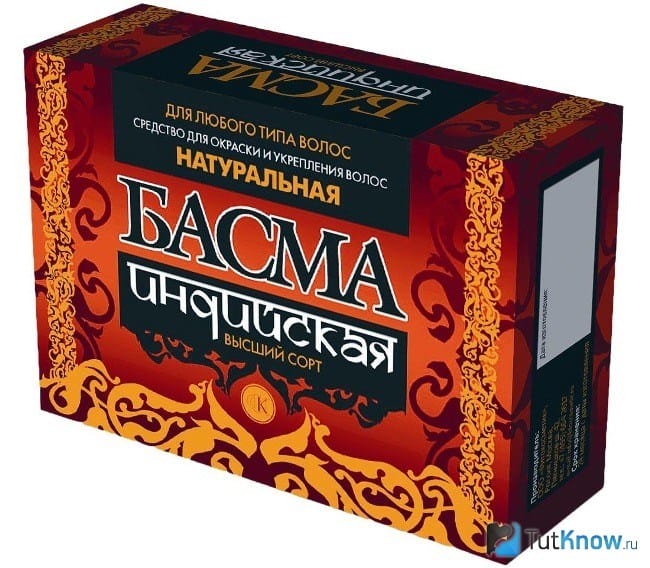
Basma is a natural dye, which was known back in the days of Ancient Egypt. It is a powdery blue-green substance obtained by grinding the dried leaves of the indigo plant.
This natural dye not only gives the hair color, but also heals it, nourishing it with vitamin C and useful tannins, promotes the regeneration of the skin, and prevents its inflammation. It is also used to treat dandruff and strengthen hair.
IT'S IMPORTANT TO KNOW! You should use natural basma without adding chemicals. The dye affects the hair very intensely, changing its structure, which is why the resulting dark shade is very difficult to remove.
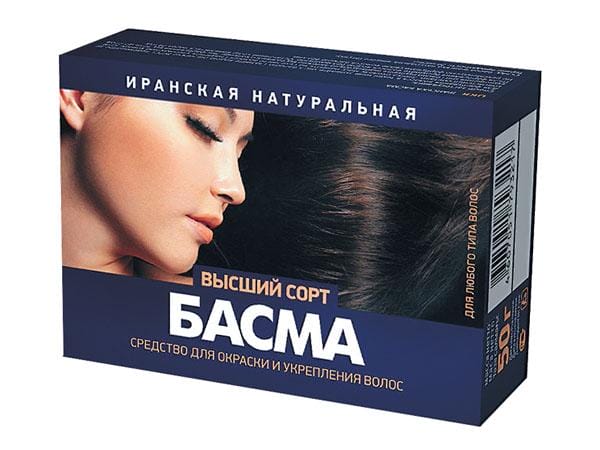
Using pure basma for coloring, you need to take into account that the result will be a rich black with shades of blue. Therefore, it is often mixed with henna to achieve a copper to dark chestnut color.
The mixture is applied to washed, towel-dried hair. To obtain a black color, basma and henna are applied sequentially, separately from each other.
The powder of both substances is mixed in a glass container with hot water or brewed coffee in a small amount. the output should be a mushy mixture. For a heightened effect, you can add shampoo, flax extract, glycerin – this will facilitate easier application, and subsequently the color is washed out longer.
Types of basma and its cost
The type of basma depends on its territorial origin. It can be Turkish, Iranian, Yemeni, or well-known Indian. The latter is just the most popular of all of the above, since it is dyed softly, and the color stays on the head longer.
Iranian is used in most cases to obtain chestnut shades. Indian – for the acquisition of black.
Within the market, the cost of these natural paints ranges from 20 to 400 rubles per package. Most often, the role is played by the brand and the presence or absence of various auxiliary useful additives and vitamin complexes. Here everyone decides for himself what he needs. It can only be noted that Basma itself is an excellent restorative agent.
What result can you get, photo before and after
Below are photos after applying basma.
Properties of basma when dyeing hair
The use of such a powder began in the old days. It was made from the leaves of the tropical indigofer tree. Flour obtained in this way is gray with a greenish tint. Therefore, it is not recommended to color with one basma, otherwise you risk turning your curls from natural to blue-green. Moreover, it is rather difficult to wash off, paint over an unusual shade.
The benefits of basma for hair
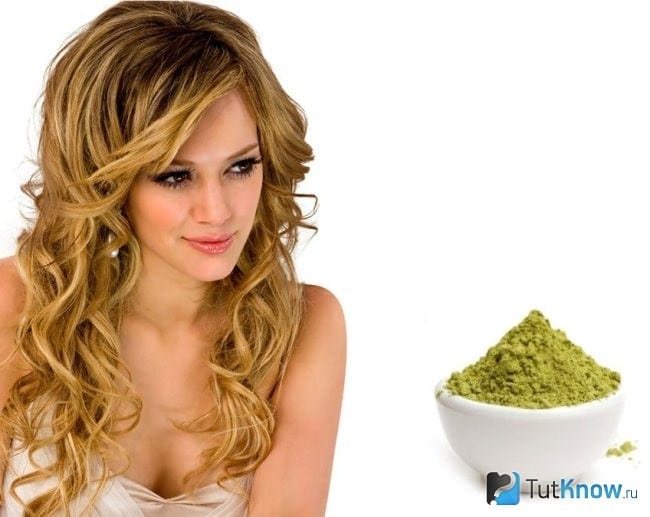
With the right use of basma hair dye, you can achieve great results. Even fans of famous brands such as Palette, Casting, Wella will not be able to tell the difference between theirs and yours. Also, the natural dye has a low cost and a lot of positive reviews because of its cosmetological properties:
- Stimulates hair shine;
- Saturates curls with various groups of useful trace elements and minerals;
- Gives the strands softness and silkiness, makes them obedient;
- It has a beneficial effect on the hair follicles;
- Enhances the growth of curls;
- It has a beneficial effect on the scalp, relieves dandruff;
- Prevents hair loss.
The advantages of basma include its hypoallergenicity. Natural paint can be applied even to women in position and nursing mothers.
What does hair look like after basma
Many girls, having learned about the many advantages of basma, want to try the powder on their hair, but you should not rush, but you should carefully study the rules for using basma, which will determine the type of hair:
- When dyeing strands for the first time, you risk getting the wrong color you would like. Therefore, it is recommended to use basma in conjunction with henna. Mix the powders in strict proportions to achieve the desired tone.
- If you have gray strands, be prepared for maximum effect. Basma will give a bright color to the curls, but in places where there was no gray hair, spots with different shades may appear. The paint is best used for women who have an even hair tone.
- Do not use the dye powder more than once a calendar month. Otherwise, you run the risk of getting the opposite effect, i.e. disrupt the water balance in the hair structure. As a result, they will become brittle and take on a dull, unhealthy look.
- Do not dye your hair if you have previously applied a different color or permed.
Be aware that basma is a permanent colorant. It penetrates deeply into the hair, it is almost impossible to wash it, and even more so it will not work to paint over with synthetic paint.
Hair treatment with basma
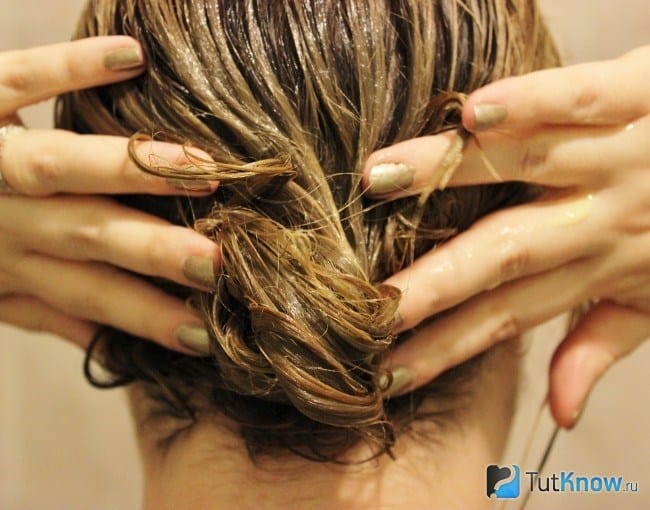
For girls who have problems with curls, it is better not to use chemical paints with ammonia. But there are times when you can't do without a dye. In this case, basma will suit you. Not only will you get a beautiful color for the strands, but also bring the hair structure in full order. If you don't want to dye your curls, then make masks.
Basma based hair mask recipes:
- Mask for all hair types. Take two tablespoons each of mayonnaise, basma and vegetable oil to neutralize the dye. Mix in a bowl. Apply to curls. Watch a couple of TV commercials, rinse the mixture off your head with warm water.
- For light strands. Mix henna, basma, kefir, lean oil. Apply the composition to the hair for ten minutes. Then wash your hair. The effect will be noticeable almost immediately.
How to dye your hair with basma at home
As mentioned earlier, basma should be used in conjunction with henna, as such a move will help to avoid unexpected shades. Unless, of course, the desired shade is swamp green.
The paint should be stored according to the instructions on the package, and the storage itself should not exceed its expiration date. Better to take fresher, then the result will turn out better.
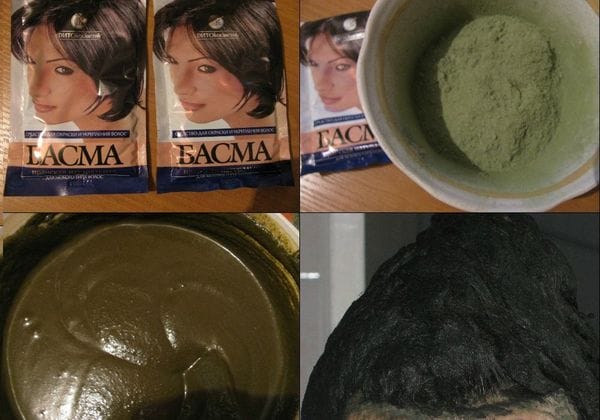
Staining itself looks like this:
- A glass, ceramic or porcelain container is taken, basma and henna powders are mixed in it in the right proportions. Depending on the length of the hair and the degree of its density, the mass of the dry mixture will be approximately 50-200 grams.
- The powder is poured with water (coffee, tea, hot red wine), the liquid should be heated or brought to a boil (it is better to boil the water, the rest of the gastronomic liquids should be heated over low heat). The resulting gruel should resemble sour cream in consistency. You can also add your favorite essential oils for aroma and ease of application.
- Put on disposable hairdressing gloves (usually they are cellophane), change into old clothes, which, in case of something unforeseen, will not be a pity. Cover your shoulders with a towel. It is better not to leave open skin, which can potentially get dye.
- Apply paint using a hairdresser's brush. Basma cannot be allowed to cool down, so it is advisable to apply it as soon as possible.
- Paint over the back of the head, then paint over the top of the head, then paint over the whiskey. Spread the mixture evenly over the entire length.
- After painting over all the indicated areas, apply another layer on top to secure the color and avoid missing some areas.
- Wrap your hair with a plastic bag, cling film or a specially designed cap to keep it warm.
- Keep the paint on your head from 15-20 minutes to an hour, depending on the saturation of the color you want to get.
- Wash your hair with warm running water without using shampoo. It is important that in the end clean jets of water flow down from the colored strands. To consolidate the result, it is recommended not to wash your hair for another three consecutive days.
How to get different shades using basma
When dyeing hair with basma, you can achieve different shades. To do this, the main component is mixed in certain proportions with henna or other natural dyes – berry juices, wine, strong black tea, ground coffee and others. Then all the ingredients are thoroughly mixed and applied to the hair. The most popular colors that can be obtained with Basma are the following.
Chocolate
To give the curls a rich chocolate shade, you must first paint them with henna (keep for about an hour and a half), and then apply basma for 2–2.5 hours. The amount of both components is determined individually, depending on the length, density and initial shade of the strands. Light colors lend themselves best to coloring – light brown, light chestnut or red.
Copper
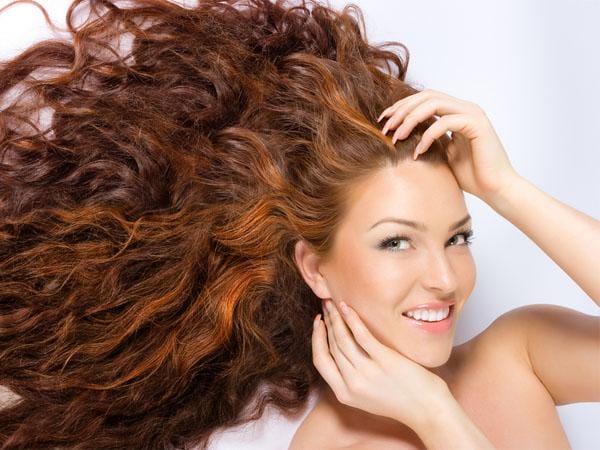
It is not difficult to achieve a pleasant copper shade with the help of basma. To do this, you need to mix it with henna in a 1: 2 ratio (1 part basma to 2 parts henna). On very dark hair, the effect will be weak.
The black
In order to dye the curls in the color of a black wing, you need to prepare a mixture of 2 parts of basma (if the hair is light, you should double the dosage) and 1 part of henna.
Maroon
A rich dark chestnut color with a pronounced reddish tint is achieved by mixing 2 parts of henna, 1 part of basma and hot red wine (natural), taken in an amount sufficient to obtain a pasty consistency. You can also use strong hibiscus tea instead of wine.
Purple
To get a dark blond shade with a purple tint, you should mix basma with henna in a 1: 2 ratio and brew with a strong decoction of onion peel.
Chestnut
The classic chestnut color can be obtained by mixing basma with henna in equal proportions. In order to avoid the appearance of a reddish tint, it is recommended to add ground coffee to the dry mixture (1 part coffee to 5 parts of the mixture). You need to dilute such paint with hot water to the consistency of sour cream.
Despite the fact that basma has a fairly high durability, the shade acquired with its help gradually loses its intensity. In order to preserve the obtained result as long as possible, it is advisable to use a special rinse made from a mixture of henna and basma (25 g each) and one and a half liters of hot water. The finished solution must be filtered, cooled and applied to the hair. It is recommended to carry out such procedures 1-2 times a month. For additional care of colored curls, it is recommended to use whey, kefir or yogurt when washing. After natural dyes, it is undesirable to use synthetic dyes and perm, since the result from such manipulations can be unpredictable.
What is henna
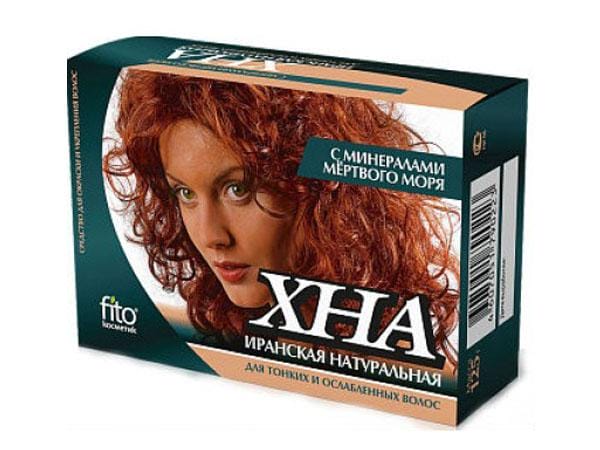
It is an absolutely harmless dye made from natural raw materials. For this, lavsonia leaves and alkanes are used, which are ground into powder. The birthplace of these plants are Sudan, Syria, India, Egypt, North Africa.
If you dye gray hair with henna, you can get a fiery red color. Of course, not all women dream of this shade, so the product is often mixed with other natural substances:
- to obtain a chestnut or chocolate shade, cocoa or coffee powder is used;
- if you want to get curls with a bluish-black tint, then basma will come in handy.
You can buy henna in three different forms:
- familiar powder;
- pressed powder;
- in the form of a liquid.
It is better, more effective and more useful to dye gray hair with henna with a product in the form of a regular or compressed powder.
The benefits of henna
The main advantage of henna is its safety and naturalness. It has an extremely beneficial effect on the hair and scalp. Among the impact it exerts, the following points can be distinguished:
- disinfecting effect:
- revitalizing;
- anti-inflammatory;
- restoring;
- wound healing.
Henna dyeing of gray hair turns out to be an indispensable option for people who cannot stand products with a chemical component or are allergic to them. In addition, ammonia can be very irritating to the scalp, which is not the case with a natural dye. Among the advantages of henna, women also highlighted the ability to get rid of dandruff with it and restore hair damaged by thermal styling.
The opinion of trichologists
Dyeing gray hair with henna is recommended by experts in the field of studying the condition of the hair. It is a natural dye that has no age restrictions for use. Trichologists have long ago identified the main advantages of the powder, they advise it to their patients, because:
- henna normalizes the work of the sebaceous glands, eliminating excess fat and dandruff;
- provides accelerated hair growth and natural volume;
- improves blood circulation in the scalp;
- protects hair from the harmful effects of ultraviolet radiation.
There are also disadvantages
Henna is a natural dye that has its own specific disadvantages. Among them, the following are especially significant for women:
- gray hair after staining may remain;
- the work of the sebaceous glands is normalized, but there may be overdrying of the strands;
- if henna was used, then ammonia-based paint cannot be used earlier than three months.
Coloring “henna + basma”
Many people prefer to use these dyes at the same time, because this way you can get different shades – from dark red to rich brown. The amount of henna and basma depends on the selected ratio and on the type of strands.
If the curls are thick and long, most often you need from 300 to 500 g of the product, if medium or short – from 100 to 300 g. You can use the dyes simultaneously or separately.
To achieve the desired effect, you need to consider certain subtleties when using them.
Separate
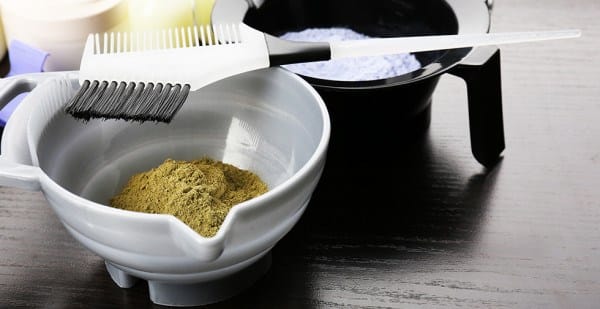
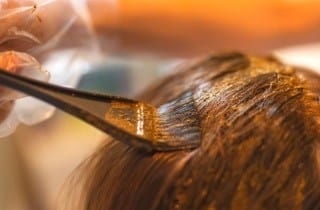 Prepare the curls: wash them with shampoo and dry them a little. It is not recommended to use a hairdryer. While the strands are drying, dilute the henna in a bowl and mix well. Spread this product over the back of the head, then use a flat brush and comb to spread it all over the hair.
Wrap a plastic bag and towel over your head. Wait as long as necessary and rinse your strands and skin with warm water. When rinsing your hair, you can use a balm. The curls should dry. When this happens, carry out the procedure using a different dye.
Simultaneous
Dissolve henna and basma in different bowls, wait until the mixture cools down to 40 degrees. Then mix them well and place the container with the resulting product in warm water. It should not cool down during the dyeing process.
Start from the back of the head, then work from the roots to the ends of the hair. Hold the henna and basma as long as necessary, then rinse the dyes thoroughly. In this case, you can use a conditioner balm. It will rinse off the product better and soften the hair.
Additional components
By adding various ingredients to the mixture of henna and basma, you can get very interesting shades of the strands:
- Saffron – will allow you to get a shade that evokes associations with old gold.
- Cocoa – makes hair brown.
- Chamomile – allows you to get a golden honey tint.
- Ground coffee – with the help of such a component, you can get a chocolate color.
- Cranberry juice, hibiscus – give the hair a burgundy shade.
- Cranberry juice, cahors – using these ingredients, you can get the color “mahogany”.
- Egg – used to accelerate the growth and density of the hair.
- Honey – makes hairs stronger, nourishes, restores curls.
- Kefir – gives hair volume, shine, effectively heals them.
- Burdock oil – makes curls more elastic, strong, well-groomed, prevents hair loss.
Mixing rules
It is recommended that you determine the timing and proportions in advance, otherwise you may get very unexpected results. When using dyes, the following rules should be taken into account:
- To prevent the strands from drying out, use additional ingredients (for example, kefir, egg).
- For breeding basma, use only water.
- Before use, you should pay attention to the consistency of the mixture. It should not be too thick or very runny.
- You can only pour boiling water over basma. This will produce a richer color.
In order for the shade of initially light hair to become light brown, you should mix henna and basma 3: 1. The proportion for obtaining a soft red color is 2: 1. This ratio of henna and basma is suitable for both fair-haired ladies and owners of dark curls, but in the latter case, the tone will be bronze.
The proportion for obtaining a brown tint is 1: 2. If you want the strands to turn black, also mix the dyes in a 1: 2 ratio, but keep them on the hair longer.
Holding time
 The term depends on the original color of the curls. If the strands are very light, the dye will need to be kept for 10-20 minutes. Natural blondes will take 5 to 25 minutes for a lasting effect. The term for owners of blond hair, light brown-haired women is from 10 to 45 minutes, for darker ones – up to 90 minutes.
If the hair is black or brown, the mixture can be left on for 120 minutes, for those with gray hair – up to 180 minutes. Start counting the time after you apply the dye and wrap your head with a plastic bag and towel.
Application frequency
Basma and henna are agents that work very well on hair, but you should not use them too often. Such natural dyes can be used no more than once a month, otherwise the strands will become brittle and dry. Hair will look more lush, but this is not a plus at all. They will cease to be soft, start to push, stick out in all directions.
It is not easy to correct such consequences, therefore it is recommended to avoid their occurrence, observing the measure.
What are the benefits
Both paints have a completely natural composition, because they are made from plants. To obtain henna, grind the lower leaves of the thornless lawsonia shrub, and for basma – the leaves of indigo from the legume family. In the first case, the powder is green, and in the second, it is gray-green.
Attention! The main advantage of both products lies not only in the sparing, but even in the therapeutic effect on the hair: strengthening, nourishing the curls, regulating the work of the sebaceous glands.
Henna in its pure form stains the strands in a red color. There are other varieties of it, with the help of which you can get golden, red shades, several tones of brown.
Recommended reading: Important points in henna staining.
If only basma is used for coloring, the hair acquires a blue-green color. Therefore, powder from indigofer leaves is almost never used as an independent dye, and in most cases it is mixed with henna. This tandem benefits both components: the combination neutralizes bright pigments and creates beautiful, natural shades on the hair. Which ones – depends on the ratio of coloring agents.
Pros and cons
Advantages of natural dyes:
- undoubted benefits for hair. With their help, you can solve many problems – loss, stunted growth, dandruff, excessive oily scalp;
- improvement of the general condition of the hair, which becomes shiny, thicker, more beautiful;
- obtaining various shades without chemical exposure to the permanent;
- effective painting of gray hair with a combination of both components (henna itself, unlike basma, does not cope well with the “silver” in the hair);
- the possibility of combining with other natural ingredients, allowing you to diversify the original palette (this includes plant juices, herbal decoctions, spices, tea, coffee);
- low cost of dyes;
- ease of use at home;
- hypoallergenic.
If you are going to stain with henna and basma, consider the disadvantages as well:
- with frequent use, the therapeutic effect becomes subtle, because natural powders can be harmful: dry hair;
- to repaint, you have to work hard. Henna and basma are not “friendly” with chemical compounds;
- after the procedure, it is difficult to rid the curls from the remnants of dyes consisting of grass particles. It takes a long time and patiently to wash the hair;
- for some time the hair exudes a specific odor;
- it is quite difficult to choose the desired shade the first time. It is not uncommon to experiment with proportions and composition to get what you need.
Advice. At the time of purchase, check if the expiration date of natural raw materials has expired. Its quality directly determines the result of painting.
Contraindications
If the strands are dry, brittle, or the scalp is very dry, it is better to postpone the packages of powders until better times. An alternative can be a combination of them when dyeing with kefir, sour cream, oils. It is not recommended to do the procedure during pregnancy and lactation: altered hormonal levels will negatively affect how the paint will lay.
Care should be taken to apply natural ingredients on light curls, because you can get ugly yellowish-green shades.
Hair coloring with henna and basma is undesirable after a recent perm or the use of a permanent, semi-permanent composition. In the first case, wait for a quick straightening of the curls, in the second – for an uneven color scheme.
In the same way, you should not apply ammonia or ammonia-free paint from well-known manufacturers to dyed hair if plant powders have been used before. Most likely, the new color will disappoint you, if at all it appears on the hair.
Important! In some cases, even herbal powders can cause an allergic reaction: itching, redness, swelling. Pre-test the dyes on the skin of the wrist or the crook of the elbow.
Preparation for staining
The final result after staining with basma and henna can be influenced by a variety of factors. So, soft and thin hair is much easier and faster to dye than hard and thick hair. And hair after a perm or bleaching absorbs the dye much faster.
The final result is influenced by the quality of the dyes. The fresher the henna or basma powder, the better the result. In addition, the duration of the dyeing procedure and the natural color of your hair play an important role. On light hair, the color will be much brighter, on dark hair it will be less noticeable, but the hair will sparkle with beautiful lively shades.
Before staining, you need to prepare:
-
A cape to cover clothing and keep paint away.
-
Rubber gloves for hand protection.
-
Towel.
-
Insulating cap.
-
Vaseline or cream.
-
Flat brush for applying the composition.
-
A glass or wooden stick for stirring the composition.
-
Enamel or glass bowl.
-
Polyethylene or parchment paper.
-
Comb with fine teeth and shank.
The hair should be washed before dyeing to remove excess oil and impurities that prevent the dye from interacting with the hair. Then the hair must be slightly dried by blotting it with a towel. Using a hairdryer is undesirable. There are two ways to dye your hair: by mixing both dyes or by applying them sequentially, first with henna, then with basma. Sequential application will make it easier to control the staining process, but it will take a long time.
The staining result depends on many factors.
Preparing the solution
Packages with henna or basma must be opened immediately before staining. The required amount of powder is placed in a prepared bowl, thoroughly rubbed with a stick until smooth, breaking the lumps. Then hot water is gradually added. The water temperature should be about 80 ° C, you cannot pour boiling water over the powder, otherwise the composition will lose its properties.
Everything is thoroughly mixed, achieving the formation of a gruel, reminiscent of thick sour cream in consistency. If the coloring composition turns out to be too liquid, then it will flow and the hair may be colored unevenly. If it is very thick, it will dry out before the hair has time to dye.
The resulting solution is cooled to a temperature of 40-50 °. When dyeing long hair, so that the solution does not cool below the prescribed temperature, you can put a bowl with the dye composition in a larger container filled with hot water.
Hair coloring
Before dyeing, you need to protect the clothes with a cape, and wrap your neck with a napkin. Vaseline or greasy cream should be applied to the temples and forehead to protect the skin from contact with the dye and easily rinse it off at the end of the procedure.
A solution of henna and basma must be applied as quickly as possible so that the composition does not have time to cool down. The hair is distributed into thin strands using a comb with a shank and a dye composition is applied to them in a thin layer. Warm gruel is applied evenly, in small portions. Parting is done 1 cm from the previous one and the next strands are painted, then they are applied to those that were painted earlier. So the whole head is gradually processed.
Try not to comb the coloring gruel at the ends of your hair, otherwise the roots may not be stained. Dye your hair strand by strand, gradually. Try to recede from the roots by 2-3 cm, here the hair is thinner, they can be dyed brighter. The roots are stained last, after the composition is evenly distributed.
All colored hair is collected at the back of the head and fixed. Cover the head with parchment paper or polyethylene and put on an insulating cap. To prevent the paint from dripping, a cotton tourniquet is applied along the hairline. After the allotted time, remove the insulating cap, tourniquet, polyethylene and thoroughly rinse the hair with warm water without shampoo. The exposure time does not depend on the length and will be the same for both short and long hair.
In the next few hours, there will be an increase in brightness and color depth. If the color is brighter than desired, you can wash your hair with shampoo. After dyeing, it is not recommended to wash the hair for three days, at which time the final penetration of the dyes into the hair structure occurs.
The process of dyeing with basma is the same, only after processing with a dye composition, you should not cover your head with a warming cap. The composition is kept on the head for a certain time, then washed off with warm water without shampoo. Over the next 6 hours, color will appear, if the hair darkens too much, you can wash it with shampoo or rinse it with lemon juice.
Natural colors give deep color
Hair color ratio
Using natural dyes, you can achieve the color you need by individually selecting the ratio between henna and basma and the exposure time on the hair. The end result will largely depend on the initial hair color, thickness and length.
-
From blonde to light red. To turn a blonde into a red beast, you need to take 1 part of basma and 2 parts of henna. Exposure – 10-15 minutes.
-
Light brown – red. To become bright red, take 1 part of basma and one and a half parts of henna. Withstand half an hour.
-
Light brown-haired – dark red color. Take 1 part of basma and one and a half parts of henna, keep it on the hair for 40 minutes.
-
Brown – dark chestnut. Mix 1 part of basma and 1 part of henna .. Excerpt – 1.5-2 hours
-
Black – black. Combine 2 parts of basma and 1 part of henna, keep on hair for 2 hours.
Natural dyes will give your hair health, and their regular use will make your hair strong, shiny and attractive.
Sources used and useful links on the topic: https://SeaHair.ru/okrashivanie/okrashivanie-volos-basmoj.html https://tutknow.ru/beauty/1955-kak-ispolzovat-basmu-dlya-okrashivaniya-volos-v -domashnih-usloviyah.html https://onwomen.ru/kak-krasit-volosy-basmoj.html https://luv.ru/397452a-hna-i-basma-i-sedyie-volosyi-sostav-instruktsiya-po -smeshivaniyu-i-naneseniyu-itogovyiy-tsvet-volos-polza-ot-primeneniya-i-pravilnyiy-uhod https://cosmetism.ru/izmenenie-cveta/raznoe/okrashivanie-volos-hnoj-i-basmoj.html https://cosmetism.ru/izmenenie-cveta/raznoe/okrashivanie-volos-hnoj-i-basmoj.html: //ExpertPoVolosam.com/procedury/okrashivanie/sredstva/naturalnye/basma-i-hna https://www.wmj.ru/krasota/naturalnoe-okrashivanie-volos-hna-i-basma-kak-krasit-volosy- hnoy-i-basmoy.htm
Post source: lastici.ru