
Free education in the best universities in the world is real! How and where to go to study abroad for free – I study offers

About general features
The list of countries and universities where you can go to study for free is long. At the same time, some institutions do not even need to pass entrance exams (we will tell you why a little later). But if you do not want to pay for education, count only on state universities, where teaching is conducted in the local language. So, add another year to your future studies and € 5-7 thousand for the passage of language courses: for foreigners, upon admission, a language exam is required (although there are exceptions). Of course, if your knowledge of the desired foreign language is initially ideal, you can forget about this moment.
Depending on the institution, you get a bachelor's degree in two and a half to four years. The master's program will take about two years to study.
The education system in Europe differs from the Russian one: you yourself “assemble” a course of study from the offered subjects. Some are required, others are optional. Therefore, in total, the term for mastering the program is shorter. However, there is no limited period of study: you can complete the chosen course in three years or in six years, but in a more relaxed rhythm, while devoting time to travel and work. The choice is yours.
An important point is age. Do not think that if you are already over 30, it is too late to enroll. In Europe and America, getting higher education at 33-35 and even 40 years old is normal. There is no top bar. Significant bonuses – the ability to work in parallel with their studies and (in some countries) reduced work experience of foreigners for retirement.
Budget European Universities
Employers from all over the world greatly value European education and diploma. Therefore, most often applicants want to enter a higher educational institution in any European country.
Europe has the largest number of universities, advanced technologies and methods of education and teaching, highly qualified teachers and comfortable conditions at universities.
Higher education in Europe, in general, costs a fairly budgetary one, but at the same time it is of high quality and systematized. European universities provide low prices for commercial education, as well as provide a large number of grants and scholarships for students.
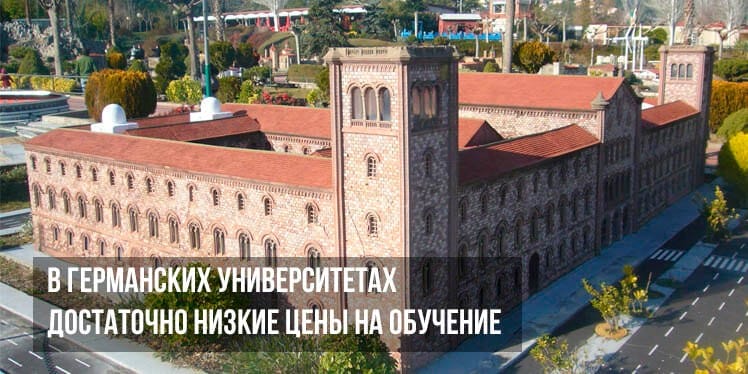
German universities
There is also a large number of universities with affordable and cheap faculties in Germany. Usually in German universities, tuition fees are quite low, and some of them are even free. Among these universities:
- Dresden University of Technology (a large number of technical specialties, the cost of education is about 500 euros per semester)
- Munich Technical University (has an extensive number of technical departments, the average price of tuition per semester is $ 135)
- University of Freiburg (Tuition per semester – $ 350)
- University of Frankfurt and Rhine-Westphalian Technical University of Aachen (average tuition per semester $ 600)
Austrian universities
Austria welcomes a large number of students from all over the world every year. Education is provided free of charge to citizens of some of the Schengen countries and underdeveloped states. Citizens of other countries will have to pay an average of about 600-1500 euros annually. There are a large number of universities in Austria, so each applicant will be able to find a suitable specialty for himself in some educational institution. Among such universities, the University of Leoben stands out, which is the foremost technical university in Austria; faculties such as mathematics, information technology, economics, engineering and so on are provided. The estimated cost of education per semester is 700 euros.
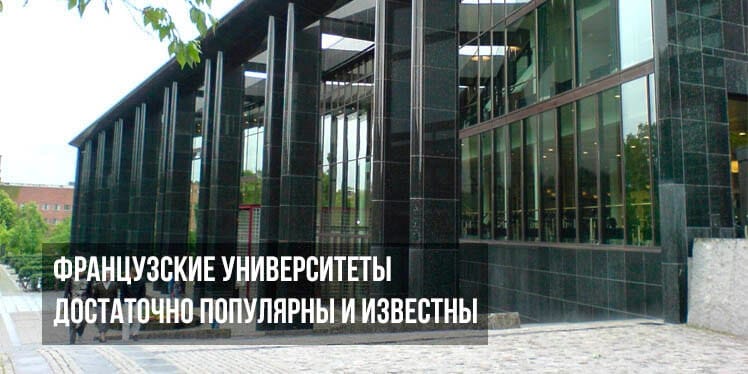
French universities
Higher education institutions in France provide affordable education, it is also worth considering that French universities are quite popular and well-known. Average tuition fees per year are between 200 and 650 euros. But it all depends on the chosen university, specialty, language of education and program.
Other universities
Spanish education is also quite budgetary, a variety of faculties, provides applicants with a wide choice. In public universities in Spain, you can get higher education in general for 600-1200 euros per year.
Leuven Catholic University in Belgium provides a variety of programs:
- Economy
- Right
- Business
- Natural Sciences
- Medicine
- Architecture and the like
The average tuition fee per semester is 900 euros.
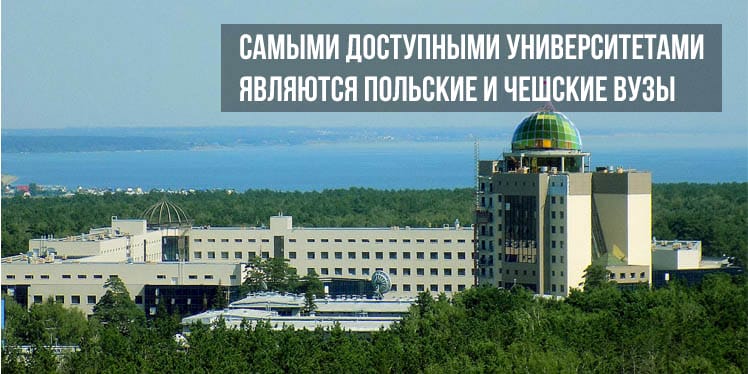
The most affordable universities in terms of price and selection criteria are Polish and Czech universities, since they provide a large number of programs and faculties, you can get higher education at low prices, and possibly completely free. We can say that it is easiest for Russians to enroll in these countries, because the admission criteria and a set of conditions fully correspond to the basic knowledge of secondary school graduates.
Reasons for the popularity of American education
For several decades, American higher education has been considered very prestigious in our country. Moreover, the point is far from the fact that after graduating from a higher educational institution, the graduate returns to his homeland and finds a job here. In fact, the opposite is true: having received a diploma, he is trying to find a job in the United States and is moving towards a further goal – obtaining a residence permit in America and citizenship of the country.
But, due to the difficult financial condition of the Russian economy and most of our compatriots, few can afford to pay for an expensive American education. To receive a grant at minimal cost means only one thing for Russians – the creation of excellent conditions conducive to further study at an American higher educational institution.
5 scholarships and grants to study in the USA that a foreigner can get
Education in the United States has long ceased to be a dream – universities in this country offer a lot of grants and scholarships for international students. In order to receive a grant, you must correctly and on time fulfill all the conditions for obtaining.
Let's take a closer look at such programs, and also find out what will help you become a participant.
1 US Government Fulbright Scholarship

The program, funded by the US Department of State, was created with the aim of strengthening relationships between the United States and other countries. The scholarship provides an opportunity for internships, attending lectures, training and research.
In 1946, the fellowship was founded by Arkansas Senator James Fulbright. During the existence of the program, about 300 thousand people have become its participants, and 48 of them even received the Nobel Prize.
Who can take part:
- university graduates
- teachers
- scholars
- graduate students
- artists
The participant of the program receives one / two years of study for a master's degree in one of the American universities. This also includes a monthly stipend, health insurance, tuition and transportation costs.
Conditions for the Fulbright Scholarship:
- be a citizen of a country participating in the program (the Russian Federation is included in this list);
- get a bachelor's degree or higher;
- have a high level of English;
- fill out the required form on the website on time and attach the documents.
For Russians, there are about ten directions for obtaining a grant. The deadline and the list of documents for each type of scholarship must be specified on the website.
2 AAUW Women's Scholarship

The program was founded back in 1917 to support women from different countries in their pursuit of education in the United States. Grants are available for all areas of research that are offered at American universities.
Who can take part:
- women from any country other than the USA with a bachelor's degree
- preference is given to women who somehow improve the position of other women in the modern world through their professional activities
Grants are awarded in three areas – Master's Scholarship ($ 18,000), Postgraduate Scholarship ($ 20,000), and Doctoral Fellowship ($ 30,000).
Conditions for obtaining a scholarship from AAUW:
- NOT have US citizenship or permanent residence in this country;
- get a bachelor's degree;
- have a high level of English;
- fill out the required form on the website on time and attach the documents.
Applications for the scholarship are accepted annually, from August 1 to December 1. Details can be found on the website.
3 Joan Schorenstein Scholarship
A special scholarship established by the Center. Joanne Shorenstein, allows an international student to join the program at a public school for one semester. management of Harvard University.
Who can take part:
- journalists
- politicians
- scholars
- media workers
The student, in addition to a high scholarship of $ 30,000, will have research work in the field of journalism, the creation of his own project and cooperation with the best specialists in this field. Unfortunately, the scholarship does not cover transportation, accommodation and meals, but it does provide space and resources for work.
Conditions for obtaining a scholarship from Joan Shorenstein Center:
- be in the United States for the entire period of study;
- have a high level of English;
- fill out the required form on the website on time and attach the documents.
You can apply for the program annually, but no later than February 1. All details and contacts can be found on the website.
4 Humane Studies Fellowship

Another popular program sponsored by the George Mason Institute for the Humanities Research. This grant is suitable for those who are engaged in the humanities and are actively involved in the life of their home country.
Who can take part:
- students of foreign universities who support research in the humanities and social sciences
The Institute annually provides scholarships in the amount of $ 15,000, which will pay off a year of study for this program.
Conditions for receiving a scholarship from Humane Studies Fellowship:
- have a high level of English;
- fill out an electronic resume on the website on time;
- write an essay of about 500 words about the project you will be working on while studying for the scholarship;
- attach a document from the current place of study to the application;
- in addition, you must provide two letters of recommendation.
The application deadline is April-March of the current year. It is better to check the exact date of the deadline on the website, since in 2018 the deadline for submission of documents was extended from March 18 to April 1.
5 Global UGRAD Exchange Program
One of the most common US Department of State sponsored training options at this time is the UGRAD student exchange program.
Who can take part:
- art students
- students of physics and mathematics, natural sciences and humanities
- engineering and social science students
A student who won a grant in an open competition will receive the opportunity to study at a US university free of charge – the country will pay all living expenses and insurance, and will also pay a monthly scholarship.
Conditions for obtaining a scholarship from UGRAD:
- have completed secondary education;
- study 1 – 4 university courses in your home country;
- have a high level of English
- provide the necessary documents and an application for participation on time.
Russians have the opportunity to study under the exchange program for one semester. You can apply for participation in the competition from November 1 to December 31 annually. All details can be found on the website.
How to get a grant or scholarship
There are a few things to keep in mind to get a grant or scholarship.
- First of all, free education in the United States can be obtained through public and private programs. There is also a sponsorship option – when a large organization interested in your specialty pays for training with further employment.
- It is important to take into account that even when receiving a grant, a student will have to spend money on passing the TOEFL or IELTS test, which confirms the required level of language proficiency. Also, some programs require the passing of additional exams.
- Experienced students are advised to identify several dozen American universities in their field and find out if they have a free education program for international students.
- To participate in the scholarship program, it is important to submit an application for participation in time and collect a package of documents. Most often, it includes a document confirming the presence of higher education, the results of the English language proficiency test and recommendations. It is worth remembering that each university has its own deadlines for submitting documents.
Who is eligible to apply for a grant
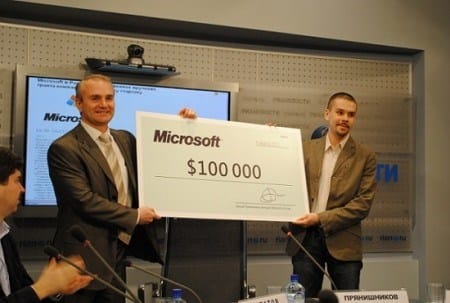
Presentation of a certificate from Microsoft
To apply for American grants, a student applicant must meet the following selection criteria:
- Be a citizen of the Russian Federation or a recognized refugee to the territory of the country with full documentary evidence of this fact.
- The student is obliged to participate in preparatory programs and trainings for admission in 2018.
- Have on hand confirmation of the submitted documents, but only to educational institutions that have received accreditation from the US government.
- Document the inability to pay for tuition personally or with the help of your family.
- Must be ready to take the preparatory exams.
In turn, citizens of the United States and employees representing the American Embassy and Consulate, as well as their close relatives, are not eligible to apply.
Instead of them, participants in other programs, students who are already studying in the United States, cannot receive a grant.
What is funded by the grant

The grant for training involves not only compensation for education, but also other expenses.
In addition to the ability to use funds in order to pay a high fee directly for training, the recipient has every legal reason to use it for other needs. Naturally, those that are in one way or another related to the process of obtaining an education:
- Reimbursement of funds spent on passing tests, interviews, including the cost of travel, if the facilities are located in another city.
- Payment of fees spent on the initial postage and submission of documents for consideration by the educational institution.
- The cost of obtaining an American student visa and the cost of travel costs necessary to get to the consulate.
- SEVIS fees.
- Payment of the cost of travel to the place of residence in the United States.
- A one-time payment of a certain amount for justification at the place of training.
Having received the highest score on testing and successfully passed the interview, do not be mistaken that you are guaranteed to become the owner of the grant. The choice of the winner, like all other decisions, is made individually, so only after a call from the organizer of the competition can you be sure of victory. In addition, funding may end at any time. The reason will be violations of the terms of the contract and poor performance of the student, as well as violation of the current legislation of the country on his part.
In which countries can a Russian student study for free?
First of all, I decided to decide in which country it would be easier for me to live, where education would be cheaper for me.
Note that you can only study for free at public universities. They provide free education to foreigners.
In other organizations, tuition is paid.
Many people call the training “free” in quotation marks. The reason is that you have to support yourself, you will have to spend not only on food, but also on the library, gym and other services of the educational institution. Everything is paid in annual installment. In addition, if you yourself are entering the university not under the funding program, then you will need to transfer to your bank account a sum of money , which would be enough for accommodation and meals throughout the entire period of study .
Since I work and can provide myself, I did not pay attention to the “free” education. Studying in Russia, we also spend on accommodation and meals. Moreover, considerable sums are spent on renting housing, and if I live in a student hostel, then my expenses will be much reduced.
So, I will list foreign countries where you can get free education and with what entrance requirements:
- Austria. Training takes place in two languages - English and German. You can choose the one that you own better. It is possible to enter universities without exams, but you will have to pass a language proficiency test. For those who could not pass the test, they offer to take a preparatory course, which lasts one academic year. During this time, you will improve your knowledge and be able to enter the university without problems.
![Free education in the best universities in the world is real! How and where to go to study abroad for free - I study offers]()
- Germany. Training also takes place in two languages with testing. There are also no exams for admission. If you do not have a higher education, then you will not be able to enroll. You must definitely have completed at least 2 years of a Russian university. With the completed 1 course, you can get into the preparatory year. And with the “HSE” you can easily enter German universities.
- Belgium. The study will be in English or French. You can enter Belgian universities without exams, but with passing a language test. The main difference between this country is that you can apply even right after school.
- Italy. Universities have opened their doors to foreign students who know English or Italian. You can enter without exams and without a language certificate, it depends on the specialty and the existing higher education. Minus – you will not be admitted to a higher educational institution without 1-2 courses of the Russian “higher”.
- France. Educational institutions offer Russian applicants to apply to them without exams and immediately after leaving school. They only look at the certificate, which should have good grades. Upon admission, a language certificate or test in French or English is required.
- Finland. Higher educational institutions of this country accept students with exams and language testing. Training takes place either in English or in Finnish, so applicants must confirm their knowledge of the language. You can go to college without exams.
- USA. Applicants who decide to enter American universities should know that they will not accept you without exams. The obligatory exam for all applicants is the SAT exam. It is necessary to test the knowledge of the school curriculum in grammar and mathematics. Note that upon admission, you will also need to pass a language test. They are admitted to universities for a bachelor's program immediately after graduating from a Russian school.
![Free education in the best universities in the world is real! How and where to go to study abroad for free - I study offers]()
- Canada. Usually, foreign applicants enter Canadian universities after school, and exams are not required from them. They only look at the certificate and give preference to those people who have high marks. Upon admission, it is also necessary to pass a language proficiency test, or provide a certificate.
- Australia. Another country where you can go to study for free. The main thing is knowledge of the English language, confirmation by a certificate or passing a test, as well as the completion of the 1st year of a Russian university. With such data, you can easily enter the 1st year of the Australian university. After graduation, applicants are offered to enroll in a preparatory course, and then get a bachelor's degree in 3 years. Another plus – you can get 2 specialties at the university in 4-5 years.


Note that educational institutions in the Czech Republic, Greece, Spain, China and other countries provide an opportunity to receive free education for Russian students.
But education at universities is not conducted in English, but only in the native language of this country, for example, Czech, Chinese, etc.
Despite this, they are admitted to universities without exams, after school and after finishing the first year of a Russian institute.
Basic requirements for incoming foreigners
Each university and country has its own requirements, however, they are almost the same.
Foreign applicants can enter universities, taking into account the following requirements:
- Providing a school leaving certificate. This is an important point, since when accepting documents, they will look exactly at your passport.
- Exam results documents. Be sure to show your GIA or USE certificates. Points can influence the decision of the commission.
- When receiving a second higher education, or for those who enroll in a master's, doctoral program of study, a diploma of graduation from a university in Russia should be provided.
![Free education in the best universities in the world is real! How and where to go to study abroad for free - I study offers]()
- Know English. Since training at many universities is in English, you should know it. Basic knowledge of grammar, stylistics, reading, as well as writing – all this is included in the test that you have to pass. For almost all universities, the main admission criterion is the TOEFL test, which is carried out on a computer.
- Age also affects admission. You must be over 17-18 years old.
- Passing entrance exams. Often, admission to a university takes place without exams, but in some countries in the Americas, you will be required to take the standard SAT exam. Instead of exams, they can conduct an interview via Skype or phone.
For those who enroll in the master's program, a standard exam is also expected. - Completion of 1-2 courses at a Russian university. Some foreign institutions cannot accept students for 1 course, since they have a school education system consisting of 12 classes. In Russia, it does not exist, so foreign students can enter only after completing several courses of their native university.

Documents required for study abroad
A standard package of documents includes:
- Secondary education certificate.
- Higher education diploma.
- Resume or autobiographical letter in the form of CV.
- A copy of the diploma supplement, or an extract from the transcript, if the document on completion has not yet been received.
- Language test certificate.
![Free education in the best universities in the world is real! How and where to go to study abroad for free - I study offers]()
- Certificate of any other standard testing, exam.
- A questionnaire drawn up according to the requirements of the university. In some institutions, it is posted on the website, in electronic form. You will need to print it and submit it in hard copy.
- Letters of recommendation from teachers, curators, dean of the university. Their number is from 3 to 5.
- Motivation letter. It should indicate why you want to enroll in this particular educational institution, why you are attracted by a certain training program. You can indicate your achievements and hobbies, fully reveal your personality and please the members of the selection committee.
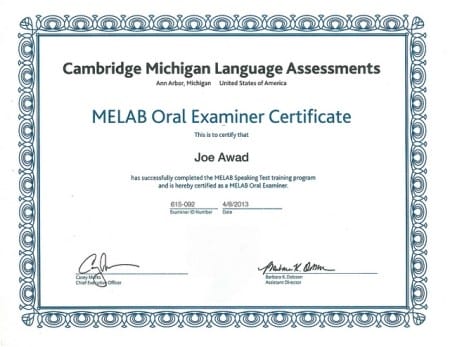
Each document submitted to the commission plays an important role.
If you do not submit any document, you may be refused admission.
5 ways to study abroad for free
There are several methods for obtaining free education abroad. All forms are directly related to donations. It can be provided to students by an educational institution, the state, a private entrepreneur, a representative of a public fund.

I will list 5 ways of such training:
- Grants or the so-called social assistance to students, which is intended for educational expenses, the implementation of a professional project, training in summer schools, taking courses, etc. The grant is issued in a lump sum in the form of an incentive. You can receive it again.
- Scholarship. When receiving a scholarship, which can cover the cost of all or part of the training, a motivation letter plays a huge role. The scholarship can be awarded for achievements in the volunteer, sports, creative, academic fields, or other talents. The scholarship can be issued by the university itself, or by the Russian state.
- Research scholarship. This way of getting an education is intended for those who have graduated from the “HSE” and are planning to enroll in a master's degree for further research activities. This scholarship can be issued by the state, representatives of private or public funds.
- Assistant. Designed for those who wish to enroll in doctoral studies. In addition to training, you will work as an assistant professor. His responsibilities include reading introductory courses in your specialty, participating in research projects that your department implements. Such financial support can be provided by both the state and the institution itself.
- Global Education Program. A program was developed so that a student studying at the expense of the budget of the Russian Federation abroad, after graduating from the university under the master's, postgraduate, doctoral programs, returned to Russia and worked at the enterprise for 3 years. This is a great opportunity to get a free education and have a job after graduation.
So, as you understood, it is possible to get a free education abroad. The main thing is to have a desire. When choosing an educational institution, I rely on entrance exams and requirements.
If you are also going to study abroad, then my advice: think over everything to the smallest detail, how you will finance your studies, how much money will be needed for accommodation, meals and other expenses, what exact documents should be sent to the university upon admission.
Japanese Embassy educational programs
Every year, the Japanese Embassy holds a competition in which anyone can take part.
Those who pass the competition will have the opportunity to study for free at one of the Japanese universities, and besides, a good scholarship.
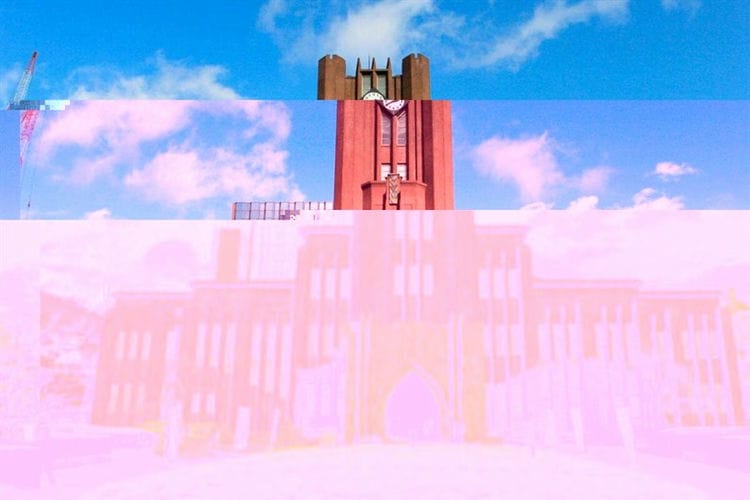
University of Tokyo
And now about the programs
Today, the Japanese Embassy has programs:
Student
– you can apply starting from the senior grades of the school, the main thing is to graduate by the time the program starts;
– designed for 4 years of study at the university and 1 year at a language school, if you do not know the language well;
– a scholarship of 117 thousand yen.
Trainee Researcher
– designed for 2 years;
– can be calculated after receiving higher education;
– suitable for training in graduate, postgraduate and scientific research;
– scholarship in the amount of 145 thousand yen.
And now about the complexities of the programs
challenging tests
– exam for knowledge of Japanese and English;
– an interview in one of these languages;
(these two points hint that you should have at least a minimum in languages)
– specialized subjects (you will have to take mathematics, chemistry, physics, depending on the direction)
-tests are conducted in Japanese and English;
– exams are taken in cities where there are representations of Japan and in one of two cities without (Novosibirsk / Yekaterinburg);
– in case of refusal, you will not be informed of the reason;
– Both all and none of the applicants can pass the competition.
Acceptance of documents for the next year will begin in the spring of 2020
Pros and cons of studying in Japan
pros
- Low tuition fees;
- Kudos to education;
- High job prospects;
- Possibility of part-time work in your free time;
- High quality education;
- Access to the most modern equipment and laboratories;
Minuses:
- High cost of living;
- Differences in mentality problems;
- Teaching only in Japanese, less often in English;
- Strict requirements for the level of knowledge during exams;
- Climate specifics (different on each island, from subtropical to temperate)
Study for international students
Japan is interested in spreading its culture and creating a positive image for a successful foreign policy. She seeks to establish friendly relations with other countries. Therefore, the percentage of foreign students in the universities of the Land of the Rising Sun is increasing every year.
In 2008, the Plan to Attract 300,000 International Students was released, according to which the doors of universities to students from other countries are now open more than ever. For those wishing to enroll in Japanese universities, this is the best time.
To attract foreigners, Japanese universities are expanding the number of study programs and improving their quality. Whereas a few years ago, teaching was conducted exclusively in Japanese, now many universities (for example, Osaka University or Tokyo Institute of Technology) teach disciplines in English. There is also the possibility of obtaining a scholarship to study.
Approximately half of all international students are from the Asian region. Others are from Western countries and Russia.
Higher education in Japan for Russians
As mentioned, the policy of admitting foreign students is quite loyal and this applies to students from Russia as well. The peculiarity of the Japanese education system is expressed in the approach to the admission process of foreign citizens.
- Since in Russia there is a complete secondary school – 11 classes, and not 12, when entering a university it is necessary to somehow get the required number of years. The options are:
- Take specialized courses in Japan, such as language studies;
- Provide a certificate stating that in his homeland the student studied after school for another two years in a specialized educational institution. Those who receive a second higher education can attach a diploma of graduation from the university to the package of documents.
- Applicants must be at least 18 years old.
- You must pass the Japanese language exam, “Nihongo Noryoku Shiken” (日本語 能力 試 試). The minimum level for admission to a Japanese university is 2 JLPT, the first institutions in the ranking of universities require 1 JLPT (fluency, like an ethnic carrier). On the territory of Russia, the exam is organized once a year in several cities by the “Japan Foundation” (国際 交流 基金). Information can be found on the website: http://www.jlpt.jp/e/application/overseas_list.html#anchor8. When passing the exam, an international certificate is issued, which is attached to the package of documents applied to the university.
In Japan, this exam can be taken at the branches of the Japan Association for the Promotion of International Education (JAFIE or 全国 国際 教育 研究 協議 会) twice a year. To prepare for the delivery of “Nihongo Noryoku Shiken”, you can take language courses in the homeland of the language.

Free higher education
In about 80% of cases, tuition, accommodation, paperwork and flights are paid by the student. Important to remember:
- It is generally possible to apply for participation in the scholarship program only after admission;
- The scholarship does not usually cover all living expenses;
- Part-time employment does not cover all necessary costs;
- Before you travel, you need a clear financial plan.
To reduce costs, it is recommended:
- Find out in advance what options for scholarships and the conditions for obtaining them exist in the selected university;
- Be a student of a Russian university that maintains a partnership with a Japanese university and become a participant in the student exchange program;
- Try to get additional support from private foundations or the state. The conditions for obtaining scholarships are different in each case, many factors are taken into account: the age of the student, his financial condition, academic achievements. There you can also see scholarships for graduate students.
Documents required for obtaining a visa
Only the educational institution in which the applicant entered is involved in visa processing. The package of documents for universities varies. It may include the following documents in English, with the required Japanese certified copies:
- Application for admission;
- Biography;
- Birth certificate and passport;
- International passport;
- A copy of the first page of the passport;
- Photos 3×4 (8 pieces);
- Certificates and diplomas of education received;
- JLPT / TOEFL Level Certificate
- Characteristics from 2 teachers of the previous place of study – grade 11, college or university;
- Certificate from the place of work of one of the parents, if the applicant is a minor;
- Bank statement – that there is at least $ 15,000 in stock;
- Medical insurance (Japanese).
Japanese Universities and Higher Education Costs
There are more than 600 universities in this country, of which 425 are private. Below is a brief information about the first seven state educational institutions in the ranking, called the Imperial ones. With relatively inexpensive tuition fees, these universities provide high-quality education and are the most international student-friendly.
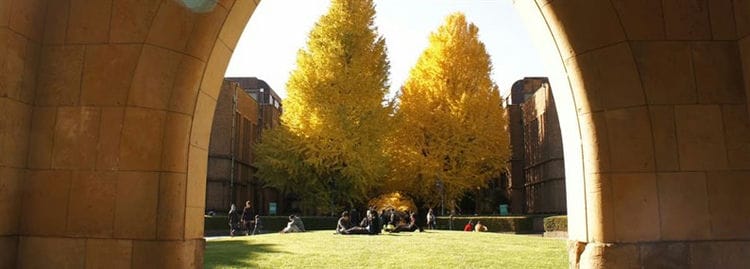
Depending on the university and the degree that is supposed to be obtained, the cost of training per year: $ 7,000 – 8,000. All universities provide hostels, the average payment for which is $ 900-2000.
- University of Tokyo (東京 大学). One of the most prestigious universities in Asia. Graduate of many Nobel laureates.
- Kyoto University (京 大). It belongs to the 5% of the most prestigious universities on the planet. The buildings are located in Kyoto, one of the ancient capitals of Japan and a modern cultural center.
- Osaka University (大阪 大学). The third most prestigious non-profit university. It has 3 campuses in the cities of Suita, Toyonaka and Mino in Osaka Prefecture, as well as a campus in the Nakanoshima area directly in Osaka. Some faculties of the institute allow teaching in English.
- Tohoku University (東北 大学). It is located in Sendai City, Miyagi Prefecture, in the Tohoku region of the northeast of Honshu Island. She actively participates in international exchange programs for students and teachers.
- Nagoya University (名古屋 大学). A prestigious university with a very selective selection program for international students. The cost of training is quite high, but there is an opportunity to receive financial support.
- Tokyo Institute of Technology (東京 工業 大学). The largest institution that specializes in science and technology. Located in Tokyo Prefecture, in the Maguma area. Some faculties of the institute allow teaching in English.
- Hokkaido University (北海道 大学). Located in downtown Sapporo, the regional center of Hokkaido Island, with the exception of the Faculty of Fisheries Campus and its Graduate School located in Hakodate.
Germany

pros
You can study and earn extra money;
Visa for a year to look for a job after graduation;
Minuses
Not all specialties are open to foreigners.
How long to study
Bachelor's degree – 3-4 years (more often – 4); Master's degree – from 1 to 4 years, depending on the specialty.
How much is
Education is free, but there is a semester fee for administrative costs from 120 to 300 €.
Pre-university training
You need to complete 11 grades of a school or 1–2 courses of a Russian university. After that, study for a year in the preparatory program at the German College Studienkolleg.
You can apply directly to a university only after several years of study at a domestic (or any other) university. In this case, you need to choose the same specialty.
In fact, studying at studienkolleg is a pretty comfortable way to get used to the country and improve the level of the language. Most foreign students follow this path.
Studienkollegs are attached to specific universities, so it is better to immediately choose a college at the university where you plan to enroll. Students are assigned to profile areas corresponding to their future specialty. Documents, depending on the college, can be submitted directly, through the uni-assist system or through the university that issues the referral.
To enter the Studienkolleg you need two things: know German well and pass the exam (or exams). The exam, most likely, will also be in German. Sometimes you have to take mathematics. Also, to confirm knowledge of the language, you will need a TestDaF or DSH certificate for at least B2 level (less often – B1).
Education in public colleges is free. But there are also paid ones, where they often take without exams. There are separate programs to prepare for admission to Studienkolleg.
Upon graduation from college, students take final exams (as a rule, there are three or more of them). The chances of further studies depend on their results.
Admission to the University
- Documents must be submitted directly to the educational institution. The exact list can be found on the website of the university concerned. A standard list of documents is at the end of the article.
- The availability of entrance exams depends on the specific university and specialty. There are usually no such exams. But for specialties in the field of medicine, law, natural sciences, they will be.
- A language test for level C1 is almost always needed (after Studienkolleg, there will be no problems with this).
- Apply for multiple study programs at the same time to increase your chances of admission.
Deadlines for submission of documents
Students are recruited twice a year: for the winter (beginning of training in September – October) and for the summer (beginning of training in February – March) semesters. Applications for the winter semester are accepted until July 15, for the summer semester – until January 15.
Timing may vary from university to university. Sometimes admission for the winter semester ends in April, and for the summer semester – in October. It is better to check the dates on the website of the required educational institution. And the documents should be submitted as early as possible, at least 6 weeks before the deadline.
Popular German universities:
Features of training
- There are several types of higher education institutions in Germany: Hochschule (universities of humanitarian orientation); Fachhochschulen (universities of applied sciences); Universität and Technische Universität (universities in our usual sense); Kunst- und Musikhochschule (Universities of Arts, Music and Cinematography).
- There are a number of specialties that are quite difficult for a foreign student to get into. These are exactly those specialties where there are entrance exams (medicine, law, journalism, psychology). In addition, they are subject to a state restriction on the number of places for foreigners.
- In addition to public free universities, there are a small number of paid universities in Germany. They are easier to enroll in and you can find programs in English.
- Unlike many other “student” countries, there are no campuses in Germany where students could live. You will have to look for housing yourself. There are three main options: try to find a room in student residences (250-300 € per month), jointly rent an apartment with other students (about 300 €) or rent an apartment on your own (300-600 €).
- The student can receive a scholarship to study and conduct scientific research from one of the German foundations and research societies.
Great Britain
pros
Teaching in English and a huge selection of courses due to this;
They will also speak English around.
Minuses
High requirements for applicants;
You cannot apply with a Russian certificate (there are options).
How long to study
3 years in bachelor's degree, 1-2 years in magistracy.
How much is
From 10 to 30 thousand pounds (11,000-33,000 €) per year.
Pre-university training
Studying at a British university opens many doors in the future. But first you have to open the door to the university itself. Getting there “from the street” will not work, for admission you need a local school certificate with a passing score.
Russian applicants have two main options for how to get it:
- After the 9th grade, enter an English high school for the A-Level or IB (International Baccalaureate) program. At the time of enrollment, the applicant must be 16 years old.
- After the 11th grade, take the Foundation – a special preparation course for the bachelor's degree.
A year of study in any of the programs will cost about the same as a year of study at a university.
BI, or International Baccalaureate, is an international educational program, the diploma of which helps to enter the university in most countries of the world. The curriculum includes six subjects: three are studied at the standard level (Standard level) and three – in depth (Higher level). The IB program is more difficult than the A-Level. At the same time, graduates with an IB diploma can enter without exams in universities in almost all European countries (except Spain), as well as in universities in the USA, Canada, and Australia. But for those who are determined to go exactly to a British university, the A-Level program is quite enough.
International Baccalaureate in the UK can be accessed at:
There is an annual Pre-IB preparatory program, where people are accepted from 15 years old. This option is popular among students who want to improve their English and other subjects necessary for the successful completion of the main IB. Pre-IB courses are available, for example, at Sidcot School and St Leonards School.
A-Level, unlike IB, is an “internal” British pre-university training program. The training lasts 2 years. The student needs to choose 3-4 subjects out of 20-30 offered (choose those that you plan to study at the university). Final exams are taken in these subjects. In addition to academic studies, there will be 5-8 hours of English per week and work on a research project.
To complete one of the preparatory programs for admission to a university, IB or A-Level, British students must graduate from high school and receive a GCSE (General Certificate of Secondary Education). This path is also available for Russian schoolchildren who can enter a private boarding school at the age of 14 for the GCSE program. After graduation, you will have to pass 6-8 exams to get into high school programs. GCSE makes it easier to adapt and improve the level of knowledge for training in A-Level or IB, but significantly affects the budget.
Many private schools and colleges in the UK provide an opportunity for international students to study under the GCSE and A-Level programs.
For foreign students who graduated from high school in their country, another option is provided – the so-called foundation year. Foundation is a university-based preparatory course. Students enjoy student rights: they live on campus, have access to the library, and participate in student activities.
To enter the Foundation, you need to pass IELTS with a score of 5.5 points. Most likely, you will also need an extract with grades from the certificate. Entrance tests vary by institution.
It is necessary to choose the direction of preparation for the Foundation program taking into account the future specialty. The advantage of this course is that its successful completion is practically a “ticket” to the university on the basis of which the training took place (or to one of the partner universities). But not all UK universities accept the Foundation certificate.
Universities in London and other cities (with the Foundation program):
Admission to the University
- There is a convenient centralized platform UCAS (Universities and Colleges Admissions Service) for submitting admission documents. You need to register on the site, choose from 1 to 5 universities and programs and fill out a personal form.
- A-Level or IB exams count as exams. Successful admission requires high results and excellent knowledge of English.
- To enroll in any specialty, you must pass an interview.
Deadlines for submission of documents
Application deadlines vary by institution. As a rule, this is January 15th. The results come in July – August. Applications for admission to Oxford or Cambridge are submitted earlier than to other universities – until October 15th. A little longer, almost until the end of March, applications are being accepted for some programs in the field of art.
Britain is known for its old classical universities, but I wanted to go to London: I was going to study business, and this is still one of the business capitals of the world! I chose Coventry University London (one of the best modern universities in England). It was important for me that students were given practical knowledge – lectures and seminars were conducted not only by teachers, but by real London businessmen, journalists, marketers.
Also in the last year there was a choice: to write a dissertation (for those who see themselves in science), write a business plan (and for real business!) Or take an internship in one of the London companies (the university provided options to choose from, but everyone could at will, too, to find something).
I would like to separately mention the financial aspect: London universities are not necessarily more expensive than universities in other cities. It all depends on the program of study and the ranking of the university. It is important that the university has a good reputation, but more importantly, how you study. An honors degree “with distinction” is what employers are looking for. There are many graduates of British universities, but there are only a few graduates with honors. In my specialty – International Human Resource Management – there were two honors degrees on the course, and this there were the first such diplomas in the last 8 years! So when choosing a university in England, you should take your studies seriously, so that later you have good chances of finding a job abroad.
Features of training
- Schoolchildren begin to prepare for entering the university at school. Mentors help to determine the specialization, teach how to write essays, write motivation letters, prepare for interviews.
- Education in the UK involves full immersion, so there are well thought out and comfortable campuses. Usually, the campus has everything you need to stay connected to your studies: dormitories, libraries, gyms, shops, cafes. It is customary to live next to study: on campus or nearby.
- At the same time, 4–8 subjects are studied on the course. The course lasts from several weeks to several months, then a new one begins.
- A lot of independent work awaits the student.
9 Sweden
Sweden is a country with a high standard of living and a stable economy, so people from all over the world have been coming here to study and then work for a long time. True, renting an apartment, eating and having fun is also expensive, and higher education for stateless persons in the EU has recently become paid. The average tuition fee is 8000-10000 EUR per year, but undergraduates and graduate students can count on scholarships and grants covering 15-100% of this amount. Financial assistance to foreigners is provided by the Swedish Institute and many large universities with their own scholarship programs.
The state gives immigrants the opportunity to study Swedish for free.
University in Uppsala is chosen by future doctors, pharmacologists and lawyers, in Lund – by political scientists, engineers, mathematicians, physicists and economists, in Stockholm – by linguists, designers, architects, sociologists, chemists and agricultural workers.
6 Greece
Greece is a great choice for lovers of the exact and natural sciences. All universities are state, there are no entrance examinations, only the marks in the school certificate are important. It is convenient to submit documents: a list of 20 preferred faculties is attached to the certificate – they will take it somewhere. For foreigners, not only education is free, but also food, accommodation, insurance and literature. Plus travel benefits and an automatic residence permit allowing you to work and earn money in your free time.
Teaching is in Greek, so first you have to go to a language school for 3-9 months.
The Polytechnic University in Athens trains engineers, computer scientists, mechanics, surveyors, metallurgists and shipbuilders. The Aristotle University of Thessaloniki is one of the most prestigious in the southeast of Europe, and welcomes philosophers, journalists, pharmacists, lawyers, artists, filmmakers and musicologists. And at the University of Democritus in Komotini, you can master history, literature and business administration.
5 Spain
Sunny Spain beckons Russian applicants, and they do not care about any obstacles. First, you have to pass entrance exams in the state language: Spanish proper, foreign, history or philosophy, essay plus additional disciplines.
Secondly, higher education is paid, education in private universities costs 5,000-10,000 EUR per year. On the other hand, state universities cover up to 75% of the costs, so their students pay an average of 1300-2000 EUR. Spanish can be learned through preparatory courses, and the number of English-language programs is steadily growing.
There are also cheaper options: for example, a year of study at the Faculty of Tourism at the University of Andalusia costs 760 EUR.
The University of Barcelona, founded in 1450, has been repeatedly recognized as the best in Spain. The faculties of fine arts, librarianship, geography, psychology and nursing have about 90,000 students. In the scientific and technical field, the leader is the Polytechnic of Valencia, in the IT field – the Polytechnic of Catalonia, and in the field of health – the University of Navarra.
4 Czech Republic
Students from 48 countries come to hospitable Czech Republic: local education is appreciated everywhere. The certificate and school exams are not enough, you need to take entrance examinations, and if in private universities they limit themselves to interviews and a run in basic knowledge, then in state universities they thoroughly test them in specialized subjects. Programs in English and other languages cost from 400-800 EUR per year.
Education in the Czech language is free, it is not difficult to learn it, there are a lot of courses, and the teachers are sympathetic to Russian-speaking students.
The most popular Czech university is Karlov, which has existed since the 14th century. They teach management, journalism, sociology, cinematography, telecommunications and other promising sciences. We recommend the Higher School of Economics in Prague for future financiers, and Masaryk University in Brno for doctors, lawyers and educators.
3 Italy
People go to Italy to study painting, music, architecture, fashion, writing and other art. They rely on independence, which means that students themselves form the schedule, choose subjects, personally communicate with curators and professors. True, the requirements are so high that about a third are excluded for academic failure. Education in public universities costs from 800 EUR per year, the amounts are assigned taking into account the success and security of the student. Excellent students and low-income people are offered scholarships and sponsorship up to 14,000 EUR per year.
Most universities do not have entrance tests, with the exception of medical, engineering and some creative specialties.
The University of Bologna is the oldest continuously existing in Europe; Petrarch and Copernicus studied within its walls. Bo University of Padua is based in a palazzo where Galileo Galilei taught. The University of Pisa is engaged in research in agriculture, astrophysics and computational mathematics, and the university in Perugia is focused exclusively on foreigners.
2 France
French education is a classic that needs no advertising. There are more than 80 universities in the croissant country, and studying there is a surprise! – quite accessible to talented applicants. Foreigners with a good certificate and letters of recommendation are admitted subject to availability after an interview and language tests. Studying in French at state universities costs 150-500 EUR per year, the rest of the costs are borne by the state. But private universities annually lighten the wallet by 10,000-20,000 EUR.
The main difficulty is the limited enrollment in pretending to be democratic, but still elite universities: for example, the Higher Normal School in Paris accepts only 200-300 students a year.
Founded in the 13th century, the Sorbonne is now a complex of 13 universities in the central historical buildings and suburbs of the capital. The University of Nantes has many programs in English, from management to computer technology. Goethe and Pasteur studied in Strasbourg, the best experts in law and sociology teach in Toulouse, and Nostradamus was once expelled from Montpellier.
8 Norway
Most state universities and colleges in Norway accept both local and foreigners free of charge, only an administrative fee of 30-70 EUR per semester is required. It is not surprising that 10% of students are newcomers who have successfully passed school exams or graduated from a university in their homeland and are aiming at the second “tower”. Having entered the paid department (full bachelor's course – about 15,000 EUR), you can apply for a scholarship or educational loan, which is issued for 20 years and, as a rule, is partially repaid from university funds.
The Norwegian education system is similar to the American one: the same small study groups, the same personal attention of teachers.
The University of Oslo is more than 200 years old, the main directions are medicine, sociology and law, but the bachelor's studies are conducted exclusively in Norwegian. The university in Trondheim specializes in natural and technical sciences: engineering, architecture, computer science, etc. And in Troms, they study space, anthropology, polar ecology and the fishing industry.
7 Slovenia
Slovenia is not the most obvious participant in the ranking, but it is pleasant to study in this country. The sea and the Alps are pleasing to the eye, Italy and Croatia are close – an unforgettable vacation is guaranteed. The education system is developing rapidly, the number of foreign students has doubled. Disciplines are taught in English and Slovene, but, oddly enough, for native speakers of Russian, it is easier to learn local than to bring up English to the required level. Moreover, the language proficiency exam is passed not upon admission, but at the end of the 1st year.
Tuition for foreigners is paid, 1500-3000 EUR per year, but undergraduates and postgraduates can apply for a scholarship. Students get discounts at cafes, public transport, concerts and other events. And after graduation, it is easier to obtain citizenship, because each year of study is equivalent to two years of residence.
Sources used and useful links on the topic: https://prian.ru/pub/38176.html https://amigrant-online.ru/samye-deshevye-universitety-mira/ https://VisaSam.ru/oformlenie/usacanada /granty-v-usa.html https://ElenaRuvel.com/obrazovanie-v-ssha-stipendii/ https://www.odnadama.ru/kariera/kak-i-kuda-poexat-uchitsya-za-granicu- besplatno-izuchayu-predlozheniya / https://zen.yandex.ru/media/id/5d8655113d008800ad0a237a/kak-uehat-uchitsia-v-iaponii-besplatno-5d87114d35ca3100ac3416e6 https://www.chgramsUStudy.ru/en/ -obrazovanie-v-yaponii.html https://www.aviasales.ru/blog/kuda-uehat-uchica https://tonkosti.ru/%D0%96%D1%83%D1%80%D0%BD%D0%B0%D0%BB/%D0%A2%D0%BE%D0%BF-10%D0% B5% D0% B2% D1% 80% D0% BE% D0% BF% D0% B5% D0% B9% D1% 81% D0% BA% D0% B8% D1% 85% D1% 81% D1% 82% D1% 80% D0% B0% D0% BD, % D0% B3% D0% B4% D0% B5% D0% BC% D0% BE% D0% B6% D0% BD% D0% BE% D1% 83% D1% 87% D0% B8% D1% 82% D1% 8C% D1% 81% D1% 8F% D0% BD% D0% B5% D0% B4% D0% BE% D1% 80% D0% BE% D0% B3% D0% BE% D0% B8% D0% BB% D0% B8% D0% B1% D0% B5% D1% 81% D0% BF% D0% BB% D0% B0% D1% 82% D0% BD% D0% BE
Post source: lastici.ru