
Features of laser and mechanical facial dermabrasion
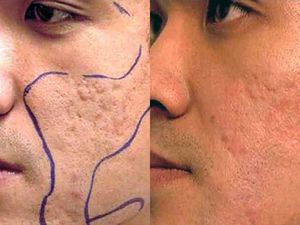
Dermabrasion is one of the methods of mechanical or laser facial cleansing. This procedure is effective, but somewhat traumatic, so it is resorted to only if there is an indication for this. It is aimed at a noticeable change in the skin of the face, including the solution of the problems of senile defects, scars, acne and many others. Its effect is comparable to methods of influencing the face through plastic surgery, but at the same time it differs in less trauma and rehabilitation time.
The essence of facial dermabrasion is to remove layers of skin using abrasive devices, which can be special rotating burs, diamond wheels and wire brushes driven by micromotors. There are methods for its implementation with the help of special lasers, which are distinguished by a gentle effect on the skin and a lower risk of complications. The good results of dermabrasion are due to the fact that young skin is formed at the site of its implementation, surpassing the former in its aesthetic parameters.
Action and varieties
There are several methods of dermabrasion that differ in working tools and the degree of depth of exposure, depending on the complexity of skin problems. The following main types of dermabrasion are usually distinguished:
-
Deep, which is a mechanical grinding. It is the most traumatic, but justifies its name – the degree of its effectiveness is quite high. Due to the fact that a cutter with a large abrasive is installed on the mechanical grinding apparatus, such a procedure can even cope with conspicuous scars. The disadvantages of deep mechanical dermabrasion include a very long rehabilitation period, during which the patient needs to use local anti-inflammatory and antipyretic drugs, as well as analgesics. But after healing, the face will noticeably look younger, age spots will disappear and deep wrinkles will smooth out;
-
Diamond dermabrasion, the main element of which is mineral dust from a hard and heavy-duty material as a cleaning abrasive. This dust covers the nozzle of a cosmetic instrument, with which the face is cleaned. Such an effect slightly injures the upper layer of the skin, removing age spots, smoothing out traces of acne, medium depth wrinkles and scars;
-
Laser resurfacing, in which the skin is affected by a directed beam. Its concentrated heat penetrates deep into the skin layers, effectively fighting acne marks, fine lines and scars. This type of resurfacing uses an Erbium or CO2 laser. The laser variation of dermabrasion is good because it almost does not injure the skin. Therefore, it does not require a long recovery period. The likelihood of bleeding or hyperpigmentation of the skin after such a procedure is very small. At the same time, laser dermabrasion is effective – it is able to make the skin smooth, which visually gives the contours of the face greater clarity.
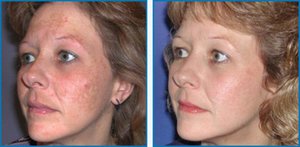
You should decide which of the described methods to choose based on your expectations from dermabrasion. If you have deep wrinkles or scars that you want to get rid of, then laser resurfacing is best not to consider. But keep in mind that the greater the effect you want to achieve, the more traumatic the effect on the skin should be. This is important to take into account with a busy schedule and an active lifestyle, since deep dermabrasion will require a long recovery period, which imposes some restrictions on work and outdoor activities.
Indications and contraindications
Facial dermabrasion includes the following indications, in the presence of which the procedure for its implementation is appropriate:
-
![Features of laser and mechanical facial dermabrasion]()
acne scars;
-
wrinkles – from small to deep;
-
stretch marks on the face;
-
traces of chickenpox;
-
scars from injuries and operations;
-
burn marks;
-
tonal irregularities of the skin due to pigmentation and birthmarks;
-
tattoos that the patient wants to get rid of;
-
keratosis at an early stage of skin cancer;
-
rough patches of skin.
In addition to recommendations for dermabrasion, there are a number of contraindications to its use. If a person has at least one of them , it is better to refuse this procedure:
-
the presence of foci of inflammation or purulent wounds on the surface of the skin;
-
SARS and fever;
-
epileptic syndrome;
-
severe somatic diseases;
-
neoplasms in the places of the potential procedure;
-
tuberculosis;
-
liver, kidney or heart failure ;
-
hemophilic syndrome and any violations of the processes of blood production and clotting;
-
pregnancy at any time;
-
increased skin sensitivity;
-
the tendency of the skin to allergic reactions.
Neglect of contraindications can lead to problems both directly at the stage of dermabrasion, and after some time as a side effect. A good specialist always finds out about the presence of contraindications in the client and only then can he admit him to the procedure. To do this, you need to know about the ailments of your body and not hide them from a specialist.
Side effects and complications
Dermabrasion, like all similar cosmetic procedures, does not exclude health risks. It is important to know what consequences during or after it can be encountered:
-
![Features of laser and mechanical facial dermabrasion]()
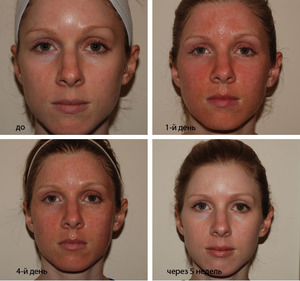
A natural side effect is redness of the skin and swelling of the face. This is almost inevitable and is not a cause for panic. Not later than 10 days later, in the areas of the procedure, sensitivity will begin to recover, and after a month or a little more, the usual shade of the skin will return;
-
Bleeding is a consequence of the fact that there are vessels on the treated area of the skin that are close to its surface. In this case, the likelihood of bleeding is high, but when using local antiseptics, it quickly stops;
-
Spotting on the skin after dermabrasion, sometimes manifested in people with dark skin. In the process of rehabilitation, this unpleasant effect disappears by itself;
-
When infections such as a fungus, virus or bacterium enter the wounds on the face, there is a possibility of infection and inflammation. Usually this happens only when hygiene standards are violated during dermabrasion or during the recovery period after it. To minimize the risks of such a complication, you need to contact serious specialists, take care of the skin after the procedure and follow all recommendations for caring for it during the recovery period.
Methodology
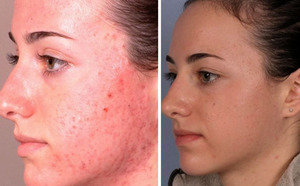
First, the client passes the tests established by the procedure and undergoes an examination by a dermatologist, who confirms the absence of pathologies with which dermabrasion is contraindicated. A few weeks before the date for which the procedure is scheduled, the person should stop drinking alcohol and smoking cigarettes . If by the time of the prescribed procedure there are no foci of inflammation and other contraindicated defects on the skin, then at this the preparatory stage ends and then proceed directly to the dermabrasion process, which is performed according to the following scheme:
-
![Features of laser and mechanical facial dermabrasion]()
The beautician performs a thorough cleaning of the skin of the face, after which marker marks are placed, which mark the working areas;
-
Areas of skin to be worked on are anesthetized. On top of them, containers with ice chips are placed – this is necessary in order for the skin to become denser, without sinking under the influence of the tool;
-
Using the selected nozzle, the specialist performs grinding. At the same time, with the help of a vacuum, its exfoliated layer, as well as settled crystals and other foreign particles, can be taken from the skin surface;
-
The exfoliated layer of dead skin cells is gently peeled off the surface of the face, which is pre-treated with a freezing spray;
-
If an invasive facial cleansing has been performed, a sterile dressing is applied as a preventive measure against bleeding and to protect against infections.
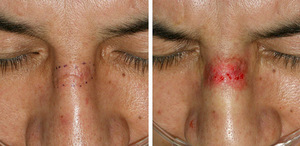
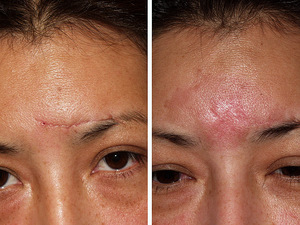
As for the duration of the effect of dermabrasion, there is no exact time frame. Much depends on the type of skin treated, as well as the problem with which the patient turned to the procedure, his body and lifestyle. Long-term, sometimes even life-long results are most likely to be achieved when removing stretch marks and acne scars. But with mimic wrinkles, the situation is the opposite – after a year they will appear again, because the muscles of the face are not immobilized.
One session of dermabrasion does not bring noticeable results, unless it was carried out by deep mechanical action. A deep variation of this procedure is carried out no more than once a year. The laser procedure is carried out in a course of 10-15 sessions. The more sessions of the procedure are carried out, the more pronounced the effect, respectively. To enhance the effect, chemical peels are sometimes additionally used.
Recovery period
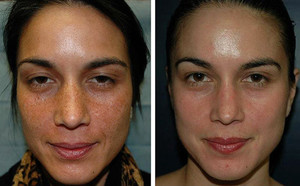
The recovery period depends on the chosen method of dermabrasion. Provided there are no complications, it can last from a week to a month. During the recovery, you must adhere to all the recommendations of the beautician. All local wound healing drugs are used strictly for their intended purpose. It is strictly forbidden to sunbathe and carry out home peeling during the rehabilitation period.
The layer of new skin will be pink and slightly puffy. It is sensitive to various stimuli. During the first 24-48 hours after dermabrasion, a postoperative bandage is usually worn. Patients return to normal life, as a rule, after two weeks.
Patient reviews
I agreed to facial dermabrasion on the advice of a beautician. My skin has never been problematic, but I wanted to renew it, get rid of dead skin cells. Of course, the sensations during the session are not pleasant, but in general they are tolerable. The procedure lasted about an hour, after which a soothing mask was applied to the face. As for the result, the appearance of my face has improved, the skin has become smooth and silky. But I repeat that I did not have serious problems, so I cannot say how this procedure copes with serious defects on the face. I used laser dermabrasion.
Anastasia, 34 years old
A few years ago, I decided to remove small scars from my face. For this, mechanical dermabrasion was suitable for me. I chose from the following indicators: inexpensive, fast and effective. Given that my scars were fresh, they took about 15 minutes. I did not experience pain during their removal. The crusts on the wounds after the procedure disappeared for about 10 days. One session was enough for me, traces of past scars are now almost invisible. I recommend this type of resurfacing for those who have fresh and small lesions on the skin.
Alexandra, 29 years old
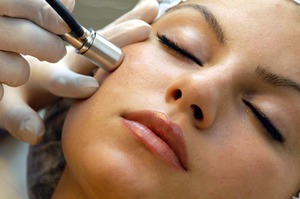
There were many reasons for me to use mechanical grinding. Among them was a burn mark on the cheek, a small scar on the border of the forehead and hairline, as well as uneven skin tone due to pigmentation. To combat pigmentation, I was recommended a gentle method of dermabrasion – laser. But I did not want to stretch the process over several different sessions, since the burn mark could be noticeably reduced only mechanically.
As a result, almost all goals were achieved. The skin tone is even, there is no pigmentation, and the trace of the burn is also almost invisible. But the scar on the forehead, bordering the hairline, remained. This is probably due to the problematic area where it is located.
Olga, 40 years old
Post source: salon.kr.ua